
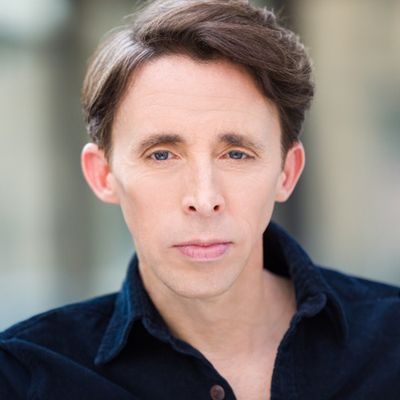
With an illustrious career spanning all throughout theater, TV, and film, Kevin shares his experiences and insights through his life in the spotlight... Read More
From the show: The Theatre Podcast with Alan Seales
Guests
Featured Shows
About
With an illustrious career spanning all throughout theater, TV, and film, Kevin shares his experiences and insights through his life in the spotlight. He looks back on his early years, including his life as a professional rodeo clown (starting at the age of 6!) and his role in the iconic musical "The Lion King." As a young actor in a different cultural landscape, Kevin reflects on the challenges and triumphs he faced during a time when representation and acceptance for LGBTQ+ individuals were still evolving. Kevin delves into one of his career-defining moments—his role in the groundbreaking rock musical “Hedwig and the Angry Inch”. He reveals how this daring and transformative production became a turning point in his artistic journey, inspiring him to embrace authenticity and express his true self both on and off the stage. Kevin's latest project "Shucked" opened on Broadway and gained critical acclaim as it evolved from its early stages to its current form, highlighting its impact on representing small-town communities and challenging stereotypes with humor and heart. Kevin emphasizes the power of empathy and connecting with others, the joy of making people laugh, and the importance of embracing individuality to create a better and more inclusive world.
Kevin Cahoon is an actor and a Tony nominee for his breakout comedic role of Peanut in “Shucked”, which also marks his Broadway return after a 16-year hiatus. He is also critically praised for his role as drag queen Bobby Barnes on “GLOW”. His other TV credits include “Monarch”, “A Series of Unfortunate Events”, “The Marvelous Mrs. Maisel”, “Nurse Jackie”, “Modern Family” among others. His stage credits include “The Wedding Singer”, “The Rocky Horror Show”, “The Lion King”, and “The Who’s Tommy”.
Connect with Kevin:
- Instagram: @kevincahoon
- Twitter: @KevinCahoon
Connect with The Theatre Podcast:
- Support us on Patreon: Patreon.com/TheTheatrePodcast
- Threads, Twitter & Instagram: @theatre_podcast
- TikTok: @thetheatrepodcast
- Facebook.com/OfficialTheatrePodcast
- TheTheatrePodcast.com
- Alan's personal Instagram: @alanseales
Transcript
This transcript was automatically generated and might contain errors.
[0:01] Alan Seales: Well howdy partner, welcome back to the Theatre Podcast. I'm your host Alan Seales and this is an all new episode with Kevin Cahoon, who's starring in Shucked! on Broadway. Tony nominated for his role as Peanut. Okay, I gotta drop the accent. I left North Carolina a long time ago. This episode is one of my favorites. This guy has an amazing, amazing story. He became a professional rodeo clown at the age of, drum roll please, six. He was a rodeo clown at the age of six and was the youngest professional rodeo clown in the country at that time. Grew up in a Texas rodeo family and his story to make it onto the Broadway stage is one that only he can tell, so I'm gonna let him tell it. Alright y'all, find me online, Instagram, Twitter, I mean X, whatever. Threads, Facebook, you know the drill. Leave a rating and review. Now everybody please enjoy this episode with Kevin Cahoon. Here you go, one, two, three.
[1:12] Alan Seales: Today's guest is a Tony nominee for his breakout comedic role of Peanut in Shucked, which marks his Broadway return after a 16 year break. Critically praised for his role as drag queen Bobby Barnes on GLOW. Other TV credits include Monarch, A Series of Unfortunate Events, The Marvelous Mrs. Maisel, Nurse Jackie, and Modern Family, just to name a few. In addition to Shucked, I can't say that without the accent, additional Broadway credits include The Wedding Singer, Chitty Chitty Bang Bang, Rocky Horror, The Lion King, and The Who's Tommy. He was a professional rodeo clown at the age of six and won junior star search at the age of 13. Hot damn, Kevin Cahoon, welcome to the Theatre Podcast.
[1:57] Kevin Cahoon: Hey, thank you for having me.
[2:00] Alan Seales: Dude, I want to start with age six rodeo clown, because I got a little boy, I got two kids, one's about to turn seven. He won't even look at a horse, let alone ride a bull.
[2:11] Kevin Cahoon: Listen, well, I was on a horse before I could walk.
[2:15] Alan Seales: Really?
[2:16] Kevin Cahoon: Yes. I'm from Texas. My dad was a calf roper in the rodeo. My parents met in the rodeo club in high school. I grew up an only child surrounded by every animal you could possibly imagine. Horses and donkeys and cows and pigs and goats. I had a monkey and a raccoon. I mean, it really was like Dr. Dolittle. There were animals everywhere. I've never been afraid of any kind of animal at all. I was on a horse since I was a small child. I would see my dad in the rodeos and I said, I want to be a rodeo clown. My parents said, okay, let's try. The next thing I knew, from five to 15, we were doing the rodeo circuit in Texas and Oklahoma. Every weekend, we were loading up the horse trailer and off we went.
I even did the Houston Livestock Show on Rodeo, which is the biggest in the world at the Astrodome. I did that for 10 years through my sophomore year of high school. Then the youngest rodeo clown thing in the world was getting a little shaky when you're a sophomore year in high school. The youngest rodeo clown in the world have a mustache now? Yeah, what's going on? What's wrong with that guy? Anyway, it was incredible. That was my first introduction to performing. I would do comedic acts in between the events while they're setting up for the next event. I would tell jokes with the announcer at the rodeo. I had other clowns that I worked with in comedic acts. I think about Shucked, which is I'm just telling jokes in cowboy boots in a rural setting, just like I did for the 5 to 15. It's funny how it all just sort of came back full circle.
[4:16] Alan Seales: Wow. Well, I work with a lot of clowns too, but none of them wear makeup.
[4:21] Kevin Cahoon: Hey, that's okay. Listen. The age six though, I just, I mean, maybe this is my, the New York, it's a different time, right? When we grew up and I was, yeah. And my almost seven year old now, I would not think would have the conscious wherewithal to be like, this animal could kill me.
[4:38] Kevin Cahoon: Right. I've never really been worried about that, to be honest. And I didn't do the bullfighting or the barrels, which is, you know, when the bulls are involved, but you know, I, I've never been scared of any. And I'm, I don't love snakes. I'll be honest with you. When you see those guys in the subway and in Times Square with a snake around their neck, it's not my favorite thing in the world.
[5:07] Alan Seales: Well, speaking of animals that can kill you, let's talk about Ed McMahon and Star Search.
[5:13] Kevin Cahoon: Hey, Hey, yo. So Ed McMahon, yeah. Junior Star Search. He, he did junior starters too. Right. I'm trying to remember.
[5:17] Alan Seales: Yeah, yeah, yeah, yeah. So the whole franchise.
[5:23] Kevin Cahoon: Yeah, right. He was everything. And so like, what was the progression that you were going through from, you know, rodeo and rodeo club, by the way, which I was like, wait, there's a whole rodeo club. I didn't even know.
[5:33] Kevin Cahoon: Yes. I'm a whole subculture. So rodeo club performing and you're like, well, I'm just going to start doing some, or I guess, what did you win for? Was it singing? And like, cause rodeo clowning isn't singing.
[5:44] Kevin Cahoon: No. And they had asked me to audition as an actor because Star Search had acting categories at that time. And they were coming through Houston and they were going around the country and trying to cast their season of Star Search. And I, I at 13 or 12, I guess at the time said, no, I want to sing. I want to sing. I don't want to, I don't want to audition as an actor. So I sing some people from Gypsy. And that got me the gig. And the next thing I knew, we were in LA and, you know, at the Aquarius Theater, which is now the Nickelodeon Theater on Sunset. That was my first introduction to LA, my first introduction to New York and getting an agent. And I had done a TV commercial when I was nine. And my mom signed me up for theater classes when I was 10 in Houston.
I did a lot of shows as a kid at Theater Under the Stars. And, um, I just loved it and fell in love, really head over heels in love with theater at that young age. And, you know, Star Search opened up a whole other life. And at that point at 13, I started living in the summers, living during the summers in New York City and auditioning. And I did a ton of, I didn't have much success except doing TV commercials. And that was incredible. And I did commercials for everything you could imagine. And that, you know, all through high school and through NYU, that helped me get through NYU. And yeah, um, and it wasn't until I graduated from NYU that, um, I started working really like in theater and playing roles as opposed to just doing commercials. I started playing roles, but Star Search was, you know.
[7:26] Alan Seales: Did you have a type that you were cast in for the commercials?
[7:30] Kevin Cahoon: Oh, always the nerd. Always. Always the nerd. No question. Um, and that was fine with me. Listen, I was happy to just have a job and it was fun. And I had the time of my life, but it's funny. I've sort of like, there's been three sort of periods of types for my career. Like I've went through a whole nerd stage. Then I sort of went through a whole rock and roll drag queen period where that was everything. And then now I'm like in my country era with Monarch, the television show that I did on Fox and this, um, it's so funny how the business and this career shifts you to, you know, what you're doing at the moment. Um, but listen, as long as I'm working and I care.
[8:23] Alan Seales: Well, it's, it's recency bias, right? And I think it, it's funny because casting agents and even the public in general, but, uh, in a business where we're supposed to be incredibly creative, I feel like some of the casting choices are often incredibly uncreative because you're just grabbing the person you just saw play the person you're trying to cast.
[8:42] Kevin Cahoon: Sure. Absolutely. No, that is very, very, very true.
[8:46] Alan Seales: So when, uh, I guess, so you went to NYU then and NYU, uh, for what, for performing at that time? Like, was there a moment when you were like, this is what I have to do? Or was there ever another time when you're like, maybe I'll try astrophysics?
[8:58] Kevin Cahoon: No. You know, when I was a kid and I was rodeoing, I did think at that time, maybe I want to be a veterinarian, you know, cause I didn't know you could have a career as a rodeo clown. But the minute that I started at like nine or 10, I knew like, oh, this is what I'm going to do for the rest of my life. And I got to do incredible shows at Tutts as a kid. I did Mame with Marilyn May and I did, um, Chaplin with Anthony Newley, who was, you know, a giant musical theater star and did a lot of movies. And, you know, the people that Chandra Wilson, who plays Dr. Bailey on Grey's Anatomy, we grew up together at Theater Under the Stars. And I was just watching all of these incredible people spend their lives, you know, doing what they loved and doing what I was, had fallen in love with. So I knew that there was, and everyone always said, well, what are you going to fall back on? What are you going to fall back on? And I, um, just didn't even think about that.
[10:04] Alan Seales: Yeah. I think, I think that's part of, of why a lot of people get into the businesses because they, the A, they don't know how hard it is. Like, and that's why people do a lot of things. If they knew how hard it was, they wouldn't have started.
[10:15] Kevin Cahoon: That's so true.
[10:17] Alan Seales: And then, yeah, the other thing is just like, well, I don't know what else I do. So I guess I'll do this.
[10:22] Kevin Cahoon: Yeah. Yeah. That's what I hear all the time. It's like, if you can see yourself do anything else, do that.
[10:26] Alan Seales: Right. They say, I've heard that saying many times.
[10:29] Kevin Cahoon: Yeah. Yeah. So then Star Search, I guess it's interesting because Star Search leads to an agent. Getting, getting the agent is always super, super hard.
[10:40] Kevin Cahoon: I lucked out. I really did. You know, I see so many of the people I went to school with and, and I was already ahead of the game because of what had happened to me when I was 13, you know, and I still, Edie Robb, dear manager of mine, is still my manager to this day.
[10:58] Alan Seales: Wow.
[10:58] Kevin Cahoon: Since the age of 13. Yeah.
[11:01] Alan Seales: Wow. He was your manager when he was 13?
[11:03] Kevin Cahoon: She was.
[11:04] Alan Seales: Oh, she?
[11:04] Kevin Cahoon: Yeah. Yeah.
[11:05] Alan Seales: Yeah. She's a young manager.
[11:07] Kevin Cahoon: Yeah. Legendary. Like, and she lives in LA and still to this day.
[11:12] Alan Seales: That's incredible. So you've had, yeah, you've had somebody who's been with you the entire time, which I think...
[11:17] Kevin Cahoon: The entire time.
[11:20] Alan Seales: Actually speak, speak real quick to, for those who don't know, what is the difference between a manager and an agent?
[11:23] Kevin Cahoon: Okay. So what I like to think of it, it's two separate offices and everybody has eyes on your career and eyes on the breakdowns and eyes on auditions and projects. I just like to think that you're covered in a double way, having a manager and an agent, but a manager, an agent will get you auditions through the breakdowns and they will negotiate your contracts. But a manager is sort of a boots on the ground, even manifesting other jobs that may not be coming through the breakdown, setting up general meetings with you, and they also get you an agent manager. So my first agency in New York City was called J. Michael Bloom and my manager, Edie, at that time, I was, gosh, I don't know, I was probably 13, got me with J. Michael Bloom and then J. Michael Bloom dissolved as a company and they started Innovative Artist or sort of like that company merged with Innovative Artist and I'm with Innovative Artist to this day. So it was those connections that happened all those years ago that are still sort of guiding my career.
[12:42] Alan Seales: Yeah, I think it's so cool to hear these stories and hear how people work together because in my experience, I think like managers, they have fewer clients and they're more hands on and agents are, they represent a bunch of people, they're senior agents and junior agents or whatever that case is. So there's a hierarchy, but I feel like the managers are directing the agents to tell the agents what to get you in for and to make sure they actually happen, the meetings actually happen.
[13:14] Kevin Cahoon: I think that's true. And then, you know, sometimes you'll...
[13:47] Alan Seales: The clowning into singing into nerd commercials and whatnot, it's funny, it's comedic. And then obviously now like you're in the spotlight again for Shucked!, which is comedic, but like the dramatic stuff, like you're not just one type of dude, which I think is, it speaks to against, you know, again, kind of like a range that you're able to produce.
[14:14] Kevin Cahoon: So when you're going from like the different phases and whatnot, like the middle phase of dressing up and exploring like the other sides of life, was that reflective of sort of where you were going personally? Or did it all just kind of like work through on its own?
[14:32] Kevin Cahoon: No, I would definitely, absolutely say that that is true. You know, when I was doing The Lion King, the original cast of The Lion King playing Ed the hyena, which some would argue is a nerdy hyena. And at that point, I saw Hedwig and the Angry Inch off Broadway in previews on a night off. I went to TKTS, everybody was talking about this show. And I went by myself and I thought, oh, I've got to be a part of this.
[15:01] Kevin Cahoon: And so I bulldozed my way in the door. I was not on the top of anyone's list, that's for sure. And then I got the job. And I became a one show a week standby for John Cameron Mitchell at Jane Green. And I left The Lion King, which everybody thought it was nuts, because it was a principal role in the hottest show of all hot shows of its time.
[15:30] Kevin Cahoon: And I said, no, I got to go. I'm going to leave. And I got paid $400 a week. And I didn't know if it was going to run a month. I didn't know if it was going to run six months, a year. I didn't, nobody knew. But I knew that I had to try. And no one had ever seen me do a role that was this serious, also funny, but at the end of the day, you know, just sort of like a cathartic heartbreak.
[15:59] Kevin Cahoon: Through rock and roll music, you know, eight times a week. And it completely changed my life, that show and that role and allowed the industry and the business to sort of see me in a different way. And it allowed me as a human being to stand in my own shoes as a gay man publicly for the first time.
[16:26] Kevin Cahoon: And I was probably 26. Not that I was hiding anything, but I just don't think that I was sure of my own skin and aware of my own skin to be present in it in front of the world until Hedwig came along.
[16:41] Kevin Cahoon: And, I mean, John Cameron Mitchell and Stephen Trask wrote this prophetic piece of theater that was way before its time and way before the world. And it allowed me to, it opened up a whole new world for me, a new life, a new way that the business saw me.
[17:03] Kevin Cahoon: You know, it's funny, you were saying a lot of comedic things. Most of the time when I'm cast on television, it's dramas. I mean, the half hour comedies that I've done are very, very few and far between. It's all hour long dramas as opposed to the theater where, you know, it's comedic and musical theater and it's a fortunate position to be in, you know, that I've been able to dance back and forth.
[17:30] Alan Seales: All right, we're going to take a quick break for an ad or two. Stay tuned.
[17:34] Alan Seales: And now we're back. I was just doing the math real quick. So, OBC, you said you were in the OBC of Lion King, which was, it opened November 1997.
[17:43] Kevin Cahoon: Yeah.
[17:44] Alan Seales: So, we're talking like winter 97 into 98. And I was doing the math too. Yeah. So, it's like, yeah, in your early, I guess, mid 20s at that point. Like you said, I think you said you were 26 or something.
[18:00] Kevin Cahoon: I think I started doing readings of The Lion King when I was 24, maybe.
[18:05] Alan Seales: Yeah, yeah, yeah. And I was reading too that, let's see, because of your upbringing, you said you didn't come out until you were 27.
[18:12] Kevin Cahoon: Right. Well, that's when I had my first boyfriend for real.
[18:16] Alan Seales: Right, right. So, when was Hedwig in all of this? Was Hedwig like before or after you're like, all right, I'm going to start like embracing who I am?
[18:23] Kevin Cahoon: No, that was, they were in tandem. Yeah, yeah. I would say, well, Lion King really was the first boyfriend, I would say. So, that was the production, not the readings, the production. So, you know, 26, 27. Yeah, 26, 27.
[18:40] Kevin Cahoon: And I look at my young friends now, who are so comfortable in who they are. And so, it's so accessible to them, you know. And it's incredible. I mean, this was a time, Don't Ask, Don't Tell was on the books.
[18:58] Kevin Cahoon: I mean, Will and Grace, I don't even think was on TV yet. RuPaul's Drag Race certainly wasn't even thought of. Like, it was just a different time, culturally. And we're in such a better place, you know, as a society, because of it. Because so many more people are able to live their lives.
[19:18] Alan Seales: Yeah. Yes, some might argue we've taken a huge step backwards.
[19:45] Kevin Cahoon: Yes, yes, yes, I agree. Your family, your peers, the rodeo club back in Texas. Do they know, I guess, like being in Lion King, that's a big Disney movie that everybody knows a story about? Like, oh, great. Like, no questions there. He's a hyena. That's all great. But then going into Hedwig, was that like, eyebrow raise, eyebrow raise?
[20:09] Kevin Cahoon: Oh, sure. Oh, yeah, absolutely. I mean, it was for me, too. You know, it is a big step to take. And it was the greatest gift of my life. But I, you know, I'm sure there were people who thought, he's doing what? What's happening? And my dad and my mom, I said, Okay, I'm gonna go do this show, who were the most incredible. And my mom is still the most incredible, supportive, loving, wonderful.
[20:38] Kevin Cahoon: Like, I'm an only child. And whatever I wanted to do, they made sure that I got to do it in some way, fashion or form, like, above and beyond. But I said, I'm going to leave the Lion King, I'm going to do this show. This is what it's about. And I don't think my dad had ever even seen a drag queen before.
[20:56] Alan Seales: Right.
[21:26] Kevin Cahoon: I guarantee you one thing, folks. It's not the Lion King.
[21:33] Alan Seales: Oh, God.
[21:37] Kevin Cahoon: That's what he said. That's what he said in the intro.
[21:40] Alan Seales: Wow. Well, yeah. Yeah. That had to be some sort of indication, though, for you to be able to say, look, my show's on Letterman. Because that was...
[21:48] Kevin Cahoon: Right.
[21:49] Alan Seales: Right? Letterman and Leno. Those were the places you were seen.
[21:52] Kevin Cahoon: Yes. And that was a huge deal when they got that booking at Hedwig down at J Street. Like, when that came through, it was, like, giant. And then it just, you know, there was Rolling Stone and everybody in the world who was so cool and downtown was coming to see Hedwig. And it just, there was magic in it. I mean, truly, I know that sounds cliche, but there was magic around that theater.
[22:19] Kevin Cahoon: Just stardust. Like, I did the show for so many cool people that it just, it's unbelievable. I pinched myself. And my name is in the liner notes of that cast recording. And it's something that I cherish more than anything in the world.
[22:38] Alan Seales: You talk so fondly of it. It's beautiful. And obviously, like, what you're doing, I guess, career wise, is reflecting where you are on a personal journey as well. And so now, Shucked just opened this year, 2023, on Broadway. But you've been with the process. What, you're the only original cast member from the reading or workshop or something eight years ago?
[23:02] Kevin Cahoon: Oh, yeah. I mean, it was probably longer than we did. It's probably been nine years now, maybe eight. But I auditioned that long ago. And Ken Clark, who originated the role of Bo at the Dallas Theater Center, is our standby for Bo here in New York. But in between, Ken had other fabulous Broadway shows he was doing and wasn't a part of that. But I, yeah, I auditioned that long ago.
[23:29] Kevin Cahoon: And they have allowed me to stay this entire time. And I'm so grateful. You know, at one point, they cleaned house completely. Like, Brandy Clark, Shane McAnally, and Robert Horn and I were the only ones that were still with the project. And that is producers, designers, cast, creative teams, you name it.
[23:53] Kevin Cahoon: You name it. So every time that there would be a new incarnation, I was just so glad that they were calling me to come back on the back of the pickup truck, so to speak.
[24:04] Alan Seales: Yeah, it was what? It was originally going out as the Hee Haw musical and then just got completely rebranded into what it is now.
[24:14] Kevin Cahoon: Yeah, no. And it's far better. I mean, it found its heart, it found its voice. It found its time. We had an out of town scheduled for Washington, DC before the pandemic. And that out of town was canceled because of the shutdown with the pandemic.
[24:34] Kevin Cahoon: I don't know if the show would have landed the way it has landed pre-pandemic, pre-Trump, pre-sort of social unrest. Like, it feels like we had to go through all of that to swing back around for this show to find its right audience.
[24:53] Alan Seales: I want to dive into that. And it's a great opportunity to peel back the layers or shuck the corn, if you will.
[25:02] Kevin Cahoon: Hey, I'm ready.
[25:03] Alan Seales: To get to the heart. Let's get to the kernel of what Shucked is about. It's not... Wait, what's the center of a corn cob called? Is it the cob? The corn? The corny cob?
[25:14] Kevin Cahoon: Yeah, right.
[25:15] Alan Seales: The cob? Okay, let's get to the cob of this story.
[25:18] Kevin Cahoon: Let's get to the cob.
[25:19] Alan Seales: We're cobbing in here. So the heart of it, I mean, the show has heart, and it's about a story of acceptance and ultimately love, where on the surface, it's like, it's a comedy about corn.
[25:31] Kevin Cahoon: Right.
[25:32] Alan Seales: And it's a laugh a minute. Don't get me wrong. Like, holy shit, Robert Horn wrote a book.
[25:37] Kevin Cahoon: Didn't he, though? Come on. Unprecedented and singular. No one does what he does. No one can do what he does. Yeah.
[25:44] Alan Seales: Yeah. Yeah. Yeah. Wrote this amazing book, and you are one of many just delivering these puns that speak my language like no other.
[25:55] Kevin Cahoon: Hey, dad jokes. Well, you are a dad, right?
[25:58] Kevin Cahoon: That's right.
[25:59] Alan Seales: There you go.
[26:00] Kevin Cahoon: I was dad joking before I was a dad. So having kids was just, it was like, here, you've earned your dadness.
[26:07] Kevin Cahoon: But yeah. Yeah. The heart of it, I guess, speak to like sort of the different incarnations, right? Because eight years ago, I don't know what it was like. All I know is kind of like the social media, like swirl or not swirls, maybe kind of the wrong name for it, but like what I've heard through the interwebs.
[28:03] Kevin Cahoon: I think this major rewrite was done when the walls were going up at the border, and there were walls everywhere. And Maisie's I Want song is called Walls, and it's about a wall of corn that has started to die. Should she go outside? Should she let someone else back in? And I think it resonates now with audiences in ways that it could never have resonated before. But it's about if you let those people that you are scared of in to your life and into your heart and your soul and your mind, you will be better for it. You will grow. You will see the world in a different way. And I think the corn, so to speak, or the world will be brighter for it at the end. Does that make any sense? It makes total sense.
Yeah. Yeah. Yeah. Just it had to be about more than just one girl's problem. It had to be a collective problem, which we were all going through in a pandemic and with the social issues that we were going through. We're going to take a short break. Stay tuned for more of the episode.
[29:16] Alan Seales: Yeah. And I grew up in a small town in North Carolina, which is like every character in Shucked! I've gone to school with.
[29:23] Kevin Cahoon: That's your kinfolk.
[29:23] Alan Seales: Yeah, of course. Yeah, them's my kinfolk. And we had a, you know, there was an unofficial gun club in my high school. I got a .22 when I was 14 years old as a kid.
[29:36] Kevin Cahoon: Oh, boy.
[29:36] Alan Seales: Yeah. Oh, boy. I mean, yeah. Never used it.
[29:39] Kevin Cahoon: Good. Well, quickly sold it. For corn!
[29:47] Alan Seales: Hey! And I like what I really like about Shucked! is that while acknowledging that there are some challenges in isolated communities, especially in small town rural areas, the show doesn't make fun of them at all. It doesn't make them the butt of the joke. They are telling the jokes.
[30:03] Kevin Cahoon: That's exactly right. And that is rare in popular culture, I think. And there have been so many people at the stage door who have said, we're from Iowa, we're from Ohio, Nebraska. It's the first time we've ever felt like we've seen ourselves represented on a Broadway stage. And I think that's beautiful.
[30:27] Alan Seales: That's amazing.
[30:27] Kevin Cahoon: Yeah. Because it is giving, when I was thinking about Peanut and Peanut's place in the storytelling of the show, I thought about a lot of those country comedians like Minnie Pearl and Jerry Clower, Stringbean, that a lot of them came out of the Dust Bowl and the Great Depression. But they became American iconic characters because they were speaking to a community that was never spoken to in popular culture. Will Rogers is similar. They were a voice for those people. They were relatable for those audiences. And that's why they became such a huge, you know, Minnie Pearl's hats in the Smithsonian for a reason. It's because she connected those people to radio and television and film in a way that they had not been connected with before.
[31:23] Alan Seales: The audience feedback, I enjoy that you said that they are coming to you and they're recognizing that they're seeing themselves represented. And have you ever had a conversation or has Alex Newell ever mentioned to you something about, like, you have these people who are never going to see someone like me in real life, most likely, right? Somebody who is just so different from the norm that small town people don't get to see all the time.
[31:45] Kevin Cahoon: Right. And it's accepted and it's positive. And Alex slays and celebrates it.
[32:01] Alan Seales: Yeah. No, I'm sure that Alex has that experience. And that is, it's incredible for the world. It just makes the world a better place, a stronger place. It's, you know, the show is about we are stronger together. That's what the show is all about. And when America is at its best, it's when we are all working together. We are listening to each other. We are communicating. We are accepting. Or we're learning to not, you know, like, listen, I can't go with that. But I do appreciate you for A, B, C, and D. And we can connect on those things. And, you know, that's what the show is about. We're stronger together. We really are.
[32:44] Kevin Cahoon: Right. Right. Yeah. And Peanut's this wonderful through line of just like, I feel like Peanut's kind of a little bit of a voice of reason, like pointing out everything that's so absurd and wrong that it's like, oh, of course, that's ridiculous. Let's talk. Let's make fun of it. Let's make fun of that, not ourselves.
[33:04] Alan Seales: Yes. Well, when the stakes get too high in the show and for Bo, his brother, he comes in with the jokes. He's like, nope, nope, nope. We're going to tether you here. I'm going to get you tied down. We're going to be okay. You know, he's kind of like, I think of Peanut as sort of like a shaman, you know, not in a way that he's like making potions, but he's a shaman, a spirit, like he marries everybody. He buries everybody. He, you know, there's something that is spiritual about his existence in Cobb County.
[33:35] Kevin Cahoon: He probably blesses the cow's milk and the corn's milk.
[33:38] Alan Seales: Oh, I'm sure. Don't you know?
[33:41] Kevin Cahoon: Yeah. You need to have a corn milk blessing ceremony before the show every Tuesday when you come back.
[33:45] Alan Seales: We should. Maybe we'll start that outside on 41st Street.
[33:49] Kevin Cahoon: Cow milk blessing. Listen, you need to do corn for corn to compete with ham for ham.
[33:55] Alan Seales: We did. We did do ham for ham, actually, but we should do corn for corn. I mean, we did ride a tractor pulling a trailer through Times Square.
[34:04] Kevin Cahoon: Did you?
[34:04] Alan Seales: I remember that. Yeah. I mean, any Broadway shows can say that.
[34:07] Kevin Cahoon: Yeah, dude. It was so fun. I remember, it was that opening night for the show, and I remember there was like, you had corn shucking contests.
[34:15] Alan Seales: Oh, wasn't that great?
[34:17] Kevin Cahoon: Yeah. I know. It really was.
[34:18] Alan Seales: Yeah, it was so much fun. The marketing, the press and marketing teams for the show have outdone themselves with the weirdness, the successful weirdness.
[34:26] Kevin Cahoon: Oh, truly. And like, you know, today, this is Friday, July 14th. At four o'clock, you go on the Shucked Instagram, and there is a scavenger hunt through New York City for signed CDs and pairs of tickets to the show. I mean, how cool is that?
[34:44] Alan Seales: Yeah, yeah, yeah. Oh, yeah, that's very cool. I love that interactivity of all of that. It's really, really cool. What I was gonna ask a second ago, I think, if I remember correctly, was like the comedy, the stage, you do the funny stuff on stage, and then the serious stuff on TV and film. And do you have a preference of what you're doing? Or is it just sort of like, I guess, right now, especially being Peanut on stage and getting the Tony nomination and whatnot. So people are seeing you for this. And again, recency bias in people's minds. Are you getting auditions now for TV and film that are still serious stuff?
[35:28] Kevin Cahoon: Well, we'll see. You know, we're in the middle of a strike.
[35:32] Alan Seales: Oh, yes.
[35:32] Kevin Cahoon: A strike and an actor strike. And so that is all fresh and new and shut to opening. And the wonderful, incredible gift of a Tony nomination is all fresh and new. So we'll see what happens at the end of the day. You know, I'm just happy to have auditions, and I'm happy to have jobs. And I don't think I have a preference. If it's just interesting characters and interesting situations, that's enough for me. And, you know, there's nothing like a live audience and doing live theater. There's also nothing like the challenge of doing a TV or film where every day is a different location and a different scene and different, you know, they're both wonderful. They're both wonderful.
[36:18] Alan Seales: Yeah, yeah, I totally get that. When I used to audition all the time, I would do... TV and film was the bad guy. I was the dark, sinister guy. And then on stage, it was the ingenue. And I'm like, can I just be a bad guy on stage for once? I want to explore what that's like.
[36:36] Kevin Cahoon: I mean, that's fun. Yeah, right?
[36:36] Alan Seales: Yeah. Anyway, so three questions. I ask everyone to wrap up the episode. The first one, just very simply, is what motivates you?
[36:48] Kevin Cahoon: Heart. Heart. I would say that that motivates me. Connecting with people, loving people, through just being, you know, walking to the deli on the corner, or getting to perform and have them connect. That's what motivates me, I think. I think empathy is the most important trait that anyone in the world can have. And that's something that I challenge with myself every day. Like, how can you be empathetic towards this person, and what they're going through, and what they're feeling, and their plight, and their cause. And I would say that connecting with heart, in one way or another, is what motivates me.
[37:35] Alan Seales: What advice would you give to your younger self and younger people listening now, starting out down a similar path?
[37:38] Kevin Cahoon: Okay. The advice I would say is, follow that tiny voice in your head that is telling you to do something. If you have an idea for a show, if you have an idea for an anything, if you have ideas to go to dinner with a certain person, make that dinner happen. Follow your inner voice. Don't think, I can't, I won't. Well, that's for them. They should do that. No, that is you. There's only one you. You are singular. Your ideas, your motivations, your ambitions, they are all yours. And whether it's in your personal life, or your creative life, follow the voice. Follow the yellow corn road.
[38:25] Alan Seales: Follow the yellow corn road. If you could only see one show for the rest of your life, or you can see it as many times as you want, what would you see?
[38:29] Kevin Cahoon: Oh my god. Now that is the hardest question anyone's ever asked. I'm not going to say Shucked, even though I want to say Shucked. I'm going to say Hedwig and the Angry Inch.
[38:43] Alan Seales: I was expecting that.
[38:52] Kevin Cahoon: Where can we find you online on the socials?
[38:58] Kevin Cahoon: Yes, at Kevin Cahoon. That's it. Instagram, Twitter, Facebook. I have not done threads yet, and I've never done TikTok, but I'm on the other three.
[39:05] Alan Seales: I did threads the other day, and I'm like, all right, this ain't bad. It's a lot better than Twitter, I'll tell you that.
[39:13] Kevin Cahoon: Okay, good. Maybe I need to do the threads. I'm on Instagram, and Twitter, and Facebook, and now threads, and all the places. Of course, you can find me on all platforms. You listen to podcasts, leave a reading review wherever you can. Thank you to Jukebox The Ghost for intro and outro music, and Kevin Cahoon, thank you so much for this lovely conversation.
[39:37] Kevin Cahoon: Thanks for loving Shucked, because I love Shucked so much too.
[39:42] Alan Seales: Oh, it's so good, so good. Thank you. Take a deep breath, make the world a little colorful.
© Broadway Podcast Network, All Rights Reserved