

From cults and documentaries to their deeply thought out character motivations, actors John Lavelle and Haskell King look back on their theatre journey. The two share their background, doing productions when they were younger, and what eventually made them pursue acting as a career... Read More
From the show: The Theatre Podcast with Alan Seales
Guests

Featured Shows
About
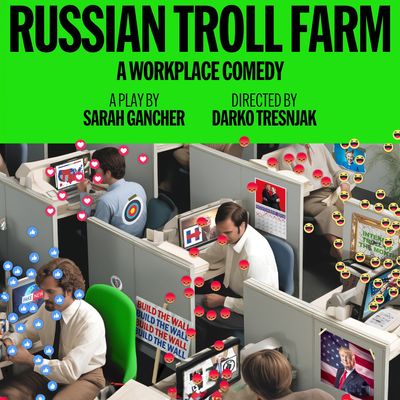
From cults and documentaries to their deeply thought out character motivations, actors John Lavelle and Haskell King look back on their theatre journey. The two share their background, doing productions when they were younger, and what eventually made them pursue acting as a career. Currently starring in "Russian Troll Farm: A Workplace Comedy", they talk about how they got involved with the show, hitting it off on the first meeting, and the allure of cults and how people get drawn into them. With the show being as relatable as ever today, they reflect on how it changed their relationship with social media, how they interact with it, and the complexity of playing as bad guys. John and Haskell also impart some advice to aspiring actors and their motivations, including the desire to be seen and connect with others and become a better person for one’s family.
Haskell King has performed all over the Off-Broadway and regional stages such as the Irish Repertory Theatre, Ensemble Studio Theatre, and the Abingdon Theatre. His TV and film credits include “Dear Edward”, “Law & Order: Criminal Intent”, “As the World Turns”, “The Fly Room”, and “Shadow & Lies”. John Lavelle has been on Broadway in “The Graduate”, and off-Broadway stages including La Jolla Playhouse, The Shakespeare Center LA, and The Old Globe. His TV and film credits include “Selma”, “Frozen”, “Wreck-It Ralph”, “Zootopia”, “The Taking of Pelham 123”, “Kipo and the Age of Wonderbeasts”, and “Grace and Frankie” among many others.
They are both part of the stellar cast of the off-Broadway production of “Russian Troll Farm”, an office comedy, at the Vineyard Theater in New York City. More info and tix here: https://vineyardtheatre.org/shows/russian-troll-farm/
Connect with The Theatre Podcast:
- Support the podcast on Patreon: Patreon.com/TheTheatrePodcast
- YouTube: YouTube.com/TheTheatrePodcast
- Threads, Twitter & Instagram: @theatre_podcast
- TikTok: @thetheatrepodcast
- Facebook.com/OfficialTheatrePodcast
- TheTheatrePodcast.com
- My personal Instagram: @alanseales
Transcript
This transcript was automatically generated and might contain errors.
[0:01] Alan Seales: Hey, everyone. Welcome to The Theatre Podcast with Alan Seales. That's me, Alan Seales. I'm your host, and these are intimate, personal conversations with the industry's biggest names. Our guests for this episode, there's two of them. We have Haskell King and John Lavelle, who have become besties in their current production of Russian Troll Farm, a workplace comedy. It takes the term office politics to a whole new level and takes us back to 2016 in the middle of that election. This has been a through line in a couple of episodes lately, but we get into the theory behind why bad guys are bad, why good guys are good, depending on what perception you're coming from, what perspective. Sometimes the good guy wins, sometimes the good guy loses, and the bad guy wins.
It's a very interesting conversation, depending on, of course, who you are. Bad guys don't wake up in the morning and say, I'm going to do bad, twirling their mustache and laughing like Snidely Whiplash. This is an incredible conversation, and we dive deep into a lot of motivation behind some pretty nasty people. So it's going to be pretty interesting. Just to set up how we're going to transition into the interview, we were having a great chat about coffee in the morning, and I decided to keep it in the interview because it shows you a little bit about who Haskell and John are. And as always, find me online on all the social medias. Leave a rating and a review wherever you are listening now. Tell your friends. And now, here we go. Let's enjoy a little chat about coffee.
[1:25] Alan Seales: Also, how are you grinding your coffee, John?
[1:36] John Lavelle: With a coffee grinder.
[1:38] Alan Seales: Yeah, but what setting? It's just got one setting.
[1:41] Haskell King: Oh, good Lord. Ground coffee.
[1:45] Alan Seales: Wait, are you a coffee connoisseur? Like, you care about how it's ground?
[1:49] John Lavelle: Me? Yes. I mean, listen to this man. He's drinking weak coffee.
[1:53] Haskell King: I don't like to drink weak coffee. No, he shouldn't. He's got a show tonight. He needs his grounds grounded.
[1:58] Alan Seales: But what's the difference between mildly ground and, like, really ground? How does that change the intensity of the coffee?
[2:06] Haskell King: Well, because he's grinding it with just a one-setting grinder, which is probably a pretty coarse grind. So when he's putting it in a French press, it needs a little bit of a finer ground so it can actually be strong. So it can, you know, get all the good stuff out of the coffee.
[2:15] John Lavelle: You grind it a couple of times?
[2:22] Haskell King: Yeah, and I shake it up to get that nice, fine powder.
[2:27] John Lavelle: Yeah, I've been there. I'm away from home. I'm away from home, Haskell. I don't have my Chemex and my Skagg Overpour. I don't.
[2:41] Haskell King: No, no, I know how that is. I go through this whole thing anytime I'm away from home, and I have to, like, I really have to go through, you know, psychological and mental tricks to get myself to adjust to this new weak coffee that I'm going to be drinking anywhere I go.
[2:55] Alan Seales: Yeah, funny enough, the people in our show don't drink that much coffee.
[2:58] John Lavelle: Really?
[2:58] Haskell King: Look at that segue. That's why they're not on this podcast right now.
[3:02] John Lavelle: Yeah, well, I drink, my character drinks Monster Energy drink.
[3:06] Haskell King: I think your character just does massive amounts of blow off stage.
[3:10] Alan Seales: Oh, you're talking about the characters, not the other actors I bet you're talking about. All right, well, okay, let's kick into the actual intro.
[3:17] Haskell King: All right, all right, great.
[3:18] Alan Seales: Well, we have and have had the pleasure of chatting with two guests today, who I will now introduce in no particular order. Haskell King has performed all over the Off-Broadway and regional stages such as the Irish Rep, Ensemble Studio Theatre, and the Abingdon Theatre. His TV credits and film credits include Dear Edward, Law and Order, The Heart That Stays, The Fly Room, and Shadow and Lies. John Lavelle has been on Broadway in The Graduate, Off-Broadway stages including La Jolla Playhouse, The Shakespeare Center LA, and The Old Globe. His TV and film credits include Selma, Frozen, Wreck-It Ralph, Zootopia, and The Taking of Pelham 123. They are both part of the stellar cast that just recently opened the Off-Broadway production of Russian Troll Farm, a workplace comedy at the aforementioned Vineyard Theatre here in New York City. Haskell and John officially welcome to The Theatre Podcast, even though we've already been coffee chatting for a very long time.
[4:13] Haskell King: Thank you.
[4:17] John Lavelle: Good morning.
[4:19] Haskell King: Thank you so much.
[4:20] John Lavelle: Good morning.
[4:22] Alan Seales: Well, good morning. Now that we're officially rolling, not talking about coffee, you guys get quiet. That's how it normally goes, right?
[4:30] Haskell King: No, no, no.
[4:31] John Lavelle: I'm loud.
[4:31] Haskell King: I'm loud.
[4:32] John Lavelle: Oh, yeah. Loud.
[4:33] Haskell King: Coffee talk. When was it? Coffee talk with Linda Richman?
[4:38] John Lavelle: I think I'm just extended all the energy I have for the day.
[4:44] Alan Seales: Um, so, John, actually, that's a great place to start. Because you said you're based out of LA, but have you always lived there? Like, where is your background in theatre and performing from?
[4:54] John Lavelle: Oh, sure. I grew up in New York City, where they paint murals of Biggie. And I was originally born in Brooklyn. And then I lived in Staten Island. My father, you know, New York City firefighter, my mom a nurse, you know, so all of that. And I've been back and forth between New York and LA. I'm bi-coastal, as some would say. But really, I just, you know, fly economy where the work is. So, um, and I got my start in theatre.
[5:26] Haskell King: Economy plus.
[5:27] John Lavelle: I got my start in theatre.
[5:29] Haskell King: Yeah.
[5:30] John Lavelle: No, no, no. Economy plus, please.
[5:32] Haskell King: No, no economy. Like, you show up and you're not sure. You're like, you're just like hoping not to sit next to the bathroom.
[5:40] John Lavelle: But I live in LA. And I came out to do this show. And the vineyard's been wonderfully accommodating. And our producer, Dory, has been wonderfully accommodating. And how did I get my start in theatre? Third grade. I was doing a production of A Christmas Carol. I was the lead playing Ebenezer Scrooge with an all Boy Scout troop, you know. Like, old school. It was all boys playing all the roles. And I made, um, I'm from New York. So, I made Scrooge like a, um, how do you say? Like, and I mean this with a loving turn. Like a Goomba, right? Like everyone I knew from, like, working around. So, I wore, like, an A, I, like, wore, like, a little t-shirt with, like, you know, mustard stains. And I imagine that Scrooge worked at a deli.
He was like a deli owner. And, uh. Oh, God. I just would, like, did the whole, I did the whole thing in third grade, like, with my dad's accent. Like, Bob Cratchit. Like, you know, the ghosts are gonna come to me tonight. And, uh, I was in third grade and everyone laughed. And then I was hooked. And thankfully, I was not very good at sports because I kept trying to play sports. And, uh, I didn't excel at them. So, I kept coming back to the theatre. And then one fateful day, I got a concussion playing hockey and my sports career was over. And I just stuck with the theatre. That's it.
[7:06] Haskell King: I love that. I just imagine Bob Cratchit trying to, like, walk across stage, do a nice cross. He's like, I'm walk, I'm walking here. What are you doing? Hey, hey, Bob Cratchit, get over here.
[7:17] John Lavelle: Oh, and everyone got into it, too. Everyone got into it. All our little third grade selves were, like, um, you know, uh, uh, harnessing our inner Don Corleones. It was really funny. But that's what you do in Staten Island. Shaolin, the rugged isle of Home of the Wu-Tang Clan.
[7:36] Haskell King: Oh.
[7:37] Alan Seales: What is your origin story?
[7:40] Haskell King: My origin story, I have, I think it's really two steps. And the first was when I was in kindergarten. And I got hired on to do this kindergarten play for Christmas. And when I say hired, of course, they didn't pay us. But I, my parents were getting a divorce and I was missing some school. And I got fired by Mrs. Gan.
[8:04] John Lavelle: In kindergarten?
[8:05] Haskell King: In kindergarten. I was replaced. And let's just say I'm not a fan of Mrs. Gan. But then in, I think in junior high, high school or something, I was trying to figure out what my thing was. And I was doing a lot of different things. I played sports and I was too small, really. I was, you know, half the size of everybody else. So I quit team sports. I competed in bull riding. I rode bulls for a while. And then I competed in karate. I got, I got, sustained some pretty serious injuries.
[8:48] John Lavelle: Bull or from the karate?
[8:51] Haskell King: From both.
[8:53] John Lavelle: Both.
[8:53] Haskell King: The bull riding had numerous, numerous injuries. And then, and then in karate, yeah, I had my, my nose completely broken, just smashed. As, as happens when you're fighting. But I had to have surgery and everything like emergency surgery because I had a blood clot. So I was in English class and I was, I was hyperactive. And my, my teacher, she really got fed up with me. And so she had me talk to the trauma teacher. And that was it. I started I've never done anything like that before, really. And so I started doing, you know, mock logs and then started competing. And I don't remember, John, do you put that? There's like a state or maybe national competition where you like take a duet or something to competition.
[9:45] John Lavelle: Duo forensics.
[9:48] Haskell King: I did the same thing.
[9:49] John Lavelle: You did.
[9:50] Haskell King: You did amazing.
[9:55] John Lavelle: It was so much fun.
[9:56] Haskell King: I won New York state.
[9:58] John Lavelle: We never knew this.
[10:01] Haskell King: I won Oklahoma.
[10:02] John Lavelle: Yeah.
[10:03] Haskell King: Did you go to nationals? Did you go to nationals?
[10:05] John Lavelle: No, we didn't go to nationals. I don't know what happened.
[10:08] Haskell King: We should have gone to nationals though, right? If we won Oklahoma state.
[10:11] John Lavelle: Yeah.
[10:12] Haskell King: We could have competed against each other.
[10:14] John Lavelle: Yeah, it would have been amazing. I, I had so much fun doing that though. I never, I'd never done anything like, but yeah, that, that was my origin story.
[10:24] Alan Seales: So you were, you grew up in, in Oklahoma then I was going to ask the bull riding was, cause it's definitely not Brooklyn.
[10:30] Haskell King: No, it wasn't Brooklyn. It was in Oklahoma. Uh, yeah, I rode, I rode bulls there for a few years from like ages of nine, 10 to maybe 14, 15.
[10:43] Alan Seales: Okay. So, so bull riding and drama, um, performing definitely two different tracks and normally, and I'm, I'm generalizing here in a place where you are encouraged to do bull riding, you are normally discouraged to sing and dance and, and act. So was, was there any struggle, uh, issues there, like trying to fall into the, the, this place of performing? Because if you found your, you know, people say you found your tribe or, you know, like you were all a merry band of misfits. So once you found your misfit friends, was it all smooth sailing?
[11:19] Haskell King: Not at all. Are you kidding me? Of course not. It's the worst. You know, before that I was also in band, I played trumpet.
[11:27] John Lavelle: has been on the show for years, and that was just second from the bottom. The bottom was really drama.
[11:35] Haskell King: Oh, yeah.
[11:36] John Lavelle: So, I went from just team sports. Everything was great in my life, and I just kept getting lower and lower. I finally ended up with drama. But it was great. I really did feel like, no, no, you're not encouraged. I remember my father, I did this monologue, and my acting teacher, of course, was very proud of me because I cried at the end or something. They did like this kind of small public presentation, and our parents came. And I just remember seeing the look of shock and horror in my father's face after I finished that monologue. What has happened? Is everyone seeing the exact same thing that I'm seeing? I was not encouraged to do that sort of thing there, but it didn't matter. It felt right. As soon as I started doing it, I knew it was the thing.
[12:36] Haskell King: That's interesting. It's interesting the drama. How old were you at that point?
[12:43] John Lavelle: I think that was my junior or senior year. I think it's right in that point in high school where you've already decided like, well, there's really no other option. It was a last resort.
[12:58] Haskell King: Well, that was what I was going to ask John, because you said in third grade, you caught the bug because you made people laugh and it was satisfying. But then you could kind of go the route of the class clown and become sort of a bro or a sports jock. But then you said you weren't so good at sports. At what point growing up, then, did you decide this is what I want to do? This is what I want to go to school for. I'm going to put my eggs in this basket.
[13:25] John Lavelle: Yeah. Well, I played sports. I was actually okay at baseball, but I was very injury prone. So I kept getting concussions and hurting my knees and stuff like that. In baseball, yeah, I was a catcher. Don't let your babies grow up to be catchers. And, you know, I mean, my family was like New York, you know, blue collar city workers. So this idea was like wildly insane. And I didn't do it for a long time. But then I got hurt freshman year. And Kristen Savarese was the lead in all the girls plays at the girls school, the girls Catholic school. And she's like, John, you're still acting. And I was like, no, I'm a hockey player now. But much higher voice. I was like, no, I'm a hockey player now. But I was injured.
I had a concussion. And she asked me to be in No, No, Nanette, which is the musical that no one knows about. It is the musical. The reason why Babe Ruth was sent to the Yankees was to produce No, No, Nanette. That's what that musical is. I did that. And then I think to Haskell, I was doing forensics and working on like really out there plays like I was doing Martin Sherman's bent sophomore year and like wish fulfillment and all these really wildly dangerous pieces of theater. You know, I got in trouble. I got suspended from my drama club because I did that. But it was different times back then. It was different times. You couldn't you know, you couldn't play as a sophomore. You couldn't play a gay man in a concentration camp, I guess.
But wow, I went for it. And then I auditioned for NYU when I was 17 and I got in. And I remember the day, like my dad said, I can go. I was working as a maintenance boy. I was cleaning a dumpster. I was inside a dumpster power washing it. My dad drove up in his car. I think it was his like truck, his Yukon Denali. And he rolled down his window. And he was like, if you really want to go, you can go. And then he kind of drove off. And that's how I know you're going to catch me from there. That's it. Thank you. Make your way home. Now there's no point of return. You spend that kind of time, you know, and I lived in a squat in the West Village because I couldn't afford housing underneath St. Vincent's. And I went to NYU.
[15:57] Haskell King: Wow. And that that point was like no point in no return for me to kind of ask. I was like, well, this is it. Like, this is what I'm doing.
[16:10] Alan Seales: And so you're at NYU then. And what's the plan originally then to stay in New York and be a stage performer? Because now you're you're a proud bi-coastal career actor.
[16:16] John Lavelle: Yes. Super. Yeah. And so why when did you start going to L.A.? And I guess for what reason? Because if, you know, New York, there's so much that happens still in New York too.
[16:29] John Lavelle: Yeah. You know, I mean, I was idyllic at first. I was like, maybe I'll just do street theater. But then as time goes on, you realize there's no way to make a living or get even the smaller jobs without doing film or TV. So I booked a show on Broadway when I was about 20. Went to L.A., did the whole L.A. thing, shot a pilot, you know, and then was chewed up and spit out and went back to New York and finished getting my degree. I went to L.A. actually because my first scene partner was this girl and we dated and we hit it off. And, you know, 25 years later, we're married and we have a bunch of kids together. So in about 2010, I was doing my New York thing. I was doing off Broadway, doing these.
And she's like, I'm moving to L.A. So I followed her. So I literally moved to L.A. to follow a girl. Then she became my wife. And that's that's why I moved to L.A. I would have never moved to L.A. Hadn't I been love? Well, maybe infatuated. It's love now, but maybe infatuated back then. But I loved her and I followed her and gave up all that.
[17:42] Haskell King: It's been so interesting, like listening to John and also reflecting on our origin stories and pinpointing that moment that motivated us to choose poverty for the rest of our lives.
[17:54] John Lavelle: I love you, man.
[17:59] Alan Seales: Hang on, everybody. We're just going to take a quick break.
[18:03] Alan Seales: All right, now we're back. Did you guys work together before Russian Troll Farm? Or is this first time you've you've been able to be together?
[18:10] Haskell King: First time.
[18:14] John Lavelle: Wow. We met and we met in the workshop.
[18:18] Alan Seales: Well, how did you get connected to it? And one of you, John, you said you worked with Darko, the director before, right?
[18:21] John Lavelle: Yeah, I've worked with Darko for almost 20 years. We've done several shows together and I knew Sarah Gansher through mutual friends in the theater. And I saw her play Seder. And then I read one of the plays that my friend Rachel was directing. And I was like, oh, she's really good. Jump on these coattails if I ever get a chance. And then one day I was just texting with Darko and then I got an offer to do this workshop in New York and it kind of aligned. It was Sarah's show that I knew about and I knew was going to New York. I was watching Hadestown with Rachel, who directed it. And she's like, oh, just let you know, Sarah's play is going to go up in New York somewhere. I was like, what? I got to reach out.
And before I even did, I went to the workshop for a play I already knew, a play I saw the online version of with Haskell. I was already in love with Haskell. And I think it took five minutes for me and Haskell to be like, yep, we're good. We're going to do this thing together. It's going to be great. It was immediate. Immediately I met Haskell and I knew artistically and personally, well, for me on my part, I was like, I'm aligned with this guy. I'm ready to do this journey. And it's been a two-year journey together. It took me a year and a half to warm up the job.
[19:46] Haskell King: But I guess for the backstory, for those who don't know, there is this place in Russia, which rumored is rumored to have been disbanded at the end of 2023, but called the Internet Research Agency. And it employed about a thousand people. And Russian Troll Farm, a workplace comedy, is a snapshot of the year, basically most of 2016, leading up to Trump being elected as president. And this is based on real facts. And as I understand it, every tweet that we see is a real tweet that has been put out in the world by the Russian Troll Farm. A thousand people whose job it was, maybe still is, is to put out misinformation on social media and sway the public opinion of things. And I didn't know how real, scary real this was until I saw your show last week.
[21:01] Alan Seales: So for the two of you guys who have been involved with this for a while, I guess, I mean, Haskell, you were involved first, but then John, you come in and you're like, Oh, it's a script. It's a story. Oh shit. It's real. What was going through both of your minds when you realized how true all of this is or the truth of this based on. For me, I can't, I know it fell out. My, my experience is that I already had an idea of some of this was going on because I had watched stuff like this happen here in the U.S. with the group Anonymous and LulzSec five years before, but how much it was influencing the general population in the U.S. by born age and how sophisticated it was, that was, that was pretty new to me.
[21:46] Haskell King: And that really opened my eyes to everything. I was interacting with all social media that I was interacting with and I was constantly on the lookout for signs of trolls and it radically changed how I viewed what I was seeing online and how it was influencing my thoughts and behaviors.
[22:12] Alan Seales: That's pretty powerful for a play to have that effect. Well, did you, I mean, again, like you had a feeling that this stuff was real. Like I didn't know, I didn't know until gosh, like the reality winner stuff kind of hit the news where it's like, Oh, this is leaked proof that Russia interfered with the election. But I thought it was more like ballots and votes and stuff. I didn't realize that there was all this misinformation that had been put out there that, that people were, I mean, people were globbing onto thinking it was real a hundred percent, because I think
[22:54] John Lavelle: What the Internet Research Agency did pretty well was take like two percent of truth and spin it into a full thing that then everyone thought, oh, there's a little bit of truth in there. That must mean the whole thing is true.
[23:07] Haskell King: Yeah, exactly. And I think that's what the playwright era started to notice, right? Like to even start diving down this rabbit hole, if you talk to her about where it came from. Well, yes, I know what it is. She saw a Facebook post that was super hyper liberal and she's like, wow, I thought I was liberal. Maybe I need to go further to the left. And then she looked into it a little bit more and realized it was a Russian troll account. All these people that, you know, had the same kind of efficacy, political efficacy, they were like looking at it and believing it to be real. And she just did a little bit deeper dive and realized that she'd been had by this Russian troll. And that kind of from that, she looked into a few more things. I think that's it. Does that sound right, Haskell?
[23:55] John Lavelle: It sounds right to me. Yeah, I remember her saying something about theirs.
[23:59] Haskell King: Yeah, exactly. It's just like I was aggressive. This is.
[24:08] John Lavelle: Yeah, yeah. And then she started to imagine the day to day, the day and now the drudgery of like any other job, these people going to an office like no different than, you know, selling paper at a paper company. But quite literally, they're there to create engagement and discord and disruption.
[24:25] Haskell King: Right. Because it's not even to like sway people. It's because they do it on either side of the political spectrum where, you know, they have that. Like there was a there was I don't know. I used to call them bots back then. I didn't call them trolls.
[24:39] John Lavelle: I call them bots. Bots are automated.
[24:41] Haskell King: Bots are automated. Yeah. But they do that, too. I mean, there's automated kind of responses that they could also come up with to create more tweets and more engagement. And Igor, the character, Igor Haspel's character uses those, probably using A.I. to create like a really huge flood of arguments, like a computer arguing with itself for other people to chime in with. But I always call the bots like I would I would have family members send me, you know, the news or something they learned. It was a meme like it's a literal meme, a photograph of Barack Obama's Columbia University ID saying, see, he's from Nigeria. And I was like, this is all fake. This is completely fake. But then you learn that Fox News picked it up and Fox News ran with it.
And Bill O'Reilly's like, you know, look at this here. Right. And he just shows it on TV. And you have to go back to your family members and be like, this isn't real, because back then I think we've gotten a little bit better now. If but but but like you look back on that stuff, you're like, you know, just like if it was on TV, it was real. If it was on the Internet, it's got to be real. It's got to be vetted. So I think that was a big thing to do with it. And then Sarah read this book called Cyber Wars, and it came from something awful, which are great books. And I think that kind of gave a lot of true, horrifying data and dramaturgy for the play.
[26:11] Alan Seales: Wow. Wow, wow, wow. So then for the two of you, then approaching this subject matter, it's very serious subject matter. And everybody's got some unspoken like it's hinted at. And maybe it's just your amazing performances combined with the amazing writing. But it's hinted that everyone's got these these these big, deep reasons is why why why they're there, why they have to be doing this in a job they don't particularly like. And Haskell, your character maybe actually does like it. You know, he's good at it. His whole motivation for existing is to win a microwave. Not really sure if he likes it, likes it, maybe dislikes the microwave rewards and all the other things. But that's like so many people, people in their jobs, right?
[27:03] Haskell King: Right. It's like so many people. I mean, if you're if you're going to be there and you're good at it, you're going to often find a way to like it or if you're if it's the one thing you're good at. But and it also gives you a connection to people. And for someone like Igor, who's not going to go sit across from someone and have a connection, this is an excellent way to make a connection.
[27:23] John Lavelle: That's a really good point. Yeah. Igor, the character of Igor is very is very mechanical, very emotionless. And you're right. He succeeds the best in connecting digitally. You're right. That's a very good, very good choices. I like that a lot.
[27:36] Haskell King: No, my character loves his job. It's his calling. It's what he wants to be good at. I don't think he's as as skilled technologically as Igor. He wishes he was. I don't have the kind of storytelling or dramatic narrative skills that Nikolai has, like all that. But I think I'm actually do believe I'm fighting for a cause and that has to start a war in America to help create a you know, it's all it's all based in like, you know, horror. Right. It's a horrible thing. But like, you know, the idea of a reset, like let's reset society because I feel like society has gotten away from people who should be ruling the world. This is a Steve. Steve feels like he should have a higher place or a much more he should be a more desired human. So the way to do that is by destroying the world and causing chaos. And once all that happens, I'll be OK. But yeah, no, it's a true calling. This is my best. Steve thinks this is the best thing for him to do.
[28:47] Alan Seales: Wow. He loves it. We've talked about this on in other episodes a couple of times about being the bad guy, playing the bad guy. And what's sort of this interesting dichotomy about Russian Troll Farm is that all of your characters, you are to us, our perception as Americans, you are the bad guys, but you all play it like it's literally like the office, the show, the office in a Russian Troll Farm. You're just you're going to work. You're clocking in. You're clocking out. You're having fun. There's interoffice politics and relationships and things that shouldn't happen for all intents and purposes. You are all bad guys, but we're rooting for you because you're all presenting it as human. And, you know, people have said to me before, like when you play a bad guy, you still play their truth.
You don't you don't wake up in the morning as a bad guy and say, I'm a bad guy. I'm going to go do bad things. You're doing what you feel is right. And that's what's hard about all this being a bad guy. Right. How do you make a likable bad guy?
[29:50] John Lavelle: Well, there's a line in the play where Nikolai says, I feel like what we do is evil, but I want to do a good job at it. And then I say, no, I think we're saving the world with what we're doing. So I think if you if you'd like, it's that real human thing, like as a bad guy. Sure. Quote, unquote, like, you know, you want to do the right thing. You just do it the wrong way.
[30:21] Haskell King: Yeah. And that's quite often like the simple definition of it. But, you know, where does the impetus come from? And it's like, you know, for me, my character, it's like extreme vulnerability. It's it comes out of like, you know, a lot of self-doubt, self-hatred, a lot of pain. And I just want to feel better. I want to feel like I'm doing something good in the world. So as long as like you empathetically look at your character, if you are riding that lane of the villain, if you empathetically like look at the character without judgment, with actually tons of love. Then I think it works better because if you're judging the character like twisting your mustache, it's it's it's just it's disrespectful to the cause.
Right. So you want to be the most human character you can and you should like I sometimes I'm like, am I the bad guy? I mean, I know I'm I'm I'm an antihero for sure. But it's funny. I was like, I was talking to my daughter not to bring up kids, but my daughter, you want to see pictures? But talking about my daughter, it was yeah, she was like, Dad, are you a good guy or a bad guy? And I was like, oh, it's complicated. She's like, do you do bad things? And I was like, I guess so. She goes, but you lose. Right. And I was like, no, I don't lose. Right. I mean, remember and I had and she remembers a little bit about the presidency and stuff like that. You remember that president we had? And she's like, yeah. She's like, well, I helped him. She's like, oh, no. I was like, yeah. So in the context of like Haskell, like what? I mean, sorry. What are your thoughts on what I did? Not the nonsense.
[32:07] Haskell King: Not that you put it so well, John. And I also think that I have an easier time of in terms of playing a villain for an audience. Right. I think my role makes it a little easier on me to do that.
[32:23] John Lavelle: Yeah. As I said before, for me, this job where this job is, it's an opportunity to not only use my technical skills, but it's an opportunity to connect with people on a broad scale and have people love me and for us to build friendships together. And what bad can you say about that? Except that in the process by doing that, I'm undermining the black vote in the United States. But like, that's the thing, right? Like there's this conflict, but somehow I've as a character, I've resolved that for myself because what's most important is these connections. And I'm getting these connections back from people. And so if people are showing this love back to me, how can that be bad? If I can't get this kind of human important connection anywhere else in the world, there's nothing wrong with this.
So it's really not difficult to play what is perceived as a villain. Clearly, if I step outside of it objectively, everything we're doing is heinous. But the inside, yeah, I think it's pretty easy to justify.
[33:48] Alan Seales: Hang on, everybody. We're just going to take a quick break.
[33:52] Alan Seales: All right. Now we're back.
[33:54] Alan Seales: The show is Russian Troll Farm is a limited run here now, January 25th through February 25th. And it could not have come out now at a better, in a better year, given that it is 2024 and look who's in the news again. So yeah, everyone go to vineyardtheater.org vineyardtheater.org. If I can say that without slurring it vineyardtheater.org.
[34:28] Alan Seales: And so I want to wrap up with three closing questions. I ask everyone to end the episodes, and we'll go back and forth here since there's two of you. Haskell, we'll start with you. Very simply is just what motivates you?
[34:38] Haskell King: In theatre, to be on stage. In life, to wake up in the morning and make your coffee. What motivates you?
[34:45] Haskell King: Good Lord. What a question. There's this moment that happens occasionally every, I don't know, a few years or so, where you feel your body, you feel a connection with the person who's on stage with you, and you feel the audience. So I only feel this every few years. And it's all equal. And I think they call that being present. And that moment is why I know that we're all, maybe not literally seeing each other, but we're all being seen and all being connected in that moment. And that's 100% why I continue to do this.
[35:31] Alan Seales: I love that. John, what about you?
[35:33] John Lavelle: Money. No, I'm kidding. That's why I do theatre. So basic, my family. I just want to be a better person and be a fulfilled person. Not so much myself, but just to be a better family member, my kids, my wife. And I think I am at my best when I'm doing what I love, which is acting, writing, being involved in this arts. Yeah, it's hard to do things for yourself. It makes you better to function with the people you care about. So yeah, just trying to be a better self. And also, you know, as kind of the Haskell's point, I like, really like people feeling okay and comfortable, like discomforted people, I like to make feel comfortable and okay. So and then the comfortable people, I like the discomfort. So I don't know, maybe, maybe that too. But yeah, overall, my family.
[36:27] Alan Seales: Then the next question, John, we'll start with you this time. What advice would you give to your younger self and younger people listening now starting out down a similar path?
[36:35] John Lavelle: Yeah, I had this idea, but through this talk, it's like changed a little bit. Quite literally, your value as a person has nothing at all to do with your place in this industry. You know what I mean? Like, you're, you're not less valuable or more valuable. You're not a better artist or a worse artist, depending on where you're ranking in so far as you're like, your monetary value, right? Whether you're with the biggest agent or the smallest agent, big shows not working at all. You're working a brunch shift at 7am or you're going on stage on a Broadway show at 8pm. Your value as a person as an artist has nothing to do with the commodification of who you are. And so often as a younger actor, I definitely saw a correlation with that.
Like I had a lot of fun. I had a lot of, you know, if I wasn't doing well, I really was hard on myself and down on myself. And for lack of a better term, not to be too revealing, like I hate myself. I thought I was worthless if I wasn't doing this at a high level. It's got nothing to do with it. It really doesn't at all. And people convince you all the time about your value, whether it be in how they interact with you, whether the contracts you get, whether the job, it's got nothing to do with it. So just practice radical self-compassion. You're the most important person in the world, in your world. So yeah.
[38:16] Haskell King: Hmm. I love that. I love you too. I love you, bud.
[38:23] Haskell King: There's so many things. I don't have kids, so I haven't gotten to practice any of these little, you know, aphorisms or anything with anyone. But I don't know, I would say try as best you can not to have any regrets, regardless of how maybe poor you think your decisions are. Try to just accept it and to just love myself a little more. God, we all want to be able to do this, don't we? It's like hug our younger self. Say that anxiety, if you can, try to work on it, read through it because the anxiety just makes you're anxious over something that doesn't exist. And the more you have anxiety about that, the more you're actually doubling your problems. And so try to be present, forgive yourself and move through and try to be kind to others and let people in. All those things that, you know, we hear in basic life stuff. But I think it would be if I were getting to talk to myself, I would just repeat that to myself all the time.
[39:29] Alan Seales: Beautiful. Both of you. Thank you. All right. So the last question then, and this is the hardest one. John, let's see who wants to go first before I ask it.
[39:34] Haskell King: I'll go first.
[39:42] Haskell King: If you could only see one show for the rest of your life, you can see it as many times as you want. What would you see?
[39:46] Haskell King: One show for the rest of my life. It has to match the situation, right? So it's not just like a show that I love. It really has to match what we're talking about here. And so I think that there's this play that I did at NYU years ago. I believe it's called Quad by Samuel Beckett. And it was Beckett wrote a bunch of these little plays that were just like letters and numbers. And this was just, I think it was one, two, three, four, the characters. And the characters were just, it's four people in a square and they wear hoods and robes. They're completely covered and they just enter. It's just very methodical. And one, this person passes the next point, the next one comes through and they just shuffle around.
And this is for eternity. And so if we're going to match the play to the situation, and I have to watch it over and over this, I think it might end up being like one of the, because any play is going to drive you crazy if you watch it over and over. But if you have a play that's going to make you crazy watching it just one time, I'm hoping that like, maybe like a joke after like 10 times, you're going to be like, Oh, okay. That's pretty good.
[41:12] Alan Seales: All right. I've never heard of it. I want to check that out now. John, what's your answer?
[41:17] John Lavelle: I mean, there's so many ways to get it out, like, you know, get it out of answering this question. You know, like I don't like to see shows more than once, you know, I just want to see a show with all my friends in it. I want to see an improv show. So it's different every night, but I'll answer it to the moment right now. I'm going to say Cloud Nine by Carole Churchill. I find that play so, I kind of like what you're saying, like, it's just so, there's so much happening and there's so much like, I don't think I'll ever fully get the play, but I'll be entertained and horrified and like challenged. So I could see that probably like 10 times, which is a lot, right? If I'm not working on the show.
Yeah. Cloud Nine by Carole Churchill or Mother Courage. I think Mother Courage is another one, but I'm like, Oh, that one's so brutal. Like, do I want to like brutally have my heart hurt? So it's a hard answer. It depends on how you watch theater. It's a hard question. I meant it depends how you watch theater. Like, I'm so sensitive. Like I'm just going to get affected by whatever I watched really deeply. I think that's why I like to watch it once. I don't want to re-hurt myself.
[42:31] Alan Seales: All right, Haskell, where can we find you online and connect with you on social media? Do you play the game there?
[42:35] Haskell King: Yeah. So Instagram, I don't have a website or anything, but Instagram is Haskell D as in Douglas King. Haskell D King.
[42:44] Alan Seales: All right, John.
[42:53] John Lavelle: Well, I'm very private. I don't have any public accounts. I'm not on Twitter. I do have an Instagram. And maybe if you're a cool person, I'll allow you to follow me. It's called Misunderstood Wanderer. That's my Wu-Tang name. If you go into the Wu-Tang name generator, which is a great thing, I recommend everyone go to the Wu-Tang name generator, the original one, and you type in your name and you find out your Wu-Tang name. And mine is Misunderstood Wanderer because I am from Staten Island and I love Wu-Tang. It's for the children. So yeah, that's my thing. I should make it public, right? I have to. I'm very bad at social media game. I have major anxiety. Especially after doing this play. I mean, come on. I'm making my public. Don't worry.
[43:39] Haskell King: Oh, is yours private too?
[43:47] John Lavelle: Yeah.
[43:47] Haskell King: Oh, yeah. Oh, if you guys don't want to put it out there, I can cut this whole question.
[43:53] John Lavelle: No, we can always filter.
[43:59] Haskell King: Yeah, we can always filter. I always ask people how we know each other and I look up their stuff before I accept anybody.
[44:05] John Lavelle: Well, for me, it's about the phishing. Because if you're just open, anyone could start engaging with you and stuff like that.
[44:16] Haskell King: They also can just make a fake profile like, you know, and then they're then they're trolling, not you, but they're all of the people, you know, as yeah.
[44:20] John Lavelle: Yeah.
[44:29] Haskell King: Well, my Wu-Tang name is now Phantom Observer.
[44:29] John Lavelle: Oh, that's a good one. Did you just do it?
[44:35] Haskell King: Yeah. Did you just?
[44:39] John Lavelle: Can you do Haskell's? Can you do Haskell King?
[44:39] Haskell King: Yeah, please.
[44:39] John Lavelle: All right. Let's see.
[44:44] John Lavelle: Haskell Douglas King, this day forward, is now known as Vulgar Criminal.
[44:49] Haskell King: Vulgar Criminal.
[44:49] John Lavelle: Wow. That's great. Well, that's how Donald Glover came up with Childish Gambino.
[44:56] Haskell King: Really? Oh, that's so cool.
[44:56] John Lavelle: Yeah.
[44:56] Haskell King: Yeah. So me, I'm as cool as Donald Glover.
[45:02] John Lavelle: That's pretty damn cool. No, he was. Yeah, he's great.
[45:10] Alan Seales: Yeah. Thank you both so much. You can find me on on threads, Instagram and TikTok at theater underscore podcast. I'm on Facebook. Leave a rating and a review wherever you're listening. Thanks to Jukebox the Ghost for the intro and outro music that you might be hearing right now. And gosh, John Haskell, thank you so much. And everybody, please go see Russian Troll Farm, a workplace comedy. If you like The Office, then you're going to like this because it's just funny. It's good.
[45:41] John Lavelle: Thank you.
[45:41] Haskell King: Thank you.
[45:41] Alan Seales: Take a deep breath, make the world a little colorful.
© Broadway Podcast Network, All Rights Reserved