

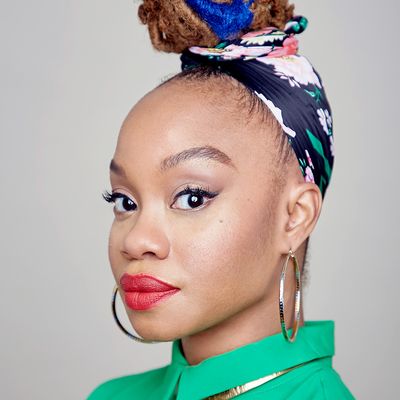
A renowned choreographer, director, and educator, Camille A. Brown gives us a rundown of her artistic journey and the challenges and triumphs she faced in the world of dance and theatre. She looks back on her early experiences and influences, particularly her introduction to dance through her mother... Read More
From the show: The Theatre Podcast with Alan Seales
Guests
Featured Shows
About
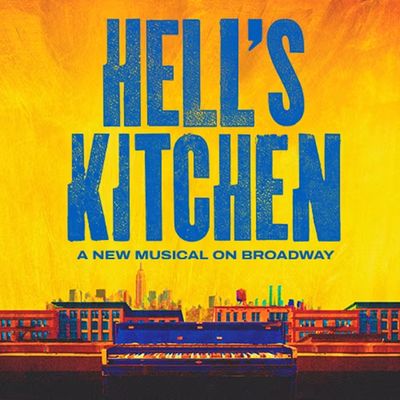
A renowned choreographer, director, and educator, Camille A. Brown gives us a rundown of her artistic journey and the challenges and triumphs she faced in the world of dance and theatre. She looks back on her early experiences and influences, particularly her introduction to dance through her mother. From concert dance to musical theatre, she reveals how she got the courage to pursue her passion despite facing skepticism and stereotypes as a black female choreographer in a field dominated by males, including reaching out to mentors like Diane McIntyre and Marlee Ciorri for guidance. Camille’s Broadway directorial debut with “for colored girls who have considered suicide / when the rainbow Is enuf” was a success, earning her Tony nominations for Best Direction and Best Choreography. She shares her emotional journey working on a beloved work and the value of staying true to your artistic vision. Her latest project, "Hell's Kitchen: The Musical" opens up new challenges and opportunities for Camille, such as her approach to the choreography and working with Alicia Keys' music. With her continuous success, she imparts simple but valuable advice to aspiring artists: to believe in the possibility of all things.
Camille A. Brown is a widely acclaimed choreographer, director, educator, and storyteller. She has a total of 62 award honors to her credit so far, including three Tony Award nominations. Her 2016 TED-Ed talk, “Camille A. Brown: A Visual History of Social Dance in 25 Moves” was chosen as one of the most notable talks of the year by TED curator Chris Anderson. Her Broadway credits include “A Streetcar Named Desire”, “Once On This Island”, “Choir Boy”, “for colored girls who have considered suicide / when the rainbow is enuf”, and now, the upcoming production of “Hell's Kitchen: The Musical”.
Connect with Camille:
- Website: www.camilleabrown.org
- Instagram: @camilleabrown
- Facebook: @camilleabrownanddancers
Connect with The Theatre Podcast:
- Support the podcast on Patreon: Patreon.com/TheTheatrePodcast
- YouTube: YouTube.com/TheTheatrePodcast
- Threads, Twitter & Instagram: @theatre_podcast
- TikTok: @thetheatrepodcast
- Facebook.com/OfficialTheatrePodcast
- TheTheatrePodcast.com
- My personal Instagram: @alanseales
Transcript
This transcript was automatically generated and might contain errors.
[0:00] Camille A. Brown: Hi, my name is Camille A. Brown, and welcome to The Theatre Podcast with Alan Seales.
[0:11] Alan Seales: Well, hi there. Welcome back to The Theatre Podcast. I'm your host, Alan Seales, and these are intimate, personal conversations with the industry's biggest names. Our guest for this episode is Camille A. Brown, who's the choreographer for so many things, choreographer and director and teacher, most currently about to be the choreographer, well, is the choreographer for the Hell's Kitchen transfer to Broadway. The first preview is set for Thursday, March 28th, and opening night currently set for Saturday, April 20th. It's really interesting to hear Camille talk about what got her into dancing and ultimately sort of the push that she gave herself to get over this huge fear that was there about, I guess, instilled in her by people who told her that she wasn't good enough or didn't have a dancer's body or whatever that case was.
And then in one of the three closing questions I asked, it kind of came full circle because I asked her, of course, what motivates you? And one of the things she said was rejection, which is really interesting because she talks about so much rejection and so much that she had to overcome. And to get where she is now is amazing. And now I know why, because every time someone said no, she gave her the impetus to work that much harder, and that's really hard to do. So mad respect. Can't wait to share this convo with you. As always, find me online on all the socials, leave a rating and a review. And now, everybody, please enjoy this episode with Camille A. Brown. Our guest today is a widely acclaimed choreographer, director, educator, and storyteller.
She has a total of 62 award honors to her credit so far, including three Tony Award nominations. Her 2016 TED-ED Talk, A Visual History of Social Dance and 25 Moves, was chosen as one of the most notable talks of the year by TED curator Chris Anderson. That's the dude who is the head of TED Talks. Her Broadway credits include A Streetcar Named Desire, Once on this Island, Choir Boy, and For Colored Girls Who Have Considered Suicide When the Rainbow is Enough, and now the upcoming production of Hell's Kitchen. From TV, film, and Broadway, all the way to the Metropolitan Opera, her work pulsates with raw emotion, drawing inspiration from both ancestral traditions and contemporary experiences. Camille A. Brown, welcome to The Theatre Podcast.
[1:50] Camille A. Brown: Thank you. Thank you for that introduction. I never got a count of the awards.
[1:56] Alan Seales: Yeah, it took me about a day and a half. And I was just going down. Yeah, going down counting all the awards.
[2:03] Camille A. Brown: You've been busy. You grew up in New York, though. So tell me about your childhood, right? Because you were growing up in this area and performance and dance and everything was all over the place. But New York, I mean, New York is always evolving and changing. But what was your childhood like as it relates to the arts?
[2:24] Camille A. Brown: Yeah, I grew up Southeast Jamaica, Queens, New York, that's the full title. And my mom is a retired social worker. And my dad is a retired parole officer. And my mom loved both of my parents love to dance. And my dad on the side actually taught salsa dance classes and he played and he coached football, sorry, basketball. So it was a he had a very interesting life. And so did my mom, but my mom was really inspired by musical theater from the time she was a child. And she introduced me to musical theater. And she always said that she would watch how I lit up when something anything about dance was on TV. And at the time, the internet did not exist. When I was younger, we would go to the library and take out videos of like Seven Brides for Seven Brothers, The Wiz, a host, a chorus line, a host of videos, and I would just watch them over and over again. And I would learn the choreography. And I would also choreograph to the cartoons that I would watch. So like Ducktales.
[4:18] Alan Seales: Yeah, I mean, it was so embarrassing.
[4:23] Camille A. Brown: Yeah, that's not embarrassing. That is that's adorable. As a seven-year-old and a nine-year-old, I have two boys. And my nine-year-old now has started making up his own desktop drumming routine. Yeah, yeah. And I don't know where that came from. But I think it's absolutely adorable when he's not like making noises and shaking the house, hitting on everything he can. It's really cool to see this choreography that he and his friend have been doing. And then he comes home every day. He's like, Dad, look, we made a new bar, we added a new measure.
[5:00] Alan Seales: Yeah, that's amazing. And maybe a musician or choreographer, you know, something sounds like it's budding there.
[5:04] Camille A. Brown: Maybe. I think he just likes the rhythm. But I mean, so like you lit up your mom said you lit up when you were just watching this dance. I mean, do you remember when you were a child? I mean, even now, maybe it even translates now. But what was it about dance? Was it move? Was it just movement in general, or the music or kind of the combination of both the storytelling? Do you remember what drew you to it? What made you light up when you were a kid?
[5:30] Camille A. Brown: Yeah, it was a combination of both. Also, I have a small voice. And I had a small voice when I was younger, it was even higher than it is now. And I used to get teased a lot. So speaking in public and class participation wasn't really something that I liked doing. And I just found that moving my body was a safe space. And it was a way for me to really communicate how I was feeling when I didn't necessarily feel comfortable doing that using my voice.
[6:01] Alan Seales: Oh, that's interesting. You use your whole body because you were self-conscious about your voice. Where did you get teased about it when you were little?
[6:05] Camille A. Brown: Oh, my goodness, I did. They called me Camille Mouse.
[6:15] Alan Seales: Oh, yeah.
[6:19] Camille A. Brown: And I mean, it wasn't it wasn't me. And I think it was out of affection in some cases, some some cases, it was me. But I just got very self-conscious about it. And even now, you know, even when you mentioned the TED Talk, when I was asked to do the TED Talk, I was very hesitant about wanting to do it because I knew it was the biggest platform that I had at the time. And everybody would hear my voice. And I was so nervous about that. So it's something that has been with me for a while. And it started when I was teased, but it really brought me to movement and dance and choreography and what that means to have a voice in another way.
[6:48] Alan Seales: That is really beautiful. Actually, you found your voice in a way that made you very, very comfortable. And so you were choreographing cartoons and shows.
[7:00] Camille A. Brown: Yes.
[7:00] Alan Seales: Watching as I imagine, like very serious about it. What cartoons were you doing? Like He-Man, My Little Pony, Captain Planet?
[7:08] Camille A. Brown: I was DuckTales. I was Gummy Bears. I was She-Ra.
[7:16] Alan Seales: Yes. All the things I watched.
[7:24] Camille A. Brown: Yeah. Oh, Gummy Bears. I still love that theme song. I have a collection of theme songs. It's actually a guilty pleasure of mine is collecting. I went through a phase about 10 years ago where I was just trying to collect every 80s cartoon theme song I could find that, you know, brought me nostalgia.
[7:28] Alan Seales: Yeah. Tailspin, Darkwing Duck.
[7:38] Camille A. Brown: Yes. Yeah. Well, we came home from school at like three o'clock and there was like two hours of solid cartoons. It was DuckTales, Gummy Bears, Tailspin and Darkwing Duck.
[7:51] Alan Seales: Yeah. Yeah. Totally. So that was my era.
[7:56] Camille A. Brown: Yeah. Yeah. You and I enjoyed that at the same time. I love that stuff. OK, so you're choreographing cartoons, which is amazing. Probably not a lot of the same type of influences over those cartoons that what you are using now being about the cultural narrative of African-American identity and similar. So at what point, like as you're growing up, I guess twofold, twofold question. At what point are you saying to yourself, hey, this is what I really want to do with my life. This is my calling. And then once you figured that out, where did you find your style? Where did you find what really spoke to you in terms of what stories you wanted to tell?
[8:39] Camille A. Brown: Yeah, I mean, I went to Bernice Johnson Cultural Art Center, which was a school in Jamaica, Queens, New York, and it's no longer in existence. But the legacy of that school really travels to this day. I mean, there are reunions and everyone comes together and it's beautiful. And I went one of my teachers, Carolyn Devore, who is a teacher at Bernice Johnson, opened up her own school in 1991. And I was 11 at the time and went to her school. And I was always surrounded by ballet, tap, hip hop, jazz, African modern dance. Like I always had that world. And then if you apply my mom's influence and musical theater and how she knew, I mean, my mom is an archivist in terms of what she knows about musical theater and all of the greats.
And I just had to accommodate. I just held that with me forever. And I always knew I wanted to be a dancer. My mom put me in gymnastics and I played the clarinet for a while. But I did swimming too. But dance was really the thing that I loved. And I think it was something about definitely having that safe space. But when everything came together at the end of the year and we put on our costumes and our makeup and the lights and just the story, I was just in heaven. And it wasn't until I think when I went to LaGuardia High School and I went to the Ailey School, which was at the time a couple of blocks away from LaGuardia High School, that I saw the Ailey dancers. And I thought, wow, this is amazing.
You can do what you love and get paid for it and travel around the world. Wow. What is that? So I mean, because in school we were taught teacher, lawyer, doctor. Those were the things that we were conditioned to think were the spaces that you can have a career. It wasn't until I got to high school that I thought, wow. And I realized that our teachers in school, because I was so young at Bernice Johnson, actually were Ailey dancers and Deeply Rooted, which is also a wonderful dance company. They were a part of that. And at the time it was called Jubilation. I was just like, oh my goodness, this is a whole world that I want to be a part of and I need to be a part of. I just didn't know how. And LaGuardia, I feel like was a major first step because everything, you know, it's like the fame school.
And I would watch, I mean, it's I guess I'm saying all the embarrassing things I used to do. But every year before we started, I would watch the movie Fame to like get myself ready. So I went to LaGuardia and I went to Ailey at the same time. And the thing that started coming up was I loved dance. I loved being in the space. But this whole idea of the ideal body came into play. And I realized that I didn't have necessarily the ideal body that some of my teachers, not all of my teachers felt that I had.
[12:01] Alan Seales: So ideal body for dancing or dance.
[12:01] Camille A. Brown: Yeah. Yeah, I think a lot of people connect having the idea what the ideal body is to specifically ballet, but it's actually the world of dance that needs to have a conversation about what the ideal body is. So I struggled a lot. There were teachers that did look at my did look at me and support me and build me up like shout out to Brian Hawthorne and Carolyn DeVore and Roger C. Jeffrey and Penny Frank and Elisa King. I mean, I can go on and on. And then there were teachers that didn't look at me and just told me flat out, you just don't have the body for dance.
[12:27] Alan Seales: What is the body for dance?
[12:28] Camille A. Brown: Well, my answer 20, 30 years ago is very different from my answer now. My answer now is the ideal body is whatever you determine your ideal body is for you. But at the time, I guess it was within whatever the European aesthetic was. And I just didn't fit into that.
[12:48] Alan Seales: Was that like at the European standard? Was that a like a height and weight in like a pure measurement sort of judgment? Or was it literally just how you look like judging?
[12:55] Camille A. Brown: Yeah, just like plain old. If you are a dark-skinned person or light-skinned person or a big or a small person, like what aesthetic is European style? I actually don't know. It's but I mean, it's both. And it's one of those things that it's kind of, you know, when I go into spaces, and I feel like I'm treated differently. I don't know if it's because I'm a woman, if it's because I'm black, if it's because I'm a black woman, you never know. So when these spaces, they don't necessarily tell you what they're coming from, what their personal specific coming from, am I too dark? Am I too big for, you know, your standard of dance? They don't necessarily really tell you that they just kind of reject you and say, you're just you're just not what that is.
And like I said, you know, I just want to reiterate that I did have those dance that I did have those teachers that were completely on the opposite side of that, that were like you make dance what it's what you make it don't don't let other people tell you who you are, or who you're not even. And that really was tremendous.
[14:11] Camille A. Brown: And me continuing because you know you when you're and you have to realize like when I'm being told this stuff I'm also a teenager I'm still growing and developing and that's the hard part about it is that kids are being told this and in the middle of their developmental stages they're being told you're not good enough so you know you have to make sure that you surround yourself with positive people that care about you as a person and care about you as a dancer just instilling you challenge you but instilling you good things so you can keep going and you can acknowledge the things that you need to work on but they don't define you and sometimes you can go in and really walk out of things believing that your weaknesses define you your weaknesses we all have weaknesses but we want to also acknowledge our strengths too and I had teachers that made me hold on to those strengths yes work on your weaknesses but don't ever forget the strengths that you have.
[15:10] Alan Seales: I love that and I think that's a wonderful segue to talk about the teaching side of what you do, the education side because you're hired like crazy to do TV and film and Broadway and we'll talk about Hell's Kitchen here soon and I want to talk go back to Choir Boy because that was a show I loved Choir Boy, yeah, and but you teach too. You have the Camille A. Brown and Dancers, is it an academy? Is it a school or a dance troupe? The CABD, what is that?
[15:33] Camille A. Brown: Yeah, it's my company. So Camille A. Brown and Dancers, I had my first show in 2006 at Joyce Soho, which is no longer in existence but the larger theater, the Joyce Theater is still very much alive and I put on my first show, I put on my second show in 2009 and then from there we got a review in 2006 that I didn't necessarily want to have a company. I was a dancer with Ronald K. Brown Evidence for five seasons and I loved the work, I loved the people I was dancing with. It was really a tremendous experience for me and one of the things that I saw that Ron went through was just that he wasn't just one thing, he was dancing, he was the choreographer. You know, we would arrive someplace, we would go to the hotel to check in, he would have to go to a meeting or an interview.
There was always things that he was doing and I was like wow that's a lot of stamina, he's putting in a lot of work. Also, I would watch the impact that his work had on the people in the audience. As a dancer, I was witnessing, I was having my own personal connection to the movement but I could really witness physically and emotionally the people that were inspired by his movement and I thought to myself oh my goodness I don't know if I can make anybody feel anything and at the time I was choreographing. I did tap into that aspect of me choreographing for cartoons back in college because I was still struggling with that whole thing of body issue and body type and my mom just told me like focus on something that makes you feel good. Part of it was creating my own dances and composition improv was something that I had never understood until I got to college.
[17:38] Alan Seales: Hang on everybody, we're just gonna take a quick break. All right, now we're back.
[17:43] Camille A. Brown: My first composition improv teacher, she was asking us to sit and think about what our creative movement and language was and I had never thought about that. I always thought that the teacher comes in, they show you what to do and you deliver it back and she was actually challenging us to sit and think about it. So I went and I got through college and I thought choreography was something that was going to help me through college and it did. And then maybe around, I graduated in 2001, a long time ago, and my friend Amy Page, who I went to school with, who is now my costume supervisor, she sent me a letter because at the time we didn't have internet and I was like non-existent. She sent me a letter for the Hubbard Street 2 competition and at the time Hubbard Street had a second company and they invited three choreographers to set work on the company and I put my senior solo together, I put my senior group work that I choreographed and I got it and I thought wow this is an amazing opportunity but I thought well I think I need to take an alias because all of the people that I've seen that have really been encouraged have been male choreographers and I didn't necessarily see that happening for female choreographers.
A lot of the people that I was taught to, you know, those are the people that you want to aspire to get in their companies, work with them, they were all men. The women were definitely present but there was not like that extra light on them and so I thought to take an alias like writers used to do, like female writers and...
[19:20] Alan Seales: Would you say like a pen name?
[19:25] Camille A. Brown: Yeah, and then I thought okay well that's writing, this is dance, they're gonna know who you are and I said okay well I just need to know right out the gate that I will have to work 100 times harder and that's just what it is and you have to be prepared for that. So I'm out and I decided to dance with the company because that's what I hadn't really landed on being a choreographer. I was still very much interested in being a dancer, danced with Evidence and then when I started getting these opportunities when I put on my first show that fear came back again of oh no I don't know if I can do this. I've seen the impact that Ron's work had, I don't know if I can make anybody feel anything and that was a hard space to get out of because I also did not want to be defined by my influences.
We all have our influences but I never wanted to lead with that. So I gave myself assignments while I was creating in the room and I said okay Camille sit down and don't get up unless something, unless you know that whatever is in your brain is coming from you, it's not influenced by anybody else, it's not somebody's other story that you kind of got in your head. And so, and there were some rehearsals that I never got up but I think it's important for, it was important for me to make sure that those influences did not define me so I worked a long time to really make sure that the voice that you see, hopefully you see, is me, is Camille and I can define it as such.
[21:00] Alan Seales: Well then realizing who you are, what voice you want to portray and saying all right this is Camille, this is my voice, stepping back, right? You're trying, there's some point when you're trying to fill the expectations placed upon you by those who think, who want you to be what they want you to be and at some point you have to say no, I'm going to do it my own way, I'm going to tell my own story and obviously in hindsight now it worked, it worked wonderfully, right? You're doing what you're doing and now you're leading the way and other people are trying to be like you. And at what point though did you step back and you were just like I can't do that anymore, I need to do me, I need to do this, like I need to find Camille.
[21:38] Camille A. Brown: I mean I've always tried to find myself and never wanted to be like other people in the sense of recreating what has already been done. So there was a point where I decided I've always loved musical theater like I said and my mom and I would always go to musical theater shows and it was my dream to choreograph on Broadway but I went the concert dance route. Concert dance is a completely different beast than musical theater and I said to myself okay in order for you to put all, I wanted to give musical theater a go but I needed to shift some things because at the time I was teaching, I was doing commissions for other companies and I was doing my company and I thought this is too much, I need to focus my energy on the things that I really want to do.
And at the time teaching and doing commissions for other companies were things that really I was thankful for the opportunities but they weren't really things that I wanted to actually continue doing. So I decided from here on out I'm going to focus on my company and focus on musical theater and that was around 2011. My friends and my family have always been very supportive of me doing musical theater and working on my company but there were people that when I told them I wanted to do musical theater it was basically like good luck with that, you know. I don't know if they saw it, I think sometimes when you don't see reflections of people it's hard for you to actually believe that it's possible.
And the thing about it again, when you see majority male choreographers in the field and successful and you are a black female choreographer, people may not believe that. People may just think you have a dream and that's as far as it's gonna go. And I did my own research and I decided to reach out to Diane McIntyre and Marlee Sierra, both who are black female director choreographers in their own right and have their own companies and also work in musical theater. And I reached out to both of them and I was just like tell me what you know, just help me, help me, I just really want to do this. And you have to shut out the noise and you have to really, my mom always taught me that you just give it a try, you know, let if the door shuts, the door shuts but at least you gave it a go.
And there were times where I was told automatically out the gate oh you're not going to get that, you're not going to get this grant, you're not going to, like immediately telling me and I actually got those things. Some things I didn't, some things I had to apply more than once but there were things that automatically because people didn't see it or people didn't know that to be a thing that they would automatically just tell me oh that's not, that just doesn't work or I was told going into musical theater was going to take away from my concert dance. It was actually going to work in the opposite direction and my work was actually going to get weaker.
[24:53] Alan Seales: Wow, and you just said screw you guys, I'm doing what I need to do, I'm doing what I feel, what feels good and you're still balancing all of that because I think I'm still balancing it, yes, because you got Hell's Kitchen coming up of course, yes, no music written by Alicia Keys, I mean holy cow, yes. And you work with the Metropolitan Opera, you've got your own dance company and I saw that you were doing some other things this month. You are constantly working and I am so impressed with the different buckets that you're drawing in, that you're drawing, I was gonna say inspiration but it's not inspiration, I guess you're filling all these different buckets and do you have a favorite or is it all just dance is dance and you just have to express it?
[25:40] Camille A. Brown: I don't have a favorite. I always go back to Homebase, which is my company because I am the director of that company and I am its leader and there's a lot of freedom there and I can get and I get to create the kind of culture that I want to see in the world and interact with my staff, interact with my dancers and musicians in a way that is helpful for me that hopefully makes everybody grow. But I love being in different mediums because it always challenges me and it causes me to shift. So opera works very differently from musical theater, which works very differently from concert dance and I'm constantly having to shape-shift throughout each one. It's never changing who I am, I'm always Camille when I step into these spaces but it's a challenge and I always want to be challenged and I want to grow.
Challenge is a challenge and growth are very scary but I feel that I never want to be in a comfortable place. If I'm doing a project and I'm comfortable, that's a bad sign. I want to be in a position to grow. You know when I did, when I directed For Colored Girls, I was so scared. It was probably the scariest I have felt in my entire life. I understood at that moment what it meant to physically be shaking out of fear of it.
[27:13] Alan Seales: No kidding. But it also put me in a position to grow.
[27:19] Camille A. Brown: Wow, wow, wow, that's cool. And I was actually going to bring that up next because that was your Broadway directorial debut with For Colored Girls, which got you a Tony nomination again, right? You're nominated for Best Direction and you're nominated for Best Choreography, two nominations for that show, yes?
[27:36] Camille A. Brown: Yes, yes, and the show got, in total, the show got seven Tony nominations and I was just, I mean, I tell everybody all the time, it's like y'all, I was just trying not to embarrass myself out in these streets. I was just trying to, you know, really and the hard part about doing that show in particular is because Anders Jack and Sean Gay's For Colored Girls is beloved. It's one of the most known plays on the entire earth and everybody that I know has a special connection to the show and what I had to do was get out of my own way. I had to stop thinking about wanting to not wanting to disappoint people or wanting to impress people. It had nothing to do with that, it had to do...
[28:22] Camille A. Brown: Welcome to the Broadway Podcast Network. I am your host, Camille A. Brown. I want to start by asking you to think about what is your contribution to this legacy that you are stepping into that you have the honor of being a part of. A friend of mine told me, I was telling them, I'm really nervous, I don't know if I can do this, and they said, this is just an offering. Just think of it as that. Nothing more. Just do what you feel. Just create what this work makes you feel like. And people may like it, people may not like it. But at least you can walk away knowing that whatever was in your brain, you were able to translate on that stage. And so for us to... I was repeating what you had said, create what the work makes you feel like.
Is that what you said? I hope so. I think so. Anyway, go ahead. To just go in there with that alone, base level, let me do what feels good to me. And let me take this full opportunity to let people know who I am as a person who has a vision. And a person who loves storytelling and loves choreography, and now this is my opportunity to show how I direct. And then I'm going to let people know who I am. And to be nominated for those Tony's and we got Drama League and Outer Critics and I was just so blown away and so thankful that it came from a place of really just wanting to do a good job for myself. Hang on everybody, we're just going to take a quick break.
[30:15] Camille A. Brown: All right, now we're back. And I think we've constantly talked about honoring our ancestors and how do we do that? And I think part of how we honor our ancestors is that we do it from a place of our truth. What is your truth when you step into this space? When you really take hold of this text, what is your truth to that? And I think that's how we honor ourselves. That's how we honor the legacy and that's how we honor our ancestors. We honor our ancestors in many ways. But that's just one of the ways. I love it. I love it. And I think it's important to remember history. To remember ancestors. To remember where we came from. And to educate. Educate tomorrow's future. Educate the youth so that we're not repeating the same mistakes.
We're not going through the same process and the same turmoil or the same struggles. Because if we have the fortunate ability to have written communication and stories and theater being one of the best ways to have people learn and to express stories. I love that it's sort of combined. You've found this wonderful way to combine everything into all of these pieces. Into all of these works. Because without realizing they're being educated people actually are. Everybody is a little bit better that way.
[32:37] Camille A. Brown: Yes. And I think people are educated in all ways. How you walk through the world. You're educating people on what to do or what not to do. I think we're constantly in the space where we're challenged. We're judged. I mean it's a hard space to be in because when you're creating art it's susceptible to people's opinions and judgments. And you have to really build yourself up to believe that in the most humble way I say this that believe that you can do it. Because someone always is going to have something to say. Whether it be positive or negative. But at the end of the day I feel like we have to place value on ourselves and our work before we allow other people to place value on it. Because sometimes we'll think oh let me run to the review and see what somebody says. But we all have our ways of processing. But I try to be in a space where I can do the work first before I entertain what other people's opinions are.
[33:50] Alan Seales: How do you get around criticism? Do you have any issues with that? Because some people don't even pay attention to it. They ignore it. It bounces right off them. And some people read it and it sits with them and it eats at them. And I'm the latter. I can't read anything without it sitting with me and eating at me. So are you one of those people who's just like one of those people who wants to know and changes because of it or wants to know and just doesn't care?
[34:20] Camille A. Brown: I think I change from time to time. I think from the what never changes is that I have to believe in the work before I even look at anything else. And I have to surround myself during the process with people whose feedback I appreciate and trust. So I surround myself with a community of people that I think I believe in. I trust their opinions. And I don't it doesn't necessarily mean that I agree all the time. But I'm constantly surrounding myself with thought partners. And I feel like and someone told me this and I never let it go. Don't read a review. Don't ask somebody what they think about it if you're not prepared to hear the answer. So I won't look at a review until I'm actually ready to see what it says.
[35:40] Alan Seales: And do you want it completely locked and finished before you want to see what that says? Or are you looking to see what it says because you're still looking to adjust?
[35:53] Camille A. Brown: No, I don't even focus on the reviews. I try not to focus on those while I'm in process. When I'm in process, I'm just trying to make the best work that I can that speaks to the people around me. And throughout that process, I'm asking people that I trust what they think about it, what they see. I'm really interested when I'm working with actors or singers and musicians how they're experiencing the work. That helps me with the process. I feel like conversation helps me with the process because if we all are on board with this, that makes you feel even better about the work. It feels unsafe to go and to be in the situation of criticism when you yourself as a community on the stage don't feel confident about what you're presenting.
So I think it's important before you get it out to anybody who has an opinion or anything, for us to feel good inside of the space about what we are doing. And once we get it out in the space and start putting it in front of people, then it's up to all of us to take the criticism, the feedback, the critical feedback, and take what people love too. And I'm interested by all of it, but I'm very specific about who I ask. I try not to ask everybody but then you're opening up the floodgates. I ask people who really are not going in and saying, well, I would do it like this. I don't ask people like that. I ask people that know me, know my process, know what I'm interested in gaining and creating and what kind of story I'm creating and I ask them.
It's a dangerous slope, a slippery slope to ask everybody because everybody's got an opinion. Everybody thinks they can do it better until they're actually held to the, put their feet to the flames, whatever that phrase is. All of a sudden they realize they can't do it better.
[36:56] Alan Seales: Real quick, I just want to plug Hell's Kitchen, the musical. That's set to open very soon. How are you approaching Hell's Kitchen differently from your last projects? Is every project approached uniquely or are you trying to learn and build from last projects or kind of both?
[37:16] Camille A. Brown: Yeah, I think it's both. Every project is different. I feel like every project tells you how it moves, how it shapes. The people, the cast is really important too. That determines how things move and shape. With Hell's Kitchen we have the honor of working with Alicia Keys' music. I'm originally from New York City, as she is, so I immediately had a connection with her work and I've always been a fan. To be inside of the work in this way, most times I'm listening to it on the radio. Now I get to step into space and create movement through the music that I've heard for decades and that everybody knows. Also, she wrote four new songs for the show, so it's also exciting to live inside of those works too and to pull out what my voice is inside of her voice. It's really been great. Each project, I think, is different for that reason. The people are different, the people in the room, it just allows for you to not be the same as you are, but be a living organism too.
[38:29] Alan Seales: Do you choreograph based on the person as you're creating something right now? In the case of musicals, literally the singers, people sing differently. Brandon Victor Dixon and Shoshana Bean, they're both in it and very well-known and very talented. The whole cast is amazing. When you're coming up with the choreography and trying to tell the story through movement, are you also shaping it based on who the singers are, who the performers are?
[39:01] Camille A. Brown: Yeah. I tell people all the time, and I try to reiterate this when I'm in every room, is that my work, I don't think it comes alive without people's creative identity. Who you are as a person. I love choice-making in a room. I love choices. If I give you one step, I'm interested in seeing five different choices. Then through our process, we land on what choice works best for that moment and that beat. It's really important that I am really aware of who's in the room because that determines how the space moves and how the space goes. We have eight dancers in the room and they were really inspirational in creating the kind of movement, the way they move. Yes, there are specific social dances that are connected to the time period of the 90s, the time period that Hell's Kitchen takes place, but it's the way we're moving through these social dances. It's the way that I'm applying my creative movement onto their bodies that I think really creates differences between one work from the other.
[40:38] Alan Seales: Laughing is something I've never had a talent for. I'm in so much awe and respect for you and everything you've created. To direct on top of it and do all the other... Teaching is a skill in and of itself. I just think it's beautiful. You're an amazing person. Full stop and to end. I want to wrap up with three questions I ask everyone to end the episodes. The first one, just very simply, is what motivates you.
[41:06] Camille A. Brown: Motivates me. Rejection motivates me. Perseverance. Life's experiences.
[41:12] Alan Seales: That's very cool. What advice would you give to your younger self and younger people listening now, starting out down a similar path?
[41:20] Camille A. Brown: It depends on the day, because I think we all are living in real time, but today I would say just try your best to believe that all things are possible. It could feel like the complete opposite is happening, but try to see light, always.
[41:38] Alan Seales: Very fair. Last question. If you could only see one show for the rest of your life, but you can see it as many times as you want, what would you see?
[41:46] Camille A. Brown: One show? That's right. Hardest question. Oh no. Probably noise funk.
[41:52] Alan Seales: Well, for what it's worth, everyone on the podcast has these three questions, too, right? And a lot of times recently I've had the recent revival of Once on this Island.
[42:02] Camille A. Brown: Yeah?
[42:03] Alan Seales: That's cool. There you go. You're contributing to people's legacy and inspiration into theater and their favorite moments in life. They're cornerstones.
[42:12] Camille A. Brown: Oh, that's great. I love it. Can we connect with you and find you online? You play all the social media games?
[42:20] Camille A. Brown: Yes. Camille Brown. That's my handle for all things. That's my website. And yeah, just hit me up there.
[42:28] Alan Seales: All right. And you can get more of me and Threads, Instagram, TikTok, on Facebook. Leave a rating and a review wherever you're listening. Tell your friends. Thanks to Jukebox the Ghost for the intro and outro music. And Camille, thank you so much for this lovely conversation. It was so nice to meet you.
[42:46] Camille A. Brown: Thank you. Likewise. Nice meeting you, too.
© Broadway Podcast Network, All Rights Reserved