

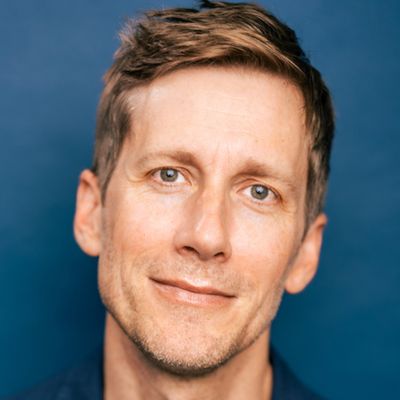
Andrew Samonsky believes that Jerry Garcia’s death (yes that Jerry Garcia) may have instigated his performance career in some way. From being a “deadhead” to becoming a Broadway actor, Andrew opens up about his years of following the Grateful Dead and dealing with drug problems that led him to go to rehab... Read More
From the show: The Theatre Podcast with Alan Seales
Guests
Featured Shows


About
Andrew Samonsky believes that Jerry Garcia’s death (yes that Jerry Garcia) may have instigated his performance career in some way. From being a “deadhead” to becoming a Broadway actor, Andrew opens up about his years of following the Grateful Dead and dealing with drug problems that led him to go to rehab. Lost and feeling helpless, he decided to pray to help find his path. He soon received a letter from his old voice teacher encouraging him to pursue a career in singing, and the rest is history. He looks back on his childhood, his love for singing despite being a shy kid, and how, ultimately, theatre and its community are what saved him during his troubled years. Currently playing as Tadeusz Lempicki in “Lempicka”, Andrew shares the story behind his cosmic connection to the show, which goes all the way back to 22 years ago and a random interaction with the Peace Corps. He discusses the challenges and joys of originating a role, the importance of trust and collaboration between actors and creative teams, and the feeling of gratitude for the opportunity to bring characters to life and how it can impact audiences.
Andrew Samonsky made his Broadway debut in the 2008 production of “South Pacific” and has additional Broadway credits, including “The Mystery of Edwin Drood”, and “Scandalous: The Life and Trials of Aimee Semple McPherson”. His TV credits include “Madam Secretary”, “It Could Be Worse”, and “Elementary”. He can now be seen as Tadeusz Lempicki in the Broadway production of “Lempicka”.
Connect with Andrew:
- Instagram: @asamonsky
Connect with The Theatre Podcast:
- Support the podcast on Patreon: Patreon.com/TheTheatrePodcast
- YouTube: YouTube.com/TheTheatrePodcast
- Threads, Twitter & Instagram: @theatre_podcast
- TikTok: @thetheatrepodcast
- Facebook.com/OfficialTheatrePodcast
- TheTheatrePodcast.com
- My personal Instagram: @alanseales
Transcript
This transcript was automatically generated and might contain errors.
[0:00] Alan Seales: Hey there, this is Alan Seales, and you've reached an all-new episode of The Theatre Podcast. Our guest is Andrew Samonsky, who I still cannot thank enough for being so open and vulnerable with me, a basically complete stranger right off the bat as we dove into the episode and the conversation. He's obviously just a very transparent guy, and I believe most likely that has helped him land in a successful career on the stage. Speaking of which, he's currently starring alongside Eden Espinoza in the all-new production of Lempicka, which just opened on Broadway. But a heads up, we recorded this episode a while ago right as they had begun rehearsals, so at a point or two he does refer to opening on Broadway as not yet happened.
So like you do, find me on the socials and connect with the podcast, share it with a friend, and everyone now, please enjoy this episode with Andrew Samonsky. Today's guest made his Broadway debut in the 2008 production of South Pacific and has additional Broadway credits including The Mystery of Edwin Drood and Scandalous. TV credits include Madam Secretary, It Could Be Worse, and Elementary. He's a Disney nerd, a baseball nerd, a high school musical, the musical, the series nerd, and former Grateful Dead fanatic. And now he can soon be seen in the upcoming Broadway production of Lempicka. Andrew Samonsky, welcome to the Theatre Podcast.
[1:27] Andrew Samonsky: Wow, you have done your research, my friend. Oh, wow. I forgot some of those things about myself. Thank you. It's wonderful to be here.
[1:36] Alan Seales: Well, where would you like to start? You want to just touch on being a Grateful Dead fanatic? Were you an actual roadie that followed them around more or less? Or groupie, not roadie?
[1:47] Andrew Samonsky: Yeah, deadhead, I think is the, you know, official term.
[1:50] Alan Seales: Yeah, sure. Let's start there. It, you know, I came, oddly, I came to them late. I went to about six shows. And soon after that, Jerry Garcia passed away. So it was a very brief deadhead career, probably for the best, because it was not healthy for my state of being. But, but yeah, it, I mean, the crazy story is, I mean, if we want to go in deep right from the beginning, I was 19. I was 19. I was following the Grateful Dead. And probably not a surprise, I had a healthy drug problem during that time. And I went to rehab with the support of my parents. And in rehab, I was, I was in, you know, these group therapy sessions. And I didn't know why I was there. And they kept wanting me to share. And finally, I was like, fine.
Here's what I want to say. I feel like I can either follow my parents' wishes and become a doctor or a lawyer or something. Or I can follow the Grateful Dead. And it just was so black and white to me, my life at that time. And the therapist pulled me aside after the session and said, Andrew, I just want to tell you that your life isn't going to be either of those two paths. It's going to be something that you find for yourself in the middle. And the concept blew my mind, like that there was another path. And so, I went back to my little room at the rehab that night. And, you know, it was like a 12-step based program, spiritual program, higher power. And I did not have any type of higher power spirituality in my life at the time.
But I thought, you know, I'm going to pray tonight. And so, I said a little prayer. I said, God, show me my path. And that was it. And I went to bed. And the next morning, swear to God, I wake up. And one of the people who worked there, ex-deadhead, came into my room with a very serious look on his face and said, did you hear the news? And I said, no, what? Jerry Garcia just died this morning. And it was like, oh, the whole path was just, one of them was just gone. And the addendum to that story is while I was in rehab after that, my old voice teacher sent me a beautiful letter saying, I wouldn't recommend this to anyone, but I think you might have what it takes to have a career as a singer.
And that's what started my path. And so, she helped me get into Cal State Northridge in their classical singing program. And the rest is, you know, as they say, history. That's where it kind of started for me.
[4:43] Alan Seales: Wow.
[4:45] Andrew Samonsky: So, the death of Jerry Garcia kind of instigated my performance career in a way.
[4:51] Alan Seales: Wow. I brought that up as sort of like a lighthearted icebreaker, but man, that's like, that sets the stage for everything.
[4:58] Andrew Samonsky: Right? I know. It's a wild story. It really is. Now, I don't think I killed Jerry Garcia by praying that night, but there was a weird coincidence. So.
[5:09] Alan Seales: Well, depending on who you talk to, there is no such thing as coincidence. But, you know, it's just you needed to be at the right place at the right time. And you got the message when you needed it, I guess, depending on, you know, your definition of spirituality. And it's funny that your voice teacher too was like, I'm teaching voice. Obviously, I have experience in singing. I'm a voice teacher. I wouldn't wish this on anybody except for you. But you can do it. You can do it. It's cool. It's cool.
[5:35] Andrew Samonsky: But it's true. It's like, it's so hard. I mean, you know, how do you know that's, you know, you know, what they say, you know, don't go into show business unless there's nothing else you could possibly do, you know? So, yeah, it's tough.
[5:52] Alan Seales: Well, that was something that somebody had told to me once, like, if you can see yourself doing anything else, do that. Do whatever else you can see. Because it's so hard. It's just so hard. And it's so hard. It's just so hard. And so, we'll get into the modern career and the success you're having now. But I want to rewind back again, because I was reading, right, you were born on a Navy Sea Base in California. Is that right? A Navy Seabee.
[6:25] Andrew Samonsky: I am so impressed. This is really, this is something. I mean, yes, yes. You're right. You're right. I mean, you just, you're going to be right about everything about my life. It's amazing. I was born, my dad is a Vietnam veteran. You know, I grew up in Ventura in California, north of LA. And close by in what's called Port Hueneme is a Navy Seabee Base. And, you know, my parents would go down there, do their shopping. And, you know, there are a lot of kind of free perks on the base, if you're a veteran or active military. And so, they would use the medical facility there. And that's where I was born. You know, fast forward 30 years later, I'm making my Broadway debut as a Seabee in South Pacific. So, another crazy story. There you go. You know.
[7:19] Alan Seales: That's cool. I mean, it feels like everything that you've embraced in life has just basically been a callback to something that's happened to you previously.
[7:28] Andrew Samonsky: So, it's exciting to see that kind of unfold. But, like, born in, so, born on the base in California. So, then when you were a kid, were you still performing? Or when did you start performing? Was it singing, dancing, acting, just being a ham? For me, it was just like, I just wanted the attention.
[7:45] Andrew Samonsky: Yeah, I have the completely opposite story. I was a very shy child and had no interest in bringing attention to myself. A quiet kid. My parents once went to, like, an elementary school. They went to, like, the parent-teacher meeting. And the teacher, my parents came in for the meeting and sat down and said, oh, our son is Andrew Szymanski. And she said, who? Because I was that kind of quiet of a kid in class. She had no recollection that I was even in her class. But for whatever reason, I mean, here's the story. I did like to sing and I loved music, but I never wanted to perform in front of anyone. In third grade, I had a short solo in our elementary school show. I got stage fright. I forgot the lyrics.
I had a total meltdown on stage. You would think I would never want to do that again. And yet, in fifth grade, for whatever reason, I auditioned for our school show of George Washington and got the part of George Washington. And I came home that day and I said, oh, mom, I auditioned for the school show. And my mom was like, knowing me, was like, oh, that's nice, honey. And I was like, and I got a part. She probably thought like, what, like some kid in the background? And I said, no, but part of George Washington. And she was floored. I don't have any conscious memory of I want to do this thing. I love to do this thing. But clearly, there was something about performing that allowed me to be or reveal more than I could in the real world.
I don't know. I don't have a thought about how that manifested consciously, but clearly, it happened. And I would sing in church, my mom's church shows and stuff like that. But I was a jock. I mean, I played soccer and baseball and was a very good soccer player in high school. And that's what I did moving up to high school. And it wasn't until I played some volleyball and I got a serious back injury that prevented me from playing sports that year that my mom suggested I try out for the school musical. Once again, not an outgoing person, but I auditioned. And once again, I got the lead. It was a celebration by the same guys who did the Fantastics, which is kind of like a, which is basically the Fantastics on acid. It's a very weird show. Good, good, okay.
[10:43] Andrew Samonsky: Yeah, yeah. And I got the kind of the lead kind of El Gayo part of the narrator. And, you know, I then started taking some drama classes in high school, which I really enjoyed. And that started like, oh, I really, I do enjoy this. This is fun. Again, no thought in the world that I would do it as a career. But then cue to a year after my first year in college, where I was the deadhead kind of going nowhere, you know, nursing a very healthy drug habit and where things really changed in rehab. So, yeah.
[11:25] Andrew Samonsky: To drugs for a second, uh, what was being solved for you through that outlet, right? Because there's a lot of, there's a lot of reasons people will use, and depending on what they're using and how often, right? They're trying to soothe, they're trying to cope, or they're trying to whatever. Do you remember at that time sort of what, uh, what purpose it was, it was giving you? You know, you were, you were hitting on something that I'm not sure I've ever totally made the connection that I think I'm making now. But yes, like I said, I was a very shy, I would say, fearful child for no reason, really. My parents are, were wonderful. They loved me so much. They do anything for me. They never pushed me really to do anything or be anything.
My dad's very outgoing. And he just kind of accepted that his child was not like him. And I mean, he certainly would embarrass me at times and stuff, but by his behavior, but, but, um, that's what they're supposed to do. Yeah. But they loved me so much. And, and so when I found alcohol, and then other drugs, it was, it was this relief. I suddenly felt a part of this world. I was always on the outside looking in. I say sometimes, you know, the Truman Show, before the Truman Show, I had these kind of Truman Show ideas about myself, that I was this kind of experiment that, that some aliens were like looking down on. I would even, even have this thought that I would get in the car, and all the windows on the car were actually like screens that just looked like I was going somewhere, but they were changing all the scenery outside the car, and I would just get outside.
And it looked different, but I was in the same place. I mean, very self-centered, um, kind of self-absorbed thinking. But yeah, that's, for some reason, that was my kind of chemistry or psychology growing up. And the drugs and alcohol, just all of that vanished. And I could go into the party, or I could go into a social situation, or just sit there and feel like, ah, I'm okay. I'm comfortable. I'm a part of, I'm connected to this thing instead of disconnected. And so, it was a lifesaver when I found it. I mean, you know, and quite quickly, it started, you know, having its problems, but it was, it was kind of a miracle cure for me at first. And the connection I'm making is that after I got sober, I was suddenly kind of, I had to kind of relive all of that discomfort again.
Like, I didn't have those substances to comfort myself anymore, or feel a part of anymore. And I was kind of like a live wire for the first few years after I got sober. And theater is really what saved me then. That community, that ability to kind of be yourself, explore parts of yourself, explore your discomfort, connect through the storytelling of your challenges, struggles, fears, hopes, dreams, you know, all these, you know, grand themes that we explore in the theater. It allowed me to explore myself and feel connected to humanity through those stories and performing. So, it really, I don't think I've ever saw it as the new drug for me. It was much healthier than that. It was a real therapy for me. And I think a lot of performers probably feel that way. But it really saved my life in a lot of ways. If I had gone into engineering or something, I don't know what kind of a person I'd be today. So.
[15:26] Alan Seales: Yeah. I mean, you gave me the answer that I was 100% expecting.
[15:35] Andrew Samonsky: Yeah. I'm so predictable.
[15:38] Alan Seales: No, I mean, it's speaking for myself too. And it's ironic because when I was in high school, especially, this was really prevalent in high school. I would imagine that there were other people, other aliens, or there was another something seeing what I saw through my eyes, right? I was performing for some unknown entity. That's how I lived most of my high school life. And I don't actually remember when that stopped, but I 100% can relate with you. Thinking that, you know, you're in the Truman Show sort of thing. Like, that's what I just assumed I was doing at some point. So.
[16:18] Andrew Samonsky: Yeah.
[16:19] Alan Seales: Yeah. I guess, yeah, theater for me, I don't know. I don't know what that is. That's... I actually, I was just Googling real quick while you're talking. I was like, what is it called when you think you're being controlled by aliens? And schizophrenia was the first result, which obviously, we're not schizophrenic. But I don't know. I've heard other people also think that way. So, merry band of misfits we are.
[16:41] Andrew Samonsky: We'll just go with misfits.
[16:43] Alan Seales: Well, I mean, there's plenty of sci-fi novels and movies that explore all these ideas. So, clearly, we're not alone in these thoughts. And I think that's part, I mean, and so, theater, art, you know, storytelling gets to explore these, you know, human phenomena, and it allows us to not feel so crazy, you know? So, oh, oh, oh, everyone.
[17:07] Andrew Samonsky: Yeah.
[17:08] Alan Seales: Or most people feel this way. Oh, thank goodness. I'm not alone. I just think that might be the most powerful thing we can give someone or give ourselves is the idea that we are not alone with our own thoughts and feelings. Because once we feel that those walls coming in ourselves, you can kind of get into a spiral of hopelessness and despair that can be very dangerous. And you know, arts and theater can really save us from that.
[17:42] Alan Seales: So, time for a quick commercial break. Hang on a second.
[17:47] Alan Seales: Welcome back to the episode. All right. Well, shifting over to Lempicka, you've been in it since the workshop. And I'm so curious to know how this all got, how you all got connected in the first place and where it started. But what was this? You have a, again, sort of the spiritual, um, cosmic connection with this show because of your Peace Corps pen pal best friend from about 22 years ago. What is that story?
[18:06] Andrew Samonsky: Okay. Yes. My best friend from college, a wonderful man named Barton Bryan, after college went into the Peace Corps and went to Mauritania, Africa, which is West Africa, and was there for two years. And we were pen pals, kept in touch. We're both kind of adventurous spirits. Him clearly more adventurous than I was. I did not go into the Peace Corps. But at one point I said, Hey, bud, how about I come and visit you? And so I actually did go over there and visit him for a couple of weeks, which was a very eye-opening experience. But while we were pen pals, he writes me about this other Peace Corps volunteer in Mauritania saying, Hey, Andrew, because I was in grad school for acting at the time.
And he says, Andrew, man, you got to keep your eye out for this guy, Matt Gould. He is a Peace Corps volunteer here and he writes musicals and they're great. So, you know, keep your eye out. And I was like, and I read this and I, like, rolled my eyes. I was like, yeah, sure, Bart. I'll keep my eye out for the Peace Corps volunteer in Africa writing musicals, you know. And so I get this offer to go to Williamstown. Amazingly, I didn't have to audition. I think I filled in for someone at the last minute. And I listened to about 30 seconds of the demo and I was like, oh, I got to do this. This music's incredible. And first day of rehearsal, Williamstown, I go right up to our composer, Matt Gould, and I say, Hey, Matt, my best friend from college is Barton Bryan.
And his jaw just was on the floor. Yeah, it's been this cosmic, again, cosmic connection. I need to plant more of these things. I just need to start saying things and then they'll come true like 20 years later, because this does seem to be a theme of this podcast today. And luckily, I think from the first read through, I mean, from their words, not mine, they told me, like, from the first read through that day, they were like, oh, we found our Tadeusz. And Tadeusz is the name of my character, who is the husband of Lempicka, played by Eden Espinosa. And I've been with the show ever since. That was 2018. You know, did a bunch of readings since then and did La Jolla. And Matt and I had this, yeah, connection that has only grown.
He is just a beautiful human. Obviously, anyone I think who goes into the Peace Corps is probably a special person. And he certainly is and has a huge heart. So I'm a huge fan of him just personally, and he writes some exquisite music. I cannot wait for people to hear this stuff. He is really a tremendous talent that I'm so glad the world is getting to finally see.
[21:13] Alan Seales: Well, I enjoy the concept behind Lempicka is, and there's nothing against jukebox musicals. They all have their place. But I love that Lempicka is an original story. That's not an adaptation of a book or a movie, right? But Lempicka was a real person. Tamara de Lempicka was a Polish refugee who, if I'm getting my facts right, she's been credited with basically popularizing and mastering Art Deco, right? This now very popular artistic style, portrait style.
[22:00] Andrew Samonsky: Yeah. I don't know. Well, that's the funny thing is I don't think she has been given the credit for mastering and popularizing that art style. So hopefully this show gives her more credit. I mean, at the time, obviously, she was very renowned and was kind of a portrait painter to the stars. I like to say she has this very kind of Les Misérables life. Her life spans the Bolshevik Revolution, two world wars, and the art scene in Paris, thriving, famous art scene back then. So there's a lot of history.
[22:51] Andrew Samonsky: In her life beyond art, as well as art, you learn a lot about history and humanity, and most importantly about her and the obstacles, struggles that she just kind of barreled through to find her place in the world and make art that she believed in. So it's really a fascinating story about her.
[23:18] Andrew Samonsky: The whole time there was a lot of political revolution too, because even today your character was married to Lempicka for a time. And what's the significance of your character? Because I was trying to find more about this, and all I got was a significant figure in Polish history, an advocate for social justice and workers' rights, and played a key role in the struggle for Polish independence. What more to it did Tadeusz bring into this world of Lempicka's? In our story, which our writer, I think, has researched very well, but he started out as a Polish aristocrat living in St. Petersburg, and he was kind of the catch of the town. Lempicka, very ambitious, landed him, and she probably shouldn't have, because she was not from as good of a family.
But he was taken with her, and soon after that, the Bolshevik Revolution happened, and so all the aristocrats were kicked out of Russia, obviously, and they escaped to Paris and were destitute. And I think he was very bitter about that part of history and his life and his lineage, and so she kind of had to take the reins for a while, which is why she started painting, making money through her painting to support the family. But they were connected, you know, in my view, they were connected through this as family, kind of through this trauma as refugees. I mean, there's actually a lot more to it that you'll learn in the story about how she got him out of prison. She basically rescued him from prison and then escaped to Paris.
So, they had, I think, one of those bonds born out of trauma and challenge and obstacle. And then they had this daughter that they raised in Paris. So, you know, not a spoiler, but, you know, it was a complicated marriage. She took lovers often with their subjects, and, you know, he probably did the same on the side. And eventually, I think, those challenges became too much, and he moved back to Poland and married again. But they clearly had a bond. I mean, I've met the granddaughter and great-granddaughter of Lempicka, and the great-granddaughter told me that Lempicka had always said that Tadeusz was the love of her life. There was clearly a strong bond between the two of them, but circumstances were clearly so challenging that it's not always meant to be a lifelong commitment, perhaps. But clearly, they went through a lot together. Well, I think if you're going through any sort of revolution, yeah, you're going to be bonded with those people that you're going through.
[26:44] Andrew Samonsky: Again, it's interesting kind of tying this back to, I guess, her need to paint, her need to express herself, her need to be in the arts, to what we were talking about with you in the very beginning, is there's probably a need to feel seen, because as a woman in a very male-dominated field back, especially back then, being seen, being made to, like she needed to feel independent, she needed to feel like she was making a difference, right? And I'm so excited. I haven't seen any incarnation of Lempicka yet. I'm so excited to see this because I've heard such amazing things about this, and knowing, I mean, Rachel Chavkin directing it, knowing how she puts women forward in her productions to be strong and independent and very, very, appropriately so, right?
She chooses these projects that are going to showcase this sort of thing. I am so excited to see how Lempicka hits the stage on Broadway with the creative team that's behind it now, and then the cast that's in it with you and Eden and everybody else. It's Beth Leavel, come on. I mean, you can't beat this. This is going to be, yeah, it's going to be incredible. Have you seen the incarnations from the workshop to all the different various productions and what you're doing now? How has it evolved now? What would you say is probably one of the biggest things that's been improved upon now that we're going to see on Broadway versus how it started?
[28:05] Andrew Samonsky: Yeah, I would say this. Our production in New Williamstown, I thought was really thrilling, and had a workshop and then did La Jolla, and some significant changes were made. The beginning, the opening of the show was very different. New songs throughout the show, basically similar structure, but a lot of changes. And there were some things that were exciting about La Jolla, and there were some things that I thought maybe we missed. And so in that year and a half since La Jolla, I truly feel is that we have kind of taken the best from Williamstown and the best from La Jolla and put it together to be, I think this is the best version of our show that we've had yet. And that's all credit to our writers and team.
But in my mind, I was like, yeah, yeah, yeah. I mean, I've agreed with everything I've seen them do. So it's been really thrilling just to kind of trust your team to be like, they're making the right decisions. It's nice to see them seeing the same things you do at times. And not that I'm always right either, but you're like, oh, they know what they're doing, and they really do. So that's not always the case. You know, with a musical, you can kind of, you know, diminishing returns. If a musical is around too long, you can start kind of losing grip of it, and it just kind of goes off the rails. But I truly believe that it has been the exact opposite in this case. It keeps getting stronger and stronger, and we're in a really exciting place with this version.
[29:58] Andrew Samonsky: I can't wait to see it. And there's nothing that Eden does that I have not liked. Like she just brings everything. Same with Beth.
[30:07] Andrew Samonsky: Yeah, Beth Leavel. I'm telling you, just get ready. This is the role of a lifetime for her. And she is the woman that is needed in this moment, for sure.
[30:19] Andrew Samonsky: Time for a quick commercial break. Hang on a second.
[30:24] Andrew Samonsky: Welcome back to the episode. Have you been enjoying the process of originating this role, of being, you know, being such a cornerstone of the story and being able to originate it from, you know, over all these years and incarnations? Or is that like extra pressure that you're like, oh, I'd just rather step into something that's established?
[30:44] Andrew Samonsky: You know, I kind of came into this business feeling like I was a very good mimic. Like I would see a performance and be like, oh, I could do it like that. Or so there is kind of a weird feeling when you don't have anything to go off of. It's just it's much more vulnerable to be like, well, I guess I'm just going to bring myself. And hopefully that's good enough. You know, luckily, I mean, I will say I don't know if I could have done that, you know, 10, 15, 20 years ago. I don't know if I had the self-confidence to share myself so completely in a production in this way. So I feel very empowered doing this role that the team has just made me feel so, you know, powerful and positive and, you know, like they clearly are happy and I'm still in the show.
So, you know, that's a win. But no, truly, I feel like they trust me. I trust them. And I can really just start exploring how this role fits on me. And that's a really, yeah, daunting, but fulfilling endeavor, for sure. Like nothing else that I've ever done. I don't think I have. Well, I guess I've originated some other musicals, you know, regionally and stuff, but at this magnitude. And a character, personally, that is so flawed and complicated that, you know, you're not doing you're not doing a, obviously not a caricature or just some, you know, standard leading man or lover or whatever. These are real people, literally, from history, and you have to give them all of the humanity that they deserve and that we experience. So that's what makes the character so special, the show so special. These are very flawed individuals that you hopefully are relating with and rooting for because you see yourself in all of them.
[33:08] Alan Seales: I love that. That's a really interesting answer. And, you know, not having saying 20 years ago, you might not have the confidence to do it. I just hope I hope you can look back and see the success you've had and how far you've come. And now just realizing for your own mental health, right, that once you open the show, everything after it will be people mimicking you. You've got that position now.
[33:31] Andrew Samonsky: Oh, don't say it. That's a really weird thing to hear.
[33:40] Alan Seales: I mean, not to get in your head, but you're doing it. You're doing what you wanted to do. And like, just, you know, be present, be in the moment. And you've been through every incarnation of this production. So you are this role. That's that's beautiful. So you're doing it right now.
[34:02] Andrew Samonsky: Well, that's very sweet of you to say. Every now and then I'll have to be like, Kate, Kate, just let's just take a minute. This is Alan breaking in from the editing room just real quick to give context. He's talking about Kate Reinders, his wife, who is also a rather successful.
[34:17] Andrew Samonsky: And because we're always like, we're trying to get the next job or like, are we ever going to work again? Or like, you know, wish I got that part or, you know, and there are just moments where you have to stop and go, okay, like, we're really doing this thing. Like we've, we've worked with our heroes, you know, it's, you know, we have, we think about the childhood dreams that came true for you, Kate, you just forget them. You forget the accomplishments, you only focus on what's next or what's not working. And so every now and then you got to take, everyone has to take those moments and just be like, I'm doing it. I'm living. I have a lot in my life, just the gratitude. But you know, yes, we're luckier than probably most in this business that we've been able to make a living.
And again, like, I make a list of the composers and actors and directors that I've worked with that I, as a teenager, I would have been like, whoa, are you kidding me? That's who I'm going to get to work with? It would have scared the, you know, SHIT out of me. So, yeah. Wow. Well, and all the Peace Corps volunteers you've gotten to work with, too. I mean, that's all kind of background, too. All right. All these actors, young actors and actors are just going to start meeting Peace Corps volunteers whenever they can. I'm going to go to the Peace Corps so I can be on Broadway one day. That's my plan. Exactly.
[36:01] Alan Seales: All right. So, three questions I ask everyone to wrap up the episodes. The very first one is just simply what motivates you?
[36:12] Andrew Samonsky: What motivates me? Well, that changes, I think, through the years. What's motivated me in the past or what motivates me now? What motivates you now to get up and pour your cup of coffee, put on your pants, maybe not in that order, go to rehearsal, bring joy to the world? Not that it's a hard answer. I'm just trying to think of what's the real answer. There's a lot of things that motivate me. I feel so blessed to be in a business, again, that tells stories that hopefully reveals our humanity, connects people, holds a mirror up to ourselves, the good and the bad. So, that feels important. I think it's important. As actors, we can often diminish ourselves. Especially when I lived in LA for a while, I was just like, what do you do?
I'm an actor. As if I'm some kind of not worth much. It's just such a terrible thing to do to ourselves. As my dad says, he's like, Andrew, what you do is what people, after they're done with their work, want to go do or see. We provide the real living of life. I think rightfully, most people probably don't maybe enjoy their jobs. After work is where they go find their joy. They go to the theater or whatever. We get to provide that place where people go to experience life. That's a huge responsibility and blessing that I have. I try to remember that. It's also just fun. For me, it's always first and foremost been about the music. Music was my first savior from the discomfort I felt as a child.
When I just get to go into a rehearsal room and listen to music and sing music and hear others sing or listen to the orchestrations, it's always brought joy to me. That's another reason that I feel so lucky to get to do what I do. I have a six-year-old boy at home. I want him to see the joy of what I do. We're not trying to make him an actor in any way, but man, does he love to reenact things. We watch an episode of The Mandalorian, and for the next two weeks, we're just, Daddy, okay, Daddy, Dad, you're The Mandalorian. I'm Grogu, and we're going to do this. I'm just like, okay. It's wonderful. It's like, oh, I don't want to rehearse. I don't want to while I'm home. I'm acting when I'm at home.
I'm acting when I'm at work, but it's wonderful. I see the joy that storytelling brings him and the way he gets to relate to it. He'll learn something about humanity. We just read the first Harry Potter book, and Harry Potter loses his parents. From the very beginning, he's an orphan. Luke was like, Daddy, it makes me sad that he doesn't have his parents. Through this story, he's getting to experience some of these realities of life, maybe in a safe way, in a beautiful way. That's what we're doing here. I just got to remind myself how important it is what we do. It's a long-winded answer, but yeah.
[40:14] Alan Seales: I love that. All right. Next question, then. What advice would you give to your younger self and younger people listening now starting out down a similar path?
[40:21] Andrew Samonsky: This is hard for me because I want to go back to myself and say, Andrew, you don't have to be so afraid. You don't have to be so hard on yourself. You're okay. Yet, it was all those things that happened to me that has brought me here. It's hard to wish at times anything different upon myself, but I see myself doing it through the parenting of my child. I want to save him from this discomfort, or at times, I want to teach him this discomfort because I feel it is important. That's where it gets confusing for me. Do I want to teach him this or not? It's the ongoing battle of what do I wish was different for my son that was for me? He's just so different on his own that I guess he's not shy the way I was, which is wonderful.
He speaks his mind, let me tell you. And he wears his emotions on his sleeve where I kept it all in. In that respect, I'm already just like, dude, just be yourself, man, and let me nurture that and help lift you to wherever it leads you. I would just say find you, whatever that means. It's an impossible question to ask yourself. What is my authentic self? I find that a wildly impossible question to answer sometimes. But if they're just keep exploring, don't be afraid of the discomfort, but find healthy ways through it. I think that would be it. Find the healthy ways through your discomfort instead of the destructive ways, which is what I unfortunately found for a little while and was lucky enough to find my way out of it.
[42:23] Alan Seales: All right. So, this is the last question here and the hardest one. If you could only see one show for the rest of your life, but you can see it as many times as you want, what would you see?
[42:34] Andrew Samonsky: Oh, my gosh. How do people answer this question?
[42:39] Alan Seales: Very similarly to how you're doing it right now.
[42:44] Andrew Samonsky: Well, okay. So, you got a lot to go with here. Do you just want to pick one that has kind of the most different elements to it so you can just like, oh, because I like, you know, something that's just kind of a lot of the same type of thing might get a little boring, something with a little more that's varied to kind of keep you interested or like, oh, I'm just going to listen to this part. I don't immediately comes to mind to me is just Les Mis. You know, it's got a little humor to it. It's obviously got a lot of different characters that you can go to. It's got some interesting history. It's got some beautiful relations. It's got love stories and stories of, you know, history. So, I feel like that's just a solid choice.
I feel like that's kind of like the practical choice. I've always said Sweeney Todd is my favorite musical, but that's pretty dark. And I'm not sure that I feel like I would just be living in a pretty dark space if that was the only musical I could see over and over. So, Les Mis is heavy too, but let's just go Les Mis. Okay, we'll go with Les Mis.
[44:03] Alan Seales: All right, where can we find you online? Do you play the social media game?
[44:10] Andrew Samonsky: Yeah, I try. I try. Instagram's probably the best place to find me. I'm at A Samonski. I have some distant relative that has the handle Samonski, and I've DMed this. They have like one post. They don't answer the DMs. I'm like, hey, you know. So, I had to go with A Samonski. That's my Instagram. That's probably the best place to find me. So, yeah.
[44:35] Alan Seales: And I followed you on threads earlier too. So, you're at least on threads. You've got one post on threads. See, I'm killing it. Nice to meet here. Nice to see you, whatever it is. That was right when threads opened. And then I ghosted everyone.
[44:53] Alan Seales: You can get more of me at thetheaterpodcast.com. I am on threads, Instagram, TikTok, and Facebook at theater underscore podcast. Leave a rating and review wherever you're listening. Turn to your friend next to you and be like, hey friend, I just listened to this awesome episode with Andrew Samonsky. You should check it out. Thanks to Jukebox the Ghost for the intro and outro music, and thanks most of all to you, Andrew, for a lovely, lovely conversation. Thank you for being so vulnerable so early on. I think it opened up for a lovely chat.
[45:17] Andrew Samonsky: Well, I'm telling you, this was an absolute pleasure to do and talk with you and connect with you. You've created something really lovely here. So, thank you for having me be part of it.
[45:31] Alan Seales: Oh, you're welcome.
© Broadway Podcast Network, All Rights Reserved