

For Tony Award winner Maryann Plunkett, she will always be a shy person. But thanks to theatre she's learned how to enter a room and own it... Read More
From the show: The Theatre Podcast with Alan Seales
Guests
Featured Shows
About
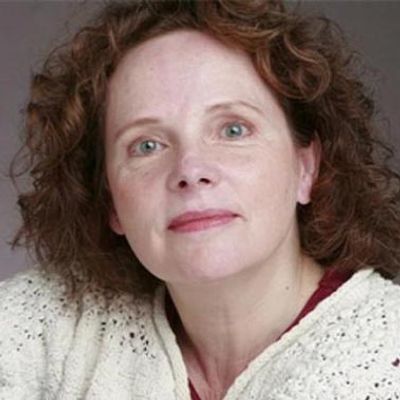
For Tony Award winner Maryann Plunkett, she will always be a shy person. But thanks to theatre she's learned how to enter a room and own it. Currently playing as Older Allie in the Broadway adaptation of "The Notebook," Maryann delves into her approach to embodying the character, the collaborative process with her co-stars and director, and the importance of observing her fellow actors to create a seamless portrayal of Allie across three different ages. With previous experiences on Broadway, she notes that her last starring role in a Broadway musical was in 1987. She reflects on her decision to return to musicals, and how she resonates with “The Notebook”, seeing her role as a way to honor her mother who lived with dementia and showcase the importance of entering the world of those affected rather than dismissing their experiences. Maryann gets more personal as she talks about her family, how she met her husband on an episode of a television show, and their first kiss… which was actually scripted and caught on film. Growing up shy, she opens up about overcoming her struggles through theatre, and “the power and strength in living one's life in a way that one can be proud of.”
Maryan Plunkett is a celebrated actress and singer who has captivated audiences on both Broadway and the screen for decades. Her career began on the prestigious stages of New York, most notably with her Broadway debut as Sister Agnes in “Agnes of God”, but it was her portrayal of Sally Smith in “Me and My Girl” that truly launched her into the spotlight and earned her a coveted Tony Award for Best Performance by an Actress in a Leading Role in a Musical in 1987. She has delivered powerful performances in plays, including but not limited to Arthur Miller's “The Crucible”, “Sunday in the Park with George”, replacing Bernadette Peters, “A Little Hotel on the Side”, “The Master Builder”, and “A Man for All Seasons”. She also spent 12 years doing Richard Nelson's “Rhinebeck Panorama”. Her TV and film credits include “Bull”, “Chicago Med”, “Little Women”, “Blue Valentine”, “Dr. Death”, and “Manifest”. She can now be seen as Older Allie in “The Notebook” on Broadway, which just nabbed her another Tony award nomination.
Connect with The Theatre Podcast:
- Support the podcast on Patreon: Patreon.com/TheTheatrePodcast
- YouTube: YouTube.com/TheTheatrePodcast
- Threads, Twitter & Instagram: @theatre_podcast
- TikTok: @thetheatrepodcast
- Facebook.com/OfficialTheatrePodcast
- TheTheatrePodcast.com
- My personal Instagram: @alanseales
Transcript
This transcript was automatically generated and might contain errors.
[0:00] Maryann Plunkett: Hi, I'm Maryann Plunkett, and you're listening to The Theatre Podcast with Alan Seales.
[0:12] Alan Seales: Hello again, faithful listener. You have climbed to the summit of Mount Podcast. And here at the top, we find ourselves listening to an all-new episode of The Theatre Podcast, featuring star of The Notebook and veteran of the stage and screen, Maryann Plunkett. Something cool we dove into was how as a kid, she was so incredibly shy that her seemingly only outlet at the time was allowing herself to feel comfortable playing someone else on the stage. Also, her love for The Notebook as a story, objectively, is one of the sincerest things I've ever heard. Being able to play a woman the same age as she is now in real life with the same health issues that her real-life mother had. And Maryann just brings it home in a beautiful way eight times a week.
But now you know what to do. Look me up on social media, tag me in your stories, leave a rating if you're listening now on Apple or Spotify. And everyone, please enjoy this episode with Maryann Plunkett. Our guest today is a celebrated actress and singer who has captivated audiences on both Broadway and the screen for decades. Her career began on the prestigious stages of New York, most notably with her Broadway debut as Sister Agnes in Agnes of God. But it was her portrayal of Sally Smith in Me and My Girl that truly launched her into the spotlight, earning her a coveted Tony Award for Best Leading Actress in a Musical in 1987. Her talents aren't confined to musicals, however. She has delivered powerful performances in plays, including but not limited to Arthur Miller's The Crucible, Sunday in the Park with George, replacing Bernadette Peters, by the way, A Little Hotel on the Side, The Master Builder, and A Man for All Seasons.
TV and film credits include Bull, Chicago Med, Little Women, Doctor Death, and Manifest. She can now be seen as Older Allie in The Notebook on Broadway, which just nabbed her a Tony Award nomination. Maryann Plunkett, welcome to the Theatre Podcast.
[1:59] Maryann Plunkett: Thank you. It's nice to be here. And then you go through the list of things and you go, and you have to end by saying she's playing Older Allie because you could go back far and it's like, she's no longer playing anyone young.
[2:10] Alan Seales: Yes, I'm Older Allie. Well, listen, oh gosh, I was going to say a reflection, a reflective nature that comes with getting older, I think, just by the nature of aging. And I'm 43. I have kids now that are eight and nine. And I still in my mind feel 25, if that makes sense, right? In my mind, I picture myself 25 until I look in the mirror and I know that I'm not 25 anymore. And that's one of the lyrics from our show, Older Noah. He starts the show by saying, I look in the mirror, I see an old man by my eyes, a young man's face.
[2:54] Maryann Plunkett: That's right.
[2:55] Alan Seales: Yeah. I'm 71 and we have a 30-year-old child. Our son is no longer eight or nine. And that's a kick when he just turned 30 March 1st. And as long as we could say he's in his 20s, he could be 20. He's 29. It's like in his 20s. Now we're going, he's in his 30s. And the next stop is 40. And where are we in that line? It's that journey. But I'm glad I'm still here. And a lot of people have not made it to this point. And we just keep going day to day and hope that there's more before we hit the horizon.
[3:41] Alan Seales: Well, I definitely want to touch on the, I mean, you're the same age as the character, Allie. Because Allie in the show is supposed to be 71. And I'm definitely going to come back to that. So what I was kind of leaning in here is that because you've been doing this for so long, literally like your husband is an actor and I was reading that your son is an actor and like your whole family's actors. But even you specifically, we'll get to the family part of it in a second too. But for you, for doing this for literal decades and decades, it's such a hard and unforgiving business. And so what has even kept you going through all of this? And I know it's kind of a cliche question to be like, oh, you've been doing this for a while. Why do you keep doing it? But there's a certain point when you're just like, it is who I am and I have to keep doing it. But I mean, tell me what has really kept you inspired to continue to push through the rejection?
[4:44] Maryann Plunkett: You know, I've been very fortunate for one thing. And each show you do, you form a community in the best of circumstances. And in the best of circumstances, it's a group of good people. I've been really lucky to, like The Notebook is a glorious group of people, the entire company, acting and non-acting, the creatives, the behind scenes, everyone. It's a great place to go to work every day. It's six days a week, you know, it's sort of, yeah, I enjoy coming into work every day and besides the play. But you know, one thing in your list of things you left out that I did spend 12 years also doing Richard Nelson's Rhinebeck Panorama. We started the public theater, there were 12 plays and with my husband.
And we did in New York and around the world, we traveled. So that community of being part of a world that is growing year to year and different plays, but about people, about just people living their lives. That was a great 12 years of my life that I was able to spend and working with my husband. There are some people who do not like to work with their spouses, I have been told. Jay and I love to work together. So that was a gift.
[6:11] Alan Seales: Wow. Yeah. Jay O. Sanders is your husband, a very successful actor in his own right. And your son, Jamie Sanders, like you said, just turned 30. It's a family of actors. And did you encourage, well, I guess, first off, when you met Jay, were you both already performing, were you doing a show? I love that if showmance turned into romance sort of thing, but then Jay too, did you encourage or discourage Jay to follow in your footsteps?
[6:39] Maryann Plunkett: We were in our mid 30s when we met. We had both had other relationships prior to it. And we met doing an episode of a television show in Washington, DC. It was a spinoff of Spencer for Hire called A Man Called Hawk. And we were playing ex-husband and wife, but I was pregnant by him. We had started to see each other again. And our first kiss is actually on film. So that's a funny story. And I wasn't interested in finding anyone at the moment. But I met him, it was sort of, uh-oh, I don't know. And we hit it off. And here we are 35 years later, still together, celebrated our 32nd anniversary, wedding anniversary.
[7:32] Alan Seales: Oh, congrats, congrats. The director's like, okay, guys, cut, cut, cut, cut, guys. We did have comments saying like, this isn't real. And it's sort of, oh, okay.
[7:48] Maryann Plunkett: Oh, that's amazing. Okay. And then five years later out pops Jay. All right. I see where this is going. And then with Jay, did you always encourage him to follow or was it just like, that's what mom and dad do. I'm going to do that too.
[8:03] Maryann Plunkett: There's no question. He always had many interests. And he's a beautiful writer. Really beautiful. And in college, he did slam, poem slams and poetry and received some awards for his writing. He had thought of majoring in, I mean, minoring in poetry. And then that's as unrealistic as minoring in theater. You go, no, that's a good choice to make some money if things are slow. And he actually majored in television and film production at Emerson College. He went to LaGuardia High School of Performing Arts here for theater and for college wanted to sort of open up more, which was great. He made films and wrote scripts and he learned a lot. It was a very good experience for him there.
[9:52] Alan Seales: Well, what about you as a child though? I was reading you were born in Lowell, Massachusetts, right? So what got you into performing yourself? Did you see that modeled for you anywhere by your family?
[10:05] Maryann Plunkett: No, my mom was a musician, but she was not a working musician by the time her five kids came along, five kids within nine years. Yeah. The first four came within five years and then there was a little break. So it was, yeah, it was a lot of kids. I think that desire that my dad too, he loved stories. He loved, we used to play a lot and I was an immensely shy little child in school. I couldn't raise my hand because I was too scared. My mom, I remember, took me to see the Red Shoes, you know, that show about the ballerina, the dancer up at what is now University of Massachusetts in Lowell. I was probably eight or nine and it was just my mom and me. It was just so amazing. We went up and we met some of the people.
They were standing in front of the stage. Little did my mom know, ah, damn, I shouldn't have done this now she's smitten. Oh, this exists? That's kind of great. It was a way for me, theater if you're shy is a great thing because you have a book and you can look in the book. If you're feeling super shy, you can be studying your book and you don't feel as awkward as standing. Like this, there's something and gradually you get to know people and you're part of a community. You're having to work on something together. You're having to build something together. I would recommend theater. If anyone has a painfully shy child, try to get involved in a theater group and they can do well.
[11:59] Alan Seales: Okay, on that real quick. My older son, actually, he is shy. He's got anticipatory anxiety. He kind of psychs himself out and he thinks of all the things that'll go wrong before he tries something and then just doesn't do it. He's shy with new people. My younger one, much like me, he's just a ham. I honestly, I'm not being facetious at all. I don't understand being shy because if someone's like, yeah, you go talk to someone. I'm like, okay, I'll just go talk and I'll comment and I'll be like, all right, you have black hair or you have brown hair. You can say something to anyone.
[12:43] Maryann Plunkett: Actually, this is a legitimate question. For being someone who is shy, are you afraid or do you remember what you were afraid of? Is it a fear at all? Is it an anxiety? I'm trying to understand more about what it is about theater that for you specifically kind of allowed you to settle into this. You mentioned with your son, anxiety. I think even without knowing, when I was little, I wasn't going, I'm anxious. I just knew that the act of raising my hand in class, even if I knew the answer, it was.
[12:20] Maryann Plunkett: So, you know, it's just so hard. My hand, it's like, raise your hand. And I could not raise my hand. And then, if I did raise my hand, and I was called on, and I would know the answer, and it would come out in a whisper, go, hey, hey. And then of course, everyone would laugh, because she's really dope, you know. And so then you feel foolish, which makes you then hesitant to raise your hand again. And walking into a crowd and a social gathering where everyone seems to be able to talk easily, and hearing your own voice, you know, talking to someone going, I sound so fake. Or I keep going, yep, yep, yep, that used to be my thing. I'd go, yep, yep. I'm thinking, you're a smart person. Why are you going, yep, yep?
And it was shyness of that breath, having the breath that says, well, I'm worthy of being here also, you know, as worthy as this person standing next to me. They don't have any secrets that make them more worthy to be in this room than I do. And that's like getting to know each other. I mean, I'm one of five children, my mom would always go, well, you know, with her siblings, you wouldn't know she's shy, because I'm right in the middle of the five. But it's when there are so many people, it's like other people seem to have the need to be talking more than I do at the moment. You know, or if you're not speaking, and people point out and go, oh, you're so quiet. And then if you blush, oh, look, that's so cute.
Your face is red. It's the worst thing you could possibly do to someone who is experiencing shyness and anxiety. It's sort of like, leave them alone. They will come in. It's like a deer outside your window. You don't run out and throw your arms around them. You go, or a baby, you don't look right at the baby, or a dog, you know, you let the animal come to you. You don't pounce on them. And I think that that's it, you know, and I will always be a shy person. But I've learned how to enter a room now, you know, that I don't have to, I don't have to do anything. I'll just be here. And if someone has a problem with me not talking, that's not my problem. That's their problem. If I'm enjoying myself, and I'll say something, if I have something to say, if they have a problem with that, then that's not me. You know, that's their difficulty, and I feel badly for that.
[15:04] Alan Seales: I was going to ask if, you know, how that's translated to being an adult now, and especially going into auditions, right? So, I think that seems like totally at odds internally, this massive struggle of being shy and not wanting to speak up and being afraid of new people and new situations. But that's literally how you get jobs in this business. I mean, how did you move past that?
[15:27] Maryann Plunkett: I think you prepare, you know, if you're going in for an audition, you know what you're going in for. And it's sort of, okay, I want to know. Again, it's that magic, you have the book, and I want to prepare this so I'm comfortable that I walk in that room, I can step into this character easily, as opposed to fumbling and apologizing or having no idea who the character is. You just sort of prepare yourself so that you can go, and I'm okay one-on-one also, or, you know, three people at a time. I was always okay with that. It's big groups where you feel something is expected of me, and I don't know how to fulfill it. So, but one-on-one, I always kind of liked.
[16:21] Alan Seales: Huh, that's interesting. That is really, really cool. Okay, so then, bringing, I guess, bringing your, well, people bring themselves, they bring who they are into an audition, into a character. And there's always a little bit, I think, of whether it's a bad guy or a good guy or whoever, you know, bad good person, whatever the spectrum is, there's always a little bit of the real person that is still sort of woven into all of this. So, if you're playing a character with lots of energy and lots of, you know, that is the social butterfly, I mean, is that as comfortable as playing someone who's on scene, in scenes with one-on-one or quiet scenes or like, does it matter what kind of role you play or who, I guess, and what kind of role are you more attracted to?
[17:08] Maryann Plunkett: I like any role, you know, a variety. I don't want to get trapped in any one role. I think, you know, the act of playing, that's what it is. When you're a kid, you're everything. You play every role. And playing someone who's out there, I mean, me and my girl, Sally, who's, you know, sweet and she's a cockney girl, but she comes in to prove that her love, Bill, should not be with her. So, she comes in like a pearly queen to this very fancy, you know, posh setting and barges into this red boa and, you know, cool, blah, and, you know, shaking herself. Once we did it, once I got it down, I had so much fun doing it. But in rehearsal, it was like sweating. And Mike Ockford, the director, I remember, and now everyone's on this stage, I do it again.
And I have to go behind the door and then throw the doors open and come in. He says, no, bigger, closer doors open, bigger. And it's sort of, it was everything. I felt like I was six years old again, of going, I can't breathe, dribbling sweat. And, but I eventually got it. And I was so mad at him, but very grateful also that he pulled it, you know, he made me do it. He believed in me, I guess, or he was about to fire me if I hadn't done it. You know, I'm not sure, but it was just sort of, I can't, I can't do it with everyone looking at me, because I'm failing horribly. And, but eventually, it's like you just go, you throw it out the window, and you do it so extremely, that he then goes, all right, I get your message.
Now do it again. And do it real this time. And then you've broken through, so you can come in as the character and do it. But it was a painful process for me to get to that point. But I loved that moment from then on.
[19:12] Alan Seales: So I think your son should get involved in some theater groups, kid theater groups.
[19:17] Maryann Plunkett: I've been thinking about that. And we're working right now on actual soccer, and soccer to him is performing. And that's why we're in, if it's just me and him, one-on-one, he's got, he's big for his age. He's got this rocket of a foot. He's really good. And then as soon as he gets the ball in a game, he passes it away as soon as he can. Because he's like, and I asked him, I said, why do you do that? He goes, oh, I know everyone's looking at me when I have the ball. I don't want to do that. I'm like, oh, okay, we're going to work on that. And so I bribe him. And I say, listen, if you can score, for everything, every time you score, I'll give you something. And then we've gotten now to, if you can score two goals in a game, then you can stay up as late as you want that night.
And that's been huge motivation for him. And he's just been rocking the ball. It's been great. And he's getting more and more comfortable because you get used to it. So that's my version of trying to be like, bigger, bigger, bigger.
[20:43] Maryann Plunkett: Yes, yes. No, it is about getting used to it and finding your place in the world, really. Rather than just being the good one, and you don't cause any trouble, you don't do anything, then maybe you do make a little noise now and now and again. And then my younger one, he's got the opposite problem. I'm like, stop making noise. You need to make room for others, my friend.
[20:55] Alan Seales: Time for a quick commercial break. Hang on a second. Welcome back to the episode. I'm going to go over and talk about The Notebook for a second, because just an amazing show. And obviously this adaptation, the stage adaptation of this iconic movie that's been around forever. Did you watch the movie originally? What was your experience with the subject matter?
[21:10] Maryann Plunkett: I don't know when it came out. Was it in the 90s? I'm not really even sure.
[21:22] Alan Seales: I think it must have been the 90s.
[21:28] Maryann Plunkett: June 25th, 2004.
[21:41] Maryann Plunkett: Oh, wow. That was 20 years ago. Well, I think my life was full at that point. I had a 10-year-old, and he was born in 1994, and working, doing lots of stuff at his school. Yeah, my life was very busy as raising a kid at that point. Also, I think we didn't go out to see a lot of movies. And then that period has passed, and there are other things to see. So I never really got a chance to see The Notebook. I know it's on streaming a lot and stuff, but just never got around to seeing it. But I think the adaptation that Becca has done changed the time frame, the location. Really, really smart. And the music, Ingrid's music, that is so enmeshed with the book. It's not, we interrupt the story for a song.
It's part of dialogue. It's part of conversation, is what I love it so much. I love the show. I love the company. Watching the youngers and the middles being out on the stage for virtually all of Act One, and Dorian and I get to absorb them. And it has never gotten tired. They just keep growing and finding new things. And it feeds us in our performances to watch them, and the rest of the company too, playing multiple roles that are so cleverly and smartly paired. The mother and the nurse, the head nurse, is sort of, what a brilliant combination that is. Andrea Burns. So it's really wonderful.
[23:31] Alan Seales: That's what I was going to ask, is if you and Dorian get tired of watching, because something that I have heard from multiple people in multiple groups of friends who have seen the show are always just like, when you go see The Notebook, watch Dorian and Marianne when they're upstage. They are so present and in the moment, every single scene. When the action is downstage, when we're supposed to not be watching you, we're still watching you because the two of you together are so in love and so magnetic. So it doesn't get old, just sitting there on the bed upstage or waiting for your lines, because there are times when you just sit so long.
[24:21] Maryann Plunkett: Yeah, but if you think about it, he's reading, do you know what I mean? So what we're seeing is then older Ali's vision of what he is reading. So it's a complicated sort of thing to walk. So he's telling the story for, because I say, you've read this story to me. Well,
[24:40] Maryann Plunkett: Once or twice, he's probably read it to her at least 10, 20 times that he just keeps reading this notebook over and over again, hoping that sometime something will click. And there are moments within the play where she goes, like I have where he's saying something to me and I have a, I call it, we do it, I call it my, I said, I think there are moments where it's like, there's like a little flash and then it's gone. But like, well, I, it would only last, it would go, I know you, but it's, but, but she's comfortable with him. And we get to read this story and we call it because we have like our own little play about how what the others are doing affects us. So, watching them, a certain word that I will turn to him of that, that means, what, why did they say that or I don't like that or this is too sad, you know, turn the page, tell me a different part of the story.
And it is such an incredible joy to have a scene partner who is as present and wanting to do that play as much, and you have to keep that balance of you have, you're present because we have to be ready for each time we come in. You can't just be sitting passively watching and then go, oh, I'm now, my scene, I'm doing it, we're part of the story as he's desperately trying to get me to understand. So, it's never, ever passive. I think if it was passive, it would be very hard to do. You'd go, okay, did they finish yet? Now, I'm doing my scene. It's not, we are as much a part of what, because they are us too. It's our story. He knows it's our story. I don't know it's our story, but it's a good story, you know, and I'm enjoying him telling it to me.
And certain things, every once in a while, that happens to me of, what was that? And he, of course, thinks, oh, does she remember? And then, no, she doesn't. And it's a dance, really. I think of the whole piece as music. Even though Ali doesn't sing until she finally is coming to the point of recognition, I feel like I'm singing through the whole show, actually. Because as they're singing, it's part of me. And I'm not singing, but it's informing me. And it's leading me forward into the next part. You know, he has read to me so many times, but this is that particular day or period of time, few days, when, what makes this different than any other day? And it's, she remembers him. Yeah, she remembers him.
Obviously, as we're watching the audience, his own health, you know, we're like, will she remember before his health fails? I mean, it's such this combination of hopefulness and nostalgia and longing. And for me, too, was kind of like a realization of my own mortality. Because older Ali and older Noah are my parents' age, and my dad has Parkinson's, and he's not doing well. And all of this kind of goes through your head of like, I can see myself in every single one of the pairs of characters. Because when you're young, you're invincible. When you're middle-aged, you're like, we were saying at the very beginning, Dorian's like, I look in the mirror, and that's when I realize I'm old. I don't feel old.
And then I look at my parents, literally, and I'm like, well, yeah, I'm becoming my mom a little bit. I'm becoming my dad a little bit, as much as I said I never would. It's just part of who you are and, you know, having parents like that. But I guess it's this perfect combination of this three generations, all on stage at once, all playing the same two characters. And doing it in such a unified way, even with the color-conscious casting, that none of that ultimately matters. Because we should be able to, literally, what I just said, we should be able to see each other in every single one of the six of you. Yeah. And, you know, Michael, I did my first workshop of The Notebook four years ago.
And Ryan was also in that, middle Noah. And I remember Michael, at that time, saying what his vision was. He didn't want a book, he didn't want matching pairs. He wanted it to be, you know, it's universal. It's something that anyone can see. There are thousands and thousands of Noahs and Allys who exist in the world. And we are not people who are curing cancer or, you know, writing the great American novel or going to the moon, whatever. There are people who live out their lives with tenacity, you know, with love. Some people would say it's a simple life. And some people who go, oh, well, schmaltzy, this is like, no, it's tough, you know. Life is not schmaltzy. If you live your life, it's not schmaltzy.
And I said there are things that you go, oh, it's a love story. Or there are things that you go, it's a love story. And I believe that Arbiter of Summer is a love story. It's about life. It's a life that takes to live your life with honor, you know, to live your life. Joy's gorgeous song, her anthem, My Days, close to the end, where she's at a crossroads, a young woman. She's no longer the girl. She's a young woman and having to make a choice. She can either marry Lon, who is a good man. It's not even, you know, simplified to the point of saying, oh, God, thank God she got away from that horrible monster. He's a good man. She could have had a good life. Or take the other path. She's at a crossroads.
And how will, at the end of my days, how will I look back on my days? Will I feel proud of how I have lived my life? Or will I think I took the easy path? And I just, I love this play. Just the concept of it, the execution of it, just I am so proud to be part of this and to be telling a story that, on surface, you could say is simple. But no one's life is simple, you know, with everything that goes with it. Just the act of growing old, if we're fortunate enough to grow old. It's not simple. But what you have to accept, what you have to, you know, to still love yourself, to love who you're with, that you look and you see time. I remember with Jay, looking at him, seeing his first gray hair on his chest.
And it was sort of, whoa, we're doing this. And then Jay can look at me and love me and find me beautiful. And we look at pictures of ourselves when we were young. It's like, oh, my God, we were so cute. But the beauty of life, of saying, did it, we're doing it. That's not simpy. It's like we're doing it. And it's like there is such power and strength in living one's life in a way that one can be proud of.
[32:33] Alan Seales: Well, I still think you are extremely beautiful. So just putting that out there.
[32:37] Maryann Plunkett: Well, thank you.
[32:39] Alan Seales: So the character is, I guess, you know, older Allie, older Noah, you and Dorian. I guess I would assume that the co-directors, Michael Greif and Shelley Williams, like all kind of did focus scene work with each of the couples, right, to get you guys comfortable together. But what did you all do, all eight of you do, the six of you as the couples and the two directors, to become sort of the same two characters moving through the three generations?
[33:08] Maryann Plunkett: You know, I know, I think we all and we continue to watch each other. You know, just I will watch a scene that I'm not in. Well, I watch all the scenes in Act One, certainly, and I'm able to grow from that. But I know that Jordan and Joy, I've seen them standing off stage, just watching. And we'll sometimes say, I saw a move where you did or I borrowed this from you. And it's not we're not imitating each other at all, because we are three, well, six completely different entities, counting the Noahs too. But it's about the essence, the spirit, trying to the continuation, the continuum of who Ali is, the spirit of the person. But like I once said to Jordan, I said, is there a way that you touch John as young Noah?
His face is there. And she told me in a specific in the song when they beautiful sadness and the joy. And she said when she does this. And so I try to do that at the end when I know it's Noah that I try to touch his face in that same way. Now, of course, the audience wouldn't go, oh, she's touching his face the same way as little Ali touched his face way back in Act One, because it's a subtle movement. But I believe that there's a synchronicity to it that the audience feels without. We don't want them to go, oh, they're imitating each other, but there's a peace in watching of how they are the same, you know, that without she touched it the same way, it's just it's until finding little more. We are all every one of us of the alleys at one point or another.
We do this, you know, stop. Excuse me if I pull away with the finger and the thumb out. Yeah. Wait, wait. Middle alley. When the mom starts seeing again, she goes, Mom, you know, and little Ali, I'm not that kind of a girl in the very first thing. I'm not that kind of a girl. And it's just, again, I hope the audience doesn't notice it, but it's a little tie between all of us. A gesture that we use that all the alleys use throughout the show at one at one point or another. So the Noah's middle and young who during iron in the fridge and older Noah's in his bed, the hospital bed. Middle Noah comes out and he turns as young Noah is coming out from the opposite side and they sit at the exact. I'm in the wings waiting to enter.
And it is the most beautiful just to get synchronicity. And they turn at the same same moment. And it is just so beautiful to me. And they both are wearing sort of work jackets. And Ryan's is a little more faded than John's. And I was in the way that went, oh, my God, middle Noah is still wearing the same jacket he wore when he was 19. But it's just faded now. It's older. And again, it's it's and that's Paloma's vision.
[36:34] Alan Seales: Time for a quick commercial break. Hang on a second.
[36:39] Maryann Plunkett: Welcome back to the episode. So much of the choreography, which isn't traditional in terms of here's a dance number, but it's all Katie Spellman who did it. It's it's done with thought and heart. I want to go back. You know that the two youngers.
[38:00] Maryann Plunkett: Well, I actually did another musical not so long ago, through Ars Nova, called The Lucky Ones, The Banksons, which was a glorious musical, very dark. I don't know if you know the Banksons, Abigail and Sean Bankson, they are a couple and write their music. And he plays every instrument ever made by man. And she is like an earth goddess, just incredible singer. And The Lucky Ones was a really great musical. And it's, it's a story. This, and my mom, my own mother lived with dementia. So that got my attention, the fact that Allie also is living with dementia. Um, and it's my way. It's my way of honoring my mother too. And I think it's, it's, it's, she's not a pitiful character at all. She's got such strength.
Allie has, and my mom never was passive. My mom, you know, she could be mean as Allie could be, but it's not mean, it's surviving. Um, you know, I describe it as if someone's drowning, and they're reaching for the surface and they're trying to, and someone tries to help them, they might get hit, you know, as the person is flailing. But the intention of the person who is drowning is not to hurt or hit. It's just to survive. And I think that with this, with my Allie, with my mom, when she'd be, you know, she could lash out, say things, but you realized there's something marvelous about that. Because what she's saying is, I am here in like, in the sun, I am still in here. I am here. I am a survivor.
No, I don't like how you're treating me. I'm going to do this until I feel safe. And so I was happy around, I would rather her be like that than being like this, and have no life in her. And so that's, I feel like with this play and the show, I get a chance to honor that part of my own mother. And however many, the numbers of people who after the show talk to me about within their family or their friends, and, or people who work in memory care units. And it's just sort of like, yes, this is, they are, it's people. And we, I was talking to someone the other day, who is a nurse in a memory care unit. I said, you know, there's a part of me that also, because the mind, there's so much we don't know about the mind.
I thought, they're in another, they're in another part of their mind. It's not the part that we're using, but we can't deny where they are. And we were taught when my mom was still living, it's like, you don't deny what they're seeing or what they're hearing. You have to enter their world. You can try to then, if it's causing them anxiety, try to change the subject or get them focused on something else. But don't go, no, no, no, there's no one in the tree. No, no, that didn't happen. No, no, no. You go, really? Wow. Well, what are they doing up there? You know, I think they're safe. My mom used to see people in trees and she'd be fretful. But you go, you know, I think that there's a platform up there maybe.
Maybe there, you think there might be a platform. Oh, do you think, you know, and then you try to create the situation, the conversation, direct it. It's about directing it in a different way. But she sees that, you know, and it's like, oh, it's not real or is it real? Maybe we can't see it, you know. It's something, it's another plane. And so, it makes it hard. Yeah, everyone with dementia is just seeing like parallel universes or something. Maybe that's all it is. I don't know. You know, and we just, we don't, we're not in that vein yet. Who knows? I don't know. But it makes it hard to live in this world. But it's sort of, you go for it, you know. As long as it doesn't cause you pain or anxiety, it's sort of, I'm happy to be there with you. If it can bring you joy, I'm happy to go there with you. So.
[43:05] Alan Seales: Yeah, I love that. It's, you know, the improv of life. I get it. All right. So, let's transition over to a quick little game before we wrap up. If you would like, we can do plot in 60 seconds. So, you give me a number 1 through 13, and then you have 60 seconds to give me the plot of a popular musical that corresponds with the number you just gave me. You want to play?
[43:23] Maryann Plunkett: Oh, shoot. Okay. Is this like my present day musicals? What if I don't know the musical? Do I just make it up from the title, the plot?
[43:31] Alan Seales: Just make it up. Absolutely make it up. Let's see. So, we're going to put 60 seconds up on the screen here. Okay. So, give me a number 1 through 13.
[43:44] Maryann Plunkett: All right. That is Les Mis. Go.
[43:54] Maryann Plunkett: Les Mis is a story about a man who steals a loaf of bread because he's very hungry, but he's a good man at heart. And he has a little orphan child, I think, who he's taking care of. And then a very intense police captain or something, officer, chases after him and causes terrible problems for him. And there's a really wonderful prostitute who sings lovely songs.
[44:23] Maryann Plunkett: And she dies from consumption. And then the Captain Ahab of police officers who's chasing Jean Valjean, I think he falls off a bridge. That might not be in the musical play. I think that was in the movie.
[44:37] Maryann Plunkett: But anyway, Jean Valjean ends up as an old man with all the people he helped to care for standing around his bed, whether they are dead already or not, because they loved him and he did good things in his life. One. The end.
[44:55] Alan Seales: That was good. That was really good. And you're talking about the young revolutionaries, but that's okay.
[45:00] Alan Seales: And they take steps up and down and they wave a flag. All right. Okay. So, the three standard closing questions, I ask everyone to wrap up the episodes. The first one, just very simply, is what motivates you?
[45:13] Maryann Plunkett: What motivates me? Life. Living. Moving forward. Existing.
[45:22] Alan Seales: Fair. Love. Yeah. Very fair. Okay. What advice would you give to your younger self and younger people listening now starting out down a similar path?
[45:27] Maryann Plunkett: Don't be so hard on yourself. Don't be mean to the beautiful young person you are, because you'll get older and you'll look back on that beautiful person and say, well, why was I so mean to him or her? Now, hardest question. If you can only see one show for the rest of your life, but you can see it as many times as you want, what would you say?
[45:46] Maryann Plunkett: Well, I know what the best question would answer would be The Notebook. I have to say that. Yeah. Yeah. The Notebook at the Schoenfeld Theater. Come see it. You'll be there the rest of your life because you have to see it over and over again.
[46:09] Alan Seales: Are you on social media at all? Do you play that game online?
[46:13] Maryann Plunkett: No. My husband is on Facebook and I go on his Facebook, but it's under his name and I don't do it. You know, the world is so too this for me. I like talking to people. I like talking on the phone to people. I like being with people and the world is so expansively in quick bites that people, everything is quick, quick, quick, quick, quick, quick. And that gets my anxiety up. It's just sort of, can we sit down and have a cup of tea and talk to each other? The quickness, life is going by too quickly anyway, you know, especially at this stage of my life and that just seems to accelerate it. Nothing is worth stopping for. It's as though if I can have a quick jump in here, a quick jump there, here's a picture for a second and it disappears and you go, oh, I wanted to look at it.
Oh, sorry. It's just their Instagram or whatever it is called. My son would do it and post a picture and go, we have to look at it quickly because it fades away. I go, okay. It's too fast. It's too fast. But I appreciate it. I appreciate the value of it to the new world. So I'm just lucky. I said to my husband, I'm lucky. I'm happy to be the age I am because I don't have to do those things. Whereas young people, it's their world and they sort of have to. But I do worry about what that means for the future. You know, less and less engagement, face to face and heart to heart. It's all in quick bites as opposed to like our play. It's a lifetime of engagement, a lifetime of intense engagement as opposed to quick bites, quick bites.
It's cool. It's cool. It's gone. It's gone. It's sort of life is like that. But you come closer. There's a lot less ahead than there is behind me and you just go, I want to appreciate it all. I want to hold on to it because you can't hold on to it. I don't want a quick bite. I want to appreciate it all.
[48:43] Alan Seales: I love that. That's beautiful. Well, if you do want to use the socials, I am on a theater podcast on threads, Instagram and TikTok. I'm on Facebook. Wherever you're listening, leave a rating and a review. Tell your friends you just listened to an awesome episode with Maryann Plunkett. Maryann, thank you so much. I have had such an incredible time talking to you.
[49:00] Maryann Plunkett: I did too. I always get nervous during interviews and I love this. I could keep talking to you forever. Thank you. Thank you for this.
© Broadway Podcast Network, All Rights Reserved