

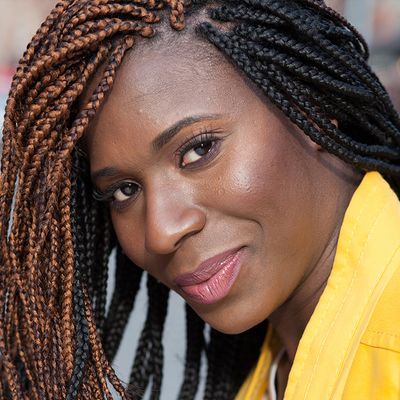
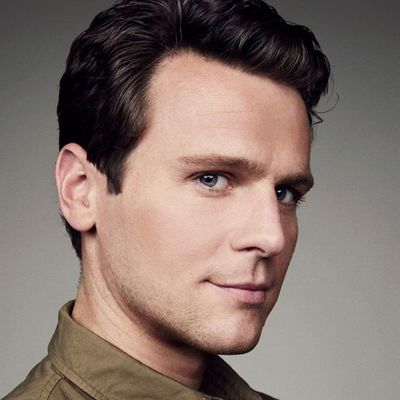
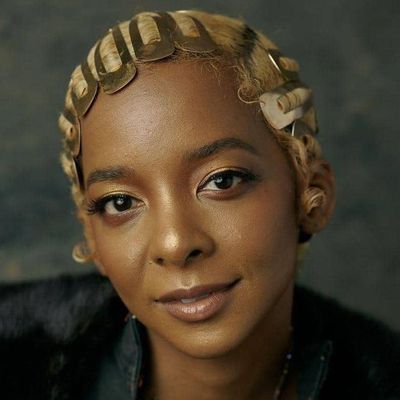
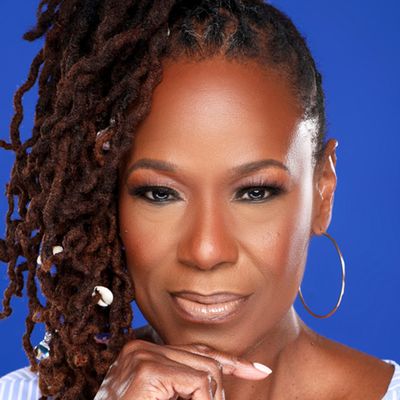
Listen in behind the scenes with this special episode featuring media room speeches from 2024 Tony Award winners Shaina Taub, Dede Ayite, Tom Scutt, George C. Wolfe, Justin Peck, Ryan Rumery, Nikiya Mathis, Will Brill, Kara Young, Daniel Radcliffe, Kecia Lewis, Branden Jacobs-Jenkins, Sarah Paulson, Jonathan Groff, and Maleah Joi Moon... Read More
From the show: The Theatre Podcast with Alan Seales
Guests



Featured Shows

About
Listen in behind the scenes with this special episode featuring media room speeches from 2024 Tony Award winners Shaina Taub, Dede Ayite, Tom Scutt, George C. Wolfe, Justin Peck, Ryan Rumery, Nikiya Mathis, Will Brill, Kara Young, Daniel Radcliffe, Kecia Lewis, Branden Jacobs-Jenkins, Sarah Paulson, Jonathan Groff, and Maleah Joi Moon.
Guest hosted and edited by fellow Broadway Podcast Network host Sarah Goodman! Make sure to check out her podcast too.
Connect with GOOD SHOW:
- Listen and follow the podcast at http://bpn.fm/goodshow
Connect with The Theatre Podcast:
- Support the podcast on Patreon: Patreon.com/TheTheatrePodcast
- YouTube: YouTube.com/TheTheatrePodcast
- Threads, Twitter & Instagram: @theatre_podcast
- TikTok: @thetheatrepodcast
- Facebook.com/OfficialTheatrePodcast
- TheTheatrePodcast.com
- My personal Instagram: @alanseales
Transcript
This transcript was automatically generated and might contain errors.
[0:00] Alan Seales: Hello again, everyone. I'm here to introduce a special bonus episode with content straight from the media room of the Tony Awards. So unfortunately, I was not able to attend the awards myself, but I partnered up with fellow Broadway Podcast Network host Sarah Goodman, who was there to capture the content on behalf of Theatre Podcast here and the network. And so this episode includes some conversations with people like Shaina Taub, Daniel Radcliffe, Sarah Paulson, Jonathan Groff, Maleah Joi Moon, George C. Wolfe, and many, many more. You got to listen. Okay, so I hear you ask, what's a media room? Well, after you see the winners accept their awards and give their speech on TV, they're quickly whisked away to a separate building, often nearby, where several dozen photographers, bloggers, and journalists all collectively ask them quick questions.
So you're about to hear many voices, including Sarah Goodman's. So without further ado, check the show notes for links to Sarah's podcast called Good Show, and enjoy this episode from the media room at the 2024 Tony Awards.
[1:11] Sarah Goodman: Hi, I'm Sarah Goodman, guest correspondent for the Theatre Podcast. And this special episode is coming to you from the 77th Annual Tony Awards. Broadway Podcast Network was able to do some media coverage in the press pool, where all of the Tony Award winners came through. In this special episode, we'll be hearing from many of the Tony Award winners on Broadway's biggest night. Our first few clips are with the winner for Best Book, Shaina Taub, who later in the evening won her second Tony for Best Score, both for Suffs, which she is also starring in.
[1:46] Shaina Taub: To be standing here with this award for Book blows my mind because that, to your question, the main, most substantive, formal change in Suffs was the addition of a more spoken book. I think initially, I'm a theatrical songwriter. I love sung-through musicals, and I thought Suffs was a sung-through musical. And I think something it taught me as I went along in the process was, oh, actually, people don't know much about this story. It will really help me if I can have spoken dialogue that tees up a song. So I really studied the books that I love of musicals like Ragtime, Into the Woods, other shows I love, You're in Town, and really embraced writing spoken dialogue. Yeah, and so there's a lot more of that.
It's wild to me. I hadn't really thought of myself as a playwright, but going through this process gave me that confidence. I think right now, it's a hard year in the country. People are feeling a lot of cynicism and despair, myself included, often, especially seeing women's rights being rolled back and to see reproductive rights, specifically in the right to abortion, being threatened on the state level and the federal level and not being able to count on the Supreme Court to protect that right anymore. And what I hope Suffs can do is remind us that when ordinary American citizens come together to coalition build and organize for justice and equality in our rights, we get things done. And the Suffs achieved major constitutional change 100 years ago, and we can do it now.
[3:06] Dede Ayite: Up next, we have a woman making history, Dede Aite, who is the first Black woman to win for Best Costume Design of a Play for Jaja's African Hair Braiding.
[3:17] Linda Armstrong: Hi, Linda Armstrong, Amsterdam News. When it comes to doing costumes for a show like Jaja's African Hair Braiding, which in my mind, made history on Broadway, because I've never seen a show that focused on that population of ladies. What did it mean to you to make sure that your costumes were authentic to the ladies that you were representing since they had never been represented before?
[3:34] Dede Ayite: Oh, that's a great question. It's very important to me to just find their heart, right? Because as much as in some ways, you can look at those group of women and think they're caricatures, or they're just loud and bold, but they have such depth to them, right? They're human beings. And so as a costume designer, and especially with Jaja's, it was important for me to just find their humanity and showcase that and showcase it with tenderness and showcase it in its complexity. So as much as there's someone who might be in a bold and colorful costume, there's also heart there, and there's also fear that she carries. And to find that nuance that I can communicate through the clothes, and then hopefully that the audience, whether they're Black or they're African, can identify themselves and relate to the story, because that story is a shared story.
It might be in a different package, but we are all human and we sort of all need each other. And so as a costume designer, I really want to find that nuance and capture the complexity of what it means to be human through the clothes.
[4:34] Linda Armstrong: What does this award mean for you personally, as far as representation on Broadway and expanding the people that we're looking at on Broadway stages?
[4:46] Dede Ayite: I mean, it means so much because for me, I looked at Paul Tazewell, I looked at Toni Leslie James when I was coming up, and to be in this moment where I believe actually that I'm the first Black costume designer to win in a play is a lot. It's a huge, huge moment because I know there are people like me that are just starting out and aren't sure and are fearful, and you just don't know what it's going to take, and you don't know how to find that step to take you forward. And so I'm just hopeful that this moment says, just keep at it. Tell the stories that matter to you, tell the stories that you find value in, and the moment will meet you. And that's what's happening for me right now.
[5:25] Tom Scutt: Best Scenic Design for a Musical went to Tom Scutt, who designed the set for Cabaret at the Kit Kat Club, and he graciously thanked his associates in his acceptance speech on the broadcast. You mentioned architects and you mentioned your associates. Thank you for thanking your associates. That's really special.
[5:44] Tom Scutt: I mentioned two more. Andrew Mordake and Matthew Buttrey are my U.S. associates, and I missed them off because I had my speech in my pocket and I didn't take it out, which was an error, but I love them. Anyway, sorry. So it takes many, many people to pull something like this off, and Cabaret is especially a unique challenge with it being so immersive and having so many elements of the theater designed. What was it like collaborating with the other artists and the other designers and the director on this massive scale of a project?
[6:06] Tom Scutt: For me, that's what my job is, and I do think that ultimately what I look for in a new project is an invitation for a process to be different. I think we're very, very oriented, and this is part of your question as well, Matt, that it is sort of very oriented about the end product, the product, and therefore the materials, the image, what it looks like, but not about how we get there. And I think theater fundamentally is about how we get there, who is in that room, who we're working with, and what the process is. And then in a way, the end product takes care of itself if that process has taken care of the people that make it. So really Cabaret is just a dream for me because it's just such an extraordinary invitation, a blank canvas to sort of involve as many artists from outside of theater as possible, and that's what I wanted to do with this was just to bring in people that haven't been involved in theater before.
[7:19] George C. Wolfe: The next person we spoke to is not new to the theater. In fact, they were receiving their lifetime achievement, Tony, and that was George C. Wolfe, who is a Broadway legend for directing shows like Noise Funk, Jelly's Last Jam, The Colored Museum, Angels in America, and a long list of amazing works in the history of Broadway. And George C. Wolfe will be directing the highly anticipated Broadway revival of The Musical Gypsy, starring Audra McDonald, opening this fall. Here he shared some words for those who are just getting their start in the industry.
[7:53] George C. Wolfe: Well, just see as much theater as you possibly can. And if you meet someone and you connect with them, and if they're an actor or they're a writer, connect with them, get to know them, build a piece together. I worked with my friends before I worked with anyone that would be, quote unquote, of a certain stature, and that's where I started to grow. And you build up a confidence, and it allows you to exercise and get in touch with your passion and your ferocity, and then you're off to the races. And also during that time period of struggle, it's one of the things which I say all the time, a crucial step to saying yes to yourself is getting used to people saying no to you. And so you hear those no's and you go, no, no, no, no, no. I have a legacy.
I've been working with these three people or these 20 people that you have no idea, but they've empowered me and I feel empowered. And so you just keep going forward from there. And if something scares you, do it. That's my big advice. And when Tony Kushner asked me to do Angels in America, I went, how the hell am I going to do it? Seven hours. I don't know what I'm doing. And then a voice said, do it like you've done everything else, one scene at a time. And then you go into a room and you work with a group of wonderful people and then Tony comes in with new writing and you're going, I'm in the middle of something extraordinary, but I'm not being paid to be all the way. I'm paying to do the job. So you get back to work. It's about the work. And you grow and you become whoever or whatever you're going to become by investing as fully and as purely and as passionately in the work.
[9:29] Justin Peck: Justin Peck, winner of Best Choreography for the musical Illinois. I never call my cast dancers in the process because I think there's so much more than that. They're actors, they're storytellers, they're speaking a language that happens to be dance. And that's always how we've thought about this show, that this is a piece of theater, that it's a musical. It does bend some of the conventions of what a musical is. But at the end of the day, that is the intention behind it. And I think that's so true in terms of the cast. They are storytellers, they're actors, and they just happen to be speaking the language of dance. And that was a precedent that I wanted to set in the process as we worked on this and was really important to me to acknowledge the kind of work that they're doing here because it's sort of extraordinary. I mean, the performance that Ricky Ubeda gives in this show is like one of, in my opinion, I might be biased, I am biased, but one of the great performances on Broadway this season. So thanks.
[10:34] Ryan Rumery: This season, Stereophonic received a record number 13 Tony nominations, the most ever received for a play. One of the many awards they ended up taking home that night was Sound Design, and that went to Ryan Rumery. I know that your work was not just only on sound, but as a sound designer, there were certain things that because this is about recording,
[10:55] ♪ Musical number ♪
[11:25] Broadway Podcast Network: This episode is brought to you by the Broadway Podcast Network.
[11:55] Broadway Podcast Network: For more information, visit us at www.broadwaypodcastnetwork.com.
[12:25] Broadway Podcast Network: Thank you for listening to the Broadway Podcast Network.
[12:45] Broadway Podcast Network: We appreciate your support.
[13:05] Broadway Podcast Network: Stay tuned for more exciting content.
[13:15] Broadway Podcast Network: Don't forget to subscribe.
[13:25] Broadway Podcast Network: Follow us on social media.
[13:45] Broadway Podcast Network: Join our community of theatre lovers.
[14:05] Broadway Podcast Network: We have a lot of great shows coming up.
[14:25] Broadway Podcast Network: Thank you for being part of our journey.
[14:45] Broadway Podcast Network: We couldn't do this without you.
[15:05] Broadway Podcast Network: Keep the magic of theatre alive.
[15:25] Broadway Podcast Network: Until next time, enjoy the show!
[15:45] Broadway Podcast Network: This has been a special presentation.
[16:05] Broadway Podcast Network: We hope you enjoyed it.
[16:25] Broadway Podcast Network: See you at the theatre!
[16:45] Broadway Podcast Network: Thank you for your support.
[17:05] Broadway Podcast Network: We appreciate your feedback.
[17:25] Broadway Podcast Network: Stay tuned for more updates.
[17:45] Broadway Podcast Network: We love hearing from our listeners.
[18:05] Broadway Podcast Network: Keep the conversation going.
[18:15] Broadway Podcast Network: Join us next time for more insights.
[18:25] Broadway Podcast Network: Thank you for being part of our community.
[18:45] Broadway Podcast Network: We look forward to connecting with you.
[19:05] Broadway Podcast Network: Until next time, take care!
[19:25] Broadway Podcast Network: This has been a Broadway Podcast Network production.
[19:45] Broadway Podcast Network: Thank you for listening.
[20:05] Broadway Podcast Network: We appreciate your support.
[20:25] Broadway Podcast Network: Stay tuned for more exciting content.
[20:45] Broadway Podcast Network: Join us next time!
[21:05] Broadway Podcast Network: Thank you for being with us.
[21:25] Broadway Podcast Network: We hope to see you soon!
[21:50] Sarah Paulson: The American theater is important right now, anytime it is now, you know, like I don't think it will ever not be vital to our society. I think it's sort of the best way to, um, what just happened? They just gave Best Musical. Oh, I'm so sorry. Meaning I'm sorry to, to, to be interrupting the moment.
[22:20] Unknown speaker: No, no, we're here for you. We're here for you.
[22:41] Sarah Paulson: Oh, no. So The Outsiders just won. Is that right?
[22:47] Unknown speaker: Yes.
[22:52] Sarah Paulson: Was that unexpected?
[22:56] Unknown speaker: Slightly.
[22:59] Sarah Paulson: It was?
[23:00] Unknown speaker: Oh, it was.
[23:01] Sarah Paulson: It was a dark horse. I love a dark horse. I do have to say that performance, you know, because we've been doing the play for this long, I have been able to see absolutely nothing. So there has been an enormous, um, joy tonight sitting there, um, for that very long time, um, getting to see all of these, these musicals. And I can't wait to see every single one of them. And I thought The Outsiders looked particularly special. So congrats.
[23:53] Brandon Jacobs-Jenkins: Oh, my legacy. Gosh. Um, as a human or like as a playwright, theater artist, I think, you know, I think for me, I found, I found myself spending a lot of energy coming up trying to suss out the ways in which I didn't feel free as an artist. You know, I grew up in the 90s at a time that was like, there was so much funding and youth arts culture, we were expressing ourselves. And something happened when I entered the industry where suddenly there were these like walls and, and double standards and these kind of inherited practices that were just like not right, you know, and I wish I had been warned about that. But then also I feel like I draw, I drew so much inspiration from folks like Ozzie Davis, like Toni Morrison, who really were about like outing and questioning those structures of power that were preventing me from communicating what I felt I had the right to communicate in life, you know.
So I guess if, when you ask me what my legacy is, I just hope that like people behind me feel freer, you know, that they don't, I never want people to feel that way again. I want people who come up in the theater who found freedom in the theater to be able to express that in adult life and be able to make whatever they want to make with whoever they want to make it with and not have it be a hot dog mess.
[25:24] Will Brill: There was a long time when I personally, I think this is maybe a common thing for a lot of artists is that because we're such sort of front-facing people, often we are trying to please people. And so there's a, there's a lot of people pleasing that happens and we sacrifice being honest a lot of the time for, for that sake. And I think there's a tendency to cover up what we are going through. So I think it's, the advice that I would give to anybody who's struggling is try to be honest with yourself and try to be honest with the people who love you because they will continue to love you if, if they see you suffering. That was a really hard lesson for me to learn. And this therapist who I have was really integral in helping me through that. And I, I truly, you know, I, there's a lot of ways in which I parallel Reg, but without her, I don't think I would have really been able to healthfully go on this journey of this role.
[26:53] Jonathan Groff: My family is with me. My mom and my dad and my brother are here. Two seconds and I'm already crying. Yeah. And they, you know, I grew up, my, my, my dad's side of the family is Mennonite and there's this video of me dressed as Mary Poppins walking around. My, my, my grandfather was a Mennonite preacher and I'm, I'm dressed as Mary Poppins and he's going, Mary, oh Mary. Not obviously knowing that I'm a homosexual, like in the making. And they're not like putting it all together, but how funny it is that they're calling me Mary dressed as Mary Poppins. But yeah, they let me, my mom let me dress up as Cinderella and Peter Pan and they took me to see theater even though my parents are jocks and my dad is a horse trainer and they, but they understood passion because they're both quite passionate people and so they saw that I was into something and they, they, they let it flourish.
And my, my teacher, Sue Fisher, is my eighth grade drama teacher and at tech, at the, at the tech rehearsal before our first performance, she pulled me aside after our first rehearsal and sat me down in the back row of the auditorium and said, you gotta pursue this as a career. And I, I was like, what? I didn't know that you could really do it as a job and I live in Pennsylvania. I couldn't understand what she was talking about. But she was the person that first told me that I could do it as a job. And then there was the Fulton, Fulton Opera House, which is an amazing theater in Pennsylvania and the Ephrata Performing Arts Center, EPAC, and I did community theater there and school theater and go PA. Hi. I'm from Lancaster.
[29:00] Unknown speaker: What?
[29:01] Jonathan Groff: I, I was in Spring Awakening at EPAC.
[29:04] Unknown speaker: No way. Where?
[29:06] Jonathan Groff: At EPAC.
[29:07] Unknown speaker: No way.
[29:08] Jonathan Groff: Yeah, you came to see me.
[29:09] Unknown speaker: Oh my God. It's so nice to see you again.
[29:11] Jonathan Groff: So nice to see you. That's not, that's not.
[29:13] Unknown speaker: What a small world.
[29:14] Jonathan Groff: I know. I know. I.
[29:15] Unknown speaker: Now you're doing this.
[29:17] Jonathan Groff: And you're doing this. Look at us. It's a big night for the honors.
[29:22] Unknown speaker: How cool is that?
[29:23] Jonathan Groff: How cool is that? Um, so you mentioned a lot about your younger self, but if you could speak to that younger self directly tonight, what would you say?
[29:28] Jonathan Groff: The, the, the pure joy, inspiration, excitement, passion for, uh, the arts is a superpower. And if you can believe in it and follow it and harness it and trust it, it can change your life. And it has, I wouldn't need to tell him that cause though, cause I guess he did it. So I would say if I had to give him advice, I would say, start meditating. Cause I started doing that two years ago and that really changed my life as well. Um, but yeah, that, that, that feeling when you're young, it's what we sing about at the end of Merrily We Roll Along in, in the song Our Time. That feeling, I mean, everybody in this room has had that feeling because we live in New York. So I'm, I'm, I'm sure most of us came here from somewhere else and that, that ambition and that passion is, uh, is, is, is a life-changing superpower.
[30:35] Maleah Joi Moon: None of this matters if we do not, I just finished saying this in the other room, if we do not do our part as theater goers, as the theater community to encourage the youth to keep following their dreams. There is no future of theater, musical theater, plays, anything, opera, anything creative without children. And if it weren't for the teachers and the providers and the, the village that raised me, not only as a child, but as a storyteller, I would not be anywhere close to this moment in my life. So this goes out to them. And as far as the diversity in the community, it is so, so important for people who look like me to come to the theater and see themselves reflected in a piece of art because everyone deserves to have good theater experiences that are about them.
[31:51] Maleah Joi Moon: Thank you.
[31:56] Sarah Goodman: Thanks for listening to our Media Room Highlights from the 77th Annual Tony Awards. I'm Sarah Goodman, filling in for Alan Seales on The Theatre Podcast.
[32:07] Sarah Goodman: For a special spotlight on designers and more clips from Tony Night, check out my podcast, Good Show, available right here on the Broadway Podcast Network. Come visit us at bpn.fm.
[32:22] Sarah Goodman: Actually, go to bpn.fm slash good show to go directly to Sarah's show. You'll be glad you did. And I want to give a big thank you to Sarah, of course, Madeline Page, and the rest of the Broadway Podcast Network team for making this episode happen, and also send a massive congratulations to all of the night's winners.
© Broadway Podcast Network, All Rights Reserved