

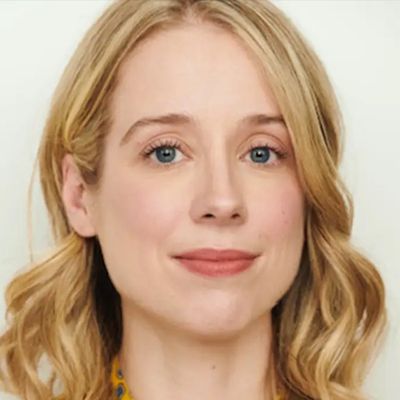
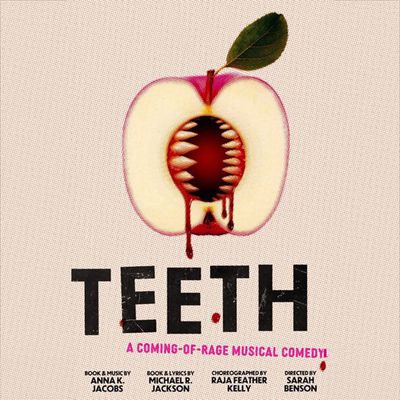
Alyse Alan Louis takes us on a deeply personal and inspiring journey in this episode. From her Broadway credits in Mamma Mia!, Amélie, and Soft Power to her groundbreaking work in Teeth: The Musical, Alyse opens up about the evolution of her career and the unique challenges of her craft... Read More
From the show: The Theatre Podcast with Alan Seales
Guests
Miniseries Inclusions
Featured Shows
About
Alyse Alan Louis takes us on a deeply personal and inspiring journey in this episode. From her Broadway credits in Mamma Mia!, Amélie, and Soft Power to her groundbreaking work in Teeth: The Musical, Alyse opens up about the evolution of her career and the unique challenges of her craft. Her portrayal of Dawn in Teeth showcases her ability to embody bold, complex characters while navigating both emotional and physical demands. Alyse reflects on how years of collaboration shaped the role and shares the lessons she’s learned about setting boundaries and embracing vulnerability as an artist.
This conversation also dives into the fascinating connection between the body and performance. Alyse discusses how she discovered she was holding stress in her pelvic floor, the impact of that realization on her work, and how she’s learned to manage the physical and emotional toll of performing in demanding roles. From her experiences as a young performer in regional theater to her insights on the importance of self-advocacy, Alyse offers practical wisdom for aspiring artists and anyone navigating a creative path.
Alyse Alan Louis is a Broadway performer celebrated for her work in Amélie, Soft Power, Mamma Mia!, and Disaster! She currently stars as Dawn in the critically acclaimed Teeth: The Musical, a role she has helped shape over the past decade. Known for her fearless approach to bold material, Alyse has earned a reputation for bringing humor, depth, and nuance to her performances. Her dedication to storytelling and her advocacy for self-awareness make her a standout voice in musical theater.
Connect with Alyse:
- Instagram: @alysealanlouis
- Threads: @alysealanlouis
- TikTok: @alysealanlouis
- Facebook: Alyse Alan Louis
- Teeth: The Musical: @teeth_nyc
- Website: teeththemusical.com
Connect with The Theatre Podcast:
- YouTube: YouTube.com/TheTheatrePodcast
- Threads, Twitter & Instagram: @theatre_podcast
- TikTok: @thetheatrepodcast
- Facebook.com/OfficialTheatrePodcast
- TheTheatrePodcast.com
- My personal Instagram: @alanseales
Transcript
This transcript was automatically generated and might contain errors.
[0:00] Alyse Alan Louis: Hi, I'm Alyse Alan Louis. Welcome to The Theatre Podcast with Alan Seales.
[0:25] Alan Seales: Hi, everyone. Welcome back to an all-new episode of The Theatre Podcast. Intimate personal conversations with the industry's biggest names. I'm your host, Alan Seales, and this is the second of four episodes in the Teeth the Musical takeover here on the podcast. This episode's guest is with the extraordinary Alyse Alan Louis. Known for her powerhouse performances in Amélie, Soft Power, and Mamma Mia!, Alyse now captivates audiences with her fearless portrayal of Dawn, the lead in Teeth, now playing at New World Stages through January 5th, 2025. This episode is so incredibly honest. Alyse, thank you so much for sharing everything you did. We explore not only Alyse's artistic journey, but the physical and emotional toll of performing such a demanding and vulnerable role every night.
She shares how carrying the stress in her pelvic floor actually has taught her to navigate the intimate connection between body and emotion, and how she's cultivated resilience through setting boundaries and advocating for herself in such a challenging industry. This episode is an inspiring reminder of the importance of self-awareness, both on and off the stage. So everyone, listen up. Make sure you follow me on social media, leave a rating and a review wherever you are listening now, and check out my Patreon or Spotify for the video version of this episode. Now, everyone, please enjoy this conversation with Alyse Alan Louis.
[1:45] Alan Seales: Today's guest is a powerhouse performer with an undeniable presence both on and off the stage, who has captured hearts with her work in critically acclaimed productions, including her standout performances in Amélie and Soft Power, with additional Broadway credits including Disaster and Mamma Mia!, two more of my favorites. Her ability to balance humor, vulnerability, and strength has made her a compelling force in the world of musical theater. She's been part of the groundbreaking project Teeth the Musical, where she masterfully tackles bold themes with nuance and flair as the formidable Don O'Keefe, solidifying her reputation as a fearless artist, unafraid to explore uncharted creative territory. Alyse Alan Louis, welcome to The Theatre Podcast.
[2:43] Alyse Alan Louis: What a beautiful introduction. Thank you so much.
[2:44] Alan Seales: You're welcome. You can take that with you and play it ahead of you in every room, so that everyone can just announce it.
[2:56] Alyse Alan Louis: Literally, if I can play that before auditions, maybe that would help my confidence a lot. That is a really beautiful introduction. Thank you.
[3:03] Alan Seales: Well, now after everyone sees you in Teeth, you won't need to audition anymore. Offer only.
[3:06] Alyse Alan Louis: Oh my gosh. Oh, I will definitely still need to audition.
[3:10] Alan Seales: Well, before we get into Teeth, which again, one of my favorite musicals, because I just love how commercial off-Broadway now is just doing this massive transformation and pushing so many boundaries. We're going to get into that, but let's start at the beginning. Little Alyse, where did you grow up? What got you into theater?
[3:28] Alyse Alan Louis: I grew up outside of Philadelphia in Delaware County in Havertown. Though my parents are not actors, they met in a play in school. They met in South Pacific. I think about that a lot. They are so supportive of me and my sister. My sister is also an actor, Jillian Lewis. I grew up outside of Philly. I started working in the theater industry as a little kid. I've been talking about this a lot because actually my first professional show was The Goodbye Girl at the Walnut Street Theater. A few of those cast members actually came to see Teeth recently, which was such a heart-filling experience because Roger Preston-Smith, who was in the show, and Bill Bateman, who were both in the cast of The Goodbye Girl, they posted about it after coming to see the show, encouraging others from our cast to come.
All of these folks commenting on their post was so heart-filling because I look up to them so much. For them to come see the show, it meant a lot to me. It was so sentimental for me. That was my first professional show. I worked in the business all through grade school and high school. I feel like I met a lot of the same people that cast me now as a child. They sort of knew me. That's a pretty wild experience.
[4:55] Alyse Alan Louis: Yes, absolutely. I feel like Tara Rubin, who's a big champion of mine, Tara has known me since I've been maybe eight or nine years old. That office gave me my Broadway debut in Mamma Mia!. I think often how these are folks in the business who really watched my journey and have watched me grow up. I also did theater. I did theater at my grade school, my high school. I was part of a summer program, too, that is incredible in my area called Upper Darby Summer Stage. That's where I actually watched my sister first do shows. I watched her do shows in grade school and I thought, that's what I want to be. That was why I started acting in the first place, was watching her. After high school, I then went to NYU for college.
I met so many artists in my class who are out here in New York, really making it happen in all areas. Still good friends today, too. We all still really support each other. Then came to Teeth in 2011. I started working on new musicals because I had a relationship with the writers at Grad Musical Theater Writing when I was an undergrad at NYU. I met Anna, I think in—Anna Kay Jacobs. Anna Kay Jacobs, maybe in 2007. I met her when she was working with her collaborator, Maggie Kate Coleman. They wrote a show called Pop Who Shot Andy Warhol. That's how I met Anna. I worked with Maggie before that. She introduced me to Anna. We worked together on Pop Who Shot Andy Warhol in Pittsburgh in 2012. The fall before that, Anna got in touch and said, hey, my collaborator Michael R. Jackson and I are working on an adaptation of Mitchell Lichtenstein's 2007 film Teeth.
We're presenting a song from it at this concert at Cap 21. We would love for you to sing it. We've been thinking about you for the protagonist, Dawn. At the time, Teeth was a duet sung by Dawn and by Brad, Dawn's stepbrother in the show. That was my first introduction to Teeth.
[7:06] Alan Seales: That's interesting. When you first heard, though, that they were adapting Teeth, I'm curious what your reaction was. I don't want to lead the witness here. What was your reaction?
[7:19] Alyse Alan Louis: I hadn't seen the film, so I had no relationship to the material. To be honest, I can remember how exciting it was. We were learning the song, my duet partner and I, for that evening. And it's clear on the page when working on Teeth that the comedy is based in such truth. As we were learning the song, and even in rehearsals, we were 100% committed to the truth of this relationship in the song. Then when we performed the song, immediately, one of my favorite lyrics that is not in the show anymore, and Teeth is not a duet any longer, but the Brad character says, she sits on my cock, my blue balls turn to red, and the whole audience erupted in this concert. It was really the first time that I realized the tone it was writing.
I realized right in that moment what tone we were writing. It's this extremely comedic, high-stakes material, but the way that Anna and Michael have written it, the way that it can be played so truthfully is part of also why it's so funny and why there's a gut punch through that laughter. I felt immediately learning it that I was so attracted to the tone of it and attracted to it because I'm somebody in the business that fits in strange cracks. I'm not clear for a lot of people when I'm cast in a show, when I'm going in for a project.
[8:56] Alyse Alan Louis: Yeah, but it's funny. I do play young, and I also play my age, and I do that together. I've done that, I would say, for the last decade. I'm either playing this spectrum of an age group or I'm playing my actual age, which is 38.
[9:20] Alan Seales: I was going to say 25.
[9:20] Alyse Alan Louis: Yes, 38. I have to say, I'm proud of it too because I don't think that I could bring the type of truth that I'm interested in bringing when I perform for this particular character moving through this journey at her age if I wasn't my age now. I feel like kind of, in a way, growing up with Teeth over the last how many years with my career in New York, my time in New York, I feel like the character has become even fuller because of the age that I am playing it. As an actor, I fit in some strange cracks because I'm comedic. I play a lot of characters too, but sometimes I feel like in our business, as we package things, my look sort of belies what I play. We're still working on that in our business.
We're still working on that because I feel like there isn't always that imagination when you're in front of a team of people that are putting something together. We want to place people in these boxes, which I understand. I understand that, but what I love so much is that because Anna and Michael and I have a long history together, as they've also built this show and I've had the opportunity to be a part of it and not as the only Don. There have been other Dons, but I have really developed it for a long chunk of time in a lot of different rooms, behind stands and not, and on stages and not. I kind of feel like they took the material and they knew what I had to offer as an actor and they made them become one, which is one of the greatest gifts that someone can give you because it doesn't happen all the time.
It doesn't happen that you have history with creators like this. It doesn't happen that you see it through. It doesn't happen that I'm usually much more used to thinking that I won't be around after a couple readings because that's my experience. My experience is that I might see something for the first couple developmental processes and then I will hear my voice on a demo that's being sent to other people to audition for the slot. That's sort of my experience. It's been pretty magical to watch this history of us collaborating and then what it did for the creation of Don.
[11:43] Alan Seales: How has Don evolved over the years? What did you say you first started? 2007?
[11:48] Alyse Alan Louis: 2011. I met Anna in 2007, but yes, 2011. I would say something that was so beautiful when getting it up on its feet fully, which happened at Open Jar in maybe 2021-2. It was the first time that we were actually bringing a physical life to Teeth where Raja Feather Kelly was choreographing five or six numbers for Teeth. We were showing the full show and we were doing it behind stands, but then also he choreographed five numbers to sort of showcase the show and for it to move on. I felt at that time this big shift where to be able to physicalize Don was so much a part of the journey because for many years behind a stand, yes, there was a lot that I could do in showing this person reconcile her religious life and her sexuality and the feelings that come with it bodily, but you're sitting up and down.
You're not really able to show that in movement. At Open Jar and especially with my collaboration with Raja, we had worked together before. He is also someone that knows my body, knows what it can do, knows how we can discuss the sections of movement effectively to make something really beautiful. I felt at that time being able to, especially as Don is at New Testament Village in the beginning of the show and then she's moving towards a place where she's realizing her body has something to say and that she does have a relationship with her own body, which is the most important relationship in the show, I felt such a shift there. And then to be able to physicalize Dentata was game changing because I had never gotten a chance to do that in development before.
So to kind of take someone who is this teenager, doesn't know how to relate to herself, but then by the end of the show really take up space with her body in a way that, you know, I used this word a lot when I was starting to find what Dentata was. For me, Dentata is electrical currents coming through a pendant.
[15:14] Alyse Alan Louis: Yes. And I feel like that transformation is such a reward for me as an actor, for a lot of reasons. Because I'm also thinking of my prepubescent self, my self as an adult. It's all part of it. It's all infused in how she moves, how she relates to others. There's also the part of it that Krista, our intimacy coordinator, yes, there's moments in the show. Dawn is assaulted and she's assaulted on stage. So there's moments that we needed to craft that are extremely emotional and very deep in terms of what we're showing on stage inside of a comedy, what we're trying to say. And I feel like also what she scored in is there is a moment in the show where Dawn is experiencing sexual pleasure. And so the moment where Dawn then realizes in her sexual experience before her transformation into Tentata, that she likes what she's feeling, that it's pleasing what she's feeling.
And she sort of is able to see that she's aroused and like sort of feel in her hands what that means. That's a moment too that I'm not used to showing. I don't get to show that often. I don't get to show that like celebration of arousal as well that Krista and I scored in. I mean, that's been a really beautiful thing to also feel heart to heart with her as she's made these intimate moments. It's made the collaboration so much deeper too with my partners in the show. Andy Karl plays Pastor, but also plays Dr. Godfrey. That is intimacy there. Jared Lofton plays Ryan. And we also have these intimate moments along with me and Jason Gotay, who plays Toby in the show, my first boyfriend, sort of first sexual experience, first time we're talking about these feelings with each other.
And in that lake scene, where Dawn is assaulted, that was a true collaboration with Jason, me, Sarah Benson, our director, Krista Marie Jackson, our intimacy coordinator. These moments that we've also had the time and space for intimacy has also made my connection with these actors so based on a deep trust as we're moving through this musical that's making everybody laugh. And it is campy, yes, is fun, and also has these really deep, serious moments.
[20:17] Alyse Alan Louis: Don't go anywhere. We'll be right back after this break. Welcome back to the episode. The character of Dawn is going through everything so publicly in terms of like as an audience member, we are watching something. We're watching a whole transformation that most people can't even talk about with their life partners, let alone perform in front of an audience, right? So was that part difficult for you? Do you have any like of the religious background that you had to separate yourself from?
[20:49] Alyse Alan Louis: I do, yeah. I grew up Catholic, so I definitely have that. I think about that often. Do you? I think about the idea of guilt as well, like how that manifests in the body as I'm creating Dawn, like feeling the feelings and also what happens when we feel that tension of guilt that is human made, but how it affects the body. I think something that's also been really incredible is the conversation that's happened with the Promise Keeper girls who are played by an array of humanity in our musical.
[21:26] Alyse Alan Louis: I love that phrase, an array of humanity. I'm going to use that. Yes, and the PKGs and I and our entire creative team have had such beautiful conversation about puberty, feelings of shame, feelings of shame attached to religion. I mean, the PKGs in so many ways, yes, each Promise Keeper has a distinct individual character and then as a group make up this great chorus that push the entire show forward as Dawn transforms. They are really the mirror for the story, the individual story that you're seeing on stage with this person you're following, but take a song like Shame in My Body, my favorite song in the show. It's a moment like that where in rehearsals as we built it, so much beautiful conversation came up because you have an entire group of people that are talking about shame, guilt, the beauty in experiencing physical feelings, when we all felt it first, how it manifests as artists as well because we do have open conversations in our business, but that's not necessarily where we came from. In our schools, in our families, how we relate to ourselves also as we've had conversations.
[22:54] Alyse Alan Louis: Absolutely, absolutely. That's correct and I feel like it's just been a really cool... Sarah runs a needs-based room, so Sarah Benson is very much about having an access needs circle up at the beginning of every day where each person on the team, in the cast, everyone in the rehearsal room as we build says what they need that day. That could be if you have an injury, that could be if you lost someone in your life, that could be if you didn't get enough sleep. Fostering that type of access needs room also means that you're honestly and authentically hearing from everyone who's building the show, which then makes a beautifully close relationship and I love too that there's an interesting thing that happens too because sometimes there's a conversation that is heated that happens in the access needs circle.
Maybe someone's not getting what they need in communication with a team member, that's the time to talk about it. Maybe we learn in that circle that we have to sidebar and not do it in the circle, but that's what the needs conversation is for. I think as we continue to have these conversations in our business about how to be great collaborators and great team members, we're learning what these lines are and I just have to say how thankful I am that she runs a room like that. It's a really, really cool thing.
[24:14] Alyse Alan Louis: How has that changed you as an individual, as Elyse, you know, 38 year old Elyse looking back on young Catholic Elyse, right? Was Teeth sort of like 2011 when you started getting involved with this? Was that sort of like your own transformation internally or did you sort of feel like you needed to separate yourself from it beforehand or afterwards? I don't want to put words in your mouth, but it can go in many different directions.
[24:47] Alyse Alan Louis: Yeah, absolutely. I would say that less about my, well actually now that you're saying it, maybe my Catholic upbringing is sort of a part of this, but to me when I think about that idea of talking about needs in a room, I think about how in my career specifically I have felt like it's a muscle I need to learn to work, to be able to say no, to be able to hold a line and I've had the opportunity to really play some incredible female identifying characters that I don't get to play often, who are a full spectrum of humanity in a way that I feel like there's a lot of roles that aren't written like that, but there's been roles that I've gotten to play like Dawn and Teeth, like Hillary in Soft Power, like Kate in Rattlesnake Kate.
These roles and this prism of a female identifying person that I really don't usually get to put out on stage and what that means is that I have also been challenged to have to really say what I need. I've had to say no a lot with my own boundaries and I think it's been amazing that Teeth has been parallel to me as I've been learning how to do that because I have really learned to work the muscle in this room. I've really learned to work the muscle of how to hold a line, how to hold a boundary as Elise, as I'm making Dawn and that's been an invaluable gift and I want to say that sometimes like it doesn't always come out the way that I want it to come out when I am speaking about something I need and what I mean there is that maybe I would shift my tone a bit, but if I don't say it at all, then we're not speaking about it at all. It eats at you on the inside.
[26:42] Alyse Alan Louis: Yeah, so I felt like I needed to figure out how to stand strong and say what I need to say and that's a hard thing to do with a team. In our business, it's difficult to do with creative teams because as amazing as creative teams are, as amazing as this relationship between actors and teams are, a lot of the times as actors we feel like we can't speak up, we feel like our jobs are on the line, we feel like also the team is working for a different entity than us, there's a lot of sort of capitalistic goals that still need to be in their lens as they build with us. It's pretty amazing then when I'm in a process like Teeth and this has really been my experience with Sarah where she has taken yes and no mean the same.
They're both like avenues to a choice and there's no judgment on that. That's even when it has to be repeated like when we were doing the workshop at Open Jar, I had tennis elbow on one arm and I also had a ligament tear in my thumb on the other hand. What was required for that workshop mostly was putting stands up and down, which weirdly was the hardest thing for me to do because I had two hands that I couldn't really work with. This was the first time that Sarah and I were really working on the piece for a longer period of time than just two days. We were doing a three-week pretty intense workshop of this show where we were going to put it up for like 75 people in these four presentations where we're staging five numbers. It was at that time that I realized how compassionate
[28:30] Alyse Alan Louis: She runs her room compassionately and also keeping us on task and also pushing me and challenging me. The balance was so incredible in a way that I really appreciated, and it was just amazing to feel like, you know, she would ask these questions like, well, can you get up from a fetal position like during this number? And then, you know, could you move the stand? I'd be like, I can't. And she would be like, okay, well, can you? And we would just like move on to the next choice. That's not always the reaction I've gotten in rooms when I'm like, you have to say no, I don't care. Yeah, or the feeling that you're putting someone out. You know, sometimes that's even been more heartbreaking when it is a female identifying director as well.
Like you think you're going to find calm. I think I'm going to find common ground because we share a gender and we share what I think we share is conditioning as well. Yeah, but that person is still a director. That person is still looking out for the needs of their room as well. They're looking out for a million things that doesn't have anything to do with me, you know, and I've had to adjust to what it means in the business to be assertive. And there's not like I feel like when I when we use these words to like, am I being a bitch? Am I being assertive? I feel sometimes like a shape shifter as a woman in the business, depending on who I'm with, I shape shift to please that room, which is also part of Dawn.
And I feel like it's hard to put these concepts into words, but I feel like on Teeth, there's just been a beautiful kind of culmination of me being able to continue to work this muscle and continue to see how I can not apologize, like in body and verbally, because somewhere along the way, too, from 2011 on, I stopped saying sorry in rehearsal rooms. And I really mean this, I had to practice. Yeah, not saying sorry, unless I obviously physically hurt someone, right, I ran into someone, or I, you know, interrupted said something out of turn that I feel like maybe hurt someone's feelings was taken away that I didn't mean. But for the most part, I have taken sorry out of my vocabulary. And that's followed me in my journey with Teeth, too.
So it's just, it just happened that this show has run parallel to actor Elise figuring out how to stand strong in a room in a business that gives us heartbreak for free. And in a business that doesn't really give you a manual for these very gray areas where we do a hard thing, and there's a lot of pressure, but you need to be able to hold a line or it does feel like people will literally just walk all over your body. I, I don't think you're gonna have the answer. And I don't have the answer, of course. But I wonder, you're like, at the same time, these two things were happening, Dawn was evolving, and actor Elise was evolving. But I wonder if one was not pulling the other along. Right? Yeah.
[31:31] Alan Seales: Because, because it seems like there, you what you brought to Dawn was a reflection of what you were going through, or what you were evolving into as a, as a real person as a, as a real Elise person. But then that has a circuitous effect of then shaping what Dawn is doing again, and then it builds, you know, so you're going back and forth between building up Dawn and evolving as Elise.
[31:54] Alyse Alan Louis: You're absolutely right. And I, as you're saying it, I am actually thinking about something that has really defined me as physical Dawn and emotional Dawn, which is that I, when I was doing Soft Power, I did the show in two productions out of town and at the public. Incredible experience for me, couldn't have learned any more, really joyful and very complicated. And I fell in the show out of town in San Francisco, and I fell during a dance number where Hillary is out there for like eight, the fictional character of Hillary Clinton that was built in that show, show by David Henry Huang, and Janine Tesori, directed by Lee Silverman. I fell off, I accidentally fell off a four foot tall burger, because Hillary comes out into a McDonald's and she's doing this dance number that's supposed to cater to every one of her, to every, every group of people that is there at that campaign rally, okay?
And I have a few costumes that I need to shed during the dance number. And it's probably like eight minutes in full, choreographed by Sam Pinkleton. And so, I, I accidentally fell off this burger and I fell very close to my tailbone, and it was during the dance number and I got up and I did the rest of the eight minutes, okay? Which is very much, that's a very telling of me growing up in the business. Like, it's very telling that I just like, powered on. I was really hurt. And I came off that night, you know, before the second act, like, completely in tears, because I had, I had fallen essentially kind of right near my tailbone, okay? And we had two more weeks in, in LA doing this show. I was in such pain for the next two weeks, like, in such pain.
And if I'm honest, I, though I had the most incredible company managers, Casey McDermott and Megan Alvord, who literally made sure that my body could come back together for these performances, along with my stage manager, David Laurie Parrott. But I felt that it was the first time I realized that nobody was going to give me the reaction I wanted in terms of like a creative team, really seeing how seriously I fell in this moment, really knowing how hard it was to then have this muscle strain for two weeks in a show where I dance so much, and it's already a real, like, physical push. And to be honest, I felt it was heartbreaking. It was really heartbreaking for me. And something that I also feel like came out of that muscle strain after I had healed from it, is that because I had tightened everything near my tailbone, months after the injury, I started to feel like I had a permanent UTI for months, okay?
I could not figure out what was going on. And I've gotten UTIs, like, in my, like, as Elise, like, during my, you know, but I had never had a feeling like this. And I remember sitting at the doctor, she was an OBGYN, and she was also a urologist. And I said, could it be muscles? And she's like, well, you did tell me that you were very stressed from this fall, and you did say that it happened near your tailbone, and that is the pelvic bowl. And she was like, and you are, and you're not really fully, like, emptying out. And it's months after the injury, but you could also be holding. And so, months after I had had this injury, yes, months after this injury, I went, I started pelvic floor physical therapy. I never knew this was a thing. I never knew it existed.
[35:41] Alan Seales: I'm fascinated.
[35:43] Alyse Alan Louis: Yeah, I actually went on to YouTube at first to try to understand what I was experiencing. I found these videos by this woman named Dr. Bree, and she actually does, like, pelvic release sort of videos. And I was like, this is exactly what I'm feeling. Now, she had a, she had experienced in her pregnancy, sort of symptoms of a different condition, but had this, but, but the same symptoms. And so, I was like, oh, I'm feeling the same thing. And so, I was in pelvic floor physical therapy for maybe, maybe six, maybe, like, maybe four or five months. And my PT would talk about how much we hold in the pelvic bowl. She would talk about the connection of emotions and the pelvis.
[36:30] Alan Seales: So, wait, the pelvic bowl, is this like, I mean, you hear about gut health and mind, mind and gut relation all the time. Is this like, you know, we hold tension in our gut, which is part of the pelvic bowl. What is the physical area of the pelvic bowl?
[36:41] Alyse Alan Louis: Yeah, actually, the pelvic bowl also, like, constitutes how, how the hips factor in to your pelvis, the muscles that you're using to go to the bathroom. Like, how to not stress them. Like, I'm somebody that I also realized during, as I was working on my pelvic floor health that, and I knew this about myself, but I didn't realize there was an emotional component. We're about to get really personal here, aren't we?
[37:02] Alan Seales: We are, we are. But listen, I don't mind. I don't mind because if somebody else has this experience, I feel like it's worth it. I feel like I was somebody who, you know, I'm like a pee holder. And I realized in therapy and also from pelvic floor therapy that this is, and there's an emotional component to that. So, along with having had this injury, felt tight in the whole area months later, because I'm still healing. I'm still guarding in that area of my body because I had the injury, but because I also felt there was some, like, care that I needed during that show in a way that I didn't get it. And I feel like I just had that all sitting in my pelvis as I came out of that injury, as I kind of dealt with my feelings about Soft Power as a really challenging show, really joyful experience.
But because of the subject matter and because of the pressure I felt, it all sat in, like, a part of my body that I could really tell it was, like, very much with me. It was also feelings of, like, am I good enough as an actor? Am I? And so, I sort of felt like then I, through pelvic floor physical therapy, realized how much, you know, my hips fire when I'm tense, how much I can really feel my transverse abdominals, how much when I'm doing anything in the bathroom that requires, like, sitting, how it needs to feel like it's not stressful, that I don't push, that this is something that affects intimacy, that this is something that people, and that it also doesn't just affect female identifying persons, that it affects really anyone of any gender that has a body, because this is, we are all holding an array of feelings in our gut, in the muscles around our pelvis, because we really hold a lot of tension here.
And I had to get really up close and personal with my therapist, because, you know, also when you're going to pelvic floor physical therapy, you aren't just getting an exercise plan like a PT that's outward. They are also helping each week to maintain your health from the inside. So she's, like, creating a relationship with me that is like, yes, I'm talking to her. And yes, this person that I only met how many weeks ago is making direct contact with my vulva and my vagina to, like, make sure that these trigger points are allowing everything to release. And so, yeah, as you're talking about this sort of parallel world of me learning about myself as actor Elise and my boundaries, and Dawn being a part of it, I have to say that that entire experience is also definitely why I'm able to get out there and do the performance I do every night from having that experience and knowing firsthand that also this character has something going on in her pelvis. She has a secret that she's keeping in exactly that part of the body. And I definitely use that each night when I'm out there.
[40:06] Alan Seales: Wow. Don't go anywhere. We'll be right back after this break.
[40:13] Alyse Alan Louis: Welcome back to the episode. I am fascinated by all of this and everything in the body is connected. There's reflexology and there's, you know, you can map out the body on the foot. Someone's like, massage under your eyes if your kidneys are tired or something, right? Like, there's all these connections that people claim to be there and some scientifically backed and some not, but to each their own, right?
[40:39] Alyse Alan Louis: And to be able to, I think, take that past trauma and literally just, well, not literally, I was going to say, literally leave it on stage every night in an emotional way, but figuratively, you're taking a giant emotional shit eight times a week.
[40:57] Alan Seales: Seven, in this rhyme, because Keira Kennedy does one and sometimes two shows a week. She's incredible. But yes, seven times a week, six during the weekends because New World has a six show weekend schedule, which I really give us all such credit because it's really hard. And it's also about learning how to take the tension out of my body when I'm doing it. This whole experience that we're talking about also allowed for me, if I'm in the scene at the gynecologist and Teeth, there's a way that I am making sure that all of that movement happens in my core and my upper body so that my pelvis doesn't react. Because of course, when I'm even doing a simulated gynecological exam, do I feel like those muscles in the lower part of my body are reacting?
Yeah, because I'm in a gown and we're doing simulation. So, I mean, and that's the way I feel even about how much love and compassion has been put towards these intimate moments, like the lake scene. Jason and I, I mean, really all of the, I know this show, we are talking so much about feminine identity, but the male identifying persons that I get to share the stage with, who I'm heart to heart with every night are so much a part of why I love this show and why I love coming to work. And we are so close at this point having built it. And so even in that lake scene, it's like, there are times where I've had to hold the line as we talk about building it where I'm like, Oh, actually, I can't, you know, put, I can't put my leg in this like water source to splash as the assault portion of this scene is happening, because it will make the bottom half of me fire. And really, I just want to make sure that
[42:43] Alyse Alan Louis: We literally met at the stage door after I did Mamma Mia that night and he was in rehearsals for Blood Song of Love, a Joe O'Connor show at Ars Nova. It was such a romantic thing to be like, "Great, I’m going to meet you at the stage door of the Winter Garden and then we’ll go down to Talia for a drink and then The Palm for a first date." That’s all on 50th Street. It’s beautiful to be in an artist’s relationship in that way and to have met that way and it also can totally be disastrous. It’s like the amazing pulls of that situation. That’s fun to think about. You know someone in a certain way and then he shows up at the stage door to pick you up, first time meeting your parents, but he shows up to pick you up and it’s like you sort of described it like a first date because you’re now all of a sudden hanging out with someone completely out of the element in which you know them.
[43:43] Alyse Alan Louis: That’s completely correct because I knew him as Sky. We probably had been doing the show by that point like four or five months and I knew he would be out of the show for nine weeks and so we were like, "Great. It’s a moment for us to also like not associate each other with this show."
[44:43] Alan Seales: Was that conscious? A conscious decision or just...
[44:45] Alyse Alan Louis: It was absolutely a conscious decision. At the time I was very – like I think I was very much like, "Oh gosh, like we’re dating at work." You know what I mean? But at the same time, like everyone knew, like everyone at our theater knew and actually I’m thinking about my sweet grandma who passed at this point but when she saw Mamma Mia, she was also like a few months, three or four months in, she was like, "I feel like you’re like kissing each other extra." I feel like, "Are you?" I remember it was sweet too because we went on our first date maybe like a day after her birthday in March and so I thought it was cute like calling her up and being like, "Well, you know, if you were right, like you were absolutely right." Like we’re going out on the state and yeah, there were a few extra kisses.
[45:43] Alyse Alan Louis: But it’s wild. I mean, and I really champion those that can make with two artists a relationship work and those who are also not with an artist. Like it’s okay. Like I think everything’s welcome at the table but I do feel like in my own experience having met my husband in a show, which is a way I never thought I would meet a partner. I was like, "I’m never dating an actor, of course." And then not just dating an actor but building a life that I’m extremely proud of with an actor is, yeah, it’s a pretty incredible thing.
[46:38] Alan Seales: Wow. Well, good for you.
[46:40] Alyse Alan Louis: Thank you.
[46:41] Alan Seales: Yeah. That’s hard. It’s hard to do. It feels like you’ve got the wherewithal. You’ve got the, like I asked if it was conscious decision because it seems like you realized very much like I’ve got to present myself, I’ve got to get to present myself in a normal way and learn him in a normal way and you’re getting past that, I guess, the natural euphoria you get from the adrenaline of doing a show. Like you have to just be comfortable with each other outside of the setting so it’s tough.
[47:38] Alyse Alan Louis: Yes, and a couple of years in I feel like we did sort of have a big like a blowout in our relationship but then we needed to like come back together and really even get to know each other even more. And so I kind of feel like it really was an incredible journey for us meeting that way. It also was amazing when we got married to be like going back down the aisle at the end of the ceremony to like Waterloo. Like we used like a lot of ABBA music like in our reception and it was hilarious and I say this a lot. Eric is always like reminding me because I had an incredible time doing Mamma Mia was my debut, amazing show, such a great company of people to be with too. But I was very stressed like anyone would be when they make their debut and you’re in that position and you’re also replacing, which is a beast of its own, with a show that’s been long running.
[48:43] Alyse Alan Louis: Although I have to say, man, Mamma Mia was a long running show that really had such an incredible vibe backstage and they really did shift a lot choreographically each time there was a new turnover like to keep it fresh and keep it new. But he’ll always be like, "Remember how stressed you were? Like I know you’re having fun with this music and picking this up. Remember how stressed you were at the theater?" And I’m like, "Yes, I was absolutely stressed." Like I was so in my tanner for the show. We tanned every week, went to Beach Bum because you know you’re on a Greek island.
[49:43] Alan Seales: Right, right. Yeah, it’s funny to think about.
[49:45] Alyse Alan Louis: Oh, wow.
[49:46] Alan Seales: Wow.
[49:47] Alyse Alan Louis: Yeah. I think it was Neil Brennan who said this in one of his comedy routines once. He was like, "You remember when tanning lotion was a thing?" And it’s like, "Lube for cancer." It’s like, "Yep, yep, I remember that."
[50:02] Alan Seales: You and I are the same age, Lise, and yes, we had...
[50:04] Alyse Alan Louis: It’s so weird.
[50:05] Alan Seales: It’s so weird.
[50:06] Alyse Alan Louis: I apply cancer lube.
[50:07] Alan Seales: I apply cancer lube. Okay, so on that terrible transition, let’s start wrapping up here and I want to play a game called Plot in 60 Seconds.
[50:14] Alyse Alan Louis: So I have a list of 16 popular musicals, 1 through 16. You give me the number. I give you the musical that corresponds to that number and then you give me the plot in 60 seconds.
[50:24] Alyse Alan Louis: That is so scary.
[50:25] Alan Seales: Okay, number 5.
[50:27] Alyse Alan Louis: Number 5, I’m going to put 60 seconds up for you here. Number 5 is Les Mis, go.
[50:34] Alyse Alan Louis: 60 seconds. Les Mis, you’re watching a group of people move through a time where everyone is poor and down on their luck, be able to survive and be able to rise up against all of the obstacles, war, relationship, capitalism, staying healthy. Staying healthy is very hard in that show. We have really incredible characters, Jean Valjean, Cosette, Fantine, great group of people, that amazing little boy that sings that song that my friend Gerard Canonico played. It’s just a wonderful group of people that are singing for their lives, literally, because it’s so hard to keep their breath and keep their wits about them in the world that they’re in and they end up doing it.
[51:43] Alan Seales: Okay, okay. Not a single mention of the plot in that treatment you gave me.
[51:46] Alyse Alan Louis: No, no. I can’t do it. I’m too nervous.
[51:48] Alyse Alan Louis: You know, it’s funny, too, because recently I have been singing with versions of On My Own and with I Dreamed a Dream. As I was doing my vocalizing during the summer, I wanted to take songs I used to sing when I was learning about musical theater, so I would put recordings of people that I love next to me on my phone and I would sing it, so Love Singing with Randy Graff found a recording of her from when she was on this sort of variety musical theater show. It’s one of the most incredible performances I’ve ever seen. Also Lea Salonga, just singing with this full orchestra and me just on my phone, just singing with the words to kind of get myself excited about the song again, but also make sure that I’m vocalizing each day.
[52:44] Alan Seales: Incredible. If you have any of those left over, send them over. We’ll post them.
[52:47] Alyse Alan Louis: Why not?
[52:48] Alan Seales: All right. So three standard closing questions. I ask everybody to wrap up. First one, just simply, is what motivates you?
[52:55] Alyse Alan Louis: Connection.
[52:56] Alan Seales: I like that. Okay. What advice would you give to your younger self and younger people listening now starting out down a similar path?
[53:03] Alyse Alan Louis: I would say that it’s okay to say no and okay to hold the line.
[53:06] Alan Seales: Good, good, good. I will internalize that myself. Okay. Last question. Hardest one, if you could only see one show for the rest of your life, you could see it as many times as you want, what would you see?
[53:15] Alyse Alan Louis: Illinois. I would see it. I would see it so many times. I was so affected by that piece of theater and by what those performers were doing every night. I left that theater just a light. I would see that on repeat every day.
[54:02] Alan Seales: That’s the first time that’s been brought up. I like it. I like that answer. All right. Where can we connect with you? Online on social media?
[54:10] Alyse Alan Louis: You can connect with me at @alysealanlouis and you can connect with the show at @teeth_nyc and TeethTheMusical.com. Get your tickets.
[54:20] Alan Seales: Yes. And let’s see. I’m on Instagram, threads, TikTok, Facebook, all the places. Leave a rating and review wherever you’re listening. Alyse, thank you so much for getting so open and vulnerable and talking about pelvic floors and bowl places and abdomens.
[54:30] Alyse Alan Louis: Absolutely. My pleasure. Thank you, Alan. This was so much fun.
[54:44] Alan Seales: Bye.
[54:45] Alyse Alan Louis: Bye.
© Broadway Podcast Network, All Rights Reserved