

Rob Madge grew up staging living room musicals with wigs, smoke machines, and the unwavering support of their parents and grandmother—but what started as childhood play eventually became the viral, heartfelt, and Olivier-nominated solo show My Son’s a Queer (But What Can You Do?)... Read More
From the show: The Theatre Podcast with Alan Seales
Guests
About
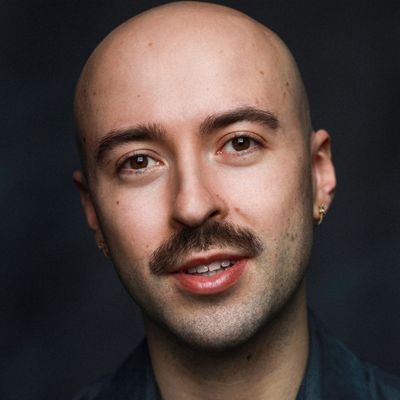
Rob Madge grew up staging living room musicals with wigs, smoke machines, and the unwavering support of their parents and grandmother—but what started as childhood play eventually became the viral, heartfelt, and Olivier-nominated solo show My Son’s a Queer (But What Can You Do?). In this episode, Rob shares how those home videos evolved into a theatrical sensation, and how a show born during lockdown has become a powerful celebration of queer joy, family, and radical acceptance—now heading to New York City Center for its limited U.S. debut.
We talk about everything from queer theory and comedy as activism to being a theater kid in a small UK village and why their grandmother was the ultimate co-conspirator. Rob opens up about the emotional weight of visibility, the importance of letting kids be themselves, and the unshakable confidence that comes from being loved early and completely. Plus, they reflect on their journey from Gavroche to leading their own story—and the joy of tweaking the show for each new audience.
Rob Madge is a writer and performer whose solo show My Son’s a Queer (But What Can You Do?) earned an Olivier Award nomination following its West End run. They began their career as a child actor in Mary Poppins, Oliver!, and Les Misérables, and trained at Sylvia Young Theatre School before studying English Literature at Warwick University. Rob also stars as the Emcee in Cabaret on the West End, and continues to explore themes of identity, family, and theatricality through their writing and performance.
Connect with Rob
- Instagram: @robmadge02
Connect with The Theatre Podcast:
- Support the podcast on Patreon and watch video versions of the episodes: Patreon.com/TheTheatrePodcast
- Twitter & Instagram: @theatre_podcast
- Facebook.com/OfficialTheatrePodcast
- TheTheatrePodcast.com
- Alan's personal Instagram: @alanseales
- Email me at feedback@thetheatrepodcast.com. I want to know what you think.
Transcript
This transcript was automatically generated and might contain errors.
[0:00] Rob Madge: Hello, I'm Rob Madge, and welcome to The Theatre Podcast with Alan Seales.
[0:11] Alan Seales: Today's guest is Rob Madge, who took childhood imagination to a whole new level, turning living room musicals, hand-sewn costumes from Grandma, and a deep love for Mary Poppins into a viral sensation that became a critically acclaimed solo show, when by critically, I mean Olivier Award-nominated. What started as a way to honor their family's support during lockdown became My Son's a Queer, But What Can You Do?, a hilarious, moving, and utterly original production that's now making its U.S. debut at the New York City Center. The conversation goes deep. We talk about VHS tapes turned activism, the surprising generational allyship that helped shape their journey, and even how comedy can be a radical act of joy and reclamation.
Rob's journey is incredible. I can't wait to share this with you. Make sure to find me online on all the social medias, and make sure to catch the show at New York City Center. It's only running for four days right after this episode drops, so you've got a short chance to check it out. And now, everyone, please enjoy this episode with Rob Madge.
[1:17] Alan Seales: Today's guest has been seen in West End productions of Mary Poppins, Les Mis, and Oliver, who, in addition to being an actor, is also a writer and storyteller, whose childhood VHS tapes became the blueprint for a heartfelt, hilarious, and critically acclaimed solo show called My Son's a Queer, But What Can You Do? The show puts them into the spotlight, blending personal history with theatrical spectacle in a way only they could. From parading around as Mary Poppins to rewriting what it meant to be yourself on stage, they've turned their living room into a revolution and brought the audience along with them. After a sold-out Olivier Award-nominated West End run, the show is now making its long-awaited U.S. debut with a special limited engagement at New York City Center this June 12-15.
[2:16] Rob Madge: I hope that's how you wrote it.
[2:17] Alan Seales: Absolutely. All things should be open to audience interpretation, and I love that interpretation of it. Yeah, great fun. Well, your one-person show, My Son's a Queer, But What Can You Do?
[2:31] Rob Madge: Yeah, you always have to do the extra high.
[2:33] Alan Seales: I know. I'm not sure I'm perfectly warm. It's finally coming to New York after the sold-out run. I mean, the show is your life story, but the episode of this podcast goes back and dives deep into your life, so I think we're going to have a little meta interview here because you're going to tell us about the show while you tell us about your life, but let's start with your young life.
[2:55] Rob Madge: Spoilers from the show. Yeah, I used to always put on shows as a kid, as I'm sure a lot of us used to do if we ended up in theater. It was my favorite thing to do. Other kids would run out and do sports at lunchtimes at school, and I would stay in the classroom and pretend to be Brandy, a Cinderella, singing in my own little corner. That was my pastime. So yeah, and then I just fell in love with theater and performing at the age of about four years old onwards, really. Never anything else I wanted to do.
[3:24] Alan Seales: Four years old, fell in love with theater in what part of the world? I won't make assumptions.
[3:31] Rob Madge: In a tiny little village in the middle of the United Kingdom near Birmingham, a city called Birmingham. Then I made the getaway to London at the age of nine to do Mary Poppins, which was wild because I was not used to the big bright lights of a city. It was very rural where I grew up, and I was the only flamboyant little monster running around.
[3:56] Alan Seales: Well, okay, so four years old, you were running around, and I know that at some point, your grandmother became a big part of this journey that you've had into discovering your own identity and writing your show and getting on theater. So if she has a play in this question, bring her into the answer. But from four to nine, between deciding you love theater and making your West End debut, what was that path?
[4:25] Rob Madge: I think the living room shows outgrew themselves, and I needed to channel them somewhere else. I think I got to the age of eight and asked for a smoke machine for my birthday.
[4:40] Alan Seales: I bet you're going to say, ask for a smoke? And I asked for a cigarette. Yeah, yeah. Hey, hey, grandma, I need to do Mary Poppins. Like a jaded old actress already.
[4:51] Rob Madge: Oh, God, eight shows a week. And so my parents found this community theater group called Stagecoach, which is still a big thing in the UK. Every Saturday, wannabe Broadway superstars get together, and they channel their Verona Divas. And from there, somebody said they had these open auditions going for Mary Poppins in London, and that was like a mythical place to me at the time. I'd never been. So I went along, dragged my mom and then got the job. But yeah, my grandmother was really one of the most influential, I guess. She was sort of my little comrade, my little companion, who if I wanted a little princess dress, I would go to grandma with the sewing kit, because I would be too frightened to buy one myself or go to a store and get the bell dress. So I'd ask my little spy grandmother to secretly make me one. So she was amazing. She gave me the confidence to go and try it out for real, I guess.
[5:58] Alan Seales: That's interesting that your grandmother's generation was the one to embrace, I guess, what we'll call a non-traditional sexual orientation or gender orientation, right?
[6:12] Rob Madge: I believe that we make a lot of excuses based on generational divides. And actually, I feel it's not so much generations in my eyes, it's who you surround yourself with and where you've been brought up and the circles that you associate yourselves with. And we all get to a point where we have the choice to continue learning and continue growing. Or we could say, no, I know everything now. And that's when problems occur, when we get outdated views, because somebody at some point in their life has said, I know the world now. But the world grows beyond you. And my grandparents and my parents are just the most embracing of any new thoughts, any new ideas. Obviously, it took my parents some time to use my correct pronouns, but they gave it a good go.
And they do it correctly. They're brilliant people, but they never sort of close the door to, that's silly. No, that's not how the world works. Well, it is. It's in front of you, and you have the option to listen and respond to the world around you. And my grandparents always did that. So yeah, I know plenty of people who are younger than me who aren't as accepting as my 94-year-old grandmother was. It's kind of wild.
[7:28] Alan Seales: Yeah, you're right. It's the circle of friends. It's what you're taught about how to learn.
[7:35] Rob Madge: Exactly. It's also a matter of privilege, I feel as well, to know how to accept one another, because I'm very lucky to have grown up with queer theory at university. And access to education is so important.
[7:52] Alan Seales: Is it queer theory?
[7:53] Rob Madge: Yeah, queer theory.
[7:54] Alan Seales: Was it a study?
[7:56] Rob Madge: It was part of my English literature degree. You pick certain modules. And yeah, I did a whole course on queer theory in 2014. And so now when people are saying, you can't say queer, I said, well, I was using that academically in 2014. But like I say, I'm very lucky to have had that education. And I think that's why education is so important and should be compulsory that people learn about our queer history, because it shouldn't just be reserved for those who can go to university. We should all have access to that information.
[8:32] Alan Seales: And I think especially it's intelligent. It's a good choice on your part to call the show My Sons Are Queer to use that word because it normalizes it. It normalizes all of this language.
[8:41] Rob Madge: Yeah, I like you say that. My intent is always to demystify the fear surrounding the word. I specifically want that word and the image underneath to be me looking as joyful as I possibly could. And that juxtaposition I find really interesting. That word that's used to often shame and subjugate us can actually be repurposed as a joyful celebratory word.
[9:01] Alan Seales: Well, I think it's kind of, is it the modern day gay? Because like, you know, decades ago, look at all these old songs like I'm happy and gay. That was a thing that everybody said. It didn't mean anything other than just joyful.
[9:12] Rob Madge: Yeah. And you know, I understand that it's a triggering term for people who have been subject to abuse based on that word. And my argument is also that for me growing up, gay was the slur. If people said you are, oh, that's so gay as a pejorative, as a derogatory statement. So I just want to take back ownership of things that have been taught to go against us. Well, they can work for us, actually, and we can be proud of that.
[9:44] Alan Seales: All right. So then let's stay in Little Robland because before you get to Mary Poppins, before you get to the West End, you're putting on shows in your living room. And they were recorded on and at least at some point either recorded on or transferred to VHS because that's included as part of the show.
[10:01] Rob Madge: Yes. Right. So what were you what shows were you putting on as a kid?
[10:08] Rob Madge: So you had your classic Disney's. You had your Beauty and the Beast, your Little Mermaids, which had full projection mapping. I made a whole set design on probably the equivalent of iMovie. What was it at the time? Windows Movie Maker. Oh, gosh. In the early 2000s. The Pinch Up Pro. Yeah. And the Bubble Machine and all the works. Mary Poppins. I guess for the smoke machine when you were a kid.
[10:26] Alan Seales: Yes. But one I don't talk about in My Son's a Queer. I did a full length musical of Desperate Housewives, which I'm very proud of.
[10:34] Rob Madge: Yeah. So it was quite niche, but it was a jukebox and it had the music of Legally Blonde and Sister Act. And basically what was popular in 2010, all those musicals, I think Eva Longoria's character sang Fabulous Baby or something. And Lynette Scarvo sang Hard Knock Life from Annie, as you can imagine, with how many children that poor woman had. And yes, it was. That was a fun show. My dad played all the husbands and I played all the wives.
[11:00] Alan Seales: I was going to ask if you were the one person going doing all the characters like you brought in your dad, you brought in were friends. Part of this.
[11:04] Rob Madge: Oh, absolutely. No, no way. Hell, they would have outshone me. No, it was very much. I play all the roles. And dad is stage manager and plays the blokes because I wanted to. And my mom was the camera operator. And my grandmother was usually the captive audience member, kept emphasis on captives. She had she was totally had no choice to watch those.
[11:27] Alan Seales: So you had a supportive, supportive, closed, which is a home life, right? And because you had your grandma and then your mom and dad and everyone was supporting you. And then, I mean, did you bring it home into I guess do that at home? Because I know that you talk about being bullied in the show.
[12:15] Rob Madge: So I always felt very odd and unique, probably in a negative sense. I was like, oh god, I wish I liked football, but I simply didn't. That's why I think it's really important to have visibility for younger kids, especially who are navigating the world and trying to see a reflection. There was nothing like that for me and it was only about nearly 30 years ago now, and even so, we've come so forward so quickly. People now have shows like Drag Race to look up to and so many examples, which is fantastic, but we never had that a couple of decades ago. So yeah, I certainly felt very different. I mean, what was I watching the other day? Oh, it was like Ace Ventura or something. I'll call it a classic movie, right?
And then being a transsexual, being trans was the punchline. Yeah, punching bag. Yeah, it was like being gay was a punching line. It's a story point and I remember, I think it was, oh gosh, Adam Driver and Kerry Russell. I forget the name of the play. It was a couple of years ago. It was probably like seven or eight, right? Like pretty recent, where I believe it was Brandon Uranowitz's character was gay, but it wasn't the plot point. And I was talking to him about it. He said it's the first time ever he's played a gay character when it wasn't. It was just is. It just wasn't part of the story in any particular thing, right? Yeah. That's what I want to show with this as well, that thing that I felt so odd and strange, but it was happening.
We've always been here and we just do exist, unfortunately, to those that don't want us to. And we always have done and we're not going anywhere. You know, 20 years ago, I was playing Ariel in my front room and it's not a new trendy thing for kids to be expressive. You know, when people say, oh, we are, you know, it never used to be like this, bad influences. Well, I was very happily, I just was. And I didn't know I was queer for want of a better term. I didn't know what my sexuality was or my gender at that point. I just was enjoying life the way I wanted to. It was just a fact. I've got an almost nine year old and a ten and a half year old, two boys who when they were, you know, toddlers, babies, they would put on whatever shoes they could and whatever.
They just wanted to be like mom and dad. So they put on her dresses or they put on her high heels. And like, I've got so many pictures, especially my little one, just like clomping around on my wife's side with my wife's high heels on. And it occurred to me in those moments, right, like shame and I guess shame, that sort of stuff is taught. It's a learned behavior. Because at that moment, I had the opportunity to say, boys don't wear those shoes, those only for a girl. Right. But instead, I pulled out my phone and started taking video because I thought it was the cutest thing. Yeah. And I just want to encourage them to like express whoever they want to be. And like you said, little kids want to express, they're always imagining, they're always dreaming up things.
And I think it's up to parents and adults and the people around them to make sure they don't hurt themselves. Yeah. To an extent. I think you need to hurt yourself to learn, learn where your guardrails are. But yeah, when it comes to this kind of stuff, this is all completely made up, taught behavior. Absolutely. Who and what should or shouldn't be something. Yeah. Yeah. Full agreement. And I believe that you just have to let them discover who they are. When you want to replicate yourself in, I'm not a parent, I don't know why I'm speaking for parents here. But all I know is that my parents, I'm so far removed from them. But we love each other dearly. But they're not theatrical. But they just rolled with it.
They rolled with the bunches, they rolled with the costume changes and they rolled with the smoke machines and they never questioned it. And we had a laugh. That's the crucial thing. I had such a laugh filled childhood. It was chaos and it was crazy and it was stupid and ridiculous. But my God, we smiled through it. They just embraced it. And they went, why not? Why not? Yeah. And that's everything. I mean, you watch documentaries or like even on this podcast, right? I've talked to so many people who are just where they are because they never saw themselves doing anything else. And it's you can kind of go either way. It's having obstacles put in front of you by society, by parents, by peers and saying, I'm going to overcome those because I need to be who I am or the blissful ignorance of just being shoved down this path.
Yes. Because no one ever told you that there should be any resistance. And as an adult, realizing that, oh, my gosh, other people had it way harder than I did. Well, that's the thing as well. And I think a lot of it boils down to, it does boil down to love and wanting to protect. But my what I've learned is that even with the most supportive family in the world, there will always be naysayers and there will always be somebody who tries to dull your shine. That's a fact of life, unfortunately, because everybody is entitled to their own opinion. But we don't exist as opinions. That's why you have to teach yourself. You don't exist as somebody's opinion. You just are. You be you and you'll flourish.
And if you have that support, it makes the naysayers wash off a duck's back. Because I was loved from such an early age and supported and accepted. Yeah, when I grow up, you are going to meet people who don't agree that non-binary is a lived experience. But I know that my parents think it is and I know that I am. So it makes it far easier to navigate the world. So I think if you're trying to protect your kids and trying to let them know how scary the world can be, don't you do that for them. You be their lifeline when the world does that to them. You don't need to replicate that. The world is going to do it. There's no getting around that. And all you will do in loving and supporting wholeheartedly is you'll speed up the process of their self-actualization.
You'll speed up the process of them loving themselves. Because I believe that even if you are unsupported from an early age, you will find your tribe and you will love yours. It will just take so much longer and you'll waste so much time and you'll make poor choices as a result. So loving your kids from day one, that will just make everything quicker, everything easier. It will make life simpler. That's what I believe. It will decomplicate a very complicated, divisive world. It can be so simple.
[18:50] Alan Seales: Don't go anywhere. We'll be right back after this break.
[18:54] Alan Seales: Welcome back to the episode. West End, Mary Poppins, you said you're nine, you moved to London for this. Was that, not was, I'm going to say it is. It must have been a giant culture shift, life shift, paradigm shift when all of a sudden you find peers that support you. I know I was very disappointed. I thought I was so unique and individual. It's like, damn, big fish, small pond syndrome. Well, Mary Poppins is slap bang in the middle of Old Compton Street, which if you don't know, is the equivalent of the West Village. It's Soho in the West End. It is the queerest hotspot of London, of the country probably. And I remember turning up for my first rehearsal and you'd see drag queens having a cigarette outside the stage door, just walking up and down the street.
And it was just mind blowing to me. I remember it being so colorful. I remember thinking, God, it's so bright and so dazzling. But I not once thought that, oh my gosh, there are scary gay people here. That's not what I thought. I just thought, wow, it's so colorful and beautiful and bright. That's what kids think. When people say that drag queens shouldn't read stories to children, these kids aren't going thinking about a drag queen when it comes to LGBTQ+. They're just seeing color and magic. They like costumes. They watch people shove their hands up puppets and make their mouth move and people inside giant yellow bird costumes. It's theater. It's just Razzmatazz, Razzle Dazzle, which kids love.
That's all it is. And that's all I remember. But it was such a great introduction to the world. But my gosh, yeah, it was really great to then. I mean, I was in the show with Scarlett Strahan was my Mary Poppins and Gavin Creel was my Bert. I was very, very blessed and very lucky for that to be my first introduction into this business. They really looked after me and supported me and made me feel so accepted again. But on a much wider scale, there's so many of us. Where were we all? That's what I think now, you know, when I look back and I go, God, I felt so alone as a kid putting on these shows and like secretly writing my Desperate Housewives musical and secretly playing Whitney Houston as the Fairy Godmother and singing Impossible in the classroom.
But there were so many of us in pockets across the world. We just needed to come together. And that's what theater does. I think that's why we all love it so much, because it's all these misfits that have found their tribe. All those kids on their own singing Rodgers and Hammerstein are now singing it as a choir, as a chorus. And that's why it's a beautiful industry.
[21:32] Rob Madge: Yeah, I love that term. I guess the unhomed misfits find their home with everybody else, because yeah, it's a place where everybody can come together and you have so much feeling that the only thing you can do is burst into song and dance. That's the only thing left to do. Words don't work enough anymore. Exactly.
[21:53] Alan Seales: And so at what point then in your, I guess, in your teen development, did you decide to start writing something on your own that would turn in this professional one person show?
[22:01] Rob Madge: I think for me, it was always the joy of creating. I don't think it was so much solely inhabiting a role and becoming somebody else. And it was never that for me. It was always, what is the show going to look like? How many costumes will I require? It was always like, I loved putting on the show, not so much just singing part of your world. I liked envisioning it. And how is the smoke machine going to go here? And where are the bubbles going to fall? And I love making programs and making the tickets. And it was everything about the backstage stuff. So writing came kind of naturally to me. And my dad's a hilarious, hilarious man. And he's always very good at observational comedy. So we'd like write little things together.
I remember it's how we first started. We wrote a pilot for a sitcom, which we sent to the BBC when I was like 12. And yeah, and it got quite far. And we got a lovely letter back saying, listen, this made like the final round, just so you know. Wow. Me and my John Madge should write a sitcom again. And that was so great. I think my dad would have been a brilliant comic. And he still could. Why not? So I learned a lot from him and how he would observe people. And then yeah, comedy writing just fell into place. And then I went to university when I was 18. I did an English literature. What do you do with a BA in English? They have an EQ so I'm going to theatre again. And yeah, I always tried to stream.
[26:24] Rob Madge: I really wrote it during lockdown in 2020 as a hobby to give me something to do, and also because I was living back with my parents for the first time since I was little, and I found all these VHS tapes and I thought, oh, I would like to, for the sake of my brain, to put it all into like a nicely packaged product that I can say, this is how brilliant you are, grandma, this is how amazing you are dad and mom, like just for them, really. And I remember I wrote it and I gave them the script and they read it and they went, this is so lovely, thank you. I wanted to channel it productively, my love for them, weirdly, I just suddenly, I felt like I'd taken them for granted, and all of a sudden I was 25 or something and found these VHS tapes of, you know, how amazing they always have been, and I just thought, god, I was so lucky and blessed.
So I just wrote it as a passion project, and then we got it on in an off West End theatre in 2021 to an audience of about 40 or something like that, and it was also Covid times where you had to have Perspex screens in between seats and everyone had to wear masks, which was hard for comedy. Yeah, so you're at 50% capacity, and then it took off at the Edinburgh Fringe, but each thing happened as a result of somebody watching a version of it and going, oh, we should now take it here. Okay, so then we'll go to Edinburgh. And then NIMAC's Nika Burns from came to watch it at the Fringe and said, oh, we should take this to the Garrick Theatre in London, did it in the Garrick Theatre then. ATG came to watch it and said, oh, we have a slot at the Ambassador's Theatre next January. So then we went there. So everything kind of just happens as a domino effect, and I've always just nodded and gone, sure, yes, why not?
[28:03] Alan Seales: The first domino, though, you said, yeah, we just put it up on an off West End, but like, that's a big step. That's a big domino to knock down first.
[28:10] Rob Madge: Yeah, well, and we were really lucky that to have assembled the creative team that we have during that time, because everybody was out of work. And there's no way I could ever get some of those people. I mean, Luke Shepard's our director, the director of Ann Juliet, and, you know, just for one day, and there's soon to be Paddington smash hit musical, it's going to take the West End by storm. So the fact that we got people like him and is just phenomenal. And, but we were all just out of work, theatre people looking for something to do. So you send out a few messages, you go, Do you want to give this a go there? Yeah, why not? And then it just blew up beyond anything we could ever have imagined.
[28:45] Alan Seales: Well, okay, let's back up even further than you wrote the script, because you were at home with your parents wanted to give something to your parents and your grandmother. Yeah. And when what, when did you say like, Oh, there's something here, why not just go write a Little Mermaid parody or something else that would float your boat?
[29:02] Rob Madge: It was really a product of the videos that I would post online, I would share some of these home videos, which I thought were quite funny. And I just wanted to entertain people in the past and show my parents off, like, look how funny they were and how brilliant they are. And then I received one comment from a parent who said, I've got a beautiful little boy who used to be a little girl. And once we came out to his friends, parents, and our community, and our neighborhood has kind of turned their backs on us. And I thought that was so insane that my silly video of me just playing dress up with my dad could engender such a response like that. I thought, Oh, there's something, there's a bigger story to tell here.
It's not just, Aha, look how funny and outrageous these living room shows were. Aren't they silly and camp? It's like, my parents can be role models in a way. And of course, they don't consider themselves that they get on with it. They're so sort of the earth, British, sarcastic. Well, hell, we aren't role models, you know? But they really are. They're kind of like, and the theatre community has just embraced them. It's hilarious. Whenever they go anywhere, I'm so, I fall by the wayside. They are the stars of the moment, and rightfully so. So I wanted to do something that answered that commenter's question of, she essentially said, what do I do? How do we navigate this? My son's queer, but what can you do? There's not much you can do. You've just got to roll with it.
[30:36] Alan Seales: Oh, I love that. All right. So the title is really like answering this one comment.
[30:41] Rob Madge: Well, I guess so, unintentionally. I mean, it's...
[30:44] Alan Seales: Yeah, not on purpose, but it's like for the world. When they see this, they're like, well, my son's a queer. What can you do?
[30:50] Rob Madge: Yeah. And I don't have the answer really to that. All I know is that my parents just embraced me and we got on with it. But really the title in its most simplest of format, and this is how I thought it up. It's a parody of a line from Les Mis. So I wrote the show initially with a very, very niche fan base in mind that knew that I played Gavroche in the Les Mis Robert 25th anniversary concert. So I thought, oh, it'd be nice if the title could sort of do a nod to me being Gavroche once upon a time. And Tanadier has a line. He goes, this one's a queer, but what can you do? And it always gets a giggle. Here comes a prince. There goes a Jew. This one's a queer, but what can you do? And I thought, my son's a queer, but what can you do?
All it is is a pastiche of that famous lyric. And then, of course, you put it in big pink letters and suddenly you can't say the word queer. I said, well, it's been in Les Mis since 1985, actually. It's been in Cole Porter for longer than that.
[31:43] Alan Seales: Exactly.
[31:43] Rob Madge: Yeah, yeah. I mean, all this stuff. Like I was saying, the language goes back 50, 60, 70 years.
[31:48] Alan Seales: Exactly.
[31:48] Rob Madge: Yeah. Anyway, so it starts to go one domino after another, after another. And are you refining? Are you changing? Or is it just like, yeah.
[31:56] Rob Madge: Constant.
[31:57] Alan Seales: Yeah, constantly.
[31:58] Rob Madge: This morning.
[31:59] Alan Seales: Really?
[31:59] Rob Madge: This morning. It never stops. It never stops. And even when we do the show, it's never completely locked because the audience in a solo show become the other characters and they will provide new lines every single day. And then they always give me something to play off of. So I have to always apologize to all the hardworking team that, listen, it is going to continue to evolve, but that's OK. Obviously, cues have to remain the same. I will never stress people out that much, but there might be the odd joke or gag that shifts every now and then. And I think it should always evolve. And I think if you're not adapting to what an audience is responding to, what's the point in having them? You know, it's a reciprocal relationship.
[32:43] Alan Seales: Yeah, yeah. And you're talking to them.
[32:45] Rob Madge: Exactly. And I never understand when people are so precious about their work to the point where the audience just isn't getting it, but they wrote it this way. So this is how it will be. No, we must listen to them. We must engage with them. Otherwise, it may as well be a film.
[33:02] Alan Seales: Right. And if you're in it for any sort of commercial success, you have to engage with them because they have to want to tell their friends. I mean, that's the business of show business.
[33:07] Rob Madge: Completely, yeah.
[33:08] Alan Seales: While still being true to who you are, who you want to write or who you want to write to be, so.
[33:13] Rob Madge: And of course, the show is so now its whole premise feels so much more urgent than it was in twenty twenty one when we first put it on in the space of two, three, four, yeah, four years. It feels like the political upheaval has been crazy in those four years. So what was a simpler, happier show? It's still that, but it feels like there's more potency, there's more relevancy than ever before to tell this story. So it's constantly evolving and growing in that way. So even though some of the lyrics might not have changed, the way they're delivered and the way they probably and the way they hit the audience probably have a totally different response now.
[33:50] Alan Seales: And you're I heard you were saying earlier that you're in Zits Pro. You have Zits Pro tonight.
[33:59] Rob Madge: Yeah.
[34:02] Alan Seales: So with the full orchestra and everything. So have you you haven't done it in New York in front of an audience yet?
[34:04] Rob Madge: No.
[34:04] Alan Seales: So I know that New York and English audiences, American English audiences are somewhat different. Have you changed any of the show, the lyrics, the lines for different regions wherever you're performing?
[34:13] Rob Madge: Yes. There are some niche references that just have to go. And it's been funny trying to find things that we share in common because we I wouldn't ever say that, you know, in the UK, I'd say we went to Tesco's. You don't have Tesco's, but then I'm not going to say that we went to Wal-Mart because we don't have Wal-Mart. So it's finding things that we both understand and share in common that garner the same response, you know, and that's just an example. But there were plenty of moments that I thought this won't quite work. And this moment that probably didn't work over in the UK will really work here. So, yeah, and we'll see, you know, and the first show probably will be different to the second show. We'll see what people respond to.
[34:56] Alan Seales: So when you finally went live on the West End, you know, your big house, full audience, and everything is going super well. Like what was some of the strangest and slash coolest reactions from the audience that you had?
[35:16] Rob Madge: We've been talking about the musical, and my favourite responses have been the dads that have been dragged by their wives or their daughters or their theatrical children who would never in a million years dream of seeing a show with the word queer, but they've rolled their eyes, they've turned up, they're missing the football for this. And then by the end of it, seeing how it's moved them and the conversations I have with them after the show is really special. And I think that's the most rewarding thing for me is changing people's minds. And I hope the title doesn't put people off for that reason, because I promise that you'll have a good time even if you would never in a million years dream of seeing a show with the word queer in it.
[36:47] Rob Madge: Come and watch. I think it goes beyond sexuality, gender identity. Fundamentally, on a literal level, it will always be for the queer community and an acknowledgement that we are going to be okay and we shall be okay and we shall get through this together. Ultimately, that is the most important thing for me. On a wider level, we can't be preaching to the choir. We have to be educating people. And I use comedy for that. I think comedy is such a good way of enticing people in and then you pull the rug. I just think theatre in general is such a powerful form of activism when done correctly because it's unexpected and to entertain and also educate I think can be really powerful. So hopefully there's something in it for everybody. I'm not standing on no pedestal. It's still very funny and it's still a theatrical experience. It's still a camp old play with songs, but hopefully you'll get something a bit deeper out of it.
[37:57] Rob Madge: I think that's the best kind of comedy when you're with someone in the whole journey, you're with the show, the film, whatever you're watching and then at the end of it, like you said, get the rug pulled out. That's a good way of putting it because it's like I'm in, you've got my attention, you've held me for 30 minutes, an hour, an hour and a half and all of a sudden, you flip it back and make us look at ourselves in a way that I'm like, oh shit, you're right, you're right. I do need to look at that differently, whatever it is. And so I absolutely love this type of comedy and I can't wait to see the show when it opens in like three days.
[38:31] Rob Madge: Oh God, I picked it up now, haven't I? You're like, what's this? No, no, no. I mean, I heard so many good things, like literally so many good things and so much excitement for the show. So don't go anywhere. We'll be right back after this break.
[38:45] Alan Seales: Welcome back to the episode. So I'm touching Cabaret real quick because it's a show now that has been running for a while. It's been huge in West End and here in New York. So is that something that you have to go to like a different place, a different Rob to get to pull that out?
[39:04] Rob Madge: Yeah, it's great to fully inhabit a role that isn't myself. It's been a long time of doing Rob, even though that's still, you know, the Rob that you'll see in My Son's A Queer is a far more heightened version of the Rob you're chatting to today. But to fully transform myself as the MC is just, yeah, it's been a long time. I'm stretching the acting limbs again, which is great fun. But yeah, it's I mean, again, that's a show that is it's a timeless show Cabaret. I mean, again, it feels far more urgent than ever before to be telling that kind of story. We're kind of at the same sort of yeah, we're at the same historical precipice. I feel 1929 Weimar Berlin 2025. It's like that slow gradual uprising and shows like that are so needed and people really need to heed its message.
So it feels very potent and very relevant to be doing that show right now. And it's heavy. It's a heavy thing to put on eight shows a week, eight times a week. But it's an honor to do it. I think it's a masterpiece.
[40:17] Alan Seales: Well, do you prefer that kind of role where it is heavy? It's eight shows a week is intense like physically and emotionally. And then even for your show, My Son's A Queer, you are the show. Right. So when you're doing that eight times a week, like help. So what do you do? What do you do to rejuvenate, to relax, to like, get your energy back?
[40:38] Rob Madge: I've got a great sense of humor. My Midland parents who aren't theatrical at all ground me, you know, and they keep me they keep my feet firmly on the ground. They we don't take it too seriously. And I think that's so important to take. You've got to take your work really seriously in moderation. And they've always taught me that. And I go back and see them a lot. You know, I live in London now. They don't live in London. But every chance I got, I go back to, you know, my roots where no one's even heard of Cabaret. You know, I tell people in the local village pub that I'm playing the MC in Cabaret and they haven't got a clue what I'm talking about, which is lovely.
[41:17] Alan Seales: Oh, you're a party host.
[41:19] Rob Madge: I know. How do they not know that? But it's really important, I think, because it can get so overwhelming and it can get so all consuming that it's really great to have those avenues where it is so not anybody else's party. And the world is a huge place. There are so many things going on in the world. People have so, so much crap going on that whenever we have, you know, issues putting on shows and all that, it pales in comparison to what a lot of other people go through. So take it really seriously when you do it. But also know that it's a job. It's work and you can shut the door on it and then unwind and then repeat.
[42:01] Rob Madge: Leave it at the office.
[42:03] Alan Seales: Yeah, I think it's important to do that because otherwise it gets, oh, I get in my little head too much, you know. The anxiety is overwhelming. You've got to have a giggle.
[42:15] Alan Seales: So now we're going to shift to one of my favourite closing games, Plot in 60 Seconds.
[42:19] Rob Madge: Oh, gosh. Okay. This is where I'm exposed for actually not knowing musical theatre at all.
[42:24] Alan Seales: Eight.
[42:25] Rob Madge: Eight corresponds to...
[42:28] Rob Madge: I'm going to pull up my thingy.
[42:31] Rob Madge: Okay, no. All right. So eight corresponds to The Sound of Music. Go!
[42:36] Rob Madge: The Sound of Music is about an icon who just likes to sing and dance a bit, but society tries to silence her and say, no, you must sit and pray. And she goes, no, girl, I'm going to go on the hills and I'm going to have a good old time. But then she meets a man. Oh, my God. And then she's like, actually, no, I'm not going to sing and dance. I'm going to be a mum. Boring. But actually, no, she teaches these kids to play with puppets. Oh, my God. She loves a marionette. And she teaches the kids to express themselves. She makes lederhosen out of curtains. What a woman. Drag on a dime. But then the Nazis come. It all gets very sad for the last 20 minutes. But then they escape and go on a mountain. And then there's some opera singing.
[43:13] Rob Madge: And the hills are alive.
[43:14] Alan Seales: And the hills are alive with the sound of music. I've got 20 seconds left.
[43:16] Rob Madge: That was 40 seconds. Very good plot. Very good plot. All right. So now we'll wrap up with the three standard closing questions. That was excellent, by the way.
[43:25] Rob Madge: Thank you so much.
[43:26] Alan Seales: First one simply is just what motivates you.
[43:29] Rob Madge: Laughter. I love to make people giggle. I love the sound of people laughing. I love it when somebody makes me laugh. And that's how I navigate the world with a good old sense of humor. And if we can, if we can laugh our way through the next tumultuous period of time, it's just the best medicine.
[43:55] Alan Seales: Yeah. All right. If you could give advice to your younger self and younger people listening now starting out down a similar path, what would you say? I think the answer is I'd write a show about it. What would you say?
[44:10] Rob Madge: Yes. Keep all the VHS tapes. They're going to be lucrative one day. Don't let dad throw any of them away. Make the most of your hair because it's going to evade you very quickly. And say thanks to your grandparents more often. And if you are lucky enough to be supported, know that that's quite rare and it shouldn't be rare. And yeah, have gratitude and and also know that they're as lucky as you are. You bring joy into their life. And I think that's we shouldn't feel fortunate to be loved unconditionally by our parents. I think it's I also have to train myself out of saying how lucky I am. I think it's I think it's a bad. I think it puts pressure on an individual for something that they never that should be a given. You know, you're not lucky to be loved. You know, you correct. You are loved as it should be. And walk with pride with your head held high.
[45:18] Alan Seales: I love that. Okay. Last question. Hardest one. If you can only see one show for the rest of your life, you can see it as many times as you want. You know what you're going to say. What would you say?
[45:25] Rob Madge: Death Becomes Her. Over and over and over again.
[45:30] Alan Seales: Oh, good. Current Broadway cast, I guess. The only Broadway cast.
[45:34] Rob Madge: Jennifer Simard. I just I just think it's such genius work. Any kind of show that embraces its theatricality. I love how it embraces its form. It doesn't pretend to be the film on stage. It is a musical and they use all the tools. No spoilers if you haven't seen the show, but they use all the possible theatrical tools available to them.
[45:54] Rob Madge: And they don't try to hide it.
[45:55] Alan Seales: And they don't try and hide it. And it's all the better for it. I think it's a brilliant piece of comedy.
[46:00] Rob Madge: So can't be in the best way.
[46:02] Alan Seales: Yes. Love it so much. I agree. All right. So where can we find you online on social media? Connect with you. Go see the show.
[46:07] Rob Madge: I am Rob Madge on all platforms. Rob Madge 02 on Instagram, I believe, because I made it when I was Gavrush in the Les Miserables 02 arena concert. And I can't change it. It's so embarrassing.
[46:20] Rob Madge: Rob Madge Oxygen 02.
[46:22] Alan Seales: Yeah.
[46:23] Rob Madge: Yeah.
[46:24] Rob Madge: As you live and breathe. And the show, My Sons Are Queer, will be at New York City Center from June the 12th to the 15th. And then hopefully there's a life beyond that. Listen, like I say, I always...
[46:35] Rob Madge: The dominoes keep falling.
[46:36] Alan Seales: I always nod and say yes to that dominoes, Paul. Yeah.
[46:39] Alan Seales: That's right. Well, you can find me on Instagram, Twitter, Facebook, TikTok, all the places. I don't have it in front of me, so I'm going off of memory. I'm just there. Thanks to Jukebox The Ghost for the intro and outro music you are hearing right now under the episode. Rob, thank you so much. It's been such a pleasure getting to meet you.
[46:54] Rob Madge: What a joy. Thank you so much.
© Broadway Podcast Network, All Rights Reserved