

Jack Viertel has quietly shaped Broadway for decades, guiding landmark productions from behind the scenes while rarely stepping into the spotlight himself... Read More
From the show: The Theatre Podcast with Alan Seales
Guests
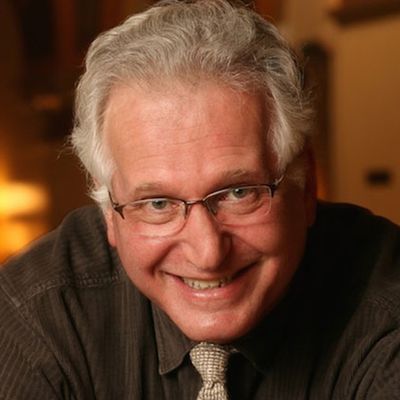
About
Jack Viertel has quietly shaped Broadway for decades, guiding landmark productions from behind the scenes while rarely stepping into the spotlight himself. In this conversation, he opens up about the art and the business of theatre, reflecting on how shows get chosen, how failures and successes both shape a career, and why Broadway has always been in a cycle of decline and rebirth. We also wander into the bigger picture — what the industry is doing right, where it stumbles, and what it will take to keep live theatre thriving for future generations.
Of course, Jack’s influence isn’t limited to the stage. He’s also a writer with a brand-new crime thriller, The Glass Eel, co-written with his son Josh. Described as “Breaking Bad on the coast of Maine,” the novel dives into the murky world of baby eels, environmental stakes, and the dark edges of human ambition. Jack shares how the story came to life, what it was like to collaborate with family, and why storytelling — in any form — remains at the heart of his work.
Jack Viertel served for decades as Senior Vice President and Creative Director at Jujamcyn Theaters, helping shepherd productions including Into the Woods, M. Butterfly, Angels in America, The Producers, Book of Mormon, and Dear Evan Hansen to Broadway. He was also Artistic Director of New York City Center’s Encores! series, and is the author of The Secret Life of the American Musical, Broadway Melody, and now The Glass Eel, co-written with his son.
Connect with Jack:
- Website: jackviertel.com
- Book site: jjviertel.com
Connect with The Theatre Podcast:
- Support the podcast on Patreon and watch video versions of the episodes: Patreon.com/TheTheatrePodcast
- Twitter & Instagram: @theatre_podcast
- Facebook.com/OfficialTheatrePodcast
- TheTheatrePodcast.com
- Alan's personal Instagram: @alanseales
- Email me at feedback@thetheatrepodcast.com. I want to know what you think.
Transcript
This transcript was automatically generated and might contain errors.
[0:00] Jack Viertel: Hi, I'm Jack Viertel, and you're listening to The Theatre Podcast with Alan Seales.
[0:11] Alan Seales: Hey, everyone, and welcome back to The Theatre Podcast. I'm your host, Alan Seales, and today's guest is one of those rare people whose influence on Broadway is so deep and far-reaching that most audiences don't even realize how much of what they love exists because of this person, Jack Viertel. And for decades, he's been the guiding hand behind shows that redefine the art form, helped shape the theatrical landscape in ways that still ripple across the industry today, and has left his fingerprints all over Broadway. He's also an author with a brand new crime thriller out now called The Glass Eel, which sounds incredibly interesting. But a quick heads up, we go into a full deep dive about how Broadway works, how it could work better, and why some things may unfortunately never change.
So buckle up, pour yourself something strong of any beverage of choice, because this is one of those conversations that pulls back the curtain in a way you don't often get to hear. Find me online on social media. You can watch the video version of this episode on Spotify or Patreon, as always. And now, everybody, please enjoy this episode with Jack Viertel.
[1:20] Alan Seales: Today's guest is someone whose fingerprints are all over Broadway history and has most likely influenced you in a way that you have never even realized. For decades, he was the senior vice president and creative director at Jujamcyn Theaters, shepherding shows like Into the Woods, M. Butterfly, Angels in America, The Producers, Book of Mormon, Dear Evan Hansen, so many more, all the way to the Broadway stage. And he's been a dramaturg, a conceiver, a producer, and has been helping shape the theatrical landscape in ways that we will never fully realize. But there's more! His creative reach doesn't stop there. He's got a brand new crime thriller. He's also an author. This crime thriller is out right now called The Glass Eel, a story that's been described as Breaking Bad on the coast of Maine. I just want to dive into this. Holy crap. Jack Viertel, welcome to The Theatre Podcast.
[2:07] Jack Viertel: Thank you so much. Thank you for having me. I really appreciate it.
[2:10] Alan Seales: So you're involved in Broadway in ways that I think so many people will never even fully realize. I said this multiple times in the intro. I'm going to come back to this, but I want to dive into the author part of your life because obviously you've got this new book that just came out today as we're releasing this episode called The Glass Eel, which you happen to co-write with your son, Josh, yes?
[2:32] Jack Viertel: Yes, that's correct.
[2:39] Alan Seales: And so where did the author side of life come into all of this? And then why add on the additional burden? Is it a burden or a pleasure of working with a co-author that you happen to be related to?
[2:44] Jack Viertel: In this case where it's my son, it's been purely a pleasure. I can imagine it being a burden in other circumstances. This book happened because I always sort of thought I would be an author of some kind. And then in 2016, I had a nonfiction book called The Secret Life of the American Musical that was published, which is still very much in print, I'm happy to say. And then a novel, what, like a year and a half or two years ago called Broadway Melody. And my son, who is not a professional writer, he has written columns for The Atlantic online, but he basically is a farmer and an environmental activist, said to me, I have an idea for a thriller and I think it'd be great on Netflix. And I said, well, I have no idea how to get to Netflix.
I mean, and you have no idea how to get to Netflix, but I have written books and maybe we should see if we can write it as a book. And it really was a wonderful idea. And it was set on the coast of Maine where I live almost half the year. So I understood a lot about the characters and the mood and the visual side of things. He understood this story that he had come up with or has come up with. And we went to work together and it was great fun. He has an enormous amount of environmental information and advocacy attitude. And I like people and how they talk and based on where they are. And we both love thrillers. And so we just did it. I don't know how we did it. We did it mostly in Szechuan restaurants.
[4:18] Alan Seales: Okay. Well, the story has been described, let's see, as Breaking Bad on the coast of Maine, but instead of blue crystal meth, it's baby eels at the center of the drama. It's a dark, suspenseful, thrilling thriller. And I guess the baby eels part of this, is this real? Is this a real thing? People are like growing and selling on the black market.
[4:43] Jack Viertel: That is one of the things in the book that actually is real. Although, like with most thrillers, there's a lot of stretching of a lot of other things. But yes, there is a big black market in Elvers, which are baby little glass eels that you can actually see right through. They're about three inches long. They fetch about $2,000 a pound. And there's a legal Elvers market, but it's very heavily regulated by the state. So naturally there's a black market. And what the black market does, and what the legal market does, is that they capture these eels who come into creeks. They're actually born in the Sargasso Sea, which is way the hell and gone down south and east of here, in between Florida and Africa someplace.
And they're trapped and then sold to aggregators and then shipped to Asia, where they're grown up into full-sized eels and eventually turned into unagi for sushi. So if you've ever had a piece of unagi, avocado roll, whatever, my son says, you're complicit in this market somehow or other. And people do dangerous things to get their hands on these guys.
[6:01] Alan Seales: Why did this get turned into a book? I guess your son wanted to make—
[6:02] Jack Viertel: Well, it didn't seem like a musical if you want to know the truth.
[6:03] Jack Viertel: I said it didn't seem like a musical.
[6:06] Alan Seales: What's that?
[6:09] Alan Seales: Well, that was one of my questions. When is this going to get turned into a musical? That's for sure. But you're something of a farmer and environmentalist and a bit of an activist too, right? Why not take this story or take this situation and, I mean, I guess maybe he is or you are. Is there something more beyond the story just than bringing awareness to this kind of trade?
[6:31] Jack Viertel: Well, there's a fair amount of nonfiction study of this. I mean, if you look at our website, which is jjviertel.com, you'll see references. You can link to articles about the actual glass eel trade and the fact that they're an environmentally challenged species. But we wanted to have fun and write a thriller, and this was such an obscure, odd thing. So many thrillers are about drugs or about sex. We wanted to do one that was about something that we thought, no one's ever going to write a thriller about this, so we will.
[7:05] Alan Seales: That could be the sequel. It's the druggy sex version of Baby Eels.
[7:08] Jack Viertel: Right, exactly.
[7:09] Alan Seales: Yeah. And that is what gets turned into a musical. Drug, sex, and Baby Eels the musical.
[7:16] Jack Viertel: Right? It's a rock and roll opera thriller.
[7:18] Alan Seales: I'm ready. Yeah.
[7:19] Alan Seales: Well then, all right, getting into the Broadway stuff, just rewind a couple decades. Tell me about when you were a kid. What got you into being interested in theater, performing arts? What did you originally want to do when you were little?
[7:35] Jack Viertel: Well, it was one very simple act of criminal insanity, which was that my parents and my grandmother took me to see Mary Martin and Peter Pan right before my sixth birthday. And at the end of that performance, I knew I wanted to be in the theater and that I didn't want to do anything else. And I really almost completely stuck to that idea with the exception of a couple of years in the early 70s when I thought maybe I wanted to be a screenwriter, which was a really stupid mistake. I fell in love with the theater. I fell completely in love with the theater. And I remember so much about that performance. But oddly, one of the things I remember about it, I was, as I said, not quite six years old.
We sat in the front row. We were A1M3 or AA1M3 at the Winter Garden, looking down into the pit and seeing all these shiny brass instruments that played music. And I fell in love with the thing probably halfway through the overture, if there even is an overture to Peter Pan. I'm not sure there is one. But anyway, that was it. And then my parents were very much theater people. My father's father actually built two Broadway theaters as a contractor, not as a theater owner, and briefly became a theater owner during the Great Depression when someone defaulted on him. My father wrote a play that was produced on Broadway in 1937 and ran for two weeks. And then he retreated into the building business with his father.
And they went to the theater all the time. They took me to the theater all the time. And when I was 13, they said, you can go by yourself. We lived in Stanford, Connecticut, which is an hour-long train ride. And in those days, the city was not particularly dangerous or anything. They just said, be home, go in on Saturday, see a matinee, be back before dinner. And so I did every Saturday. Beginning at 62, I was 13 years old. I can tell you a lot about the 1962 season.
[9:22] Alan Seales: That's crazy. And do you think that sort of unsupervised, not unsupervised in a bad way, just the ability to be independent and find out who you are and what you want to do, being able to go on a train ride into a major city when you're 13 and see these incredible shows, do you feel like that sort of shaped who you became as a teenager into a young adult? Did you build any confidence doing this? Or was it just all kind of who you are?
[9:53] Jack Viertel: Because I've always wanted to spend a lot of time by myself uninterrupted. A lot of my life goes on inside my head. And so getting on a train and going in and find, I never had a ticket when I got on the train. I had a train ticket, but I never had a theater ticket. Wandering up and down the streets of the theater district and saying, oh, well, here's the show called Pearly Victorious, and there are seats available for the matinee in the balcony for $3. I'm going to see that show. And then I didn't have to discuss it with anybody at intermission. I've always enjoyed that aspect of it. Although I like going with other people and talking about the theater as I'm talking about it with you now. But there's a part of me that's always really appreciated.
This is just me inside my head having an experience. And the theater did that for me to some degree. Because it's a very social experience for the people on stage. They're telling a story. They hate each other. They love each other. They're fighting with each other. But I just had to sit there and let it be in my head. And as a 13-year-old too, I think that's a very emotionally impressionable time.
[10:58] Alan Seales: Yeah. I didn't have a lot of friends in school. I wasn't very good at socializing, but I liked being by myself.
[11:04] Alan Seales: Well then, okay. Would you consider yourself an introvert or an extrovert? Because introverts to me are basically kind of...
[11:17] Jack Viertel: Well, I'm generalizing here. So I realize this. But a lot of introverts don't want to go out. They like to stay in. But you're saying you like to go out, but you like to be by yourself when you're out. So looking back, have you ever... I mean, I guess, have you ever taken a personality test? And so have you figured out sort of where you are on that spectrum?
[11:42] Jack Viertel: No, but I know myself, I think, well enough that I am fundamentally an introvert, but I'm also fundamentally very insecure about being an extrovert. And this is partly because I can't remember anyone's name. And I'm not even very good at remembering faces. And I'm continually in a state of thinking something's...
[12:00] Alan Seales: Growing up then, did you find the scriptedness, the knowing what was coming next of theatre, of musical theatre, was that part of what you really fell in love with or drew you to it professionally? I'm trying to get into the psyche of all of this.
[12:43] Jack Viertel: Yes, I'm not sure I know how to answer that. You know, when you're young, you go to the theatre or the movies or any entertainment form and you see actors and you think, oh, well, that's what that form is. It's actors, so I guess I want to be an actor. I wasn't a particularly talented actor, although I did very well in high school. But by the time I got to college, it was clear that there were people who were much more talented than me. I think the notion of somehow being part of that cabal in a show without being an actor, being backstage, being someone who's just helping, helping it happen, helping create it in one way or another was very, very attractive to me. It's basically how I spent my career.
I've been the generating creator of a couple of shows, including one that we just closed a couple of days ago in Phoenix called Let the Good Times Roll, which we'll probably see a workshop in the spring. But most of my career, I've been either a dramaturge or a creative consultant or a person who goes out and looks at shows and says to his boss, book that one, don't book that one. I've not been really in a driver's seat and haven't wanted to be in a driver's seat until very recently in my career. I think when I became, and this is a whole other subject, when I became the artistic director of Encores!, the Encores! series at City Center, which was in 2000, and my first season was in 2001, that's the first time I really was the boss of something. And I got to like it, not immediately, but I got to like it a lot by about the third year.
[14:26] Alan Seales: Well, being the boss then, you're the one who takes the responsibility if something goes wrong. That's correct.
[14:29] Jack Viertel: So I think that's probably why you didn't want to be the boss at first, and then you got this confidence. You're like, yeah, I could do this, right?
[14:39] Jack Viertel: Yeah, I think that's probably right. And sometimes you are responsible for theatrical calamity. I mean, and also the fact that you work for 15 years someplace, I ended up working for 30 years at Jujamcyn, and you have your share of calamities. You learn that that's that. There was a very funny moment when we did a show that closed in previews, which was a show I had advocated for doing. And Robert Landesman, who was my boss, said to me the next morning, well, you have to kill yourself. And I really appreciated it because what he meant, of course, was you don't have to kill yourself. Rocco's a big horse racing fanatic, so he knows you go to a racetrack, there's nine races. You're not going to win all nine races.
You'd be lucky if you win one race or two races. So you just have to let that be part of your life. You have to let failure be part of your life. And that was very hard for me at the beginning. And I still don't like it, but I understand that it goes with the territory.
[15:37] Alan Seales: Well, that show is called Face Value. It closed after eight previews, right?
[15:45] Jack Viertel: Yes.
[15:46] Alan Seales: And how early in your career was that? Because you have 37 Broadway credits listed, and they date all the way back to 1987. But I think Face Value was in '93? Do I have my trivia right?
[15:58] Jack Viertel: That would make sense. The first really important play that we did when I got to Jujamcyn was M. Butterfly. And Face Value was David Huang's next script after M. Butterfly. And I think all of us who had done very well, and I hadn't made any personal money, but the theater did very well, and the producers did very well, and the show won the Tony Award, felt if David had a new script and Stuart Ostroff, who had been the lead producer of M. Butterfly, was the lead producer of Face Value, we need to be part of this. And it's funny how when you feel that way, you can work up enthusiasm for something that perhaps you should have worked up less enthusiasm for. So then you go crashing forward, and pretty soon out come the tanks with guns blazing.
[17:00] Alan Seales: That's interesting. As a creative team, as someone on the decision-making team of, we need to greenlight this, or setting the rules, what are the ticket prices, if we're going to renovate the theater, everything that's going to happen to move a show in, right? So when do you ultimately, and is this experience or were you taught this? How did you figure this out? How do you figure out when to read the writing on the wall or how to read the writing on the wall of this just isn't going to work?
[17:20] Jack Viertel: Experience mainly. And of course, sometimes you can convince yourself that something's going to work. And then an audience convinces you that it's not going to work. In the case of Face Value, we had, you know, spent three weeks in Boston or four weeks in Boston, trying out and it was clear that it was not going to work. But Stuart really wanted to bring it in. And we had already booked the Court Theater, which is not even a Jujamcyn theater, now the James Earl Jones. And we came.
[17:46] Alan Seales: Is there something that you expected not to do well that turned out to be a massive success of any kind?
[17:51] Jack Viertel: Well, there's something I expected not to do well that did well, I wouldn't say a massive success. But we went into Grand Hotel very reluctantly, because I had looked at the material and said to Rocco, this is not very good material. I mean, this is just very, very routine level of writing. And he said quite smartly, it's Tommy Tune. And that's what I trust about it. And so we're doing it. So I think we put a million dollars into it in the days when a show cost, you know, $5 million, not $20 million.
[18:20] Alan Seales: Yeah.
[18:20] Jack Viertel: And of course, we were both right. Right. They fired all the writers out of town, brought in better writers. And the show turned out significantly better than it read on paper, partly because it was written by different people by the time it came into New York. But that was a nice surprise.
[18:37] Alan Seales: Don't go anywhere. We're going to take a quick commercial break. All right, everyone, now we're back. So one does not just become the senior vice president and creative director of a theater, a massive theater powerhouse. Like, how did you start getting into the dramaturge sort of scene? And then what led you to Jujamcyn? How did Jujamcyn notice you?
[19:01] Jack Viertel: I was my first job in the theater, real professional job in the theater was as a critic. And I was a critic for the Los Angeles Herald Examiner, which was the afternoon paper in Los Angeles, a very unsuccessful Hearst newspaper. The L.A. Times was obviously the dominant paper. They hired me because I had been writing freelance criticism for a free newspaper for $35 a review, and their critic retired. And so they hired me. And that was really fun. I loved being a critic for about five years. And then around the sixth year, they made me the arts editor of the paper. And I quickly realized that I was in the wrong business that, you know, if I did really well, they'd make me a city editor or something.
But I had no interest in the journalism business. I was only a theater critic because of the theater, not because of journalism. And so I managed to get myself hired by the Mark Tabor Forum, which is the big not-for-profit theater in L.A. as the dramaturg, which was a term I didn't understand. The only thing I knew was that their dramaturg had left to go be the artistic director of the Repertory Theater of St. Louis. So they were without a dramaturg. So I said, I can do that. I had no idea what the job description would be. And I knew Gordon Davidson, who was the artistic director because I kept panning the shows there. And little by little, I talked him into hiring me. So that was my first dramaturgical job. And we sort of invented what it would be as we went along.
[20:31] Alan Seales: But did he ever hold it against you if you were like, you keep writing crap about my shows?
[20:37] Jack Viertel: He did at one lunch right before he actually hired me. He said, why should I hire you? You write all these terrible things about my shows. And I said to him, well, you know, I'm only trying to assess them and possibly make them better the next time someone does them. Or, you know, I'm just it's just my feeling about it. And I think it's I didn't say this, but he said, well, you know, it's a smart you're smart. I mean, you know, I don't agree with you a lot of the time, but what you say is not stupid or vindictive. And he eventually hired me and we got along extremely well for the two years I was there. And then Rocco hired me to come to New York.
[21:11] Alan Seales: Well, that was where I want to take this next. Actually, the vindictiveness of how I feel a lot of reviews are written now, a lot of criticism. I don't feel like it's very constructive. I just I read a lot of these and it sounds personal a lot of times.
[21:27] Jack Viertel: I think it has gotten very personal, but I think all journalism and writing has gotten very personal. The notion that basically, as a critic for a daily newspaper, not for not or a daily source of some sort, not necessarily for The New Yorker or for some, you know, thoughtful essays about a particular player, playwright, but overnight reviews. The best of them, I think, long, long time ago by people like Walter Kerr and Brooks Atkinson were that they were good reporting. They told you what kind of a night it was and what kind of a show it was, and they didn't draw judgments about this kind of show shouldn't be done or should be done, or I'm insulted that they think I should sit through this.
They said, you know, this is a mystery thriller and it's a pretty good one kind of falls apart in the third act. You know, they were they were just doing a reportorial job with an opinion behind it and they could be mean. Well, I don't think Atkinson could be mean particularly. Kerr could be mean.
[22:26] Alan Seales: Why do you think that?
[22:30] Jack Viertel: Well, should they do this? Does this happen? And I just don't know about it. But when a show is getting put together, you workshop it, you do staged readings, you do all these different iterations to try to like refine it, refine it. Do critics get brought in under any kind of NDA early on, or is that really what a dramaturg is supposed to be doing?
[22:46] Jack Viertel: I think that's what the dramaturg is supposed to be doing. You know, when we get way back, I'm so old that I have all this information that no one remembers or cares about. But way back in the day, when you went to Boston, Elliott Norton, who was the critic, the chief critic out there for either the Globe or whatever the leading paper was, I guess it was the Boston Globe, was full of suggestions and very helpful. And some of the suggestions were really wrong headed. But he felt his mission since the show was trying out and changes were still being made was to say, you know, this would be better if X or Y. Right. And I think producers looked to him for that. There was no such thing as a dramaturg in those days.
You know, we're talking about the 50s and 60s. But I think that was considered an out of town critics prerogative. In town, the show is as finished as usually as it's going to get. And it is what it is. I mean, through the 50s, there were certain shows that actually made changes after they opened like Damn Yankees, but not many. Mainly what you saw was what you got. Right. And so the critic was saying, well, I went out last night and I saw this show and it's got good music. I really like the music and I wish the plot was stronger or whatever they said. And that was fine. I mean, it wasn't
[24:01] Jack Viertel: They were much more powerful than they are now because there was no other form of marketing really. But on the other hand, they weren't nearly as definitively cranky as they are now.
[24:13] Alan Seales: Cranky is a good word for it. I feel like there's a lot of crankiness going on of just being angry that they were forced to sit through yet another show that they just don't like.
[24:24] Jack Viertel: That's right. And they know going in that they're not going to like. And that's actually one of my favorite things is to expect a show to just kind of fall flat. Not in a, I want it to fail, but I'm like, this concept is so off the wall that how could it work? And then it turns into something like, Come From Away is one of my favorite examples of this. When I hear like, oh, they're writing a musical about 9-11. What? That's going to be, it's in terrible taste. No one should do it. And it's one of my favorite shows ever.
[24:56] Alan Seales: Yeah. Well, there have been some of those. No question about it. Well, I mean, I think that the world, the professional world thought MJ was like a disgraceful idea. How can you write a laudatory musical about this real life person who was not a good person? How long has it been running now? Like six years or something?
[25:13] Jack Viertel: Yeah. Yeah. You're right. It keeps going and it doesn't need the advertising. It just keeps going because the tickets are there.
[25:18] Alan Seales: Yeah. The time you spent, I guess, going through the multiple phases at Jujamcyn, what phases did you have before getting to the ultimate senior vice president and creative director?
[25:31] Jack Viertel: Well, the original mission was, this is in 1987 when I arrived, that Broadway was in a rut. There were lots of empty theaters. There were not that many full theaters. And Rocco Landesman had perceived quite correctly, I think, that the Schubert organization and the Nederlander organization really had strong ties to most of the important English producers and creators, right? Whether it was Andrew Lloyd Webber or Cameron Mackintosh or Tom Stoppard or any of those people. And whether it was Amadeus or Cats or whatever, they had those relationships and they were longstanding relationships. And he felt that there was absolutely no upside to going to war over shows like that with organizations that were much bigger and more powerful than they were.
That would just be a stupid thing to do. But our theaters were empty. So he said, well, we're going to have to make our own. We're going to have to roll our own here. And so I think I said, what's really missing from that whole equation is American artists. Where are the openings for the David Huangs and the Wendy Wassersteins? It was a whole bunch of really talented people writing plays, including August Wilson, who had had a show at Nederlander and two with Schubert, but both organizations had decided they'd sort of done their, gave it the office. And we went and we just said, we're going to do them all. He's writing 10 plays. We're going to do all the rest of them. And that was the plan. And then if there was an empty theater and somebody needed to book a theater with something that we didn't really care about, we would book it because you want to have a full theater.
But mostly that was the idea was that we were going to invent our own with mostly American talent and a particular interest of mine with non-white talent where we could. And we also did some of the first gay plays on Broadway, Love, Valor, Compassion and Take Me Out and those. So I was looking to create opportunity where there wasn't opportunity, but I was also looking to fill the theaters. And that meant both picking and also working on plays as they came along or courting either independent producers like Margo Lion, who had this crazy idea to make a musical about Jelly Roll Morton. We dove into that and then working on the shows as they were developing. And then at a certain point, Broadway really turned around partly because of Disney, partly because of the mall-izing of Times Square, making it a very safe tourist zone.
And the man who owned Jujamcyn, Jim Binger in Minneapolis said, you know, stop investing in all these shows that you're inventing. This is ridiculous. We can now do what we couldn't do before. We can rent the theaters. So at that point, I became more or less a tout. I would go around the country and, as I said, say book, you know, book Tommy, don't book a nameless musical that died in Wichita. And then Rocco eventually became head of the National Endowment for the Arts. He sold the company to Jordan Roth. And Jordan Roth really didn't want me even picking. He wanted me there as a more of a dramaturge more than anything else. And that's when I gained the title Senior Vice President. I was fine with it, but it wasn't my idea. I mean, he just he bumped Paul Libon and me up to two different positions that did had not existed before.
[29:13] Alan Seales: That's fascinating how seemingly, I mean, I know you probably work with tons of people and had teams that are helping you, but, you know, you mentioned you and one or two other people that are like, I want to attribute a lot of the revitalization of Broadway to with the help of, you know, Disney working with the city to clean up Times Square, then you're the one who's leading this charge to go out and say, we need diversity. We need different stories. We need original things. We need new. And now it's led down this path of where we are now. Of course, in the multiverse, there's all sorts of different variations of what's happened, but where we are now in this universe is a world where like everything I listed off in your bio in the beginning that you helped usher through to Broadway is something that has changed the landscape of Broadway and influenced others and impacted others in ways that, you know, probably you, I don't know if you've heard audience feedback from all these shows about how they've, you know, people like find salvation in a lot of these stories.
[30:19] Jack Viertel: I guess. I mean, I, I, I want people to be, to have an emotional experience with what's on stage. And I, and yes, it's wonderful if someone says this, this, this particular play changed my life. A couple of people said that to me about The Prom, which was a show that I sort of invented out of whole cloth and then didn't write, but I get a nice credit on it. And, uh, uh, and that's wonderful when that happens, but mainly I think people who go to the theater are happy when they've had an actual emotional experience with what they've seen. It doesn't have to change their life. It has to give them something that a good book or a good movie or a good symphony gives them some, some real feeling inside of them. And that's what you strive for.
[31:04] Alan Seales: I heard a story told by, by Izzy McKellen, Caitlin Kinnunen, um, from The Prom multiple times that, that, um, they, when they were doing their out of town, it was, it was in Atlanta, Atlanta, right. It was in the South. Um, you're doing this show about lesbian teens in the South. Uh, and somebody came up to them. I think it was the stage door. I could be butchering the story. Sorry if I am, but someone came up to them and it was this kind of gruff man and was like, if I had known what the show was about, I would have never come to see it. Dot, dot, dot. But I'm so glad that I did. It's truly changed how I feel about a lot of things.
[31:47] Jack Viertel: That's good. Right. That's a good thing when that happened. Right. And that's, that's the kind of thing that, that, you know, by just bringing stories to the stage in a safe space where people might show up because they're, they're somebody's plus one or they're taking their kids or whatever, all of a sudden, like you're teaching multi-generations how to think and empathize in a way that they probably wouldn't have otherwise. When that happens, it's a really good thing.
[32:11] Alan Seales: Yeah. Yeah, absolutely. And so then getting into the business of Brett of show business today, I have, I've been talking with so many people and I personally think that Broadway is kind of, uh, on a, on a, a very slow death because production costs keep going up while ticket sales are going down post COVID. It's not back to where it was pre COVID. It's, it's like the only way to have success. I'll put an air quotes in the U.S. less than is different, but in the U.S. is to have this massive commercial hit where you have to go big or go home and it's, and now I don't see anything that's really an original story anymore because you have to have IP that people know of. So there's brand recognition for them to want to spend an astronomical amount of money on a ticket for a show they haven't seen.
[33:04] Jack Viertel: I think that's mostly true. I think maybe Happy Ending gives a light of that to something.
[33:09] Alan Seales: That was exactly, that's exactly what I have said. That's different. And they barely made it to opening, right? Because they, because their ticket sales were so bad because they were an original IP, then they finally made it to opening, then word of mouth, then Tony awards, then, then, then that's a Cinderella harder to do now than it's ever been before.
[33:28] Jack Viertel: Exactly. Uh, but not impossible as we now know from at least one show. And I have to say, I think there are others that while they have some recognition like Buena Vista Social Club, huge brand names like, uh, George Clooney, you know, and they, and they manage, but I do agree that this is a big, this is a big problem. And it's partly has to do with the whole note and nature of marketing and that you market what you, what's the most marketable thing about your show, which is not necessarily that people like it. Um, but that it has a famous title or a famous actor or something. Um, and, and partly, uh, it's a function of cost, you know, I mean, it costs a lot of money to buy a ticket and it costs a lot of money to put on the show.
What I don't believe is that we're, that we're in a death spiral. I mean, Broadway has been in a death spiral since the Greeks and, uh, something will happen to change it. Uh, you know, and I don't know what, I have no idea what, but I've seen it change in any number of ways, any number of times in my very significantly long lifetime. And I believe it will be, it will, it will survive. I mean, one of the problems that you didn't mention that I think is a, was a big problem this summer is the lack of tourists. I mean, I think that, that, that, that the United States has scared off a lot of tourists and those are the people who buy tickets in the summer. And the summer went from being a dead time in the seventies and eighties to being a really good time. And I think this summer was a rude shock, but it was deader than anyone expected.
[35:00] Alan Seales: I haven't been paying attention to that part in the last month, but yeah, yeah, I, that makes a lot of sense. And that's what I, that's partially what I meant by, we're not where we were pre pandemic. I mean, in terms of audience attendance.
[35:07] Jack Viertel: Yeah, we're not. Yeah. Yeah. Yeah. I'm with you on that, but how would you wave a magic wand and fix it?
[35:11] Alan Seales: I would start with city subsidized tickets and caps on the amount that theaters can charge productions. I don't think you can do that, but I know you can't now.
[35:25] Jack Viertel: This is magic wand.
[35:25] Alan Seales: Oh, the magic wand. Oh yeah. I had one, but I left it in my other suit to the cleaners.
[35:33] Jack Viertel: I think that, you know, one of the misperceptions and this would be one thing I would really fight hard to do. One of the misperceptions is that it costs $900 to see George Clooney, but it didn't, there were people paying $900 to see George Clooney. But if you looked at the average ticket price for that show in any given week, it was probably between 250 and $280. I mean, people weren't sitting in premiums.
[36:32] Jack Viertel: It's a push-me-pull-you, but I do think it's a bad perception mistake that theatre tickets are not just expensive, they're astronomical. They're not astronomical. And then you have people like the lottery systems, the people using the lottery systems and student rush tickets, and there's ways to have accessible things. But I think a lot of what we hear is, maybe it is the marketing, because I think the $900 ticket I thought was attributed, I always attributed it to Othello, so it's Jake Gyllenhaal. You're right. Name your poison. Yeah, name your celebrity. But I could go see the same people on the West End for like 90 pounds and sit in the equivalent of the orchestra over there, right? So that's what I mean about the costs. If the city were to support the arts in the way here that the way they do there, I think it would be a much different ecosystem.
[37:37] Alan Seales: Yeah, I don't think there's ever been much government support, city, state, or federal, for commercial arts. I mean, as far as the government is concerned, this is a business like any other business. It's up to you. How much gasoline can you sell in a week? Which is really unfortunate and very, not unique, unusual, I think, among liberal democracies, which is what we had up until recently. Most of the European countries do support the arts, and it's made a huge difference. And I think what people get out of the arts is productive for the rest of the economy where that's been shown over and over and over again, but it has not convinced the government to do anything about it really in any significant way.
[38:20] Jack Viertel: No, and that's where I would wave my magic wand, would just say like, let's have the city subsidize it. Because theater owners, I feel like from a production perspective, the theater owners are the only ones who make a ton of money on everything no matter what, because there's always somebody in the space. There are more shows than we have theaters right now. So they're always making money on licensing fees and the rental of the theater and paying their staff when a show is there. The show pays for everything to use in that space. And then that has to be passed on through the ticket cost, including your celebrity's astronomical salaries, passed on through the ticket cost to the average consumer, the average theater consumer.
I think you'd have to see more systemic failure before anybody really takes the bull by the horns. Right now, it may be coming, but it hasn't arrived. Yeah, the people are concerned and they wish musicals didn't cost $25 million and why do they? But I think if you started to see real systemic failure, lots and lots of empty theaters, nobody buying tickets, you might actually get some kind of action. But boy, the theater community and show business in general, very slow to respond. They don't get ahead of these things.
[39:42] Alan Seales: Mm-mm. No, I say this too, is that theater is the last industry. Broadway is one of the last industries to adopt any new change, especially technological.
[39:48] Jack Viertel: Yeah. In 1968, I happen to know this just from reading William Goldman's book, there was one show that accepted credit cards for tickets. Everyone else, and the one show ran about two weeks. There was no, I mean, credit cards had been in business for a long time. Right. And you couldn't use one at a box office. The whole notion of how you purchase tickets and related to that, the fee processed and what it costs to buy a ticket beyond the price of the ticket. I mean, it's not good. This is what I mean. Something's got to break. This is the slow death. Strangulation, a slow decline.
[40:35] Jack Viertel: I don't believe there's death. I believe there's decline and comeback.
[40:38] Alan Seales: Okay. You're right. You're right.
[40:39] Jack Viertel: That's been my experience for my whole life. A slow decline. You're right. Because it won't die. There's always going to be people performing somewhere. And there's always people who want to see them.
[40:48] Alan Seales: Yep. Yep. Yeah. So a slow chokehold on the industry here in Broadway, at least, and I guess regionally in the country too. I mean, it was bad post-COVID and now, yeah, it's just not good current administration. I don't know what the touring world is like these days. I haven't paid any attention. I don't know. And I need to find out more information about this. So if anybody's listening knows, let me know. But I think I saw that the second to last tour stop of the Beetlejuice tour was canceled due to low ticket sales. I don't know what happened there, but anyway.
[41:21] Jack Viertel: And I know The Outsiders, which I worked on, is about to launch a tour that's booked for two years. I mean, I guess it could go out and find out that there's nobody sitting there and not run for two years, but that's a healthy tour. That's got a different demographic though.
[41:36] Alan Seales: Yeah, that's true.
[41:38] Jack Viertel: That is aimed at the younger generation who needs to suck onto Broadway and start creating the new hits. So that's why I love, love, love shows like The Outsiders and put aside the fact that it's not truly an original IP. It's an adaptation from a book and a movie. But the fact that it is aimed at and embraces the fact that its fans are all of much younger demographic that don't have a lot of money to spend on front row seats. A two year tour, I think is brilliant because you're going to be able to go out to these 4,500 seat houses, 4,000, 5,000 seat houses that cost a fourth of what it would cost to get in a mezzanine here in New York. So you're going to start influencing exponentially all of these people all over the world. I think it's great.
[42:29] Alan Seales: And that's the other thing about touring is people see the tour and then weirdly enough, they don't feel they've seen the show that makes them want to come see the show in New York.
[42:36] Jack Viertel: Right. Which is backwards.
[42:37] Alan Seales: Which is backwards, yes.
[42:39] Jack Viertel: Right. So that's what I loved about The Wiz. I was a co-producer on The Wiz and part of why I did that was like, they're going to go on tour before the Broadway show. And then they're back on tour again. But they could already do that because it was already an IP people knew. It was already property people knew a story. And you can't do that because we're not a culture of going to see shows we've never heard of before and spending a lot of money on it. You've got to hopefully open, raise enough money because you have a good enough cast and creatives behind it to get to opening, to then have enough money to market, to make it to Tony's, to hopefully win some awards that then get you notoriety and then you start touring and then hopefully you make your money back. It's a terrible model. It's terrible.
[43:30] Jack Viertel: It's not a great model. That model is not a great model.
[43:33] Alan Seales: No, and it's not like that in other countries.
[43:35] Jack Viertel: No, although West End is a real exception, but most countries don't have a Broadway.
[43:41] Alan Seales: No, no, I'm not saying that.
[43:42] Jack Viertel: They don't have an equivalent business. They have state-sponsored theaters that do shows for short runs that then come back every year for six more weeks. It's a whole different way of doing things. And Broadway may slide in some ways into that direction, but not tomorrow. I mean, right, and that's to my point, state-sponsored, right? When you have the entity that is governing the people, promoting the arts, I don't know, I'm just on a soapbox right now and I get passionate about the fact that you pay tomorrow's marketing budget with yesterday's ticket sales and it's this Catch-22 and something in the cycle has to break and change and get better.
[44:24] Alan Seales: Yeah.
[44:25] Jack Viertel: So anyway.
[44:26] Alan Seales: I'm with you.
[44:29] Alan Seales: We're going to take a quick break for a few commercials.
[44:32] Alan Seales: All right, everyone. Welcome back to the episode. So let's wrap up here and we'll wind down a little bit with Plot in 60 Seconds. It's a game I play with everybody here on the podcast. I'm going to put 60 seconds up on the screen and you're going to give me a number, one through 17. Pick a number off of list one through 17. It'll correspond to a musical that I have on my list. And then you have 60 seconds to give me plot. Give me the plot to musical you just chose.
[44:59] Jack Viertel: Let's start with number 10.
[45:00] Alan Seales: Number 10 is The Lion King. Go.
[45:03] Jack Viertel: The Lion King is a show about a little baby lion who grows up to be a great big lion and has to, it's basically Hamlet, has to conquer his uncle who killed his father. Or at least that's the plot of Hamlet. And we're done.
[45:20] Alan Seales: Okay. Okay. I'll take it. I'll take it.
[45:24] Jack Viertel: That's about as much as you're going to get from me out of almost anything. And there's some songs in Hakuna Matata.
[45:31] Alan Seales: Okay. Three closing questions I ask everyone to wrap up. The first one simply is just what motivates you.
[45:35] Jack Viertel: Oh, you mean I don't have to do all 17?
[45:37] Alan Seales: No, you don't. No. First one simply is just what motivates you.
[45:41] Jack Viertel: I think what motivates me is the desire to see audiences impacted by the theater.
[45:45] Alan Seales: I love that. All right. What advice would you give to your younger self and younger people listening now starting out down a similar path?
[45:51] Jack Viertel: Advice to my younger self would be not to be so shy and to toot your own horn a little bit more than I did within reason and not become obnoxious about it. But I was, again, it's all about introversion. I was waiting for the phone to ring when I probably should have been picking up the phone and calling people. And to young people, I've always said the same thing because it worked for me, which is take any job. You want to be in the theater? Take any job that you're being offered. You'll meet people, maybe in an area that you have absolutely no interest in, you don't care about advertising or marketing or dramaturgy or compose. Take any job. That's how you will begin to connect. And it can be a very weird set of dots that connect.
[46:31] Alan Seales: All right. And then last question, if you can only see one show for the rest of your life, but you can see it as many times as you want, what would you see?
[46:36] Jack Viertel: Follies.
[46:39] Alan Seales: That's one that you that you helped create?
[46:41] Jack Viertel: No.
[46:44] Alan Seales: No?
[46:44] Jack Viertel: I was in college when Follies was produced.
[46:46] Alan Seales: Oh, wow. Okay. Yeah. I don't know my timeline. Right. You're such a young man. I wouldn't know.
[46:51] Jack Viertel: But that's my favorite show.
[46:54] Alan Seales: That's great. All right. Where can we find you online? And where do you play the social media games?
[46:59] Jack Viertel: Well, the book is at JJ. The book that we were talking about earlier is at JJViertel.com. There's two J's because my son's named Josh and I'm named Jack. JJViertel.com. I also have my own site, which is JackViertel.com. And I'm on most of the sites that you would be on, Blue Sky and Instagram and Facebook. And you can find me under my name.
[47:21] Alan Seales: Cool, cool, cool.
[47:22] Jack Viertel: I don't post all that often, although I'm posting about this book somewhat regularly now because that's what my publisher has told me to do.
[47:29] Alan Seales: Good publisher.
[47:29] Jack Viertel: And I do whatever I'm told.
[47:31] Alan Seales: Yeah. So everybody, The Glass Eel is out now. So find that wherever you find books in hard copy or digital and find Jack online. I am at theater underscore podcast on Threads, Instagram, and TikTok. I'm on Facebook. Leave a rating, leave a review if you're listening on a platform like Apple or Spotify that does that. Thanks to Jukebox The Ghost for the intro and outro music. And Jack, thank you so much. I've had a really good time chatting with you.
[47:56] Jack Viertel: Thank you for having me. I've had a really good time too.
© Broadway Podcast Network, All Rights Reserved