

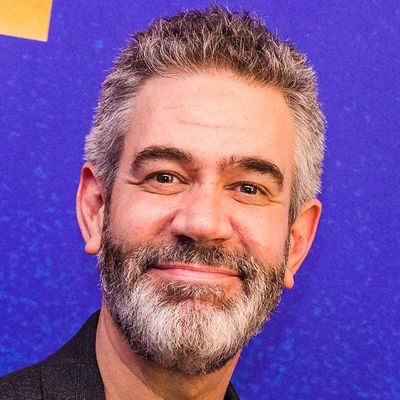
Kevin Del Aguila has one of those careers that feels impossible on paper but makes perfect sense once you hear him talk about it. He shares how acting and writing grew side by side almost accidentally, from staging one-acts with unemployed friends to becoming the secret ingredient that finally unlocked Altar Boyz... Read More
From the show: The Theatre Podcast with Alan Seales
Guests
Featured Shows

About
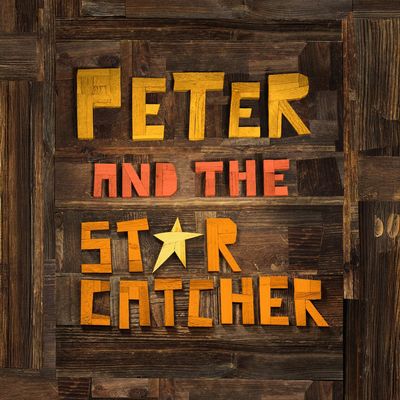
Kevin Del Aguila has one of those careers that feels impossible on paper but makes perfect sense once you hear him talk about it. He shares how acting and writing grew side by side almost accidentally, from staging one-acts with unemployed friends to becoming the secret ingredient that finally unlocked Altar Boyz. Kevin opens up about years of temp jobs, the anxiety of switching to a full-time artistic life, and the surprising moment he quietly “quit acting” without telling anyone—only to find himself pulled back in through Peter and the Starcatcher, where collaborating with Christian Borle reignited his love for performing. His stories from backstage, especially the legendary “silent aria” of laughter waves, remind you why the magic of theater is so addictive.
We also explore the second creative empire Kevin has built in children’s entertainment, from Wonder Pets to his Emmy-winning work on Peg + Cat, to writing the lyrics for Click, Clack, Moo and the wildly popular Dog Man: The Musical. He breaks down why kids instantly know when something has been sanitized, how a little edge goes a long way, and why he’s drawn to writing that treats young audiences with intelligence and respect. Kevin also reflects on his full-circle return to The Baker’s Wife more than twenty years after first performing it, now taking on Antoine in the highly anticipated Classic Stage Company revival. The episode is full of craft, heart, humor, and the reminder that longevity—not overnight success—is the real engine of a creative life.
Kevin Del Aguila is an Emmy Award–winning writer and Tony-nominated actor whose career spans theater, television, and children’s entertainment. He wrote the book for the long-running hit Altar Boyz and the lyrics for Click, Clack, Moo and Dog Man: The Musical. His Broadway and stage performances include Some Like It Hot, Frozen, and Peter and the Starcatcher. His television writing earned him an Emmy for Peg + Cat, and he appears in the newest season of Hazbin Hotel. Kevin currently stars as Antoine in the Broadway revival of The Baker’s Wife.
This episode is powered by WelcomeToTimesSquare.com, the billboard where you can be a star for a day.
Connect with Kevin:
- Instagram: @kevinoftheeagle
Connect with The Theatre Podcast:
- Support the podcast on Patreon and watch video versions of the episodes: Patreon.com/TheTheatrePodcast
- Instagram: @theatre_podcast
- Facebook.com/OfficialTheatrePodcast
- TheTheatrePodcast.com
- Alan's personal Instagram: @alanseales
- Email me at feedback@thetheatrepodcast.com. I want to know what you think.
Transcript
This transcript was automatically generated and might contain errors.
[0:00] Kevin Del Aguila: Hi, I'm Kevin Del Aguila. Welcome to The Theatre Podcast with Alan Seales.
[0:12] Alan Seales: Hello, and welcome, everyone. I am Alan Seales, and welcome to The Theatre Podcast. Our guest for this episode is Kevin Del Aguila, who is someone whose career refuses to stay in one lane in the best possible way. He's got Emmy Awards for writing. He's a Tony-nominated actor. He's done children's TV. He's a musical theatre lyricist and just, I don't know, a comedy thief who has spent his entire life stealing scenes on Broadway. Everything he's done just makes me crack up. And what I love most about how every chapter of his journey seems to just open by accident because he keeps walking through the doors that appear in front of him, as he puts it. Kevin talks about discovering writing while temping between acting gigs because originally, he wanted to be an actor and then just fell into writing and found early success as a writer, ironically.
He developed Alter Boys. He was kind of the final person to make Alter Boys what it is. Other writers couldn't crack it. They gave it to him, and he made it what it is. And how the New York Fringe Festival suddenly changed his entire career trajectory when he had something submitted there. It's funny. He also mentioned that at one point, he quietly quit acting without telling everyone because he was just kind of tired of not working as an actor. But then somehow that led to his Broadway debut in Peter and the Starcatcher while performing alongside Christian Borle. I mean, that was just an incredible show. If you haven't seen it, please find a copy of it somewhere. Of course, we talk about his children's television work, his process for crafting those stories.
He's the writer behind the Dogman musical. And then, of course, his full circle return to The Baker's Wife 20 years after first performing it. So this is an episode about longevity, saying yes when opportunities come your way, and just being curious and keep surprising yourself. So remember, you can watch the video version of this on Spotify or on Patreon. Find me online, leave a comment, leave a rating, and a review wherever you're listening. And everybody, now please enjoy this episode with Kevin Del Aguila. Today's guest is an Emmy Award-winning writer, Tony-nominated actor, and one of the most versatile storytellers working in theater today. He's written the book for the long-running hit Alter Boys, the lyrics for Click Clack Moo and Dogman the Musical.
His stage credits include scene-stealing turns in Some Like It Hot, Frozen, and Peter and the Starcatcher, which, by the way, is one of my absolute favorite shows ever. On television, his writing helped earn an Emmy for Peg and Cat, and most recently, audiences can catch him in the new season of Hazbin Hotel, now taking on the role of Antoine in the highly-anticipated Broadway revival of The Baker's Wife. Kevin Del Aguila, welcome to The Theatre Podcast.
[3:11] Kevin Del Aguila: Thank you for having me. It's great to be here.
[3:13] Alan Seales: I love how... How many times did I practice your last name?
[3:15] Kevin Del Aguila: A lot. Let's say a lot.
[3:18] Alan Seales: DeLagula. Private parts. Howard Stern. Those of a certain generation know that reference. I was just saying that right before we started that you've had so many different career additions. I won't say pivots, right? Because you started... Did you start as a writer and always thought you would always be a writer? Because Alter Boys was long ago.
[3:41] Kevin Del Aguila: Yes, yes. No, it was actually the opposite. I went to school, to college, to be an actor. I studied to be an actor. But while I was in school, I would write little one acts. I would kind of copy the playwrights that I liked and try to write my own little sketches and plays. And I'd put them up at school. And then when I moved to New York, trying to be an actor, hanging out with my unemployed actor friends, they would say, we've got nothing to do. Let's put up some of the stuff you've written. So we put up some of my plays. And some people saw it and said, hey, Kevin, you can write. And so suddenly I had a writing career kind of growing as I had my acting career going. And so it kind of branched off from there. And so I would have my acting side. And then I had this writing side that kind of took off. And Alter Boys was the big thing that put me on the map in that regard.
[4:44] Alan Seales: I mean, I listen to that music ad nauseum.
[4:48] Kevin Del Aguila: Oh, it's terrific.
[4:49] Alan Seales: Coming out of college. Yeah, it's absolutely terrific. I mean, so were you writing that? I want to dig into Alter Boys for a second. So it's a spoof of boy bands and religion in general. So does that reflect any way upon your childhood, the way you were raised?
[5:06] Kevin Del Aguila: Not at all. Although, well, maybe it does. My father was a minister of a church. My mother played the organ in this church. And there's a dirty joke in there, but I'm the punchline. So I understood the idea of it, but I didn't grow up Catholic. I really grew up kind of, you know, religion wasn't pushed on me. My parents, even though they were very involved in a church, they wanted me to decide my own way. So I didn't really know that side. I'm married to a woman who grew up Catholic, so I got a lot of info from her. But no, Alter Boys, I had written a show that was in the Fringe Festival, and a producer saw it and said, hey, I'd like to transfer this off Broadway. And I said, great. That didn't happen. But he said, hey, you might have the sensibility to help me with this show, Alter Boys. We've been trying to get it to work. Can't get it to work. I think you may be the secret sauce.
[6:10] Alan Seales: Ken Davenport?
[6:11] Kevin Del Aguila: Ken Davenport, yes. And so him and Robin Goodman, Robin Goodman was the one saying, look, if you can't make this thing work, it's going to die. So I'm not going to try to do this again. We've been through three book writers, and this is it. And she was like, I want the world to hear this music. Nobody's going to hear this if this doesn't work. And I was like, no pressure. Let's do it. And yeah, luckily, I was the secret sauce, and it all worked out. And suddenly, I wasn't just some guy writing for the Fringe Festival. I was, oh, you're the guy that wrote Alter Boys. So that was a big upgrade to my career.
[6:47] Alan Seales: I was going to say there that once you hit that point, it sounds like you said you were unemployed. You're writing all this stuff. It sounds like you were in New York acting, I assume getting small parts or whatnot, right?
[6:56] Kevin Del Aguila: Regional stuff, yeah. I was the guy doing the workhorse. Like, oh, he does lots of accents. He looks ethnically ambiguous. Let's put him in everything.
[7:08] Alan Seales: So then you flip the switch, and all of a sudden, we'll put in air quotes, successful, right? So what was that kind of experience like where you're like, oh, this business is so fickle because I've been doing all of this beforehand. Nobody cares. And I do one thing, and all of a sudden, it's exploded.
[7:24] Kevin Del Aguila: That seems to be showbiz in general. I mean, it was funny because as we were writing Alter Boys, the other guys, Gary Adler and Michael Patrick Walker, the composers, lyricists, they were working on Avenue Q. They were playing in the pit of Avenue Q. They were working on Broadway. I was temping. I was catering. And so sometimes they'd be like, oh, we got a writing meeting. And I was like, I can't make it. I got a temp job. Can you do it on my lunch hour? So I was still trying to pay my rent, doing honest work. And after Alter Boys, I do remember thinking, wow, am I going to make the switch? Am I not going to take that temp job and just rely on this money? Can I do that? Can this happen? It's a weird transition to go like, okay, my income is going to be from showbiz.
Let's see if I can make this work. They say you can't make a living in showbiz, but you can make a killing. I have not found that to be the case, but I have weirdly been able to make a living in show business, which I think is all you can ask. That's success. If you can do that, that's success. So the fact that I found that, I feel very lucky and very privileged to be able to do that.
[8:44] Alan Seales: And at that point on, did you decide to continue writing then? Because now, we'll get to it, but you've got so many credits in children's shows and with the animated series and whatnot. So it seems like you built such an amazing career in writing while not making a Broadway debut until Peter and the Starcatcher was 2009, I want to say. So you had both of these paths going at the same time.
[9:08] Kevin Del Aguila: It was weird. People get confused. They would call me in for something and people would say, oh, you should call Kevin in for it. They're like, Kevin the writer? They're like, no, Kevin the actor. Wait a minute, he acts? Oh, wait, he writes? It was a very confusing time. It kind of blossomed in a weird way because I've told this story many times, but I would have these regional acting jobs and my writing career was kind of taking off and I found myself at a certain point, I remember distinctly being on stage and thinking, I'm not enjoying this. I don't enjoy doing this. This doesn't feel creative. This feels very much like stand here, say this, do it this way. And I thought, I don't necessarily need this.
I have writing. Maybe I should just focus on the writing career. So I kind of unofficially quit acting. I just thought I'm not going to pursue it any longer. And if something comes up, then great, but I'm not going to put myself out there. It's not fulfilling me. But I didn't tell anybody that. And that was the key because certain people that didn't know that I had retired from acting kept calling me in. And one of those people was Alex Timbers, who I had auditioned for him way early on when he had started his downtown theater company. And he was writing and directing these crazy, crazy ass plays downtown. And he'd bring me in to audition for all of them and just laugh and make me read a million parts.
And he would always offer me roles and I couldn't do them for one reason or another, but he kept calling me in. And so one day he called me in for Peter and the Starcatcher. And I said, Alex and Roger Reese, and I can't say no to this. And so I went in and auditioned and I was cast in that. And it was one of the greatest experiences of my life to be in that show that was so creative and filled with such an amazingly talented, imaginative, wonderful, wonderfully funny cast. It just revived my love of performing, being around those people and being amongst those creatives. And then suddenly it moved to Broadway. And so all of my dreams that I had put away long ago, there they were. I couldn't believe what happened. I retired from all this and here I am performing at the Tony Awards. How did all of this happen? So you never know what's going to happen. The key is, if you're going to retire, don't tell anybody.
[11:54] Alan Seales: I mean, yeah, that's pretty much it. In showbiz, I guess, yeah, you're reinventing yourself. That's all it is. And then you worked with Christian Borle again in Something Like It Hot. Did you work with him before that? I remember I reposted something that you put on your Instagram. It was just one of those montages of you making him laugh at the same line, every single line, show after show after show. And I think I remember, I forget what caption I wrote, but it was like, that is the magic of theater to me. So for those who don't know, it was this clip looking, I think it was someone filming.
[12:28] Kevin Del Aguila: Stage Left past Christian at you standing in the wing stage right and he would just look behind him at the same exact same time everything you know it was part of the blocking and you would always be there like doing something completely random and wacky and they got so outrageous.
[12:45] Alan Seales: Yes, that's true.
[12:47] Kevin Del Aguila: And that's what makes me love theater.
[12:51] Alan Seales: Well, it's funny. I mean, you know, I had, you know, had such an amazing rapport with Christian in Peter and the Starcatcher because I was made to his Captain Hook for lack of a better term.
[13:05] Kevin Del Aguila: And so I had a front row to everything that he did and he I've never laughed so hard as I have watching him on stage tears coming out of my eyes watching him and he was just so fearless and amazing and and so to be in another show with him.
[13:22] Alan Seales: I you know, I'm not that guy.
[13:25] Kevin Del Aguila: I'm not the guy that messes around like that. But for Christian, I thought he will appreciate so, you know, after a long run, you start to find little little things that that help get you through the eight day week and that little moment where he glanced off stage and I would do something like, you know, wave or do a little jig just kind of blossomed throughout the months.
[13:52] Kevin Del Aguila: And I mean, the greatest thing is I didn't know that that, you know, one of the crew guys was taping it. And then he taped like the last three months of the show.
[14:00] Kevin Del Aguila: And when it closed, he sent me this iCloud full of all of these videos. And I was just like, oh, this is the greatest gift I've ever been given.
[14:10] Kevin Del Aguila: It's amazing. So but what's on Instagram is basically a best of trust me there. They weren't all so elaborate.
[14:16] Alan Seales: They weren't also. Did you get him to crack at all? Did he ever break?
[14:20] Kevin Del Aguila: I mean, he could kind of like chuckle a little in that moment. So sometimes he chuckled a little more than others.
[14:28] Kevin Del Aguila: But he would run off stage and critique, you know, what I had done.
[14:32] Kevin Del Aguila: Oh, that was a good one. You really got me. That was a good one. That was good.
[14:36] Alan Seales: Yeah. The inside is great. He's cracking up.
[14:39] Kevin Del Aguila: So then you grew up in California.
[14:40] Alan Seales: Yes.
[14:41] Kevin Del Aguila: Yes, I did.
[14:42] Alan Seales: Yes.
[14:43] Kevin Del Aguila: California.
[14:44] Alan Seales: So Cal.
[14:45] Kevin Del Aguila: And what got you into performing?
[14:46] Kevin Del Aguila: You know, I really don't know. I it's something I always kind of been fascinated with. I remember my my best friend in first grade was a kid whose father was a D.A., I think, but he would do community theater.
[15:01] Kevin Del Aguila: And I remember the kid was always talking to me about theater and about performing. And he was like, oh, you're going to come see my father in this show.
[15:10] Kevin Del Aguila: And so I went to see Cabaret. His dad was playing the MC in Cabaret. And I remember the kid going like, there's a gorilla in the second act. Wait till the gorilla comes out in the second act.
[15:19] Kevin Del Aguila: So I was all excited for this gorilla to come out in the second act. And the whole experience was just kind of amazing.
[15:26] Kevin Del Aguila: I think it and meeting his father afterwards and his makeup with this long, you know, eyelashes and stuff. I think it just it kind of made a big impression on me and made me think, oh, you can do this like his father's doing this.
[15:41] Kevin Del Aguila: He's very excited about it. We're all excited about it. So I think that kind of unlocked something in me that was just with me as I grew up.
[15:48] Kevin Del Aguila: I always thought I can do this. I remember auditioning for my first play and it was in a community theater and it was the auditions where everybody is sitting there watching everybody audition.
[15:58] Kevin Del Aguila: You know, it's not like private auditions. You just get up and audition in front of everybody. And I distinctly remember having the the thought when when it was happening.
[16:06] Kevin Del Aguila: I can do it. I got it. This is OK. I had a very, very comfortable. So I think it was just something that I always was drawn to and and understood from, you know, watching movies, TV shows, having an affinity for comedy.
[16:22] Kevin Del Aguila: And I think, yeah, it felt very natural.
[16:26] Kevin Del Aguila: Comedy, comedy is is very hard, like good comedy.
[16:30] Alan Seales: Sure can be.
[16:31] Kevin Del Aguila: Yeah, very hard. And, you know, I've talked with so many people like Kate Rockwell and I and I brought broke this down Mean Girls days years ago.
[16:40] Kevin Del Aguila: And then Alex Brightman, of course, stands out again. And and it's people who come in and they take the they take comedy so seriously.
[16:47] Kevin Del Aguila: And you have to have to like to try the bits and be comfortable enough and allow yourself to be vulnerable enough to just fall flat on your face over and over again, going back to like kind of the altar boys analogy.
[16:57] Kevin Del Aguila: You just kind of don't. It's OK. It's OK. It's OK. And then all of a sudden something hits.
[17:02] Alan Seales: Right.
[17:03] Kevin Del Aguila: And that's it. And you have to work towards allowing yourself to be vulnerable in that sort of space or like working with somebody like Alex Timbers.
[17:11] Kevin Del Aguila: I know that guy just makes an environment that everybody feels so comfortable in, you know.
[17:18] Alan Seales: So is it the director? Is it you? Like, where did where did that come from?
[17:21] Kevin Del Aguila: I think it's a little of everything, you know, I think instincts. I think it's a comedy is all about instincts.
[17:28] Kevin Del Aguila: You know, you you kind of have that's why they call it a sense of humor. Right. You have that sense of what's funny.
[17:33] Kevin Del Aguila: And and I think you bring that sense of humor to to a situation and everybody has their own sense of humor.
[17:40] Kevin Del Aguila: And when they gel, it's magic. You know, when when when a moment it really, really hits because you you you know how to attack it and how to how to deliver it.
[17:52] Kevin Del Aguila: That's when it when it really it really fires.
[17:55] Alan Seales: So I think, you know, and Alex is a perfect example of somebody who is very good at getting people together that have, you know, different kind of strengths in that in that area.
[18:07] Kevin Del Aguila: And when they're all together, I mean, you're just making one another laugh.
[18:11] Kevin Del Aguila: The backstage of Starcatcher was amazing, an amazing thing, because people would just be doing bits, but they would do the same bit over and over and over and over again, but only tweak something just just like the most subtle, subtle tweak that would just send people over because they were recognizing like, oh, that's what you did.
[18:33] Kevin Del Aguila: I see what you're doing. And so it's that when you're working with those kind of people, it's just like it's so it's so feeding.
[18:40] Kevin Del Aguila: So it's so delightful to to be amongst people and say, like, oh, we all speak the same language.
[18:46] Alan Seales: Don't go anywhere. We're going to take a quick commercial break.
[18:50] Kevin Del Aguila: All right, everyone, now we're back.
[18:52] Alan Seales: Well, it's understanding that that you can give someone the silence to let that third wave of laughter come back.
[19:00] Kevin Del Aguila: Oh, yeah.
[19:01] Alan Seales: Yeah, yeah, yeah.
[19:02] Kevin Del Aguila: Like to sit there in the silence for a second.
[19:03] Kevin Del Aguila: I remember, again, going back to Peter and Starcatcher. I saw this so many times.
[19:07] Kevin Del Aguila: Every time when when he slammed when Christian slammed the chest on his hand, it would get longer and longer and longer for, I think, exactly that reason.
[19:14] Alan Seales: Exactly.
[19:15] Kevin Del Aguila: And all of you would would just encourage this and you would set him up for this every time because you knew what was coming.
[19:21] Kevin Del Aguila: Comedy is so specifically mine.
[19:24] Alan Seales: Yes, specific, I guess.
[19:26] Kevin Del Aguila: But then, yeah, like you said, just dial it just a little bit and then you're going to find out where to stop it and then you just bring it back.
[19:32] Alan Seales: Well, let me tell you, that moment, while it might not have been appropriate completely to the storytelling, it was a masterclass.
[19:43] Kevin Del Aguila: I mean, all he was supposed to say in that moment was, oh, my God, oh, my God. And, oh, my God, turned into, oh, my God, oh, my God, oh, my God, oh, my God, oh, my God.
[19:54] Kevin Del Aguila: And then eventually, after after a little while, he stopped talking. And it was this silent aria of expressions, feelings and the waves of laughter that would come and go on stage and in the audience.
[20:12] Kevin Del Aguila: It was incredible to behold. Let me tell you, it was it was like an unbelievable thing to witness and to be part of.
[20:21] Kevin Del Aguila: So, yeah, those those moments are cherished. Those are things hopefully we'll never forget.
[20:29] Alan Seales: But OK, so then let's see, you get into theater, Alter Boys, you're performing, you got your dual career side by side.
[20:37] Kevin Del Aguila: And then when does the the children's animated series come into play?
[20:40] Kevin Del Aguila: Well, this is the weird thing is that Alter Boys was a big hit in the in the 2000s, you know, like it was one of the biggest like musical comedies.
[20:47] Kevin Del Aguila: But for some reason, nobody was really kind of interested. I think they thought the book was kind of throwaway, like it because it was a concert.
[20:55] Kevin Del Aguila: So they were like, oh, the songs are the big deal. There's it has a book like people would actually say that to me.
[21:00] Kevin Del Aguila: There's a book to Alter Boys. And I was like, yes, as a matter of fact, I wrote it and I wrote it.
[21:07] Kevin Del Aguila: But so what happened was, you know, I was kind of told at an early when I first moved to New York, they were like, you're a young character actor. There are no roles for young character actors.
[21:20] Kevin Del Aguila: You know, you could have a great career in 20 years when you age into old character actor. And I was like, well, what am I supposed to do for 20 years, you know?
[21:29] Kevin Del Aguila: And the answer was children's theater. I auditioned for TheatreWorks USA, and they were the first ones to cast me in something when I came to New York.
[21:39] Kevin Del Aguila: And I would do like a bunch of their their summer shows, and I would work on on their development of shows and stuff.
[21:48] Kevin Del Aguila: And they were like, oh, Kevin, you write. Let's commission you to write something. And so they commissioned me to write things.
[21:55] Kevin Del Aguila: They were the first ones to commission me to write lyrics for a musical. They were like, Kevin, you direct. Let's let's have you direct these shows.
[22:02] Kevin Del Aguila: And so they really became this playground for me to learn on the job.
[22:09] Kevin Del Aguila: I learned how to write lyrics. I learned how to direct. I learned how to to do all of these things.
[22:14] Kevin Del Aguila: And they really believed in me and and supported this. And so, yeah, I got hooked up with this guy, Billy Aronson, who wrote the book for we were doing an adaptation of the book Click Clack Moo.
[22:31] Kevin Del Aguila: And I wrote the lyrics and Brad Alexander wrote the music and Billy Aronson wrote the book. And he was like, you guys are great.
[22:40] Kevin Del Aguila: He was like, Kevin, you should be writing for TV. He was he was a children's television writer and he was like, you should be writing for TV.
[22:47] Kevin Del Aguila: And I was like, well, if you hear of anything, let me know. And he he recommended me to the folks that wrote Wonder Pets way back then.
[22:54] Kevin Del Aguila: And I wrote a couple of episodes of Wonder Pets. And right away, I found out if you had any proclivity for this world, this animated children's television world, your name was thrown around everywhere because suddenly people started coming to me saying, Kevin, we'd like you to write an episode of this.
[23:11] Kevin Del Aguila: We'd like you to write an episode of this, this, this. And so little by little, I started to write children's television, animated television shows.
[23:20] Kevin Del Aguila: And it was it was kind of just a fun little sort of side thing, but it grew and grew and grew.
[23:27] Kevin Del Aguila: And by the time I got to Pig Plus Cat was the show that Billy Aronson developed with Jen Oxley, one of the Wonder Pets creators.
[23:36] Kevin Del Aguila: And they hired me to be a writer on that and and also do voices on that.
[23:41] Kevin Del Aguila: So I was I was kind of like yet again, another playground for me to kind of write, but also like perform.
[23:47] Kevin Del Aguila: And sometimes that was a conflict of interest. I would write my character into the script, give myself the good lines.
[23:55] Kevin Del Aguila: And then suddenly we won Emmys. I have two Emmys at home for this show that I was like, what is going on?
[24:01] Kevin Del Aguila: I'm supposed to be a stage actor. And now I'm like, I've got this like crazy career in children's television.
[24:06] Kevin Del Aguila: So, you know, again, you know, if the doors are open, you walk through them, you know, the doors are closed, you knock and but but don't wait for them to open, you know, go through the ones that are open.
[24:12] Kevin Del Aguila: And that's that's been my philosophy. And that's, you know, what's led me to where I am today.
[24:20] Kevin Del Aguila: So, I mean, even today, I'm still working with TheatreWorks. They commissioned me to write this adaptation of these Dog Man books.
[24:30] Alan Seales: Yeah.
[24:31] Kevin Del Aguila: They're written by the Captain Underpants. I took my boys to see the musical when it was at New World Stages.
[24:37] Alan Seales: Is that right?
[24:38] Kevin Del Aguila: Yeah.
[24:39] Alan Seales: Yeah.
[24:40] Kevin Del Aguila: Yeah.
[24:41] Kevin Del Aguila: Dog Man. And and it's just been delightful. It's been like such an amazing thing.
[24:46] Kevin Del Aguila: It's been done all over it all over the world now. It was done at the Sydney Opera House. They flew me down there for that. It's it's I mean, it's just.
[24:55] Alan Seales: Did you know of all these IPs before you were brought into them? Because like you said, if you have any proclivity in this, your name gets passed around. So it sounds like it's a very small group of people who know how to write good stories for kids.
[25:10] Kevin Del Aguila: Yeah, I mean, that's the thing. I think my experience in theater really helped with that. And in musicals, especially, because, you know, a lot of children's television, a lot of children's entertainment is very musical or has music involved. And they would just say to the writers, just throw some dummy lyrics in here, you know, so that we can hand it to a composer, and they can turn it into an actual song. So when you get somebody who's written lyrics to throw some actual lyrics in there, and they're like, these words rhyme. Who are you? This is before chat GPT. So they realized like, oh, this guy's got a little more to offer than our normal fare. So I think theater helped with in that respect.
But yeah, no, I had a little kid. My son was like, of the perfect age. So he watched all these shows. And, you know, he was a perfect focus group. And I'd write things and I, you know, pitch, you know, ideas or jokes, you know, to him. And if he laughed, I was like, it's in. So I had that going for me. And then Dog Man, I hadn't heard of Dog Man. You know, and they commissioned me, they're like, Kevin, we want you to adapt these books. And I was like, Dog Man. And I looked over and my son is reading Dog Man in the corner giggling to himself. And I thought, tell me everything you know about Dog Man. Tell me, tell me. And I realized just what a huge, you know, IP it is. Just everybody in elementary school is hooked on Dog Man. And Diary of a Wimpy Kid. That was another one. Yeah. And Captain Underpants. Dave Spivey, right?
[26:50] Alan Seales: Dave Pilkey.
[26:50] Kevin Del Aguila: Who's Dave Spivey? He's somebody.
[26:53] Alan Seales: Somebody. Yeah. Dave Pilkey. Okay. Yes. Yeah. Did you ever get to meet? I mean, I'm sure you've met Dave through the process.
[27:00] Kevin Del Aguila: Oh, he's the greatest guy. And that's the thing. It's like, when I was hired, we got on the phone and I had a whole pitch for him. I was like, this is how, what we're going to do with your baby. We're going to, you know, here's the take, here's the blah, blah, blah. And seconds into the call, he was like, you know what? Just do what you want to do. And I'll come and see. And I'm sure it'll be great. And I was like, what? That's a lot of pressure. You're going to give me just the keys to your car and let me just drive this thing? And so it was kind of nice to just sort of go like, okay, here we go. He came to see a workshop production of it and he was laughing and crying. And so we gained a lot of trust from that. And he just loved it. He came to see it over and over again. And he's just so supportive and just a really, really wonderful guy. And so it's been great to be part of the Pilkeyverse. And yeah, just to enjoy it.
[28:04] Alan Seales: My nine-year-old still reads Dog Man. He loves it. Yeah, he loves that stuff.
[28:09] Kevin Del Aguila: Yeah. They're genuinely funny. That's the other thing. Teachers don't really like them that much because they use words like jerk and they're a little edgy, but they can't stop kids from reading them because they're reading.
[28:23] Alan Seales: Is there a difference? Is there a difference? Here's my question. Is there a difference between writing for, I mean, I guess the answer is yes, but writing for the Dog Man sort of group and then the amazing world of Gumball?
[28:37] Kevin Del Aguila: So my 10 and a half-year-old loves Gumball and I love to watch Gumball with him because it reminds me of Ren and Stimpy from when we were kids.
[28:46] Alan Seales: Yeah. Well, I think that's the thing. What all of these have in common is they're a little edgy. When I first got into children's television, it was like there were all these educational consultants. You'd write this script and the educational consultants would just like pounce on it and just take out all of the danger, any words that kids couldn't understand, get rid of that. And I was like, well, when are they going to hear these words? When are they going to learn these words? When are they going to be exposed to these words if you don't do them? Anyway, get rid of all the jokes. The kids won't understand it. Get rid of this, that, and the other. Get rid of all the edges. And it would be bland.
But all the things you're talking about, they have just a little bit of edge and the Dog Man books and what we did with the Dog Man adaptation is keep that little edge. And what happens is kids recognize it. They're like, oh, a teacher didn't sanitize this. This is for me. And they feel a real ownership of it. And that's key because they buy in and they think, ah, this is mine. And it's amazing to see.
[29:52] Kevin Del Aguila: That's one of my favorite things about these shows. I mean, TheatreWorks is very good about their philosophy isn't like, don't put on just a kid's show. It's not a skip and wave kind of thing. Write a good show. And if it's good, kids will like it. Adults will like it. It will be actual good theater. And my proudest moments are when you look in the audience and you see a kid laughing at something. And next to him, his parents are laughing at the exact same thing. And you think, ah, it's the sweet spot. It's genuinely brought people together and they're all laughing at exactly the same thing. Have you tried, do you want to write for Broadway? Is that a dream that's still out there?
[30:28] Alan Seales: Of course. Who doesn't want to write for Broadway? Why not?
[30:34] Kevin Del Aguila: Of course. I don't know. I mean, it's a bigger risk, bigger stress, bigger risk. Depending on who you are on the inside, you might be like, you know what? I'm going to just take my paychecks and laugh all the way to the stress-free bank. Yeah, I don't know. I mean, the difficult thing about it is that, especially when there's so much on the line with something like that, people don't want to take the chance, you know? So I've had a lot of things that have been kind of like moving along. Hey, we're doing a reading. Oh yeah, it's good. Let's do a bigger reading. Yeah, let's do this. Let's do that. Oh, we got this big producer. Yay, let's keep going. And you're just like, God, the doors are opening.
Why? This thing is headed right to Broadway tomorrow. And then suddenly people get nervous. How much is this going to cost? Are these songs really worth it? What's this story about? Blah, blah, blah. You know, all the questions, all the scrutiny, all this, that, and the other. Whether it's warranted or not, you're sort of like, oh, I don't know whether this is going to pass the muster. I don't know whether this producer really believes in this. I don't know whether the project is really like Broadway worthy. I don't know whether anyone's going to take a chance on this. And so you get stuck in either development, you get stuck in reading after reading, you get stuck in making changes that you're like, this doesn't look anything like what I first fell in love with.
This is not the story that I wanted to tell. This is something else. And consequently, I have several things on my computer just sitting there that I'm like, what happened? Disappeared. It had such promise, and now it's collecting dust in a folder on my computer. So working for TheatreWorks, working for these places that commission you, you're like, this is going to happen. They want it to happen. They put money into it. So I like writing things that get produced. That's basically been my MO these days.
[32:31] Alan Seales: Fair. Do you write a mix of straight plays and musicals, or is it all kind of one genre?
[32:37] Kevin Del Aguila: It's mostly been musicals. I mean, they seem to pay more when they're done. People seem to want to commission musicals more. And frankly, writing lyrics is really fun. I really enjoy it. And a lot of the IP that gets adapted, you usually want to make a musical out of it. So that just seems to be where the money is. But I like writing plays. I like writing.
[33:08] Alan Seales: So you've been a director. You write. You're all of the creative side, and then you're still acting. Is it hard to switch between the two? Or are you just like, finally, I'm in actor mode, so I can just be told what to do?
[33:16] Kevin Del Aguila: I mean, I try not to put my critical hat on when I'm an actor. In fact, I don't like to put my critical hat on when I'm an actor, because I really like to just be part of the... I like to help with the development. I understand where the writers and where the directors are coming from. They're trying to make something work. They're trying to figure out if it works. They're trying to make this moment work. They're trying to figure out whether this song is the right song. And so I like to just be the contributor, the one who's like, I'm bringing my side of it as an actor, representing this character, playing this character, trying to hit these moments, trying to make something work for you. And together, we're going to see if it works.
If it doesn't, then it's up to you to rewrite. Not me. That's your job, not mine. I'm the actor. So I don't mind wearing actor hat and being involved in that kind of place. But I definitely don't envy... I don't sit there and go, I would do this, I would do that. I'm very much more supportive of the writers, because I know where they're coming from.
[34:23] Alan Seales: What about something like Saturday Night Live? That's a whole... sketch comedy, live TV. That's a whole separate genre of directors and phone calls and everything. So have you seen a window or a door to possibly cross into that kind of world?
[34:42] Kevin Del Aguila: When I first moved to New York, I loved Saturday Night Live growing up. I remember as a kid watching it just to see Mr. Bill. That's how young I was. I was like, Mr. Bill, that's for kids, right? But I got exposed to all these other things while watching Saturday Night Live, looking for Mr. Bill. So yeah, coming to New York, I always wanted to be on Saturday Night Live or in some kind of sketch comedy. I loved sketch comedy. Me and a kid from grad school actually got hired to run a comedy night downtown in Chelsea, this place called Rebar. We were running this open mic night, basically. These stand-ups would come in and they'd pay a cover to do their act and we would put on little sketches in between.
We'd write little sketches and stuff. So there was a time where I was in this world meeting these people and we would go to other comedy shows around town with people who have become very famous now, big comedy people now, but they were playing these little tiny clubs in New York and we were rubbing elbows with them, doing our little stupid sketches and stuff. But it was a whole nother world. I realized right away, this is a different thing. It was funny. You'd be sitting at the bar talking to a comedian, and he'd be making you laugh, and you're having a good time, and then he'd get up to do his act and he'd say exactly the same things that he was saying to you at the bar. You're like, trying your act out on me.
You weren't talking to me. You were saying whether what you were about to do on stage is funny or not. So they're quite a breed, those comedians, and it was quite a world. So it's not that I would not want to do it, but you really have to be all in if you want to be in that world. It just came out this week, actually, they were saying that the new writers listen to the episodes and get more out of the episodes about how the show works than they are taught actually being there. So yeah, you have to just go all in and live and breathe that whole world. I feel like, yeah, that would leave no time for the relaxing stuff, the children's theater, the musical theater. So I get it.
[37:22] Alan Seales: Alright, everyone, now we're back. Alright, so Baker's Wife.
[37:25] Kevin Del Aguila: Yes, Baker's Wife! Let's talk about that. How did you get connected with that? And how do you choose the projects you do now? Because I feel like your time is probably very limited.
[37:35] Kevin Del Aguila: Well, this has a great story because in my days of being, you know, a regional theatre actor who would get cast here and there while he was writing stuff, over 20 years ago, I got cast at the Goodspeed Opera House in this revamped version of The Baker's Wife that Gordon Greenberg was directing 20 years ago, over 20 years ago. Stephen Schwartz, Joe Stein had revamped the show and they were trying it out at the Norma Terrace Theatre there at Goodspeed. And I was cast as the town drunk, Antoine, in this version of it. And it went well and they brought it to Paper Mill and I was, you know, playing the same role there at Paper Mill. And, you know, it had a gorgeous set. It's like, everybody seemed very happy with it.
And they were like, bringing it into New York, it's coming to New York. And of course, it came into New York. And so 20 years later, I get a call and they're like, we're bringing The Baker's Wife to New York. And I was like, it's taken 20 years? And they're like, we'd like to offer you the same role. And I was like, what? I guess you can't outgrow the town drunk. That's the lesson I've learned. But you know, I thought, well, look, I can't drop the ball at the one yard line here. I've got to, you know, come with this show to New York. It's been so long and I really love the show and wanted to be a part of it when it arrived here finally. So that was my thinking. And I'm glad I did.
[39:16] Alan Seales: Well, so Gordon's directing this one too. And is it a lot of the same creative team? I mean, I assume like Ariana DeBose wasn't in it 20 years ago. You know, she would have been like two years old.
[39:26] Kevin Del Aguila: Yeah, no, it was Lenny Wolpe was The Baker and Alice Ripley was The Baker's Wife. Yeah, no. And Joe Stein sadly passed away in the time that it's taken. But yeah, no, Stephen Schwartz is around. And boy, you know, I'm like, even you're having a moment. You've got Wicked, Queen of Versailles. You've got this. You're like, everything is coming up Schwartz. And they're bringing back Spaceballs too, speaking of Schwartz. So yeah, I mean, Gordon and I think, yeah, and Stephen, and it's in a much smaller venue now. It's at Classic Stage Company. It's like in this, it's not in the round, but it's in this three quarter, really kind of the environmental kind of aspect of it is very new and different.
And so even though it's the same revamped show, it's got this new kind of element where the audience is really part of it. It's not like audience interaction kind of thing, but the audience is there. We're all in, you know, Concord, this little town of Concord together. And it's been really fun to see how that kind of plays out. Everybody just comes to this kind of like this little oasis and you're in France for two hours. Concord. You have to say it with a...
[40:45] Kevin Del Aguila: Concord.
[40:46] Alan Seales: Concord. So do you get drunk in French?
[40:49] Kevin Del Aguila: I do. I do, yeah.
[40:50] Alan Seales: So I like Les Mattel. And other offensive stereotypes.
[40:58] Kevin Del Aguila: Yeah. Is it, I mean, is it a cast now? Gordon's, it's like, Gordon's one of those guys, I've worked with him for a couple of years on various different projects. And he's like, oh, he's this kind of like subtle guy, but gets involved in the funniest things.
[41:12] Alan Seales: Yeah.
[41:13] Kevin Del Aguila: Right. So, I mean, is that another one of those environments that like directors coming in and fostering this creativity to allow something like this to become what it is?
[41:21] Kevin Del Aguila: Yeah. Gordon's one of these people, I met him at TheatreWorks. He was a director at TheatreWorks, and I was in one of the shows that he directed. And I think I was in a couple of shows that he directed there. And so he liked me and brought me into The Baker's Wife. And, whoa, these many decades ago. Yeah, he's very smart. He's very attuned to this kind of world. I mean, he also cast me as the standby in the Jacques Brel revival that happened back in 2006, something like that. And I loved Jacques Brel. I was in college. I listened to Jacques Brel all the time and always wanted to be in a production. And the fact that I was the standby and got to sing all the songs that the males had in that thing, I was just forever grateful to Gordon for putting me in that.
So I only work on French things with Gordon Greenberg. But yeah, no, he's just got a perfect sensibility for it. And I think he just really understands the power of the show. It's a show about forgiveness, and as much as it's about The Baker's Wife and Baker, it's also about this town that's kind of in trouble and have to learn how to forgive, how to get along, how to let all their animosities go. So it's really speaking to the time we're in, in a different way. And I think it's, even though it's taken 20 years to get here.
[42:54] Alan Seales: Between the 20 years ago to now, and then once you add an audience to now, how's it shifted?
[43:00] Kevin Del Aguila: You know, it's hard to tell. It's funny because the people involved each time I've done this, Gordon is really bringing together a cast of characters. There are people from all walks of life, actor-wise. They're bringing in all these different ages, all these different experiences, all of these different actors are coming together. And so you really do form a little village. Everybody's got their own little track, their own little portion of the show, and you really form a world together. And so each time I've done it, it's been different. It's always the same show, but there's a different dynamic. And this is a really fun dynamic this time around. You know, the people involved are just terrific.
It's wonderful actors. And so it's exciting to be amongst those people, everybody in their little part of the art, playing their little role in the village, in the show. And it's great to just be one of them and for all of us to be contributing to the same goal. It's terrific.
[44:17] Alan Seales: Yeah, something we need now.
[44:18] Kevin Del Aguila: Yes. I definitely think so.
[44:20] Alan Seales: Alright. So we're going to start to wind down here with plot in 60 seconds. There's 60 seconds on the screen. I have a list of 17 musicals on my screen. You give me a number, one through 17, and then I will tell you what you chose. You give me the plot to that show in 60 seconds or less. This is going to be a disaster.
[44:37] Kevin Del Aguila: Good, good, good. So I pick a number?
[44:40] Alan Seales: Yeah, one through 17.
[44:42] Kevin Del Aguila: Let's do 12.
[44:43] Alan Seales: 12? Oh, there you go. You mentioned it already. And it's Wicked. Go.
[44:48] Kevin Del Aguila: Okay. There are talking animals in this thing, and it's a prequel to The Wizard of Oz, where who you think is evil isn't necessarily evil, and who you think is good isn't necessarily good. And they're sisters, kind of. No, they're not really sisters. There is a sister. Yeah, right. That's right. And one person becomes a tin man, one person becomes a scarecrow. That scarecrow has a relationship that's going to be, wait till you see what happens here. And you think something happens, but it doesn't happen at the end. And then she flies and sings, and everybody goes out thinking, yeah, I want to come back for act two. And then you come back, and you're like, oh, that's Dorothy. I see where this is going. And it's very exciting. And Stephen Schwartz wrote the music, and it's been made into a movie that's going to make millions and millions of dollars. For Stephen Schwartz.
[45:46] Alan Seales: Five, four, three, two, one. May the Schwartz be with you.
[45:49] Kevin Del Aguila: That was good. That was good. I like—
[45:51] Alan Seales: That made sense, right?
[45:52] Kevin Del Aguila: That made a lot of sense, especially with the bits. That was, yeah.
[45:54] Alan Seales: So you don't know.
[45:57] Kevin Del Aguila: That was kind of like speaking whale and finding—
[46:01] Alan Seales: Exciting.
[46:02] Kevin Del Aguila: You don't know. So there's these sisters.
[46:07] Alan Seales: I get it. Alright. So three standard closing questions. First one simply is what motivates you?
[46:13] Kevin Del Aguila: What motivates me is fun and a challenge. Those are two things. But a good, fun challenge motivates me.
[46:20] Alan Seales: Alright. What advice would you give to your— Do it again without hitting the mic.
[46:27] Kevin Del Aguila: Don't hit the mic. That's my advice.
[46:30] Alan Seales: What advice would you give to your younger self and younger people listening now, starting out down a similar path?
[46:34] Kevin Del Aguila: The advice I would give to my younger self and to younger people is don't assume that you know it all or can do it all, but work hard, have fun, be kind, be prepared. Those are the things. Do that and things will work out eventually. I think the other advice would be don't be impatient. Longevity is the key. That's what I've learned. It doesn't happen overnight. Well, actually, for some people, it happens overnight. But for most people, I think longevity.
[47:16] Alan Seales: Alright. And if you could only see one show for the rest of your life, but you can see it as many times as you want, what would you say?
[47:20] Kevin Del Aguila: One show for the rest of my life? What about Waiting for Godot? It would just never end. It would happen over and over and over again. I think he'd want it just to be like, Kim, when's Godot showing up?
[47:32] Alan Seales: I'm sure he's going to show up. I'm sure.
[47:36] Kevin Del Aguila: He's sure. He's going to be here tomorrow. Tomorrow, I'm sure he will. Let's go. We can't. Why not? We're watching Waiting for Godot.
[47:46] Alan Seales: You know, someone's asked me a couple— They've asked me a couple times what my answer to that question is. And I've said Rent, historically, because that was the show that kind of got me into paying attention to theater and realizing that there's more than just your standard classics that can speak to different types of people, because I'm not a phantom person. I'm more of a Rent person, singing-wise. And after talking with you, though, I think I want to amend my answer to Peter and the Starcatcher.
[48:16] Kevin Del Aguila: Hey, how about that? We've got a convert, everyone. We've got a convert.
[48:21] Alan Seales: I think. I think I would. Because, yeah, just watching all of you make that come to life every night, it was always so subtly different.
[48:32] Kevin Del Aguila: It really was. It's true. No, no, no. I would watch Peter and the Starcatcher forever, yes.
[48:36] Alan Seales: Yeah, that was good. That was good. At least we know what happens. We don't know where the hell Godot is. Alright. Where can we connect with you online and say hello, shout out?
[48:47] Kevin Del Aguila: Um, you could probably find me at Kevin of the Eagle on the Instagram.
[48:53] Alan Seales: I was going to ask you where that came from.
[48:55] Kevin Del Aguila: My last name, Del Aguila, means of the Eagle. Yes, I am Kevin of the Eagle. Kindly treat me accordingly.
[49:06] Alan Seales: Well, you are not balding.
[49:09] Kevin Del Aguila: I'm all American, though.
[49:10] Alan Seales: Good. Alright. You can get more of me at the Theatre Podcast, theatre underscore podcast on all the socials. I'm so tired of spouting socials. Find me online, people. Leave a rating, leave a review. Tell your friends. Thanks to Jukebox the Ghost for the intro and outro music. And welcome to Times Square for this wonderful studio we are in. And Kevin, thank you so much for being here and for writing what you do and for making everyone laugh. You make the world a better place.
[49:38] Kevin Del Aguila: Hey, thank you for having me. This has been delightful.
© Broadway Podcast Network, All Rights Reserved