

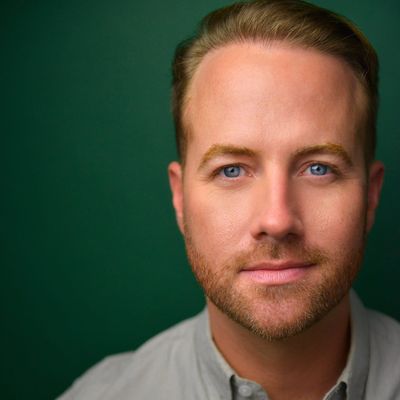
He’s an actor and theatre creator who has appeared in numerous national tours, feature films, and 5 Broadway shows including Beauty and the Beast, Chitty Chitty Bang Bang, The Little Mermaid, Amazing Grace, and most recently Cirque du Soleil Paramour -- He one half of the duo that makes the widely popular @broadwayhusbands Instagram account, and is also a Certified Life/Career Coach... Read More
From the show: The Theatre Podcast with Alan Seales
Guests
Featured Shows

About
He’s an actor and theatre creator who has appeared in numerous national tours, feature films, and 5 Broadway shows including Beauty and the Beast, Chitty Chitty Bang Bang, The Little Mermaid, Amazing Grace, and most recently Cirque du Soleil Paramour -- He one half of the duo that makes the widely popular @broadwayhusbands Instagram account, and is also a Certified Life/Career Coach. As he puts it, he is “helping to create Balance on Broadway.
Bret started out as a Texan who loved to sing and dance, but found his way to the Broadway stage as a young adult. Throughout this episode, we cover. As the Broadway Life Coach, a personal brand 5 years in the making, Bret helps people find their full potential, get clear about their purpose, and create balance and self-confidence. In this episode, he explains his philosophy on striking a balance between pursuing your Broadway dream and paying the bills, how to stay sane and avoid burnout while performing 8 shows a week, and his experience as a gay man in the theatre industry (coming from Texas, of course!).
Interview content begins at 1:56.
Closing standards begin at 35:35.
Connect with Bret online:
- Twitter: @bretshuford
- Instagram @bretshuford, @BroadwayLifeCoach, and @broadwayhusbandsbalanceonbroadway.combroadwaylifeapparel.com
Connect with The Theatre Podcast:
- Support us on Patreon: Patreon.com/TheTheatrePodcast
- Twitter & Instagram: @theatre_podcastFacebook.com/OfficialTheatrePodcastTheTheatrePodcast.com
- Alan's personal Instagram: @alanseales
- Email us at feedback@thetheatrepodcast.com. We want to know what you think.
Thank you to our friends Jukebox The Ghost for our intro and outro music. You can find them on Instagram, Twitter, and Facebook @jukeboxtheghost or via the web via jukeboxtheghost.com.
A very special thanks to our patrons who help make this podcast possible!
Cheryl Hodges-Selden, Paul Seales, David Seales
If you would like to see your name in this show notes or get a shout out on the pod itself, visit ttp.fm/patreon to become a member and show your support!
Transcript
This transcript was automatically generated and might contain errors.
[0:00] Alan Seales: Welcome to The Theatre Podcast, intimate personal conversations with theatre's biggest names.
[0:11] Alan Seales: This episode is actually very exciting for me. It's a little bit different from the normal type of guest we have on the podcast. Bret Shuford, he actually is involved on Broadway. His husband is involved on Broadway. He's been in five Broadway shows, but to sort of fill a gap between shows and deal with some of the mental anguish that comes with the ups and downs of being in this business. He actually became a certified life coach and calls himself the Broadway life coach. His story was actually really incredible. He became sober after 9/11 and had to deal with all that depression that came around New York City that happened during that time for obvious reasons. And now has just like transformed his life, transformed his career.
He got married in 2011 and he and his husband actually have like an Instagram lifestyle account almost. I guess that's what you would call it. They just hit 25,000 followers at Broadway Husbands. And the guy is just, it's just interesting. It's a very interesting story. I encourage you all to listen to the whole thing just because it's different, but it is actually very inspiring. And I think it could help anybody regardless of whether or not you're actively involved in theater or on stage or not. So as always, before we get into the episode, please take a moment and leave a rating, leave a review. That helps everything. I read them. It's wonderful. Visit us at ttp.fm. You can show your support at ttp.fm slash Patreon and contribute a little bit. Help us keep the lights on. And now everyone, please enjoy this episode with Bret Shuford.
[2:05] Alan Seales: He's an actor and theater creator who has appeared in numerous national tours, feature films, and five Broadway shows, including Beauty and the Beast, Chitty Chitty Bang Bang, The Little Mermaid, Amazing Grace, and most recently Cirque du Soleil Paramour. He is one half of the duo that makes the widely popular Broadway Husbands Instagram account and is also a certified life coach and career coach. As he puts it, he is helping to create balance on Broadway. Bret Shuford, welcome to The Theatre Podcast.
[2:32] Bret Shuford: Thank you. I'm so happy to be here.
[2:34] Alan Seales: Did I get that all right?
[2:35] Bret Shuford: Yeah, nailed it.
[2:36] Alan Seales: Okay, great, great, great. So let's start with, I guess, well, normally, I was going to say, I went into my old routine. I was going to say, normally, let's start with how you grew up. But first, you're a little bit of an unusual guest to have on the podcast because we're focusing on the life coaching and the career coaching, but I feel like it's very relevant to the listeners and even to the other guests that I've had on the podcast. So I actually want to kind of start with that and tell me, I mean, you're an actor, right? Are you a dancer? You're an actor-singer. Are you also a dancer?
[3:10] Bret Shuford: Yeah.
[3:12] Alan Seales: And your husband as well, right?
[3:15] Bret Shuford: He's primarily a dancer, but yes.
[3:17] Alan Seales: Okay. And the three of you have two very successful Instagram accounts. I mean, so you're Broadway Life Coach. So what is that? That's at Broadway Life Coach, and then at Broadway Husbands are two. So tell me, just tell me, like, we're in an elevator together, you have 20 seconds. Like what is this? What is the life coaching? What is the Broadway aspect?
[3:36] Bret Shuford: Yeah. Well, for me, I grew up in a small town in Texas and I remember I had these visions of what Broadway was and was widely disappointed when I got my first Broadway show and I realized that Broadway was mostly about money. And no one had really pointed that out to me, the for-profit aspect was not something I had really learned or mastered or understood because I thought it was this dream, it was this thing. And when that bubble burst, I remember feeling a little disappointed, but then also going, why didn't anybody explain this to me? And I think I would have, not that I would have changed anything, but it would have helped me approach things differently and maybe not have lessened that disappointment a little bit so that I could understand how to run a business.
No one had really taught me that this was a for-profit business. And once I got that, and once I got that first Broadway show, I thought, okay, well, let's learn how to do this. No one was teaching that even in college. People weren't teaching that when you graduate with a BFA in musical theater, you are now an entrepreneur and you own a freelance company and you have to learn how to market it and manage it and build relationships and nurture it and grow it. And I thought, wow, once I learned all these different things and I learned that you can't really brand yourself the way that a lot of business people say you have to sell a brand. You can't really do that because relationships in the theater industry, you have to be organic and real.
So it's a tricky balance to understand how to sell yourself without selling yourself, how to build relationships without being pushy. These are all things that I think are really challenging for some of us as artists because we just want to perform. We just want to do what we love and let people recognize it. And so I eventually started to figure that out on my own. And then people were coming to me, hey, how did you get an agent? How did you do that? How did you do this? And I was like, it took me a lot to figure this out. And I need income right now. Why don't I offer this as a paid service? I would love to help people and I'd love to help shift the way that they approach this business so that they're not all disappointed.
Some people I would get into, I went into a long-running Broadway show one time as a replacement and there was a negative energy from some people who'd been there for 10 years who just didn't quite know what to do with themselves now that they'd accomplished this dream and the dream became a job. And so I thought I could help support that by becoming a coach and help them find purpose within that.
[6:37] Bret Shuford: That's longer than 20 seconds, but now I get it.
[6:39] Alan Seales: I tried. It's a hard thing to do.
[6:43] Alan Seales: Okay, I'm processing this. And I've had other guests, I've talked with plenty of people who have said like they've had mental health issues and they've got anxiety and like Patti Murin is one of the best examples and we'll talk about it because she's talked about it so publicly that she still gets anxiety trying to maintain the success that she is now finding and that she has and the pressure of being on stage eight times a week. And it's interesting to me, exactly like you said, that people, students are not taught how to get jobs because that's half this business. I used to perform with people, they could sing circles around me, but had no idea how to put headshots and resumes together or who to send them to.
And it fascinates me. It absolutely fascinates me, the business side of it. And that's kind of why I started this podcast and why I've gotten involved with the things in this industry that I have. And because there's so much to do, there's so many jobs that are not being on stage, but then the Broadway people themselves have also said, you know, Broadway's not the end all be all. But what do you, I mean, I guess, did this come naturally to you? And you said you're a, I mean, it said you're a certified life coach and career coach. How do you actually become certified?
[8:17] Bret Shuford: You just say it. I'm here now. I walked through a waterfall and boom, I'm certified. No, I actually went through training. There's a company called IPEC, that's International Professional Education for Coaches. And I got my certification through that. So I'm certified through the International Coaching Federation, which basically means I follow certain guidelines and certain tradition, not traditions, but certain guidelines that are internationally recognized through that organization. There are people who are coaches who are not certified and you don't have to be certified. But I think that there's a certain, I felt for me, I was saying I was a coach and I wanted to legitimize that. And so I went through that certification.
Now, it did come easy for me. I mean, it came easy for me because I made a huge decision. What was interesting for me was I moved to New York 2001. I graduated college and September 11th happened, which is tomorrow. Crazy. And that was how many years ago is that now? It's almost 18 years ago. So I went through, I was living in Midtown. I went through a huge transition process at that time of understanding depression, of understanding, coping skills. It was a shock to the entire city and I was living alone and I had all this optimism of, oh, I just graduated college. I'm going to make it on Broadway. And the world was falling and I didn't know how to cope. I didn't have the skills myself. And eventually that led to me getting sober.
It was a huge part of my path is getting sober and through that process, it was really like once I got sober, it was literally three months after that I booked my first Broadway show. And I didn't understand why I couldn't get it. But once I realized that there was something about self-care, there was something about making a commitment to take care of myself that opened that doorway up for me, that I realized that other people probably need support and help around that. And it may not just be around addiction. It may be around other things. And so I wanted to help people. I wanted to be of service. I have a passion for theater since I was six. This is all I've ever wanted to do. So I wanted to help shift the energy within the industry so that people can find fulfillment, whether they're on Broadway or not.
I don't think like you said, Broadway's not the end all be all. I believe that Broadway can be just a step along the path of a long career, but you have to be in this for the long haul. And when you're in something for the long haul, you need to be prepared and you need to know how to cope and manage yourself. So that all was stuff that fell into my path once I made a decision to commit to taking care of myself. And so then the coaching kind of fell in from there.
[11:23] Alan Seales: Wow.
[11:24] Bret Shuford: Yeah.
[11:25] Alan Seales: And so you said you got sober. Were you actually an alcoholic at that point?
[11:28] Bret Shuford: Yeah.
[11:28] Alan Seales: Would you consider, really?
[11:29] Bret Shuford: Yeah. Oh, yeah. I mean, I had no... And it's funny, when I got sober, I thought I had to drink in order to make it in the business. Because that's what people do. That's how they socialize. At the time, it was like, let's go to Vintage. What's the place they go to now?
[11:49] Alan Seales: Glass House.
[11:50] Bret Shuford: Glass House. Let's go to Glass House. Vintage was the Glass House of my dime. And that's the only way people are going to hire me. And what's funny is that the minute I got sober was when I booked my first Broadway show. So it just wasn't true. We've told ourselves a lot of these things. And I think we hear a lot of things. We take in a lot of things. This is something I work on a lot as a coach with people is just because you're taking in information and other people are telling you things doesn't mean it's true for you. And it's okay to own what's true for you because it'd rather be nine people's favorite thing than 100 people's ninth favorite thing, right? So I think that once I got sober, I found my people, I found myself. But before that, yeah, I mean, I would go on regional...
[12:40] Bret Shuford: You know, theater gigs and come back completely broke because I spent all my money on booze, you know, and because I thought, well, I got to fit in, I got to blend in. And I had no skills, and it wasn't until I made that decision and found a community that I started to learn how to do that. Long, long purposeful pause here. I'm, I'm processing. Yeah. So the, the drinking and addiction, and it's interesting to me as, as someone, like, I feel like I have an addictive personality, but not to substances. And I think that's what's always drawn me to, to theater and to the stage is the validation. So you gave me, you gave me wide eyes on that one. Yeah. The validation. I get that. And I mean, this, this gotta be something that you deal with, with your clients, right? Just like, how do you constantly, how do you deal with the feeling that you're constantly not good enough, which is what I feel?
[13:39] Alan Seales: Well, I think that you have to realize that everyone feels that way. We all have that, that moment where that was taught to us. And a lot of times what that is, it's a protecting mechanism. It's, it's something that was, you know, early on in our childhood, somebody made fun of us, teased us, said something, or your parents did something, or a teacher did something that you ended up having to take yourself. Well, you know, I have to create this shell for myself in order to protect myself to say, I'm not good enough so that I can drive myself further, or to say, I'm not good enough so that I justify them treating me this way or, or whatever it is. Right. And what happens is, there's a lot of times that message, which was taught in an early time when we needed protection isn't, isn't relevant anymore.
So it's, it's, it's, it's, it's, it's, it's, it's, it's, it's, it's, it's, it's, it's sort of just sitting or they're sitting there trying to protect you at a time where you don't really need it. So what I always say to people is just that voice that's saying, I'm not good enough. Instead of pretending it or saying it shouldn't be there, acknowledge it.
[15:03] Bret Shuford: Yeah. I hear you and say, thank you. I know you're trying to protect me right now. And it's because what we end up doing is we try to like, ignore it. We try to say, well, I shouldn't be nervous. I'm going to this audition. I shouldn't be nervous. Or they're going to see that I'm not good enough or they're going to, I'm a fraud. Right. That's a big one for me. Like they're going to see what a fraud I am. Even five Broadway shows later, I don't feel like I've, I'm successful, you know, but because what does that feel like? Who knows? Right. But when I, when I hear that voice in my head, the thing I do is go, cool. I hear you. Instead of ignoring it. Thank you so much. I've got this. And all of a sudden you're in the driver's seat and you're no longer letting that fear drive you.
[15:50] Alan Seales: That is actually something I will try.
[15:54] Bret Shuford: Try it.
[15:54] Alan Seales: Yeah, I will. I will. And, and I think that's just good advice in general of acknowledging, acknowledging what's going on in the back of your mind. Because I was talking, talking with Bill Hader once and he said that he suffers from anxiety. Like he would almost have panic attacks before going out live on SNL every, every Saturday. And he just has to acknowledge it, say like, okay, you're there. I get it. And, and not try to push it away. But like you said, just work with it, work with it, use it. I mean, that's the thing. What happens when you, you know, if you have a scab and you start picking at it, it's going to bleed, right? It's going to bleed. So, you know, just say, okay, I'm going to, I'm going to clean it. I'm going to put a Band-Aid on it. I'm going to take care of it. I'm going to acknowledge it instead of trying to ignore it or constantly trying to be like, oh no, go away, go away, go away. It's just going to get worse.
[16:48] Bret Shuford: Yeah. So you have to, I think that when we, the, you know, what we put our energy on grows. So that's my belief.
[16:55] Alan Seales: I get that. I get that. I think it's what you believe in and the people who have really changed the world, the people who are successful are, what is it? What's the saying? They're either too stupid or too dumb to realize they can't, or sorry, too stupid or too crazy to realize they can't. And then they ended up doing it. Right? Like if you told Elon Musk, he can't build a vacuum tube between LA and San Francisco that he wouldn't have ever tried. I don't know. I'm going off the rails here, but you get my point.
[17:26] Bret Shuford: I do. And there are people in this industry who I marvel at. I don't have, I care too much what other people think. And that's like my, you know, sort of my thing, but you know, I see people who don't care what people think and they just go for it. And it's so impressive. And it's just not something that comes naturally for me. And I know it doesn't come naturally for about 75% of us. So how do you continue to go after what you want when you put that kind of pressure on yourself to be perfect or whatever it is?
[17:54] Alan Seales: And that's where I think having support comes in.
[17:59] Bret Shuford: Support from?
[18:00] Alan Seales: Support from a coach, support from friends, support through self-help, support, like just knowing that like you're not alone. And there are people who are going through the same thing or who've been through it and gotten through the other side.
[18:13] Bret Shuford: Well, that's, that's, I think part of the beauty of theater too is because you can, you can immerse yourself in characters and stories that, that aren't, that are and aren't necessarily real, right? Like Dear Evan Hansen is a fictional story about very real things, teen suicide, teen depression, that most people are afraid to talk about, mental health in general. And like The Prom, The Prom touched so many people in so many ways. And the stage door feedback that all of the actors got was just like, this has changed my life. And like, I've never told anyone this, but I'm gay or I'm bi or whatever the case is, like it empowers them. Stories, chemically, we also, we are, we get addicted to storytelling. Do you know that?
[19:03] Alan Seales: Yeah.
[19:03] Bret Shuford: So our brain releases oxytocin when we're, when we're into a story. It's one of the, you know, one of the pleasure chemicals like serotonin and dopamine and oxytocin. Our brain releases that when we're hearing a good story. And so chemically we are drawn to these tales, to these, to the sense of belonging to, to, you know, like, I think that's part of why even religion has continued for so long.
[19:30] Alan Seales: Yeah.
[19:30] Bret Shuford: And, and Disney. Nostalgia.
[19:33] Alan Seales: Yeah.
[19:33] Bret Shuford: I don't know what, I don't know what chemical nostalgia is. Um, it's probably a little bit of everything, but, uh, uh, yeah, I, I, I'm just rambling now, but I totally agree with you. I totally feel, feel that. Um, but, uh, so your, your Broadway life brand, um, you've been building that up for five years now.
[19:52] Alan Seales: Yeah.
[19:52] Bret Shuford: Like, so what, what is the, what is the life brand? Like how do you have a brand about Broadway life?
[19:57] Alan Seales: Well, I think that one of the big things that comes with a lot of clients is they come to me and they say, okay, Brett, I've gone to the growing studio and I've gone to this workshop and I've met this casting director and I have sent these headshots off. And I got, I went to this photographer and do the right photographer. And I've gone to the easy EPAs and I've done the ECCs and I've done it. And I'm like, uh-huh. And they're like, what am I missing? And I go, have you gone for a walk in the park? Have you taken a yoga class? Like you've got to be a human being. You know, we, we think that we have to do all these things in order to be, um, to get work. But then what happens when you get that work, you've missed out on all those opportunities that to live your life.
And that stuff comes like, you need to fuel your craft by being a human being. And so that's always my first thing. I say, have you fed the human, feed the human part of you because no one wants to work with a robot.
[21:02] Bret Shuford: And you know, it happened all the time. I would go to these casting director workshops and the casting director would say to everyone in the room, so what are you up to? And everyone would go, well, I had a callback for this and I booked that. And I would go, I just took the most amazing hot yoga class of the studio down in Chelsea. And the casting director would sit up and perk because like, Oh, you're being a human being with me.
[21:21] Alan Seales: Right.
[21:21] Bret Shuford: It's different. It sticks out too. And it sticks out, but it just, it makes you something they can relate to, you know? And I think that's so hard for so many of us because we want this to happen so badly, especially when we're starting off. But if we can trust that it's going to happen and we just trust, like it takes a lot of faith. It takes, it doesn't mean don't hustle, but it just means that you don't put your life on pause because you're losing out on all these opportunities to meet people and to network and to connect, which is all we want to do. That's what theater is. It's connecting with people, sometimes thousands of people in front of you. But if you can't connect with somebody one-on-one in a casting director workshop, you're missing an opportunity to do exactly what you were put on this planet to do.
[22:10] Alan Seales: Mm-hmm. I think a lot of it too is personal connections. I mean, it's the energy exchange, right? And it's getting to know someone and feeling close to them, which again is serotonin release. It's the love chemical. And New York for 8 million people on this tiny little island, it's a very small world.
[22:27] Bret Shuford: Right.
[22:29] Alan Seales: And so you go to your hot yoga studio, you go whatever, you're going to travel the circles that other people are going to travel in similarly. And if you're consistently seeing them and you're consistently connecting with them, then you're going to be top of mind first on their list of like, oh, who can I go to?
[22:42] Bret Shuford: Yeah.
[22:44] Alan Seales: And I noticed that years ago with Ben Stiller movies. That was the first time I noticed, I was like, why are all the same people in all of Ben Stiller's movies? I was like, oh, he's actually real friends with all these people. And so when he creates something new, the first people he calls are all the friends that he likes working with and all the people who are real individuals. And you see it, I mean, in the interviews now on my podcast, I'm like, well, how did you get involved with this? And how'd you get involved with this? And it's always, well, I met so-and-so here and I've worked with them here. And it's when you have somebody that you really connect with, that you know can handle a little bit of pressure as a director or a producer or whoever it is, even if you're an actor now writing your own stuff, which a lot of people are doing because it's so easy to just pick up a camera, then you call your friends, you call who you love, whether it's romantic love or platonic love.
[23:41] Bret Shuford: But yeah, totally.
[23:42] Alan Seales: Yeah.
[23:42] Bret Shuford: Totally am with you.
[23:42] Alan Seales: Well, so that's where this Broadway life came in is like, it's not just about Broadway, it's about living your life. And you don't have to be on Broadway to live, I would say this, you don't have to be on Broadway to live the Broadway life. People who are doing it shows a week are going to yoga and are going to the chiropractor and are going-
[24:02] Bret Shuford: Physical therapy.
[24:03] Alan Seales: They are human beings who are trying to get through those shows and do their job. And why can't you connect with them on that level? Why does it have to be just about their work? Because there's a human being behind there too. And I think like kind of what you're saying about Patti, I'm sure some of that pressure comes from people seeing her at her best, singing her best, but what happens when she's sick? That's got to be a lot of pressure for her. But what if you, that's what I love about Patti too, is she loves The Bachelor.
[24:37] Bret Shuford: Oh, does she?
[24:40] Alan Seales: Yes, she does.
[24:40] Bret Shuford: So it's like she was able to play this other human part of her and that's so relatable. And that's why people love her so much because she's vulnerable and she puts herself out there. And that's the scary part for so many of us.
[25:01] Bret Shuford: Totally.
[25:01] Alan Seales: Is to say like, I really like Star Wars, right? Or whatever it is, but that's what makes you human. And I always say everybody's nerdy about something. Even the sexiest person you know is nerdy about something. So find out what that is and connect with them about that because that's what makes us vulnerable is those things that we just are passionate about that don't happen to be what we do for a living.
[25:21] Bret Shuford: Yeah, I really agree with that and this business, the Theatre 8 Times a Week business is a job for these people. They love it and it's something that hopefully they still want to do and love doing, but it is a job, so if that's all you ever want to talk to them about or all you want to connect to them about, that gets old. Like they do it 8 times a week, they want to go and they want to talk about The Bachelor, they want to talk about dogs, they want to talk about yoga, whatever it is. So yeah, I think you go to your work, you leave work and just like everybody else, sometimes you just don't want to talk about work anymore.
[25:55] Bret Shuford: Yeah, and I think when you're starting off it's really hard because for four years you've been studying theatre and so all you know and all you're thinking about is theatre, theatre, theatre, theatre, theatre, right? But what I always say to a young person is let's start with your roots, where you're from. For me, I'm from Texas. What do I love about Texas? I didn't love much when I got out of there, but I love Tex-Mex. There's a lot of stuff. Whataburger. So there you go. Start with your roots. Start with I have a twin brother. There you go. There's always something there whether or not you think it. Just go back to who you are and where you're from and share that. If a casting director says, tell me about yourself. Well, I have a twin brother. All of a sudden you've opened this door as opposed to well, I sing to a G-sharp. That's not interesting. Every other person can sing to a G-sharp.
[26:55] Bret Shuford: So I want to bring up too that something you had told me that kind of resonates with you is your experience of being a gay man in the theatre industry. Is this something that you find is a little bit easier or harder in New York? I mean, obviously compared to Texas, it's a little bit easier, I would suspect.
[27:16] Bret Shuford: Well, I mean, I got the hell out of there as fast as I could. So I've been in New York 20 years now. I daydreamed about moving back to the South because I do like that slow pace and the people are very friendly and the food is real good. But my husband and I just spent the last year in Charleston, South Carolina. We just got back. And for me, we did. We stood out. We stood out in a way because we're used to being affectionate in public and we're comfortable doing that in New York. We weren't afraid for our lives or anything. But I do think that there is a stigma. I do think there's a stigma even in New York around it's definitely getting better, but I've certainly not gotten auditions because I'm openly gay.
[28:04] Bret Shuford: Really? Yeah, I believe that. No one ever said, we're not seeing him because he's not gay. They would never do that. But I do think that there's, it's definitely improving. But 20 years ago, for sure, they would say, well, I'm not convinced I believe that you would be in love with her. Well, why don't you let me audition and try? But there is a stigma to it. But I always, always, always felt that I'd rather be happy with who I am every day than try to hide who I am in order to succeed in this business. It's just not worth it. Again, I go back to just I'm going to miss out on all the joy of being who I am with the people I love because I'm trying to get a job. That's just silly. And there's a lot of young people like me who want to know they're not alone. So I've just always sort of unabashedly been open about my sexuality and even with my family who weren't that accepting when I first came out.
[29:13] Bret Shuford: So it's something that's important to me to be visible and to let people know that you can be straight acting and be gay and you can, even though that doesn't really matter. But I do think that you can be a good actor and be openly gay. I just think that people should know that. I think Brian Murphy is proving that with every season of whatever three shows he's working on. I think a lot of people are really proving that to be true now and it's really nice to see.
[29:43] Alan Seales: Yeah. Oh, totally, totally. And kind of I guess about putting it out there, that's a good transition into Broadway Husbands I think. So you were just saying you just hit 25,000 followers on Instagram. So for those who don't know, what is Broadway Husbands?
[30:01] Bret Shuford: So my husband and I, Steven, he was primarily a ballet dancer with New York City Ballet when we met in 2006. And we've been together since Little Mermaid. I was in Little Mermaid and then he did Billy Elliot and he went from Billy Elliot and did On the Town. He was in American in Paris. He did Hello Dolly with Bette Midler. Really amazing ballet dancer. But we got married in 2011. And when I was creating content on my channel I was constantly, I had one series I did called Broadway Husbands where we would get together with other Broadway couples and play fun games. Like we had Cara Lindsay on there and we had different couples. And that content was more popular than anything else I made. So I was like, oh, well maybe I should just make a separate channel for Broadway Husbands.
And we did it last year. And in a year we hit 25,000 followers. I think people just were interested in seeing a visible LGBT couple. We're in the process of starting a family and managing unsteadiness of finances in this business and being entrepreneurs and all those things. I think it really is a unique story that we're telling which is just our lives. But it's a unique point of view. Especially when we were in Charleston and exploring the South and how we were going to make a living there which now we're back in New York. So I think that explains that.
[31:28] Bret Shuford: But I thought it would be, you know, there's a lot of elements to surviving in New York City as a gay couple in the arts. I wanted to create visibility for gay marriage and for supporting the arts. And there's a lot of influencers in the social media space who do fashion and food and that's great. But we don't own a Gucci belt. And I can't afford a Gucci belt. And that's just not our lives. And I think that that's true for a lot of people. And I want to help them see that you can have a happy marriage and you can start a family and you can do what you love and still be a gay couple.
[32:10] Alan Seales: Yeah. And the pictures, I know people ask this all the time most likely. You look like you have a professional photographer following you around or sitting there by your bedside as you both wake up and you're like, ah, good morning, love. Snap, snap, snap, snap, snap. Can you let me in on a little bit of the sausage making?
[32:34] Bret Shuford: Yeah, sure. I mean, I've just learned this through other people. But when we started, basically when I first started last year, somebody else was doing it and had all these followers. Like, how are you doing that? And they were like, a tripod. So I went on Amazon and I bought this remote-controlled tripod. And so every now and then I'm like, let's take some photos today. Sure, because we're sitting around and so we have a tripod and then some photographers do approach us. And so photographers will say, hey, we'd love to shoot you. Like some wedding photographers, they're like, I don't have enough gay couples in my portfolio. I'd love to shoot you guys. So people have come to us to do that. But that's really the key to Instagram, I learned, is quality photos. And a tripod. And a tripod, which is not that expensive. But it's become a fun, creative outlet and we've met some really cool people because of it.
[33:31] Alan Seales: Yeah, that's actually really, really cool. So in addition to everything that you just mentioned, you've got all these online Instagram, social media influencer, all this stuff. You've got an apparel line. BroadwayLifeApparel.com which is all inspirational Broadway-related phrases and funny, witty things. I was backstage at Paramore. Paramore was this Cirque du Soleil show that I did on Broadway. It was the last Broadway show I did. And it was such a crazy experience that just working with Cirque was such a weird thing. It's like, I'm going to have to write a book about it one day, I think. Because it was epic. But I was backstage and I was like, huh. I had this idea. I was like, Stephen was doing Hello Dolly.
Put on your sundae, like ice cream sundae clothes. I was like, that'd be a cute t-shirt. And then I went on my computer and I created this graphic and I made a shirt. And I was like, this is a cute idea. What if I came up with witty Broadway themed t-shirts? And then just me, I'm very impulsive. I'm like, I'm just going to go with it. And so I started doing that and started selling these t-shirts. And every season I try to come up with new ones for whatever's coming out for the new season. It's been a fun little creative outlet.
[34:55] Alan Seales: Yeah, that's a lot of fun.
[34:58] Bret Shuford: Okay, so cool. I think that covers all of your outlets. You're doing so much and I'm so impressed. It's silly. So if people want to get in contact with you, what's the best way?
[35:10] Bret Shuford: So brettshupert.com is my website for everything. But if you're interested, if any of your listeners are interested in Broadway Life Coach stuff, I offer a free five-day Balance on Broadway challenge. It's totally free. Just go to balanceonbroadway.com and you register on there and you'll get an email to join the challenge.
[35:34] Alan Seales: All right. So we'll end this episode here with the three standard questions that I ask everybody to wrap up the episodes. The first one, very simply, what motivates you?
[35:43] Bret Shuford: Oh, what motivates me? I'm motivated to help others be the best they can be. I always feel like every day is a chance to be better than you were the day before.
[36:04] Alan Seales: All right. And then second question is, what advice would you give to your younger self and younger people listening now starting out down a similar path?
[36:13] Bret Shuford: It's all happening. Just trust that it's happening. You don't have to try to force it to happen. Just trust that you are on your path and each day that you take one step towards you want is a successful day.
[36:28] Alan Seales: All right. And then the last question, hardest question. If you could only see one show for the rest of your life, but you can see it as many times as you want, what would you see?
[36:34] Bret Shuford: Oh, jeez. One show for the rest of my life. That would be so sad. I feel like that would be Sweeney Todd.
[36:46] Alan Seales: Wow. That is a lot of votes for Sweeney Todd, actually.
[36:49] Bret Shuford: Sweeney Todd, just every time I listen to it, I hear something new.
[36:55] Alan Seales: All right. Well, we can get more of you, of course, on Instagram at Brett Shuford at Broadway Life Coach and at Broadway Husbands. Of course, on Facebook.com at Brett.Shuford on Twitter slash Brett Shuford. And then you mentioned Balance on Broadway.com and your website, BrettShuford.com. Get more of me at the TheaterPodcast.com. Please show some support. Help us keep the lights on at TheaterPodcast.com. Sorry, TheTheaterPodcast.com slash Patreon. You can find me on Instagram and Twitter at Theater underscore podcast. Facebook.com slash Official Theater Podcast. We're going to be doing a rating and a review in whatever app you're listening in right now. This is edited by Matthew Hendershot. And thank you to Jukebox the Ghost for the intro and outro music. And then, of course, Brett, big thanks to you for being here.
[37:43] Bret Shuford: Thanks so much.
[37:46] Alan Seales: All right. That's my, I feel like what should we call it? Matthew McConaughey. All right. All right. All right. All right. All right.
© Broadway Podcast Network, All Rights Reserved