

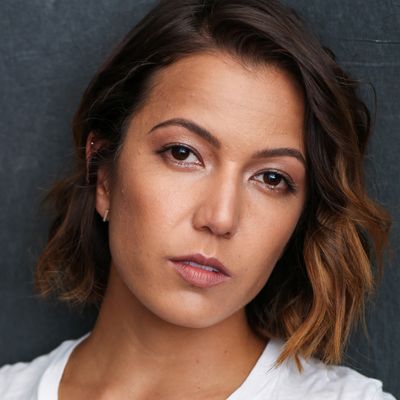
Morgan Marcell is an actor, dancer, choreographer, and director with Broadway credits ranging from the original Broadway cast of Hamilton to the original Broadway cast of Bandstand to Fosse Verdon. She is now on stage in the original Broadway cast of Moulin Rouge, the musical... Read More
From the show: The Theatre Podcast with Alan Seales
Guests
Miniseries Inclusions
Featured Shows
About
Morgan Marcell is an actor, dancer, choreographer, and director with Broadway credits ranging from the original Broadway cast of Hamilton to the original Broadway cast of Bandstand to Fosse Verdon. She is now on stage in the original Broadway cast of Moulin Rouge, the musical.
A San Diego native, she originally planned on going to law school, she eventually found her way back to LA as a trained dancer. Soon after performing with the In the Heights tour, she took over for the dance captain after just 8 months. Working her way through just a handful more gigs, she has even contributed to the TV scene as an Assistant Choreographer for Fosse Verdon.
With other members of the Hamilton family, Morgan and Philippa Soo co-founded The Eliza Project, a philanthropic endeavor led by Hamilton cast members to lead artistic workshops and create new works with the students at Graham Windham, the orphanage created by Eliza Hamilton herself. I addition, she has recently made her directorial debut with Sharing Our Stories: The Eliza Project. It is a 10 minute Short Documentary about the inception, purpose and hopeful legacy of The Eliza Project, featuring Renée Elise Goldsberry, Jonathan Groff, Lin-Manuel Miranda & the students of Graham Windham.
Connect with Morgan:
- IG: @morgankei
- Twitter: @morgankei
- MorganMarcell.com
Connect with The Theatre Podcast:
- Support us on Patreon: Patreon.com/TheTheatrePodcast
- Twitter & Instagram: @theatre_podcast
- Facebook.com/OfficialTheatrePodcast
- TheTheatrePodcast.com
- Alan's personal Instagram: @alanseales
- Email me at feedback@thetheatrepodcast.com. I want to know what you think.
Thank you to our friends Jukebox The Ghost for our intro and outro music. You can find them on Instagram, Twitter, and Facebook @jukeboxtheghost or via the web via jukeboxtheghost.com.
A very special thanks to our patrons who help make this podcast possible!
Cheryl Hodges-Selden, Paul Seales, David Seales
If you would like to see your name in this show notes or get a shout out on the pod itself, visit ttp.fm/patreon to become a member and show your support!
Transcript
This transcript was automatically generated and might contain errors.
[0:00] Alan Seales: Welcome to The Theatre Podcast, intimate personal conversations with theatre's biggest names.
[0:10] Alan Seales: I'm Alan Seales, and this episode is with Morgan Marcell, who is in the smash hit Moulin Rouge! The Musical, which continues our February 2020 takeover. Morgan is another example of someone who just kind of says yes to opportunities and then figures out how to make it work. She's very type A, she says, but that hasn't stopped her from saying yes to opportunities. But then she kind of freaks out about like, oh, crap, I said I'm going to do this. Now I've got to make it work. And being that she is type A, she wants to be the best at it and she's doing it. She's succeeding. We obviously get into the specifics of this in the episode, but she's created her own way, which ironically, because Alex Timbers is her director in Moulin Rouge!, I was going to compare her to Alex Timbers who, and even Lin-Manuel Miranda, who she's also worked with, people who have written things and created things to create opportunities for themselves instead of waiting for opportunities to come to them.
And now through her experience and through the people she's worked with, she's known as someone who can translate stage to screen. I think we are going to be seeing a lot more of her in the coming years. Very soon. She's just this delight to be around. She has a great energy. She is very talented and very imaginative and very creative. So I hope you enjoyed listening to this episode as much as I enjoyed recording it. Before we get into this episode, as always, please visit me online at thetheaterpodcast.com. Show your support. Help me get the transcriptions finished for all my past episodes. All of the money right now from Patreon is going to get the transcriptions made so that we can be more accessible for those who want to read it instead of hearing it.
So that's very helpful for those who need it. Again, if you need it, that's thetheaterpodcast.com slash Patreon, P-A-T-R-E-O-N. Visit me on social media at Twitter and Instagram at theater underscore podcast. And now please enjoy this episode with Morgan Marcell. My guest today is an actor, dancer, choreographer, and director with Broadway credits ranging from the original Broadway cast of Hamilton to the original Broadway cast of Bandstand to Fosse Verdon. She is now on stage in the original Broadway cast of Moulin Rouge! The Musical. Morgan Marcell, welcome to The Theatre Podcast.
[2:35] Morgan Marcell: Thanks so much. Wow, that bio is really thorough and made me smile.
[2:39] Alan Seales: Yeah, you got a big old smile on your face. So you only do original Broadway cast. That's what I'm taking away from the intro.
[2:45] Morgan Marcell: Right, right. That's my requirement.
[2:47] Alan Seales: Yes.
[2:48] Morgan Marcell: Must be original.
[2:49] Alan Seales: In my contract, must be OBC or I walk. But you did choreograph. You were assistant dance captain for the National Tour of In the Heights, right?
[3:00] Morgan Marcell: I ended up being the dance captain. I took over for the original. So I was a dance captain and a swing for, yeah, for the first national tour. And that was kind of my first big job in musical theater.
[3:10] Alan Seales: Well, I want to get, we'll get to the first big job. But so you grew up in California, born in California, right?
[3:15] Morgan Marcell: Born in San Diego. What a terrible place to have to go back to for Christmas. You know what I mean?
[3:21] Alan Seales: Right. There's no snow there, though.
[3:23] Morgan Marcell: I know. But see, but you can drive two hours to the mountains and then you're in snow.
[3:27] Alan Seales: True. Touche. Okay. Okay. Tell me more.
[3:31] Morgan Marcell: Yeah. So I grew up in San Diego and I did theater as a kid in the summers until I was probably 15. And then I was like, I'm going to go to law school and forget arts. I'm going to go educate myself. And so I applied to Stanford thinking that was, you know, that was my dream school. Didn't get in. Went to Boston University for a year instead. And I still wanted to go to law school, but my mom came in like February of the year, my freshman year. And she said to me, I have never seen you so depressed. What's going on? And I was getting straight A's. I was like doing the thing, but she could just tell that I was like gray, you know? And she said, what's going on? And I said, I just feel like I'm not contributing to the world.
I'm not changing it. I'm not not changing it. I'm just here learning, just existing. I'm doing the assignments. I'm doing what people tell me to. But there's no conversation here about how we affect anyone else or what our big dreams are. I mean, it partly has to do with the fact that I lived on an engineering floor. So there's that. I don't know that they were talking about anything, you know, artistic or, you know, kind of those things. So she said, oh, no, no, they also can change the world. I just don't know that they were talking about it. But my mom said, what do you want to do with all this money we're spending on education? Is there something else you'd rather do? And I said, I want to go to L.A. and train as a dancer. And she said, OK. And so I did.
[4:59] Alan Seales: How much dance training did you have until that point?
[5:02] Morgan Marcell: I had done very rigorous, like classical ballet from the time I was probably 10 to the time I was 17, until I was a senior, until I left. And I did jazz a little bit less consistently than that. But I did. And I was trained in tap when I was little. So I had kind of all the skills, but I didn't really know what that meant. It just seemed kind of like a hobby at that point.
[5:26] Alan Seales: Right. Right. I applaud your mom. You were saying that she just came in and just said, you know, something like, I've never seen you so depressed. Our parents' generation is not used to talking about feelings like that.
[5:39] Morgan Marcell: Yeah. Well, I'm actually very lucky that that happened because my mom was the one that pushed me. If anything, like I have gone to therapy now because of my mom. Love you, mom. Because she pushed me so hard and she required that I get a 4.0. And part of my type A personality surely comes from her. But I think she pushed me so far just so that I knew I could do it. Like I survived a year in college. And she said to me, you're succeeding. You're doing very well. It's not that you are failing and you want to leave. You're succeeding and you're still saying, I'd like to leave. And she said, that proves something to me. So let's do what you want to do.
[6:16] Alan Seales: Yeah, my version of that is that I go to therapy because of my mother. Love you, mom. And because we didn't talk about feelings.
[6:23] Morgan Marcell: Right.
[6:24] Alan Seales: So being, you know, especially a boy, I was not encouraged to talk about feelings. And I did musical theater and I was singing in boys' choruses and whatnot. And then when I got to high school, when all of a sudden it was just, you know, you were not right in the small town of North Carolina where I grew up to be a boy and do the arts.
[6:43] Morgan Marcell: Yeah.
[6:44] Alan Seales: And I was this macho jock that went hunting. You're forced to leave it behind, but that's a different story. So then you go to, you switch colleges.
[6:56] Morgan Marcell: No, I drop out.
[6:57] Alan Seales: Oh, you drop out completely?
[6:58] Morgan Marcell: Yeah.
[6:59] Alan Seales: Beauty school drop out. Yeah, bye. I left Boston University and I went to L.A. and my parents took a portion of what they were graciously giving me to go to college. And my mom said, you know, train your butt off, like go do it. And so for a year and a half, I danced six days a week, 10 hours a day. Like literally, no, that's it. I did it for a year and a half. I like barely took holidays off. I just was so obsessed with it and I did my own class schedule and I took ballet every day and I was in all these crazy hip hop classes. And, you know, I was taking class from Sonia, auditioning for her. She could literally not notice me. I was like in the back and she never paid me any mind. So there's that.
[7:46] Alan Seales: She's decided to tie it. Does she remember you when you auditioned for her from Moulin Rouge?
[7:49] Morgan Marcell: No.
[7:50] Alan Seales: No?
[7:51] Morgan Marcell: And I'm glad she didn't because I'm a different person. But I did go up to her during the rehearsal process and I said, you know, my best friend is, he's a dancer and choreographer named Nick Lanza-Sara and we did Rent Live together. But I said, my best friend is Nick and he assisted you all the time and I would go to these rehearsals and, you know, pick him up or drop him off or say hi or getting dinner in between or whatever. And I went to all his performances. So I've seen you. I know who you are. You've met me. I went to all of your workshops and your auditions and I, you didn't like me then, which is fine.
[8:27] Alan Seales: This is after you were cast in rehearsal.
[8:29] Morgan Marcell: Oh yeah, yeah.
[8:30] Alan Seales: Certainly after, yeah.
[8:31] Morgan Marcell: Yeah. Too late, too late to say she's a weirdo. Don't cast her.
[8:34] Alan Seales: Right, right, right. Exactly. I could open my mouth.
[8:36] Alan Seales: All right. So back up for a second though. And so we were talking about In the Heights tour in the beginning. So that you said that was your first like professional job?
[8:45] Morgan Marcell: Kind of. I mean, I had worked professionally in the theater in LA and San Diego, but it's not a huge scene, right? And I had worked as a dancer a little bit commercially, but nothing huge. You know, I didn't do any crazy like Britney tours or anything like that. So this was my first job as an adult in the theater professionally on a professional contract. And it changed my life regardless of being an artist forever.
[9:15] Morgan Marcell: Absolutely. Like it just made me a better person. I'm still friends with those people. It's that show. I don't know. It just breeds a family and it was a really great experience.
[9:26] Alan Seales: I don't think anything Lynn touches just breeds a family.
[9:29] Morgan Marcell: Yeah. But that one in particular, I feel like he would agree. It was sort of a commercial success, but not as much of a commercial success, obviously, as Hamilton, but it was about his own family. And so that's in the blood of the musical and in the writing. And you're out salsa dancing with these people that this was also part of their story and they're proud to tell it on stage. And it was really cool.
[9:57] Alan Seales: Was he auditioned for that on the West Coast?
[9:59] Morgan Marcell: It was in LA.
[10:00] Alan Seales: Oh, interesting.
[10:01] Morgan Marcell: Yeah.
[10:02] Alan Seales: So they didn't cast completely out of New York then?
[10:03] Morgan Marcell: They didn't. I mean, I think I was one of few that came from LA, but that's actually a crazy story. I don't know if you want me to tell it now.
[10:12] Alan Seales: Sure.
[10:13] Morgan Marcell: Okay.
[10:14] Morgan Marcell: Tell me crazy stories.
[10:15] Morgan Marcell: Okay. So I auditioned in LA. I didn't know who Andy Blankenbuehler was, but they said we want this like street styling and we also want someone that can do musical theater. I said, ha ha, that's me. I've trained a year and a half to do this. And so I went in and Andy cut half the room. He did a thing from 96,000 and then he did like this little tap combo and he cut actually half the room. We were all sweating, drenched, like my eyelashes had fallen off. And he said, y'all need to learn how to tap. And I was like, oh, because I had tap training. I mean, it wasn't insane, but he just looked at the entire room. Y'all need to learn how to tap. Oh, okay. So made us a call back. I didn't have any singing confidence then.
And so I'm auditioning for Alex Lackmore. And in my song, I had sort of head voiced this F and he said, hey, that ending note, can you just belt it real quick? And I was like, I mean, in my head, I couldn't even hear my voice doing that. And so I did it. I cracked. He had me do it five times over and over again. And I was like, I actually lost this job. This is never happening. I went outside the room. He's like, we'd like to hear you do the Carla sides, which is one of the supporting characters. What?
[11:35] Morgan Marcell: I literally can't sing this, there's no way. I went to my car, my car, oh, I miss that. Went to my car, listened to the soundtrack, like trying to listen to what she sings, sang it. Anyway, came to New York, my first time coming for an audition. I came out super excited, and we did two days of like 10 to six dancing, and everyone got a call that night. And I flew home the next day, one of my friends was also auditioning from LA, and he called me and he's like, did you get a call? I said, no. He's like, okay, well, everyone else has heard. And I was like, oh my God, I didn't get the job. Like, I'm heartbroken. I had left another rehearsal process to come to the callback. So I'm flying away from New York, you know, like longingly looking like, oh, I lost the job, crying, and this whole thing.
And my mom and I have this joke about Top of the Chrysler, that's the name of my corporation, because my mom and I have a joke, because I played Molly and Annie, and so I was like screaming, like, shine like the top of the Chrysler building. So it's always a joke, she puts it in opening night cards. So for Mother's Day, I auditioned in November, by the way. So for Mother's Day, I got her this little plate, and I had someone write Top of the Chrysler on it, and I was going to pick it up. It was ready that day. It was like maybe three days after Mother's Day. I went and I picked it up. So we're in May now. Yeah, yeah. I went, I picked it up, and on our way home, I got a call that I had booked the tour.
And we're like screaming. Also, my dad, the documentary had just come out about In the Heights, the making of In the Heights. I had purposefully not watched it, because I was like, I'm going to cry, because I didn't get that job. And so that night, my dad was like, we have it, we have to watch it. And so my mom got this plate of Top of the Chrysler. I had booked my first job. It was sort of this Mother's Day gift, right before my birthday, and my dad was like, let's watch this documentary. So I got to do that. Anyway, that's the story. That is such a fun story. It took six months to get the call. That's incredible. I mean, it was just, people had turned something down. I mean, I was like second choice, but that's okay, because that's just how it happens.
It happens. And now it has made this great career for you. You came into the In the Heights tour as, you said the assistant dance captain, right? I was a swing, and then I took over for the dance captain when she left. How long were you in before you took over? Probably like eight months. So is it normal for someone who's like new on the job, to take over something like that? I mean, because I guess it was eight months new-ish by that point? Well, new, like I had never danced captain before, and I had never swung, so it was all new to me. But thankfully, Stephanie Clemens, who was assisting on In the Heights, and was in the original cast, kind of saw me audition, and saw the way my brain worked, I think.
And so I think they thought that I was the next choice. I want to talk about that for a second, because I've talked to Sonya, Sonya Taya, and it was kind of the same thing for her. She started dancing later in life, long after you did, like late in her teenager years. I mean, she was doing underground scene, and then ended up getting into choreography later. But she was saying that somebody came to her in a dance scenario and was like, you have the brain for a choreographer. And I still don't quite understand what that means. Do you have more of an explanation of what that is? I do, a couple things. So I have two examples. One is from Tommy Kail, about directing. And one is from Stephanie, about dance captaining.
I think the way that you see someone compartmentalize things to be a dance captain, to pick up the counts quickly, to not put too much of their own flavor onto something, and really absorb what the choreographer wants, someone that listens well, you know, this is what this movement means. And then that person internalizes it, you can see that, and then executes it, I think is part of a formula for a good dance captain. Because you have to be the choreographer when the choreographer is not there. And you don't want to teach something to another person with your own stylings on it. You want to teach it the way the choreographer did it. And so I think that's what they saw. I mean, it's an advantage and a disadvantage, because it's an advantage because the choreographer trusts you and you have a great relationship with them.
It's a disadvantage because often it means you're not on stage. Because you didn't put your own stylings on it, right? You didn't make a choice about the way this arm goes, or what this kick looks like. You just did it exactly by the book. And so I think often that means you end up in a swing position or a dance captain position. Because you can kind of, yeah, like switch out. You can replicate, yeah. You can replicate, switch out into whatever character you are, yeah. Yeah. That makes sense, okay. So then that, what year was that? It was 2011, right? Was that in the high school? That's when that ended. Yeah. And then you were in the original Broadway cast of Hamilton in 2015. But obviously there were years of work.
Oh, yeah. Until then. There were years of work and not work. There were years of, I'm going to do TV and film now. Yeah? Yeah, so I, it's sad to admit this, but after In the Heights, I said, that was a really great experience. It changed my life. I'm really invested in acting, and I want to do real acting. Yeah, all of New York just died. Real acting, TV and film, hilarious. No, just well-paid acting. That's what we should have said. Right, but then, that's what I was thinking, is that I don't want to do musicals. They're cheesy, and I just want to do something that's really dramatic and all this stuff. So I was training at a classical theater company called Antius in LA, and I was doing Greek theater and did The Crucible and all these things.
You went back to the West Coast after this, yeah. It was really fun. And I learned a ton, but I was also working in a Pilates studio and bartending in a hookah bar that was owned by the Armenian Mafia. Really? Yes, so that was my LA experience, and I kept coming back to New York for auditions for everything, Aladdin. I was in that room for five times and all these things, and I finally said, you know what? If I book one more job that needs me to come to New York, I'm moving. So Mark Stewart called me and said, I'm choreographing Grease at North Shore Music Theater. Will you come, will you assist me, and then will you also be Cha-Cha in the musical? So that's it, so I moved. And then you, so it came here, and then, when did you audition for Hamilton?
Probably eight months after I moved. I moved in July, I believe, and then I auditioned probably spring, in the spring. How fully developed was it at the time when you auditioned? Because I think you were, if I remember this correctly, you were part of the original crew that went down to the White House and performed for the Obamas early on, right? Yes, so I was in the original cast that was Uptown, but I did not do the public. So the public was, you know, they had a full run with costumes and all the ideas kind of formulated, and so I joined as a swing for the Broadway run. So that, okay, so that was like 2014-ish, I would say? 2015, yeah, we opened. It was, I don't remember what month it was, but yeah.
Did you have any idea what kind of success that it was gonna push you and everybody else into? Certainly not me. I mean, I saw it at the public, because I went and I did the lottery and I ended up winning, and Stephanie, again, came up to me and said, hey, we're having auditions for this show. But everyone says that, right? Like, come in for the audition. You're like, yeah, whatever, call me if you call me. And then not a week later, here's the appointment. Okay, I gotta do this. And actually, that story's kind of crazy, too, because I had booked the lab of prom, and I was so excited to do a Casey Nichola thing. I was like stoked. I had a great audition. I was really excited about it. I was doing pre-pro for something else, and then I was supposed to go to La Jolla Playhouse to do another show.
So I had all these things on my plate. It was very exciting, you know? It was like, oh, it's my first year, so exciting. And then Andy calls me, and he's like, I heard that you have a lot of jobs on the line. Yeah, I've not auditioned yet. Yes. He's like, you can't do them. Okay, but I need to. I need to pay my rent. And he's like, well, what if I bring you in as a vacation swing on Hamilton? I'm like, what? I don't even know what that is. He's explaining it to me. He's like, you'll be in the rehearsal process, but then we might not use you for six months. And I'm like, well, do I get a retain alert? How does this, do I get paid? What is this job? He's like, well, we really want an African-American swing.
And so I don't know if you coming in for the swing role is gonna work, but we do want you on the job somehow. Very confusing. And so I decided in that moment, I was like, it's probably, whoa, it's probably gonna come down to my voice. So I'm gonna take the most amount of vocal lessons I can possibly cram in in the next two weeks. I did, I sang the song I rapped in my audition. There's that to a tape, okay? Anyway, and then I got the call that day, which also never happens. Like I got home and agent called. And congrats, by the way, they just announced it's gonna go into the movie. They're gonna make a movie out of it. Yeah, it's exciting. With the original Broadway cast. It's exciting. Yeah, we filmed that, I guess right before the Tonys in the first year.
Oh, it's already been filmed? It's already been filmed, yeah. And then they put it in the vault for like five years. And now here we go. I thought they were bringing everybody back to redo it. I mean, maybe we should be telling people that, because that seems more exciting, but it's actually not the fact. Oh, that's pretty cool. Yeah. All right, well, good on them for recording that and keeping it. Yeah, Lynn is a genius. Yeah, many thanks. So then 2017, bandstand, original Broadway cast. How long were you in Hamilton? Just over a year and a half. And was it kind of a natural choice or a hard choice to leave something that you knew would be a regular paycheck for a while? It was not hard for me because my goal originally was to perform, right?
And so I have an offstage track. That's what I had. I was the dance captain. I was a swing. And I just wanted to know what it felt like to put my stamp on something that I did eight times a week after that. And so when bandstand came up and I was able to leave, I think it was a hard decision for both Andy and I because I was, going back to the dance captain role, I was him when he was not at Hamilton. And so he was like, this is gonna be a hard decision. I would like you to come do bandstand, but we have to figure out who stays in the building. And so it was a little bit of negotiation there, but it was pretty easy for me to make the decision to be on stage eight times a week. So then in bandstand, you actually, you were part of the regular rotation, or the regular cast, yeah, yeah.
And it didn't last as long as I feel it should have. I know, it's so sad. It's like the little train that could, and then it couldn't anymore. I mean, was that kind of, was that hard for you? Because I guess it was the first show that you left because it closed. Yeah, it was really hard. I mean, it's sort of weird because that show was so hard physically that I actually don't know how I would have done in it for a year. And I think we all say that. It's like, we were putting our all into it every single night because, and I think that's why it ran for even as long as it did, because
[23:10] Morgan Marcell: We just were giving our all every night because we never knew when we were going to get the notice. And I actually, I took a vacation and we got our notice while I was on vacation. And so I wasn't even there to experience it with the cast. So I had to go back the next Tuesday, like performing like, Oh God, we're going to close. But I don't know. I just loved everything about that show. I loved all the people in it. I loved the music. I love doing it. I love dancing it. I could have, if my body would have let me, I would have done it for a long time.
[23:39] Alan Seales: Yeah. Well, was it harder than the other choreography? I mean, we're going to get to Moulin Rouge, but I mean, the Moulin Rouge choreography looks intense.
[23:47] Morgan Marcell: Yes, I can do a full Venn diagram, like compare and contrast on all of them. But I think the short answer is that they're all equally hard in different ways. I think we call Hamilton the marathon because it's three hours long. You have to be invested as an actor. Emotionally, you got to do the choreography. You got to lift chairs over your head. You got to do the costume changes, the whole thing. Bandstand was so high impact. It was insane. We were doing a lot of partnering. So if you weren't showing up for your partner, you were going to get injured. You know, you had to be there and be a hundred percent. And Moulin Rouge is a little bit of both. Like it's, it's, we call it the high intensity training, like a HIIT workout because you're on stage for 20 minutes, sweating everywhere.
The opening number is 11 minutes by itself. You're dying in the opening number. And then you go off stage and you have a little bit of rest and then you come back and do it. So if you want the Moulin Rouge workout, just do three HIIT workouts in a row, eight times a week.
[24:44] Alan Seales: That actually, there's a marketing idea for the show. Just like put the choreography on tape.
[24:49] Morgan Marcell: Someone told me that already. They're like, do the Moulin Rouge workout and I'll watch it. I mean.
[24:54] Alan Seales: There's your, there's your TikTok idea.
[24:56] Morgan Marcell: Yeah. Yeah. There you go.
[24:59] Alan Seales: But okay. So 2017 was Bandstand, 2019 Moulin Rouge the musical. And then at what point does Fosse Verdon make its way into your life?
[25:06] Morgan Marcell: So Fosse made its way into my life. After Bandstand, I went and dance supervised Hamilton in Chicago for six weeks or so. They just needed someone to fill in and I had all the information and it was kind of good timing. So I went out there and then I came back and did like chess at the Kennedy Center and in the Heights at the Kennedy Center, a couple like little short things. And I had emailed Andy saying, he just did the movie Vice. He had done a dance number in it, which was cut, but he did it. And I said, you know what, if you do anything that has to do with film or TV and you're choreographing, I think that I'm the person to be your assistant because I have a really kind of eye that lends itself to cinema, but I know your choreography so well.
And so I think I would be a great assistant. Let me know if that's of interest to you. No reply, because Andy might be there. And then two months later, he calls me and he's like, hey, I have this job. I'm going to choreograph Fosse Verdon. It's FX, it's the entire Hamilton team. Do you want to be the assistant? What? I was sitting on my floor like I'm dying, but absolutely, like absolutely 100%. And then I got to look at the team, like Tim Ives was our DP and he did Stranger Things. He did Summer of House of Cards. He did Girls. It was blowing my mind. And so then we started not like two weeks later, training Michelle and Sam and scheduling and doing the whole thing.
[26:34] Alan Seales: So what was your role as the assistant choreographer? Did you come up with, is it like a A-cam B-cam team on a film set or like how does it work?
[26:42] Morgan Marcell: What wasn't my job is the question. No. So it basically was to, I was in charge originally of training Michelle and Sam. So emailing their managers and getting them in the studio and deciding what Fosse rep we were going to teach them and who was that person that was going to come in, all that stuff, organizing all that stuff. Then when we got to choreographing, it was doing pre-pro with Andy. And then when Andy had to go to a location scout or something like that, then rehearsing the dancers and running the auditions and things like that. So it was a lot. Andy entrusted me with a lot of information and a lot of responsibility and it was really quite cool. Also in the middle of that, now it's known he left to do Cats.
So he did three episodes and then he left to do Cats. And so I had to kind of take over while he wasn't there. So the day we filmed Who's Got the Pain, it was just me. You know, it's Michelle Williams and Tommy Hale and me. So that was really cool. I mean, it was really fun to do.
[27:54] Alan Seales: I feel like that would put me in such a place of imposter syndrome of like, what am I? Where did Andy go? Where did he go?
[28:01] Morgan Marcell: Oh, I was scared. Can I cuss on this?
[28:05] Alan Seales: Oh yeah.
[28:06] Morgan Marcell: Okay. I was scared shitless, for sure. I mean, most of the time. Because also there's this scene when they meet and there's dancing with dialogue. So they don't, as actors, they don't care. They just want to do the work. They don't care who's in the room. And so they're rehearsing this thing and I'm just going over the counts and stuff like that. They're like, what do you think this line means? Like, why do I say this as Fosse and blah, blah, blah. And what's their interaction here? And I'm like, oh my God, this is Tommy's job. Like, what do I say? But I'm like trying to give them information, but not trying to overstep my bounds. You know, it was a lot and very cool.
[28:39] Alan Seales: That's really fun. Wow. Wow. And is that, was that the first time that you were coming up with original choreography or where it was?
[28:49] Morgan Marcell: We did. I mean, we did mostly Fosse rep. So we had people come in from the Fosse, Verdon legacy that came in and taught that stuff. But Andy probably choreographed two or three numbers that were original. And so I was in pre-pro for that and teaching a lot of that. But it was really fun. I've been in the room with Andy a couple times on just random projects where he's creating and it's always really fun and inspiring. And it's always driven by some kind of storytelling. So it's cool.
[29:21] Alan Seales: That's a lot of fun. And did that lead into Rent Live as well?
[29:25] Morgan Marcell: Yeah. So once he left, I was like, hey, can I take a leave to do Rent Live? And they actually had another choreographer, Susie Meisner, come in and take over for Andy. And so it was kind of this perfect shift where I was like, great, I'll go do Rent Live and you can start to take over with your team. And then I ended up doing a couple episodes of Fosse later when I came back. But yeah, it kind of segued right into Rent Live.
[29:48] Alan Seales: So is it a subset of people that kind of are looked into in the industry of like, we have theater, musical theater that needs to translate to screen and we only trust certain people to do it now? Have you like breached this inner circle?
[30:03] Morgan Marcell: I would love to think that. I don't know. I think it depends, you know, like this new movie In the Heights coming out. And the choreographer, Chris, has mostly done commercial stuff. But his translation of storytelling into film, I think is going to be really great. But he's not of the theater world, right? But I think he has a similar mindset about storytelling and how you do that. And so I think it's something that people see in the artist about how to integrate music and movie making and choreography. And if someone has proven that they've done that well, I think they're trusted with that.
[30:51] Alan Seales: All right. And okay, so you're more on the creative side. You're on the creative side doing that thing. And did the Moulin Rouge! audition come in the middle of all this? Or were you done and you're like, all right, I'm going to start auditioning again?
[31:04] Morgan Marcell: Right. Like, how did it go? That's how I felt. Literally, what's going on? How do I, what coast am I on? So I did the lab.
[31:12] Alan Seales: What mode are you in?
[31:13] Morgan Marcell: Well, here's the thing is that I think you're always in all modes. You just have to be, right? Like, I think that I look at a piece of choreography and I'm like, oh, that's brilliant. I would love to dance that. But there's also a part of my mind that's thinking, how would you film that? You know what I mean? It's just like how I feel like I walk around. And I think-
[31:31] Alan Seales: I think that's unusual though.
[31:33] Morgan Marcell: No, because I think old school Broadway, which they're legends, they were like, I am a dancer. I am a choreographer. I do this. And why someone like Fossey, for instance, is so revolutionary is because he's like, I'm going to do everything. I was a dancer. I'm now a choreographer. And now I'm going to choreograph and direct. Watch me do it. And everyone's like, whoa, you're revolutionary. And he's like, no, I'm just doing what I feel like. I'm just doing me. And I feel like we get so caught. We're now breaking all the boundaries, but we get so caught. Even casting directors being like, that person is a dancer. They can't do TV and film. Or this person that's directing this film will never be in front of the camera, but we're seeing it all the time. You know what I mean? We're seeing everyone do it all the time. And so I feel like that's the way, that's the future. That's the future. Anyway, what did you ask me?
[32:18] Alan Seales: How and when did Moulin Rouge! the musical come in?
[32:23] Morgan Marcell: So I auditioned for Moulin Rouge! while I was in Bandstand. And I did a reading of it while I was in Bandstand. And then the show closed. And we did a lab, an eight-week lab that fall. So Bandstand closed in September. So November, we were doing a lab. And then we did the out of town run six months later in Boston that summer. And then we had nine or 10 months. So Fosse happened right after that.
[32:49] Alan Seales: Fosse happened that fall.
[32:50] Morgan Marcell: Yeah, yeah.
[32:55] Alan Seales: And so it was Rent Live. And then I had a couple months in the spring, and then we started rehearsals for Broadway.
[33:00] Alan Seales: Okay. So for Moulin Rouge! when you started, when you went in, you were...
[33:06] Morgan Marcell: I guess at what point was the script finalized? Because there were songs that were cut. There were things that were edited.
[33:11] Alan Seales: Still changing. I'm just kidding.
[33:12] Morgan Marcell: Is it really?
[33:13] Alan Seales: No, no, no, I'm kidding. I think what you see now was not finalized until we froze on Broadway, which is probably a week before we opened.
[33:21] Morgan Marcell: Wow. So Boston, what changed from Boston?
[33:24] Alan Seales: There were a couple things. There were songs that got changed. Like we did Shake It Out. But now we do, I mean, we always did Chandelier, but now Ziedler sings it. And so some of those roles changed. There was talk of changing Firework for a little bit, but then that ended up staying. And I think there were some things that we couldn't get the rights to. And so they had to maneuver, and Justin had to reorchestrate to fit in what we could use.
[33:54] Morgan Marcell: Did it just blow your mind when you saw the script and you heard the score, and it was just thing after thing after change after change of costumes and scenes?
[34:05] Alan Seales: It's like a ride. You get on it, and it just takes off out of the station.
[34:09] Morgan Marcell: Yeah. Well, I didn't know what it was. Even doing the reading, I didn't understand how high of a production value it would be. And so we got to do this run of it downtown. Or not run, but we were doing run-throughs, and it was the end of the lab. And we had costume changes and lighting and strobes and all this stuff. And I was like, this is crazy. I mean, we had a mini Passerall downtown. It was nuts. And it enabled Sonya and Alex to create their world and really see it. And I think...
[34:45] Morgan Marcell: Eventually helped us get into Boston because all the designers could come and be like, what do we want this to look like eventually? But seeing the set for the first time, I think it's like on my Instagram or something, I filmed people walking into the theatre and it blew your mind. It's like walking into Disneyland for the first time as a three-year-old. You're like, oh my god, Cinderella's real! I literally wrote down in my notes here, it's like seeing a show and getting on a ride. The house, the pre-show, everything is 100% immersive, which Disney has always impressed me with. Because even the queue, the atmosphere, you have your park music that's synchronized. You walk in and you were just in that world.
And you're supposed to leave everything else behind. Well, Alex, I think is a king of that. I saw Beetlejuice while we were rehearsing for Broadway. And I walked in and I was like, oh, we are the darker, sexier version of this. This is the crazy, fun, sarcastic one. And we're going to be the other one with the red lights and the costumes that are a little more revealing and mysterious. We're going to be the mysterious version of that. I was like, I'll do it. This is amazing. I'm in. It was a really cool experience to see Alex do it in another way. Right. Yeah. And this is your first time working with Alex. He's one of those people too that just made his own way and does it all. Bloody Bloody Andrew Jackson, he wrote because he just wanted to direct.
At the age he was at the time, it was kind of like, oh, you're not in your late 40s or early 50s. Yeah. You're not old enough or experienced enough to direct. So he just wrote something. He could direct it. Exactly. And then just writes his own stuff. Yeah. He's like, I'll be in it and I'll write it. And now I'll direct it. And so and you too. And I think you're kind of following along in those footsteps because you're doing. I take that quote and put it on my website. I mean, you're following along those footsteps because you're doing your own choreography. I was looking at your website. You're doing all these videos to get experience of putting yourself out there, doing the dancing, making up your own stuff.
And then this even led into the Eliza Project and the Share Your Stories documentary, which was your directorial debut. Yeah. Right. So for those who don't know, tell us about the Eliza Project. So when I was in, I think the greatest, one of the greatest gifts that Hamilton gave me was opportunity, obviously, but particularly because Philippa Soo and I created an organization that works with Graham Windham, which is the orphanage that Eliza Hamilton created. So we work with those students to give them artistic workshops and help them find their own voices, whether that's through a rap or we did like an eco project where we went into the forest and taught kids about the environment and how they could help and... Oh, eco.
Eco. I thought you said ego. Ego. Well, honestly, we should do workshops on that too, but eco, yes. So we got to do a couple Eliza projects. And the reason it's called a project is because it can be anything. It can be a four-week workshop. It can be one day. It can be a meditation retreat. It can be kind of whatever you want it to be. And so Hamilton actors, cast members, crew even got together and we developed all these programs. And while I was in Bandstand, actually, the Smithsonian called. What a hilarious sentence. The Smithsonian called. And they said... Not many people can say that. Right. They said, we want to do an exhibit on Hamilton and how it has interacted with philanthropy. Can we do something on the Eliza project?
I'm like, well, yeah, what do you want? They're like, I don't know, a picture or a T-shirt. I don't know what I have that I can give the Smithsonian. And my dance partner, now partner, Ryan, was like, you should do a film. You keep saying that you want to do film. Why don't you do a film and give it to the Smithsonian? I was like, hilarious. I'll never go for that. Cut to the pitch meeting. I'm like, how about a film? And Graham Windham's like, yeah, we have the budget to do it. How much do you need? Let's do it. And then I'm, again, shitting my pants because I've said something that I want to do and I have literally no idea how to do it. And so I'm calling these people that have done documentary film before and trying to get this crew together.
And I'm doing it all by myself. There's no AD. There's no nothing, which was my number one first mistake. I've learned from it forever. And then I'm sending these papers to Lynn's lawyer being like, do I have the right to use his image? And they're like, well, we have to. Meanwhile, I'm copy and pasting it from Google. You know what I mean? It was an insane experience. All that to say, put your money where your mouth is and just do it.
[39:39] Alan Seales: Right.
[39:39] Morgan Marcell: So I did this 10-minute documentary.
[39:41] Alan Seales: I'll share your stories.
[39:43] Morgan Marcell: Yes. And yeah, it was really interesting to head that up. So yeah, I'll read. The Eliza Project is a 10-minute short documentary about the inception, purpose, and hopeful legacy of the Eliza Project, which was co-founded by Philippa Soo, obviously, and you. Features Renée Elise Goldsberry, Jonathan Groff, and Lynn, and the students of Graham Windham. And so that's now, we can see that in the Smithsonian?
[40:12] Morgan Marcell: It is in the archives, and you can also see it on my website.
[40:15] Alan Seales: Oh, yeah. I was watching it on your website. But yeah, the Smithsonian, that's so cool.
[40:18] Morgan Marcell: It is cool.
[40:19] Alan Seales: That is so, so cool. Okay. So a question from one of my patrons is, what is your favorite dance number or song from Moulin Rouge?
[40:29] Morgan Marcell: I think that depends on, such a boring answer, but I think that depends on the mood that I'm in. Sometimes, if I have a friend there and I have had caffeine, the opening is so fun. I'm like, look at this skirt go. I'm flying around the stage. I'm kicking my face. I get to make basically growling sounds and be in a permanent squat on a bridge. Great. Living my literal best dreams. When I'm not that, I think Diamonds is really empowering. It's a little less crazy on the body, but it's really fun to be in this V-flanking Karen Olivo, sometimes Ashley Ren, and be going for it, giving you, I don't know. I mean, obviously, diamonds and lights and all the things, but it's just, it feels really empowering for it to just be all women. And we're like, watch us go. It's really fun.
[41:21] Alan Seales: That's very cool. All right. So the three standard questions I ask everybody to wrap up every podcast episode. The first one here is what motivates you?
[41:30] Morgan Marcell: I think the stories that are not told or don't get to be told.
[41:38] Alan Seales: Who lives, who dies, who tells your story?
[41:39] Morgan Marcell: I.
[41:43] Alan Seales: She jumped out a window. Okay. So the second one is what advice would you give to your younger self and younger people listening now starting out down a similar path?
[41:51] Morgan Marcell: It's so hard. I think that you learn, it took me a long time to learn that my weaknesses are actually my strengths and that, quote unquote, cheesy musical theater that I loved to do when I was a kid and later viewed as this weak spot, this cheesy thing that I did, that was a hobby, has made my career. And I was a part of one that has changed opinions, may not change the world, but changed Broadway and the arts for the better, I think. And look what you can do with your, quote unquote, weakness.
[42:39] Alan Seales: Elizabeth Stanley told me something very similar in that she felt that musical theater was not as...
[42:47] Morgan Marcell: Lifting up my body in like a pompous way. It doesn't quite get the accolades that.
[42:54] Alan Seales: Yes. To be a serious actor, you shouldn't do musical theater or you can't do musical theater or something. But yeah, so obviously she said the same thing was like, nope, you got to be really good.
[43:01] Morgan Marcell: Yeah. And also, I think I just talked myself out of it. Yeah. And also, I think I just talked myself out of so many things. I just was in, I'm in my own way. And that's the only person that's telling me I can't. I've never had someone blatantly just be like, well, you can't do that. Do you deal with that a lot? Do you have like the devil that is your own worst critic?
[43:22] Morgan Marcell: I think I'm just like a perfectionist. If anyone hasn't read Daring Greatly, they should. It changes your life. But in it, Brene Brown talks about perfectionism as a disease. Fully suffer from it, 100%. I'm like, if I don't get a 4.0, if I don't get the A, if I'm not the best, I'm not going to do it. Look how many things I wouldn't have done. You know what I mean? It's crazy when you think about what your mind tells you. And so that's like my current, or I guess probably the last three years. Yeah. Get rid of that. It's got to go.
[43:54] Alan Seales: Yeah. Well, that's why we're sitting here with the podcast. Yeah. On the podcast because I was like, I just want to have conversations and I don't know what I'm doing, but let's start talking to people. And you're doing it. And now you're known for it.
[44:00] Morgan Marcell: Yeah. Among several other things. I'm the same way. It's very much of like, well, I'm curious about that, so I'm just going to go do it. And now that I'm doing it, okay, now I got to be the best at it. Yeah. And it's disease and a curse and a blessing, I guess, depending on whatever that saying is. But yeah, totally understand. Okay. And then the last question, hardest one. If you could only see one show for the rest of your life, but you can see it as many times as you want, what would you see?
[44:25] Morgan Marcell: Ragtime.
[44:29] Alan Seales: All right. That's several votes for Ragtime.
[44:33] Morgan Marcell: So old school.
[44:34] Alan Seales: Several votes? Several votes. Yeah. Oh God, I don't feel unique anymore.
[44:38] Morgan Marcell: That's my favorite musical of all time. I think Sweeney Todd is number one.
[44:44] Alan Seales: Whoa. Yeah. I think, yeah. Ragtime is my vote, I think. Or maybe, yeah. That's a hard one. I also think Book of Mormon would be fun just because then you'd be laughing for the rest of your life. Also Something Rotten. I know, I didn't pick one, but Ragtime is my number one. Okay. We'll go with that.
[45:02] Alan Seales: We can find you on Instagram and Twitter at Morgan K.
[45:08] Morgan Marcell: Very close. Oh my gosh. Have you interviewed Jonathan Groff? No, I haven't. Okay. Or Renee. Well, when you do, you need to talk to them about my Instagram name. Morgan K. Very close. Morgan Kia. Morgan K-E. Okay. So for everyone to clear up the misnomer, my name is actually Morgan Marcelle, but Morgan Kia is my middle name. And so I've just had it as my email address, my whatever. But Renee, at least that was my last name. So when she was talking about the Eliza Project on the Hamilton stage, she called me Morgan Kai. Everyone from Hamilton will love that story.
[45:47] Alan Seales: All right, Renee. Thanks a lot. And morganmarcelle.com is your website. You can get more of me at thetheaterpodcast.com. You can find me on Instagram and Twitter at theater underscore podcast. Listen, subscribe, leave a rating wherever you're listening. This is edited by Matthew Hendershot. Thank you to Jukebox the Ghost for the intro and outro music you're hearing right now. And Morgan Marcelle, thank you most of all. This has been so much fun.
[46:08] Morgan Marcell: Thank you so much. Take a deep breath, make the world a little colorful.
© Broadway Podcast Network, All Rights Reserved