

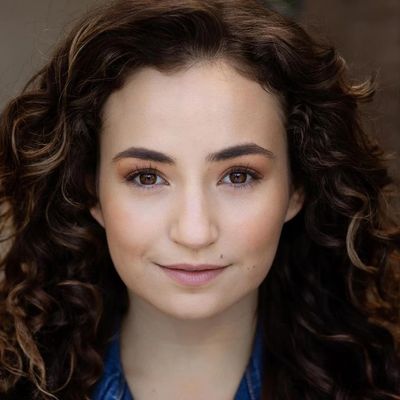
To watch the video version of this interview, please click here. Listen to the SIX studio cast recording, or grab the sing-a-long edition! Courtney Monsma is an actor, singer and dancer from Queensland, Australia... Read More
From the show: The Theatre Podcast with Alan Seales
Guests
Miniseries Inclusions
Featured Shows
About
To watch the video version of this interview, please click here. Listen to the SIX studio cast recording, or grab the sing-a-long edition!
Courtney Monsma is an actor, singer and dancer from Queensland, Australia. Most recently Courtney performed in the Australasian tour of Disney’s Aladdin, and also appeared in the Australian tour of MAMMA MIA! understudying the role of Sophie. During her years of training, Courtney played Charity in Sweet Charity, Carmen in The Life; toured with the production of I Love You, You’re Perfect Now Change, and in her final year played Maria in West Side Story. She appeared in Opera Queensland’s Kiss Me Kate and was a 2018 finalist for the prestigious Rob Guest Endowment Award. Courtney is currently playing Katherine Howard as part of the original Australian cast of SIX the Musical.
While Courtney was born in Adelaide, Australia, she relocated to Queensland when she was fairly young, and currently resides there. Courtney started as a dancer at a young age, and after seeing her sister perform in a community theater production when she was 8 years old, she quickly followed suit. This is also when she discovered singing, and finally felt, ‘ah yea, this is for me” - she knew this was what she wanted to do with her life. “There’s nothing that compares to the feeling I get when I sing,” she told us. Courtney quickly became involved with the community theater scene, and upon graduating from high school sought a way to hone her skills and pursue performing as a career. She found herself at Queensland Conservatorium Griffith University and graduated with a Bachelor of Musical Theatre.
Portraying Katherine Howard in SIX the Musical is not for the faint of heart, and Courtney reflected on how much she’s grown and learned throughout a journey that's included auditions, rehearsals, and performances. She shares how Howard taught her about getting rid of the white noise in her head, and that there is no time for feeling down on yourself because it only holds you back. Throughout auditions and rehearsals the queens were instructed to never do anything that wasn’t authentic to themselves as individuals. As a result, she has also gained a lot of confidence - confidence that will carry her into her next starring role as Anna in the Australian tour of Frozen. Courtney shares that if it hadn’t been for SIX, she doesn’t think she’d be ready for Frozen. “SIX taught me so much about myself”, she says, both personally and as a performer.
In this episode, we talk about:
- Realizing at a young age that performing was what she wanted to do with her life
- Starting SIX and being in a room full of performers she’d always admired from afar
- Her reality living with anxiety as a actor
- Her love for NYC, and being there the week SIX was supposed to open
- The new sort of pressure she feels as she prepares for Anna in Frozen
- The time she was able to spend chatting with Patti Murin (Frozen on Broadway’s Anna)
Connect with Courtney:
- IG: @courtneymonsma
Connect with The Theatre Podcast:
- Support us on Patreon: Patreon.com/TheTheatrePodcast
- Twitter & Instagram: @theatre_podcast
- Facebook.com/OfficialTheatrePodcast
- TheTheatrePodcast.com
- Alan's personal Instagram: @alanseales
- Email me at feedback@thetheatrepodcast.com. I want to know what you think.
A very special thanks to our patrons who help make this podcast possible!
Cheryl Hodges-Selden, Paul Seales, David Seales
If you would like to see your name in this show notes or get a shout out on the pod itself, visit ttp.fm/patreon to become a member and show your support!
Transcript
This transcript was automatically generated and might contain errors.
[0:00] Alan Seales: Welcome to the Theatre Podcast. Intimate personal conversations with theatre's biggest names. I'm your host, Alan Seales, and this is the final episode of May, which means it is the end of our Quarren Queen Takeover. This episode is with Courtney Monsma from the Australian cast. She plays Katherine Howard down there. If you want to catch the video version of this episode, you can find it online at ttp.fm slash patreon. That's p-a-t-r-e-o-n. But before we get into everything, I want to just take a moment and give a special shout out to Parody Bill, who did the graphic treatment for this month's Takeover. Please make sure to go follow them on Instagram for some incredible Playbill mashups. That's instagram.com slash parody bill.
So I actually just finished the interview with Courtney, and I was just so pumped up from my chat with her that I had to just put this reflection down as quickly as I could. We got into such a fascinating conversation about so many different things, and something that surprised me that it hasn't come up before in conversations with people is what you get, what actors get when they're on stage. And especially as a woman who is playing Katherine Howard, who history tells to be a sex object, it comes with expectations. And we uncovered through a bit of conversation that it's all a lot about safety. She gets this confidence, and she gets this feeling of safety being up on stage, being able to be sexy, being able to be talented, being able to be stared at by thousands of people.
But it's safe, and it just makes her feel good. Her career is very young. When the quarantine is over, she's actually going to be Anna in the Australian production of Frozen, which they did announce. She said that the dates that were supposed to start, I guess, in the summer have been pushed back to December so people can reschedule their tickets. That's still going to happen. She's in love with New York. I just have a feeling that even in Australia and in New York, we're going to be seeing a lot more from her in the coming years. So keep your ears open, keep your eyes open for Courtney Monsma. Before we get into this, as always, please leave a rating, leave a review wherever you are. Follow me online on Instagram and Twitter. You can visit me on Facebook at facebook.com slash theater podcast. And now, everybody, please enjoy this episode with Courtney Monsma.
[2:54] Alan Seales: My guest today comes to us once again from down under, a graduate of Queensland Conservatorium Griffith University. She is a relative newcomer to the professional stage but holds some amazing credits such as the Australian tour of Mamma Mia as well as the Australasian tour of Disney's Aladdin. Now starring as Katherine Howard in the Australian production of Six. Courtney Monsma, welcome to the Theatre Podcast.
[3:16] Courtney Monsma: Thank you so much for having me.
[3:23] Alan Seales: Oh, no problem at all. You were saying you live like out in, like way out in Queensland.
[3:32] Courtney Monsma: Yes, I do. I do. So my connection is pretty horrible. Yes, I live in the outback almost of Australia. But it's nice, like difference from like, you know, the theater scene. It's nice to get away at home. I've been to Sydney and Cairns, which is spelled Carnes. But I was asking people, I was like, have you heard of Carnes? And they were like, what is your problem? Like, what are you saying? And it's Cairns, which is funny to me. Like, the only thing I figured out how to do about Australian accents is you put R's where they aren't and you take away R's where they are. So instead of law and order, you say Lauren order.
[4:14] Courtney Monsma: It would be weird learning it if I wasn't Aussie, because there's just no rules, really. Like people, wherever you are, it's different to us. So yeah.
[4:21] Alan Seales: So you're in the middle of the outback. And did you grow up, like, I guess, well, what I was going to say was, did you grow up in the country? But like country to me, I'm picturing sort of like farmland and whatnot. And outback, as I understand it, is like almost desert and unlivable, right?
[4:37] Courtney Monsma: Yeah, well, look, you feel like you're in the outback when you're here, but then you drive like 15 minutes and you know you're in mainland city, it's not very far out at all. But it feels like it, which is nice. It's like kind of the best of both worlds.
[4:51] Courtney Monsma: Oh, yeah. So I grew up here. I was born in Adelaide and then moved to Queensland when I was quite young. But yeah, it's good. There's a really nice little theater scene here, like lots of community theater and definitely helped me growing up to want to do this for a career.
[5:08] Alan Seales: Yeah, that's what I was going to ask, was where you got sort of the theater bug. And I guess, when did you, how young were you when you started performing then?
[5:18] Courtney Monsma: Yeah, so I always kind of did dancing from a young age. And then I did a lot of community theater growing up. My sister did a community theater show. And then I just followed suit with that and kind of did that from when I was like eight years old or something like that. And then when I graduated school, I thought, you know, I want to get better so that I can make it a career and a job. So I studied at the con and yeah, so it worked really well so far.
[5:45] Alan Seales: So I mean, that's kind of like a very quick summary of middle school, high school. Yeah, so you're like, I was a kid and then I went to conservatory.
[5:55] Courtney Monsma: Yeah, I did a lot of theater through school, kind of that training outside of school and doing community theater. And yeah, it definitely helped. It's nice to play roles you don't get to play when you're working.
[6:08] Alan Seales: When did you decide, I mean, like how old were you or do you remember kind of what grade you were when you sort of had this realization that you wanted to try to put your eggs in this basket and do it? Because it's not an easy career or a surefire thing at all, if ever.
[6:25] Courtney Monsma: I, as early as eight, I knew that I wanted to do it. Like watching my first show, I just sat there and I just remember being like, what is this like? And I never really was too real about the fact that it mightn't be secure. Like I just always went after it and kind of just knew what I wanted to do. So I just, yeah, I just went after it, which helped in a way to not like overthink the security of it. And it got to a point in school when people are talking about university and career and like what you can do and how much you earn and security. And I was like, I just don't play into that. I'm just going to go do my own thing. And yeah, it's great in Australia. I feel very supported. But at the same time, like any theater, it's just ever changing. It depends what you fit into. And if you overthink it too much, it gets a little bit scary.
[7:13] Courtney Monsma: It's nice to just live in a contract or live in the moment.
[7:17] Alan Seales: Yeah. Living in the moment, of course, is great and what you need to do to be a good actor. And taking me back to, I guess, like you said you were dancing. You started dancing first, right? Like your parents put you in dance?
[7:35] Courtney Monsma: Yeah. I remember my cousins did dance and it was like something to do. And I was already, I was the one asking them to take me really. I just always, from when I can remember, just wanted to perform, like always performing in the lounge room. And as corny as that sounds, it's so true. It's like part of me. It's cool.
[7:57] Alan Seales: Well, that's what I was sort of getting at was, it sounds like from everything you've said, you're just like, oh yeah, I always knew I would perform. I always knew I was going to dance. And then at some point, singing made its way into everything.
[8:10] Courtney Monsma: Yeah, singing just kind of took over, to be honest. You're dancing and you're growing up and you get to that stage where you can continue to get better and pursue that. And I'm like, maybe it's not for me. And then as soon as I started singing, I was like, oh, this is it. You get to act through singing as well. And it's a nice, I just enjoyed training in it. And yeah, so dancing helped. And doing that as a kid definitely helped me now getting work and stuff. But as soon as I discovered singing, I was like, oh, I see.
[8:42] Alan Seales: Well, what was it about, what is it about singing and performing, like the expression of it? What speaks to you? In the morning when you wake up, you're like, I have to do this for a job. What is it? What part of you is getting satisfied?
[8:57] Courtney Monsma: You know, without having it, it's so much easier to realize why. There's just nothing that compares to the feeling I get when I sing. It's the control. And it's almost like you're yourself and then you've got this other part of you that's like this performance and kind of be what you want to be. And I love that. I love that it's something you can always improve on. It's such a good thing to learn. And you never kind of stop. I thought, you know, I get a job and that's it. I'm done. It's like, no, I'm still working on making it more versatile or making it right for the job I'm doing or getting through a week without not having a voice. And just to have a voice really. And doing Six, which is kind of like the first time in my professional career that I kind of had my own voice to tell the story, that's when I realized how powerful it was and how important it was to do that.
[9:50] Courtney Monsma: When you're singing in a group, it's important. But until you have your own mic and people are responding to what you're saying, it's quite surreal. So I definitely miss that so much.
[10:02] Alan Seales: Yeah. And it's not even like a personal thing. It's like a character thing. It's so hard to explain.
[10:05] Courtney Monsma: Well, let's try. I want to dig into that because it's like what I love to talk about and help people uncover is sort of like the psyche behind what drives you. And a lot of people that I've asked this to, they're like, oh, I never really thought about it. But they're drawn to performing. They're called to it. And to have a calling is almost like a spiritual thing if you want to sort of like go that route. And I think behind spirituality is a lot in it. I'm very like neuroscientific. And I like to read about brain chemistry and all sorts of nerdy things like that. So behind all of the spirituality and the callings and when you click with somebody, it's pheromones. And when you're staring someone in the eye, it's oxytocin releases.
So your calling, I don't know if even I have the words to kind of describe this. But to me, like a calling, you're being drawn to something. You're being validated. You're being satisfied. Your brain, your body, and your soul needs this for some reason. And in this kind of
[11:24] Alan Seales: I'm leading towards what you get out of SIX the show specifically because this is a show that is made to empower everybody on stage. It's a show about women with no care for demographics. It's colorblind casting and nobody is up on stage to tear each other down. It's only to build each other up. Yeah. And as a performer in that environment, it was so incredible. The women, obviously, we've been speaking to some of them and they're just incredible, but you admire them from afar when they were doing different jobs. And now that you're in the same room and it's almost like the show in real life because it's just nothing but support and just seeing the best in absolutely everyone and feeling like a team even though you're up there for 10 minutes singing your own song.
It doesn't even feel like that. It's like a machine. It's so strange. There's a journey of the show. You obviously know the show and the end is quite satisfying, but every single night when that moment would come for a different reason, it could be the fact that you got through the show. And there's just nothing like just locking eyes with those girls on stage and just realizing you've created something magical that's the calling and that's the satisfaction that you can't necessarily get. And that's why we crave what we do. And it's almost like helping people like people, counselors or helpers. And that's their calling is to help and heal people. And I feel like theater is escapism in a way.
And also, personally, it's escapism. It's like going on and putting a higher version of yourself and being in that is so empowering. It's almost like, yeah, dangerous. You live it all the time, but it's nice. And yeah, it's good. So many things you said that I want to talk about. Escapism specifically, do you have something that you're trying to escape or general life stresses? A lot of people are like, I have anxiety. I have depression. I have all these issues. And I get up on stage and all of that melts away.
[13:47] Courtney Monsma: Yeah. And it's so interesting. And yes, I deal with all of that, especially with performing and just general life. I feel like I live the heightened life. And naturally, I'm such a heightened person. I feel things not on a zero, but I feel them always on a hundred. I'm just extreme in how I feel. I really care or I'm really sad or I'm really anxious. It's all the extremes. So especially with Howard in SIX, seeing her from a distance before the audition, I was like, oh no, I can't do that. Her confidence and her beauty in herself. And that's something that most people struggle with and I struggle with that. But then you step onto the stage in this character and all of that's gone. It's crazy.
I'm standing here tall in the costume and feeling like that powerful self that if I was to be a hundred percent, like have a hundred percent belief in myself and the way I present myself, that's what it would feel like. And I learned a lot from that personally. I think while I was doing that show, it was so intense in that it was like recognizing why it was hard to feel that in the first place, why it was hard to get into that character. And a lot of it was personal. A lot of that in our rehearsal, which I thought was interesting. It's like we were kind of cast because we had similar essences and we were told that from these girls. But it was like, why would I hold myself back from being that? Really interesting.
[15:21] Alan Seales: Yeah. That's interesting that the casting directors saw this in you when you didn't even see it in yourself.
[15:24] Courtney Monsma: Yeah, definitely.
[15:27] Alan Seales: Because yeah, Catherine Howard, she's like the sex object song, right? And wow, wow. Oh man, kudos to the casting directors. That is so cool because they knew you could do it. They cast you and they knew you could do it. And obviously you're doing it. And so looking back on pre-rehearsal and post-opening, Courtney, contrasting the two, how have you changed personally now?
[15:58] Courtney Monsma: So much. And it was just on that thing of Catherine Howard being the sex object, when I went for it, I was like, oh yeah. I don't come across like that as compared to other performers, so I probably won't get it. But they told me it's not about that. There's so much more heart to it and the truth in that. And I was like, that's interesting. But from then to now, it's just a matter of getting rid of the white noise. And that's what Howard kind of taught me. It's like standing up in front of these people that are right this close and feeling down on yourself, like there's just no time for it. You can't actually do that. It holds you back. So I've kind of gained a lot of self-confidence in caring about what matters and not putting too much attention on the things that don't, especially when it comes to what people perceive of me.
And that's the same as Howard. Her whole story is showing what people and society perceive of her and then kind of being like, bam, it's nothing what you actually think, which is what I think as well. It's as a performer and you're always putting on this best version of yourself and not many people know you for who you are and you can be perceived as different. And it's like that doesn't... If they think that, whatever, as long as you know your own truth. And I think we all kind of discovered that and we all really bonded over that. And now I get to see these women as totally different because I know them personally in that way. So yeah, it's like a therapy show or something. I don't know.
[17:27] Alan Seales: Right, right. Oh, totally, totally. And I can totally see that because the song, it's like, all you want to do is this, but I'm really like this. What you think of me is not who I am. I'm smart and I have things to tell you and all this stuff. I totally understand how if you've been pigeonholed your whole life for being assumed to be a certain way and then all of a sudden people meet you and they say, oh yeah, she's not what I thought. Yeah, of course it does. And I've started to recognize this probably all too late in my life that being a cis white male presenting male, whatever the term is, I'm sorry. It comes with privilege that I didn't realize for a very, very long time.
[18:12] Courtney Monsma: Definitely. Yeah. It's opened my eyes to so many things with discrimination and just equality and just not undermining your simple values about being intelligent and having an opinion and not being afraid of that. And yeah, it's amazing. But yeah, the privilege thing, 100%. It's like the more you realize, you're like, oh, right. Okay. Things are so easy that I have taken for granted all just because of the way I am.
[18:45] Courtney Monsma: So yeah. I have a friend of mine, a close friend of mine, who is very attractive and she tells me all the time that, and she's very, very smart, and she's a writer and an actor and just incredible. But because there's a certain perception of her, she feels like it works to her disadvantage until it doesn't, right? But she goes out of her way because she's so tired of just being treated a certain way or having people assume certain things about her that she goes out of her way to be as unattractive as possible.
[19:12] Alan Seales: Yeah. That's actually very interesting because that's something I've learned from this is that you go on stage and you're dressing up and you're looking like the right, the perfect version. From doing the show, I'm kind of the same. I still don't really care what people think about how I look anymore. I'd go post the show, I'd walk out with whatever, half a face on. And normally I would care about that. I don't know if that's a good thing, but I think it is definitely personally. It's almost like a screw you to the system kind of thing. It's like, I'm not going to conform to what you want me to be. I don't know.
[20:08] Courtney Monsma: So in thinking about this, I wonder if part of that too is that you walk out of the show with the confidence that you just kicked so much ass, that they know your talent, they know that you're not just a face, that you have personality and substance, so all of a sudden the face doesn't matter. Whereas if you met the same group of people without having just performed with them, would it be a different feeling?
[20:41] Courtney Monsma: It definitely would. So drawing from that feeling post show, it's like, why do we not feel like that all the time? Because all of those powers are within us all the time. But it is this sense of proving to people we can do things, then the reward is us being ourselves and relaxed. So that's very interesting. That made me realize that because I'm not doing that now. I'm not doing the show and I still don't really care. But there'll be times where I want to impress people and care so much about that. And it's like, you're always constantly trying to prove yourself. And once you've proven yourself, you're like, oh, cool. But it shouldn't.
[21:20] Alan Seales: Well, that's what I was going to get to, is now you've got SIX under your belt, which hopefully, I mean, scheduling wise, who knows what's going to happen with the quarantine, right? But there were two further stops of the tour that I think, do you know if they're going to happen yet? Have you received any word?
[21:38] Courtney Monsma: No, no word. It's all just dependent on our government. It's hard to say something's going to happen for them, the cost of rescheduling, etc. So it's all up in the air. I do trust that the sixth, like it has anyway, has had such an impact on the industry and the audiences. And it's such a well-loved show here. And so many people haven't seen it yet. So I do trust that it's definitely going to get back on its feet, I think.
[22:00] Alan Seales: Oh, totally. And I think once it opens on Broadway, because the day that COVID shut down New York is when they were supposed to have their opening night on Broadway. Actually, the day before, I was like, I cannot believe I'm going to an opening night on Broadway. And then I guess when it didn't happen, I was not so shocked because I didn't think I was going anyway. So it just felt too surreal. But yeah, I wish to see it on Broadway. I want to see that cast so badly.
[22:33] Courtney Monsma: You'll get to see it. You're in New York, aren't you?
[22:37] Alan Seales: Yes, I'm in Brooklyn.
[22:39] Courtney Monsma: Oh, wow. So you can see it when it gets home. I saw the final preview. I was there the Wednesday night. We would have been in the exact same place.
[22:46] Alan Seales: That's crazy. You were there too? I wasn't at the show, but I would have been watching another show.
[22:52] Courtney Monsma: Yeah, I just, that place, like going there, I want to be there all the time. It's just like a playground for theatre. So much here. Yeah, I saw it. I saw the final preview. And then that Thursday, when it shut down, that was supposed to be their opening. And I was so happy I got to see it, but I was so devastated for these girls. Most of the cast was about to make their Broadway debuts. And then just, I've talked to a lot of them too, and they're just patiently waiting for it to all come back. There's no word that it's cancelled. But I was reading, I read too that in June, you're supposed to start in as Anna in the Australian tour of Frozen.
[23:37] Alan Seales: Yeah, so that's, I was supposed to start rehearsals, I think a few days ago, actually, which is crazy. I'm not ready yet. So I'm glad it's not on. Yeah, it's been postponed till, to open supposedly in December, hopefully. So, yeah, so we've actually got new dates, new theatre dates. And people can reschedule their tickets. So having that sense of hope and time frame has been really helpful for me at the moment. And I know it's a very lucky position to be in. So yeah, that's going to be a big challenge. And I'm so excited.
[24:15] Courtney Monsma: To have that, I mean, I brought that up because you were talking about having to prove yourself. So with Six, you have proved yourself. And obviously, the team, I'm sure it was a lot of the same team from the Aladdin tour.
[24:27] Alan Seales: Yeah.
[24:31] Courtney Monsma: That probably came back and saw your talent and saw everything and was like, okay, let's give her a shot. And is there a different sense of pressure or a different focus that you have going into now Frozen versus Six? Because Six is an ensemble show.
[24:54] Courtney Monsma: Yeah. Frozen is a little bit different.
[24:55] Alan Seales: Very.
[25:02] Courtney Monsma: So I don't think I personally would be ready for Frozen if it weren't for Six. I think Six taught me so much about myself personally and as a performer, like as for maintaining my performance over the week, like just simple things like that. Just the confidence that it's given me. But yeah, there is a pressure and I'm trying to prepare myself as best I can with my mental health for that as well. Because I think I'm probably the youngest in the cast as well. Not that makes a difference, but there is that pressure of still proving myself because it's a cast of amazing performers that I've grown up watching. So yeah, I think that from the difference from Aladdin to now working at the same company is that I have a better sense of self.
I know how to tackle my challenges better. I also think I have a better or more mature head on my shoulders as well when it comes to creating a character. And yeah, getting just... I think the maintenance is the biggest thing that's hard to prepare for. It's getting through. It's not about the first day of rehearsals. It's about the weeks of rehearsals and the shows and being a leader for a cast and being consistent and just all those little things. But it's a new show every day. There's a new group of people watching. And yeah, I'm excited for the challenge. I love the challenge and I like feeling like I'm learning and growing. So I'm not thinking that I'm already at the end result, which is good.
But yeah, it's also the hard balance of being 100% ready, but also being open for whatever they want as well, because it's hard to create something that it's about the collaboration with the team and everything as well.
[26:51] Alan Seales: Yeah. I know that they... I mean, obviously, you're not recreating the movie, but is the idea... I've actually never talked to anybody in this situation before. So you're originating a role that has already been originated.
[27:05] Courtney Monsma: Yeah, in Australia.
[27:09] Alan Seales: Right, right. So you're originating in Australia, but obviously, Patti Murin originated it here in the Broadway production. And when I talked to Patti about it, she was telling me too that they didn't want her to be like Kristen Bell. They wanted to make it your own. It's a new production. So I mean, I guess, I don't know if they've talked to you yet. You haven't started rehearsals at this point, then we're recording it. But do you know if they're going to want to try to recreate the Patti character or just make it a whole Courtney thing?
[27:42] Courtney Monsma: I think a Courtney thing from my... I actually caught up with Patti when I was in New York. I reached out to her and totally fangirled because we got to have a little coffee together. And she gave me a lot of tips on the process and just the challenges and the rewards that come from it. But as for myself, through the audition process, the first thing, and I think the reason that I was so successful is that they were just telling us so much that like, do not be a character, be yourself, because the essence of you is what we want in this character. Because that's the first thing for people to go, especially when you're recreating something. So I'm very aware that I have to find my own truth and everything. And naturally, my instincts and myself as a person is kind of a reason I would have got the role anyway. So it's trusting yourself and what you are, which is harder than putting on a character, I think.
[28:39] Alan Seales: Was it like that for Six too? Because Six has multiple, multiple incarnations now.
[28:45] Courtney Monsma: Yeah, it's definitely very similar. And that's something that I loved about Six because, you know, you see the original cast and they're just like iconic, OG, incredible. You know, I watch their videos online because I'm obsessed with them. So stepping into those shoes, but throughout the process, it was like, do not do anything that's not authentic to you. You know, you've got your history facts, you've got your intentions of what we want to be perceived as a coward, especially, but you need to be you because that's the reason you got cast. And I'm finding that a lot lately. It's like, you think when you're studying that you need to be this type and you need to be this type, but it's actually finding the type that you are and working with the material you're given or like finding the truth in that.
So Six was that, you know, if I made an offer that wasn't me, they would say that you wouldn't do that, don't do that. And I'd be like, true, I wouldn't do that. What would I do? Which is cool because then you don't feel like they have the pressure of being like someone else either.
[29:48] Alan Seales: Yeah, awesome. That's so interesting to me. You know, it needs to fit. So obviously, they're casting people who will do a service to the character as we know it, but they don't want you to be that character. They need you to be yourself. So I wonder like at the end of the decade, if they put everyone who's ever been Katherine Howard together, if you all would just be like instant best friends or instant frenemies because you're so similar, right?
[30:13] Courtney Monsma: That's the beauty of like a good performer. I'm learning that it's finding the truth in all the different parts of you and making it right. Because then I think about that method. It's like, well, I can't play these roles because it's not me. It's like, no, I got to find the truth in that part of me or like playing that to make that character work. But yeah, I think even online, like with some of the Howards, I'm like, hi, like we talk and it's really cute. And I just admire them. And the way they've set up the show is that anyone that's part of it, you just automatically admire and so special. It's just such a cool thing.
[30:51] Alan Seales: Yeah. I think in general, everybody... So I used to perform. I'll back up a second. I used to perform and that's what got me into the whole scene. And then my path forked and I got a computer science degree, but I never left performing behind and that whole story, blah, blah, blah. So I've worked with people who I didn't enjoy working with. I've worked with people who I do. And by the time I went through my computer-y career, the people that I had started out in like post-college and community theater and regional theater and whatnot, non-X stuff, non-equity things into... They made it onto Broadway by the time I got established in my career. And it was always the people who were nice to work with. There's always exceptions, but in general, I would generalize as people who are nice to work with and who are just genuine and honest that continue to work because you want to want to be worked with.
[31:48] Courtney Monsma: Yes. And that's the biggest relief to know about... This is definitely the same in Australia and it's a lot of the same companies that are casting these shows. So why would you want to work with someone that's difficult? And I think you're right about the honest and genuine because the honest and genuine people are open to learn and open to take direction and just be good to be around. So it's nice to... There's power in being a good person in life and in theater. And I love... And yeah, of course, there's always exceptions, but you always hope that those people realize that you don't have to be like that to be successful or to enjoy your job.
[32:30] Alan Seales: Yeah. Well, especially if you're going to do eight shows a week. I guess in Australia, it's nine shows a week, right?
[32:33] Courtney Monsma: Eight normally. We did nine for Six just because at the time, it was a bit of a shorter show so we could squeeze one in. But that was a big challenge. But looking back, I'm so grateful we did that extra one a week because that's an extra one a week I got to do. And I've got time to rest.
[32:52] Alan Seales: That's true. So I guess part of why I'm bringing this up is at the end of the episode, I'll ask you three standard questions that I ask everybody. And I'm going to spoil it for you now because I think it's relevant to the conversation. But one of them is what advice would you give to your younger self? And that's only half the question. So don't think you... Don't start thinking about it yet. And part of it is... Or what I hear a lot from people is just be yourself. Don't try to be what you think they want you to be. Because if you are trying to be someone inside that you're not, let alone being a character, but if you're trying to put on a face in real life that you are not, you're just going to get tired out and you can't keep it up. And it's exhausting. It's not genuine. And other genuine people can tell when that is not being... When genuineness is not being reflected back at them.
[33:40] Courtney Monsma: Yeah, yeah. I agree 100%.
[33:55] Alan Seales: So I'm completely, completely on board with that. So yes, my advice to you is just... As someone who's got so many Broadway credits, obviously, myself, is to just...
[34:10] Courtney Monsma: Be your damn self and obviously it's gonna work because now you are proven to. Like you can sing, singing is one thing, acting is one thing, dancing is one thing, but it's having stamina and mental health well enough to maintain eight shows a week. Like this is the, I've said this so many times in this podcast, this is the Olympics of theater.
[34:30] Alan Seales: Yeah.
[34:34] Courtney Monsma: Hard work and it's so rewarding, but it doesn't come easy and it's not all the tip of the iceberg stuff. A lot that goes into it for sure.
[34:42] Alan Seales: Oh yeah, well, you're young and Frozen's gonna be like, that'll put you on the map in so many ways. I mean, SIX already did and you're gonna be, it's gonna be fine. So come to New York.
[34:57] Courtney Monsma: Yeah.
[34:59] Courtney Monsma: That's me, I'm like I want to be back there so badly. I just, I would just walk around the streets for a job honestly, like see the theaters and the people and I love that. What I loved about New York is seeing the genuine performers and like I'm seeing that they're genuine people too. Like meeting up with Patty and seeing her and how lovely she is, I was like, this is just everything I want to be.
[35:22] Alan Seales: Yeah, it's so good. It's life stuff. It's not just performing stuff. It's awesome.
[35:29] Courtney Monsma: Yeah, well Patty too was kind of a pivotal episode for me. I interviewed her, gosh, probably just over a year ago now and she was really the first one who opened up to me about like her own battles with anxiety and she would like, she had full-blown panic attacks on stage and half like she would call out before a show or in the middle of a show even sometimes and definitely a fear because I say my struggle with that and it's that like, you know, lack of control there.
[36:01] Alan Seales: But I love, I yeah, I love that she's so open about that. It makes me feel and makes probably a lot of people feel so much more comforted in that like it's okay.
[36:09] Courtney Monsma: And it's, yeah.
[36:11] Alan Seales: Well, you need to talk about it. I mean, because when, look at the root of performing, you're standing on stage in front of a group of complete strangers for the most part seeking validation for what reason?
[36:26] Courtney Monsma: Yeah, yeah, right. Like, but so that's the deeper message that I'm always looking for and I look at it in myself too. I'm like, why do I need that validation? Why do I not feel good enough? Why, you know, where did this need to have strangers put me in a place where I feel good about myself? Where did that come from?
[36:45] Alan Seales: Yeah.
[36:46] Courtney Monsma: Because some people are just, they can just go off and never talk to people and they're totally happy and good for them and I don't get that. I do not get that.
[36:55] Alan Seales: I'm the same.
[36:55] Courtney Monsma: It's like this, this, um, I think it's a superpower in a way and also a bad thing for personally, but it's like that ability to care. I feel like a lot of performers I meet just care so much and they care about people. They're passionate and passionate can turn into, you know, it's that seeking of validation and that fulfillment that you get from that reward system in a way. It's like working hard and getting your award and not having that at the end, it's like what? It's scary. So yeah.
[37:24] Alan Seales: Well, I wonder, okay, going back to the neuroscience chemically if like our brains are just hardwired for whatever reason, genetics, our parents, whatever that comes from to just we produce a little bit less of one chemical or a little bit more of another. So when we are like, we need extra hugs or we need extra validation or we like the vibration and the movement and the passion you bring from singing, when all that moves through your body, it really helps kick that, those extra chemicals up a notch. So like that translates into emotion which, I mean like again, someone could be like, oh, that's just spirituality, that's just being, that could be religion, but like I don't know. I'd love, I'd love to dissect into like to zoom in and zoom in and zoom in until I understand the most basic structure of what's going on while at the same time, you know, being in the moment. You got to back up and just accept everything for what it is at that time. So it's this weird dichotomy.
[38:27] Courtney Monsma: Yeah, I'm always bouncing between.
[38:30] Courtney Monsma: And where my mind is quiet is on stage.
[38:33] Alan Seales: Yes, I love that. That puts words to the feeling, doesn't it? It's like, and then that's the scary time is when that brain or your mind does come into play and that's when something else chemically or anxiety something takes over. And it's so strange that like it takes that and in such an extreme circumstance of, you know, it's like you said, thousands of people watching you, judging you, whatever, that that's the moment where you're in your element and you're like grounded and nervous and like excited. It's just like, it is, it's like chemical, I don't know. It's, I find it so interesting.
[39:12] Courtney Monsma: I'm the same and I feel like some people were born with that like want to do that and maybe it is a want for those chemicals to be at its height and feeling maybe it's like, yeah, it's safe. It's safe.
[39:26] Alan Seales: Because.
[39:27] Courtney Monsma: And I think too, especially for women perhaps, and please correct me if I'm putting words in your mouth or wrong here, that it's, women, you know, we're trained by society in all cultures to be attractive, to want to, you know, like yes, it's kind of hardwired in our DNA because we've evolved from creatures who just want to reproduce to survive. So we want to be wanted, we want to be attractive and there is a safety in being able to stand on stage with a metaphorical wall, the fourth wall, right between you and these thousands of people and all of these people are looking at you and especially in a show like SIX where like you specifically are the sex object of the six of them.
[40:14] Alan Seales: No, but no one.
[40:14] Courtney Monsma: Like, so you're up there and because of the costumes and the lighting and the makeup and the song and the blah blah, like you have no doubt that you are attractive in that moment, right? And that is empowering and all those thousands of people watching you were like, she's attractive and you believe that and that feels damn good. But they don't, but they can't touch you and they can't talk to you.
[40:43] Alan Seales: Yeah.
[40:46] Courtney Monsma: And they can't make you feel creepy.
[40:48] Alan Seales: Yeah, it's not uncomfortable.
[40:50] Courtney Monsma: Make you feel safe.
[40:50] Alan Seales: So you make, so you feel safe.
[40:55] Courtney Monsma: Yeah, and you're completely safe, yeah, having a voice and like not being spoken back to you or the different, you know, it's, it's and the safety of knowing what you're saying and knowing what's coming and, and even like, yeah, I love that.
[41:10] Alan Seales: Yeah, I'd like with the script for Howard, especially in like, you know, the kind of burns that she makes in her dialogue, like not like it was just so personally fulfilling as like a power thing for myself and my confidence. It's crazy that a script like can make you feel what you kind of want to feel in life. And you know, I admire people that do stand their ground and have that confidence and don't need that validation because when they believe it, you believe it. Like it's like anything. It's like believing good acting if it's genuine and not overthinking it. If it's a little bit bad, you'll overthink it and be like, are they good? I don't know.
[41:46] Alan Seales: That's why.
[41:48] Courtney Monsma: Yeah, safety thing though. It's like good to remember when you feeling scared or out of control. It's like this is the most in control thing that there is and it is safe. What are the, you know, it's not like life, the uncertainty, you know, we're gonna do for the next two hours and who you're gonna be around and what you'll say and what you'll feel and yeah, remind myself that when I'm sad stage terrified, I'm going on, gosh.
[42:15] Alan Seales: Just remember, remember me and remember you are safe.
[42:31] Alan Seales: All right, please, please do. Okay, so let's wrap up here with the three closing questions that I ask everybody. So the first one very simply is what motivates you?
[42:42] Courtney Monsma: Motivates me, um, it's like a simple question, but I'm finding it hard to answer. Yeah, I, it motivates me to help people. Yeah, performing helps if that's personal, if that's helping others like it's, it motivates me to have control to make a change.
[43:06] Alan Seales: Mmm, I like that. I like that a lot. Okay, so here's the full second question. So what advice would you give to your younger self and younger people listening now starting out down a similar path?
[43:16] Courtney Monsma: Mmhmm, I, like we kind of touched on earlier that like don't ever underestimate the simplicity of just being yourself and how important that is personally and for a career and just for your sanity. Another thing that we kind of touched on as well, my younger self before this kind of journey, I would have told myself to really brush up on the things I'm feeling mentally and speaking about them and doing things to get better, like learning to be mindful and maybe speaking to someone, speaking to a therapist or something because you don't know until it's kind of overwhelming. I'm overwhelmingly too late with things. So 100% I would tell my younger self that.
[43:58] Alan Seales: Okay.
[44:00] Courtney Monsma: So the final question is if you could only see one show for the rest of your life but you can see it as many times as you want, what would you see?
[44:10] Courtney Monsma: In the theme of what we're talking about because I would have to say SIX. It's just like fulfilling, variety, good amount of time. Yeah, I love it.
[44:21] Alan Seales: All right, so where can we find you on social media?
[44:28] Courtney Monsma: Yes, so just my full name on Instagram, Courtney Monsma at 21 spot and that's basically about at the moment. I've got a Twitter account, but I've never used it so I will get better at that all under the same name. So yeah, Twitter, yeah Twitter, whatever.
[44:45] Alan Seales: Okay.
[44:47] Alan Seales: You can get more of me at thetheaterpodcast.com, support the podcast via thetheaterpodcast.com/patreon. I am on Instagram and Twitter at theater underscore podcast. Please leave a rating, leave a review wherever you can. This is edited by Matthew Hendershot and Courtney, thank you. Most of all, this has been so much fun. I really appreciate everything we've talked about. This is incredible.
[45:10] Courtney Monsma: Thank you so much.
[45:11] Courtney Monsma: It's such a pleasure to meet you and you've really, it's nice talking to like similar minded people and like giving me new things to think about when it comes to performing in life and I love that we have similar values. It makes me feel very happy.
[45:28] Alan Seales: Deep breath, make the world a little colorful.
© Broadway Podcast Network, All Rights Reserved