

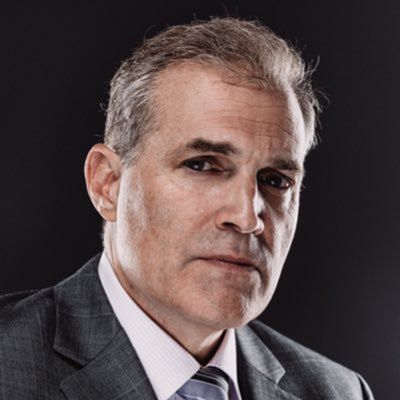
Marc Kudisch stars off the Bleeding Love musical podcast takeover, a brand new completely original musical podcast set in a post-apocalyptic future where it's not safe to go outside. Marc is a 3-time Tony Award nominee for his work in Thoroughly Modern Millie, Chitty Chitty Bang Bang, and 9 to 5... Read More
From the show: The Theatre Podcast with Alan Seales
Guests
Miniseries Inclusions
Featured Shows

About
Marc Kudisch stars off the Bleeding Love musical podcast takeover, a brand new completely original musical podcast set in a post-apocalyptic future where it's not safe to go outside.
Marc is a 3-time Tony Award nominee for his work in Thoroughly Modern Millie, Chitty Chitty Bang Bang, and 9 to 5. He is a Drama Desk Award winner and two-time Outer Critics Circle Award Nominee. Some other Broadway highlights include Finding Neverland, Hand to God, Assassins, the Scarlet Pimpernel, and Beauty and the Beast. You also might recognize him from TV and film credits such as The Tick, Billions, Mindhunter, Limitless, House of Cards, Unforgettable, Person of Interest, Gossip Girl, Blue Bloods, SMASH, and even Sex and the City. He recently starred in the off-Broadway production of Girl from the North Country and is now reprising the same role -- once Broadway returns, of course! However you can catch him right now in a brand new way as both the Super and the narrator in the original musical podcast Bleeding Love.
Connect with Marc:
Connect with The Theatre Podcast:
- Support us on Patreon: Patreon.com/TheTheatrePodcast
- Twitter & Instagram: @theatre_podcast
- Facebook.com/OfficialTheatrePodcast
- TheTheatrePodcast.com
- Alan's personal Instagram: @alanseales
- Email me at feedback@thetheatrepodcast.com. I want to know what you think.
A very special thanks to our patrons who help make this podcast possible!
Cheryl Hodges-Selden, Paul Seales, David Seales
This episode is released in a time of crisis and mass awakening. Black Lives Matter. Please consider donating to any of the following:
Transcript
This transcript was automatically generated and might contain errors.
[0:00] Alan Seales: Welcome to The Theatre Podcast, intimate personal conversations with theatre's biggest names. This is the first episode of June, and surprise, we've got yet another takeover coming at you for the month of June. All month, we're going to be featuring actors from Bleeding Love, which is a new musical podcast written as a radio play, and the story behind it is actually kind of ironic because it was written years ago. The story is all set in this post-apocalyptic time where it's too dangerous to go outside for one reason or another. Sound a little bit too familiar? Yeah, so the Broadway Podcast Network put it together. It's this massive undertaking recorded entirely in quarantine. So please go to bpn.fm/bleedinglove to check it out.
And it's got a wonderful cast of characters, the first of which coming at you is this episode with Marc Kudisch, who is this incredible intellectual. He was actually a poli-sci major in college, and he actually would have gone into politics if not being an amazingly talented actor. So his story is quite interesting. We just talked and talked about everything, including his past in poli-sci and whatnot, and he's just a super smart guy who just happens to be an incredible actor and just went where life took him. So please enjoy this story and go over to bpn.fm/bleedinglove to download the episodes. All of them are out now and you can enjoy it all, binge it all, do whatever you need. It's a great story about love and hope and Sarah Stiles and Taylor Trench and Rebecca Naomi Jones and Annie Golden and Tony Vincent.
And of course, Marc Kudisch are the cast and it's just incredible. So bpn.fm/bleedinglove. And you can find me online at theatre_podcast on Instagram and Twitter. Please go to thetheatrepodcast.com to see past episodes. And now everybody, please enjoy this episode with Marc Kudisch. My guest today is a three-time Tony Award nominee for his work in Thoroughly Modern Millie, Chitty Chitty Bang Bang, and Nine to Five. He is a Drama Desk Award winner and two-time Outer Critics Circle Awards nominee. Some other Broadway highlights include Finding Neverland, Hand to God, Assassins, The Scarlet Pimpernel, and Beauty and the Beast. You might also recognize him from TV and film credits such as The Tick, one of my favorites, Billions, Mindhunter, Limitless, House of Cards, Unforgettable, Person of Interest, Gossip Girl, Blue Bloods, Smash, and even Sex and the City.
He recently starred in the off-Broadway production of Girl from the North Country and is now reprising the same role once Broadway returns, of course. And however, you can catch him right now in a brand new way as both the super and the narrator in the original musical podcast, Bleeding Love. Marc Kudisch, welcome to The Theatre Podcast.
[3:14] Marc Kudisch: Well, howdy. Took me a while to get here. Sorry I was a little late. There was a lot of traveling involved.
[3:23] Alan Seales: Yes, getting from your living room to the bedroom takes a lot of effort these days.
[3:29] Marc Kudisch: Really a lot of traveling involved. My wife and I, we have an eight-month-old Australian shepherd who is the greatest dog on the face of the planet. Everyone says that about their dog. My dog is kind of amazing. And we were just sitting out in the park. It's funny, we were just talking about wanting to get out. Everybody wants to get out right now. But because we've had a dog this whole time with us, and we live right across the street from Central Park West, I'm looking at Central Park right now. So three times a day, I'm getting more outside time, strangely, more actual sort of walking exercise because of my dog, and because of the fact that I'm just home, we're home, than I would if I was doing the show eight times a week and everything else that goes with it.
So we were just out in the park, and I had to go from there to the grocery store to pick up our weekly stuff to here. So I actually did have travel time. That wasn't just a joke. Anyway, it's good to see you, dude.
[4:30] Alan Seales: You too. I haven't seen you since, well, seen you face-to-face since we were recording Bleeding Love a couple months, two months ago.
[4:36] Marc Kudisch: Yeah, still on the set.
[4:39] Alan Seales: I know. I didn't even think of it that way.
[4:41] Marc Kudisch: Yeah, yeah. It's been interesting. So for those listening, full disclosure, I ran audio and I'm one of the producers on Bleeding Love. And this is actually the first original radio play that I've been involved with, and it was quite exciting. It was a challenge, though, because we recorded this. Ironically, it's a show about a post-apocalyptic world where you can't leave your house because everyone's in quarantine. It's not safe to go outside. So obviously, sound familiar. The ironic part was that this was written years before the current pandemic. And obviously, now is the right time to release it. But we had a lot of fun challenges recording that. And we were just talking about this before we started the podcast here, was you're continuing your voiceover work and your agents, you got to get geared to record from home.
And I remember when we were recording, we had pillows all around and you were in your bedroom where it was nice and lots of things to absorb the sound. And this is just such a weird time for everybody. And all the hype about Girl from the North Country, making it from Off-Broadway to Broadway. You guys did just open and then...
[5:57] Marc Kudisch: Yeah. Thankfully, we did. Thankfully, we did open. So we got that. We were one of the fortunate shows that got to open and got the reviews and were able to cherish some of the reward to the hard work, as well as record our album. Dude, we opened, right? And then right after we opened, on our two days off, because we were switching our schedule, that's when we recorded our album. So going from all of that into recording our album, into going back to work on Tuesday instead of Monday, and then having the conversation immediately of COVID-19, where the producers were all like, we're not closing down. We're not expecting to close down. We just want to make it safe and precautions. And I was one of the first people to just raise my hand and say, when we close down, what's the game plan?
Because it was like, look, the minute it strikes in the theater, that's it, right? I had expected it maybe to go on for weeks still yet. And then of course, days later, everything shut down, which took everyone by surprise, which says a lot. We were all taken by surprise, but perhaps we shouldn't have been taken by surprise. But there's a lot of reasons that we were. And it's insane. It's been a really interesting journey, hasn't it? And it's going to be really interesting to explore how we genuinely feel about all of this when we get back on our feet in terms of industry, don't you think?
[7:46] Alan Seales: I absolutely agree. And I think realistically, I mentioned this in a couple of past episodes recently, that I think it's not going to be until 2021. Because even if the city, assuming there is no recurrence of any sort of local outbreaks or whatnot, right? There's no immediate health threat. I think first, you have to make sure that you're not posing a danger to anybody in terms of public transportation. So the big companies like big tech have been asking their employees, Twitter actually just had an announcement saying that they're now allowing their employees to work from home permanently. And I don't doubt if Google and others might not follow suit. Google is saying that we don't come back to the office until 2021 at the earliest.
And because all of this is because the city, the policymakers of the city are saying, we can't stress the public transportation system because that could be where the outbreak happens. And because I remember right at the beginning, it was saying subway poles are the biggest spreader of COVID, which subway poles are just nasty in general. But you know, the thing that's interesting to me is this, and it's like, I say this to friends and I say this to anyone essentially that I see outside. So wear gloves, put on a mask and wear gloves. It's a simple thing to do. It's really not expensive in any stretch of imagination. All of these things are now available everywhere. And then you don't have to worry about it so much because you can take the gloves off and throw them away.
If you have to ride the subway, then you're not worried about your hands touching anything. And if you have a mask on, you're not worried about really breathing anything in. And not to the same degree, obviously, it's just, it's a multi-level thing, right? I mean, like you just said with Twitter saying that maybe they'll work from home permanently. First of all, that is an industry in where you can work from home and still get your work done because a large part of that industry is virtual, right? And the truth is, like I've always said, like I said it when we were working together last time, there are things that we are all going to learn from this pandemic that we're going to keep. And we're going to keep, we're going to realize that there are benefits to certain kinds of behavior through this, that even after we're able to come together again, it's going to be like, you know what?
That wasn't so bad. That's actually a pretty good idea. And one of those is going to be working from home for a lot of industry. And it's not just like, look, it's all bottom line, right? It's all bottom line at the end of the day. So for Twitter, it's also like we can save a lot of money on office space if we're just as effective with our employees working from home. Yes, we're helping, you know, our fellow citizens, we're keeping everybody socially distant and safe, but really we're saving a lot of money on not paying for real estate that we don't necessarily need anymore. I mean, I think that's a big part of what business is discovering as well as I think people are realizing I can wake up, go get a cup of coffee in the kitchen, roll over to the office desk and go to work and not have an hour drive.
I mean, I'm looking at you and you're, you're set up in your studio now, and you're like nice and cozy. And I know that you guys have office spaces with, you know, but who knows, this could be like the way that things move forward. There are industries and businesses that I am sure when someone gets hired that someone is going to get a package of things to help them set up at home. It's interesting to me in that I think a lot of it is going to be dictated by the public school system. The private school system follows suit with the public school system, the public school system right now. I mean, there have been teachers that have died right from all of this. So like, aside from the immediate threat of death, and this is a podcast about theater, not COVID. So we'll get back to theater in a second. But yeah, like the educational system, like they're, if they don't open in the fall, major corporations can't because
[12:13] Marc Kudisch: And all their employees can't leave their kids at home. So that's where it's all going to start, I think. Look, man, like you just said, this is a theatre podcast. It's not really a podcast about, but it is, because we're all connected to the situation that's happening right now, right? Every industry is affected by this, and every industry is going to go back to business in its own individual way. But every industry, hands down, has to reinvent the wheel. That's just what it is. The wheel worked great for a really long time. It's a wonderful invention, but we need a new one because of this situation. And you can be mad, you can be angry, you can be upset about it. You can have all the feelings in the world about what you think about the pandemic and quarantining and COVID-19, but this virus doesn't care how you feel.
Or how you look, or who you are, or how much money you've got. There is no bias, there is no prejudice, there is no ideology, there is no political who's who here. This is about the simple fact that this is a new virus. It is a novel coronavirus. We are experiencing it for the first time in our human history, and so we have to adapt. And it's as simple as that. So it's reinventing the wheel for everyone, which is why a lot of industries are going to learn how to work from home. We in the theater are going to be slow to open up because we are an industry of socialization. That is what we are. Now, we're going to also learn, I think, along the way, because we were talking about when we think we're going to open, what the date is, what the time is.
And the fact is, we can only assume right now these things because we're learning day to day. That's the biggest challenge here, right? Because we're getting mixed information coming from all different sources because of the way that our economy and our political system is functioning right now. I mean, there's a lot of individualism in terms of the states are really telling us what's going to go down. The federal government can say a lot of rhetoric, but the states are dictating how it's actually falling down. And like you said, I mean, there are states that are opening right now. And that's going to be the guinea pig for what happens to those of us that are in the much bigger populations in the bigger cities where we're being more careful because we just have that much more density to us.
But I also think that goes for the theater. I think we're going to learn a lot from some regional spaces that are going to begin to open up before we would. Or like television and film and how they figure out because that's obviously on a much smaller scale in terms of you can have four or five people in a scene and then you have your crew and you can control the environment more because you're not dealing with large crowds of 500 to 1000 people. And I think that it's going to be a step by step by step where we learn what we can and cannot do. And that's how it's going to go. Absolutely, absolutely. And even when we learn what we can and cannot do, we are also going to learn, well, the producers have to decide on a case by case basis what makes sense.
Because it was just announced last week that Frozen closed permanently. Right, right. So like Disney Theatrical, who had their money raining from the sky, even probably now, decided not to keep Disney Theatrical, not to keep Frozen open. So then they've got the others that are still on stage. At what point does the cost benefit analysis show them that paying rent to the theater owners is just going to like, they're never going to make it back or it's going to take them 10 years to make up all of these closed months? And then you have shows like Girl and Six. They didn't even get to open. Their opening night was the day that Broadway shut down. Right. How long are they going to be able to hold on paying rent to, you know, like this has got to start at a higher level.
And that's a part of the challenge. First of all, we all have to, and this is what I, you know, it has to be, look, the greatest, I'm going to just say this. One of the hardest things to swallow about our society, and when I mean our society, I mean American society, is especially, and I want to say in the last 10 years, and I don't want to just blame it on the last three and a half or four, although it has accelerated in the last three and a half or four. It is daunting to me how we have become so self-interested. And our society, American society, is very self-interested and self-aware. I think a part of that is due to social media. I think a part of that is obviously Twitter, the selfie stick.
I mean, clearly we are self-aware, but I also think a part of that is the fact that because we are a capitalist society, there is room and flexibility for individual achievement to be the focus, as opposed to how this, you know, like you look at a lot of the other countries that are reopening right now, or you're looking at Germany, or you're looking at South Korea, or you're looking at the Netherlands, or you're looking at, you know, and you're looking at places that are, you know, democratic socialisms where the government really does just sort of lay down, but there's also a mentality to those societies where they're all following suit. They may be pissed, they may be angry, they may have their feelings about it, but they're going with it because they're used to having an answer to a federal government, right?
Whereas it really has become more and more from the hip here, and so self-interest has taken over more and more and more because, frankly, you don't have, I'm sorry, we don't have a leading voice or an administration that is genuinely there looking out for everyone's wellbeing, and so people are left to their own devices. And we've gotten there. It's not just something that's happened with this last administration, and I think that that's the biggest challenge to our society right now is that you just have so many mixed messages about what you should or you shouldn't do, and because we don't have a clear answer from the top of our federal administration, you're left with no choice but to fend for yourselves, and that's just taken up time, you know?
I mean, you know, there's this study that's out that's been talking about on the news, like, you know, that they did a study that if we had done this a week later, how many lives would have been saved and how much down the curve it would have been two weeks before that, and so for our shows, getting back to that idea of these shows, you know, I feel like to some degree, I know the Broadway League is in there and they're going at bat, but at the same time, so much of this feels like it's gonna be, I hope it's not gonna be an each-man-for-himself kind of mentality, you know, because people have been making money throughout all of this, no matter what you feel or what you've seen. It's like, I've been watching the stock market.
I have my own investments. Stock market's doing pretty well right now. Like, right before, stock market was doing really well, and then, you know, COVID hit and we shut down and it plummeted, but now stocks are pretty close to where they were before that, and we're looking at, you know, 30 to 40 million Americans that are unemployed. We're looking at unemployment numbers we've never seen in our country's history, and that includes the Great Depression, and yet the stock market is still crushing right now. Now, how is that happening? You know, and then some are saying, well, look at the economy. Economy's doing great. No, the stock market's doing great. The economy is not. So clearly, right, there is a pluralism that's happening.
It has continued to happen, and I'm a poli-sci major when I'm in university, so that's why I roll on this show. I was gonna ask what your background is. I wanna get into that. Yeah, I'm a poli-sci major. My father was a lobbyist, so like, these are things that I have an awareness of, and, you know, we've become more and more of a pluralistic society, so, and that affects everything in every business. You know, so that's why I say, given our business, you know, I think, look, at the end of the day, people are gonna wanna come back to the theater, because there is nothing to replace the theater. On the other side of this conversation, nothing can replace the theater, and all of this stuff that we've been doing online, all of this stuff that we've been, you know, Zooming, and all of this stuff that we've been, you know, streaming, is great as a reminder, but it only frustrates us, because we know it's not the thing.
We can't have live performance in streaming, because there's just too many technological things at play. You can't do it. It's just, everyone has to have the same equipment. It's too difficult. The only way to have it happen is that everybody has to be in a room together. So, is it possible that eventually, we may actually see some performance happening, live performance happening over Zoom, with companies, and small orchestras, bands, if you will? Yes. Do I think that we can see live streaming of some shows? We may see that before we open our theaters. Yes. I mean, current shows. Maybe, or even new shows. Like, the thing that I, you know, the theater is at its best when it's present to what our environment and situation is.
So, I would encourage anyone right now who is a writer to write what is happening now. Write about now. And this is our platform, this little guy, right here. Kapow. That's your platform, not the stage. So, write on this platform. Write for Zoom, write for Google Hangouts, write for Skype. And it doesn't mean you have to, it goes on forever, but this is now. So, you can't, you know, why avoid it? And why be angry about it? Instead, just put your efforts to it. And, you know, but I'm not worried about theater. We're gonna get back to it, because we need it. And there's nothing else like it. Do I think movie theaters could be in trouble? Yeah, but I think they were already in trouble. So, the idea of people staying at home, like, to me, that was eventual anyway.
I love sitting at home streaming a new movie. Like, I don't know why we're not doing it more anyway. But now, you know, I think because of the pandemic, people have been going, well, I know I can do that. You know, so I think that the things that were already, you know, like Frozen, I think a part of that is perhaps, financially, it just, it was already sort of on an edge to where it could go this way, it could go that way, and this just sealed the deal. You know, so anything that's closing that way, I think, is something that was sort of already on its way to it, and this just advanced the speed of it. You know, and I think that goes for film, and I think that that goes for, and that's why Netflix, obviously, those studios, Netflix, and Starz, and Hulu, and they're experimenting with how to film right now, because they're a streaming service anyway. So, the.
[24:27] Alan Seales: The question for us is, when does our theatrical stuff begin to stream as well? And I do think it's something that will happen. I think that people will write pieces specifically to be streamed, and then perhaps make their way to the stage.
[24:45] Marc Kudisch: Sure, which is an old form.
[24:46] Alan Seales: Right, right. And so now the idea, yeah, the idea is now to continue with that. And when Broadway comes back, and it will, in just whatever form it comes back as, is to continue and bring that back to a physical platform. But if it still requires social distancing and whatnot, then they've got a proven method that it works. And the show's getting fan art from other countries, and it's spread all over the place.
[25:31] Marc Kudisch: I mean, but that's the thing, though. Again, you know why? Because it's not theater. It's not theater, it's radio, right? Which is theatrical on its own. But it's an audible form of entertainment. Like, look, when my father introduced me to radio plays when I was a kid, because he loved them. And one of his faves, and I mean, he had collections of records and recordings. But The Shadow was the shit for me when I was growing up. And I don't know if you've ever listened to those old radio plays. But they're amazing, because there's the whole, you know, there's the whole, you know, there's a guy in the sound room making all the noises and everything, doing all the foley and everything. And it's excellent, because you have these great actors, voice actors, playing these roles.
And then you have this wonderful narrator narrating through. And this is back in the 30s and the 40s. It was a great serial that was on the radio, and everyone would gather around the radio, and they would listen. And so this is an old form that was obviously successful until, like, really, not even, it was a successful form, even when, like, film was happening. It was up until the television came in and invaded everybody's living room. And that took the radio over. But interestingly, we have, again, podcasts. When podcasts came in, all of a sudden, like, the radio got overwhelmed in many ways, and television, yet again, because people were on the go, they're running around, and you're listening to this great stuff, and you can do it in your own time, and you can do it at the gym, and you can do it on the subway.
And so, like, it gives you this freedom of being entertained while you're in the midst of your activity. So it is. And doing Bleeding Love that way was awesome, because we realized we were able to create, essentially, new art, new musical art, while we're in this situation where we can't gather. I mean, obviously, the show is about not being able to gather. But there are other things we can talk about, too. You know, while we continue to not be able to gather, that doesn't mean that we can't continue to socialize. You know, that's why I always wondered at why they called it social distancing. It's not social distancing. It's physical distancing. Being socially distant means not communicating at all.
[28:05] Alan Seales: Right.
[28:07] Marc Kudisch: Right? And that's why I was like, and I understand what they're saying is, no, you have to stay physical distancing, physically distance while trying to socialize. But we're socializing. I mean, you can go online and stream and Zoom and FaceTime, and we all did that shit anyway. It just went into overload once this happened. But it doesn't mean we can't socialize. But like we were saying earlier, we need to get out. There's a little bit of brain chemistry involved, too. Because there's some of the love chemicals that don't get released unless you're physically touching something or someone.
[28:52] Alan Seales: Right. But I mean, and that is social interaction, which is absolutely based to who we are. It's why the theater will never die. Because, I mean, you can go back millennia before the Greeks, okay? I mean, Orchideo Christian history, and people were gathering together to talk about ideas, and they were playing it out. Morality plays have been around longer than we have recorded history. They just began recording it. And so that's not something that's ever going to go away. People need to gather. I mean, that's why everyone wants to get back to watch sports. And people aren't happy about their baseball coming back, but they can't actually watch it live. They're going to watch it at home. It's like people just need to gather because a part of the joy is, again, watching something, an explosive emotional reaction and feeling, because it's resonance, right?
And that's what makes the theater different than any other form, is that it's all resonance. That's why the joy of acting, and I don't know, I've told you this before, but I don't know how much longer I want to be an actor, and I haven't known for a long time.
[30:13] Alan Seales: Really?
[30:14] Marc Kudisch: Well, eight shows a week, man, it's exhausting. And I'm not fueled by it in the way that other people are. I'm not one to really love applause. I'm not one to really like laughter that's set up. I'm far more into making an audience uncomfortable than making them happy. And I'm far more into the idea of engaging than entertaining. And maybe that's because I'm the devil's disciple, and I like to be the opposite point of view. But I just, the thing that I love about the theater is the resonance, is resonating out some energy to a group of people you don't even know. And if you're good, you're making it personal and you're not apologizing for it, and you're hitting 1,000, 2,000 people every night, and you're having an intimate moment with people you don't even know, but they're going to leave thinking they know a lot about you. And actually, they probably will, if you're good, right?
[31:24] Alan Seales: Mm-hmm.
[31:25] Marc Kudisch: That to me is the thing. That's why I like Hand to God, because it just made people uneasy. It just made people uneasy. And people left more confused than when they came. But they couldn't stop thinking about it. It's what I like about Girls from the North Country. It's what I love about the show. And it's why people are going to come flock to see our show. Because our show is about people that are desperately trying to survive. And they're desperately trying to connect. And they're desperately trying to understand who they are. They're hunting for their identities, even after they think they knew their identity. And after this, after we're able to come back together after this, we are going to need that catharsis.
And Girl is a beautiful example of that. And it leaves an audience very uneasy, very uneasy, which I love. But it's beautiful, and it's inspiring. And Dylan's music, I mean, Connor's play and Dylan's music are something that you will not be able to shake for months. And that's entertainment that pays.
[32:41] Alan Seales: I still think about it. I saw it off-Broadway.
[32:45] Marc Kudisch: Oh, it's way better. It's way better on Broadway. It's way better on Broadway.
[32:52] Alan Seales: What changed about it?
[32:54] Marc Kudisch: The space. Not that the public wasn't great, but I actually felt like the audience felt overwhelmed by the events that occurred through the course of the night. I felt like the audience felt like you were a fly on the wall because you were so close to it. And it was sort of put on you in a way that it was hard. I mean, shit happens in our show. I also think Connor found really good ways in the first act to engage the audience in a more inviting way that allowed for them to come to it with some more humor without it being, there's nothing, obviously, there's nothing pleading or prodding, or there's nothing winky, or there's nothing of that nature in our show. We're not begging the audience to enjoy.
But he wrote some more stuff that has a humor that allows for the audience, through the tension, to have a little more release in the first act. You still get clobbered like a mother in the second act. And the theater, the Belasco, has history, and it's gorgeous inside. It's a stunning theater. I've worked in, I think, 12 different Broadway houses. Yeah, 12 different Broadway houses. This is by far the most beautiful house I've worked in. It's freaking gorgeous. And because of that, the show feels so natural in it. So it's a bigger space, but it's still an intimate space. And it's a space that allows the audience to breathe a little more. So I think the audience feels like they have a little more room to deal with their emotions, if that makes sense.
[34:59] Alan Seales: Oh, absolutely.
[35:00] Marc Kudisch: Yeah. And I feel that myself, too, sometimes, is if I'm too close, I actually don't like being any closer than sixth or seventh row to any show. Because I want to be able to see edge to edge of the stage. And it's a more complete picture when you're not focusing on being that close to something or someone. And yeah, if you're in the light as an audience member, you feel it. And it takes away my anonymity. And a bit of theater is voyeuristic. And so to be able to watch someone, and to stare at someone or something, and have it be OK, I think is very kind of... Cathartic's not the right word. But when you're looking on stage, and you're able to just maintain an...
[36:40] Marc Kudisch: Unusually long gaze at something, someone, some scene, whatever it is, if you were out in public, you'd be weird. But on stage, it's expected.
[36:48] Marc Kudisch: Right. And that's the thing, it also depends on the play, right? It also depends on the piece. Our piece is very slice of life. For those that know their theatre history, it's very William Saroyan-esque, I think, in its tone, even though it's very Arthur Miller, it's very Eugene O'Neill, it's very Jack London, it's very Clifford Odets, you know? But the feel of the piece is very slice of life, it's very natural. It almost feels at times as though we're not acting, which I think is what makes the audience feel uncomfortable at times because they're not watching something that is theatrical or musical. It's not something that is aware of itself or it does not make you aware that it is aware. And I'm not taking away from anything like that, you know?
Obviously, when you bust out and dance in the middle of a show, clearly that's not a natural thing to happen, right? Like you said, if everybody just bust out in the middle of the street and just started dancing suddenly, that would be weird and it would make other people stop and actually watch you. But in Girl from the North Country, when there is dance or when there is something that is choreographed, it feels very, well, natural, you know? Like it's a party, so people are dancing together, you know? Or there are moments where people are sort of singing together and it feels a little more natural. When a song starts in our show, people just walk up to a mic and start singing and it doesn't necessarily forward plot, you know?
I mean, it's the thing that I really like about the show is that it's just very natural and it has its own rules and it doesn't, we explain ourselves like, you know, we set the rules along the way and we don't apologize for them. And I like that. It gives the audience room to just sort of explore and experience the play on their own level, you know? You're not told how to feel or think. There aren't punchlines, you know?
[38:58] Marc Kudisch: Yeah, it's telling a story for the sake of telling a story and not to play to the audience's laugh. Because I mean, it's not comedy.
[39:10] Marc Kudisch: Although it can be very funny at times.
[39:12] Marc Kudisch: Yeah, there are funny moments, but it's not there. You're not waiting on audience laughter.
[39:16] Marc Kudisch: No, because the thing is as well, look, man, it's sort of like that's like I go back to Hand to God again. The thing I really liked about Hand to God is it was a wildly funny play, but wildly not. And the things that we found really funny, a large part of the thing that you were laughing at was it was just a release of tension. It's the same with Girl from the North Country. It was just a moment where you were literally releasing the tension of what you were feeling up to that point. You know, it was a recognition of how absurd the moment was, you know? And in our situation, again, I feel like it's very much that way. You know, my job in the show is not to give you any kind of laughter, even though, you know, in the beginning, I'm able to draw some sense of either levity or recognition of a particular kind of personality. But I don't know, I just really like exploring real feelings.
[40:11] Alan Seales: Go ahead.
[40:12] Marc Kudisch: Well, I was just going to say, and I think right now, it's what people want more than something to laugh at. I think when people gather again, people are going to need to really mourn the time that we lost. Whatever we lost in this period of time, I don't think that it's just time lost, because I think there's a lot that's being gained at the same time. But we will have lost friends. We will have lost a certain sense of identity of ourselves. We will have lost things in the past that we genuinely appreciated that will no longer bear existence. There are those things to, you know, deal with.
[41:03] Alan Seales: You said earlier that you're not sure how much longer you want to be an actor. Why did you start?
[41:10] Marc Kudisch: Dude, I honestly don't know. Because it wasn't what I was intending on doing. I was not trained in it. I did not do it in high school. I did one musical in high school, and I only did that musical in high school because I was asked to audition for it. And I had been in the gifted program for so many years. I was in the same class with the same kids from second grade to the time I graduated. So I was a nerd. I wasn't one of those people that was social. So it was a way for me in my senior year to actually do something socially, which I had never done previous. And then I just, when I went to college, I did some community theater after that because I finally discovered, like, a group of people that I felt like I really connected to.
Because, you know, again, in the theater, one of the beautiful things about it is sort of like, we're all from weird different places, but we have this appreciation and affiliation to the same things. So regardless of who you were, like in the theater, you're just you. Do you know what I mean? Like, if you're a geek, you're a geek, or if you're this, you're this, or you're that, you're that. But like, we all tread the boards together. So it's not like in high school when the nerds are in their little cubby, and the jocks are in their cubby. So I got into a group of people that I felt like I really related to in a way that sort of broke me out of that same group of people that I had grown up with.
[42:57] Marc Kudisch: And then when I got to university and I was studying political science, I took theater courses to lighten the load. But I also thought, if I'm going to be a politician, I'm going to need to have a sense of being in public and how to present myself and how to be confident in myself. And so I took theater courses for those reasons, and I eventually got to the point where I realized that I wanted to do theater more than I wanted to do politics.
[43:28] Alan Seales: That's what you originally wanted, what you were setting out to do, was be a politician?
[43:31] Marc Kudisch: Yeah, I wanted to be a politician. My father was a lobbyist. I thought maybe I could be a lobbyist too. So I was going to go to school for corporate law. I was going to do two years at Florida Atlantic University where I was going to transfer to George Washington University. I was going to get my undergrad, and then I was going to move forward into corporate law because I thought, well, that would be the smartest thing for me to do.
[43:54] Alan Seales: That's a very specific outline. Is that how you've kind of always operated? I guess, well, up until theater, because you can't control basically what you're cast in, you can control what you audition for. But it sounds like until a certain point you were like, I'm going to do this step, and this step, and this step. So was it hard at any point to just say, all right, well, just screw it. I'm going to just be an actor, and I get what I get?
[44:18] Marc Kudisch: Well, I just, because while I was in university, I just realized that theater was the thing that I was called to. And because I was paying, I was putting myself through school at this point in time, I always was putting myself through school. I also realized that it was my choice, that I could do what I wanted to do. And so when I realized, look, when did the bug bite you and all that ridiculousness? I was lucky in that I just found myself in it. It wasn't something that I planned at all. The political science I planned, but this was something I was just doing, and I was finding that I liked it, and I was finding that I was interested in it, and I was finding that I didn't want to stop. So in the middle of my, was it the middle of my sophomore or the beginning of my junior year, I just switched my majors because I was already getting the credits.
I was already on my way to it. And it's a long story, but like Florida Atlantic University had just gone four year, they were a graduate school only. And I was invited into their first four year program because I was in the top five percentile of the state of Florida. So my first semester was free because it was their experiment to see what it would be like to go from being a graduate school to a four year university. And when I started working with the theater department, they didn't have a four year program set up yet because they were a small department. So I was taking graduate courses until the undergraduate courses were actually set up, and that took almost two years. So by the time I got to the end of my sophomore year and their four year program, and they had hired the teachers and they were actually in a position to start doing a full four year curriculum, I pretty much already had two years of graduate work under my belt.
So when I was into my junior and my senior year, I actually ended up doing a lot of independent study because they couldn't ask me now to do theater 101, theater appreciation. They couldn't ask me to do these basic classes after I'd already done graduate work. So I was just getting credit for my work on stage or for the credit for independently working in the black box studio and or credit for actually going out into the professional world and working on semesters off. And so it was a very interesting way for me to get my diploma, but also it was a very practically applied way. I had to make my own way because there was no clear cut way. So no, I didn't go this and this and this because there was no clear this and this and this. But because of that, I just sort of carved my own shit out.
[47:22] Alan Seales: Where did you end up going to school?
[47:25] Marc Kudisch: Florida Atlantic University.
[47:26] Alan Seales: Florida Atlantic, and so did you grow up in the-
[47:28] Marc Kudisch: Of course, FAU, we used to call it FAU, find another university. Back then it was really small, it's a big university now. And it's a big commuters university. But like I'm telling you, man, when I was going there, it was small, it was a small school. But the teachers that I had, here's a list. And you may know some of these names. Let's see, Hume Cronin was a teacher of mine for a semester. Zoe Caldwell was a teacher of mine for a semester. I had a couple of guys from the RSC for a semester, they were great. Joshua Logan, on his last good clear day, I had him. I had amazing teachers, crazy great teachers that had retired down there. And one of the great things about FAU is it's four blocks from the beach.
So I was a beach kid, man. But I learned a lot because it was such a small department. The amount of work, the practical application. I did like 20 productions when I was in university, dude. I directed three. I mean, by the time I moved to New York, I had way more experience than most of my friends that had graduated from bigger universities. So again, I think it's always 10,000 hours of work.
[48:53] Marc Kudisch: And that's the only reason they did that. But I was a classically trained actor, and that was a classical music department, and both were very good. I have tried for years to get them to work together, and they still will not do it. So it's amazing to me how university doesn't really focus on the practical. And I think at a certain point, a certain university is better at that self-marketing or whatever, but the truth is I've never been good at that. That's never been my fort. That's never really been my focus anyway. I just, I don't know. Like my whole career has just been, let's see what happens. Moment to moment to moment to moment to moment. You know, I don't know how the hell I've been on Broadway as long as I have. I don't know how I've done as many shows as I have, because Broadway was never my focus when I got here. Ever my focus when I got here.
[50:53] Alan Seales: Well, you moved to New York to be an actor and didn't think Broadway was in the cards?
[50:59] Marc Kudisch: No, I was thinking circle rep. I was thinking off-Broadway. That's where I was going to do my work, because musicals were on Broadway. I was, honestly, I was looking at soap opera. I was looking at television and film. I was looking at the off-Broadway companies. That was where my bread and butter was going to be. It wasn't going to be a musical theater. I didn't do it. I wasn't trained in it. I had no experience in it. I had no background in it. It just wasn't my focus. My fort, like my genuine fort, was in doing Tennessee Williams. Like, my mentor at school was a dear friend of Tennessee's. So like, I got, I worked on Tennessee Williams like crazy, and I got firsthand information. Like, that's what I did, you know?
So how I ended up where I am, and that's not to say, like, you know, I've also done some great plays. Like, right before doing A Girl from the North Country, which is, in truth, a play with music, you know, it was great doing The Great Society at Lincoln Center, which was a mammoth play about, you know, LBJ and his whole presidency. And those are the things that I feel the most at home at, and the most natural in. More than music theater, although I love the form of music theater.
[52:20] Marc Kudisch: Bleeding Love is a musical podcast. Yeah. It's just, it's so interesting to me how you've fallen into all of these things without ever really meaning to, which I guess, you know, speaks to talent that you've got, right?
[52:38] Marc Kudisch: I think it's, I don't know that it speaks to talent. I don't, I don't. I think what it speaks to is a headspace, which is also why I say, I don't know how much longer I really wanna act. The things that pull me, though, like Great Society, or like Girl from the North Country, or like Hand to God, are those shows where I go, my headspace, my point of view, I think is gonna be useful on this show, because I do not know that anyone else is going to approach it the way that I do, or that they're willing to risk approaching it the way that I do. Because I'm not an audience pleaser. I don't like to do that. Now, that's why I also say, I don't know if eight shows a week, because it's exhausting. It's really tiring doing eight shows a week.
It drains you. And I also feel like, you know, look, man, and there's a bottom line. This is a business. I hate the word artist. I hate it. I hate the word artist. Because too many other people mistake that for what we do as a hobby. It's a business. And it's a business with a bottom line. And I'm a businessman. And the body is the instrument. Also my business. So, you gotta know how to pace it. And you gotta know when the times come that you're not gonna do that thing anymore. And I do think I love, I'm good at process. I love process. So, you know, getting on the other side of the table and working from that other place is, I think at the end of the day, a better place for me anyway, because it's about the head space.
[54:18] Marc Kudisch: I don't know. Yeah, because there are people that are incredibly talented, dude. They love performing. They love to sing. They love to be out in front of people. They love to have that communication. And they love the applause and the laughter. And they give it back to the audience. And that ain't me, man. I'm not gonna do that. I'm gonna challenge everything, every moment. And through that, I think ironically, you've become an audience pleaser. You don't do it to please the audience, but you've got a fan base and people see you in shows.
[54:58] Marc Kudisch: I don't know about fan bases. I don't know. I don't operate that way. It's not something I keep in touch with or keep tabs on. I think that there are people that respect what I do, that maybe respect my approach to shit. I work hard and I do my best to show mutual respect to everyone else around me, as well as challenge, because I believe that good collaboration needs good argument. And I don't think that there is anyone else like me because of that. And so for that reason, I continue to be useful at times. But I don't know, man. I just, that's what I think. I just think that over the years, I've just carved my own weird, distinct sort of niche. If I had just done one thing for a long period of time, I'd be a lot more famous and I'd be a hell of a lot wealthier. There is no question of that. But I wouldn't have been happy, so I chose otherwise.
[56:11] Marc Kudisch: And I think that's why you can call yourself an artist, because you do it to be happy. And I hate, I think, think about that, because artists do it for, in my opinion, artists does it for the expression, for the act of doing it, for the process of doing it, not the end result. Okay, truth, but, but, but I can't do it without an audience. Artists do it for the sake of doing it, and they love to do it, but you can paint a painting and you don't need, like, you know, God bless you, Van Gogh. You know, he painted all of that stuff and one person in his entire life bought something. Like, for me, it's about the engaging of our society. And it's actually about shaking that shit as opposed to making people be happy or pleased about it.
I just like that conversation, and I like engaging in challenging conversations. I like engaging in, you know, ideas and questioning the hell out of them. My favorite topics are religion and politics, and I'm happy to talk about that shit all the time. And, you know, so like, because I just, it's, and maybe that's the Jewish side of my personality, where, you know, we question, we question everything, you know, because that's a part of engaging in society. And that's a part of what collaboration is, is questioning an argument, and the best ideas come out of that.
[57:49] Alan Seales: I'm running out.
[57:50] Marc Kudisch: Yep, I was just going to end on that, because that is a great place to end. So there's three standard questions that I ask everybody to end the episodes. The first one is, what motivates you?
[58:02] Marc Kudisch: Wow, well, I just said it, the conversation, the ongoing societal conversation of identity.
[58:12] Alan Seales: I like it. Okay, and then the next question is, what advice would you give to your younger self and younger people listening now, starting out down a similar path?
[58:19] Marc Kudisch: I wouldn't give a hint of advice to myself, because that guy's gone, so why waste time on him? But to anyone else coming up, I would advise them, live day to day. Just, and there's no better example of exercising that than now. Breathe, live day to day, be patient with yourself, have faith in yourself, feel the emotions that you're feeling, but do not let them override actuality. Be present to the moment you are in, and boy, be grateful.
[59:00] Alan Seales: So the last question then is, if you can only see one show for the rest of your life, but you can see it as many times as you want, what would you see?
[59:12] Marc Kudisch: Oh man, I mean, does it have to be a show? Could be. I'm not gonna lie, dude. I could probably watch Lord of the Rings every day for the rest of my life, and I'd be really happy. Or Harry Potter. I mean, I could watch it every day for the rest of my life, and I would just be so damn happy. I'm just, I'm a nerd that way. I love that shit, man. Marvel films, I mean, you know, I can't help myself, but really, but the Lord of the Rings, man.
[59:49] Alan Seales: You can go with that.
[59:50] Marc Kudisch: It doesn't need to be a theater show. Yeah, because theater, I'm like, I don't know. Theater's a different thing to me, man. With theater, I'm ready to move on. The minute I've done it, I'm like, all right, what's next? But I could always live. I could always live in J.R.R. Tolkien's world, man. Always and forever, dude.
[1:00:08] Alan Seales: Everybody, please make sure to go see Girl from the North Country once Broadway comes back, and listen and subscribe to the Bleeding Love podcast by visiting bleedinglovemusical.com, or you can visit bpn.fm slash bleedinglove, and connect with Marc on Instagram and Twitter at @marckuds, K-U-D-S. You can get more of me at thetheatrepodcast.com. Show your support by visiting thetheatrepodcast.com slash Patreon. I'm on Instagram and Twitter, @theatre_podcast. Please leave a rating, leave a review. This is edited by Matthew Hendershot. Thank you to Jukebox the Ghost for the intro and outro music, and Marc Kudisch. Thank you most of all to you. This has been a very, very different kind of conversation than I normally have on a podcast. I always have to start these things by saying, I know this is not the conversation you were expecting.
[1:00:56] Marc Kudisch: No, I loved it, it was great.
[1:00:59] ♪ Musical number ♪
© Broadway Podcast Network, All Rights Reserved