

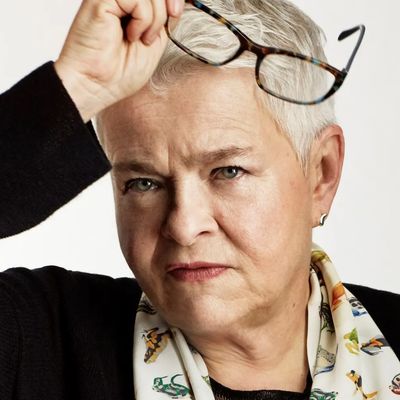
We are thrilled to welcome the legendary Paula Vogel as our first guest on Season Three! We talk about the revival of How I Learned to Drive currently making its Broadway debut at Manhattan Theatre Club’s Friedman Theatre as well as other highlights from Paula’s incredible career... Read More
From the show: Thesis on Joan
Guests
Featured Shows

About
We are thrilled to welcome the legendary Paula Vogel as our first guest on Season Three! We talk about the revival of How I Learned to Drive currently making its Broadway debut at Manhattan Theatre Club’s Friedman Theatre as well as other highlights from Paula’s incredible career. We talk gender collision, theater-viewing as obligation, the inspiring next generation of playwrights and theatermakers, subverting dangerous myths about queers through theater, reinventing Paula’s theatrical catalogue, how Harrow followed in Paula’s footsteps, and increasing access to plays by BIPOC and queer writers through the virtual archive Bard at the Gate. Additionally, Paula gives us a ton of ways to support queer youth in Texas and Florida and wants your ideas on how else to create safe spaces. Stay tuned after the credits for very special surprise guests.
Paula Vogel: Website | Twitter
Paula Vogel’s Reading List
- Bard at the Gate
- Dr. Anne Fausto-Sterling’s Writing
- Charlie Francis Chan Jr.’s Exotic Oriental Murder Mystery by Lloyd Suh
- Unmerciful Good Fortune by Eddie Sanchez
- The Drag by Mae West
- Philip Kan Gotanda
- Naomi Iizuka
- The Country Wife by William Wycherly
- Do a Paula Vogel Bake-Off!
Queer Culture Recs:
- Cheryl Wheeler- Music / Concert Dates
- Bush Tetras - Snakes Crawl / You Taste Like the Tropics
Queer Gives:
- Donate to Bard at the Gate
- Gay Pride Orlando - October 15, 2022
- Equality Florida
- TENT- Transgender Education Network of Texas
Episode Credits:
- Edited by Meghan Dixon
Thesis on Joan:
Transcript
This transcript was automatically generated and might contain errors.
[0:07] Harrow: Hello, welcome back, queers. This is season three, episode two of Thesis on Joan.
[0:13] Meghan Dixon Thesis: Thesis on Joan is a podcast dedicated to amplifying voices from the LGBTQ+ community in the New York performing arts scene and examining the industry from a queer perspective.
[0:24] Harrow: Join us as we sit down with groundbreaking theater folks, both on stage and behind the curtain.
[0:29] Meghan Dixon Thesis: For many queers, theater has been an escape. And this podcast looks to have open conversations on where we've come from and where we're headed as a community while queering the canon along the way.
[0:44] Harrow: So we're super excited today because we have a very special guest who we've been dreaming about for a while and can't believe that this actually happened.
[0:57] Meghan Dixon Thesis: And we like just recorded the interview, so I feel like we're both just like still smiling and just like staring wide-eyed at the camera. Incredible.
[1:07] Harrow: Um, Holly, wasn't Paula like on our dream list that we first put together for the podcast?
[1:12] Meghan Dixon Thesis: Yeah, oh yeah. We had a good like brainstorm session, and then we have an enormous list spreadsheet of people we want to talk to.
[1:21] Harrow: And some of you might be on it. I'm sure, I'm sure. And then yeah, Paula's been on there, you know, since the beginning.
[1:28] Meghan Dixon Thesis: Um, and I just got to see the How I Learned to Drive production that's currently playing at the Friedman.
[1:35] Harrow: It is incredible. It was my first time seeing that play in person.
[1:38] Meghan Dixon Thesis: I'd read it. Um, and we'll get more into it. But if you haven't got a ticket already, you should definitely go.
[1:46] Harrow: They have the 30 under 35 program.
[1:49] Meghan Dixon Thesis: So check that out.
[1:50] Harrow: Barely qualify still.
[1:51] Meghan Dixon Thesis: Yep. Glad they raised the age.
[1:53] Harrow: Maybe we'll go up to 40.
[1:55] Meghan Dixon Thesis: And yeah, I just went on like a Paula Vogel play kick and I read all of Paula's, or not all of, but I read several of Paula's plays, and a lot of them are available at the New York Public Library if anyone also wants to read them.
[2:07] Harrow: They're just as fun.
[2:08] Meghan Dixon Thesis: Well, not just as fun, but they're very fun and interesting to read as well.
[2:12] Harrow: And potentially you could go see some at the Theater on Film and Tape Archive at the Library for the Performing Arts at Lincoln Center.
[2:22] Meghan Dixon Thesis: Which you'll hear more about today.
[2:24] Harrow: Um, so let's introduce our guest, Paula Vogel.
[2:28] Meghan Dixon Thesis: Paula Vogel is a Pulitzer Prize-winning playwright whose plays include Indecent, How I Learned to Drive, The Long Christmas Ride Home, The Miniola Twins, The Baltimore Waltz, Hot and Throbbing, Des Nimona, Baby Make Seven, The Oldest Profession, and A Civil War Christmas.
[2:45] Harrow: She is the founder and co-curator of Paula Vogel's Bard at the Gate, an online reading series currently produced in partnership with the McCarter Theater Center.
[2:53] Meghan Dixon Thesis: Upcoming projects include the Mother Play, an adaptation of They Shoot Horses, Don't They, co-directed by Marion Elliott and Stephen Hoggett, a memoir, and a book on playwriting.
[3:04] Harrow: Awards include a Pulitzer Prize, a Tony nomination, the American Theater Hall of Fame Award, two Obies, the Lily Award, the New York Drama Critics Circle Award, a Guggenheim, and a Pew Charitable Trust Award.
[3:16] Meghan Dixon Thesis: She founded and ran the MFA Playwriting Program at Brown University and served as the O'Neill Chair of Playwriting at Yale School of Drama.
[3:23] Harrow: She is a member of the Dramatists Guild and is honored by awards given in her name by the American College Theater Festival and the Vineyard Theater.
[3:31] Meghan Dixon Thesis: So well, thank you so much for being here. I we can't say enough how thrilled we are to have you. This is like so exciting for us.
[3:39] Paula Vogel: Thank you again.
[3:40] Harrow: Thank you.
[3:40] Meghan Dixon Thesis: Thanks for having this podcast.
[3:43] Paula Vogel: Oh, yeah. I mean, you're one of our dream guests right now.
[3:46] Harrow: Yeah.
[3:48] Paula Vogel: Fantastic.
[3:49] Meghan Dixon Thesis: So this is your second season?
[3:51] Paula Vogel: Our third, actually.
[3:52] Meghan Dixon Thesis: Yeah.
[3:53] Paula Vogel: Woo! Congratulations.
[3:55] Harrow: Thank you.
[3:57] Meghan Dixon Thesis: Yeah.
[3:58] Paula Vogel: And we usually start with our guests if you want to share your name and anything about how you identify maybe in this hour, this minute, you know, if that feels like it's true to you right now.
[4:11] Paula Vogel: Um, sure. Uh, we were just uh talking before we started that um I tend not to use pronouns.
[4:19] Paula Vogel: Um, I came of age uh way before when we were still looking at sexuality and gender as a binary thing.
[4:30] Paula Vogel: And so um I don't know if I'd been born 20 or 30 years later, what I would be doing in terms of my identity.
[4:40] Paula Vogel: Um, I have been uh really kind of uh sticking to the notion of I am in a f uh a woman's body.
[4:51] Paula Vogel: Um, and I feel that that's really uh a kind of welcome platform for subversion.
[4:58] Paula Vogel: So there's something for me.
[5:01] Paula Vogel: Um, I was very well endowed as a young girl, hence how I learned to drive.
[5:07] Paula Vogel: Um, but there's something for me about, you know, I'm also a cigar smoker, and it seems much more transgressive because people see a large-breasted, short-haired senior citizen now, um, walking somewhere and lighting up a cigar.
[5:29] Paula Vogel: And I really kind of love the collision of gender.
[5:35] Paula Vogel: Um, and I feel that now that I'm 70, um, and particularly being influenced by my partner, uh, Ann Sterling, that many people know as Anne Fausto Sterling, um, whose Sexing the Body came out a couple of years ago, and myths of gender, um, that I think about identity um uh in a kind of uh constantly morphing way, and I've become more secure with that.
[6:07] Paula Vogel: If, for example, you identify yourself as a woman, that definition of what a woman means is going to be changing every day of your life.
[6:18] Paula Vogel: Um, and I so I'm really happy to be living in a time when uh the notion of gender has become so much more flexible, so much more a creation of the individual rather than a policing of our educational system, our families, our churches, our synagogues, all of our houses of religion, and our government.
[6:47] Paula Vogel: So one of the things I'm delighted about your podcast is um we're we're in a state of war right now.
[6:56] Paula Vogel: And I'm also very fortunate in that I've been able to fight in whatever way I can in a theatrical arena.
[7:05] Paula Vogel: How fun is that?
[7:07] Paula Vogel: Um, how joyful is that?
[7:10] Paula Vogel: Um, so that's that's kind of where I am today.
[7:13] Harrow: And we wanted to jump into um How I Learned to Drive and talk about that first.
[7:19] Harrow: So this Pulitzer Prize-winning play is finally on Broadway, making its Broadway debut.
[7:25] Harrow: So, what does it mean to you to have this on Broadway like stages after a very successful run and career off Broadway?
[7:34] Paula Vogel: Um, How I Learned to Drive, I created in Alaska at a theater company, Perseverance Theater that had 50 seats, and then it transferred, it never opened there, it transferred to the Vineyard Theater in 1997 that had 125 seats.
[7:53] Paula Vogel: Um, and I have to be aware that I am being now age 70.
[7:58] Paula Vogel: I wrote it when I was 45.
[8:01] Paula Vogel: This is the way I feel that American theater plays with visibility, being mindful that this season there are two revivals by African American women playwrights.
[8:13] Paula Vogel: One, the sensational For Colored Girls, I saw on Broadway as a young woman, and it blew my mind.
[8:21] Paula Vogel: And the other is Trouble in Mind.
[8:23] Paula Vogel: So one of the things I've been saying is it is actually a kind of luxury to be done as a woman or whatever gender we are today.
[8:35] Paula Vogel: Um, a woman playwright in my lifetime.
[8:40] Paula Vogel: Because it doesn't happen.
[8:42] Paula Vogel: Um, it may happen after we're dead, but things are morphing so quickly on Broadway to be having um all of these wonderful plays by African American writers.
[8:55] Paula Vogel: I just saw Confederates blew me away, you know, to have people like Dominique Morisseau, to have people like Lloyd Suh writing The Chinese Lady and uh just amazing prolific work.
[9:11] Paula Vogel: Um, we're at a time where I feel that so many writers are getting past the gatekeepers.
[9:18] Paula Vogel: Um, and I feel that that hopefully COVID, hopefully the sea change uh and and all of the amazing initiatives of playwrights in this generation, um, has changed that for good.
[9:35] Harrow: Yeah. So do you think what what do you think has changed primarily since How I Learned to Drive first premiered to have Broadway producers and audiences ready for this production?
[9:47] Paula Vogel: Well, um, one of the things I experienced was a lot of people telling me that of course it wouldn't transfer to Broadway.
[9:56] Paula Vogel: One, because women don't write universal plays.
[10:01] Paula Vogel: Um, great.
[10:03] Paula Vogel: Yeah. I like that a lot.
[10:04] Paula Vogel: Um, and that my play would be too upsetting.
[10:10] Paula Vogel: What I think we do is I think if we really want to look at upsetting uh uh stories and subject matters, what we do is we either uh transfer plays from London, um, that have a much different uh aesthetic and notion they're also into entertainment, but they're also into let's examine what's happening in our midst.
[10:38] Paula Vogel: Or we do revivals, you know, Tennessee Williams, um, Arthur Miller, uh, or we we do Shakespeare.
[10:47] Paula Vogel: Um, I mean, so those are kind of the three areas that's keeping whatever muscle we have that I feel that um the Greeks wanted us to have when they came up with this little thing of goat dance in uh 400 BC that the obligation of theater was to pay homage to the gods and to make all citizens attend the same performance.
[11:14] Paula Vogel: Senators, I don't know if you know this, senators had to attend.
[11:20] Paula Vogel: Required.
[11:21] Paula Vogel: Yes, it was required.
[11:22] Paula Vogel: Rich citizens had to rotate who was producing the festival, had to.
[11:29] Paula Vogel: Wow.
[11:29] Paula Vogel: It was their civic obligation, and this always kills me, but it's always said in the textbooks.
[11:37] Paula Vogel: Women and slaves were permitted to attend for free.
[11:44] Paula Vogel: So just think about that audience for a moment, and let's play like Medea or the Trojan Women, and it is making the Greek senators and citizens look at their misogyny, look at how they treat foreigners.
[12:02] Paula Vogel: Um, Trojan Women makes the senators who voted for war look at what it does to civilians, to women and children.
[12:11] Paula Vogel: And I just think, you know, and they also had a lot of pardon me, they had a lot of fart shop in their comedies.
[12:16] Harrow: Right.
[12:17] Paula Vogel: Um, you know, you're if you were a playwright back then, you had to write a comedy and a tragedy on the same subject.
[12:25] Paula Vogel: So, you know, you put in a lot of fart jokes to Trojan women, and suddenly it's a musical comedy. No, it's not. We're so we're I feel that we've been having a benign censorship since the 1980s, since Ronald Reagan.
[12:40] Paula Vogel: We've cut back our art funding. We have been slowly cutting back all of the art programs in high schools and middle schools.
[12:48] Paula Vogel: That's what's cut out of the budget, right? We've been cutting back foundation support philanthropy to the arts.
[12:57] Paula Vogel: Um, and again, you know, so many societies really honor and and and hold precious their arts. That that's what makes us a culture.
[13:10] Paula Vogel: That's what allows us, regardless of the hierarchy of the culture, talk to each other about what is happening in our midst.
[13:19] Paula Vogel: And um uh hopefully now, this this younger generation. I mean, I I have to say I keep getting excited every time I think I'm burning out, I don't want to do this anymore.
[13:30] Paula Vogel: You know, I read about three to five hundred plays a year by younger writers.
[13:34] Harrow: Wow.
[13:35] Paula Vogel: And I read the plays and I'm like, man, Vogel, you can't quit this. Way too exciting.
[13:41] Paula Vogel: And you know, you gotta you gotta stay in there long enough to see how these writers are transforming, you know, my world.
[13:49] Harrow: Oh my gosh. I don't know if I'm jealous or like intimidated by three to five hundred plays a year.
[13:56] Meghan Dixon Thesis: Well, you you're gonna be doing this as an educator.
[14:00] Paula Vogel: This is true.
[14:01] Meghan Dixon Thesis: I read a lot.
[14:02] Paula Vogel: Yeah.
[14:03] Paula Vogel: But yes, you learn how to do it quickly.
[14:07] Paula Vogel: Um we wanted to ask you about something you said in a recent interview um with the New York Times about how I learned to drive.
[14:14] Paula Vogel: And you mentioned that you wanted to avoid the myth that women become lesbians as a result of sexual trauma and end up fearing or hating men.
[14:23] Meghan Dixon Thesis: So just wanted to ask a little further, why do you think this myth is so prevalent, especially in art and dangerous?
[14:31] Paula Vogel: And how do you subvert it in your work?
[14:34] Paula Vogel: Well, you know, I growing up of an age and uh where we were really taught that lesbianism and homosexuality was uh a deviant uh state.
[14:52] Paula Vogel: Um it was treated that way, it was treated with shock therapy.
[14:58] Paula Vogel: Um girls and boys who uh would not disavow their sexuality were institutionalized.
[15:06] Paula Vogel: That happened a lot in the 50s and 60s.
[15:09] Paula Vogel: So I I was personally concerned in that I think the most wonderful thing that has happened to me in my life is being lesbian, um falling in love with women.
[15:20] Paula Vogel: Um I think for me it's been uh just very life-giving.
[15:25] Paula Vogel: And the last thing I want is to be used as data for false science.
[15:32] Paula Vogel: Um I think that uh American culture wants to find an easy false answer to everything, and there are many, many, many individualized reasons that we create the path we create.
[15:49] Paula Vogel: And I'll be damned if someone's gonna say, oh, well, you know, uh Miss Pedophilia of 1997, one hates men, which is what the most prevalent uh uh myth is about lesbians, two became uh a lesbian because of um an early childhood uh uh sexual abuse, etc. and so forth.
[16:14] Paula Vogel: There's another myth that drives me crazy personally at a personal level.
[16:19] Paula Vogel: I think it hurts me as much and perhaps more than the mythology of what makes a lesbian is the notion that gay men are predators and pedophiles.
[16:31] Paula Vogel: Um and particularly the last time we went backwards, we're going backwards right now.
[16:37] Paula Vogel: Um the last time we went backwards in the 70s with Anita Bryant and uh California passing resolutions that were uh really punitive to gay teachers, etc. and so forth.
[16:51] Paula Vogel: Uh my brother was a librarian.
[16:56] Paula Vogel: He started as a children's librarian, he loved children, he looked forward to reading hours with Uncle Carl at the San Francisco public all week long.
[17:07] Paula Vogel: That was his thing to do.
[17:09] Paula Vogel: He was fired by two heterosexual women who didn't want a pedophile in the library system.
[17:18] Paula Vogel: Um, and I think what that does to our egos, and I'm sure they've done the same with lesbians and and librarians, and I have every time I hear of you know, the drag queen reading hour, I particularly love that.
[17:34] Paula Vogel: So, you know, it's it's um yeah, it's it's something that um I feel that we can fight um and I feel like we go two steps forward and then one step back um so the progress is much slower than I had hoped for uh as a young woman but do you do you do you feel like you're seeing progress um I feel that I'm seeing progress but I feel that the progress is very much becoming uh I really think that we're in a discourse that could be heading towards civil war I feel that there are two united states at this point in view that what has been very successful with our uh Russian asset president is his um fanning the flames of a white supremacist separatist culture um and it's very very dangerous I feel that within the blue portions of the state I feel that uh within younger generations the really great thing is that younger generations come forward it's not a big deal to them to many many many of them unless they're really being and I feel like it's brainwashing uh that's similar to a cult in terms of the extreme right um and what we have to start thinking about is you know how do how do we how do we help convert people out of the cult is is my question.
[19:22] Paula Vogel: Sexuality has always been a wedge um this absolutely happened in the Weimar Republic going into Hitler's Empire.
[19:34] Paula Vogel: I mean, we see it.
[19:35] Paula Vogel: It's a very useful tool to make people scared of their sexuality.
[19:43] Harrow: Yeah.
[19:47] Paula Vogel: Yeah.
[19:48] Paula Vogel: Yeah.
[19:49] Paula Vogel: The other thing that I'm mindful about, and you know, I I've I worried about and tried for maybe 20 years, is I want to put things out there that's happening, which is four out of ten of us, and that's probably underreported, experience some form of molestation or a power abuse as teenagers from people.
[20:16] Paula Vogel: Now it's interesting, the actual uh profile of the predator is much more likely to be presenting himself or herself as a heterosexual married woman or man, um which is interesting, right?
[20:32] Paula Vogel: So this is a kind of separate podcast, but I worried about how I learned to drive because there is a part of me that wants to be celebratory whenever I can.
[20:47] Paula Vogel: Um, and I don't I hope that the ending of the play basically says we're we're driving through this.
[20:55] Paula Vogel: Um I'm hoping.
[20:57] Paula Vogel: Uh but uh I really feel that we have a lot to celebrate.
[21:03] Paula Vogel: And a lot, a lot of homage and uh an incredible community that continues to diversify.
[21:12] Harrow: It's great.
[21:14] Meghan Dixon Thesis: And speaking of celebrating your work, like it feels like How I Get to Drive finally gets this larger audience.
[21:21] Meghan Dixon Thesis: And you know, hearing you say that a lot of your work is like, oh, it's not gonna be the Broadway because you know you're a woman, whatever.
[21:27] Meghan Dixon Thesis: Um are there other works of yours that you feel like didn't get the audience that you wanted, and it felt like it was ahead of their time?
[21:37] Paula Vogel: Well, I don't think we ever think that we're ahead of our time.
[21:40] Paula Vogel: I mean, I think that's a very difficult notion.
[21:42] Paula Vogel: Um, I think every playwright is out of sync.
[21:47] Paula Vogel: You know, I do feel that it it's easier to be a prodigal son of playwriting.
[21:53] Paula Vogel: I feel that we have a hard time accepting women and lesbian comedians and uh women and lesbian playwrights and writers, and that's because I think we resist culturally the notion of the prodigal daughter.
[22:12] Paula Vogel: There is a place in culture for the young man criticizing the father and then being re embraced into the community.
[22:22] Paula Vogel: That doesn't happen.
[22:23] Paula Vogel: Uh, or that hasn't happened.
[22:25] Paula Vogel: It's starting to.
[22:26] Paula Vogel: I mean, again, that's why it's such a wonderful time, I think, to be alive, if if if this makes sense.
[22:33] Paula Vogel: Um, are there plays that I'd like to go back to?
[22:35] Paula Vogel: Yes, but you know, the reason that I'd like to go back to the plays is that other than Baltimore Waltz, How I Learned to Drive, and Indecent, um, all of the other plays I've written in my life, I wrote while I was working 60 hours a week.
[22:50] Harrow: Wow.
[22:51] Paula Vogel: And um, that's what it takes to run a program, you know.
[22:54] Paula Vogel: So uh I started the program at Brown when I was 33, and I finally quit uh uh Yale when I was 65 because I'd never be able to complete decent, and it was too important to me.
[23:09] Paula Vogel: So I just stopped um getting a salary uh and fortunately made it to the point where I could get social security, and that allows me to go on the road and eat and live simply and have enough time to finish a play.
[23:26] Paula Vogel: It takes a lot of time rewriting and a lot of workshops, hard to do.
[23:31] Paula Vogel: I mean, how I learned to drive the first time I was uh teaching and running the program at Brown, and I would leave three times a week at 5 a.m. to drive to New York in time for rehearsal, and then drive back home so I could teach the next day and get home at maybe 11 o'clock at night.
[23:49] Paula Vogel: So, you know, I think a lot of us who we are subsidizing our art.
[23:56] Paula Vogel: And um, my regret is I feel that I have plays that are almost there.
[24:03] Paula Vogel: Um, I would love to go back into Miniola Twins.
[24:06] Paula Vogel: I'd love to make it a musical.
[24:08] Paula Vogel: Um, I'd love to do it with a uh, you know, a woman's band or a trans band on stage singing songs that you know, that horrible excuse me, white woman music from the 1950s, you know, like remember the joke I knew Doris Day before she was a virgin.
[24:30] Paula Vogel: Um, there was really only one choice for women singers in the 50s and almost through the 60s for women, and that was to be the virginal daughter, and this music is kind of revolutionary to look at. So I'd love to go cut the book in half, work with women composers, and just say, hey, you know, this ended with a bombing of Planned Parenthood. Guess what? There's another chapter. Um, and we're right in it now. I would love to go back to Long Christmas Ride Home. Um, I would love to do it with a Japanese American and Japanese director. Um, and in this, I'm very aware that as a white woman, it's not my culture. And I did write it, and although I tried to expose that in the text, it was never finished.
And I don't think it can be finished. I really feel as a playwright that I'm writing something that can only be finished in the theatrical process. And um, I would love to just turn it over to other artists and say, what do you want to do with it? Finish it. Um, Civil War Christmas. Um, I'm about to ask some of my African American colleagues to just take it and do whatever they want. Um, if you can adapt uh Dickens, why not adapt me? Um, I want children in my community. I I have um a multiracial family, and I I want their children um to see the histories that aren't being told uh in a Christmas Carol. What a radical way to look at your work. I I don't think we've ever talked to anyone that was like, here, take this now and do what you want with it.
That's amazing. So why not? Why not see it now? And what I'm talking about is actually done a lot by writers in television and film. You turn it over. So that kind of how Indecent started for you, too.
[26:45] Paula Vogel: Well, I have to say, with Indecent, uh, I had gotten obsessed when I was in grad school by God of Vengeance. I actually did a um uh a study of Yiddish theater. I became really fell in love, and um, you know, that was kind of a note for me, you know, follow your Jewish side. Um, that really is in terms of identity, uh, the side that I identify with. So uh when I met uh Rebecca, she had this idea about the obscenity trial, and I read the entire trial, and I the reason I said yes was I started to see another play in my head, and I said, as I'm talking to you, I'm seeing actors rising in an attic with dust pouring off them and suitcases, and I think the play is about that. I think the play is about this group, and I saw it immediately.
[27:45] Meghan Dixon Thesis: Well, it sounds like you were really drawn to God of Vengeance, and you know, it does center on this first kiss between women on stage. Was that kind of what sparked your interest in it? Or what drew you to God of Vengeance initially?
[28:00] Paula Vogel: A professor looked at me now. In those days, you know, I was living on food stamps um and um uh taking typing jobs to try and get my way through school. So I was dressed in my my overalls that I got at Salvation Army. That's how I I went to uh uh seminars at Cornell, and uh one of my professors looked at my attire for the day and said, I want you to go to the library and read the God of Vengeance tonight. Yeah, he was like tonight. I want to read the God of Vengeance tonight. And I read the first act, I'm like, Bert States, why did you tell me to read this? I mean, I'm in the stacks reading it, and then I get snacked. And I was standing in the library. I don't remember breathing. I remember going, oh my god, and turning the page and literally, have you ever talked to a play out loud in your hands as you're reading it?
[29:02] Meghan Dixon Thesis: I definitely yelled at it, yeah.
[29:04] Paula Vogel: Like, wait, why are you doing this? Don't do this, or oh my god, I can't believe you're doing this. So, what I started talking to the book about was I was waiting wait. A 24-year-old man who was a newlywed man wrote this, and of course, subsequently um I recognized that he was himself aspiring to be a lesbian in love that he thought of uh now. Good for you. I mean, it was a progressive at the time. He thought of lesbian love as being purer than uh other forms of love, and he thought the love between two women was the purest form. I'm would be really interested to see what games were played in that newlywed uh. Um but he also, of course, and you know, this was the the end of the 19th century, this notion of inversion and that you know the older woman is more dominant than the younger woman who's pure and innocent.
And I'm like, hell no, in my experience as the younger woman, I'd be chasing her. No way at all. Am I gonna be there passively waiting? Um so but it was an incredible, I think, um thing to write in 1905. Remarkable. When you have to think that in just 15 years, they were burning uh books. Uh well, more than 15 years, but they started burning books by sexologists um in the street. Um so to have this then go all through Europe, what what an amazing thing, and to be embraced, embraced by the Yiddish communities, you know, that that women were thrilled to play the younger woman, and then as they got older, they could play the older woman. Um, and they'd be thrilled in a company that their daughter would finally be of age to play one of the lesbians.
Wow. You know, it's it's one of those things that I think we all do, right? It's like we didn't invent this. We're diversifying it, we're changing it, we're evolving it, but we didn't invent it. And how important it is to go on that search of who came before us.
[31:46] Paula Vogel: So thinking about who came before us, so you created a position that I later held at the Theater on Film and Tape Archive. Uh, and that's the archive that records Broadway and Off-Broadway shows. Um, is there thinking about theatrical history, like, is there a part of that history that you feel is really overlooked and needs to be remembered and studied more?
[32:08] Paula Vogel: Well, first of all, let me just say a shout out because um I was evicted the day that I applied for the job. Wow. And um uh I had been fired from Cornell because of my lesbianism, and I had run out of my unemployment insurance, and I got an eviction notice. Um, and I dummied up a resume as a secretary because I was, and I applied and I passed the typing test and met Betty Corwin, who within a week found I didn't realize that in the library they're clipping files and all the playwrights. He came to my desk and she said, Paula, you left a couple of things off your resume, you know, like your graduate studies and your teaching and your writing. And I'm like, Betty, I can I can type as fast. Just because I'm an ABD, I can type as fast as if you know I was a BA, and she said, it's not that I have to raise money now to give you a pay raise and a title raise.
Wow, which is how the job got created. Um she was my first uh employer that completely embraced my love for my partner and me, um, which was extraordinary. Um, so I think what Betty did was by creating theater on film and tape, was extraordinary and necessary. Um I feel that uh we we keep doing this, we keep having companies that look at past shows. I would love just one show to have one company like the Mint Theater or whatever, to have a season that looks at LGBT uh earlier plays in the 19th and 20th century. I would love to see revivals of the drag and Mae West. Um, I I really I I would subscribe to that season. Do we need to do more of that? Yes. But the other thing we need to do is make more visible the people who are writing, that get one, you know, off-Broadway production, and then they disappear from the dominant culture.
So, for example, you know, there's so many absolutely brilliant writers in our community. I'm thinking of Eddie Sanchez, who may not be read as wisely as widely as he should be. Um, he wrote a play called Merciful Unmerciful Good Fortune that is astonishing. It needs to be given a major revival. So uh my my feeling about this is A, we have to start really putting pressure on not-for-profit theater companies bringing the work. People don't know the work. I'll bring up names because of my age, um, as as we do planning for the next season of Bard at the Gates, uh, which is my uh digital theater uh uh archive that I'm creating, kind of in homage to Betty Corwin.
[35:21] Meghan Dixon Thesis: By the way, did you enjoy working there?
[35:23] Paula Vogel: I did, yeah.
[35:25] Meghan Dixon Thesis: It was such a great job. I got to see so much theater, um and just it felt like being a little part of theater history and helping make that happen. It felt really special.
[35:35] Paula Vogel: Yeah, yeah. I um I loved it too. Anyway, so you know, I there's a there's I there's no wrong way to go about this. One is to make sure that we're showing visibility to the writers right now. The other thing is making sure that we're showing visibility to the emerging writers and not making them wait to the point that they apply to law school, and then thirdly, I feel that we need to recover our history and our theater history. So these are, you know, Philip Kan Gotanda. Why are we not doing major revivals of this brilliant, gorgeous playwright? Why is Naomi Iizuka not done with frequency? I could go on and on and on. I have so many heroes and heroines, and what would be the non-binary word?
[36:31] Paula Vogel: I was just thinking that, like heroines, the rows, a movie is just called everybody's heroes, and the way that I've stopped saying actress, and I now just call people actors, you know, because it's a TOR, it's not really gendered. You know, um, and and and that's what I'm hoping for I I'm I'm about to embark on more fundraising, but uh in this third season, I would like to have a legacy writer who is still alive, who's had incredible impact in the shows. That then, you know, we rush on to the new and we we don't hold on to these incredible accomplished writers. Um, so that's that's what you know is keeping me off the street these days is thinking of theater on phone and tape and thinking, you know, now is it possible, and it is possible to have an archive that's virtual rather than in a place, so that um I've got uh I I just wrote uh just about every uh theater department in a public university or school, and I've written to a hundred community colleges.
I'm trying to increase the data bank for Lloyd Suh's play, uh, what is it, Charlie, Charlie Chan Jr.'s exotic oriental murder mystery. If you haven't seen it, you can see it by going to the McArthur website. Be still my art. So brilliant. And to know that students watch that from all 50 states. Wow. Is thrilling. I want to make this accessible for high school students who are in a small town where they're feeling very solitary uh because of their own sexuality, that there's a way that they can see theater rather than there may not be a repertory company. I want to be able to use this to pressure artistic directors to diversify our programming. And lastly, you know, I'm hoping that we just expand our own individual aesthetics by seeing the work of somebody like Dibica Guha or Issa Davis.
I mean, all of these playwrights to me are household names. They're anyone, this is a this is a little bit kind of one of my, I wouldn't call it a misfortune, but once I read someone's play, they're in my brain rent-free forever. Um there's something about reading a play and hearing somebody's voice, where I carry them around with me. Um I want to afflict other people with that. I'd say we'll put together our Paula Vogel's reading list just based on what you said so far of all these amazing playwrights. And that's it's awesome just to hear how you're using like kind of the technology to just increase access. I feel like that was one weird silver lining of the pandemic was it made us less precious about um access. So it's great to hear all the work you're doing with Bard at the Gate.
[39:45] Paula Vogel: Well, I think digital theater is doing something that we haven't been able to do. We've been running theater uh based on capitalism. It's a terrible model, it doesn't work. And that means limiting access to monetize tickets. What a hideous, hideous model. So um, as I raise money, I've been saying to people, first of all, it's already proven that if you see Hamilton online, it increases the desire to see it on tour or in person. It doesn't compete, it's not a survival of the fittest. And I've started to say to people, you know, the first sports broadcast was in 1938. What would have happened to sports if they had decided, no, no, no, we have to be poor. You can only see it, you know, freezing in the snow in the stadium.
We will not be as the art form. You know, it's always been the case with art and theater and music is that the more that there's a supply and access, the more that there's a demand. So uh this again is something that I feel we have been slowly descending into a censorship by not making all of our artwork, all of our theater accessible, and having the same attitude about theater as we have about a library or museum. There are days when it's absolutely free, you don't pay for your library card. This is something that the richest citizens in our midst should be paying for and the government should be paying for. Absolutely. I actually hate charge for tickets, I really do. I would appreciate that world.
[41:27] Meghan Dixon Thesis: Holly, should we move into queering the canon? Do you think?
[41:31] Paula Vogel: Okay, so we have a section of our show we call Queering the Canon. And so we've we've talked about this a little bit, but is there a something from theater history, which you are extremely well versed in, so this might be hard to pick that you would like to rewrite and queerly adapt?
[41:49] Paula Vogel: That's indecent God of vengeance. Um, I I I did kind of create and pitch an idea that uh my original thesis that I didn't turn in because I got fired and they told me to rewrite the whole thing, um, was about restoration comedies. And I was looking at how gender was being used as a kind of warfare between Tory men and Whig men, and women were being used as pawns. It was a comedy of adultery. And there was specifically the first professional woman playwright, Aphra Bain, wrote plays with a lot of breeches roles, which is interesting. So I started thinking, what can I do from that period of time? And there's a play called The Country Wife, written in the 1600s about a man who wants to sleep with all of his best friends' wives.
Oh my gosh. And they they know he's just, you know, a predator. So they shield their wives. And so he gets a doctor to proclaim that he's had syphilis and that he's now a eunuch. As a result of surgical intervention and the sickness, he can no longer have sex. And the doctor says, You want me to spread this with your reputation as a ladies' man all through London? The guy says, Yes, do it. So then his friends insist that he accompany their wives to the Alberta and whatever. Well, they're out screwing other men's wives. Anyway, I thought it was kind of fabulous. And I came up with the idea of an actress in Hollywood who was pretending to celebrate her 35th birthday for the fifth year in a row with all of her best friends who are actresses pretending to be in their 20s, but they're all in their later 30s, and they're losing boyfriends because all the executives want the sweet young 21-year-old.
You know, the misogyny of Hollywood is extraordinary. And now they're all competing to be play district attorney. And our protagonist at the time, I named her corner after the um lead character in Country Wife, goes, That's it, I can't do this anymore. They're all eating salad with a little bit of salad dressing on the side and drinking maybe a glass of white wine. She goes, screw it. I want a double hamburger right now. I want a real drink. And she says to her friends, I want you to go to every casting director in Hollywood tomorrow and tell them I'm lesbian. They say, Are you kidding me? But you've never slept with women. She says, It's a role. I can learn like any other. And then it becomes the sex comedy about being a lesbian in Hollywood. Um, so that would be my adaptation. Uh, would be The Country Wife. I think that would be a lot of fun to do.
[44:52] Meghan Dixon Thesis: Oh my god, I love that. Please do it.
[44:55] Paula Vogel: Yeah. I I keep thinking, how do I write uh a lesbian love story? Um, and I'm just not sure how to do it, if that makes sense. I can think of how to include a lesbian love story in a tapestry. Um, if that makes sense, or I keep trying to find I for a while I thought about writing about Well of Loneliness. Um did you ever read that book?
[45:26] Meghan Dixon Thesis: Oh, there's a story there. We we have we have a book club, and it's what year are we in, Holly?
[45:34] Holly: Holly started it.
[45:35] Meghan Dixon Thesis: Yeah, we have a queer book club. We started six years ago, and that book comes up like several times a year of like, should we read this next? And everyone's like, Oh, it's too sad. We're not ready.
[45:47] Paula Vogel: So no, I haven't read it. We need to, but we have not. We need to queer that book. Now there's a book that needs to be queered. Um, I have seen productions that have queered the children's hour. Um undergraduates have done that at Brown University, which which is great. Um, the other thing that I will say that I don't know what we should do with it. In Catholic University, the where I was very careful, but I think it was high hard to hide my lesbianism by then. I was cast as the Butch lesbian in the killing of Sister George. Oh my god. And that's where I learned to smoke cigars and became addicted to cigars. During the post-session, the audience told me that no one believed I was a lesbian. And that's when the light bulb went off.
I wasn't supposed to be an actor. That I had to find some other way of saying. Not convincing. There's some really wonderful, like scary, like the children's hour, uh, like uh Well of Loneliness. Um, what's the other one? The Fox. You guys know this?
[46:54] Meghan Dixon Thesis: I don't know the Fox.
[46:55] Paula Vogel: Horrible novel. I think it's D. H. Lawrence. It was made into a film with Sandy Duncan. Um, and it is every myth in the book about lesbianism. So this might be a kind of fun thing to throw out and say that people want to gather and do a bake-off on one of these. Like you have, you know, a queer book club. Let's do a queer bake off where we get some of these really homophobic, or I call them sapphophobic, sapphophic, you know, misogynist uh mainstream plays and break every bone in the text and create something off off of the uh off of the bones.
[47:42] Meghan Dixon Thesis: Oh, yeah, that'd be fun to do.
[47:44] Paula Vogel: Yeah, that's an excellent idea.
[47:46] Meghan Dixon Thesis: Our next section is a queer culture wreck. Uh so outside of theater, what's your queer culture indulgence? It could be like a book or a TV show or a movie or an event.
[48:02] Paula Vogel: Oh, well, I um I know her and I absolutely love her work. Uh, and that would be going to a Cheryl Wheeler- concert. Have you guys ever attended a Cheryl Wheeler- concert?
[48:18] Meghan Dixon Thesis: No, sounds like we have to.
[48:20] Paula Vogel: She's a songwriter. Um, and she's a brilliant lyricist, and she's had a couple of covers done in Nashville. Um, but she is funny, outrageous, queer, um, extremely political and savvy.
[48:40] Paula Vogel: Um, and my idea of a thrilling time um is going into a community that tracks Cheryl Wheeler- from town to town.
[48:50] Harrow: Um I think everybody should listen to her.
[48:54] Meghan Dixon Thesis: Awesome.
[48:55] Harrow: Nice.
[48:55] Meghan Dixon Thesis: Thank you for sharing.
[48:56] Paula Vogel: I definitely guys, they're no longer together, but if you can track them down, the Bush Tetras.
[49:05] Harrow: Okay.
[49:06] Paula Vogel: The Bush Tetras were a punk rock group in the 1970s, and their most famous hit was Snakes Crawl. But my favorite Bush Tetra, all woman band, was You Taste Like the Tropics.
[49:24] Meghan Dixon Thesis: Oh.
[49:25] Harrow: Pretty fabulous.
[49:27] Meghan Dixon Thesis: Yeah.
[49:28] Paula Vogel: That would be good.
[49:30] Harrow: Yeah.
[49:31] Paula Vogel: And if they're not, they should be.
[49:32] Harrow: Okay.
[49:35] Meghan Dixon Thesis: We'll find them.
[49:35] Paula Vogel: Yeah.
[49:36] Harrow: I'm sure they're on YouTube somewhere.
[49:38] Paula Vogel: Right.
[49:39] Harrow: We'll find them and link them. Don't worry.
[49:42] Paula Vogel: Awesome. And then queer gives. So if there is a uh charity or mutual aid fund, maybe Bard at the Gates, something you'd like to shout out where our listeners could do more to support or even potentially give to support.
[49:59] Paula Vogel: First of all, I would love if anybody wants to give to Bard at the Gate. And so we have to do them. That would be great. And if anyone wanted to give, it's www.mcarter.org. And if you scroll down the page, you'll see Bard at the gate, and there's a way to give to McArthur.
[50:50] Paula Vogel: I will say though, I did give this some thought because I'm trying to find out for myself. So I want to kind of also query back this. I was very fortunate when How I Learned to Drive came out to be able to go to high schools like Harvey Milk, but also the Eagle Academy in Los Angeles for LGBTQ students in high school. And I think it's so crucial right now. I've started to do a little research about what is out there. I feel right now that a couple of things. I would love to see all of us organize. There's going to be gay pride in Orlando in October. And particularly because this is also the town of the Pulse Massacre. I think it would be extraordinary for people to support that march.
[51:54] Paula Vogel: In Florida, there's something called Florida Equality that would be a good place probably. I'm about to look them up. There's an organization called TENT for trans students in Texas.
[52:19] Paula Vogel: Are all there in Texas right now. Florida Transgender Education Network of Texas is 10. And Florida, you know, I think probably Florida Equality is a good place to start. But I'd love to hear back from people about ways that we can all engage um with our bodies with, with you know, dollars, um with emails and social media. Um I am uh incredibly worried. As the writer of how I learned to drive, I feel that by um trying to make um LGBTQ students silent, they are creating a breeding ground for predators.
[53:12] Paula Vogel: So this use of the word pedophile that's being flung around by Trumpers is a way of dismissing and making fun of what is happening to our youth. Um and where you foster shame and silence, you foster predation. So for me personally, if anybody wants to reach uh back to me, I have a uh Twitter account for at least the next week until I find out what Elon Musk is doing. Um if you guys know, you know, here's a good organization or or here, you know, to to help um teachers and parents and students, I'd really thank you for that information.
[53:59] Harrow: Sure. And is Twitter the best way for folks to reach you and to follow what you're doing?
[54:04] Paula Vogel: Probably Twitter, yeah. I mean, um I'm gonna have to really, although Instagram is also Twitter, isn't it?
[54:12] Harrow: It's Facebook.
[54:14] Paula Vogel: Oh, well not it's Facebook.
[54:15] Harrow: Yeah, okay.
[54:15] Paula Vogel: Well, not taking Facebook, but it's not Twitter.
[54:19] Harrow: So I think we'll have to switch over to uh to Instagram if if this is gonna go in the direction I feel it goes.
[54:27] Meghan Dixon Thesis: Yeah.
[54:28] Paula Vogel: Holly, you have to tell Paul about the tweet you saw today.
[54:31] Holly: What'd you see?
[54:32] Holly: Uh my coworker sent me a tweet that said, I wish Paula Vogel bought Twitter.
[54:44] Paula Vogel: Oh my god, that's funny.
[54:49] Paula Vogel: It's a lot less this wonderful man who started this thing. She he started making t-shirts that said, more vogel, less mammoth. Um these t-shirts. And now I'm seeing which is really wonderful, you know, more moraso, less mammoth, more wolf, more knottage. You know, it's it God bless this this man. Um I I spread his last name, but oh my god, it just brings such joy.
[55:16] Harrow: Um my god.
[55:17] Paula Vogel: Yeah, we need those shirts.
[55:19] Harrow: Yeah.
[55:19] Paula Vogel: We will find those too and share it with our listeners.
[55:22] Meghan Dixon Thesis: That's a so many other options besides him.
[55:25] Paula Vogel: Yeah.
[55:26] Harrow: Oh my gosh. You know what? I'm I'm gonna say something about my identity and my gender that is different.
[55:34] Paula Vogel: And we don't really have a category for it. But um there should be a new category for a queer aunt slash grandmother. Um that uh, you know, I don't know if there's a queer version of Bubba or Bubby, you know. I don't know if there's a queer version or a non gender version. Um, but I I do very thankfully uh feel like a caretaker um of everyone else's children um and and younger people uh in our community um and it's such a blessing.
[56:18] Harrow: So uh that's kind of where my gender is these days.
[56:22] Meghan Dixon Thesis: We do need a word for that.
[56:24] Paula Vogel: Yeah.
[56:24] Harrow: I have nieces on my partner's family side and they call me Xanti.
[56:29] Paula Vogel: Uh Xanti, that's Zanti.
[56:32] Harrow: Oh, that's a good one, thank you.
[56:34] Paula Vogel: Well I think we're at the end of our time, sadly. I want to talk to you all day.
[56:39] Meghan Dixon Thesis: This is awesome.
[56:40] Paula Vogel: I'm sadly I'll now that we've talked to each other, we'll run into each other. Do you guys where do you guys live?
[56:46] Harrow: We're in New York.
[56:47] Paula Vogel: In New York.
[56:48] Harrow: Yeah.
[56:49] Paula Vogel: Now that this has happened, you know, we'll run into each other on street corners, which is will be a delight.
[56:54] Harrow: I love that.
[56:54] Paula Vogel: Yeah.
[56:55] Meghan Dixon Thesis: Thank you so much for being here. This was amazing.
[56:59] Paula Vogel: Oh my gosh. Yes, thank you for everything.
[57:03] Meghan Dixon Thesis: Thanks for listening. If you like, please rate and review us and share us with your friends. So excited to hear your queer culture recommendations or any of your ideas on how we could queer the canon.
[57:15] Harrow: You can call us.
[57:16] Meghan Dixon Thesis: Yes, actually call us and leave us a voicemail at 845-445-9251.
[57:23] Harrow: Or send us an email at thesis on joan at gmail.com.
[57:28] Meghan Dixon Thesis: Until next time, keep it queer.
[57:31] Harrow: Not that it'd be that hard for y'all to do.
[57:37] Paula Vogel: Maybe our dogs will meet.
[57:39] Harrow: Yes.
[57:39] Paula Vogel: Yeah, and where were the dogs?
[57:41] Harrow: Oh yeah.
[57:43] Paula Vogel: Come here. What am I doing? Indigo, come here.
[57:49] Paula Vogel: This is indigo.
[57:52] Harrow: Oh, honey.
[57:54] Paula Vogel: Is that a border?
[57:55] Harrow: So she's an Australian shepherd, but she looks like a border collar.
[58:00] Paula Vogel: That's my favorite species. Ann wouldn't let me have one.
[58:03] Harrow: Oh, they're so active, but they're the best.
[58:06] Paula Vogel: Yeah.
[58:07] Harrow: At our age, we're getting corgies who think they're Australian shepherds.
[58:10] Paula Vogel: Oh, but corgies are here.
[58:11] Harrow: Do you want to do a spin, Indy? Indy, spin.
[58:13] Paula Vogel: Oh, Indy, you are beautiful.
[58:15] Harrow: Yeah.
[58:16] Paula Vogel: Oh my gosh. She's the best girl.
[58:20] Harrow: Yeah.
[58:20] Paula Vogel: Oh, how old is she?
[58:22] Harrow: She just turned two, like two weeks ago.
[58:24] Paula Vogel: Oh, that's great.
[58:25] Harrow: Yeah.
[58:25] Paula Vogel: But corgies are like just as crazy as Australian Shepherds, I think.
[58:29] Harrow: I don't know.
[58:30] Paula Vogel: They're crazy, but you can run with them for half an hour rather than you know, five miles.
[58:35] Harrow: Oh, rather than yeah, exactly.
[58:37] Paula Vogel: She said, Australian Shepherds are great for lesbians who are 30 years old and run five miles of TV tour now.
[58:42] Harrow: That's me and my wife accept the running.
[58:44] Paula Vogel: We walk, we could walk five miles around a lot.
[58:47] Harrow: This is business.
[58:49] Paula Vogel: This is beauty.
[58:50] Harrow: We're busy.
[58:52] Paula Vogel: Business.
[58:54] Harrow: Business dude. Can you go out on the street and have this business?
[58:59] Paula Vogel: He does, yes.
[59:04] Harrow: Uh he's almost two at the end of May.
[59:08] Paula Vogel: Are you getting together with your dogs for players?
[59:13] Harrow: We we do have because we live pretty close to each other. Love each other.
[59:16] Paula Vogel: Yeah.
[59:17] Harrow: Oh, that's great.
[59:19] Paula Vogel: That's great.
[59:19] Harrow: Well, I'm sorry I don't have my my my corgies here.
[59:27] Paula Vogel: That we we name.
[59:29] Harrow: Oh.
[59:30] Paula Vogel: Because I wanted to go on the beach in the summer when there are little infants playing around and have mothers say, What's your dog's name? And then say, Dingo.
[59:37] Harrow: I said Dingo ate my baby.
[59:43] Paula Vogel: I do. I love that.
[59:45] Harrow: Wait, is that a Buffy reference?
[59:49] Paula Vogel: No, it's not. It's a Dingo Ate My Baby is it Seinfeld?
[59:53] Paula Vogel: No, it was Meryl Streep, the movie about the woman who was um jailed for killing her daughter in a dingo.
[1:00:03] Harrow: Oh my god.
[1:00:03] Paula Vogel: I've heard that saying, but I've never known what it was from. It was Meryl Streep in an Australian accent, which I cannot do going now. A dingo ate my baby. I can't do it, but she was amazing in that.
[1:00:15] Harrow: So that's the line from the There's a band in Buffy called Dingo's Ate My Baby.
[1:00:21] Paula Vogel: Oh, this is you know, I've never I haven't watched Buffy. I know I should. I'll put it on my list.
[1:00:29] Harrow: Classic.
[1:00:30] Paula Vogel: Classic.
[1:00:32] Paula Vogel: Anyway, thank you for showing me and sharing your dogs with me.
© Broadway Podcast Network, All Rights Reserved