

In this episode Jose speaks to playwright Jocelyn Bioh and director Saheem Ali, who star in the documentary "Reopening Night" (available on HBOMax from Dec. 20). The film by Rudy Valdez follows the talented troupe led by Bioh and Ali who brought back Shakespeare in the Park following the Covid-19 theater shutdown... Read More
From the show: Token Theatre Friends
Guests
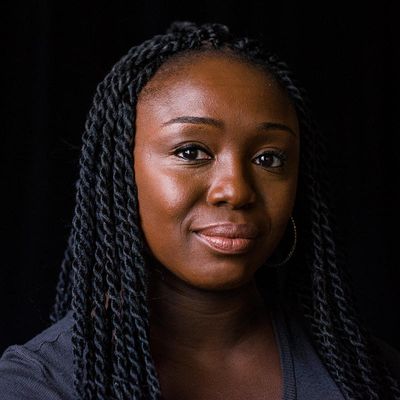
About
In this episode Jose speaks to playwright Jocelyn Bioh and director Saheem Ali, who star in the documentary "Reopening Night" (available on HBOMax from Dec. 20). The film by Rudy Valdez follows the talented troupe led by Bioh and Ali who brought back Shakespeare in the Park following the Covid-19 theater shutdown.
Bioh and Ali look back at their thrilling summer and reflect on how their artistry has been informed by the pandemic and share their wishes for theater in 2022.
Transcript
This transcript was automatically generated and might contain errors.
[0:07] Jose: Chelsea and Bio and Sahim Ali, welcome to Token Theatre Friends. Such a pleasure having you both here. I watched Reopening Night recently, and I loved it. I'm gonna get to that very soon. First, can you tell our viewers and our listeners what Reopening Night is?
[0:26] Jocelyn Bioh: Yeah, Reopening Night is a documentary about the reopening of the theater, the Public Theater, and it uses the process of Merry Wives, which I was directing and Jocelyn was the writer on, as kind of its narrative spine. So it kind of shows behind the scenes the putting it together of the production from maybe like a month or a few weeks before first rehearsal to opening night.
[0:55] Jose: There's this beautiful moment right after the first preview is canceled because of rain. And there's this beautiful moment where the two of you are like, what the hell's going on? You know, will this ever happen? And someone off camera tells you something. I'm paraphrasing, I didn't write that down, but someone off camera told you this is a production that we're never going to forget. So based on that, why did you want to make a documentary about this? Like when did you know that this was a process that you wanted to capture for posterity?
[1:32] Jocelyn Bioh: Well, the Public had been in conversation with a couple producers who work with HBO about doing a documentary about theater, about the Public in general. And they just didn't know what the right angle or way in would be. And then this particular project ended up being the one that everybody said go on. And the director of the documentary, Rudy Valdez, came on board. And he's a lover of theater, you know, a theater artist himself. And so yeah, he had been a part of it since basically day one. So we all agreed that we thought it would be interesting. I didn't know if it would be as good as it ended up being. I thought it would be a little boring if I'm being honest. Because putting on a show to me is like, you know, exciting and fun, but I don't know if the, you know, John Q public would think the same thing. But these were extraordinary circumstances we were working in. So I, you know, stand corrected.
[2:37] Jose: Yeah, I that would be that you what you're saying, Jocelyn. Like I thought it was so special because I don't think, you know, even as a critic and journalist who's been doing this for a while, I don't think I'd ever been so immersed in the process of, you know, getting a show from the page to the stage, literally. And I couldn't help but wondering, like I wanted to ask you both did it feel intrusive in any way, having a camera and having people who are capturing this process that I'm assuming, and I'm sorry if I'm being presumptuous, that's very intimate for all of you and all the people who are putting together a show. So how was it to have an external force, so to speak, seeing, you know, what the rituals of theater making are?
[3:23] Saheem Ali: Yeah, it certainly didn't feel intrusive just because we had Rudy, who is such a remarkable, sensitive, generous, open-hearted human being who was part of the process. I think it could have very easily felt if we had a presence that wasn't similar to his, it would have felt, we just would have felt it there in an unhelpful way. But I really because of who he is and because of how easygoing he is, his character is, but also he does everything himself. So he's not only directing it, but he's also the cameraman. And sometimes when he can't have a sound person, he's also the sound guy. So there's something very light about his footprint. And then, you know, Justin and I have been doing this for a while.
Like we've been through the ringer, we've been, you know, this is not our first rodeo. We had a photo shoot, we were standing cheek to cheek in Central Park for like hours and hours. So it's also like we're used to operating in our creative space with like in public and private and all the way. So I think it also really helped to have that relationship. That we were just able to be ourselves because like we're, we've done this so many times before. It's old hat for us. We're not learning each other, we know each other. And so I think that way, you know, we were able to just like kind of relax in the process because really like it was a huge undertaking, but in terms of creative stakes, like I didn't feel like I was entering some kind of unknown terrain when it came to this particular relationship. So that helped. That helped just make it feel really grounded.
[4:59] Jocelyn Bioh: Yeah, I agree. I agree with that too. I feel like I often hear like reality show people say, like, I forgot the cameras are there, I forget the cameras are there. And I, for a lot of, you know, what was filmed, I honestly forgot, you know, that they were there because that's how unintrusive it felt with our process. And you know, we had a lot going on, as you saw during the documentary. So it was hard to then kind of like switch and try to put on some weird public face. Yeah, I honestly forgot half the time that they were there. I love that. I have to say that one of my favorite moments in every single movie that I've seen in 2021 was that moment when you look like a little kid who's excited at Christmas when you're playing with the models and you're showing us, you're showing the camera what you know, like you're so happy when you're like turning a, then this is going to be the laundromat and it's like you looked like a little boy and I was so happy just like getting to see that and I felt so grateful that you were giving us access to that.
And my question for both of you is, is that what making theater feels like for the two of you? Because it's like those scenes where I think we're both in Sahim's apartment, you look like kids on Christmas morning.
[6:28] Saheem Ali: I think a lot of that is accurate. We definitely have a very good time, you know, when we are working together we make each other laugh a lot. So there's definitely that and you know, even with all of the circumstances and things that we knew we were going to have to overcome, we were excited about doing the show. Like it was thrilling for us to both, this was both going to be our park debut. We really loved the premise, you know, Sahim came up with this idea of like where this particular Merry Wives would be set, and you know, the people who would occupy the play. And we were just excited to like figure out how to like put it up. And we had the full support of the Public Theater staff and team.
And so we were able to get, you know, beautiful costumes and cool set pieces and things that we wanted to do. So, and it was going to be one of the first major shows back, you know, to theater to New York City since the shutdown. So yeah, there was definitely a level of excitement.
[7:35] Jocelyn Bioh: Yeah. And like it is my happy space to be like playing make believe. I feel like Jocelyn does that when she's in her room with like her characters speaking to her, and she's typing up for what you're saying. And for me, like, you know, like look here. Like, I have a model here right now for like the next show that we're doing together. And it's like on my kitchen table. Because like it's just, it's really kind of glorious to be in that imaginative space and like playing around it. Because that's so, that yes, that's really is what it's like. Like a little dollhouse that I'm playing with. And I mean, that feeling is so contagious. Like, I couldn't stop grinning with that moment. Like, I love that.
So thank you for sharing that with us. I want to go back all the way to the beginning of the pandemic, Jocelyn. For you specifically, if I recall correctly, School Girls was one of the first major plays that was streamed as well. And can you talk a little bit about what that decision making was like for you? You know, because you're like doing something that's rarely done in theater, especially during, you know, the chaos of that pandemic. So, was it like a no-brainer for you? Like, yes, I want to make sure that people get to see my play, even if it's not gonna happen together in community in a theater?
[8:49] Jocelyn Bioh: Well, what's so wild about that time at the beginning of the pandemic? Everything just felt like it was moving very fast and very slow at the same time. It's like kind of the best way I could describe it. I were actually in rehearsal for another play of ours, Nollywood Dreams. We were about to go into tech when everything shut down. And I did have a couple productions of School Girls that were happening on the West Coast and in Chicago that were due to open and had to, you know, close unfortunately early. And so the decision to stream it, to film it and stream it was made really fast. I almost didn't really have time because of how we were racing against the clock in terms of everything, you know, shutting down.
I just was really, my biggest concern was for the artists who were involved, particularly the actors who, you know, this is their source of income. And if the show was going to shut down, like would they, because so much there was a financial attachment to the streaming that they would still be compensated for, you know, a couple of weeks or a few weeks in for the run with it being streamed. And so that to me felt like that was the big no-brainer, I guess, to answer your question was that I knew that the artists involved would be compensated and it would at least be some way for the art to still, you know, their hard work to still be seen. So that was it. I think if that was not a caveat or a part of the process or decision-making process in the streaming, I think I probably would have just said no and hoped that the theater would bring it back. But because I knew they were compensating the artists, I was like, let's do it.
[10:41] Jose: Well, it's strange then to be able to watch your play, you know, preserved in a way that's not, you know, like those recordings for the performing arts library that are very like, you know, just for the record and very like academic and feeling. This was like beautiful pro shot. Was it weird for you to be able, as a playwright, to experience your work captured that way?
[11:03] Jocelyn Bioh: Well, it's always a little odd. I mean, I did have the good fortune of the original production of School Girls that was done at MCC. We did have a pro shot that was done for a local PBS station. So I had seen that, but that was also, we had filmed that a year and a half into our run, right? So I was already very familiar with what the stage play was and, you know, was happy that we would be able to share it with at least more audiences within the tri-state area. But this particular one, because of the pandemic, you know, we were catching artists at an early stage of their development with the characters, you know.
[11:47] Jocelyn Bioh: In the case of the Berkeley Rep production, that was essentially the only time they ever did the show beginning to end. It was essentially their dress rehearsal that was filmed and then had to be streamed. In the case of the Goodman production, they had only been running for six days, which is not a lot of time to incubate characters and develop them in a way that you want. I knew we were also capturing artists in the middle of their process or even the beginning of their process. I was happy that I was able to see that, but also knew how much of that moment had been robbed from them. So, it was bittersweet. I also happened to watch those particular productions on my birthday, which happened two weeks into the shutdown. Both me and Saheem have birthdays four days apart. I was watching that on my birthday and was like, wow, I never imagined this is how my birthday was going to be. But yeah, it was bittersweet for a myriad of reasons.
[12:56] Jose: Does that mean, and this has nothing to do with anything? Does it mean that all of us here are Aries babies?
[13:01] Jocelyn Bioh: Yes.
[13:02] Saheem Ali: Absolutely, yes.
[13:03] Jose: When is your birthday?
[13:06] Jocelyn Bioh: My birthday is on April 11th, which originally was the day that, you know, before theater returned. It was said that it was gonna return April 12th. I was like, yes, Easter and like rebirth and blah, blah, blah. And we all know that didn't happen. So I'm sorry that the three of us spent two birthdays in a row.
[13:26] Saheem Ali: Yeah.
[13:28] Jocelyn Bioh: So last time I spoke to you, it was because of Romero. You forget that. And that was an audio play, and now I'm talking to you because you're involved with the documentary. So was there an art form outside of theater, you know, like stage productions that you didn't try during the pandemic?
[13:50] Saheem Ali: Well, you know, I am always like for the documentary, like that really was Rudy kind of putting it together in a way that I was more like a participant in it rather than someone who constructed it. It is so fascinating. Jocelyn's an actor, so she's seen herself in things, but it was fascinating for me to see myself in something because I'm usually on the other side of the thing, you know. But to have the process kind of captured in a way that not only demonstrates the process and the individuals and the relationships that go into making theater, to not only have that, but then to have like the thing have its own narrative arc to have like a beginning, a middle, an end, some drama in the middle, some obstacles, you know, it was just kind of fascinating to see how that storytelling form could be translated to a medium like a documentary.
So I definitely found myself being excited about just like the possible just like and just excited by more ways in which we could kind of capture the process of making theater and like sharing it in this way.
[15:00] Jocelyn Bioh: There's this beautiful moment where one of the team members in Merry Wives reveals the way in which a text that you wrote, Jocelyn, for this adaptation kind of turned into a prayer for them, and it became something that was what their soul needed. And you know, I love the experience of theater because it's obviously very church-like and it's very, you know, gathering for some sort of like larger good, whether it's like, you know, whatever people believe in, like the truth is that when we go to the theater, we all gather for something, a force for good, something that we all share. And obviously, in the documentary, we also get to see those ritualistic aspects of putting together a show. But thinking about this specific text, Jocelyn, that was so beautiful.
We turn into a prayer by this collaborator of yours. I wonder if there are texts for the two of you that kind of also feel like prayers, you know, theater texts that feel like prayers as well that give you comfort or that have helped you find some, if not answer, certainly some solace during the pandemic and during the break that you had from theater.
[16:17] Jocelyn Bioh: That's a beautiful question. Especially because I obviously know the moment you're speaking of, and I'm still very touched because I, you know, didn't know that that collaborator had spoke about what I had written in that way. So it really, really moved me. I think that that's what's the great thing about theater, right? Is that there's different pieces or plays or musicals or whatever that can speak to you in a moment that you can kind of return to when you're feeling down or need a pick-me-up or need to feel inspired. I feel like I have so many of those things, and so many little pieces of inspiration. I think if there was one that I had to choose right now, I would say Passing Strange. Not necessarily the whole, you know, all of the that whole particular show, but I just love the print.
I love the idea that someone, you know, a young Black character, you know, is going out into the world and wanting to be the kind of artist that they want to be, even if it's very different from what society wants them to be, right? There's a beautiful moment in Passing Strange where the character is kind of contending with, you know, the loss of their parent. They have this beautiful song that they sing to their mother who devoted so much to them. I feel like those are songs that I kind of return to often because especially during the pandemic, it was very easy to feel alone. It was very easy to feel like unclear about why you're doing the work that you're doing, especially for me as a comedic writer.
It was very hard to find anything funny about what was happening in 2020. I took a lot of comfort in those particular songs and in saying like I'm acknowledging the loss but also acknowledging that me as an artist is here for a reason, you know, even if that reason sometimes feels murky through it all. So that would be my answer. But that's a really good question. I may have a different answer tomorrow, honestly.
[19:01] Saheem Ali: Wow, yeah, that is a great question. And the moment in the documentary does have like such beautiful personal resonance. I honestly, Jose, when you ask me that, all I can think of is the fact that I did three radio plays, as you know, over the course of the pandemic. And with each one, I had like two Shakespeare texts and one original text. Each time I was gathering with a collective of actors on Zoom, trying to create a sense of community, trying to collaborate, trying to create a space where we could replicate what happens in the rehearsal room. That was I was constantly in that for like almost a year, all the way through to the actually we were doing Romeo and Julieta, like right until before doing Merry Wives.
In terms of text and in terms of theater, I really was engaged in the process of using these texts to create some kind of space where artists could approximate what we do in the theater, like on this medium. I didn't really consume any other texts or scripts at that time. So I think I was just very kind of insular with these processes in preparation because I felt like I just was always preparing for the next thing. Even during Merry Wives, we were very with Jocelyn from Merry Wives. I don't know, I saw West Side Story yesterday, and I was so and I saw Tick Tick Boom also the other day. So I've also experienced these translations of theater, musicals into film things, and they really moved me. Both pieces really, really moved me more than anything I've read quite recently, actually.
[21:03] Jocelyn Bioh: So I think I was just like kind of blown away by how um it's possible to take these kind of like well, what's the story is like obviously a really kind of monumental text, tick tick boom, less so, but I don't know.
[21:18] Jocelyn Bioh: Like I haven't been so moved as I have been watching those two things um in a long time.
[21:24] Jose: Thank you both for sharing that. One of my favorite moments in the documentary was, you know, and I'm sorry because the only comparison that I could find for this was when you're all getting together in person for the first time, and people just keep showing up one after one. The only thing that it made me think of, which is something that I benched a lot during the pandemic, that I have been benching a lot during the pandemic, was RuPaul's Drag Race. Every time like a new queen is welcome, and everyone's so excited, and everyone's like, oh my god, what is this person going to bring? I wonder, you know, as a viewer, that was the impression that I had. Like every time someone walked through that door, it was like seeing that person almost for the first time. Is that accurate?
[22:08] Jocelyn Bioh: I think so. I especially at the moment I think you're describing, which is when they were in costume, you mean really like every time, you know, like I'm thinking first about that moment where you're like together. I think, yeah, like you, the two of you are sort of like the last people, I think, who are right, and everyone's still wearing their masks.
[22:30] Saheem Ali: Oh, yes, yes.
[22:31] Jocelyn Bioh: That was rehearsal, yeah. I think because we were, you know, for I certainly for me, you know, I'm what some would describe as, you know, a hypochondriac. I don't know that I'm diagnosed in that way, but it's safe to say that I skew told me careful you're just very careful. I'm a quite a careful person, and I really had not left my house much in the couple of years or whatever that we were in the midst of quarantine. So being back in a rehearsal room with 25 other people was the wildest experience I've ever had. I mean we didn't even do anything. It wasn't like going to a club or anything. It was just walking into a room and sharing space with other people was wild. I think we were all just so happy.
There were so many things about the pandemic, right, that every time you got excited about something it we couldn't do it, you know, it would fall through. There would be another wave, there'd be something. So the fact that we actually had set a date that we were going to come back and do this play and we were actually able to walk into a room and do that, that felt like groundbreaking. It was like we had, I don't know, built a house. It was wild. Meeting people who we knew a lot of the cast already, like these are our friends and colleagues, so it was just that it really captured the joy of meeting people and meeting in this context too, like we're about to come together, we're about to make a play again.
It's crazy. We're wearing masks, like should I hug you, should I not hug you? It was like all the things, all the joys, and we just forget because we just, you know, then the documentary really reminded me of just how we moved past so much that was so crazy.
[24:33] Saheem Ali: And this is not a long time ago. This is just a few months ago. I wonder how you know, like you said that you were working together during Nollywood before the shutdown, and then you got to have the production when theater reopened in the fall. I'm curious if you know, if at all or not, you'll tell me. But that the pandemic and that distance and that break that you took from starting the show to actually doing the show, did that inform the production that people got to see in any way? I think that it definitely we I don't know if it informed the production in as much as it just felt like this like return, especially for the two of us, because we had just been making like an African comedy when this thing shut down, and here we are again doing an African comedy, but a totally different circumstance for it.
So there was so much about the vibe in the room that was similar, but it was a totally different play, totally different cast. At that time, we didn't even know if Nollywood was gonna come back at all. It was just like somewhere on some shelf. So you know, with Jocelyn, it's just like it's like home. So it just really felt like whenever you know, she's to my right, I'm to her left, it just feels like home ground. And here we were about to like enter another space and make it like another show, and we're gonna laugh and we're gonna have fun. So again, it just everything about the circumstances were different because of the COVID of it all, but then so much of it was just the same.
[26:21] Jocelyn Bioh: I don't think, you know, I think when people are watching the opening night, I think anyone and everyone who's been to a Shakespeare in the Park production knows how essential the raccoons are to the experience. So I was very happy to see the raccoons make several appearances throughout the film. Did the raccoons cause any you know chaos that we didn't get to see in the movie or were they well behaved?
[26:50] Saheem Ali: It's my knowledge they were well behaved. I actually did not see a whole bunch which was you know great for me and my heart because I do not like any sort of rodent. I don't like any rats, squirrels, raccoons, I don't any any anything anything that is low and furry. So I was really happy that I didn't really see much. And I did not hear or read about them terrorizing the production or the cast or crew in any real way. But I don't know did I miss something Sahib?
[27:32] Saheem Ali: I think they were I think they were just happy to have some company again. They had taken over of course because it is you know we're the visitors that's their home turf there. So like yeah we gotta be respectful of like their home. I think I remember seeing Ben our assistant stage manager like definitely take a couple of swipes at them because they liked the trash area that's backstage. But I did see a couple on stage in the middle of the night when we're doing lights at like 1 a.m. or something. So that's when they would venture out into the seats to see any like leftovers that were lying around or on stage. But yeah, the raccoons, man. You can't visit it, it's not a Shakespeare in the Park experience unless there's a raccoon.
[28:11] Jocelyn Bioh: Absolutely. So since we're you know a week away from Christmas basically, which is wild to me. I wonder if you're willing to share what's on your personal question list. Like what did you write when you wrote Santa, what did you ask Santa to bring you this year? And what did you ask Santa to bring the theater, the field that both of you love so much this year?
[28:36] Jocelyn Bioh: I would love for Santa to um I what I write to him probably every day and what I've been writing for the last I don't know year and a half is to bring us an end to this pandemic. I am so sick of COVID. And you know in some cases passing away like I just want this thing to be over so so so badly probably more than anything at all. So that is that is a big it's a big huge thing that I'm hoping Santa can you know sprinkle some fairy dust vaccine dust whatever he needs to sprinkle over the world um you know to um end this. And my now fiancé proposed on opening night of Merry Wives. So I wrote about Merry Wives, and now I'm about to be one. So I'm looking forward to um that next journey. And essentially there's a big like African wedding celebration at the end of the play, Merry Wives, which some of it is kind of featured in the documentary. So the idea that I was probably writing my own future had not occurred to me. But here we are.
[30:20] Saheem Ali: Congratulations.
[30:22] Jocelyn Bioh: Thank you. Yes, you wrote it into existence.
[30:25] Saheem Ali: You really did. On a personal note, I want my husband home for Christmas. We spent a lot of time apart because of this pandemic. And he works in Canada. He's a nurse. And so I just I don't take anything for granted now. So like I it's Christmas is next week. He's hopefully coming home. I just want him home. And then for the theater, like I just, you know, there's been some great changes, there've been some great strides, there've been some great conversation. And I just wanted to continue. I want us to like not forget the lessons that we've learned. I want us to be continue to be conscientious and to give folks voices who haven't had a voice before and take care of people in ways we haven't taken care of them before.
And just like it's a collective responsibility for all of us to speak up when that isn't happening. So I just I really wish, and you can do that, and the work can be great and powerful and exciting. Like it doesn't compromise the integrity or the or the power or the beauty of the work that we make. If anything, it enhances it. So I just really want us all to continue with that because we do this because we love it. We love it so much. And sometimes we're willing to hurt a little bit for it, but like it just it doesn't have to, it shouldn't. So yeah, that's what I want for the field.
[31:39] Saheem Ali: Amen. Are there any projects early in the new year or in the spring that you should we should be on the lookout for?
[31:45] Jocelyn Bioh: Yes, we have a musical. We have a big ass musical coming out next year called Goddess. It's gonna be a Berkeley rep before it moves around to other places. So yeah, we're very excited about that in the spring.
[32:00] Saheem Ali: Yeah, I concur. That is that is the big, big, big, big, big project, but we are so excited and thrilled about it. And anybody who's in the Berkeley area or if not, get on a plane, get on a plane and come see it. Because I think it's going to be a really beautiful and amazing show. I'm really excited about it.
[32:23] Jocelyn Bioh: And thank you for that. And in the meantime, theater lovers and people who don't know theater and movie lovers can watch Reopening Night on HBO Max. I think it's one of my favorite things that I've watched all year. And I was freaking out like I don't know, like a groupie when like people like did it at ETA show. I was like, oh my god. And like I'm so excited that you know, people who don't know theater necessarily are going to be able to meet our rock stars, including the two of you. So thank you for sharing that with all of us and happy holidays, and thank you for your time today.
[32:57] Saheem Ali: Thank you for always, always a pleasure to see you.
© Broadway Podcast Network, All Rights Reserved