

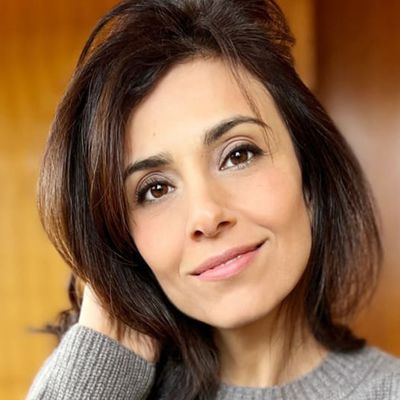
In this episode, Jose speaks to actor Marjan Neshat, one of the stars of English. The play by Sanaz Toossi takes place in a classroom in Iran, where the students prepare to take the TOEFL, in order to prove their proficiency in English... Read More
From the show: Token Theatre Friends
Guests
Featured Shows

About
In this episode, Jose speaks to actor Marjan Neshat, one of the stars of English. The play by Sanaz Toossi takes place in a classroom in Iran, where the students prepare to take the TOEFL, in order to prove their proficiency in English. When she was eight years old, Neshat and her parents moved from Iran to the United States where she found a way to embrace the new culture through her love of performing.
In the play, she stars as a teacher who constantly reminds her pupils to speak in "English only," but unlike her strict character, Neshat has proven to be an incredible performer across mediums. Some of her notable parts in television and film include her roles in Quantico, RoboCop, and Almost in Love, one of the projects she confessed to being proudest of.
Neshat also speaks about returning to the stage following the theater shut down, her love of process, and starring in back-to-back-to-back plays on the same season.
Transcript
This transcript was automatically generated and might contain errors.
[0:22] Marjan Neshat: Welcome to Token Theatre Friends. I'm so excited and happy to have you here.
[0:30] Jose: Before we get started with the meaty questions, can you tell our viewers and our listeners what English is and what character you play in it?
[0:40] Marjan Neshat: Sure. English is, on a basic level, a play. It's an off-Broadway play playing at the Atlantic Theater right now, and it follows a TOEFL classroom, which is a test of English as a foreign language. My English is now working on split. It's four adult students and a teacher in Kadaj, Iran, in 2008, and it follows their sort of classroom settings for about six weeks, and you know, their relationship to language and identity through the learning of this other language, and also what that means for them in terms of their opportunities and hopes and why they're in the class. Their relationship to English also reflects their relationship to each other—how they're competitive, how they resist, how they affect the teacher and how she affects them is basically the umbrella of this play.
Although on a much deeper level, the play is so much about identity and your mother tongue and who you are and what language and who you want to be in what language and accents, and the sense of belonging and what language sort of means and what it means to be on the outside or on the inside and all the intricacies of our own feelings about our voice and how we feel, especially given being in our homeland versus being someplace else and where you're headed.
[2:23] Jose: Your character in so many ways almost exists in a sort of limbo where you're half English, half Parsi, and then you kind of wonder where the character is going to end up. How was it for you as an actor to access that really strange place, that very gray place almost to exist?
[2:48] Marjan Neshat: It's such a great question. You know, from the minute I read the script, really until now, I somehow viscerally understood this idea that what we're born to and what we are supposed to be doesn't always link up with our idea of ourselves. Sometimes some people feel more alive in something that isn't necessarily given to them or is not their supposed birthright. I understood how you can have a real romantic idea of yourself. For my character, this is probably the class that breaks her in many ways because it comes at a point in her life where she's both vulnerable in the sense of what she feels like she's losing as more and more time passes. This idea of herself that I think she feels she was very alive in this time in her life and in this language.
But the truth of it is that is also covered up in a lot of romance because ultimately she never fully grasped it and she never fully belonged. This question of why she comes back, I think that she keeps her possibility alive through giving it to other people, but I think it gets really challenged. I feel like I can never relax with this play because it slowly calibrates this peeling apart of how you look at yourself and the big questions of where is home and where do you belong? If you don't quite have it in one place or another, I think she carries a lot of sadness that is covered up by an attempt to do something, an attempt to give this to her students. Slowly as that gets challenged, it starts to chip at this root of who is she really and where is home and why isn't home what it should feel like.
[5:03] Marjan Neshat: I really had a lot of questions of like why English, why English? I also understood in my own ways the things of coming from Iran and moving to America and being like, I want to be an actor, and my mom's like, we didn't leave Iran for you to come and do this. Have you heard about Marilyn Monroe? She died of drugs, you know. There are so many things where it's like I wasn't conditioned to go the way I did. And yet it was the thing that made me feel most myself. There are so many things like that, I think, upon migrating, because you left when you were very little. You were seven years old, if I'm not mistaken, right?
[5:49] Marjan Neshat: I was yeah, eight, but yeah.
[5:51] Jose: Okay, and you arrived in the States and you arrived in Seattle. What were your favorite words in English when you started learning English?
[6:00] Marjan Neshat: Oh god, when I started learning English, I didn't have a favorite. I just was so, you know, I came and I was in fourth grade, and they stood me up. The only thing I knew for sure how to say was I don't know English. It took me a long time to develop. I learned it in, I think, three to five months; I was proficient. But those first few months, I really relate to this thing in the play where she's like your head hurts and the days feel long. Every day in class, it just felt like because people treat you like they think you're an idiot, like they think you're deaf or dying. They would introduce me and they're like, This is Nika. And I was like, I understand this is Nika, like what? I don't know what to say.
Then they kept repeating it like I didn't understand. Inside, I was like, I am a smart, sensitive human being; I just don't have the language. Initially, when I came, I was this really skinny little girl who kind of looked like a boy, and I was so sensitive and so afraid of making mistakes, and I just didn't fit in. So I don't think that I had a favorite word, but I had favorite foods. Coming from Iran, going to the grocery store was so exciting to buy bananas and sour cream. I think that's all I ate the first year of being here. Although now I love, I've gone through phases where I've tried to learn a poem a week. I love language. It was just in that period of time, it felt so out of my reach.
[7:53] Jose: I wonder if there was some element because as someone also who I'm from Honduras, and I moved to the United States when I was in my 20s. I already spoke English, that was a plus. But I also, you know, like you kind of have this weird thing where you no longer know where you belong, and you try and you try to grasp onto anything that reminds you of the place where you were born in order not to lose it. Was that something that your parents instigated in you, or was that something that you consciously knew? Because I know, especially for children when they move to the United States, American kids are mean.
[8:37] Marjan Neshat: It's so true. It's such a great question. To tell you the truth, my dad didn't speak English very well, and at home, it was really reinforced. This is who we are. I think initially coming here and being so on the outside, we moved to a particularly white suburban area, and I really resisted and pushed everything away. I thought in order to belong, I had to be white in order to get a job in acting. I really struggled with identity and belonging. When I came to New York and went to acting school, they really started to delve into your roots—what are your childhood memories, what's the music that kind of pulls at your heartstrings? I met a bunch of Iranians here who were making things, and it took me a long time to reclaim that part of myself.
I would say in the last 20 years, it's been a real slow and kind of beautiful experience to understand how much of—I know that I don't quite belong in either world—but to understand the things of Iran that really do belong to me. Doing this play, sitting on stage with a predominantly Western audience and listening to the song that all Iranians play when they want to cry at all parties about distance, just listening to that is a really thrilling and profound experience. For a lot of us who moved really early, having the sense of home being one thing, but then going into the arts, I think it is really this time in the arts where people are attempting to showcase these things without otherizing it or without saying, here's our one token play in which you have to explain who you are, but to not have that and just have people existing and being funny and being crude, and also being Iranian has really been so moving to me. I feel like I’ve gotten so much of my own experience back, which isn't fully Iranian or fully American. It's this in-between liminal space.
[11:23] Jose: So after, during lockdown, obviously, during the shutdown, no one was really working on stage. When stages started reopening, you ended up having three back-to-back-to-back plays: Selling Kabul, English, and then you have For Sure coming in the spring. Was that transition from not being on stage to going back and having three plays come for you? Was that an easy transition for you to achieve, or did you have to relearn in any way how to be a stage actor?
[11:58] Marjan Neshat: I wouldn't say it was an easy transition, but it was so welcome. The first day going back in the subway, fully entering the workforce was this kind of bizarre experience. There's always this thought, like, if I get COVID, the play shuts down. But I think Selling Kabul, both physically and emotionally, was so challenging. I had started at least a month before doing vocal warm-ups.
[12:31] Marjan Neshat: I was like, I have to get my body. I basically haven't raised my voice past like talking to my nine-year-old, you know, like I was like, I have to get in shape for that play. Um, because it was such like a muscular experience. So I'd been doing that, but I think like walking in that very first day and like actually seeing eyes and like being hugged, like instantly, it was this feeling of it was so welcome. It was like to not try and, you know, like doing Zoom readings, and it's like you never know if you're even fully making eye contact. And then just to like have human beings and like their smells and their touches and their temperature, it was like you forget that that's we're meant to be that way. We are meant to like be with other people. It was like it was an instant sort of release, you know.
[13:36] Jose: Your mom, your mom warned you about Marilyn Monroe, but when you were little and you started realizing that you wanted to be an actor. Who were those people that who were the Marilyn Monroe's that your mom was worried about in your life?
[13:52] Marjan Neshat: I mean, you mean in like I think I just think that they had an idea of because like no one in my family had, you know, I had an uncle who was a painter, but no one had like the idea of actors were like it's all loose and drugs, and you'll get you know, so like I think Marilyn Monroe was that it was like that that was their sign of like this is what happens if you go into acting someone will you know break you and so but I think that so like really kind of all the stories about Hollywood and drugs and everything was like the thing that they had heard. And I think that there was the other side of it this idea like you know I just started auditioning for schools like craft and really like it's like a thing that you study is not the image that people have you know especially like as immigrants of like oh this is you go to college and you get like degrees in what this is um so I I don't know if I'm I don't know if she mentioned anyone other than Marilyn that was like her sort of like beacon of what not to like her biggest fear um you know and and and honestly like it's not that it's an easy road not necessarily for the same reasons but it's sometimes people study and work their hearts out and they don't get to do it. It's it's acting is not something you can it's not you can't go alone in a room and do it. You need other people and so it is a more complicated sort of entry point.
[15:29] And I read that you first remember loving theater when you were very little and you went to see a play. So how you know what was that art upbringing than your family because like obviously your parents took you to theater so why are they worried about you becoming an actor you know, I think it's really it's amazing.
[15:48] Marjan Neshat: I have no idea who I would be or what I would be if we'd stayed in Iran. And I I think like when I so they took me, you know, it wasn't that we went all the time, but I went to see this play in Iran, and I just remember like I I just like I didn't want to leave. I felt like they were so in communion with each other, and it was so like my feeling, like my heart was just kind of there with them. And I think part of probably what made me an actor twofold is that I was a deeply sensitive person. I just like everything broke me. You know, I'd see a beggar on the street and I'd be like, I can't live in this world. Like I just was like, I had no skin. And for so long you kind of live thinking that that's a really bad way to live.
And it does like it hurts. And I think I also when we immigrated, I was just so on the outside of everything. And I think the first time I did a play, it both I both like used this hypersensitivity and also I wasn't on the outside. And it's been this life of learning actually, how sometimes where that kind of sensitivity is plot out of you because they think you won't survive in a way is like needed to be able to lend that to like your character. You know, they have to be able to like re-feel and re live through things. And so I think like uh the more I worked and the more I learned, I was like, oh, it it's the place in which it's it can become a strength and not your sort of fatal flaw.
[17:27] Marjan Neshat: Um so like I mean, my parents, you know, they appreciated the arts, and I is very like in Iranian culture, like all of their parties, like they would sit around with a group of Iranians and they would play this game where it's like you say a poem and whatever letter it ended on, the next person had to start. So it was like that, like it it is sort of in their life, poetry and music, and that kind of expression is very sort of like I don't know any Iranians who don't know poems by heart. Like it was such a tradition of of a way of being, but they didn't consider that like art. Like it was just like such a part of life, you know, that I think this idea, especially coming to America and like what it is to do theater or make art, like that was a step beyond, you know, their feeling of safety.
And I do think it's truly with like immigrant kids, there's this thing of like now you've gotten this opportunity, so you better go become a doctor or lawyer and like you know, do well because you got the chance, and it's complicated to be like, oh, wanna do this.
[18:43] Jose: You have this really beautiful quality in the work that I've seen you on stage and television and film, uh like thinking about something like Almost in Love, which we'll talk about in a second. Uh, and it's that I don't know if I could even ask this because you're probably gonna tell me like I don't know. Uh, but you look so alive, and there's this warmth where you are, yeah, you you are so alive when you're acting. And I wonder, can you describe what are you feeling when you're either on stage or in front of a camera? Like, how do you achieve that?
[19:19] Marjan Neshat: You know, really beautiful sense of just aliveness. I mean, that is so nice to hear, you know. I I I don't I don't know if I could answer that at all. Although I mean, I guess I would say I truly especially like when you I feel like I'm an actor who I feel like there are certain actors who can take any material and make it good. But like I really like as a person and as an artist, like I go I like to go deep down and like I love process and rehearsal, and and so the things that I find, like the things that I love or the things that I find are well written. Like it seems like it's just been like given the keys to the kingdom. Like I I love it, and I think that part of that is like I'm happy to be there, and I'm I'm like kind of ever curious about how people behave.
So I feel like if I'm engaged with people trying to figure it out, I that is it's the most sort of awake, I feel. Um, and so I guess it comes from a sense of like really not just you know, I I will say like part of the best advice sort of I heard about acting, you know, I did this class a long time ago with Phil Hoffman, who I think is like one of our most beautiful genius actors, and he was like, you have to be honest with yourself, like acting really hard, like, and it's like pulling suitcases up your brain. And it's like, do you want to be there doing that, or do you want to be at the bar afterwards being told how great you are? And it was a real like, you know, it's like this thing of I don't, I think I don't know too many people who go into acting not having some kind of insatiable need to be seen or you know, loved or something.
And I think that it's true that some people just like you just want to like stand there and be like, love me. And like you, I've also understood it's actually like really the work that protects you from that. It's like you can, if you fully engage yourself in the thing that you're doing, you're protected from being like, Am I good, am I bad? Do they like me? Do they not? You know, like you need to kind of in that moment not worry about that to be able to do your job. And so maybe it's also like desperately holding on to that, to not feel like to not have that question of, am I being seen? Is it being received? You know.
[22:03] Jose: What is it about the impermanence of theater that draws you back to the stage? Knowing, for instance, that being on TV or film, you're there forever, you're preserved. And I also want to know if you go back and watch your film and TV performances, and are you very critical of yourself when you're watching yourself?
[22:24] Marjan Neshat: Great questions. Um in terms of theater, I there is something. I mean, I will always go back to theater in that there is something that is, I think, like this alchemy that happens. A, I love to rehearse. And so I feel like you get a chance to create and craft something with people. But the fact that like every night it's alive, and that you have to be so like ever present, you know. Like the other night I came, like I went on stage and like the speaker had fallen in. Like it's like in that moment, it's like you're there, they're there, like you are in communication, and you can't like you know, I feel like now people watch TV while they're like scrolling through Instagram and doing this and doing that, like whereas like we are collectively in this world together, and there's something that I feel like the craft of acting like gets you know, like every no matter how you feel, like they've still paid their ticket and you gotta go through this whole journey, and there's something that I feel like keeps you really uh like honest or worked out because there's not a chance to do it over.
Like if you give a bad performance, it's like you did that, that's on you, and that's you know, or or all you can do is try, but like you can't ever be like, well, I'll just redo this. And I I love to be like, I love that space between the audience and that that we're collectively having this experience together. It feels I mean it's it feels very alive, and um and I do like it feels like the most process oriented, you know.
[24:07] Marjan Neshat: And I will say, like, I I love film, and I think in a way, like when we the way that we um shot almost in love, we almost rehearsed it like a play because we didn't know when you know when the camera was gonna be there. So once you started, you had to be alive as your character going through because you didn't know when the camera would catch you. And I feel like I those movies when I watch it, I'm like, okay, I'm okay. There are things in because TV is so fast. I mean, there's like, you know, I do tend to be hypercritical and I sort of like watch it like the, you know, like the the times where it's like, okay, it's like bearable, but I wish I could have done that like five more times. I wish we'd rehearse the scene, you know, it's it's faster.
[24:50] Marjan Neshat: Um so I but now I feel it for me though, essentially at its core it comes down to the writing. Like if there's a good script and people who are willing to like I feel really lucky this year that it's not only good material, but I feel like I've been really trusted and my instincts have I feel like I love working with the same people because I think they get to know you and then they're like here you're being a little like you could do better. You know like you can just push each other up you know there's usually this external necessity from I would say like the mainstream media specifically to have artists of color and immigrants represent you know like according to them we have to represent entire sparse of like population and cultures and communities and I wonder if for you is that the case at all like do you feel that burden of that response you know that burden of representation times and does this ever make you think of your work as activism at the same time as being acting you know I I think it's twofold because I I think representation really matters and I and I especially now like there is many things that I will not do because I I don't want to misrepresent you know myself or my culture.
[26:21] Marjan Neshat: I feel like it's really fortunate when activism for me comes across as just doing the thing that you like to doing it your way and that that you know, even doing this play and like having an Iranian like it's just like okay, we're just talking about we are just people and that there is something that you you have to understand. Like when we were doing selling Kabul, I was like, the that we didn't have accents because a brother and sister living together in Afghanistan speaking in a mother tongue would not. And I feel like there's so many times where people expect, like, oh, if you're going to see a Chekhov play or a Molière play, they speak with British accents and that's totally acceptable, and like they're not other eyes.
And so for me, it's less about like I I don't, you know, I don't feel like I need to make a statement in terms of like I don't want to be a like I went into acting because I want to represent like human life and how they behave, and if there's something universally true, I think that that will have an impact.
[27:30] Marjan Neshat: And if you get to know me or get to know Afia in selling Kabul and understand that they she is her, she's just a really good person in an impossible circumstance. You may feel less removed from that in your life when you think about helping or giving. And that is political, but I really appreciate that I'm not like a mouthpiece for a uh I think that's separate for me anyway. Like it's not I don't pick I I pick the things that I'm drawn to and I, you know, say no to the things where I'm like, I think that that you're trying to put something in my mouth that is not how I see myself or my people, you know. You know, I do think that it matters if you are rep I I I think it really matters if you're misrepresenting.
[28:21] Marjan Neshat: But in terms of like true representation, I feel like especially living here and being both a part of, you know, I've lived here since I was eight years old. So it's not I can't fully represent someone who's like lived their whole life someplace else, but like I think that everyone should get the opportunity to represent what they feel connected to. I think that's how we are good artists. And I feel like just because you're from this part of the world doesn't mean that you are like you have to like give a history lesson or like otherise yourself for the sake of these. Like I really was like, when people are like, why don't they have accents? I was like, Well, do you when you speak to your brother, do you have an accent?
Like, why would you? And why is it only this part of the world that you expect to be like they shouldn't sound like us and they shouldn't be like us because that's what divides us and like makes us less open-hearted to those causes, you know, and I feel like that's a real so I think I guess it when I say it's twofold that yes, I really believe in that, and I think some of the things I've done, like when I was doing Julius Caesar in the park, we were getting store like people were like marching on stage, and because our Caesar was dressed like Trump and like we had protests every night, and people rushed the stage, and like just doing that play felt like a political act, and it was like in a way scary, but also exciting, because it's like okay, like just I I feel proud. Like I'm an actor, I'm doing the thing, and you can respond to it, and we can have a dialogue.
[30:02] Marjan Neshat: But I don't set out to like teach anyone anything through language. I just hope that I represent a human being truly enough that they take that for themselves and do with it what they will. You have played spies with secret agents in the past, and in so many ways, I feel that the work of an actor is kind of like being James Bond and getting a new dossier and getting a new mission every time. So I wonder for you, you know, like going from play to play to play and like going from Afia to Marion in English and then going to Reshura here. How is that process for you? Like, do you ever find yourself right now, for instance, in English, suddenly going, wait a second, this is how Afia this is something that she would do. Like, how do you get rid of the character you just played?
[30:56] Marjan Neshat: You know, I was I was I have to say I was a bit worried about it because Afia was I'd worked on that play for so long, and she I loved her so much, and she was so like inside me that I really like I had to do like a little ceremony to let her go before I went into English. Like I lit some candles and everyone, like it was very woo-woo, but I because also we closed a couple days early, so I didn't get to feel like this is the last time I'm gonna like put on this costume, and so I had to like really sort of mark it. But I think especially I think with theater, because you have rehearsal, like you go in, and I feel like from day one, the approach to English and the writing, it was so different, and it actually, you know, three and a half, four weeks is not that long, so you sort of jump in, and I I I mean, there may be elements, but I haven't like Marjan has felt deeply different from Afia to me.
[31:52] Marjan Neshat: They're both their circumstances and just like the way that they like live through the world. I don't, but this will be very interesting because I start rehearsals for Wish You Were Here next Monday, and we still have two weeks of performances. And I've never done that before I'm rehearsing one during the day and performing a different one at night. And I don't, and it's by the same author. So I have no, I don't know yet what that will be. Although there it's just like I do think that characters like they tend to like as you keep working on it, they have a spine. And I feel like the spines of all these characters are quite different from each other. So I I mean it's still told through me, so I'm sure their sensitivities or their you know, hand whatever, like they're like I'm sure some things will be the same, but I do think that they're like they're sort of they all have a very like strong, they're like moral centers are very different from each other, which it's like I guess that's part of the process is to find how they're different and how they're you know, I don't know.
[33:03] Marjan Neshat: I wish you could see them and you could tell me if they seem the same or different okay, and just to wrap up, think about anything other than acting and theater and being on stage and being on film, what skills do you have outside of the arts that you would be a great teacher uh for? Um I love to cook, and I I find it really like I don't know if I could teach it, but I I mean, I I think I could do a good course on like soup making and broth making. And like I weirdly I like have a I both for this um lunar new year, I went with my little kid to Korea town and we made like lucky curry and new year suit. Like I really love like culturally specific, like trying to do it as and I I I somehow seem to understand like like I like my Korean dishes don't taste you know Italian.
Like my husband used to always joke, like whenever he's made a stir fry, but like until he got with me, where I was like, no, no, no, you have to use this oil. You can't use olive oil and put these vegetables. So um I think that would be one of them.
[34:22] Marjan Neshat: I also like again, I don't know if I could teach this, but I'm an enormous reader. Like I think that books in many ways have saved my life. And if I had, I don't know, I don't know if anyone would pay you just to read books, but I would I would like to do that. Um and other than that, like my greatest sort of if I could, I I I really love horses. And I went and did this course once where it was like you communed with horses, and I don't know, I would maybe explore that. I think someone would have to teach me versus the other way around. But um, I think those are the areas in which my sort of loves go.
[35:09] Jose: They're all wonderful. So Marjan, thank you so much for your time and for joining us. Would you like to invite our viewers and our listeners to go to English right now and to wish you were here in a couple of months?
[35:20] Marjan Neshat: Yes, I would love right now. English is playing until February 20th at the Atlantic Theater on 20th Street. Tickets are selling out fast. So if you want to come, come quickly. And then Wish You Were Here is going to be at Playwrights Horizons. I believe I I think we start sort of mid-April, and we will run through May or June, depending on our extensions.
[35:51] Marjan Neshat: And I I think that they are all very, you know, universal. Like I think they all pull at like very human themes. And um I I love them. And I think I from the responses of everyone who like writes to me every day from different parts of the world saying, like, oh, I took a tofu class in Cambodia and this like sounds like my class, you know. I think, and also in Wish You Were Here, there I there was I was talking to a woman, she was like, I never cry at plays. And when I saw a reading of this, it made me want to go and call my camp friends from when I was like 12. So there's like there's just things in it that I think are undeniably, I don't know, they rest where our heart lies. And I think it they're really worth a view.
[36:41] Marjan Neshat: And I'll add also that if we can find Almost in Love, please stream it. It's please gem of a movie. I love it. Um I think it is on Amazon and on um Apple and iTunes. I think you can stream it on iTunes. It's a movie, it was a movie in two shots, time to a sunset and a sunrise. And I I couldn't be more proud of it. It's one of my favorite things I've done. It's gorgeous.
[37:07] Jose: Marjan, thank you again for your time. It's a true pleasure.
[37:10] Marjan Neshat: It was a pleasure talking to you. Thank you for having me.
© Broadway Podcast Network, All Rights Reserved