

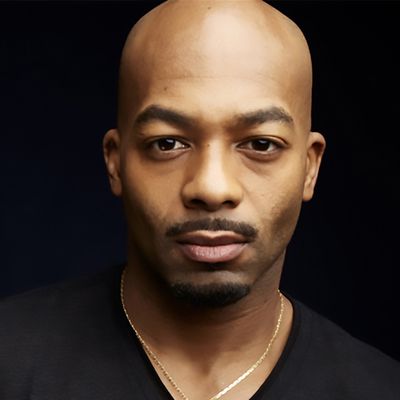
In this episode, Jose speaks to Brandon Victor Dixon about his work in MacGyver The Musical. The Tony, Emmy, and Grammy-nominated artist talks about his work on stage, on screen, and as a producer. He also shares his advice for young people of color who want to be in the performing arts... Read More
From the show: Token Theatre Friends
Guests
Featured Shows
About
In this episode, Jose speaks to Brandon Victor Dixon about his work in MacGyver The Musical. The Tony, Emmy, and Grammy-nominated artist talks about his work on stage, on screen, and as a producer. He also shares his advice for young people of color who want to be in the performing arts.
Transcript
This transcript was automatically generated and might contain errors.
[0:11] Brandon Victor Dixon: Welcome to Token Theatre Friends. I'm dying to know about, you know, MacGyver the Musical. I have to ask, when you were, you know, when the show was on originally, did you ever try to do any of the MacGyver gadgets and like come up with like, I don't know, like something out of bubblegum sticks and like a plant?
[0:34] Brandon Victor Dixon: Oh yeah, absolutely. You know, I was a big MacGyver fan. It was my dad's favorite show, so I would watch it with him in the evenings growing up. I mean, I never, you know, for me it was always like pretend. It was like, oh, we'll take the paper clip and do this, and we're gonna unlock the thing. You know, I never actually built engineered gadgets. But, you know, it's like I'm gonna go MacGyver, like MacGyver, we're gonna, yeah, it was always that.
[1:01] Brandon Victor Dixon: You came on to the project of recording a cast recording for the musical for a friend of yours who is no longer with us, right? So how was it to do the thing that you had talked with your friend originally about? Like, were you thinking about your friend in the recording studio? Is your performance in the cast album kind of like a, you know, head's up to you, my friend?
[1:25] Brandon Victor Dixon: Absolutely, you know, my support of the project is, I mean, certainly I have a love for MacGyver and a love for the property and what can be done with it, but it's really because it's a dream of my friend and his partner and friend Lee, and, you know, my continued support of the project is an homage to Steven Gluckster.
[1:50] Jose: That's really beautiful. Although there was a very short-lived, I think, reboot of MacGyver, a lot of people probably don't know.
[2:00] Brandon Victor Dixon: It's still going.
[2:02] Jose: I think it ended in 2021.
[2:04] Brandon Victor Dixon: Oh wow.
[2:05] Jose: It's like an online campaign to keep it going for another season, I think.
[2:10] Brandon Victor Dixon: Oh wow. I hope they made it happen then. But a lot of people, you know, MacGyver. A lot of people don't know exactly what the MacGyver deal is, what the MacGyver aesthetic is. So, like if you're thinking about maybe people who were way too young to know anything about the original show and have no idea like that the reboot, you know, happened and it's still trying to be made. How would you explain what MacGyver does to someone who doesn't know anything about MacGyver?
[2:38] Brandon Victor Dixon: I would say he's MacGyver is Batman without the cape and cowl. Like he, in the same way that Batman has no powers, but he uses his brain and engineering ingenuity to craft a way to solve problems and help people. That's what MacGyver does. You know, they would call MacGyver in for all kinds of things, whether it was military related or whether it was like archaeologically related, and MacGyver would come in and find a way without guns to take down the bad guys and to save and help people.
[3:13] Jose: As I hope you don't find this like as a grandiose question for me to ask, but as someone who's a performer on stage television, you know, every medium basically, you're also a producer. Are you kind of like a MacGyver in the performing arts?
[3:29] Brandon Victor Dixon: I would, I wouldn't, yeah, I've never thought about that, and that's a fairly apt comparison, but I don't think my skills are MacGyver level yet. But I aspire. I aspire, absolutely.
[3:43] Jose: Can you talk a little bit about wearing all these different hats? Does the Brandon who does Jesus Christ Superstar Live on NBC, for instance, think differently than the Brandon who's a producer who's saying, let's do this, let's not do this? Is it different than the Brandon who then does a play?
[4:02] Brandon Victor Dixon: Uh, or are just basically the same person and just like trying to figure out all these different paths that you want to take?
[4:09] Brandon Victor Dixon: Yeah, the same person applying the same kind of deductive skills to different situations with different levels of influence and power. You know, I mean, the producing is really just grew out of an effort to gain further knowledge and control over what I'm doing. You know, initially you want to have mastery over your words, and then you want mastery over your words and your notes, and then you want mastery over the scene, over the act, over the content. What's the show about? What are we trying to say with this show?
[4:42] Brandon Victor Dixon: Either what do we try to say different about these characters in the story, or what are we trying to say to the world through the story of these characters, you know? And all right. Well, now it's like I, when we tell the story, I want to have this effect, and it would be great if the lights could do this to me, or if I could do that. It's like, oh well, we can't do that because we don't have the right light setup, or we can do that because it costs this, or a cost, you know. So then you start to say, okay, well, how do I make sure we have that? Or we don't have, and so that's how you get into the producing aspects of it and finding other ways to create the storytelling, energy exchange experience between you and the audience.
[5:19] Brandon Victor Dixon: You know, it's just about finding more ways to have a greater effect on that. And you know, it is a business as well, so finding ways to make sure that the creative input that you put out into the world continues to generate income for yourself and all those who are part of that creative institution.
[5:36] Jose: Have you found that your instincts as a producer have shifted or have changed in any way since 2020 basically when we encountered not only the ongoing pandemic, but also George Floyd was murdered? And you know, the entertainment industry made all these promises about what was going to happen to people of color, to black and brown people in every medium. And yet so many promises I would say haven't been kept. So have you shifted in any way from what you want and what you would prefer to produce than you thought or where you were doing, you know, three years ago?
[6:16] Brandon Victor Dixon: No. You know, my kind of the alignment of the kinds of things I like to perform in and the kinds of things that I look to help produce or help bring into the world, they remain pretty consistent and those values I find as crucial now as they were before these conversations. And most of the time, you know, my goal really, my efforts as an artist as a human being are to expand the consciousness of myself and everyone around me, to engage in work that can do that, and to tell stories that can do that in one way, shape, or form.
[6:53] Brandon Victor Dixon: And so, you know, those are things I continue to be drawn to and the things I continue to pursue. You know, I don't, you know, I think I also think being on the producing side, I have, I think I look at these things through a greater variety of perspectives than some of my colleagues do or have at different times. Because, you know, I found all the conversations that surrounded kind of diversity, equity, and inclusion in our business to be, I think it's taken some time for them to find their focus and to find their perspective.
[7:34] Brandon Victor Dixon: And I think sometimes even within that conversation, we conflate certain issues that shouldn't be conflated, and we also misunderstand where the power structures in our business lie. I think another thing is, you know, a lot of the times when we talk about theater, we only think about Broadway. And we also think of Broadway like it's a single company. Like we work for Broadway Incorporated, and they've got a board of governors and a human resource department, and you know, and you know, you all need to do this and you all need to change that. And that's not what it is.
[8:13] Brandon Victor Dixon: It's a geographical location where a concentration of resources that have to do with live entertainment have gathered over time. And those resources have been honed and developed in a certain way over time to create an audience, and that audience is relatively specific. It's expanded and morphed in the last 10 to 15 years to become more tourist and more commercial, but it's a very mainstream, broad audience. It's a very mainstream, broad business, and economically it's also structured in that way.
[8:46] Brandon Victor Dixon: So the way it's structured prevents a lot of depth and diversity, even amongst the homogenous, you know, we use the white work. Even that work's not highly deep and diverse. It's commercial properties. You're looking for, because of the cost of theater, most producers are looking to find, maximize their buck in ways that they can find built-in properties, built-in audiences, and convert those things.
[9:13] Brandon Victor Dixon: And so, you know, for me, the conversation about diversity, equity, and inclusion needs to take place primarily on the creative side. The idea that even in these relatively homogenous or commercial shows with, you know, backgrounds that aren't necessarily highly diversified, the idea that those things can only be created by certain groups of creatives is a falsehood. And also, you know, all of us as performers of color, 90% of us, we are educated in these institutions, in these mediums, in these cultural lanes, as well as the variety of others that we can bring.
[9:54] Brandon Victor Dixon: So it's like, so I think definitely on a technical level, on a creative level, that diversity inclusion needs to be maximized. When you're talking about the content of the shows, you know, a reality that performers have to embrace is that not everything belongs on Broadway. Broadway is not the audience for everything, for every live piece of entertainment. And so if we want to build and expand theater and live entertainment opportunities, we also have to recognize that our dollars are not only located here, our dollars are located across the country.
[10:30] Brandon Victor Dixon: And so we have to invest in supporting the live entertainment networks in these different towns and these different cities where our communities are. We have to think about the kind of theater, the kind of live entertainment that other communities want to see, the kinds of sensibilities, entertainment sensibilities that other communities work with. Because Broadway's a fairly niche sensibility, a niche way of telling stories.
[10:56] Brandon Victor Dixon: And so, you know, which is why you kind of have to break it up when you're trying to bring in younger audiences. You gotta, you know, so I think, you know, there is there's very limited, I think there's there's a very limited perspective oftentimes when we talk about these things and we need to expand our thinking about the business of theater when it comes to all these questions.
[11:20] Brandon Victor Dixon: Even in terms of access, you know, like you doing something like MacGyver for instance or doing something like Jesus Christ Superstar, you're bringing theater not only to the states, you're bringing theater all over the world. So can you talk a little bit more about expanding access in terms of not only doing theater that people have to go sit in a specific geographic place to be in because something like MacGyver for instance, like I left New York about a year and a half ago, something like MacGyver just like brought me so much joy. You know, I just smile from ear to ear listening to the work that I did. And that's for me, it's theater.
[11:57] Brandon Victor Dixon: Absolutely again, it's about that live engagement. And even if that live engagement is a pre-taped live musical event on television that gets broadcast into people's homes, there is still an element of live engagement there.
[12:16] Brandon Victor Dixon: And I think that that is that is the thing we have to think about. You're looking to engage people, looking to engage communities as the entertainment medium is changing and as media is changing and changes how we uh how we intake content. Um, but you know, being able to take a show like MacGyver and imagine it not in a traditional proscenium setting, but in a way that it can travel around the country and get into different spaces to get to regular people. You know, one of the coolest things about the MacGyver show for me is that you know, you know, before the show starts, they announce that the lead actor playing MacGyver can't make it to the show, but the show must go on. And so they get three or four volunteers from the audience, and they all have to dance something, sing something, and act something, and then the audience by applause decides who's gonna play MacGyver that night.
And then that cast that that audience member joins the cast and goes and does the show, you know, just a very unique way into the MacGyver model, but also into a model of doing an immersive kind of musical theater performance. And that's that's a kind of that's a great thing. Being able to take a story like Jesus Christ Superstar, which is kind of a global property, but to imagine it with these artists in this way and to beam that into living rooms across the world, you know, that is um that's a special and unique thing. I think it's something, you know, after that night or that night, you know, Lynn Manuel Miranda tweeted, he was like, like what a special thing it is that we we're all doing this at the same time, sharing this experience with one another. And that's that's what you look for, right? That's the power of art. A poem, a play, a piece of music, an album can transform a generation in a moment. Absolutely.
[14:07] Brandon Victor Dixon: I have two questions about the potential new MacArthur, not the potential, like the real new MacGyver epic performance. Like, first, I have a very silly question. Like, if you got to have any of your artist friends play MacGyver, who would you love to see play MacGyver at some point? Because I was like, Roger McDonald comes to performance and she's selected as MacGyver, I would love to be in the audience. Audrey would be a tremendous MacGyver. Wouldn't she? She would. I'd also I'd like to see Ann Lee Ashford play MacGyver. Oh, that'd be like a very, very funny MacGyver. Okay, I hope you're gonna make it happen some point then. But now for the more serious question, I guess. This, you know, the beautiful thing about this potential MacGyver and getting someone new to play the part of every performance, is also that you're opening the door for people who maybe never thought that something like this could be possible for them.
So as someone who actually has an award named after them for excellence in high school theater, why would you advise people who are in high school who maybe don't know that or who have been told historically that they can't be artists, that they can't be performers? How would you challenge that? How would you tell them you're welcome? Like we want you here.
[15:31] Brandon Victor Dixon: I would tell them the only thing that matters is if they can see it for themselves. You know, growing up, I was regularly told about the impracticality of my goals and my desires, but they remain fixed in my brain. Um, so I never I I never doubted the possibility, and that's un that's I guarantee you that is uh part of the reason why I was able to manifest it. Um I saw this clip from Eddie Murphy the other day. He was like, he was, and look, there this is relative, but the way he said it actually really did resonate for me. Because he was like, he's like, he's like, if you can imagine it, if you can see it, if you can picture the you it really, you really can make it happen. He was like, he's like, think of Attack of the Killer Green Tomatoes, Sharknado, some of the stupidest things you've ever seen.
He's like, but somebody saw it and kept seeing it and kept pitching it and kept going, and and they made it. And the only way something that done gets made is because somebody can see it and they can believe it and they're willing to pursue it. And I thought that was absolutely perfect. And it's uh, and so I you know, for me, I see it, see it for yourself and put yourself in the environments where even a percentage of it can become true, because that percentage will grow the more you continue to do it. So to say the 80s territory, basically, like field of dreams, and you build it, they won't come, right? If you build it in your mind, it should happen. If you build it, well, if you don't build it, they can't and they won't. How about that? So build it, it will create the possibility. And thank you for reminding me of the killer tomatoes, by the way. I forgot about that. You know, I I know what I'm doing later tonight.
[17:22] Brandon Victor Dixon: Um I would love to hear you talk a little bit about because you're all ready to do this inspirational work with the VR Foundation. Can you talk a little bit about what the foundation is, how people can become involved, and what your goals are? Uh yes, the so the We Are Foundation, uh, you know, our mission is to use the connective power of the arts to bridge the gaps between communities by creating access and amplifying voices that emphasize our shared humanity. Uh, you know, the organization was uh created during the the kind of the last general election um in order to tie primarily like lower income disenfranchised communities uh more closely to the power of their vote and really more than that the power of their ability to affect change in their local communities, because really government um is local and um and community is local, and it's really on that level that that's don't on that level is the only place in which we can really affect real change.
Um and so you know, for us it's it's about creating initiatives uh annually that can engage the community and tie them more closely to the power that we have as individuals and as a collective on the ground level. Um primarily it's about trying to spread kind of this artistic philosophy that I try to breed in in my work uh about finding ways to connect people so that we can expand our consciousness as a society. Because that's that's that's why we are here. We are here to to to live and love amongst one another, and for that living and that loving to to grow and expand who we are and who we can be.
[19:05] Brandon Victor Dixon: That's really beautiful. It's probably impossible to pick just one, but was there one or were there many instances of um examples of art that touched you in a way that you knew that this is what you had to do? Um I mean, there are I mean I'm trying to think of one that really encapsulates. Um look, I will I will choose uh the incident and the incidents surrounding it. Uh, you know, when we when I was doing Hamilton and the vice president elect at the time, Mike Pence came to to see the show. Um, and you know, we we it was after a fairly contentious, intense election, um, you know, and we made a statement from the uh from the stage as a cast just about our our hopes for how we can going forward put away some of the vitriol and the contentious nature of things and remember as an example that we are all in this room tonight, a diverse group of people in the audience and a very diverse group of people on stage telling an American story about our struggles, but also our successes and what we can achieve together through that push and pull.
And I, you know, I I think that there is a lot that that show has done to get people to open themselves up a bit more to the complexity of our American story and the nuance of our American story, and particularly for young people to start to use that to engage themselves about to strip away the kind of the venerated mythology of our founders and re and reveal them as people with gifts and flaws, uh striving to forge uh the future that they think is best for themselves and their loved ones, and and reminding using that art to remind people that we have that power too. It's not it's not something that these great men dreamed of and and made happen and they created this perfect thing. No regular people coming together to fight to forge a thing that wasn't perfect then and remains imperfect. But if we can strive for perfection amongst ourselves, then that thing can grow and evolve.
[21:39] Brandon Victor Dixon: You know, that's I'll I'll use that as so far in your life and your career, what are the best uh at least for you methods of self-care that you have discovered that you might want to share with our audience? Uh being able to take time for oneself and travel, those are the I think those are the things just changing the environment and getting out into nature, uh uh and unplugging from the general stimuli that you're accustomed to. Those are the things that I find the most restorative.
[22:13] Jose: So let's bring it back to MacGyver then. Your song "Drink, Drink, Drink" is hilarious and beautifully performed, obviously. And there are two things about it that I was like, I have to ask you this. First of all, is although it's a very funny song, it's also a celebration of life and how we're not here for a you know for a long time, right? Like we're not here, no one knows how long we're gonna be here for. So I wonder when you were uh when you were recording that when you were saying that how do you keep the humor and the comedy aspect with the lyrics that in so many ways can be very, very, very, very sad.
[22:54] Brandon Victor Dixon: Uh and let's let's start with that. Uh well, you know, I I think uh uh the our our composer, Peter Lurie, uh has an ability to imbue the music and the musical stylings with the energy and the color that you need while also making sure that the storytelling is sophisticated enough to carry those layers. And so, you know, I I I'm gonna say that it's uh it's a gift of the writing. I love it. That's great. And then the next question what's your place of choice? What's mine? Poison of whiskey, loggable in 16 years. That's the way to go. I love it. Thank you so much.
[23:37] Jose: Uh so uh, Brandon, would you like to tell our viewers and our listeners where they can find the MacGyver uh cast recording and if there's anything else that people wherever they are in the world can see you performing next?
[23:50] Brandon Victor Dixon: Uh all information on MacGyver the Musical and the cast album can be found at MacGyver.com backslash musical. Uh and you can catch up with me and all the things that I'm doing on the socials at Brandon V Dixon. Thank you so much. This has been a true pleasure. And I hope you get to travel somewhere fun and natural and beautiful soon.
[24:10] Brandon Victor Dixon: I hope so as well.
© Broadway Podcast Network, All Rights Reserved