

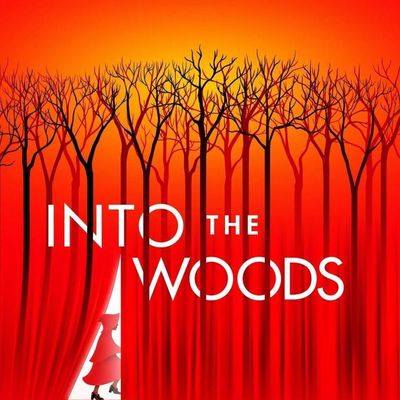
In this episode, Jose speaks to two of the artists behind Epic Players' production of Into the Woods. Music Director Shane Dittmar and Executive & Artistic Director Aubrie Therrien talk about the company's mission of providing opportunities for neurodivergent and disabled people, as well as the joys and challenges of taking on a show as beloved as Woods... Read More
From the show: Token Theatre Friends
Featured Shows
About
In this episode, Jose speaks to two of the artists behind Epic Players' production of Into the Woods. Music Director Shane Dittmar and Executive & Artistic Director Aubrie Therrien talk about the company's mission of providing opportunities for neurodivergent and disabled people, as well as the joys and challenges of taking on a show as beloved as Woods.
Transcript
This transcript was automatically generated and might contain errors.
[0:11] Aubrie Therrien and Shane Dittmar: Welcome to Token Theatre Friends. I'm very happy to be talking to both of you today.
[0:22] Aubrie Therrien: So just to get started for people who have no idea what Into the Woods is about, can you tell us a little bit about what the show is? So there's this guy, I'm not sure if you heard of him. His name is Stephen Sondheim. And he wrote, uh, with James Lapine a, uh, a musical in the, I guess, 80s is the original production. 87 is the thing in my head. But what we have, it's a musical retelling of some Grimms Brothers fairy tales. Um, so Cinderella and, uh, what else is there? Little Red Riding Hood, Jack and the Beanstalk. Uh, there's yes, Rapunzel. And all of these characters are put in this same world. They're all neighbors with one another. And so it is a story about what happens when this Baker and his wife have to reverse this curse in order to be able to have a child, and they run into all these other fairy tale creatures along the way and all these other characters, and it's about what happens when all of their paths intersect and what it means to make wishes and what happens when your wishes come true and morality and what it means to be in a story. It's a very cool show.
[1:38] Aubrie Therrien: And I will take our production. So Epic is a neuro-inclusive theater company. So that means we work with artists who identify as neurodivergent, um, or having any other disabilities. Uh, and we, uh, create shows together and productions that can elevate their work to a broader audience so people can see really the talents of this community, and that if you are born with a disability, you can also be born with a disability and love to perform and be extremely talented. Both of those things can coexist. Uh, and that's what we try to do, show this talent and put on professional performances and give our players the opportunity to play roles that maybe would not be accessible to them or offered to them would they be auditioning for another theater company?
Um, there are 28 humans in the cast, which are so many humans, and but they are all amazing. And most of I would say 85% of our cast identifies as neurodivergent. Um, so either autistic or living with another developmental disability or identifying as neurodivergent in some way. And also we have representatives from the blind and low vision community, representatives from the deaf and hard of hearing community, uh, and also various other communities, LGBTQ, non-binary, um, people of color. I mean, this is the most inclusive production we've ever done at Epic. And we are extremely proud of that and what that says about the work and Into the Woods and how it highlights the kind of human condition within the text, uh, really makes that very clear, I think, with the performers we have in place.
[3:27] Aubrie Therrien: So I am very proud of that and love watching our performance every night. The show itself, the book of the show is very much about the importance of creating community when you feel that you're isolated. So, can you talk a little bit about how in your production and, you know, doing this with this ensemble and this incredible, uh, company of people that you're doing? How does that parallel the, you know, the intention I guess behind the show, which is like reminders that no one is alone?
[3:56] Shane Dittmar: Yeah, I'm so glad you said that because that is, you know, what we tell our cast all the time is that this show, especially act two, is all about finding your found family, you know, your community of people. And I think that is definitely, uh, a theme that our players live with daily, uh, in terms of who are their found community, who are their found advocates, um, and it is something that really resonates with them. And you can see that, you know, in the performance, especially when we get to that number, "No One is Alone." And you see four different actors, all who identify as neurodivergent from all different walks of life singing this song together and having found, you know, this chosen community.
I think you'd even see that more in the number "No More," um, when the Baker makes a choice to say, "No more of this, I am going to make a different decision and decide to join the community," which maybe wasn't a community he initially wanted to belong to. And, you know, having a disability, it's the largest minority of humans in the world, and also a minority you can join at any time. So I think that's also very telling in the text.
[5:13] Shane Dittmar: Yeah, I was just gonna add to that. I think from my experience, I can say that living with a disability can feel like a very isolating experience if you go through things like, uh, like K-12 public education with a disability, for example. Um, a lot of the times you're in these pull-out kinds of classes, getting your IEP services, and it's just you, or it's just you and the three other students who have a disability like yours at the school. And then you're trying to integrate into these other communities. And so this idea of a chosen and found family, I think is so powerful in that what brings our predominantly disabled cast together is the choice to be doing storytelling and to be doing theater.
And then I think also to add on to what Aubrie said about "No More" and about the power of it choosing to embrace the community is some of the communities we end up in are things we choose, like places we move ourselves or groups we join or auditioning for a musical. And some of the things that get us into community are not things we choose, things like being born with a disability or developing a disability, or having your wife or mother killed by a giant, for example. And so it also tells such a powerful story that I think is really, it resonates with me as a person who has struggled off and on throughout my life with how actively I wanted to embrace community around disability to have this story about exploring sort of that and about choosing to join with people with whom you have something in common to make something good and make something better, and about the difficult circumstances that can lead you to be in a community and also the joy and the benefit and the positive that can come out of embracing the community that you find yourself being a part of.
[7:29] Aubrie Therrien: Shane, I want you to get as nerdy as you want for this question, because I can imagine that for a music director, getting an opportunity to work on a Sondheim score is like one of those "I wish" moments, right? So can you talk about the challenges and also the joys, I'm assuming, of getting to work on a score as beautiful as this one?
[7:49] Shane Dittmar: Absolutely. So I absolutely love working on this score. It is gorgeous, it is so rich and so full. And then 72 is the bows. So there are so many things going on in this piece of music. It is, most of the, a vast majority of those cues have at least one person singing in them. Almost all the ones that have one person singing have more than one person singing. What I think is really special about this score too is that when you go to approach something musically and say, "We're telling fairy tales," you have to create a world of magic where magic is real, where magic is every day, where magical beans can cause giants, and no one's like, "That doesn't make sense to me." And I think that in the way that the score is composed, it does such a good job of that by playing with what we expect out of tonalities and what we expect out of the way that keys work and what we expect out of the way that chords progress.
While still being incredibly singable and incredibly listenable, it's not atonal, it's not challenging. I mean, it's challenging, but it's not challenging to hear. It is challenging to sing and sing well. And we spent the first month of our rehearsal process just learning music with the cast, um, and going through and making sure we all knew when to sing, what to sing, how long to sing, and then we've been reviewing those things every rehearsal since then. But we spent the first month of our rehearsal process exclusively on that. And our cast has done an amazing job of internalizing all of this music and all of these moments and all of these sounds, and allowing them to kind of extend the storytelling, and it's so well written that it lends itself to that, and it is absolutely without question a hard score to sing and to think through and to understand.
But our cast has spent the time with it to live in it and make it feel authentic to the characters that they're playing, and that has been a real joy to get to kind of shepherd that process along to the point where you're watching someone go through these moments and experience things and figure out grief or figure out morality and not watching them count for one, two, three, four, one, two, three, one, two, three, one, two, one, two, four. Like it could be that. For me, it is that. But our cast, it's been so nice to get to see them move away from just really having to think about when to sing. The score has really just allowed them to express these incredibly high emotions really, really elegantly and beautifully.
[11:09] Aubrie Therrien: Think about this production specifically. What have you, you know, Into the Woods is so beloved and so known. And there's a movie version, there's been many revivals. There was a revival on Broadway recently, even. So what have you learned about the musical specifically by doing this production? Have you discovered moments that suddenly you're like, "Oh wow, I never noticed that about the show before?"
[11:30] Shane Dittmar: Oh yeah. I mean, I have. But, um, I've seen the show several times, you know, listened to the music. I saw the Broadway revival a million times and just loved it. Um, but I think there are so many nuances that our actors bring to the table that I think are sometimes lost. That I have discovered through this process. I think like a very even tiny, tiny one that really has, you know, is not full of meaning or anything, is there's one line the Baker sings. Um, Baker and Baker's wife sing little gurgles in the first, in the opening of act two, they're talking to their baby, and you see, and they sing little gurgles, and the very next line is, "Where's the cheesecloth?" And I'm like, "Why does he say where's the cheesecloth?"
And then we've like now fit into with our production that the baby basically spits up on the Baker and he has to find the cheesecloth and find it and wipe it off. So that's just these, you know, little moments. You're like, "Why did that happen?" I think another one is moments in the woods. Um, that number, I think we've found so many moments, no pun intended, of, you know, woods, W-O-O-D-S versus W-O-U-L-D-S.
[12:48] Aubrie Therrien: You know, what are the woods and what are the woods for the baker's wife? And I think I'm really proud that our actress Carly has really found these levels within the baker's wife. I think if the baker's wife has done too one-dimensional, you leave the show going, she deserved to die. Uh, cheated on her space. Spoiler alert. Yep. But I think with our show, Carly and Max, Max who plays the baker, have found this really complex relationship where it's not this naggy couple. It's a couple who's gone through a lot of trauma together. Um, whether it's a giant, whether it's infertility, whether it's um seeing things differently, especially when we cast neurodivergent actors in roles. You know, Max identifies as autistic, he's neurodivergent, he plays the baker, and it opens up a whole new level within the text.
When you see the baker really unwilling to move or change, or just struggling, having a hard time doing it, it parallels with maybe what he struggles with on a daily basis with his autism, you know, is seeing the gray through the black and white. And I think that comes out a lot in the baker. So you don't see this, you know, nagging husband patriarchy, oh, you stay here. You see someone who’s really trying to process the gray, trying to change, trying to be the man that Baker's wife wants him to be. And I think we've found a lot of those moments, those human moments within the text that I didn't see before when I've seen this production or listened to this score. Um, I think also when you have a uh deaf actor as Cinderella's prince, you find so many other like little hidden nuggets within the text that Sam plays physically that are so uh mind blowing and show stubborn. And it really is uh a pleasure to watch. Shane, any nuggets for you?
[14:59] Shane Dittmar: Oh, everything you said. I think one of the things I I've music directed the show before and also am very familiar with like the recent production, and I actually did some accessibility consulting on the tour that's out right now. I think what is so fascinating to me about our production is this can be and often is just the stereotypical Disney princess version of Cinderella, the Disney princess version of Rapunzel, the evil, scary version of which it is a show that I've always loved because it explores the dimensions behind the one dimensional characters that fairy tales are about. But I think by doing it with the cast that we have, one of the dimensions we've been able to explore is the assumptions we make about people being able by default, people being cis by default, people being white by default.
Um, our cast is predominantly a lot of our cast are not one or more of those things. Several of them are not many of those things. Um, it is just so special to dig into. Like I love the work that uh Jordan who plays Cinderella has done on creating an empowered Cinderella with agency who is kind of snarky sometimes. I love yeah, it's incredible. Um, that's not a choice people make when they play Cinderella because we have this one image of what a Cinderella is. Our witch is also my writing partner is Sarah Kaufman, and they are a non-binary person and lean into that as elements of how we present the witch and play with gender and play with the idea of parenthood of the motherhood, the relationship that they have with Rapunzel.
It's I think there's so I've never gotten more out of this show than I have doing it with this company of actors because they all have such unique and underrepresented lived experiences to add to these characters. And we're not uh we changed some pronouns. We're not rewriting the show, but it's a different show about different, more interesting people just because we cast different, more interesting people in it.
[17:56] Aubrie Therrien: So how did theater become the choice for each of you to pursue in your lives?
[18:03] Shane Dittmar: I don't have a great story. When I was younger, I wanted to marry Jonathan Taylor Thomas, and I thought, you know what? I guess I need to be an actor because that's the only way I'm gonna get to him. And that was my first jump into it.
[18:23] Aubrie Therrien: Um, you get to meet him at all?
[18:26] Shane Dittmar: No, not yet, but I'm now I'm married, but if you're if you're listening, JTT, the flame still burns. Big players nyc.org. Contact us. But then, you know, I got into it and I was like, oh well, oh I'm good at this. This is fun and brings me joy, and I like telling stories and I like making people laugh and feel things. Um, and I think in terms of how I got into Epic, I was an actor for a really long time and I started getting, you know, I never did acting because I wanted attention or I wanted self-validation. I told you I wanted to marry Jonathan Taylor Thomas.
[19:05] Shane Dittmar: You wanted one specific person's attention.
[19:07] Aubrie Therrien: One very shoot. So it really like the world of acting when you're not really into that can be very like, ooh, I don't want to be around all of this. Everybody else's anxiety. So uh what rediscovered my love of the theater was seeing the joy that it and the joy and the confidence building in the life affirming transferable skills that it brings to people who maybe have not accessed this before. You know, it's a privilege to be able to access this. And it is also an incredibly scary thing to do. And I think when you when you take someone who's been told all their life they can't, and you say, no, you can, and you also can do it better than all of these people, and you believe in them, it really is a um snowball effect to their life and also a mirror up to society.
And I've seen that with Epic and I don't want to really do theater with anybody else but our community. I think we've created a really uh wonderful home and um I feel really lucky to be a part of it. So my story isn't that great. Shane, yours.
[20:29] Shane Dittmar: My story is basically exactly what Aubrey just said. I wanted to marry Jonathan Taylor T no. Uh, I when I was in school, I I've been musical since before I can remember. I had like uh shitty pop punk band when I was in like middle school, that kind of thing. But I got into theater because uh someone told me to audition and I said no, and then like I on a whim did anyway in my uh in my sophomore year of high school. I got cast uh in Annie. I played FDR because the director at the time was like the blind kid can't walk off the front of the stage if we put them in a wheelchair. Uh literally the explanation but uh I did the show and I discovered oh I love this I love musicals I love theater I am so energized by all of the people that are around me I am gonna keep seeking out these opportunities.
I'm gonna learn how to do a jazz square and I did. Um and then I did many more jazz squares because it was high school theater. But I I it really was so empowering for me. And it it was the first place in in high school that I had a community of people that I really liked and felt like were my friends um who we bonded over the same things we all wanted to be Christian channel with when we grew up. And like it it was a thing I just kept going back for and going into more and more deeply and I realized at some point that people write the things and I was like I want to do that and I realized that music directors were a thing and that I was bad at memorizing lines and I was like I want a music direct because they won't make me memorize the lines anymore.
I can which is easier for me for some strange reason but I uh it just was I it just snowballed for me in having this place I I have been blind since I was born and I it's a very visible thing. Uh it's you can tell that I'm blind. I walk around with a big black dog that says guide dog for the blind on his back, or uh like a white stick with the red thing at the end. It's very, very obvious that I have this thing, and so like blindness is the first thing people notice about me or know about me. And I think like getting into theater was really the first time I ever felt like it wasn't the most interesting thing people knew about me or saw me do. It was it gave me this space to explore and and play with things and pursue stuff that I really cared about and connect with people on a different level about a different thing that felt like it was in my control.
And so when when Aubrey talks about creating these opportunities and the snowball effect of being involved in theater and what it does for your social skills and your interpersonal skills and your independent skills and all of the skills you build through doing this about being reliable, about having a community, about what it takes to learn lines, what it takes to manage a rehearsal schedule, what it takes to manage your life around needing to have the ability to participate, to keep yourself in the right place at the right time. It's just so many skills that that all come from it, and I I definitely grew in every area of my life when I started doing Annie, and so like when Aubrey talks about that being the benefit of Epic, I am a hundred percent confident that that is true because that is how I became the person that I am. Although like many things have improved, there's still so much more that can be done.
[24:28] Aubrie Therrien: So, in the spirit of the show, what do you wish that the field as a whole would notice and would try to improve for the better?
[24:40] Shane Dittmar: I wish, in terms of the accessibility of theater, I have I have two wishes that are sort of related. Uh my my first as an audience member, as someone who goes to as many shows as humanly possible. I wish it would occur to the producers of shows, to the people who own houses, that there are disabled people in the audience who want to see and need to see and could benefit from seeing your show, and that audience services accessibility for patrons would be of a similar level of concern as all of the other audience experience stuff.
[25:25] Shane Dittmar: It should be at least as much of a conversation about how we're going to make our shows accessible to the audiences who come who are hearing impaired or who are visually impaired or who have mobility access issues as it is to think about how long the intermission's going to be, or what's available at our concessions and what's available in our merch and where like if we're trying to design the best possible theater going experience as a producer as a house, and we're not also thinking about the experience for someone who's attending the show who may have different needs, it's you're missing an opportunity, and we as disabled audiences know that we were an afterthought, and it's clear from the way that accessibility is handled at large scale productions, at most productions, honestly, if there is accessibility at all, it is abundantly clear that it was an afterthought or that it was a thing that was added out of compliance or worries about compliance and not out of the desire to make your storytelling accessible.
[26:34] Shane Dittmar: And I think related to that is this the production and the teams that are directing and creative, the design of shows where we spend so much of our energy thinking about making things as good as they possibly can be. It's shocking how uninvolved any of the amazing designers or performers who bring a show to life, they are all remarkably not part of the conversations around making their work accessible, not asked to be involved in describing themselves or their vision for blind audiences, not communicated with as part of figuring out what the right intention is when you're interpreting an ASL. All of those sorts of things that in my experience, actors, directors, designers love to be a part of helping make those things accessible. They're just not involved because it's an afterthought for our audiences.
[27:35] Shane Dittmar: So that's the first thing. The first wish is I would love for us to be one of the communities that are actively considered when you are putting a show together, whether you're the producer, whether you are the landlord, whether you are the creative team. I think I just it's just people don't think about us as wanting to come. And then I also think we and to your point, that is the area where conversations are starting to get better. We are starting to think about those things. We're not thinking about them hard enough or early enough or consistently enough, but they're starting to be addressed.
[28:18] Shane Dittmar: The other thing is a huge systemic wish. But I wish we could build our industry in such a way that made it as possible for me or any of our cast of Into the Woods as anyone else to work professionally and to work on Broadway, to work at these high, high levels, to work in these top-tier productions. Our industry has not thought very hard about how to make sure that our performing roles, our design roles, our support roles, our music roles, our creative roles are accessible. And it's possible to do it, but we have built a system that doesn't allow for that. And that is just because we are attached to certain things happening a certain way or certain things happening at certain times. It's all arbitrary continuations of stuff that has worked for some people, and it hurts a lot of people in a lot of different ways for us to run a business that way, for us to run a theater industry that way.
[29:33] Shane Dittmar: But one of the things it does is shut the door on most disabled people from working in spaces where they haven't been able to completely design the job for a disabled person.
[29:49] Aubrie Therrien: Yeah, I would agree with all that, and also that, you know, I think you're absolutely right, Shane. This is an employment avenue for people with disabilities. I mean, people with disabilities are the largest group of unemployed people in the world. And when they are employed, they're employed in like labor jobs or janitorial positions, which is not fair. And this is a competitive field for anybody. You know, that is clear, but you should have some kind of access to it. So I think it even starts in like higher education. You know, college theater education is by design ableist and toxic. I think it is that for anybody going through a BFA or MFA program, there are really, you know, toxic facets of it. And I think it needs to be changed one thousand percent and needs to be more accessible to the disabled community because they want the training, you know, they want the training, they need to have the access to do so.
[30:54] Aubrie Therrien: And then I think you'll reap a lot of rewards. My hope is that every theater is an inclusive one. That we are no longer a niche thing, that every company, regardless of somebody's identity or disability, would consider that person to play these iconic roles, not necessarily a role written for a disabled person. And I think right now in film and TV, you know, it isn't really getting better. I mean, we want it to, I will say on the other side of the fact of the coin, I receive casting calls all the time. Casting agencies reach out to me, agents reach out to me to help cast their projects now, which is wonderful because I want Epic to be that resource. So we can say, yes, yes, you can cast authentically, and we can help you and we will help you do that if it means kind of changing those statistics.
[31:50] Aubrie Therrien: But right now in film and television, only 2% of the roles written for characters out there are disabled characters, and of that 2%, 94% of those roles are played by non-disabled people pretending to be disabled. So I do think we have a very long way to go. I am hopeful because I do think it is changing, but I think Shane is right. We need to think about these things beforehand. It starts with little things like how can you make your auditions more accessible? You can simply say, what are your support needs? Is there anything we need to know about you before you come in? Anything we can do to make you this process a bit more comfortable for you. What can we have here? You know, just that simple question goes a long way instead of somebody constantly having to self-advocate for themselves, which can be really frustrating and exhausting.
[32:46] Aubrie Therrien: So yeah, my hope is that all theaters will do this eventually, and we won't even have this discussion anymore. And we Epic's rehearsal process, right? Epic's process is designed through that universal lens. So we do ask those questions of the people that are coming in. We have tried to build our schedules in a way that don't require a toxic level of commitment from our cast and our creatives. We have tried to build our rehearsal rooms in such a way that allow for people who need to take breaks because they're sensorly overstimulated or just have to take breaks. We try to build that stuff in, and we are able to do a professional level production of a Stephen Sondheim show at a high quality in Manhattan. It's not impossible to both include people and support people and not be toxic and have a high quality show. They can both happen, but only if you start by looking at the system you're trying to use and not the outcome you're trying to get.
[33:52] Shane Dittmar: Like it really, if you start by thinking, oh well, it needs to be this good, and then here's what we need to make it this good, you are going to create ableist and exclusive systems because you probably are not aware enough of the people who share the planet with you to imagine their ability.
[34:15] Shane Dittmar: Although Into the Woods famously features so many characters of all these fairy tales that everyone knows and loves. Running around into the woods and competing with the witch to wreak havoc on this land or assisting in some way. I for me, I how are there no dragons in this thing? How are there zero dragons? Where are the dragons? An official letter of complaint.
[35:31] Shane Dittmar: You do have a project about dragons coming up soon, right?
[35:34] Shane Dittmar: Uh yes. I do. So partly because of the lack of dragons in Into the Woods. That's not really true. But uh no, but uh Sarah Kaufman who plays the witch and I have been we bonded over theater accessibility when we started writing together, and we are working on a fantasy D&D inspired podcast musical that is you know part queer enemies to friends to lovers, romance and part epic adventure, and does in fact feature at least one dragon. And that's called The Reality Shaper, and we've been working on that and made a pilot of it last year with some friends and just continuing to explore ways that we can make different kinds of inclusive theater podcast being one that I like because I don't miss anything because it's all sounds.
[36:35] Shane Dittmar: And there's probably gonna be a dragon in the piece that Sarah and I are writing for Epic later this year that'll be a TYA show that'll go out to schools in the New York City area next season. So I'm trying to fix the representation problem one dragon at a time. And that's my personal goal as a creative. Also, like disabled people and non-binary people, because we're cool too, but mostly dragons.
[37:02] Aubrie Therrien: Mostly dragons. I'm looking forward to that then. Thank you both so much for your time. Would you like to invite our audience members to come see Into the Woods?
[37:12] Aubrie Therrien: Yes, please.
[37:13] Shane Dittmar: Sure, why not? We are playing for one more week. It's a limited run. We are up this Wednesday, June 14th. That's the right date, right?
[37:23] Shane Dittmar: Yes. To Sunday, June 18th, at Art New York Theaters in the theater district in New York City. All of our shows are accessible to the blind and deaf community as well as the neurodivergent community. And it's just a great show. So please come out and see it. Sarah Bareilles sent us a little shout out. So clearly it's a good show. It's really, really extraordinary. And I think if you are a person who wants to support inclusive theater making, you should already be there. If you're a person who just wants to see a good production, you should also already be there. The show is not good for a disabled production of Into the Woods. It's just good.
© Broadway Podcast Network, All Rights Reserved