

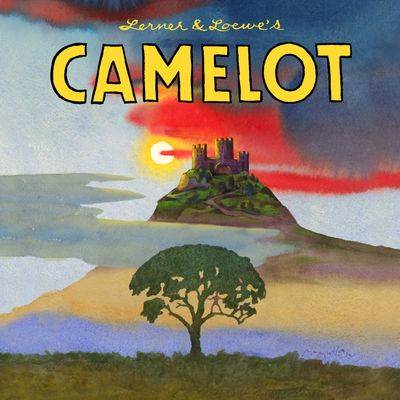
In this episode, Jose speaks to Matías De La Flor, who talks about his work in Lerner & Loewe's Camelot and getting to play a Latino Lancelot. De La Flor also shares what it was like landing his first Broadway job out of school and why he's interested in coaching actors in two languages... Read More
From the show: Token Theatre Friends
Featured Shows
About
In this episode, Jose speaks to Matías De La Flor, who talks about his work in Lerner & Loewe's Camelot and getting to play a Latino Lancelot. De La Flor also shares what it was like landing his first Broadway job out of school and why he's interested in coaching actors in two languages. Coming up on August 4th, De La Flor will join Jaime Lozano & The Familia at Lincoln Center.
Transcript
This transcript was automatically generated and might contain errors.
[0:10] Matías De La Flor: Bienvenido at Token Theatre Friends. I'm very happy to be talking to you today. We're gonna get started with the show that you're gonna be doing about a month from now with Jaime Lozano and La Familia. Can you talk a little bit about that?
[0:29] Matías De La Flor: Jose, it's a pleasure to be with you. Um, it's a really interesting story because I was doing um a week as Lancelot at Camelot. And my first night, it was a Lincoln Center gala. And it was a very kind of, you know, a big deal for the theater. It was my first night on, it was incredibly thrilling. And in the audience was Jaime and Florencia. Um, and really I had no idea who they were, they didn't know me. I'm new to the city. Um, and they were incredibly generous with me and reached out to me via social media and showed their support of a Latino Lancelot, and it was a really beautiful moment. And then from that, you know, Jaime and I and Florencia kept in touch, and Jaime talked to me about this concert at the atrium that he's doing.
And um, he had written a song about Peru, which is where I'm from, from Lima, Peru. And he sent it over to me, and I automatically was like, you're literally and figuratively speaking my language. Um, so I was very excited about the prospect of working with him, and then he offered if I would be interested in doing this concert with him on August 4th at Lincoln Center and with some incredible people that I have admired for some time. And of course, I said yes, and I'm very excited to be able to work with him and La Familia and tell these stories about, you know, what it is to be an immigrant. You know, I moved from Lima when I was five to the US and, you know, I've had my experience with my immigration and what that's been like, you know, building a new life but then also keeping your roots and how that is all balanced.
The biggest breakthrough for me was when I found that the adaptation and the new life and all these new things can actually work through my art together and have a catharsis for me, um, and then hopefully for an audience. So really, um, to be able to work with someone whose mission statement is about, you know, bringing light to immigration and not making it really a dirty word but really a word full of hope and beauty, um, it's an absolute pleasure for me, so I couldn't be more excited.
[2:48] Jose: As a singer, what's it like to go from Lerner and Loewe to Lozano?
[2:48] Matías De La Flor: I love all the elves. Yeah, oh my God, I mean, that's a great question. I think that what they share is really specific storytelling. Um, you know, Lancelot, and I speak of Lancelot specifically, um, but this also goes for my ensemble track. You know, if ever I would leave you, how could it be in springtime knowing how in spring I'm bewitched by you? So there is a rhythm, a cadence, a, you know, for me, I love all the seasons he speaks of when he speaks of her and the difference between summer and springtime and winter and fall. And then you have Jaime who's saying, like, I miss your lucuma. You know, I miss Pablito's smile. You know, I miss um the taste of home. You know, and I think that both of those have an incredible through line because that is the taste of home for that character.
And the taste of home for this character is her in springtime. You know, so for me, I always find what is the base? What is the foundation? What is the thing that I can root into? And for me, a lot of the time, it is my roots, you know, it is my culture, it is the strength and the hope and the faith that I find in those stories. So for me, really going from one to the other, I find it really is similar in a way because Lancelot is an immigrant, you know, he's a French immigrant into England who is looking to be in these rooms where these decisions are made because he believes in it and he has a faith, you know. And I think that that's the same thing when you're talking about Lozano's work, you know, when you're in a new country, you're doing what you have to do to make your dreams come true.
And that comes with challenges, but it also comes with a lot of beauty. And then you find the things that root you back, you know, and I love how much he talks about food. And for me, food has been an incredible, I mean, Peruvian cuisine is, yesab, man, is the mas bello que hay para vivir en este mundo, pero um, I just find a lot of pockets of where I can feel really at home in Jaime's work and then also in Camelot. Um, and the beautiful thing about that is that it really is about perspective, you know. So I choose to have that perspective.
[5:18] Jose: Thank you for that. And also thank you for making me crave that each. Now I'm looking like, we know what I'm salivating now. Oof. Una kuscena se vichito, man. Oof, pero que rica la comida peruana, man. I love it. I love it. I love it.
[5:32] Jose: You said that you're new to the city. So what was that experience like? Where did you come from?
[5:38] Matías De La Flor: Right. Yeah. So I was um, I was doing my undergrad in North Carolina in Winston Salem at the University of North Carolina School of the Arts and the School of Drama. Um, two years before then, I had been um in a community college. Uh, it's called Florida School of the Arts. I had done two years there, and then I did four years at UNCSA. Um, so I graduated school. I had been writing a play for uh for about a year at that point. I did a public reading of it. Um, and then after I did that reading, about three weeks later in August, I moved to the city. Um, I moved here the 13th of August. And I basically, you know, I got an apartment, I got all my stuff in a U-Haul. I drove 12 hours, it was insanely frightening and exciting and cathartic, and the ride was full of me like just thinking about the past and the future and all the things that led to this moment, you know.
I had, and then I moved, I got here and all of a sudden I was just living here and I was like, okay, all right, and then um, you know, I think my audition for Camelot was September, so it was like a month after I got here. Um, I had done a couple of other auditions. I remember one story I love is I had gone in for the Raul for the Phantom of the Opera, and right before it was in a close. We didn't know that at the time, obviously. Um, and they said you can sing, you know, sing all I ask of you, and then sing anything you want that's legit musical theater. So I said, okay, I'm gonna sing if ever I would leave you because I know Camelot is coming up, and I really want to be in Camelot. Um, so I sang it, and that was kind of like my voice to the universe saying, please bring me an audition for the show.
So I got it in September, and I did the self-tape, and you know, I felt great about it. Waited a few weeks, and then I got to go in for a callback with Bart and Kim and Adam and some of the team, and it really was a transformative experience because, you know, it was at a point in my life where I was like, you know, I was maybe like a month and a half living in New York, so I felt a bit settled, a bit like, okay, I have a base here, I'm not traveling here to do an audition. Um, and it was a lovely experience because they really gave me permission to just be vulnerable, to be in a place to not lead from my power center, but lead from my emotional center, which um, when you think of the knight in shining armor, you might not necessarily make that choice.
But the beautiful thing about them allowing me to make that choice was it made the knight in shining armor a three-dimensional person. And I think in that moment, what I felt was space, you know, space to just like stand and deliver and not have to be this person, you know. Um, and that was lovely. And that was really my introduction to New York City, and then I got the job a week later, you know. Um, so we did the workshop um where we were doing movement, and it was just this spectacular mixture of like I didn't feel like commercial theater. Everyone was telling me that I was like, I know of course it's not for profit at Lincoln Center, but it was the scale was so big that people were telling me, like, don't get used to this because this is not normal.
You know, we're doing like, it felt like we were in movement class at school, um, just knowing that we had this arc that we were building to that was gonna be this show and this production, right? But we were focusing on like how to move, how to breathe, how to send energy, how to be an ensemble, and it was a really beautiful experience. For me, coming right out of school, it was like I felt comfortable in that. We were doing Suzuki, we were doing Lecoq. I was feeling very comfortable in those situations. And then, you know, after that, I worked with Moises Kaufman on a play, Las Aventuras de Juan Planchardi did a workshop of this Venezuelan novel that's spectacular. And Moises is a genius and truly an incredible theater maker.
And I was able to assist and direct for him for a week and a half, and like the penultimate day of that, I got the call that I was gonna do it on Broadway. So it was kind of just boom, and then it was the holidays, and I was able to kind of process it all. And then we started in January. But that was my New York story, you know. I moved here and, and yeah, I got real lucky, and the stars aligned in a way.
[9:56] Jose: Yeah, that's incredible. And by the way, like Camelot's not one of the only shows that I wish that I would fly to New York City to get to see. So no me enojos en algún momento, you want to sing a little bit of Camelot for me?
[10:10] Jose: That's an amazing arrival in New York City kind of story. But you know, like going arriving there and then almost immediately getting work. Does that mean that by now do you have your favorite New York spots? Have you been able to make yourself at home? Or are you just mostly theater to home?
[10:27] Matías De La Flor: That's a great question. Um, I was able to find my way around because I think I tell a lot of artists that are coming out of school now too that like you have to really enjoy the moments when you're not working because those are the moments that feed the work. Because truly, like what the job of an actor and artist really is, storyteller is to reflect nature, right? And how can we reflect nature if we're not living in it? And for me, being here, when I before I had, you know, the 12-hour days, I was soaking it in, man. I was like, you know, I was teaching and that and I love and that's another, you know, thing I do. I was teaching. I was, you know, going around Soho, not knowing where to go, and the East Village and Washington Heights, and I live in Harlem, and you know, the upper west and the upper east, and looking at the theater here and the theater there and the water and the park, and just kind of taking it all in. And so I, and I'm a huge food guy, so all the restaurants I could try. Um, I found a lot of Peruvian restaurants that I love. I found a lovely community of people.
[11:33] Matías De La Flor: You know, am I done? No, I'm just getting started. But I feel like I got a really good taste and a really good, you know, to start to plant those roots down, you know. Um, because it's really important for me, like the notion of home. I think that's very um that's something that a lot of artists, specifically Latin artists, are always trying to um dive into is what is home, you know, especially because we come from so many different places, like so much of my family is in Peru, but then my father lives in Brazil, and my mother and my sister and her kids, and my stepfather and that side of the family, they live in Florida. So, like it's kind of like this puzzle, right? But for me, what I've noticed is home really is where I feel authentic telling stories and connecting the dots between cultures and all the things that I and that's why I again why I love food so much, because you know, Peruvian cuisine wouldn't exist without immigration.
You know, it was all about all these different cuisines coming together and building this new thing, and that's what I think as a culture, as a society, we could be doing more of. We could be seeing instead of the how this hurts us or this hurts us, you know, how how can it feed us? You know, how can it do that? And I think that for me, New York has been a beautiful place to put those dots together. Um, and yeah, I feel like, but then real quickly it got really like we're working, we're working, you know. During the preview period, it was it was rehearsal all day, shows, two show days, doing it all the time, switching, making changes, making cuts, you know. But that's and that was look, it's difficult.
This is a really difficult job, but how lucky to get to be in this room with these incredible artists. I mean, for me coming out of school, it was just the most incre it was grad school. It was grad school like this, you know what I mean? But in the profession, you know, to I I I get to understudy Jordan Donica, who has become a wonderful friend of mine. And to watch him every night like go out there and like have that like supreme faith and confidence in himself and in his voice. I mean, that's how I see him. Um, it's been an incredible lesson for me, you know, to be able to how to do that, how to actually be on Broadway. Because everyone has the dream and the thought and the hope, and I hope I get it.
I but getting it is a different story, you know, you you have to be able to find your roots, your values, your morals inside of that work, or else you'll kind of get lost, you know. And it took me a while. And then, you know, working with with Bart and with Aaron, you know, it's it's a very intimidating thing to to work with your heroes, you know. Um, to work with Philip and Andrew, you know, like I've been watching these people since I, you know, I've been listening to Philip Assue on cast albums since I was, you know, since I started liking theater when I was in high school, you know, to then suddenly be playing opposite her. You know, what that what that was like in for that week I did Lancelot to play opposite her was an incredible gift because wow, like I'll forever get to carry that in my heart and forever get to see what it was like to have that connection and intimacy and arc with you know that Lancelot and Guinevere have with Philip Assue, who I have admired, but then also who became such a dear friend, you know, and like though that was such a lovely lesson that it's like at the end of the day, we're all humans, we're all storytellers, and we're all here to like try to advance the thing.
So when it comes to New York, that's that's the roots. That's that's what I have here. You know, that's that's the lesson that this city has taught me, and it's been a beautiful thing, but it's also slapped me with that, you know what I mean? Um in the and I'm here for it, man. I'm here for the beauty, I'm here for the pain. You learn from it all.
[15:18] Jose: You just said that you started liking theater when you were in high school. So what did you want to be when you were growing up? And how did your parents take when you said voy a estoy al Petro?
[15:30] Matías De La Flor: That's such a good question. I think I wanted to be Spider-Man when I was young. Like I wanted to be Spider-Man. I like I remember I was in Peru, and every time that we would cross under a bridge, um, we would have like the rule was you hold your breath and you make a wish, right? And I would always hold my breath and be like, I just want to be Spider-Man. I just like just give me the power to be Spider-Man. And I was so into it as a kid. Um, so I feel like I always wanted to be an actor. I just had no idea that that was an option. You know what I mean? I did like, you know, theater, like I did plays, you know what I mean, when I was in middle school and elementary school. But it wasn't until my, you know, my the end of my junior year when I did a play, as you know, more of like, you know, I was like 17, 16, and I remember the reaction from the audience.
And I remember I would I didn't feel like I was doing anything. I was just kind of like like playing, you know, and the audience was so responsive and so in it. And I and there is I remember like being surprised on stage at how that was, and that was like an electricity that I had never felt. Um, and that completely changed my perspective. And I remember I was having dinner with the cast at like a Buffalo Wild Wings afterwards, um, at Pepper Pines Charter High School. And I um and I remember I was like sitting at the table and I was watching everyone just laughing and having a good time and eating, and I like slammed my hand on the table like really dramatically. And I was like, guys, I am majoring in theater.
And I just like I announced it, I proclaimed it, and everyone went, ah, and everyone just was like so happy because they all wanted me to, but I was denying it. Um, and then after that, that's when I started kind of taking it more seriously. And in that senior year, I it was about like, okay, what do I want to do? How do I want to do this? And and um, my teacher recommended I go to a community college to really like, you know, get my feet wet, see what I like, see what the path is, you know, and really do some plays, do some musicals, get into it. Um and my mom, my mom was very very into the idea. Her and my sister always kind of saw something in me that that that was, you know, that that there was a spark there.
My dad, it it took him a second, I think, to come around. Because, you know, my my dad, he's a wonderful man, and and he's and he's like really done great in his field. And like I and I really admire his business sense. And and this was kind of the opposite of that, you know. Um, especially at that time, because I wasn't aware of the business of of being an artist. I was just, I just liked acting. Um, so that's what I had to offer, you know. And and he, you know, he was he was kind of like the the other side of the argument. It was like, okay, like let's think about this, think about this, etc. And and it was, you know, not at all a bad way. It was it was a very logistical argument, and that was something that needed to be had, especially when you're thinking about building a life.
Um but I remember that he came to see me in a play my senior year, the first musical I ever did. And I think, and then after that, he never never said anything again. He was always just like, yeah, just go. You know, and that was really beautiful that it took him seeing me working, you know, um, which really tracks, and I think that's lovely. Um, and he's been incredibly supportive. My mom has been incredibly my sister, everyone in my family has just been like every because I've and I I always say it's been seven years for me since I started, and every year and every minute, just incredibly supportive and and there for me. Um so it took them a second, but once, you know, the the crazy thing really was like when I got this job for them all to be like kind of did that.
And I was like, I know, like what's happening? I don't know. I just just get on the train and smile. Like, don't do anything. Just be there. And then, you know, for my mother, the first time she saw Camelot was when I, it was my first night as Lancelot. Because she was gonna come the opening night. But, but you know, this happened, so she flew in. And, you know, she was sitting at Lincoln Center, and all of a sudden, like, you know, Lancelot has the most epic entrance, one of the most epic entrances I've ever seen in the theater, period. And she just saw me do it. And she she couldn't really describe what the experience was like. And for me, that was everything. Because, you know, one of the questions I've been really asking myself is like, what is this all for?
What are we doing this for? You know, and that goes back to the creation of work. Like, why are you making art? Is it for the sake of art or is it because you have something to say? And I think that for me, really, it's been about reflecting my community, right? And being a vessel for that and a voice for that. It's not for me, right? It has to resonate with me and come from a personal place, but I don't think that it's for me. You know, I don't make, I don't write plays for me to read them out loud in my living room, right? Um, so when I had that moment with my mother on that stage on that day, it was like a real big reality moment of like, oh, okay, this is happening. This is real. Like you're on Broadway, you're you're you're you played this role, you know, and and it was lovely.
Um, so that relationship with my parents and and and with my family has been incredible. And my sister came to see the show with her two kids, Penelope and Alex, and just to like, you know, hear them singing the songs, and like, you know, they woke me up the next day, like as they stayed with me, and they woke me up the next day singing like the lusty month of May. And it was just like beautiful, you know, like we're and and it just goes back to like that first impulse I felt when I was a junior. It was playing, right? And then people celebrating your playing. It's like that's a real job. That's a real job. It comes with a lot of logistics and it comes with a lot of business that you have to deal with and take care of and create and recreate and fail and win and feel glory and feel depression.
You feel all the spectrum of emotions. But it's just all so worth it when those kids sing, you know, and they have that little moment that I had, you know, or like I saw this incredible video of um Jaime's son like singing Camelot, like on the Camelot sign, and he tagged me in it because he's the one, like he saw me do it, you know, and like that's a young Latin kid who saw like a Latino Lancelot, and you know, and like that for me, like it's just a beautiful thing. I don't it doesn't even need to be political, you know what I mean? It's just it's just a human thing, and I think that like when we get back to those roots again, that's the best. And that's beautiful.
[22:09] Jose: Thank you for sharing that, Matías. But also, you have to tell us, you have to share with us what was that musical that your dad saw you in that blew his mind so much.
[22:18] Matías De La Flor: Oh my god, you're gonna you're gonna laugh. This is incredible that I'm talking about this. Um, it was my senior year show, which was high school musical, and I played a Troy Bolton. Um, in yeah, so I the whole nine, I was like basketballs and the start of something new, and you know, it's hilarious, man, because it all tracks like like I was a kid with my sister watching this when it was coming out on Disney Channel, and then I did it my senior year before going off to college to pursue this thing that I'm now able to do. Like, it's all such a crazy, like um, full circle thing. Um, yeah, so it was high school musical that was my grand um performance that my father saw and was like, Oh, yeah, you do it something like this. Um yeah, man, I'll never forget that. That was like my my week of being cool in in high school.
[23:08] Matías De La Flor: Everyone was like, it's pretty cool, man.
[23:10] Jose: Yeah, cool.
[23:11] Matías De La Flor: Um, yeah, that was that was it. I mean, I love high school musical, Team Sharpe forever.
[23:21] Jose: What makes your spider sense tingle when you're on stage and canoli?
[23:29] Matías De La Flor: Mistakes. Mistakes are sent from God, Steven Sondheim says, right? And anytime anything goes a little bit to the left when it should go right, that's when your sense kicks in, and that's when you're forced to be present. And I think that presence is earned, right? I think that like you have to put yourself in the position to be open and to be vulnerable, and then you can be present, right? And you can breathe and be with your partner and play the tennis match that is acting, right? But it's that is it's earned. Sometimes you go here and there, or you're, you know, you had some bad news before the show, or you know, you didn't eat enough, or you feel like your knee hurts that day, or whatever, you know, there's a million things that go on, but then when something happens, something real, not stage, something real, like you drop a prop, or the sword falls, you know, or you say a line in a way that surprises you, or your partner doesn't look at you when they usually do.
That is everything for me, you know. You know, when I'm put in that position of uncomfortability in a safe space, right? I think being uncomfortable and safe is really important to being an artist. If you can do both and you can have both, and that, and I think that's up to the director and to the team and like the space that you build inside the nucleus that is the show, right? But that's what gets me excited, man. I mean, always, right? Like, and I remember like being terrified, you know, like going on stage and like opening act two with "If Ever I Would Leave You," it's a very terrifying thing. Like that's why I was saying about Jordan, like how I admire him and his experience and how he does what he does, and I'm trying to soak it in, right?
But when it was my turn, it was it was me. I had to like, you know, walk out there and sing the song to Villapassou in front of all these people with a 30-piece orchestra. I'd never sung with an orchestra before by myself. Um, so I was doing it all for the first time in this scenario. Um, and that fear was my fuel, you know, but it really is a perspective switch. It's like a okay, I can't let it belittle me. I have to let it, you know, empower me. And that is hard. And that is something that every millisecond I had to remind myself on stage. I think that acting is about battling negative thoughts in real time. Because whenever you're doing something that's like actually new, you're like, that was stupid.
Like I shouldn't have said it that way. Like I shouldn't have said to be or not to be in that way. Like, that's not the right way to say it. It's like, but that is the right way to say it, is to say it wrong. You know, audiences don't want to be lectured, right? I had a great mentor, I have a great mentor, her name is Lisa Wolpe. She says, don't perform the text, reckon with it. And I've been really trying to get back to that because it's really difficult because when you're doing when you're in that scenario on Broadway, in this place that I found myself in, I was like, well, now's not the time to reckon. Now's the time to be good. Now's the time to perform it. Now's the time to be, you know, in a straight line.
But it's not. It's not. That's fear, you know. Um, so I remember coming off. It took me a couple shows, you know, but I remember coming off stage, I think it was the Friday night of my run, where I felt like I actually sang that song from a vulnerable place. Like really actually just speaking to Philippa and to Guinevere and to love and to duty and will and God. And that took it takes time, and it's hard to find again. Because it's like a one, it's from quote the show, it's one brief shining moment where you, you know, but then you have to go through ebbs and flows and ebbs and flows, and ding, and dun, dum, dude, you know. Um, but that's what it's all about, right? Like that brief shining moment of like, oh, I was alive, I was fully present, I was communicating and being communicated to, you know, and it was just us that existed, but there's 1200 people there too, you know. It's the thrilling roller coaster.
[27:49] Matías De La Flor: Reckoning with text is something that you have been doing with your own work as a playwright. So can you talk a little bit about Romeo Julieta Nimenius?
[27:57] Matías De La Flor: Well, Romeo Julieta Limeno really was born out of a place of I don't know what to do next. Um, I was, you know, I was uh it was a summer before my senior year. I was I get these kicks where I'm like, all right, like I gotta, I gotta like plan, I gotta do this, I gotta do that, I gotta do that. And I was like, okay, well, what have I done? What do I want to do? I want to make work for what for the Latin community, saying what? I want to talk about family and culture and food. Okay, great, have that. How do I do that? I put that to the side. And then I remember I had worked with um Jackie Alexander, who's the artistic director of the North Carolina Black Repertory Company. I done a reading with him.
Um, and I was like, I should call him, just get his thoughts. I want to be an artistic director one day. I want to do producing, I want to do this. Let me get his thoughts. I call him and I tell him my idea. I'm like, look, we have a 33.6% population of Latin people in Winston-Salem, North Carolina. There is zero art that speaks to them. Zero. Why? Right? And he was like, I've been thinking that too. And then we just had conversation conversation. I said, we should do a reading of references to Salvador Dali Make Me Hot by Jose Rivera. I love this playwright. I love that play. I've been trying to do that play forever. I was like, we could do a reading of that, or we could do this, or we could do that.
Or I had an idea to like maybe do a bilingual version of like R and J, but I don't know. And he was like, wait, that we could do that at our Shakespeare for Sunset. We could do a we could do a poll production, we could do this, blah blah blah. And I was like, okay. He's like, yeah, can you write it? Yeah, I can write it. Yeah. Uh-huh. Okay. Hang up the phone. Oh shit. I'm gonna write a play. Okay. I didn't expect that. That was like my last option that I pitched to him. I had like five other things that were already built, right? But he liked it. And then I thought, okay, well, if I want to do a thing about family and food and culture, and this cannot fit into RNJ, well, it's a family play, okay.
What if I twist the screws on it? What if I do this and what if I do that? And what if it's, you know, Paul and Aruda versus Shakespeare, but also it has my voice over the top, and we find this. And it really became about the notion of creating a new culture of what it is when two people bring different ideas to the table, and instead of letting them be their destruction, letting it be their uprising, right? Um, and I really based it around tradición and fusion, you know, like all through the lens of food. So really it's like, what is it to keep the tradition that keeps us afloat that is our history, that is our legacy, but also allowing for the fusion that is taking that legacy and putting a new ingredient on it, right?
Taking it to a new level, showing us that there is more to see, right? And that balance is really tricky because we have and that speaks universally to everything, to politics, to family dynamics, to like whatever you want to put on it, right? But here it's food, right? And I think that the most important thing for me as well was speaking to my community, but not only my community, to show people that we can share morals cross-culturally. You know, we can all relate to what it is to eat food. We all have to eat, right? Some people eat you eat in Madrid, I can eat in Peru, in New York, in Florida, and this, but no matter what, some ingredients make sense. Some this might remind you of home, or like I didn't try this before, and that reminds me of this, and how my mother used to make this, and my grandma.
It all kind of comes together. And for me, it was like, how do I take this timeless story, keep the plot somewhat intact, but change the story and make it about hope, about faith, about authenticity and artistry, and having difficult conversations through the lens of Shakespeare, but twisting it. And really, why I wanted to do an adaptation of RNJ. People ask me all the time, like, why did you just write a new play? I said, Well, because it would be very difficult to achieve what I'm achieving in a new play, I think, for me, right? I love Shakespeare. I'm totally like identify as like a Shakespearean actor. I love that this text. And what I wanted to do was hold a foundation so that any culture could come to the theater and have a relationship to Romeo and Juliet off the bat.
So they know what the thing might be. So then I can start to challenge you and put a little extra seasoning on top of it. And I remember I asked my niece Penelope, I was like, hey, what do you know about Romeo and Juliet? And she was like, they're in love. And I was like, that's all I need. If a child knows that, and that's their first like thing about Romeo and Juliet, I am happy with that. And I can just hang this whole thing on love, right? And cross-examining it, showing it, taking it, whatever it might be. And that's been my thesis with this, with this, with this project. And the beautiful thing about it is how much I've learned in this past year, you know, being in New York. And after I, we, you know, we did a we did a reading with Jackie at the North Carolina Back Repertory Theater.
So it was like, I had a year, I wrote it, and then we performed it. And it was lovely to see the um, like we had like, you know, we had food trucks, we had people eating food, we had music. It was this whole celebration, which was the whole the whole thing for me was like I want them to have a taste of the culture, literally, you know. So there was people there eating ceviche, you know, eating tacos, eating this, eating that, like watching this play, and it was speaking to them in their language, you know, no matter if you were American, Latin or from anywhere, you know, whatever it might have been. And I remember speaking to a bunch of different people after there was Peruvian people there.
That was so incredible for me. There was a man who reminded me of my grandfather, which was so touching. And I remember I made there's this one joke about Lima being gray because Lima is always gray. And one guy just went. And I'll never forget that moment because it was like it was just the specificity, it was it was just a lovely reaction. I'll never forget that. But I remember speaking to this um this American guy from North Carolina. And he was like, I don't speak Spanish, but I understood it all. Because at the end of the day, what what I think is that language isn't words, it's passion. And you can follow an actor, a human going through an emotional roller coaster and connection, no matter what language they speak.
That's why we like opera, right? That's why we like these epic stories, because we don't necessarily have to understand them. Silent films do the same thing, you know. So for me, it was about connecting Shakespeare and language and culture and all those things together.
[34:41] Matías De La Flor: And now after this year and after that reading, I've learned so much and been able to be in these incredible rooms, and they've just influenced and influenced and influenced and influenced. And I found new collaborators and incredible people that have been willing to chat with me about these things, and I'm learning. Um, and it and it and it gets me really excited to you know continue working, continue crafting the work and and navigating the business to to get me in the to the place where I can, you know, have a workshop, do a production of this, and and hopefully, you know, have the have the message be heard and and start some conversation you went from school to basically getting your first huge job on Broadway so I'm assuming that that must have made very apparent the things that they never teach you in school because they can't teach you everything that you ended up learning while doing the work.
[35:32] Matías De La Flor: So in your work as a coach have you incorporated those things that you learned once you were doing the actual job and how does that go into uh the bilingual teaching that you did of course I'll start with that with the bilingual coaching what was important for me was to create a space where young actors just actors could bring in pieces and get coaching in whatever language they choose in that moment that I have the skill set for which is English and Spanish right I found out pretty early in school or just like by auditioning you know or seeing what was out in the industry that almost everything I was going to do I I was going to be cast as a as Latin as a Latin person right which comes with a couple of things which means it's not as many auditions as I would as I would hope right but also you might just have to speak in Spanish or in English or both right so you have to have a level of in your head competency with all these things right so truly what was important for me and that's how RNJ actually started you know was like me making a curriculum for myself of how I needed to train outside of school because I also think it's a myth that like everything you learn in school it's like you you need to create your own curriculum in life, you know, like it period.
[36:48] Matías De La Flor: I just think that like that's just because you have to know what you want to do and then do it. And for me, I started, you know, reading Naruto's translation of Romeo and Julia, you know, like and all these things they're connected, you know. So I started reading, and I was like, um, es Julieta, es el sol en el oriente, as opposed to see, and that's what the languages see, they start to get muddled, and you start to forget the lines, and you start to think, okay, well, in this language or in that language, and then it is the east and Juliet is the sun. Es Julieta es el solen el oriente. Those are two different thoughts. You know, it's a translation, but they're two different thoughts.
[37:25] Matías De La Flor: And like I was interested in that. I was like, how are you articulating so beautifully but differently? You know, and like that was interesting to me. So I started playing around with that, and that's why now in my, you know, in my coaching and my teaching, I want to provide that space where like we can have those conversations, we can throw pain at the wall. We can say, well, if you want to try, you know, to do this José Rivera piece like this and like that, and then maybe translate it all to Spanish yourself and just do it and see what you find and then split the difference. You know what I mean? It's like it can be a place for like that sort of play that can only be really be done by someone seeing a hole and trying to fill it.
[38:05] Matías De La Flor: And that's what I was trying to do because I knew that that would happen to me. It was selfish, you know. I was like, I need to be able to go from English to Spanish like this, right? And I remember I did an audition for something my senior year that was all in Spanish. It's tough. It's tough. My voice and speech training, everything is in English, right? Everything that I have learned logistically and artistically as an actor has been in English. That's a different thing, you know, to be able to just boom, boom, boom. There's vowels, there's consonants, there's more brightness, there's a completely different thing. Singing in Spanish, another thing, you know what I mean? But they all can feed each other, but you have to be able to see that.
[38:45] Matías De La Flor: So, like, that was how I started my work on that. And now I just opened that up to like to try and pass that down, the things that I tried that I learned and I that I figured out, and then to let other people take that in, and then they can take it and bend it and do it, and then I'll learn and we learn and everything, you know. And teaching has been an incredible part of my career because you know, right before I moved to the city as well. I taught at the summer session at UNCSA. I taught Shakespeare. And the the fulfillment I felt from teaching these kids who had no relationship to Shakespeare, but just came in and started speaking the speech, it was an incredible, credible journey for me, you know, and a lot of them became clients of mine, and that's how I I kind of started this business, right?
[39:30] Matías De La Flor: But we have a responsibility, I think, as artists to to preserve the passion, you know, and and the only way to do that is to feel it yourself and then have the courage to express it. And it's contagious. It's contagious. I was I remember going into Florida School of the Arts, my second, like you know, it was a I was there like in the summer visiting, and Patricia Crady, who's a legendary professor there who just retired, she was teaching a Shakespeare class. She was talking about meter, and she was talking about the dung da dumb, and she's just pacing across the room, just like, and this is what it means, because it's the heartbeat, and and that's what the character's trying to express this in this moment, and that's why the meter helps you five.
[40:15] Matías De La Flor: And I was like, what is she talking about? I have no idea, but I want to know. And that's like, you know, that's that's the line. You don't have to know what it is, you just need to know that the person speaking about it is incredibly passionate. That that was what it was for me. Um, so now, and that's why I focus on uh that is a part of my curriculum, but also it's you know, how to break down TV and film scripts. You know, I was lucky enough to work with Bob Krakower for four years at UNCSA. Like I want to be like also able to like the more I teach that, the more I learn too. You know what I mean? That's the thing about being an artist.
[40:49] Matías De La Flor: Um, and Shakespeare and and just I've been doing a lot of um college, like college coaching, you know, for for kids in high school that are that are looking for the conservatory because I'm so fresh out of it and I have this perspective that really that really helps us kind of figure out what exactly is needed. Um, so that's been great for me, you know, to have that experience teaching and and also weave it through my work, you know, make it because I I can only teach what I have learned and I'm learning, you know, and I love being able to, because I was teaching while I was doing, I still I mean I'm teaching today, but like I was teaching when I was in the rehearsal process of Camelot, and I would get home, like make dinner and teach.
[41:29] Matías De La Flor: And I would be like, okay, well, I'm gonna take this idea that we talked about today in Camelot, and then we're gonna talk about that. And it was really cool to take something from a broader rehearsal room into the classroom and have really striking conversation with a young artist who's on the come up who's very smart, you know. Like if you choose to study theater and like there's something in you for it, I just think you're inherently there's something connected inside of you that you're trying to get out. You don't need to necessarily have the words for it. That's what playwrights are for, you know. Um, they help you find the words.
[42:02] Matías De La Flor: So that it was a really it continues to be a beautiful thing um for me and and and something I really cherish and will continue doing. Matthias, you have made me very, very hungry with all that food talk. So let us let us wrap up on a food question, then.
[42:19] Jose: If someone were to commission you to create a camelot and a Romeo y Julieta Limeño sandwich, what would go in each of them?
[42:30] Matías De La Flor: This might be the best question I've ever been asked. Okay, okay. So camelot. French baguette. A spicy ajia marillo, cilantro lime, mayonesa. Huh. Huh. Maybe like uh huh, like a like a short rib.
[43:05] Matías De La Flor: Yeah, yeah, yeah, yeah. Like short rib, like really slowly braised in like wine and fresh broth with like a lot of rosemary, but like really slowly. I make this, it's it's so good, and it just falls out of the bone. Take that and put that on the sandwich, get some like really like funky cheese, maybe like a blue cheese, I don't know, like a goat cheese. I love goat, like goat cheese. And we're gonna do some pickled onions on top, some basil, and a little like just a stash of you know, no, that's it. Boom, boom. That's camelot, right there. Boom. Boom. Classic French with a twist, right?
[43:40] Matías De La Flor: Romeo Curita Limeño. What I would make you is a lomo saltado empanada. So the thing about Peruvian empanadas though is that the the when you make the breading, it's sweet. There's like azúcar on top. You know what I mean? So it has a completely different reaction with the lime, you know. So it it isn't like it's crocante, but it's not, but it's sweet. It's sweet and savory at the same time. So I would take that con your azúcar in cima, and then the lomo saltalo, which is filemignon sauteed with with umarillo, tomatoes, red onion, um cilantro, um uh soy sauce, uh, white vinegar, um garlic, and just all that together and it's a little bit su papa fritas, boom, into an empanada, so you can get all the taste right there.
[44:41] Matías De La Flor: My flamuck's making sounds, right? This is a great question, and you really you have to put my shit to the test, and I love that. Mathias Asiano Bernero Placer, thank you for your time. And would you like to tell us everything that you have coming up?
[44:55] Matías De La Flor: It's your chance to plug every project that you have going on right now. Yes, of course. August 4th at the Atrium with Jaime and Familia. We're doing this beautiful, beautiful, beautiful concert. And I'm so excited to share these immigrant stories and this love with with our community. Um, and please come see Camelot. We are we are in our run right now at Lincoln Center Theater. Um, I think it's a beautiful show that really challenges what it is to be a leader, what it really challenges to make theater and what we're here to actually do um on this planet in the time that we have.
[45:16] Matías De La Flor: I think it's a I really believe in the story and I believe in the team, and I really I really urge people to come see it. It's beautiful music and and a and a great epic story. And when it comes to Romeo Curita Limeño, we're in the process of all the ins and outs it takes to produce work in New York. So I'll keep my website and everything updated on that as we're going. Um and I'm just so excited to be able to share all this work here in New York.
© Broadway Podcast Network, All Rights Reserved