

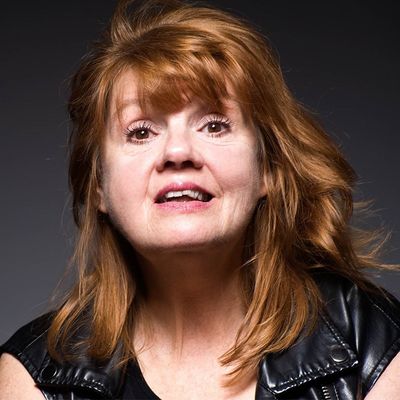
Annie Golden got her start in the 1970s as the lead singer of the CBGB headlining band, The Shirts. In the 1970s director Milos Forman “discovered” Annie Golden singing at CBGBs with her band The Shirts. He cast her in his 1979 film adaptation of Hair... Read More
From the show: When Lightning Strikes!
Guests
Featured Shows
About
Annie Golden got her start in the 1970s as the lead singer of the CBGB headlining band, The Shirts.
In the 1970s director Milos Forman “discovered” Annie Golden singing at CBGBs with her band The Shirts. He cast her in his 1979 film adaptation of Hair.
She has been working and thriving ever since.
Click here to see Annie Golden shared her "work station" which contains her "fancy schmancy" microphone to record the new Bleeding Love podcast.
You may know Golden from playing Norma Romano in Orange Is the New Black. You may know her from countless roles on and off Broadway. Her vast credits include Hair, Leader of the Pack, Ah, Wilderness!, On the Town, The Full Monty, Xanadu, Violet, Assassins and Broadway Bounty Hunter. You may know her playing Jeannie Ryan from Milos Forman’s film adaptation of Hair. You may know her from Desperately Seeking Susan, Baby Boom, Longtime Companion, Strictly Business, Prelude to a Kiss, 12 Monkeys or I Love You Phillip Morris. Golden currently co-stars in the new Broadway Podcast Network series, Bleeding Love. The Post-Apocalyptic musical takes place in a world where it’s too dangerous to go outside. Golden stars with Rebecca Naomi Jones, Marc Kudisch, Sarah Stiles, Taylor Trensch and Tony Vincent
Be More Chill composer Joe Iconis even wrote the musical Broadway Bounty Hunter as a love letter to Golden. (The original cast recording was just released last month, https://ghostlightrecords.lnk.to/broadwaybountyhunter). “She has been my muse,” says Iconis. “The thing that has always comes through is her authenticity. She is such a real New Yorker and so authentically herself. And I love that she has had such a wild life.”
Produced in part by the Broadway Podcast Network.
Transcript
This transcript was automatically generated and might contain errors.
[0:25] Jeryl Brunner: Welcome everyone to When Lightning Strikes. Uh, we've all had it. That Eureka moment, that proverbial light bulb inside of you goes off, the heavens open, the seas part, you're tingly, you feel it, and you know at that moment, you've realized this is what I must do. Today I have Annie Golden. Welcome, Annie Golden.
[0:55] Annie Golden: Oh good, I'm good. How are you?
[0:59] Jeryl Brunner: I'm so good for someone who's a shut-in. I have been in touch with people. I was on a call, a FaceTime call for three hours to my friend in Brighton, just outside of London yesterday.
[1:03] Annie Golden: Three hours.
[1:14] Jeryl Brunner: Yeah, which we never had done. He had said, let's FaceTime. We've just been emailing back and forth. And so we did that, and it was just so wonderful.
[1:23] Annie Golden: That's extraordinary and how we connect in such a different way, Jeryl.
[1:28] Jeryl Brunner: Which is fascinating and often beautiful.
[1:32] Annie Golden: Yeah.
[1:33] Jeryl Brunner: But what's extraordinary about you? I mean, just a little bit of backstory about you, that you were the lead singer in The Shirts.
[1:41] Annie Golden: Yes.
[1:42] Jeryl Brunner: You were discovered by Milos Forman when you were at CBGB's. You were in the movie of Hair, then you were in the revival of Hair on Broadway. You've been in a trillion Broadway shows.
[1:58] Annie Golden: Well, not a trillion, but a lot of Broadway shows, like the original production of Assassins and The Full Monty and Violet and on and on, and you were in Orange Is the New Black, and Broadway Bounty Hunter. Um, and it's on and on and on and on. And I love how eclectic you are as an artist. And you know, people go, uh, oh, so when did you choose that in your career? It's like, honey, there ain't no choosing in this career. You have to be chosen. You sit by the phone and you wait to be chosen. So I've been very blessed, yeah, with a lot of different opportunities throughout the decades.
[2:45] Jeryl Brunner: And what I wanted to start, because what I love is I remember talking to Joe Iconis, who wrote Broadway Bounty Hunter for you.
[2:58] Annie Golden: Yes.
[2:59] Jeryl Brunner: And he talks about how you are his muse, and how he wrote this musical back when he was a student at NYU, and he said to the casting director, well, I wrote this character, um, it's sort of an Annie Golden type for an Annie. And she said, Well, I've worked with Annie Golden, so do you want me to ask her to do it? And you said yes.
[3:31] Annie Golden: Yes, and what's extraordinary is that you've maintained this connection with him, and then he wrote Broadway Bounty Hunter for you.
[3:42] Jeryl Brunner: Yeah, so the story that you just imparted, uh, Jeryl, is how I met Joe, and that was through The Black Suits. That was his black box thesis presentation. And he had written, it's about a garage band, so it's high school guys. And then there's a nosy neighbor lady. And that was Mrs. Waring. And that was the role that he wrote with me in mind. And then he brought it to Marie Costanza, who was at NYU, the adult master's program. And it came across her desk, and she had just produced a musical that I was the title role of called Mimi Leduc. And it was the last thing that Eartha Kitt ever did live on stage. So Marie read this pitch and this character breakdown on Joe's musical, The Black Suits, and um she reached out to him and said, you know, I've just worked with Annie, so if you'd like me to, I can get it to her. Long story short, nine, ten years later, no one has ever done Mrs. Waring but me. So I'm very proud of that.
[4:50] Annie Golden: I love that. And one thing Joe says is that you're always his muse, and that he says, I've worked with her so many times. I always felt how come no one's written a classy leading lady role for her. She's always the sidekick or the best friend. She always comes and steals the show, and there should be a show built for Annie. And he said, We were so inspired to write something for an actress of your stature and age, where you could be the center of your own story, and it didn't have to be about somebody's mother or about being someone's wife. That it could be about you. And you could be allowed to be a kick-ass and sexy and funny and weird. And so Broadway Bounty Hunter was all a love letter to you. So I just think that's a beautiful sort of summation of who you are in a lot of ways.
[5:55] Jeryl Brunner: And um, you know, this badass awesome performer who's so eclectic. Can you talk about your lightning bolt moment, your, uh, it could be several moments when you knew you had to be an artist?
[6:14] Annie Golden: When I was in the third grade of Catholic school, um I we were it was Christmas time and we were learning a hymn put to the melody of Greensleeves, the classic melody of Greensleeves, and the hymn is called What Child Is This? And it's a challenging melody and it's really quite beautiful. And the nun was um writing the lyrics on the board, and when she turned around to run it down with the class, uh she got a little confused with the melody. She was like, wait a second, I've lost the, wait a second, I'm not singing this properly. And so she said, Does anyone remember that? And I raised my hand and I said, I do, and um, you know, I wasn't one to raise my hand, so uh with academic stuff, math and science and stuff, but when it came to music, I was always, you know, right there.
So I raised my hand and I said, you know, I can sing it and I can sing it back to you, I think. And she was like, okay, well, then try it. So I started it and she stopped me and said, No, no, no, no. You see, you're never gonna listen. You're never gonna hit the pitches. You started too high. And I started again, and because I don't know, I just started in the same pitch. And I went through the whole melody, and you know, her jaw dropped a little bit, like, uh, oh, okay. So she went next door and she got the choir, the nun who led the choir, and she said, Listen to this. And I sang it again, a cappella in the same pitch that I had, you know, chosen in my head. And um, and then I was in the choir.
So that was when I realized um, you know, I had not auditioned for the choir or tried out for the choir um myself, but that's how they got me into the choir. So um that's when I knew that I had some kind of aptitude or ability that maybe the other kids in the third grade didn't have. Uh so that was uh that was a mini lightning moment. But um, you know, as you said, uh it was decades later when I was fronting The Shirts at CBGB's that Academy Award-winning film director Milos Forman, you know, won the Academy Award for One Flew Over the Cuckoo's Nest. And um he was either talent scouting or slumming, depending on how you look at it. And he came down to CBGB's looking for new original talent. He, you know, he was a great discoverer of um unknown people, you know, like Edward Norton and uh Courtney Love and you know, he would give people opportunities, and um he plucked me right out of that scene and put me in a major motion picture. So that was like another lightning strikes moment. So I was just, you know, I'm just ravaged by lightning and blessings, is what I should really just say.
[9:21] Jeryl Brunner: See, that's so extraordinary. I want to unpack. There's so much here to unpack because what I want to go back to that classroom in the third grade. Uh-huh. What gave you that courage? What gave you that inspiration to say to the to speak up out of all those third graders? Why, why did you feel that need, that desire to say?
[9:39] Annie Golden: Oh, I think it was probably to help, you know, to help someone. She was like, Oh, I've oh, now I've lost the melody. I and it's Greensleeves, I should know this melody, you know. And so to help her, uh, you know, and as I say, I wasn't a pretty present kid in the class. I like a lot of us, I wasn't a pretty present kid in the class when it came to um other subjects. So I think it was to help her out. And also I now that you ask me, I realized my very best friend's birthday is Saturday. We're gonna be doing a Zoom call. And um, she uh, I think it was the other kids were kind of going, you know, poking at me, like, you know, you Annie knows it. Annie'll do it, Annie can do it. So I mean, not with sports, not with academic would I ever be volunteered by my peers.
But the other kids were going, Annie could probably sing, Annie probably remembers it. So I think I was um supported by my classmates, and that gave me the courage to just go, I think I could try it. And then when she said, you know, no, no, no, no, you've started too high, you're never gonna hit it. And then I started again thinking I had adjusted when I had not, and just, you know, and just went with it. So I think I was encouraged. So I think that's why, you know, and that's been a theme throughout my life to be encouraged by others.
[11:13] Jeryl Brunner: Yeah, that's so beautiful that you found the strength to start again. You know, a lot of people would have just thought, oh, I can't do it. She said, Yeah, just shut down, just be shot down. Who for you for having that internal flame? Did you grow up say were you always singing? When did you know you could sing?
[11:35] Annie Golden: Um, my dad was a big band singer and a drummer. Uh so he sang when he was in the service, he sang, and uh at family functions he was always asked to sing. Um I remember as a young girl, you know, I would go to functions, you know, christenings and birthday parties and weddings, and you know, people would be like, you know, Pat sing, you know, Patrick sing, you know. So um he was always singing, and I would get like embarrassed by it, you know, kids with parents, I would get embarrassed by it, like, oh God, here he goes. But he gave such delight to the family members, and people were so thrilled to have him sing. And um, so then when my mother passed away, I remember he and my mother died very young at 42.
My father asked me to accompany him. I'm the oldest of six, and my father asked me to accompany him to a wedding. Uh the first time, his first outing since he was widowed. And I went to the wedding, and um they asked him to sing, and he said, I will if my little girl joins me. So he needed me to bolster him because he knew he was gonna get asked to sing, and he wasn't sure he felt like singing after he lost the love of his life, and so again it was this support system and something that was emotionally intense that I was called upon to you know step up, and I couldn't be afraid and I couldn't be selfish and I couldn't be embarrassed, I just had to do it.
[13:12] Jeryl Brunner: That's so beautiful. Do you remember what you sang at the wedding?
[13:16] Annie Golden: Uh yeah, it's um, it was one of his mainstays, um, an old standard called There Goes My Heart.
[13:23] Annie Golden: Oh really, that's so healing.
[13:27] Jeryl Brunner: Yeah, you both sing together.
[13:29] Annie Golden: It's really beautiful.
[13:31] Jeryl Brunner: Now take me to can you take me to CBGB's?
[13:35] Annie Golden: And there we and now for something completely different.
[13:39] Jeryl Brunner: What a transition, right?
[13:41] Annie Golden: Yeah, quite beautiful, yeah.
[13:44] Jeryl Brunner: No, um, but that did you ever in that where can you talk about where you were in your life then when you were singing with The Shirts and yeah, um well, I was I you know I was uh I was a secretary by day.
[14:01] Annie Golden: Uh those are those are people who are now called administrative assistants.
[14:07] Annie Golden: Um, but you know, I took dictation and I I typed, which people don't know about, that's like, you know, my former life.
[14:14] Annie Golden: That I, you know, my organizational skills, and you know, I'm I'm really I'm really good at that stuff because I was a secretary for many years.
[14:23] Annie Golden: Um, and so I was a secretary by day, and I went to you know, rock clubs at night, and and I I was out in Brooklyn with my very best friend that I just uh spoke of, Marie, whose birthday is Saturday, and um day after tomorrow.
[14:39] Annie Golden: And uh she, you know, and we went out and I met these guys who were in a band, and they said, you know, you should come by, you know, to rehearsal.
[14:49] Annie Golden: We have a storefront.
[14:50] Annie Golden: And so I went and I came by and I started hanging out and I started uh following them, and then I started sitting in.
[14:57] Annie Golden: They would call me up when they would have a gig and I would be there, and they would call call me up to, you know, sit in with them.
[15:04] Annie Golden: And then eventually I became I became a band member, full-on band member.
[15:09] Annie Golden: And so we would do covers and then we would do, you know, then we would do originals.
[15:14] Annie Golden: And we crossed the bridge.
[15:16] Annie Golden: There was a scene at CBGB's, and we we crossed the bridge from Brooklyn to, you know, the Bowery, and um, and we got a gig at CBGB's, and the rest the rest is CBGB's history, and then the rest is also my history because if I had not CBGB's is kind of my Schwab's drugstore, you know, Lana Turner was discovered sitting at the counter at the Schwabs drugstore, she probably wouldn't have been discovered, you know what I'm saying?
[15:43] Jeryl Brunner: Yeah, I hear you.
[15:44] Annie Golden: I hear you.
[15:45] Annie Golden: I I love that story because it just doesn't happen like that.
[15:48] Annie Golden: But here you are at singing at CBGB.
[15:52] Jeryl Brunner: How long had you been uh with The Shirts at that point and singing at CBGB's?
[15:58] Annie Golden: I think maybe uh let's see, maybe uh uh two two or three years.
[16:03] Annie Golden: We did block parties, we did, you know, local uh local uh bars and uh concert uh venues in Brooklyn, and then like I said, we we would read the Village Voice, so we would read the Soho Weekly News, and it would talk about this magical scene that was happening, all kinds of music, all original from all the boroughs, and then people started to migrate, like the Talking Heads came from Rhode Island, uh the Ramones were mainstays, they were like the house band, they came from Queens.
[16:34] Annie Golden: So we came in from Brooklyn and and we you know asked for a gig and we got one, and then um they did the live at CBGB album, which was a way the the bands that weren't getting signed by by labels, um, like Sire Records, Indie Labels, or um, you know, Atlantic, uh, you know, major labels.
[16:56] Annie Golden: Um, they put together this live at CBGB's for the kind of the cast-off, so the misfits that didn't get signed.
[17:03] Annie Golden: And um, you know, like Blondie got signed, the Ramones got signed, Talking Heads got signed.
[17:09] Annie Golden: So a lot of us were on this live at CBGB's album, and then we did a tour to support that.
[17:14] Annie Golden: So suddenly I was legit, you know.
[17:17] Annie Golden: So I started becoming a temp a temp secretary.
[17:21] Annie Golden: So I worked at United Artists for a while, and I worked at ABC Public Relations for a while.
[17:28] Annie Golden: So when I had to go, I would just, you know, leave my day job and and go.
[17:33] Annie Golden: So it was um it was a gypsy life even before I got to Broadway.
[17:38] Jeryl Brunner: That's extraordinary.
[17:39] Jeryl Brunner: Can you recreate that moment or tell me about that moment when Milosh came into your life was it like after to come up to you did he come up to you afterwards did he have somebody call you like how did that all transpire?
[17:54] Annie Golden: The uh the story goes that um Milosh came in one night uh just talent scouting and um I think that um I know he had uh Geraldine Chaplin on his arm and um he had uh a fashion model on his arm and uh and he came in and he and he he alerted the club he said you know who's who's the proprietor and so Hilly came from the bar to the front door and he said I'd I'd like a table I'd like to look at a couple of bands and uh I'm looking for you know uh I'm casting a new movie and so Hilly accommodated thrillingly and then um and then I was told afterwards that that that he had been there uh talent scouting because Hilly told me the proprietor Hilly Crystal he told me so he's gonna come back and he wants to see boys and girls so I'm gonna set up a night with you know uh bands that have girls in them and uh bands you know all had boys in them so and uh he said I'm gonna set up a night and he wants to come again and he wants The Shirts to be on the bill because he wants to see you guys again so um that's what happened and it wasn't until the second time that he came that um he came backstage and said, um, yeah, I'd like to talk to you.
[19:22] Annie Golden: I'd like to, you know, I'd I'd like to contact you, I'd like to keep in touch.
[19:25] Annie Golden: Um, so then, you know, contact information was exchanged.
[19:30] Annie Golden: And uh, I went to his penthouse across from Central Park West, and I sat across uh on the park wall.
[19:40] Annie Golden: I couldn't believe my luck.
[19:42] Annie Golden: I was going to a penthouse off of Central Park West, took the subway in from Brooklyn, and then I went into the building, and I had never been in an elevator that goes right to the apartment door, you know, that opens to your apartment door.
[19:56] Annie Golden: Uh so it's all security, and you have to be, you know, you have to be cleared uh to go to that floor.
[20:03] Annie Golden: And I went to his floor and the door opened and he greeted me, and then Michael Weller was there, the the guy who adapted the play to the screenplay.
[20:13] Annie Golden: And um they handed me some pages and I did what is now known, I I I learned as a cold read.
[20:21] Annie Golden: And then we did some improvisation, and I saw his his Oscar in his trophy case and his China closet there with the glass door.
[20:32] Annie Golden: I saw it.
[20:33] Annie Golden: He had a beautiful uh he still has it, his widow's there, Martina's there.
[20:37] Annie Golden: Um, it has a beautiful view of Central Park.
[20:41] Annie Golden: And um, and I was there for a few hours and then I went home and then and then I danced for Twilight Thorp, which was a debacle.
[20:51] Annie Golden: And um, and uh yeah, it was just uh it was it was a process, and I was a fish out of water, and my working class roots, you know, uh told me to just keep quiet, don't ask questions, just absorb everything and try to figure it out for yourself.
[21:09] Annie Golden: And and that's what I did.
[21:11] Annie Golden: And um, and I was chosen.
[21:13] Annie Golden: So that was like another another lightning strikes moment where I was like, whoa, this is the big time.
[21:19] Jeryl Brunner: Yeah.
[21:20] Jeryl Brunner: Did you did you know the songs of Hair at that?
[21:24] Jeryl Brunner: I mean, did you know and love Hair?
[21:27] Annie Golden: Um, not really, because that I mean, I remembered that it was groundbreaking because as a kid I saw them, I guess on Ed Sullivan, and maybe I saw them on the Tony Awards or something like that.
[21:39] Annie Golden: But um I didn't really uh I, you know, I I was a flower child.
[21:47] Annie Golden: I mean, I did I did go to Central Park on my weekends and stuff, and I did buy incense and peasant blouses in the village, but um I didn't um I I didn't really grasp anything until um until I was in it, until I was in the thick of it, and then and then I learned stuff and I loved working with Galt McDermott, who was the composer, and then Tom Peter pe Tom Pearson, who was the um musical director.
[22:16] Annie Golden: I don't know how I remember this stuff, Gerald, but I think it's just that I'm very aware when I'm in it.
[22:22] Annie Golden: Yes, you know, I'm just really firing on all, you know, uh on uh all guns, and I just kind of go, this is an opportunity, be present and grasp it and you know, don't don't try not to be, you know, you're totally intimidated, but try not to show it.
[22:41] Annie Golden: And you know, just kind of take it all in.
[22:44] Jeryl Brunner: And I love that you you said that you sang at his memorial.
[22:49] Annie Golden: Yes, I did.
[22:50] Annie Golden: Two two Septembers ago.
[22:52] Annie Golden: We lost him in April, uh, two years ago.
[22:56] Annie Golden: And um right after that, and I I have always been in touch with the family.
[23:02] Annie Golden: I have always stayed in touch with the family, because that's you know, that's my thing.
[23:07] Annie Golden: I love the kids, I love the, you know, I I love the spouses, I just I love the whole familial um uh aspect of it.
[23:16] Annie Golden: And so I, you know, it's not just a job for me, it's a career, and it's my life.
[23:20] Annie Golden: So um, and it enriches my life, not just the work, but uh so I was contacted by his twins.
[23:28] Annie Golden: Uh Milos has uh two sets of twin boys uh 20 years apart.
[23:35] Annie Golden: So he has the Czech twins that he had when he was a young man, and um he has the uh the second set of twins who are the American twins.
[23:45] Annie Golden: So the second set of twins were born during um uh Man on the Moon.
[23:51] Annie Golden: So the twins are uh named Jimmy and Andy after Andy Kaufman and Jim Carrey.
[23:58] Annie Golden: And the um the Czech twins, who I know longer because you know, uh I was involved with Milosh, you know, decades ago, uh, are Peter and Matik.
[24:10] Annie Golden: And they uh they were doing a documentary about their father's life, and they were putting on this tribute, Milos Forman Day in Prague, uh at the Zul at the uh Zul Zoltan uh palace in Prague, and they invited, you know, many people, and they were gonna show film clips of their father's uh films, uh Czech and American, and he won another Academy Award for Amadeus after uh uh after Cuckoo's Nest After Hair, he did Amadeus and he won another another Oscar, very accomplished person.
[24:50] Annie Golden: And um, so I went to Prague, they invited me to go to Prague.
[24:56] Annie Golden: Uh, so I got to sing uh Walking in Space and Good Morning Starshine with uh famous Czech rock band called Meteor, and then I got to sing at the end of the night the finale with the Prague Philharmonic, uh Frank Mills.
[25:15] Annie Golden: And I mean, you're scared, you know.
[25:17] Annie Golden: Whenever you have to sing, I think any musical theater person will tell you on an audition that they have to sing.
[25:23] Annie Golden: It the level of nerves is you know is heightened because you're not just bringing your acting chops, you have to be in good voice and you have to uh perform the song and you know, so it was a wonderful opportunity, it was a great experience, and they're doing a documentary, and um, you know, the Philharmonic was there, it was being conducted by um their maestro who did all the music for Amadeus, all the all the classical uh uh, you know, uh all the Mozart stuff for Amadeus.
[25:57] Annie Golden: So part of the program was that, and then at the end I I got up and sang this beautiful, beautiful arrangement with another conductor um for the uh for Frank Mills, and it was just so beautiful.
[26:11] Annie Golden: And um, that was two years ago, and they're working on the documentary, The Life of Their Father, and they showed film clips and interviews, and I got Treat Williams to do a testimonial.
[26:21] Annie Golden: I got Michael Douglas to do a testimonial, I got Woody Harrelson to do a testimonial, but it came in too late, so we couldn't use it, but it's probably going to be in the documentary.
[26:32] Annie Golden: So yeah.
[26:33] Annie Golden: Because I did Cheers with Woody.
[26:36] Annie Golden: I did It Runs in the Family with Michael Douglas and Kirk Douglas, my idol.
[26:41] Annie Golden: And um I had done, you know, Hair with Treats. So I reached out to everybody and they came back. They came back with video testimonials that the sons put in the documentary and were there for the evening that they played it. It was so great. I think of the six degrees of you. And um, of course, that what you're working on sounds so fascinating.
[27:07] Jeryl Brunner: Um Bleeding Love.
[27:11] Annie Golden: Uh yeah.
[27:12] Jeryl Brunner: On the Broadway Podcast Network.
[27:14] Annie Golden: Yes.
[27:15] Jeryl Brunner: And I think, oh my goodness, talk about art imitating life.
[27:22] Annie Golden: Yes. Yes. Extraordinary. So if people don't know that it uh that Bleeding Love is a musical about people in this post-apocalyptic world who are cloistered inside because it's too dangerous to go outside.
[27:39] Jeryl Brunner: And what's so crazy and surreal is that this was created pre-coronavirus.
[27:46] Annie Golden: So he talk about that and um what that's been like for you.
[27:52] Annie Golden: Well, it's been really wonderful. I mean, in 2016, an actor that I really enjoy working with, I've sung um Assassin's duet with him many times, Harris Duran. He's also a writer and a brilliant director. Um, he had written uh this uh, as you say, this uh beautiful with operatic uh pop music. He had written this story, Bleeding Love, and I play the oldest living left alive person, uh, Madame Floyd, and he had written this uh musical, and we had done like a two-week workshop of it in New York, and I loved it. And then um, and then he contacted me and said that he had um had the opportunity to do a production. He and the um uh the composer, um Harris is the uh lyricist, and um author Franz Bacon wrote the music, and uh we did this two-week workshop, and then he said we got we were able to get a production done in Denmark.
[29:02] Annie Golden: So they did the production, they recorded the production, and then um Harris contacted me and said, Okay, we're gonna do something really um uh kind of risky, and I hope you're down for it. But we're gonna send you the music, we're gonna send you the tracks, and there's a Madame Floy there already, but she's speaking in Danish, she's singing in Danish. We're gonna wipe that and we're gonna do the recordings uh in English to these tracks. So we did it. We went into a studio. It was painstaking because you know, I I don't read music or anything. And uh he was patient and great, and he then he came out excited and happy about it. And um, so he had these tracks to promote the show to maybe get a production done here in America somewhere.
[29:56] Annie Golden: And um, then when all of this went down, he contacted me and said, you know, with the coronavirus and the pandemic and the stay-at-home orders. He said to me, we're gonna make it a podcast, and we'd like you to play Madame Floy with the spoken word now, and we're gonna record for um uh Broadway Podcast Network the dialogue and make it in three chapters or three parts. We're gonna do Bleeding Love, and we hope you'll join us. I know the cast, I mean, like you said, Rebecca Naomi Jones, you, Mark Kutish, Sarah Stiles, Taylor Trent, Tony Vinson, and I I mean, who would have thunk, you know, uh even six months ago, how relevant and how close to life in some in some scary ways this would be.
[30:50] Annie Golden: And the music is just beautiful, the voices and um it what was that like recording it?
[30:58] Annie Golden: Um it was really quite beautiful. Um it was uh it's singing like I I don't usually get asked to sing. So that was kind of cool because um, you know, it's operatic and um I can do that, but I don't know that people know that I can. It's not where I live, I just visit there. But um, you know, so it touched upon that, which was great, which was again another project that stretched me and also showcased me in a way that maybe, you know, people were not were not aware that I had that trick in my, you know, in my bag of tricks.
[31:40] Annie Golden: I mean, it's really quite spectacular that there's an opera in the midst of all the chaos and the fear that that's possible. How do you stay creatively fortified or how do you stay sane during this madness? What are you doing to feel well there's been some there's been some nice you know people reaching out well because I do qualify as elderly so people do uh reach out and check in on me which is which is lovely and uh and it's really a tribute to the diverse career I've had and uh the the long arm of acquaintances I have across the board um I've been uh contacted for we just did the full Monty 20 year reunion via Zoom uh we're gonna do a Violet reunion this weekend via Zoom um we also did a a 29 hour reading of a new musical which was wonderful and I didn't think we could do it but we did it so you know it's um it's uh you know love will find a way I mean it's you know necessity is the mother of invention at this point and I'm happy to be you know to be to be uh uh to tag along you know on these geniuses uh Star Tales.
[33:04] Jeryl Brunner: What are these reunions like that sounds so fun that you are and how what transpires it doesn't it's kind of um it's kind of um Hollywood squares, you know, everybody's in their little box, and um you can always tell a newcomer who hasn't done it before because they talk over you, and once you talk over somebody, it it craps out. So you get really really good at it. You get good at listening, which I mean, that's my Norma Romano, you know, skill from Orange is the New Black.
[33:40] Annie Golden: I just I'm happy. I don't have to be talking. I am a chatterbox, but I don't have to be the one talking. I like to listen as well. So it's it's really been, you know, it's like the box of Hollywood Squares. So there's a lot of people, you know, uh visible, and you mute your microphone when someone else is talking so that the sound quality is better, and um you just um you just reminisce and it's lovely and you laugh and you cry, and it's just great.
[34:08] Jeryl Brunner: Is there something you miss about the show?
[34:11] Annie Golden: There's everything I miss about the show, starting with the paycheck, but anyway, um actually it's you know, that was such a you know, Genji Cohen created it, and I can honestly say she created it for all of us because if you look at that cast, I mean, talk about diverse. I mean, all uh ages, all demographics, every shade in the rainbow, uh every you know, every shape and size. It was just absolutely so fulfilling and so uh satisfying to be with that group of women and the new new new people coming into the storylines.
[34:56] Annie Golden: It was just really wonderful. And um I miss everything about it, uh just being on set and being with those actresses and just downtime and lunches and the and the profanity and the and the and the perspective and um just the the courage and the creativity. I'm I miss all of it, and I'm very proud of that.
[35:20] Annie Golden: And I'm uh that's you know, my most recent, you know, uh lightning strike moment that I was like, how lucky am I to be involved with this? And I do have to tell you that I think it's Joe Iconis, I call him the iconic one, yeah, Genji Cohen. Um I I really believe that people grew up on me.
[35:44] Annie Golden: And now they're, you know, and thinking, as Joe said, I'm his muse of a certain age, he has many muses, let me tell you. Um, that people grew up on seeing me in maybe the second slot, the second banana, or the B team or whatever, and they wanted to push me up front, like my third grade classmates. You know, they wanted to say Annie can do it, you know, Annie should be doing it. Annie can do that. And so that's what it is. I mean, it's people who grew up on me are suddenly coming into their own now, and they're remembering me because I have a new series on Fox TV that will drop in the fall if all things go well.
[36:24] Annie Golden: And it's Tate Taylor. And Tate Taylor wrote The Help and directed The Help, and he directed Come On Up at the James Brown story, and he directed The Girl on the Train. And he wrote this character for me uh for this new series he has called Filthy Rich on Fox. And he just contacted me. Same thing with High Maintenance. The people for the HBO High Maintenance, they contacted me and said, We wrote this character for you. We wonder if you would be interested in playing her.
[36:56] Annie Golden: So these are people who grew up on me and have seen me around and want to push me to the head of the class. And I'm I'm happy to do it.
[37:05] Jeryl Brunner: I love that they see that, you know, and and that because you really, I mean you do disappear into the role, but there's it's you're so uniquely you at the same time.
[37:16] Annie Golden: You were talking about how in Violet, you know, how discovering you you were mentioning to me how your friend saw the show and didn't realize it was you until he heard you sing, right?
[37:30] Annie Golden: Yeah.
[37:31] Jeryl Brunner: Because your voice is so distinctly you.
[37:34] Annie Golden: It has that that beautiful tone and quality.
[37:38] Jeryl Brunner: Thank you. And and um I know you're doing oh, you're you're doing another podcast.
[37:44] Annie Golden: It Makes a Sound.
[37:46] Jeryl Brunner: Do you want to tell you the Night Vale Presents?
[37:49] Annie Golden: Yeah. Um I I uh I it was um my girlfriend Mary Testa had done a musical with a lovely young actress called Jacqueline Landgraff, and Jacqueline was working on this um this storyline. She didn't know what she was gonna do with it, but there was the role of her mother, and she approached Mary with it when they were working together.
[38:13] Annie Golden: And Mary read it, and she said, This sounds like Annie Golden to me. I mean, I I think you should ask Annie if she wants to do it, which is which is what I say about this community, which I think in and musical theater programs and and and in performing arts schools, they they make it a little competitive, like it's a sports event, and it's really not. It's a community of you know, people handing off uh stuff to other people when they know it's right for them and not, you know, right for their friends and not quite in in their wheelhouse, you know.
[38:47] Annie Golden: And so it was Mary uh who uh told Jacqueline to reach out to me. And so Jacqueline led with that. She said, Mary Testa thought you might be interested in this, and I was, and it was wonderful. And um, yeah, it's called It Makes a Sound, and we have season one, and we also have a cast album from it. The music is beautiful.
[39:08] Annie Golden: So yeah, it's it's really a wonderful opportunity to just be. I don't really listen to talk radio or anything, but Jacqueline was so proud of the podcast, she said, you know, have you heard it? And I said, No, and she sent it to me, and I listened to it, and I was so I was so moved by it and the full the foley artistry of the sound effects, and you know, it was just really a magical, a magical way to escape. It's a story of this um young uh young woman uh who uh lived next door to a country club uh and a golf course, and there was a a young guy in her town called Will Farros, and he was a songwriter, and she was crushing on him, and she loved his music, and he would play, he would play their rec center where they lived, and he would play gigs at the country club as well, birthday parties and stuff like that, like sweet 16 birthday parties and stuff.
[40:09] Annie Golden: And so she remembered his music, and she was a young devotee of Will Farrows, but um he never went anywhere, and she loved his music, this young girl. So she's trying to unearth um his music, and the cassette player doesn't work, or the cassette the cassette player eats the cassette tape or whatever. And there's her mom who's struggling with Alzheimer's, who's not always there and not always present in the way that she should be. And her mother, it turns out, remembers the music by wrote specifically. And it just pours out of mom these songs. So it's it's really quite a beautiful story. Um, and uh the music, as I say, is you know, just lovely. And we did season one on Light Night Vale uh presents, and we uh we also uh Jacqueline is in LA now and she's been working on other seasons, and we hope that we get to continue.
[41:15] Annie Golden: At five scenes 54 below at home. I know the I am woman. This is a beautiful um this wonderful show that of all these extraordinary women like you uh talking about the sort of taboo surrounding women's issues that you bring to the forefront. Yeah, more about that. Well, um uh Laura Bell Bundy's um also there, and she's doing a song that she wrote, and I'm doing a song that I wrote called White Picket Fence. So um that's my Violet connection again with you know, you work with these with these kids, you know. I don't have children of my own, but when you work with like, I'm still in touch with the boys who were in the full Monty, as you know, as Nate is the boy, and you know, the two, the understudies, the alternates, and in Violet, Emerson Steele played uh the young Sutton Foster, you know, and so the young Violet.
So Emerson, when she made her cabaret debut at Feinstein's 54, which is I think they think I live there, you know. I'm like a homeless woman who hangs out at the bar because I'm always there as guest soloist because I know everybody, and people reach out to me, and I love playing that place.
[42:34] Annie Golden: So I, you know, I've yet to do my own gig there, but that's in the works, but also, you know, just as guest soloist. So Emerson was making her cabaret debut with all her 16 and 17 year old friends, and she invited me to be her special guest star, and she did from company uh not getting married, and I did the Blessed This Day solo, and so she found the perfect the perfect piece for me to be involved in the show with, and she made her cabaret debut at Feinstein's 54, and then um now she's going to NYU, and uh she wanted to do this night to empower women. Um, and Jen Sandler produced it, and Jen was one of the producers on Broadway Bounty Hunter, and she produces individual shows at Feinstein's, and I've done several.
She she did um uh Big Lights Big City. Uh, she did that evening, and I was involved in that. And so, you know, I'm the go-to gal, and when I have a great experience, I'm back in a heartbeat. And so uh we did it, and I, as I said, I sang a song that I wrote called Why Pick Efense About Domestic Violence, and um, and Emerson hosted the evening with her with her buddy, and um they had all these fierce women come up and sing, and then we did the Helen Reddy tune, which nobody knew but me because I was around when it when it was a pop hit and um and that was the theme of the evening you mentioned something earlier that I thought was so fascinating you said you still get nerves you still get afraid even after you know how many Broadway shows have you been in over the decades what what makes you kind of calm down and get because obviously you're booking parts so what makes you calm down and and take over you because the nerves or maybe not quashing the nerves what makes you well it's you know you're given an opportunity you know and you want to honor that opportunity that's also again my working class roots where you know if you're given an opportunity do the job don't complain buck up and get it done so and now after all these you know all these decades of you know doing this you um you say okay well you know the responsibility lands on my shoulders and and you better bring it and you've brung it you've brung it you've brung it that's my Brooklyn you've brought it before and you you know and and you're you're gonna you're gonna step up to the plate and and uh get the job done whatever it is you know so um that's really uh you have to just you know like when I worked with uh Sondheim when I was cast by um Jerry Zach's for Assassins.
[45:32] Annie Golden: You know, I I knew the way, even though I was a rock chick, still, you know, in theater, finding my way through, I knew Sondheim was a big deal and it was an original musical. And but now all these, you know, years later, I'm going, you know, I'm a I'm a Sondheim diva. He he wrote something for me. You know, I created that role. I mean, I was the first one to do it. I mean, that that's just mind-boggling, you know. But you just have to honor the opportunity and honor your resume and just keep, you know, doing your best work when you're asked to.
[46:12] Jeryl Brunner: Is there something you say to yourself when you go into the audition room or something, a mantra?
[46:18] Annie Golden: I mean, that you don't have to reveal your an actual mantra or something you do, or breathing or or something to stay calm. Yeah, you just, you know, you say, I mean, you know, it's a it's a trite phrase now. You got this, you know, it's kind of a sports phrase, you know, you got this. But um, you know, you kind of say, you know, just just breathe, just relax, come on. And also I I do some coaching sometimes with adults and and children, mostly children. And um, so I use my own mentorship and my own my own um uh my own logic on myself, you know. And so if you're gonna, you know, if you're gonna talk the talk, you gotta walk the walk. So I kind of uh turn it on myself, you know, and say, you know, you can do this.
Why are you intimidated? What you know, what's going on? And you can always address, you know, with a musical director. You can always say, I I usually say stuff like, you know, I'm tripping over that phrase. I'm not really, what is it? Can you plunk it out for me? I'm tripping over that. I'm not really hitting the notes, you know, and stuff like that. So you just kind of you just kind of have to step up to the plate and uh be who maybe they expect you to be.
[47:40] Jeryl Brunner: Is there something you wish though you could have told that that kid that uh who was C at CBGB's, yeah, and working in the temp job, is there something knowing all you know now? Is there something you wish you could advise?
[47:58] Annie Golden: Uh yeah, when I said to you, you know, I was very present and I was firing on, you know, uh all guns, and um because I wanted to absorb everything and take everything in. And then when it got really uh busy for me, and I'm juggling things, and I said maybe yes to too many things, or I get a bit overwhelmed, I say, you know, stop and smell the roses. I mean, appreciate everything, don't see it as a burden, see it as an opportunity, see it as a gift. So that I would have, you know, because there was some stuff that was happening, you know, uh stuff was happening so rapidly that I was like, do you enjoy anything? I used to beat myself up and go, okay, so are you enjoying any of this? Can you just sit back and enjoy it?
And so I had to work on that because there was so many things passing me by that that stuff was a blur, you know. I would do it and I'd go, so do I remember that song? I mean, did I enjoy singing it? Did I did I like doing that concert? Did I like doing that job? You know what I mean? Yeah.
[49:08] Annie Golden: So I, you know, I would say, and I already was present, but now I would say even more like, stop, stop your whining that you're so busy. Just be grateful you're so busy and just take everything as it comes and enjoy it to the max. And so I think now with my um my veteran status, I've gotten to um be able to uh micromanage everything or you know, or specifically handle everything a lot better because I used to get so worn out by everything, you know, and s and like and say what was most important to me was to do a good job and to enjoy doing a good job. And it was kind of lost on me for a while. So, you know, when when I was doing hair, the shirts were recording their first album uh in London, and I flew on the Concord to go back and forth to sh to shoot in Central Park and in and in Barstow, California, and I was doing a major motion picture with an Academy Award-winning director, and something I had worked for for years with my band, I was doing that, but it wasn't in New York, it was in London. So it was like all these opportunities came at the same time, and I was a bit, I was a bit worn down by by the pressure of it.
[50:33] Annie Golden: And um now, and also too, I mean, with your veteran status, like I said, you get to maybe um be accommodated a little more, you know. I don't think in this career you can never call the shots, but you get to you get to um manage things a little better and people will make accommodations for you. So um it gets it gets easier, but but the but the main thing was I was doing the movie and I was doing the album and it was making me a little crazy because I was like all these things I've worked for for so long and they're all happening now why are they all happening now don't ask why just do it just do it is there a role you're aching to play I mean you you play the most uniquely original roles but is there something you're you're just oh I gotta tackle that or is that yet to be written oh I don't know I mean I guess it's yet to be written but I you know I I always I always wanted to play uh mame why I'd love to see your meme but yeah I I really liked that you know the the aunt the the uh the extroverted aunt uh anti mame I would uh I would love to I love that score and I remember when I was in the full month we were collecting for Broadway cares and I was uh at the door with my red bucket and um uh Jerry Herman had come to the matinee and when he left and you know you miss the curtain call when you're collecting you leave the curtain call so that you can be at the door when the audience leaves and um so I just had a moment with Jerry Herman and I didn't say I didn't say that but I did say um you know he he complimented me and I said thank you for coming and he said oh it's just so wonderful this is a fresh new voice David Yazbek music and he was like you know this is a fresh new voice and you can tell him for me and I said oh it's his first musical and he was like oh well you can tell him for me it's just very thrilling to have a new voice in the theater so I got to talk to Jerry Herman as he put as she put a big bill in my in my little red bucket so I so appreciate all your sharing and thanks Carol thank you so much for taking the time my pleasure and uh I hope you have a wonderful rest of your day and thanks I will thank you bye bye still happens every day when lightning strike it's the moment you know the theme song was written by Tom McGovern.
[53:10] Jeryl Brunner: This episode was edited by Kyle Moore and the talent was booked by Anna Strauss when lightning strikes.
© Broadway Podcast Network, All Rights Reserved