

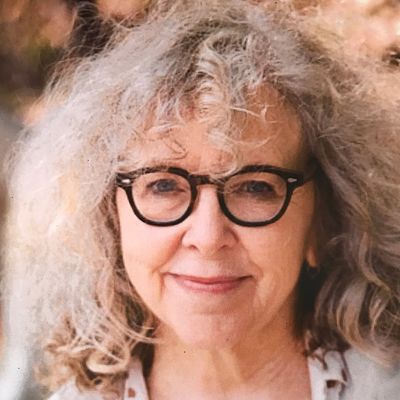
Kathryn Grody is an actor, writer, and producer whose work spans Broadway, Off Broadway, film, and television. Her solo shows blend humor, vulnerability, sharp cultural observation, and deeply personal storytelling... Read More
From the show: When Lightning Strikes!
Guests
About
Kathryn Grody is an actor, writer, and producer whose work spans Broadway, Off Broadway, film, and television. Her solo shows blend humor, vulnerability, sharp cultural observation, and deeply personal storytelling. Kathryn’s current play, The Unexpected 3rd: A Radical, Rollicking Rumination on the Optimism of Staying Alive, directed by Timothy Near, is part of the In The Bricks Festival at New York Theatre Workshop. The repertory series features original solo performances by a wide range of artists including Liza Jessie Peterson (The Peculiar Patriot), Leslie Ayvazian (Mention My Beauty), Chris Grace (Sardines (A Comedy About Death)), and Alaa Shehada (The Horse of Jenin).
This episode was recorded on May 20, 2026.
Transcript
This transcript was automatically generated and might contain errors.
[0:00] Jeryl Brunner: From Shakespeare to Schwartz, from Fawcy to Alvin Ailey. From Santam to the Burrellis, from McNally to Faye. It happened to the greats, it still happens every day. When lightning strikes is the moment you know when lightning strikes, where your mentor goes. You can stand in Chalureka. Do whatever you like. You'll never forget the moment when lightning strikes. This is Jeryl Brunner, and you're listening to When Lightning Strikes.
[0:34] Kathryn Grody: Kathryn Grody is an actor, writer, and producer whose work spans Broadway, Off Broadway, film, and television. Her solo shows blend humor, vulnerability, sharp cultural observation, and deeply personal storytelling. Kathryn's current play is The Unexpected Third: A Radical, Rollicking Rumination on the Optimism of Staying Alive, directed by Timothy Near. The show is part of New York Theatre Workshop's In The Bricks Festival. This repertory series features original solo performances by a plethora of great artists.
[1:26] Jeryl Brunner: Well, welcome.
[1:27] Kathryn Grody: Thank you very much.
[1:29] Jeryl Brunner: So tell me about The Unexpected Third, how that all came to be.
[1:34] Kathryn Grody: Well, it's a long process of evolution. Yes. I mean, I think I've been pissed off about how the culture treats older people. And that is, you know, 50 on, and of course, we're made to believe 40 is old, so it's very screwed up, you know. And I've been pissed off about it for a long time. But once I stopped coloring my hair, I really wanted to talk about it because I was treated so differently. I wanted to do this experiment where I, you know, took a brown wig and somebody videotaped me going through the city, and then when I took it off and how they treated me with this, you know. And I also had the privilege of spending a lot of time in South Africa at one point, about 10 years ago, and the difference between how that culture treats elders.
I mean, if there's one thing I want to do, Jeryl, I want to get rid of the word senior, I wanna banish it. I would, you know, been there, done that. It was not my great year, you know, senior in freaking high school. Why do we have to go back to that? It's so patronizing to me. Elder at least implies some gravitas, some experience, some respect. Anyway, so I just every solo show I've done sort of speaks to something I'm experiencing, and I have a feeling a lot of other people are, but it's not in the cultural zeitgeist, you know. So I decided to do this. I mean, when I did A Mom's Life, you know, somebody actually asked me when I had my second son if I was working or staying home having fun.
And that was just mind-boggling. So I went to beloved Joe Papp, and I said, I want to answer that question theatrically. And he radically said, if you write it, I'll produce it. And I'd never written anything, Jeryl. Joe was a very intuitive person, and he just said, and I said, Joe, I need a place to write. I can't write at home. And he gave me a Selectrix and a table at the Public Theater. And you know, I brought him the idea when Gideon was one, and it was on its feet at the Shiva there when he was four. And then I did it for 10 years. So, you know, that's that story. And then I did one called Falling Apart Together about how a family can be phenomenal and then go through various catastrophes, but you don't necessarily have to split, you can reform, including those experiences.
And now this one. The Unexpected Third's title is A Radical, Rollicking Rumination on the Optimism of Staying Alive. It's sort of a mouthful that I sometimes think of changing. But somebody said to me, well, the unexpected, what is that? Is that having a third kid? Is it baseball? So anyway, we add that. And it's basically a plea and sharing of experience that I don't want to feel that this is it, that I'm done. You know, that this is who I am. I want to feel that I can have new ideas or new adventures or new work or new experiences. I have some phenomenal new friends that I've met and made in the last five years. And you know, they're very different than the friends that have known you from the beginning.
[5:04] Jeryl Brunner: Yeah, yeah.
[5:04] Jeryl Brunner: Yeah, yeah. You know, I think about that brilliant set. It's like another character, you know. Where did you see the show, Jeryl? Did you see it?
[5:05] Kathryn Grody: But they have real value and remind you that you could be seen and connect with people, even if you haven't had the exact same journey or experiences, do you know?
[5:15] Jeryl Brunner: At New York Theatre Workshop.
[5:16] Kathryn Grody: Oh, you did. Oh, wow, that's so interesting. Because it's a very different set than the one I used in Malvern. We had to make a portable set for here. And the one in Malvern is it's the same idea, but it's much more elaborate. So we're gonna be going to George Street in October with that set. But I'm glad you like this one because I love it too. Because it's like the is it like the inner, would you describe it like the inner workings of your brain?
[5:47] Jeryl Brunner: Well, that's what I say. I say, welcome to my mind, and I point to that. Do you know? And that is what it is supposed to be, and the pages are supposed to be a metaphor, yeah.
[5:57] Kathryn Grody: Yeah, because I'm wondering about it. Made me fascinated by your process because there's on the set, not to give too much away. There's books everywhere, there's loose pages, pages hidden under the couch in every crevice.
[6:13] Kathryn Grody: Yeah, and that's yeah, just well. You know, it's interesting because when we first started working, it was just a reading, and we were like throwing pages around just to make it more interesting. But when we did it at a workshop called The Kiln at the Incredible People's Light Theater, which I recommend everybody, it's only 40 minutes, guys. It's right outside of Philadelphia, you know, 40 minutes from Philadelphia. It's a beautiful theater. And Zach Berkman is an extraordinary producer. But one of his board members said, I love the throwing of the pages. They were like a metaphor for new ideas, old ideas, tossing ideas. And my director, Timothy, and I just looked at each other and went, we're keeping it.
This is great, you know. So now the hard thing is I know the play, but I have to remember when I pull a page to at least look at it once. Because otherwise it doesn't make any sense at all. But I think it's for the it represents to me the messiness of life, the sort of beautiful chaos of life, the unexpected things that happen. You can be so sure of a path, and then there's a zig or a zag, both joyful or grievous, you know, and to be as full as possible in it and never stop that. The whole idea of retiring. I mean, I know there's a lot of people that have had work, Jeryl, that they don't like. Yes, and it's great when they get released and get to do things they like, you know, yeah, and work power to them.
But in my profession, that just doesn't make sense to me. And also, also I had to create work. There's not exactly, you know, tons of work for people of a certain age in the theater, though it's really changing tremendously. There was an article today about all the elders suddenly appearing on television, you know, and I can feel it. I was very worried when I started this in November of 22. I wanted to get it on, get it on, and it was so difficult. And I was worried that I can feel it. This is in the zeitgeist. I'm at the beginning of it, but I can feel it. And you know what, Jeryl?
[8:28] Kathryn Grody: Yeah, now I just feel I don't feel competitive. I just feel wow, this is happening. We've got, you know, 70 over 70 podcasts. You've got Julia Louis-Dreyfus. You've got um Oldster magazine, Sari Bottonton. You've got so much attention.
[8:50] Kathryn Grody: Yeah, suddenly. And um, I'm just I'm just feeling great. Welcome. Let's all have a loud voice, you know.
[8:58] Jeryl Brunner: And I love, I love the sense of, dare I say it, like embracing the messy, would you say? Like that you don't have to be perfect.
[9:07] Kathryn Grody: I think the sex like that, it's the chaos of your mind that's a good thing.
[9:11] Jeryl Brunner: Yeah, thanks, Jeryl.
[9:12] Kathryn Grody: Yeah.
[9:13] Jeryl Brunner: Yeah, messy.
[9:14] Kathryn Grody: I think messy is a good word, not a bad word. You know, tell me about the kitchen. You know, my husband's a very big cleaner of the kitchen. That's not my area. Thank goodness it's his. But um I do think messy is a positive descriptive.
[9:31] Jeryl Brunner: Yeah.
[9:32] Kathryn Grody: Yeah. Well and I love the idea of taking agency over your career but not just waiting for the phone to ring. And I think of you were the ultimate of that I was saying before we started how your videos and Becky helped get me through the pandemic or your family I could count on you know for your drama, your joy, your wisdom, your caring. There's this great expression that my older son says I overuse and it sounds better in Spanish which I can too but it's there's nothing so bad that good can't come from it.
[10:13] Kathryn Grody: Yeah. And you know certainly the horror of the pandemic and all of our fear and isolation and not knowing the outcome at all you know I mean Gideon was doing something totally else, but he had to come home. And this was such an accident, which you know I talk about in the play.
[10:39] Kathryn Grody: Yeah. And uh, and it still astonishes me.
[10:42] Kathryn Grody: I mean, it's very interesting, Gerald. For my 20s, 30s, 40s, 50s, and 60s. If I was known at all, you know, other than locally, um, I was known for being Diane Keaton's best friend and Mandy Patinkin's wife. And that was fine for me because both of those people wanted different things than me. I just wanted my off-Broadway OB, and I got two of them. Oh, yeah. And it's funny, Gerald, I was nominated years ago for a Mom's Life for a Drama Desk Award. And it was very funny. There were three nominations for solo show that year. Mandy Patinkin for his first solo show, Dress Casual, Robert Morse for True about Capote, and Kathryn Grody for Mom's Life. And I literally prayed that Robert Morse would get it, which he did.
You know, but it's a very odd thing at the age of, you know, 79. You know, I mean, it was so strange. I was at an event at the New York Times, and I'm at the crepe table, and I turned to my right, and it's M. Gessen, and I go, Oh my God, M. Gessen, thank you for educating me and your brilliance and for terrifying me. And I so appreciate you. And M. Gessen says, Thank me, thank you. Oh, my wife's gonna be so upset. She didn't go, and I am gobsmacked. How the hell does M. Gessen know me? I mean, this big, huge, brilliant brain. I mean, it blows my mind, you know, from that to just people thanking us for the pandemic or for encouraging us now, you know. And I kind of my mother always thought I should be a social worker.
So it's kind of my social work, you know, uh aspect of me that um I'm an optimist by nature, even on my worst days. Yeah, I try not to have that stick. Um, and Gerald, you should tell all your viewers there is a book that is the most helpful book I've read. Everybody should get um Rebecca Solnit's The Beginning Comes After the End.
[12:58] Jeryl Brunner: Oh, tell me why.
[13:00] Kathryn Grody: I love it. It is she is my uh she's just astonishing. She has such a big natural view of dark times and what they lead to and how ideas, even if they get born and then they get sort of removed, you can't undo an idea. It's out there in the zeitgeist, you know. And she has this extraordinary metaphor in the beginning about a caterpillar. Uh, you know, when the caterpillar goes from on its way to becoming a butterfly, it's not gorgeous. It turns into this sort of larval goo, you know, before it becomes the butterfly. And in some ways, that's the period we're in politically. I love thinking of it as larval goo. Yes, will eventually hopefully lead to us being not just aspirational, but really what we potentially could be as a country. An idea that means so much to people, even if we've enacted it.
[14:04] Jeryl Brunner: Yeah, there's a beautiful Maya Angelou quote about, yeah, that people don't remember what the butterfly went through.
[14:12] Kathryn Grody: Exactly. Yeah, so I'm just I've I underlined it and I couldn't find it upstate for a friend's birthday, and I gave him my underlined copy. And then went and I just bought 10 copies to give to every friend I have because I'm I find it genuinely encouraging, you know.
[14:32] Jeryl Brunner: That sounds beautiful. I mean, how did you deal with rejection and the word low and how did you keep going forward? How did you stay intrepid?
[14:44] Kathryn Grody: Well, you know, it's funny, Charles. Uh it's funny, like I talk in the play about you know how the past just interrupts the present. Yes. And it just did it right here with you because I just remember saying to myself before every audition, I have something of worth to offer. If they don't see that, that is their problem, not my problem. And I also really tried to have as full a life as possible, and not just um I had friends and I was very involved with my children and other people's children and political aspects here, and uh worked for gun control. I mean, I wanted rejection uh not to be my whole essence. I had a very close friend, uh Rosemary Tischler, who was a very beloved casting director.
She got like the an Oscar for casting directors. She was at the public, she was also a producer, and after a particularly abominable um audition of mine, she said, we're gonna figure out, we're gonna try and figure out why you either knock it out of the part and nobody else can get it, or nobody understands how you've ever been employed ever. And we went down, Gerald, every audition I'd had at the public, and there was um a commonality with the parts I got. I need to talk to people first. The reason I've only done one Broadway show is because the beloved late Frank Dunlop, and boy, I'm so sorry I didn't get to tell him this. I meant to for years. So if you have an intention, anybody act on it, you know.
I had this audition for Scapino, uh, Jim Dale on Broadway. I had just gotten here. I wasn't even coming to move here, though that was a plan, but I was coming to visit a lover, actually, and I had a backpack, and my agent sent me up for this audition. I talked to Frank Dunlop. Frank Dunlop wanted to know me as a human. He sat and talked to me for 20 minutes, and then he said, Is there anything you'd like to show me that you know you've done? And I did a Pfeiffer cartoon I'd been doing since friggin college, and I got the part, and that's very different, Gerald, than you know, some director in the back of a Broadway house. You don't shake hands, you can't see them. Hi, Kathryn, turn to page 27.
No, yeah, screw you. I don't even know if I want to work with you. You know, yeah, I need the human thing. So that's one thing I learned. And from then on, if it didn't happen naturally, I would just say, I'm sorry, just give me five minutes, I won't overdo it, but I need to talk first, you know.
[17:39] Jeryl Brunner: Thank you. That's very insightful. You just mentioned how you came to New York. I'd love to know your lightning strikes moment when you knew this was your path, what led you to wanting to be an artist? I know you were you were born in Los Angeles, right?
[17:53] Kathryn Grody: Yeah. Yeah. No offense. It was funny. Everybody born in the East Coast loves Los Angeles when they make the opposite trajectory. When I came to New York, it was like, oh my God, that's what's been the problem. Look, truthfully, yeah. Truthfully, Gerald, when I was growing up in the 50s, what could girls be? You could be a mom, you could be a nurse, you could be a teacher, you could be an actor. Well, duh. You know, it wasn't you could be president, you could be a diplomat, you could be a senator. Honestly, honestly, if those options had at all been in my imagination, I think I, other than I'm lousy at languages, but I might have wanted to be uh involved in government in some way or politics, to know. Um, but that was a no-brainer. I was also extremely dramatic in my household. My Russian grandmother would always say, Oh, she's a regular Maria Uskenspaya, who was some famous Russian actress, you know, before she left Russia.
[18:59] Jeryl Brunner: Right. Was there a seminal piece of theater you saw or a performance you were in, like even in the backyard or something making up plays or anything?
[19:10] Kathryn Grody: I was in theater in junior high and in high school. I had a very uh brilliant um junior high school drama teacher named Rod Newisham, who worked a lot at Ashland, Oregon in the Shakespeare Festival. Oh, yeah, and I'll never forget the trauma of putting on a scene and there was a curtain, and I tripped over a lamp cord and the lamp broke, and you heard this voice go, what happened? And I said, Oh, I'm sorry the lamp broke. The lamp didn't break, you broke the lamp on a and then followed by a whole thing about the careful handling of props. Um I think I very much liked the idea of being different people. And I thought, well, you can either be schizophrenic or you can be an actor, you know. I mean, it's very odd to me and curious, Gerald, that both my husband and I, our original idea of the craft of acting was being different people, yeah, walking different, talking different.
I always in my first shows at the public, even I had to know my shoes, I had my shoes right away. And we have evolved over these last 10 and 15 years from doing character work to just being ourselves. And it's so funny to me because that never was what I thought was interesting about this, you know. I thought it was interesting that you could be these totally foreign people that people believed, you know, was you. And now it's just kind of removing layers of myself, you know. I see and laying bare who this is, you know, though I'm not opposed to being cast in something where I uh am not me, but uh right now that does not seem very likely. Um, as this whole new way of of performing and interacting with people seems to be um first up right now.
[21:19] Jeryl Brunner: Well it's good to have both. When did you say, okay, I'm gonna head out to New York? Can you bring me to that moment when you I always had this fantasy of New York?
[21:29] Kathryn Grody: My family and I took a cross country trip when I was 16, and I was devastated when I went to Broadway. I actually pictured Broadway being little old wooden theaters. I don't know where I got that idea. Wooden, old, sort of um, you know, prayerful. I was just gobsmacked by the neon and all that stuff. Um and uh I went to um I went to San Francisco State uh and uh they had a very good theater department. I was accepted to Carnegie Tech, which was sort of the Yale big deal still, my parents couldn't afford to send me. And I've always been so grateful, um, Gerald, because I got a work study fellowship for the following year. So I kind of said, okay, I'll go to San Francisco State, you know. And the fact is I landed there in 1968.
And sometimes I go, Oh my God, who would I have been if I had gone to this cutthroat theater school in Pittsburgh, you know? Steve Botchka would have been in my class. So sometimes I thought, well, if we would have been friends, I might have been on, you know, one of those police procedurals or something. You know, uh, but it it's a funny thing. And also after San Francisco, um, they used to have an extraordinary thing with theater communication group where you would have auditions, Western, Midwest, and East Coast. You would audition, and if you were chosen, you were sent to these auditions for 25 regional theaters in the country in Chicago. I mean, it's amazing, Joe. They paid for you to fly there, et cetera.
They put you up. You had five minutes, you know. And uh you were supposed to do, you know, one classic, one contemporary. And I I was just, oh my God. It's amazing. I went, Grody. And then I sat down and did four one-minute pieces. You know. What were the pieces? Do you know? Oh, I did I did a Marlon Brando speech from the fugitive kind. I did Constance from King John or something. I'm horrible at Shakespeare. I did my Pfeiffer cartoon that I did for Frank Dunlop five years later. Um, and one other thing I can't remember. And then I spoke to eight theaters, uh Gordon Davidson at the Mark Taper Forum, someplace in Manitoba, and I ended up going to um Actors' Theater of Louisville, Kentucky, because they had real rep.
So I would be doing eight shows in rep. I'd never gone to a city where I knew nobody, and I'd never gone to a place where they had snow, winter. What was the first one of the first plays you did or shows you did? I did um oh the birthday party, uh Harold Pinter's the birthday party. I was a horrible Sonia in um Uncle. Um uh God, oh, barefoot in the park. I mean, it was a whole potpourri. Really, why were you a bad Sonia? I can't believe because I really didn't know what I was doing at the time. I really did not know how to connect emotionally with the part, you know. Yeah. I would sit, I remember I would go home and I would think about losing people I loved, and I'd start to cry, and then I'd do the lines.
And of course, when I went into rehearsal, it had nothing to do with that reality at all. So it didn't work. So, but it was an amazing experience. I made beautiful friends there. I still wonder about a little girl named Mary Gill, Mary Gill from Georgia, if you're listening. There were these three kids right out of Appalachia that came down. And there I was an actress in one room, right? And they were 10 people in one room. So they thought, oh, you know. And I befriended these kids, which took a lot of effort. And one day they said to me, Catherine, you know, you say you're a Jewish person, and I wondered if I could feel your horns. And I said, that's a prejudice. That is a fear of people that some people have when they're different from somebody else.
Here, you can feel my head. And they came back the next day and they said, Mom says you just you people cut them off. But I've always wondered, Gerald. I've always wondered about that kid. What happened to her, where she went, if the impact of meeting me had any further little pricklings, you know. Um, and you know, Mandy for 37 years has sung for Our Supper all over the country, and he loves going to places um outside of New York because people are so happy. And believe me, when I was in Malvern, Pennsylvania, those audiences were unbelievable. And the first couple of nights that New York Theater Workshop took some getting used to. It was like, whoa, oh right, New York, man. Yeah, there's a lot to see, and I have to sort of prove myself and work very hard to get you to come along.
And eventually we're working together, and it's been wonderful. Um, I've I've congratulated uh Patricia McGregor of the New York Workshop for out of four shows, having two that are by 79 year old women. That is a radical friggin' thing. And it's radical because she didn't just think, oh well, that's one of those stories. So you have to choose. The fact is, um, and I recommend the festival because it's uh it's an interesting array. Liza Jessie Peterson's show, um The Peculiar Patriot. I don't know, have you seen it? Not yet. Well, let me tell you, it's marketed as the inhumanity of incarceration. That's not what it's about, you know. It is about resilience and creative language and love and connection in any circumstances and her writing and performing is brilliant.
She's done it for 25 years. Chris uh Grace is doing his show, Sardines, which is it will sound a very funny look at Korean culture and death. And there's Leslie Ayvazian doing my beauty. We grew up in the exact same time, Gerald. We couldn't be more different. It's like we were on different planets. I mean, we couldn't have had more different experiences growing up. I mean, it fascinated me. You know, and we loved it. Yeah, I love New York Theater Workshop. How they how they present work that's you know so groundbreaking, and you think about it. Jim Nicola is one of my oldest friends, and he started that place many years ago and made it a real radical theater place. Yes, yes. And then you think about all the great theater that's come out of there like and changed the culture, like Hadestown more recently.
Right, right. But is there something you wish you could tell that that kid, you know, who is just starting theater school or coming to New York or you know, yeah, yeah. Yes, I will tell them two things. Yeah. One is if you have a gut feeling of doing something, and all the experts in the theater tell you no, you can't do it, listen to your gut. When Mandy Patinkin wanted to do a solo show with just a piano player, and this was after Evita and Secret Garden, whatever, all the Broadway producers said, No, you can't do that. No one will come see it. You need at least a 10 piece orchestra. And Joe Papp said, Well, you didn't ask me. Come do it on Monday nights, you're doing Winter Tales, see if it works.
And it was like watching somebody find their skin. So when the experts say no, you listen to your gut. And also, Gerald, if you have a plan, but something happens, and you have an opportunity you didn't even think of. And if it's not exactly, you know, acting. When I first came to New York, a guy I knew in LA asked me if I wanted to coach a young actor in Sardinia for three months for significant money. Sardinia I'd never been to. And I was like, coach an actor. I'm in New York. I'm trying to be an actress. Well, you know what, Joe, what did I do for those three months? You know, I went on two auditions and I waited a lot of tables. You know what that job was? It was coaching Henry Thomas in the Black Stallion.
It was Caleb Dashnelle's first job. And who knows what would have happened. I'm not, I love, I love coaching. I might have started a whole business. I might have married Caleb Dashnelle. And his life and mine would have been different. And I'm very glad that aspect, you know, didn't happen. But I really say don't be afraid to leave this town. Don't be afraid of regions, you know. Yeah. I wish I could remember this one actress's name. It's Anna. I think it's Anna Reed. I haven't seen her in years. She was fantastic. She went where the work was all over this country. And Jane Howdy Shell spent 25 years before New York discovered her in her 50s, you know, doing every role all over the country. You will meet people.
You want to start a theater, go to a place that really longs for one. Maybe the Dakotas, I don't know. Do the Steppenwolf model in some new place. Don't be afraid to veer from your take those blinders off, you know, and see what might surprise you. That's what I'd say. That's brilliant. Well, so much congratulations. It's such a joy to talk to you. It's lovely to talk to you. Take care. Bye bye. It happened to the greats. It still happens every day. When lightning strikes, it's the moment you know. The theme song was written by Tom McGovern. This episode was produced by Anna Strout. Lightning strikes.
© Broadway Podcast Network, All Rights Reserved