

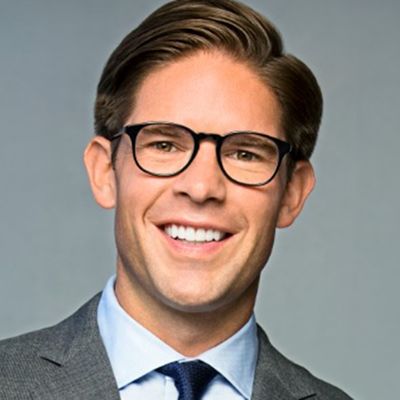
Frank DiLella is the host of “On Stage” on Spectrum News NY1. He won a Best News Magazine Emmy Award for his special on the musical “Come From Away.” Frank has interviewed everyone including James Earl Jones, Vanessa Redgrave, Bono, Lin-Manuel Miranda, Jane Fonda, Lady Gaga, Andrew Lloyd Webber and on and on and on... Read More
From the show: When Lightning Strikes!
Guests
Featured Shows
About
Frank DiLella is the host of “On Stage” on Spectrum News NY1. He won a Best News Magazine Emmy Award for his special on the musical “Come From Away.” Frank has interviewed everyone including James Earl Jones, Vanessa Redgrave, Bono, Lin-Manuel Miranda, Jane Fonda, Lady Gaga, Andrew Lloyd Webber and on and on and on. Most recently Frank played himself as a theater reporter in the Netflix film “The Prom” getting his close-up opposite Meryl Streep.
This episode was recorded on January 4, 2021.
Transcript
This transcript was automatically generated and might contain errors.
[0:00] ♪ Musical number: "When Lightning Strikes" — performed by Unknown performer ♪
[0:25] Jeryl Brunner: Hi, this is Jeryl Brunner, and you're listening to When Lightning Strikes, where we talk about the tingly, heart-stumping, mic drop moments that led you to becoming an artist.
[0:39] Frank DiLella: Frank DiLella is one of New York's most beloved theater reporters and broadcasters. He is the host of On Stage on Spectrum News, New York One. Frank won an Emmy Award for Best News Magazine Program for his special on the musical Come From Away. He's interviewed everyone. And this is just a very, very tiny, tiny sampling of who he's interviewed: James Earl Jones, Lady Gaga, Vanessa Redgrave, Bono, Lin-Manuel Miranda, Jane Fonda, Andrew Lloyd Webber, and on and on and on and on. And most recently, Frank is playing himself as a theater reporter in the Netflix film The Prom, getting his close-up opposite Meryl Streep. Hello, Frank!
[1:30] Frank DiLella: Hey Jeryl, how are you?
[1:33] Jeryl Brunner: Thanks for having me on your podcast. Happy New Year.
[1:36] Frank DiLella: Happy New Year.
[1:37] Jeryl Brunner: Thanks for being here. How are you doing these days? How are you staying sane and creatively nourished these days?
[1:47] Frank DiLella: I'm staying sane. I'm actually about to move. I just bought an apartment. So that is, I don't know if it's keeping me sane. It's definitely keeping me busy. Um, so that is, you know, moving during a pandemic. I don't know if that was the best choice, but I'm doing it and um it's keeping me busy.
[2:08] Jeryl Brunner: So congratulations.
[2:11] Frank DiLella: Thank you.
[2:12] Jeryl Brunner: Are you changing neighborhoods?
[2:13] Frank DiLella: Nope, staying. I'm a resident of the Upper West Side, staying in the neighborhood. I love it up here. And um theater, it's not that far from Broadway. So uh once Broadway is back up and running, you know, we'll be seeing each other in the theater district more often than not.
[2:30] Jeryl Brunner: Yeah, I cannot wait.
[2:32] Frank DiLella: I cannot wait.
[2:33] Jeryl Brunner: Fingers crossed. Let's talk about your lightning strikes moment when you or moments when you knew you had to be an artist, when you knew this was the path for you.
[2:47] Frank DiLella: Um, well, I think we have to go a little back to when I was, you know, six, seven years old when my mom introduced me to the art form that is theater. Um that first experience in Philadelphia, that's right. The first experience was seeing Andrew Lloyd Webber's Cats, the National Tour at the Forest Theater. And I remember not wanting to leave the theater after the show was over. My mom and sister, we had to go, but I did not want to leave. I just I just knew then and there, you know, I know this sounds cliché, but walking into a theater, um, you know, is a very religious experience for me. You know, that moment walking in and this sense of wonder that uh I felt, you know, looking up and seeing the chandelier and seeing the curtain, seeing the stage, you know, this was a temple.
This was uh a Mecca, this was a special place, and um that feeling that I felt when I was a kid, and obviously I was six and didn't really know what I was feeling, but um now putting it in words as an adult, that was a special place, and um still to this day, whenever I walk into a theater, that is my church, that is my temple, you know.
[4:03] Jeryl Brunner: It's beautiful. I know it's the I think about that moment also when the in the musical, especially when the orchestra plays its first notes in that overture, and it's like my heart just starts to flutter, and it's almost as if you're at it's the first time. What was it about the performance? Is there something you remember?
[4:22] Frank DiLella: I love that the even the visceral feeling of walking into a theater, you um ignited you, but was there something about that performance? I mean, for a six-year-old, again, same Cats, um, and Cats will forever have a special place in my heart. I know it's, you know, you either love or you hate Cats, but um just you know, the overture and being able to see into the orchestra pit. Like what was happening? What was making all these folks come together and folks who didn't look like folks will look like cats with this crazy ass makeup on these crazy ass costumes. This was all becoming a thing in that moment in time, and for those two and a half hours. And I think that was like, oh my gosh, this is this is a little operation.
This is a little, you know, company that is putting on a show and making something out of nothing. And I think that was like just, again, wonder is the word that comes, you know, to the tip of my tongue. It's like, what is this? It was just, and I wanted to learn more, and I wanted to know more about this world that is being created in the theater. And then, you know, I'll be honest with you. I remember seeing at the time, you know, I think the tour of Into the Woods was happening, and Fiddler on the Roof was touring. And so, like seeing these commercials on the screen, again at the Forest Theater, you know, call this number for tickets. I was like, oh my gosh, this is so there's more of this. There's more of what I just saw, and these worlds that have been created. Let's find out about them.
[6:07] Jeryl Brunner: So yeah, yeah. And I love that you started out being an actor, right?
[6:13] Frank DiLella: But you knew that was I did a lot of high school theater. I did a lot of great school theater. I did a lot of community theater. And I moved to New York, like many of you wanting to be an actor. I attended Fordham University at Lincoln Center, um, where I started in the theater program and took, you know, the acting requirements, acting one, acting two, and scene shop and all that kind of stuff. But I have to be perfectly honest with you, Jeryl. There were a lot of talented kids in my class. Fordham's theater program is excellent, and it's a rather small program. And in my class in my particular year, um, I was in the same class with Tyler Schilling, um, my buddy Van Hughes, who went on to do a ton of stuff on Broadway, and my friend Kate Chadwick, who's done a lot of stuff in theater and on TV.
Um, Kelly Curran, who does a lot of stuff with um Classic Stage Company in Bedlam. She's on The Gilded Age, the new TV show. Um, so like it was a very talented bunch, and I realized early on in my college career that if I was going to survive in New York City, which has always felt like home for me. You know, my mom took me to New York when I was a kid and I just I never wanted to leave New York once I got here. And if I knew I was going to stay in New York, I knew A, I had to figure out a way to make money and also that meant not being an actor because there are a lot of other talented folks out there. So I found the world of broadcast journalism and never looked back.
[7:45] Jeryl Brunner: So let's unpack that a bit about your acting that how I love that that led you, you know, in it's into this pivot. But can you talk about some memorable roles? Because you said you did community theater, you did high school theater. Are there roles that you remember doing you think, oh I love that?
[8:05] Frank DiLella: Gerald, of course I mean um, you know, I uh my first year of high school I played Jack in Into the Woods and you know obviously as a Sondheim fanatic that was a thrill to get to dig into the world of Sondheim and Into the Woods. The senior year of my senior year of high school I did we did The Secret Garden and um I got to play Dickon, the role John Cameron Mitchell made famous on stage and actually in that show um my dear friend Elise Allen Lewis played Mary. She was a freshman and she played Mary Lennox and she has since gone on to have a very successful career in the theater here in New York. She um was Sophie in Mamma Mia on Broadway with Beth Leavel, but most recently she played Hillary Clinton in Soft Power.
Um, very talented actress who we obviously grew up together and uh go way back. So, you know, there during my quote unquote theater career, Gerald, um, I've been I've been lucky enough to kind of interact and um be around some very talented folks. Again, folks who are a lot more talented in that department than I am, but um it was it was a fun, fun tour if you will while it lasted.
[9:23] Jeryl Brunner: I see. And what's so cool is that here you took that passion and you found a way to still very much live it, be part of it, swimming in it in this other way, creating your own art. And I love that you were an intern first at New York One. Um, can you talk about that? How you became an intern at Spectrum News York One?
[9:54] Frank DiLella: Sure. Well, we'll go back again a little bit. So sophomore year, um, I started taking an intro to journalism class, or I took an intro to media studies class. And my professor at the time um said that if you really want to, if he first asked the class, how many of you want to or think you want to be uh news reporters? And some people raised their hands. And he said, if you do, you know, you are probably gonna have to move to the middle of nowhere at a very um small market, and you know, you start from the middle of nowhere and then you work your way back up to the bigger markets, like the New York Cities and the LAs and the Philadelphias and the Chicagos. Um, but he said, if you really want to stay here, go get an internship in New York One.
And if they accept you, you know, you will be able to experience, you know, the world of broadcast, get your hands on editing and producing and all that kind of stuff. And you know, if you're lucky enough, you can stay here. So that summer, I was like, you know what, I am switching my major to journalism. I gotta think of a plan B. And I was actually I auditioned for the Gallery Players production of Hair. Now it was, I think um, you would get equity points by doing it. It was, you know, semi-professional, uh, this theater in Brooklyn, and I got a couple callbacks for the role of Claude. Now, at that same time, I had applied for the internship at New York One, and I said to myself, God, I'm putting it into your hands, or I'm putting it into, you know, the world's hands, if you will.
If I get Hair, I will continue to pursue acting. If I get New York One, I will switch majors and 100% go into journalism. Did not get Hair, I got New York One, and the rest is history. On my first day, I was put in with the theater and entertainment unit, which of course produced On Stage. And the reporter who had the theater beat before me was not there. And my boss at the time said to me, you know, we need some interviews done at the Culture Project downtown. Um, I'm gonna send you out with a camera guy, go and get some interviews.
[12:18] Frank DiLella: And as soon as that microphone hit my hand and I was doing the interviews down at the Culture Project, I was like, oh my gosh, yeah, like I'm not leaving. This is so cool. I'm covering theater in New York City for a news station. And that is my main purpose for the day. Like, this is amazing. This is my dream job. Not to mention, you know, Jeryl, I was one of those weird kids. So I did theater growing up. And of course, you know, I'm so speaking of The Prom and fast-forwarding quickly to Ryan Murphy. You know, I think he's done an amazing job with Glee and the shows that he's brought to, you know, the masses, because back in the day, doing the shows at school or being a part of the performing arts was not cool.
Like I had to hide that as a young kid growing up in Philadelphia. You know, it wasn't cool to talk about listening to show tunes. It wasn't cool to talk about taking dance classes and all that kind of stuff. Like, I had to hide that. And you know, that's a whole other story. But um, you know, getting to experience, you know, covering theater for the news, because as a kid I did shows, but I was also my other passion was like news programs like 20/20 and Dateline NBC and America's Most Wanted. Like, I would like long-form news magazine programs, I was obsessed with, like, that's what I would sit down and watch. Theater stuff, like the Sunday musicals and these news programs. And so I felt like, oh my gosh, this is the perfect blend of these two worlds. What a beautiful marriage.
[13:56] Jeryl Brunner: I can't believe you were a news geek growing up.
[14:01] Frank DiLella: I was. And I cannot believe that I mean, like that they gave you that opportunity. Your very first day as an intern, you were interviewing.
[14:11] Frank DiLella: Well, you know, that is the beauty of New York One. It's like, you know, you show the effort, you put in the time, and um you show that you know what you're talking about and you know that there is that trust there. And also, um, it truly is amazing, you know, in a way, New York One was my graduate degree or my I got my master's in journalism through my experiences at New York One. I've been there since 2004 and have never left. I've done things here and there on the side, but uh for the most part I really did grow up at the station. So how did you get to be host of On Stage? How did that trajectory happen?
[15:01] Frank DiLella: So um, you know, I was a reporter for well, you know, I started out as a producer. The stagehand strike happened in 2007 and um I broke the news that the strike was on uh in the fall of '07 and I broke the news that the strike was officially over. So that was a whole crazy scenario and situation in terms of you know, just kind of making things happen and just covering the news day in, day out, living, sleeping, breathing in a news truck. It was pretty extraordinary that whole experience. And when that happened when the strike was officially over, my news director at the time said to me, she was like, obviously, you know this be you have incredible contacts in this industry. Um, we're gonna promote you to producer of the On Stage unit, the living unit.
And so they um they promoted me, and I produced for a very long time, and would just kind of go out and shoot stories and do all that good stuff. I would not track them or present them, but I would, you know, produce them. And then in 2009, the fall of '09, uh, the company of Hair uh took off from their matinee performance on a Sunday and the Saturday night before they went down to March for Quality in DC with a bunch of Broadway folks. And uh my a friend of mine who was working on the production at the time said, why don't you come with us, take the bus with us, we'll put you up in DC, and we'll just kind of like let you tell that story from the angle of being with the cast. And so I did. And it was, you know, uh historic moment for our country.
It was just so cool to be down there with folks like Audra McDonald and Gavin Creel and Cynthia Nixon and Stephen Schwartz and Lady Gaga and all these amazing people, you know, as they you know expressed their their voice and vision for a more equal United States of America. And I was there during that whole ride, and I came back, and my news director said, there's no way that you know, we're gonna have someone else report this story. You experienced it, so we're gonna put you on air for this. And then that, you know, I was reporting nonstop up until 2016. And then in 2017, I got the opportunity to take over as host of On Stage, and there was a whole idea to kind of revamp the program, and part of that was bringing me on board as host, and the rest of his history was pretty um, it was pretty fast and furious, and you know, those early days of kind of revamping the show and making it more making it more of a show where you're not just talking about theater, you're experiencing theater, and I'm taking you on that ride and on that journey and behind the scenes uh was pretty crazy at the beginning to kind of like figure that out, but um it's been a joy, it's been a joy of a process ever since. It's been just so much fun getting to tell these stories every weekend.
[18:14] Jeryl Brunner: I love how you do these deep dives into shows like Let It Work or Come From Away. How do you determine? Because yeah, when you think about the typical theater season and the multitudes of shows, how do you decide? Ah, this is the one you I want to spotlight, because you've done everything from Frozen to yeah, you cover so much, so many varieties of shows at each well.
[18:43] Frank DiLella: I I think you know, you know this too as a journalist. It's like, you know, what are the good stories to be told? Like, what's a great story to be told? And you know, I think for instance, when we did our big Angels in America episode, um, you know, first and foremost, making sure we have an incredible cast to help tell this story of this epic piece of theater. So when the revival happened, it was you know, Nathan Lane, Andrew Garfield, um, and so on. So making sure we had access to these folks, making sure we had access to Tony Kushner, but then also like, how does it relate back to New York City? Because at our core with New York One, we're a station that celebrates New York City. Um, we are part of the city, we're built into the fabric of the city.
So, you know, for the AIDS pandemic, when AIDS was and still is obviously, you know, a major issue for the world, but when New York City was ground zero, I mean things were bad here. And so, you know, kind of visiting sites, like we we I remember shooting um a portion of that episode at the AIDS Memorial, which was you know, to be there and be across the street from St. Vincent's. Um, no, it was kind of like a full circle moment with telling the story of Angels in America, but then also bringing back to you know the city and Roy Cohn and all these fascinating characters, but then also with that, a major character in the episode was New York City. So it's all about the story. It's all about the story.
[20:22] Frank DiLella: For me as a journalist, I love the blank page that when somebody says when an editor says, okay, cover um Hamilton or uh Kelly O'Hara, you know, or a person, or there's something joyful about getting that first assignment, that assignment, and then figuring out, okay, what is the story? And then crafting that. What's the joy for you of crafting a story of creating a story?
[20:57] Frank DiLella: I I, you know, it's the first thing that comes to mind is like that moment in Sunday in the Park with George where George says white, white, you know, uh a blank canvas, if you will. Um, that that's exactly it. It's like, you know, the world is yours, the world is your oyster, figure it out and and go from there. For me, you know, I'm such a theater nerd. So, like you mentioned folks like Kelly O'Hara and you know, the greats, you know, whether it's the Elaine Stritches or the Liza Minnelli's or you know, Harvey Fierstein, folks like that, these colorful characters where I can dig into, you know, worlds past, roles past for them, um, and and crafting something that, you know, I I guess I'm I'm I'm I'm kind of going down a rabbit hole with with this answer because I'm so excited.
But I I think in terms of the story in and of itself and what to present, it's like, what can I tell that's different that people don't know or that's not out there yet? How can I, how can I craft this story to kind of provide the essentials to provide the important information, but also kind of tell people something new and have them go, oh wow, I didn't know that. Oh wow, interesting. You know what I mean? Like I always try and think of angles like that when I'm when I'm presenting stories and telling stories and writing stories.
[22:26] Jeryl Brunner: So can you share some of those moments where you thought, oh my God, I've learned I've changed as a human or this is tray. I mean it doesn't have to be that dramatic, but oh my God, I cannot believe I got to be privy to that.
[22:42] Frank DiLella: Now you're putting me on the spot. Let's see. Well, you know, well, let's let's go back to um, you know, you mentioned Come From Away. Uh we did a special on that. And I think, you know, when we decided to do the special, the show was brand new in New York City. So it was you know it had just opened when we did that special so telling the backstory of that and getting the folks from Gander who were still here to kind of put that story that they experienced that is now being seen on stage eight times a week in their own words was you know like one of that project alone was one of the most incredible experiences that I've had in my career thus far. But um getting to tell that story, you know, I I got a ton of phone calls and a ton of emails and texts after that episode aired saying, oh my god, Frank, I didn't know, like I didn't know it was uh based on like these folks's lives.
Like I I knew it was based on some truth, but like this is crazy. And like hearing, you know, the dialogue that is now used in the show that you know came from their mouths. Like people people were amazed by, and um, I guess that's that's an example. I hope that works.
[24:08] Frank DiLella: I could see the thousand times because it's all about the residents of Newfoundland took in these strangers who were stranded during 9/11. And it's just a magnificent story. I love that you told that story.
[24:21] Jeryl Brunner: Well, I and I love you talked about um Elaine Stritch. She described a bit of Elaine Stritch, how she would just call you up and say, Let's chat.
[24:31] Frank DiLella: And then you had you interviewed her at the very end of her life.
[24:36] Frank DiLella: And yes, she was she was an amazing woman. I um, well, first and foremost, I always adored watching Elaine on stage, and I got to meet her. I I get to really connect with her in 2008 when I think she was doing she brought At Liberty to the Carlisle. And um, as luck would have it, I showed up, I set up my camera, and that was, you know, I just moved over from the news department to on stage. So I was alone by myself. I was producing this piece, and I set up my camera in the back of the Carlisle, started filming, and um it was done in two parts. I think she did an abbreviated version of At Liberty, but it was done in two parts. And at the quote unquote intermission part, she went back up to her room, and I said to the press person at the time, um, I need to I need to leave.
I was like, I think I ate something earlier today, and I do not feel well, and I like I I don't feel well at all, and I need to leave. And he was like, Well, you can't get Elaine till after the show. And I said, No, I'm not leaving this place until I get Elaine, so like we need to make this happen. And he was like, Well, let me go see. So he called me up and was like, All right, Elaine has agreed to do the interview with you, but you have to be quick. So I go up, and at that point, I was like, please, like, don't let her know that I'm sick because I, you know, she's a performer. I don't want her to think that I'm like, you know, spreading germs or whatnot. Well, sure enough, she knew exactly why I was leaving, and she goes, Stay, stay away from me, stay away from me.
She was like, I'm gonna hold your microphone. And I remember having a long cord, and she was basically at the door. Like, I walked in, set up my camera, like in the bedroom area, and she was like standing back all the way back by the door. So, like, so so so far away from camera to microphone. And she held she held the microphone and she was like, All right, what do you want to ask me? And I, you know, was asking her about a show. And then we wrapped the interview, and she said, Okay, Frank is not leaving here until he has orange juice, water, let's get him an apple. Like, she went down the line of like things that I toast, like I needed before I left. I was like, Elaine, I'm totally fine. She goes, No, you're not.
We're gonna make sure you have all this stuff. And I was like, Oh my gosh, like I just I just want to leave. I just want to leave. She's like, No, you you're I I gotta take care of you, you gotta make sure uh that you're okay. So I left, and then every year she would come back to the Carlisle and like clockwork. Every time she would do that, I would sit down with her, and then you know, we just I remember visiting her backstage. I got very friendly with her music director, Rob Bowman, who is still to this day a very close friend of mine, and he would say, you know, Elaine's asking for you, when are you gonna go see her? You know, so I I remember uh seeing her multiple times in night music when she went in with Brandon Peters, and I I'll never forget this one performance.
I sat um with Rob in the orchestra pit and just watched her, and just she was she was amazing, like no one like her her line deliveries for things were just like it was a masterclass watching her. She was she was so unpredictable and just so real, you know. You know, she was like, that's the best word to describe her. Real. Lane Stritch was so real, and that final interview I did with her, her documentary was coming out, and it was the one that Alec Baldwin produced. And you know, they were trying to do some press. And at the time she was dying basically of cancer, and she came back to New York after moving out. And she was in this apartment on the east side. And I remember getting a call saying, Can you come and interview Elaine?
She wants to do an interview with you. And I remember getting there, and I was like, okay, so why don't we have her in this chair and I'll be in this chair? And they said, No, she's not getting out of bed. You're gonna have to get in bed with her and do the interview. And I was like, All right. So I did that. And um, yeah, it was just like, you know, it was it was one of those moments where I was like, I'm just gonna ask as much as I can about, you know, uh the incredible people that she knew and called her peers. And I remember asking her about JFK and Judy Garland, and you know, she she saw it all, you know, and and she we we stand on the shoulders of the Elaine Stritches and folks like that who kind of you know paved the way for Broadway as we know it today, and just you know, asking her about Sondheim and you know, she was she was just amazing, she was amazing.
[29:31] Frank DiLella: Yeah, I mean, as you say, she was so real. I mean, she didn't I mean that she just exposed herself quite literally that she had those legs for days. Oh my god, but yeah, I think of her in that d that 70s um saying ladies who lunge in that documentary. Documentary, yeah. And and you see the struggle and the pain and trying to get it. And it you're it's really it's was so magnificent see her, especially in at liberty.
[30:08] Frank DiLella: Yeah. And then you have a beautiful story about Liza Minnelli, right? Early on in your career.
[30:14] Frank DiLella: Oh my gosh. Well, um, I'll never forget it was the weekend of my birthday. I actually think it was on my birthday, and it was like happy birthday to me. My assignment for today. And it was on a weekend too. It was a Sunday night. And um, I don't forget, Jared, like I love what I do, and I love the world that I get to cover. Like, so you know, I'm very fortunate to say work is not work. It's you know, it's a passion, and I get paid to do what I love. So I remember it was a Sunday. Um I wasn't supposed to be working, but I I was called in because the person who was you know covering the beak could not make it. And so it was a benefit concert for um victims of Hurricane Katrina, and it was Liza Minnelli and Ben Vereen who were hosting the benefit with everyone, you know, everyone from Adina Menzel, Cheyenne Jackson.
Um, you know, Wicked was still the it's still a hot show, but was, you know, still relatively new um to the masses, so that was like the it show at the time. And so it was a benefit at the Gershwin, and we showed up and Liza and Ben were in a dressing room in the star dressing room, and they asked me to go in to interview Liza Minnelli. I remember going in and she had like a crowd of people around her, and um, she was sitting down, and they had me come in, and I remember walking in with my camera person at the time, and the door locked, and like I heard the click, and it was like no one's coming in, so it's like I'm locked in a room with Liza Minnelli liking me. And so I just, you know, started chatting with her, and her the one thing that comes to mind is that yes, she was, you know, all about raising money for the victims of the hurricane, but she kept saying over and over, but to kitty cats, to kitty cats, we've got to protect the kitty cats.
Um, so like I'll never get that out of my head. She kept talking about the kitty cats, the kitty cats, kitty cats. And so I finished the interview, and again, as a theater nerd, a performing arts geek growing up. One of my favorite VHSs that I had, and my brother and I watched on repeat was Liza Live at Radio City. I knew every single word to that concert, which she which to this day is, you know, I think it's Liza in her prime. And you know, so I just the the little fanboy in me was like going nuts. And so, you know, I finished the interview and she said, Darling, do me a favor. And I was like, Yes. She goes, Do you guys do you have a pen and paper? This was long before iPhones and BlackBerries and all that good stuff.
I said, Yes, I do. And she said, Write down my address. I was like, Excuse me. She goes, write down my address. I was like, okay. So I was like, go, please. And it was on the east side, right? Screw scribble it down, my hand is shaking. She goes, darling, um, can you get me a copy of that interview and bring it to my apartment tomorrow? Bring it to me tomorrow. I was like, oh my god, Liza Minnelli wants me to bring my interview, then I just stay with her to her apartment. And so I like I ran out of there on Cloud9, and of course I did interview with Adina and all these other people. So it was just like, oh my gosh, the night's even getting better. Or the night's getting uh continues to get better.
And um the next day, of course, I was still in school at the time. I had class, I was like, this is absolutely an excuse to skip class. I must skip class, and this is the best excuse possible. Um, I remember walking with my um disc man listening to Liza Minnelli on the way to her apartment from Lincoln Center where I was living at the time to the east side. And I, you know, am all proud of with my tape in hand, and I walk in and I go up here to see Liza Minnelli, and the doorman said, um, she's left for the day. Um, she'll be back tomorrow. And I was like, oh God. Well, I ended up leaving it. I I did not go back to the next thing, and leaving the tape for her, but um, it was quite the experience. But just even the experience of walking there, listening in your in your disc master, this disc master with her voice of the hope that you would have that Liza moment.
[34:47] Frank DiLella: Exactly. Talk about amazing moments. I love that you played yourself in the prom on Broadway in the film. Let's talk about that, how that came to be two brilliant leading ladies who you start opposite, Beth and Meryl.
[35:08] Frank DiLella: Absolutely, absolutely. Well, the great Dory Bernstein is always thinking outside the box. And Dory and Bill Dimashke, who produced the prom on Broadway, as well as um were producers on the film, uh, they came up with this idea during the week when a lot of the Tony voters are in town. Um in the spring every year, they were like, for one of our little fun things to do, why don't we put some journalists who are known in New York uh in the prom on stage? And so I got a call, and uh the answer was of course yes. Um, you know, that original company, Broadway Company of the prom was second to none. Some of the the greatest talents of our generation, Beth Leavel, Chris Sieber, Brooks Ashmanskas, and Angie Schworer, uh, truly, truly the best of the best when it comes to Broadway talent.
Um, so I was in awe of them, and a lot of them are friends, and you know, so when the time came for me to take to the stage as myself, that overture is playing, and then the curtain goes up, and I'm the first line, and I was shaking. I was shaking, and I'm not one to get nervous to to speak in front of people, but I I don't know, it maybe it was it was the first line, maybe uh it was uh, you know, I had this grand intro, but my hands were shaking, and Beth Leavel, God bless her, held my hands, both of them, and she was like, We're gonna do breathing exercises, just follow my lead.
[36:44] Frank DiLella: And we took deep breaths in and out and in and out, and I have to say, when that curtain went up, I was a lot more calm. So, God bless Beth Level. And then the way the film happened, um, around that time when I did the cameo, right after that, I had um Ryan Murphy and I had dinner together, and uh, you know, he had told me about taking the prom from stage to screen. And he at dinner he made some you know joke, or at least what I thought was a joke, saying, and you know, you you I'll I'll put you in the movie, you'll play yourself. I was like, Oh, yeah, right, Ryan, okay. And um, you know, Ryan is a man of his word, he truly is, because September rolled around uh, you know, a couple months later, and my manager Pam got a note from Ryan's casting director saying we need Frank's availability for October, November, and December.
Uh, we're gonna have him play the reporter in the prom movie. And I was like, this is crazy. This is absolutely crazy, but sign me up. And they flew you to LA and they they flew me to LA. We sh that was the so we shot the opening scene the second day of shooting. I think they shot 40 days for the prom and uh the opening scene was day two. Um, I had to be in LA for a week, and um, you know, everything from you know, my costume fitting at Paramount Studios, where you know, Ryan has an amazing eye, and you know, when you see his projects, when you see his films and TV shows, like the the colors, the the look of it all is just the details are magnificent, and Ryan improves every single principal costume, or at least that's that is what I was told.
So when I arrived at Paramount Studios to try on my tuxedo, I just thought it was gonna be a tuxedo. No, I tried on about 10 tuxedos, and all different brands, all different types, and the costume designer or the costume assistant, designer's assistant said I the cut uh the tuxedo I end up wearing was the John Barbado's Tuxedo. And I put it on and I was like, oh my gosh, I love this. And he said, for all because they had it sent photos of me for Ryan to approve. He said, for the one that you like, just smile and that and we'll see what we can do. And sure enough, when I got to my trailer, that one was the one that was hanging. But um, they recreated Broadway on this empty lot in downtown LA.
And I when I got to set, I was like, holy shit, like this is unbelievable. It was like, first off, the detail was magnificent, but it was like Broadway on steroids, like it was just it was it was incredible. And you know, we we shot, I think we started filming around five o'clock, and I didn't get home that night till two in the morning. I mean, it was just a lot of moving parts, but um so much fun, just so much fun.
[40:00] Frank DiLella: And what was it like uh acting opposite Meryl Streep making your film debut? Was that your film debut? No, it wasn't my film debut. I actually did um another movie last year called The 40 Year Old Version. Oh which I um played myself, which is actually it's a fabulous New York City film um by this incredible writer and director um and filmmaker Rada Blank. And uh there is a theater connection to it, and I play myself from on stage in it. And um, you know, for folks listening, just you know, not because of me, nothing because of me, but it's honestly a beautiful love letter to New York City, so it's worth checking out. It's it's been winning a lot of awards, won the big uh one one of the big awards at Sundance last year and is now on Netflix.
But um, and then when I was a kid uh growing up in Philadelphia, M. Night Shyamalan actually went to the school that I went to, and one of his first films that he did, uh, you know, when he quote unquote uh, you know, starts to, you know, get the attention of Hollywood was a movie called Wide Awake that was set at the school that we both went to, and um Rosie O'Donnell was in it, and Cameron Manheim and Dennis Leary and Danny Delaney were all in it, and um I was an extra in that. But and if you watch it, you can actually see me in um a couple of the scenes. So this would this would be my third movie, Gerald. Uh but who's but who's counting? Uh uh but but playing opposite Meryl Streep, my gosh, you know, I was nervous to do it on Broadway.
Uh I this I felt like there was even more at stake just because there were hundreds of extras around, you know, there were I Ryan Murphy was directing me, and Meryl Streep was my scene partner. So I drilled those lines like I've never, you know, memorized anything ever before. I just every single day. And I, you know, I didn't get the script until I landed in LA. It's very common that Ryan, Ryan doesn't email anything. He um everything is hand delivered. So my script arrived, I think day two I was there. So I couldn't even prepare really that much in advance. It was just a couple days before. So I saw a friend of mine who's an actress out in LA. She coached me. My friend Mike Doyle, who is uh a well-known TV and um film actor and also director, an incredible director.
We FaceTimed every night, and he I would just be like, Mike, you're gonna play me now, like we're gonna do this one-on-one. And uh yeah, we uh back and forth, back and forth, back and forth. He was Meryl, I was me. I made him be me just to kind of see how he would do it. And he was like, Frank, at the end of the day, you're playing yourself. So like the pressure is on, but also like take the weight off your shoulders. So it was it was thrilling. It was thrilling to sum it up.
[43:11] Jeryl Brunner: Why does why does Ryan only hand deliver? Is it a security issue?
[43:16] Frank DiLella: I think so. I think it's because you know, I mean, Joel, he is Mr. Hollywood, he is Mr. Entertainment, and people are just craving, you know, his material. So it's it's I think it's for protection. So stories aren't leaked and you know, spoilers aren't put out there.
[43:38] Jeryl Brunner: And can you talk about going back to you said when you were a kid you just sort of hide your your passion for theater? What was it like for you to be in this extraordinary musical that celebrates you know, be who you are? What was that like for you?
[43:59] Frank DiLella: You know, that's I think if anything, the takeaway from this entire experience has been that I am a part, a very small part, I must say, because I'm I what Andrew Rannells and Meryl Streep and Keegan Michael Key and James Corden and Kerry Washington and Nicole Kidman and what they do and Joel and Pellman and Ariana DeBose, what they do on that screen is nothing compared to what I do. Or what they do, like I I'm nowhere near what they do, is my point. However, um to be a part of a project that promotes acceptance and inclusivity and tolerance, um I I couldn't be more proud. Like that's that's it for me. That's enough.
[44:50] Jeryl Brunner: Yeah, yeah. And and when those lights came up when you were on Broadway opposite Beth, what was that like for you when you're here you are going to theater on the other side of it your whole life, and now you're on stage looking out at that audience? Is it hard to describe?
[45:11] Frank DiLella: It was it was a thrill. I mean, it literally um it was a whirlwind, to be honest with you. It kind of, you know, it it happened and then it it was over, you know what I mean? So um it was truly a whirlwind, but yeah, I mean, the little like I still can't believe, you know, this little kid who grew up loving the theater and had posters all over my wall. And I remember, you know, when I was in grade school and high school, like looking at the names on the posters on the show cards, thinking, hmm, maybe one day I'll know someone who who works on Broadway. Maybe one day I'll, you know, a friend of mine will get a Broadway show and maybe be in the chorus, or I'll have some kind of connection to the theater.
Fast forward all these years later, like it just it's it's mind-boggling. And I I'm so grateful, and uh, I'll continue to say this, you know, I I'm such a champion of the theater and what Broadway and this community is. It's second to none. And um, I will forever, you know, as long as I'm able to, uh, I will forever celebrate this community because it's so special. This is a community that stands up for each other. They stand up for those in need. Um, and I'm just grateful to be a small, small part of it.
[46:46] Jeryl Brunner: And I love the the 360 list of it that now you're a professor, right? You teach now at for at your alma mater.
[46:55] Frank DiLella: Right. So Fordham University asked me at Lincoln Center asked me to uh create a course called Arts Journalism, Theater Journalism, uh back in 2013. So I I taught from 2013 uh through 2019. I actually um I've taken some time off uh for um some work stuff. So I'm I'm actually not teaching this semester, but I hope to be back there soon enough. But you know, I've also just through that, you know, and interacting with the next generation of journalists, entertainment journalists, and people who will be part of the conversation or will go on to do other things, but you know, have this knowledge of this community. I I've met some lifelong friends and um incredible folks along the road, so or along the on along this journey. So I'm truly grateful for that as well.
[47:47] Jeryl Brunner: Where do you see yourself, Belle? Is it hard to say, like in five years, ten years?
[47:52] Frank DiLella: I you know, Gerald, I get asked this question all the time. As long as I can continue to tell stories and you know, celebrate this community and be a part of the community. I'm gonna be doing that. That's what I'm gonna be doing for for for the rest of my life, truly.
[48:11] Jeryl Brunner: Well, Frank, it's such a pleasure to have you on the show. Thank you so much. It's always so great talking to you, and I miss bumping into you. I can't wait to to see you again soon. Like I mentioned earlier in the podcast, just to see you at the theater and um, you know, catch up, catch up uh in the district, if you will.
[48:32] Frank DiLella: Yes, yes. Here's to catch it up. The great it still happens every day when lightning strikes is the moment you know. The theme song was written by Todd McGovern. This episode was edited by Kyle Moore, and the talent was booked by Anna Strauss. Lightning strikes.
© Broadway Podcast Network, All Rights Reserved