

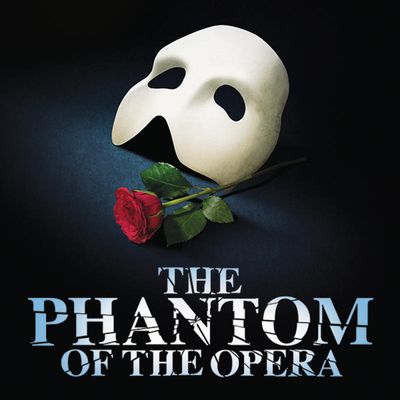
When Lightning Strikes goes to the premiere of the new documentary, The Show Must Go On. For the first time since the March 2020 shut down, an audience filled the Majestic Theatre that is home to Andrew Lloyd Webber’s Phantom of The Opera... Read More
From the show: When Lightning Strikes!
Guests








Featured Shows



About
When Lightning Strikes goes to the premiere of the new documentary, The Show Must Go On. For the first time since the March 2020 shut down, an audience filled the Majestic Theatre that is home to Andrew Lloyd Webber’s Phantom of The Opera. Co-directed and produced by Dori Berinstein and Sammi Cannold, The Show Must Go On is an inspiring film about how two productions in South Korea kept theater alive in the midst of the pandemic.
The premiere was held on August 9, 2021 and benefitted The Actors Fund.
Transcript
This transcript was automatically generated and might contain errors.
[0:00] Jeryl Brunner: From Shakespeare to Schwartz, from Fossey to Alvin Ailey. From Santham to Burrelis, from McNally to Faye. It happened to the greats, it still happens every day. When lightning strikes is the moment you know when lightning strikes, where you're meant to go. You can stand in Chalureka. Do whatever you'd like. You'll never forget the moment when lightning strikes.
[0:25] Jeryl Brunner: Hello, you're listening to When Lightning Strikes. In this episode, we bring you to the Majestic Theater and the Red Carpet to celebrate the premiere of the new documentary.
[0:41] Jeryl Brunner: In March 2020, when theaters around the world went dark, there was one place where commercial theater was kept alive. South Korea. Co-directed and produced by Dori Berinstein and Sammi Cannold, the film takes us backstage and behind the scenes in Seoul for a fly-on-the-wall view of the international companies of Phantom of the Opera and Cats. From hotels to rehearsal rooms, we experience how artists in the midst of the pandemic took on the Herculean task of putting on and performing their shows. Despite all that was happening in the world and against all odds, they kept theater alive. The documentary also follows Andrew Lloyd Webber from the United Kingdom as he gets inspiration from his Korean colleagues to fight for the future of theater.
[1:52] Sammi Cannold: Massively. It was the gift of a lifetime to get to be able to do something during this awful period, you know, that felt like there was energy that was helping to move things forward.
[2:03] Jeryl Brunner: It was an emotional night, especially since for the first time since the March 2020 shutdown, the Majestic Theater had an audience. What a feeling to join together at a Broadway theater.
[2:24] Greg Hildreth: What's that like for you?
[2:30] Greg Hildreth: I'm glad to feel like I'm back with my people.
[2:43] Eric Anthony Lopez: Being here, first vaccinated full house on Broadway, is an amazing, amazing experience. And so it feels like an opening night. It feels like we're opening again. You know, the last time you probably saw Red Carpenter was in 1988. So to be back here is just, it's amazing.
[3:01] Jeryl Brunner: I asked the artists how they stayed creatively nourished during the pandemic. Here's what Eva Noblezada and Reeve Carney from Hadestown shared.
[3:13] Eva Noblezada: Yeah, we both have found passions that were somewhat unexpected. They're connected to what we love, but definitely different.
[3:21] Reeve Carney: Uh, should I brag about you for a second?
[3:24] Eva Noblezada: Yeah, I mean, Eva is an incredible pole dancer. And not necessarily in the fully traditional sense that you would think, not limited to what you might think of when you first think of it. She's, I mean, she could be in circus way. It's crazy what she's doing. And so, yeah, that's been awesome. And then I've been working with electronics this year.
[3:41] Reeve Carney: I launched my own pedal company, and I now have an international dealer, which is incredible, it's insane. And I'm doing it all by myself.
[3:47] Eva Noblezada: You're like Albert Einstein.
[3:50] Reeve Carney: He's literally a genius.
[3:51] Eva Noblezada: Yeah.
[3:51] Reeve Carney: And what did you miss most about the theater?
[3:54] Eva Noblezada: About the well, being employed with my friends.
[3:58] Reeve Carney: Yeah, yeah.
[4:00] Eva Noblezada: Getting to do collaborative work as opposed to more isolated work. Not having to look at a screen is really nice.
[4:07] Jeryl Brunner: I talked to Tamika Lawrence, who will soon be in Caroline, or Change.
[4:07] Tamika Lawrence: I did a lot of TV and film. I wrote my own projects. I started teaching the business of theater because I think that's important because a lot of us, you know, we're kind of thrown on our butts. So I did that. I started a series called It Be Like That, after the murder of George Floyd, to kind of investigate for myself and educate others about what statistics in terms of gun violence, police relationships, all that stuff, what the CDC actually says, what the statistics actually are, but to do it in a sort of satirical way so it doesn't feel preachy, and so that was very fulfilling, to sort of find my voice and help others, I think.
[4:59] Tamika Lawrence: What did you miss most about, uh, what did I miss most about it? I think just the energy and communion between ourselves and the audience members. I think something that Oscar used to say that really struck me once is that, you know, theater doesn't really beat people over the head with something, good theater anyway. It proposes a question. And so to have those sort of conversations with the audience, I miss that.
[5:27] Jeryl Brunner: But you're in Caroline, or Change.
[5:28] Tamika Lawrence: Yeah.
[5:30] Jeryl Brunner: We haven't started rehearsals yet.
[5:31] Tamika Lawrence: I think we start next month, hopefully. Because our performances start October 8th. And I'm looking forward to that because, you know, before the pandemic started, I don't know that people were ready to have certain conversations about race and class and socioeconomic statuses, and so I'm very excited to have this conversation now at a time when I think everybody's more receptive and the walls are down.
[5:55] Jeryl Brunner: Look at what Greg Hildreth, who Lex Stars and Company is doing.
[6:00] Greg Hildreth: Well, one of the ways you stayed creatively nourished was by painting these exquisite portraits of pets.
[6:07] Greg Hildreth: Yeah, I was, you know, I didn't know what to do when we shut down, and my girlfriend asked me what I needed, and I blurted out watercolors, and they arrived the next day. I started painting my own cats and house plants in the house and stuff like that, and then people started asking if I would paint their pets. It kept me sane for a lot of months.
[6:27] Jeryl Brunner: Can you bring me to the moment when you got the email or the notice that Company was reopening, you had a date, it was happening? Take me to that moment.
[6:36] Greg Hildreth: Totally. Well, we originally announced that we were going to be starting rehearsal in November, which was kind of a bummer because I was excited about September, and then we actually got an email about a month later saying that we were gonna be, we had been bumped up and we were starting in October, and that was the moment that was like completely euphoric and surreal. I still can't quite believe it's happening.
[6:56] Jeryl Brunner: There was dazzling Lilius White.
[6:59] Lilius White: I did some shows with Seth Rudetsky, whom I love very much. Seth and James are just divine. I've done some Broadway Podcast Network shows, specifically As the Curtain Rises. So if nobody's familiar with that, they better get on it because it's fun, it's a lot of fun. What else have I done? A Broadway soap opera. Yeah, it's very dishy. Very dishy. Very good. And yes, I'm working on a Sarah Baum album that's due to come out next spring. And I have an album that just dropped in July. It's called Get Yourself Some Happy.
[7:36] Lilius White: Oh yeah. And if you go to Liliuswhite.com, you can get it. It's great to be on this block in particular. I did my first Broadway show across the street there at the St. James Theater a few years ago.
[7:51] Jeryl Brunner: For people who might not know, what show is that?
[7:54] Lilius White: That was Barnum. Yeah, that was my first. Thank God I'm old. You say so, it's nice to see this activity going on on the street. It's exciting, and I'm hoping that things work out in the right direction as far as all of this stuff that's going on in terms of illness and what have you, and you know, hoping that things work out in terms of the changes that need to be made in the theater arena for Black people and people of color. So I'm hoping that this is the beginning of that, and I'm just praying for the best, the God best outcome for all of it. We need it. We need the arts, we need the arts, and you know the people in the audience need it, the artists need to do it.
[8:45] Jeryl Brunner: I spoke with Cody Renard Richard, the stage manager of the new show Passover, that is already in previews.
[8:56] Cody Renard Richard: Yeah, I'm a stage manager. I'm currently working on Passover, which we just started previews on Wednesday.
[9:02] Jeryl Brunner: What would you like people to know about Passover?
[9:06] Cody Renard Richard: Come see it. It's the only show running on Broadway right now. Come see it. Well, Springsteen is also running, but you know.
[9:14] Jeryl Brunner: How did you stay creatively nourished during this time?
[9:18] Cody Renard Richard: Oh, um, I, you know, I started teaching, I created a scholarship program, I did a lot of advocacy work. It's been a busy time in this last year and a half. Just I kind of stepped away from stage management to feed all the other things that I'm interested in, so it's been a lot.
[9:34] Jeryl Brunner: What were you teaching?
[9:35] Cody Renard Richard: I was teaching at NYU and Columbia. I was teaching some of their stage management classes.
[9:40] Jeryl Brunner: Jay Armstrong Johnson chatted with me about what he's been doing.
[9:46] Jay Armstrong Johnson: I kind of became a producer and a writer over the course of this time.
[9:50] Jeryl Brunner: Wow, and a teacher as well. Can you talk about that?
[9:54] Jay Armstrong Johnson: Yeah. I do an annual Halloween show every year, and we decided to go virtual this year, and we wrote a whole new virtual event, and we shot music videos, and it was very exciting and very nerve-wracking. Um, yeah, and I also started teaching private acting lessons via Zoom to a bunch of kids all over the world.
[10:14] Jeryl Brunner: What did you miss most about live in-person theater?
[10:20] Jay Armstrong Johnson: Mostly the community, the hugs, seeing my friends. You know, it's one thing to create things in a virtual environment, and we all knew we all had to pivot in that way, but I really need to be with my humans and in a room and that kind of in-person creative process. So I think that's what I miss the most.
[10:36] Jeryl Brunner: Actress Salicia Thomas from Beautiful, the Carol King musical, who has her own podcast on the Broadway Podcast Network, Black Hair in the Big Leagues, stopped to chat.
[10:49] Salicia Thomas: Well, a few things. It's like having so much free time. I started two podcasts, Black Hair in the Big Leagues with Broadway Podcast Network. It's been so cool to like, it was really an excuse to talk to my friends in the industry and like sit down with people and have deep conversations and like have fun. And so that has been so nourishing. I also like have a joy for interviewing that I didn't know about. So that's been fun and doing just like some volunteer work on Zoom.
[11:21] Jeryl Brunner: Tell me about that.
[11:23] Salicia Thomas: Um, Sing for Your Seniors. I like a lot of Broadway people, they'll go to senior citizen places across the country and sing songs. And so through the pandemic, we've been doing it on Zoom. So I've been able to perform at you in Utah and of course Harlem and like all over the country because Zoom has been so convenient.
[11:44] Salicia Thomas: We've been waiting for so long, and every time it's like, oh, it might come back. Oh, just kidding, we're pushing the date back. And those doors are open, people are going inside. My vaccination card got checked coming in here. I feel safe. I'm hoping everyone else feels safe too. I'm just so grateful.
[12:01] Jeryl Brunner: The evening celebrated and benefited the Actors Fund, as Darius DeHaas explained.
[12:08] Darius DeHaas: When COVID-19 shut down our industry, the Actors Fund didn't miss a beat. In fact, when Broadway theaters closed on Thursday, March 12th, 2020, the Actors Fund had their programs and services completely online by Monday, March 16th. They have helped more and have distributed more than 22.2 million dollars to more than 16,500 people in need since the pandemic began.
[12:48] Darius DeHaas: Yes.
[13:01] Jeryl Brunner: This was unexpected.
[13:10] Darius DeHaas: Could we start again?
[13:13] Jeryl Brunner: I think you've made your point now.
[13:19] Darius DeHaas: You've even gone a bit too far to get your message home.
[13:25] Jeryl Brunner: After the film was shown, more radiant Broadway voices, including Adrienne Warren, Ariana DeBose, and Sierra Boggess, fittingly sang "As If We Never Said Goodbye" from Sunset Boulevard.
[13:41] Jeryl Brunner: As the lyrics go, this world's waited long enough. Everything's as if we never said goodbye.
[14:06] Jeryl Brunner: We'll teach someone new ways to do it. Thanks so much for listening. When lightning strikes is the moment you know. The theme song was written by Tom McGovern. This episode was edited by Kyle Moore, and the talent was booked by Anna Strout.
© Broadway Podcast Network, All Rights Reserved