

A most prolific actor, just a few of Stephen McKinley Henderson's credits include Fences, A Raisin In The Sun, A Doll's House Part 2, Lincoln, Manchester By The Sea, Lady Bird, Dune, Causeway, Beau Is Afraid and the upcoming Dune: Part 2... Read More
From the show: When Lightning Strikes!
Guests
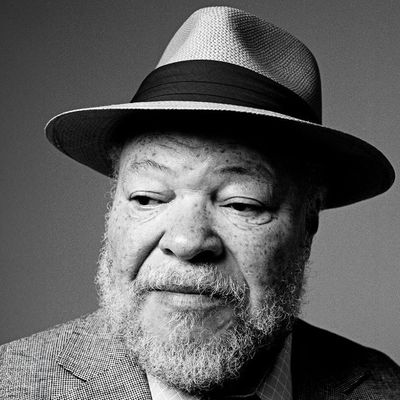
About
A most prolific actor, just a few of Stephen McKinley Henderson's credits include Fences, A Raisin In The Sun, A Doll's House Part 2, Lincoln, Manchester By The Sea, Lady Bird, Dune, Causeway, Beau Is Afraid and the upcoming Dune: Part 2. He was last on Broadway at Second Stages' Helen Hayes Theater in the riveting play Between Riverside and Crazy by Stephen Adly Guirgis. Directed by Austin Pendleton, Stephen was just nominated for a Tony Award for his riveting performance. Returning to the role that he originated back in 2014, Stephen played Pops, a retired police officer and devoted widowed father, who is doing his best to hold on to his beloved and massive rent-controlled Riverside Drive apartment.
This episode was recorded on April 26, 2023.
Transcript
This transcript was automatically generated and might contain errors.
[0:00] Jeryl Brunner: From Shakespeare to Schwartz, from Fawcy to Alvin Elley, from San Tom to Burrelis, from McNally to Faye. It happened to the greats, it still happens every day. When lightning strikes is the moment you know when lightning strikes, where your mentor goes, you can stand in Chalureka, do whatever you like. You'll never forget the moments when lightning strikes.
[0:25] Jeryl Brunner: Hi, this is Jeryl Brunner, and you're listening to When Lightning Strikes, where we talk about the tingly mic drop moments that led you to becoming an artist, a most prolific actor. Just a few of Stephen McKinley Henderson's credits include Fences, A Raisin in the Sun, A Doll's House Part 2, Lincoln, Manchester by the Sea, Lady Bird, Dune, Causeway, Beau Is Afraid, and the upcoming Dune: Part 2. He was last seen on Broadway at Second Stage's Helen Hayes Theater in the riveting play Between Riverside and Crazy by Stephen Adly Guirgis.
[1:17] Jeryl Brunner: Stephen returned to the role that he originated back in 2014. The New York Times called Stephen's breathtaking performance deeply easygoing and impeccably measured. Welcome!
[1:34] Stephen McKinley Henderson: Thank you. Good to see you and good to be able to speak to you.
[1:40] Jeryl Brunner: Oh, it's such a joy and an honor to have you on the podcast. What has it been like now that there's some time that's gone by since you've done this exquisite play at the Helen Hayes?
[1:55] Stephen McKinley Henderson: Well, it was, um, well, it was such a joy to be a part of it, first of all. And in a wonderful season, I must say, what a Broadway season, which is still going on. I mean, there are things that I can't wait to come to town to see because I don't live in New York, I live in Buffalo, New York, and so I'm gonna go in and see a few things, but I saw some wonderful things before we started, and it was just a joy to be a part of it. But I must say it was also very relaxing to go off that behemoth of a role, you know.
[2:33] Stephen McKinley Henderson: Behemoth, my goodness, I love this play so much. I care deeply for your character Pops. Can you bring me to when the other Stephen, the playwright Stephen, came to you and said, "I have this play"?
[2:51] Stephen McKinley Henderson: Well, you know, he told me about it because he saw me walking with the cane. I had just had a hip surgery, and I guess this was 2012 or 2013, something like that. And I said, "Yeah, man, I'm gonna slow down now. I gotta take it easy. I probably won't be doing much stage anymore." He said, "Oh no, no, no, that's not true. I've got a play that you play a supporting role in, and I've got a play that you play the principal in." And so, and I said, "Well, you better hurry up and write them, man, because I'm running out of steam." But he absolutely surprised me and he started, he didn't have a play at all. He was saying that he was actually just trying to encourage me, but then he talked to Neil Pepe at the Atlantic, and he had about 15 pages, and Neil believed in those 15 pages, and we started doing readings at the apartment on Riverside Drive.
[4:01] Stephen McKinley Henderson: And it was just an incredible journey to go from the 15 pages and the lie that he had the play already that he was writing it, you know. But he crafted with an idea in mind, he knew about the color of the day, about how many undercover policemen who were wearing the proper color of the day were actually shot by other policemen because they were people of color, and so they went on the scene and they didn't think that they were the undercover folk, and that was the notion, the sort of seed, and then he built out from there with his feelings about his father and about his friendships with all these various people and what an incredible motley group of people came through that apartment and everything, and he ended up with just, I think it's a wonderful piece.
I'm so glad that he won the Pulitzer for it, you know, and to have that prior to and after the pandemic, and then, well, not after because we're still, because we were testing all the time, and that's another thing.
[5:16] Stephen McKinley Henderson: I'm running off here, Jeryl, but I have to say, it's so wonderful to be a part of that Broadway season because the people who are ready in the wings to come in. If someone tests, and I was fortunate, I never tested positive, nor did Liz but Canavan, who you know is my partner, and we really pride ourselves in that because we were the older of the group of people that were there, and we never tested positive. But when someone did test positive and had to go out, there were such wonderful actors ready to come in and do playground ball, you know, and jump in. And it was a joy to do that. And the company we started out with, mostly the whole company that we had started with, you know, and that was a joy that everyone was able to come back, and then to have that wonderful bench ready to come in whenever someone had to leave. So that it was a joy to do that. That's all I can say.
[6:21] Jeryl Brunner: Well, it takes a village, right? And what I love about this play so much, it's such a gem. For people who might not know Between Riverside and Crazy, what it's about, would you mind encapsulating it?
[6:36] Stephen McKinley Henderson: You play Pops, as you mentioned, a retired police officer. And yeah, my son and I have weathered the death of his mother and my wife, and we're really in the throes of that still. We haven't had another Christmas yet, and the Christmas tree is still up, and she died just before Christmas. But he also has had trouble with the law and with drugs, and yeah, the son, and he has had some friends. He's now become sort of a mentor for one guy who is there, a wonderful character, Oswaldo, who's just a joy, and then he has a girlfriend who is amazing, Lulu, who is also there in the house with him, and they occupy the house. Then he has his former partner, Pops' former partner, a policeman, and her new fiancé.
[6:54] Stephen McKinley Henderson: The thing about it is Pops has a lawsuit with the police department because he was off duty in an after-hours joint, and he was shot several times, shot six times by a young officer who came into this after-hours joint. I think someone tried to rob the place, is what happened, and Pops thought he could defend the joint because he is a cop, although he was off duty and he shouldn't have been there. And so when they came in, they thought that he was among the people who were robbing the place or who had robbed somewhere close by. And so he's also, which is why he's really crazy, is about to lose this wonderful Riverside Drive apartment, which is his whole legacy, is everything, and he wants to be able to give that to his son. So he's between Riverside and Crazy, yeah.
[8:56] Stephen McKinley Henderson: I love that description. And what's so phenomenal too is this exquisite Riverside apartment is like another character in the play, which from what I've read is the playwright Stephen's father actually has had this apartment, right? Stephen still lives there.
[9:23] Stephen McKinley Henderson: Yes, that is this wonderful apartment that the Labyrinth Theater often has their celebrations. But yeah, it's a fabulous place with a view of the Hudson. I love what I love about Pops is that he's so multi-layered, you know, they're all multi-layered, multifaceted. I love his relationship and his sense of caring for his son. Pops is the moral center, and there are people around Pops who are doing things that are possibly illegal, and yet Pops is full of love and acceptance and understanding and knowledge. It's quite something because we don't know whether that's newly acquired or whether that's how he's always been, but I think part of it is that after he lost his wife, he wanted to try to replace her position in the house.
[10:33] Stephen McKinley Henderson: She was the moral center of the house. She was everything. And he's doing his feeble best to occupy that position. But when she was there, he didn't have the kind of activity that he's got going on there. But it's also quite wonderful because Stephen just writes these brilliant characters who are, as you say, are multi-layered. The church lady comes into this.
[11:02] Stephen McKinley Henderson: Yes. This character that Eliza Colinz played. My goodness. That was a joy to be a part of, to see how that grew. To see how that character grew. And how, you know, Stephen is just, he's inspired by things that, and he takes them quite beyond the point that he encountered them. But he's inspired by wonderful things. And this character, the church lady, I'm quite certain was inspired by an actor who first read the role when it was really maybe 30 pages by that time. And she was from, I believe, Brazil or Peru.
[11:52] Stephen McKinley Henderson: But he was able to build off of her first reading of it, you know, and she was never to be a part of the play. She just came through a lab, through an intensive session and back home again. I think she was a playwright, really, but she had this wonderful effect on Stephen in terms of how this role would develop, and then he put it in the hands of one of the great masters of theater, Eliza, and what happened then was just magical. And so the play, it's very difficult to describe because it's so character-driven, and all the characters are so full.
[12:45] Stephen McKinley Henderson: You can have a play that followed every one of those characters.
[12:49] Jeryl Brunner: Yes.
[12:56] Stephen McKinley Henderson: And uh with an incredible uh company of actors. Uh I can't say enough about that ensemble.
[13:05] Jeryl Brunner: You're right, because I care so deeply for every one of them. And you I don't want to give it away, but that scene between you and the church lady, it's electric, and then to see what she gave you, and then what you give her, which I don't want to give away.
[13:27] Stephen McKinley Henderson: That's his world. That first of all, there are no unredeemable or irredeemable, I don't know which is the proper term, but there's no one who cannot find redemption in their life, no matter what they've done. And there's grace that you know comes in. You have to have, you know, you depend not only on the kindness of strangers, you depend on the grace of God as well. And uh uh and he always has a theological message hidden inside the tavern of ruin that that you find these characters in. They they come from really quite desperate and and desolate places, but you can find the height of moral and ethical uh generosity in that same environment.
[14:22] Jeryl Brunner: Yes. Even when we learn that maybe Pops isn't quite you know who we expect, we still love and care for him deeply. We're always on your side.
[14:34] Stephen McKinley Henderson: And and you know what I love about that too is that the world we live in calls for uh a different kind of uh survival techniques. You have in order to survive in in the world as it is, and still have some integrity and nobility and and and and honesty, uh there's always a little skirting of the truth that goes on inside your survival in the in the in the society, but uh but always, as I say, everyone can find uh some redemption, you know.
[15:15] Jeryl Brunner: What was it like to come back to him, you know, after the pandemic?
[15:20] Stephen McKinley Henderson: Well wonderful, wonderful uh question. Because I had really put my hook into the role in terms of his grief for the loss of his wife. And uh it's it's kind of when the character was in his alone time, that's what was motivating. What would she do? What would she think of what I just did? How could I do that? What would what would and then um this time coming back, it really was more about the sun for me. It was realizing how difficult it must have been for him, and what my part was in the difficulty of him being the son of a policeman, and and and why he was closer, so much closer to his mother than to me, and and and what my faults were in terms of my connection to my father. So I was it I came back, I met the man again, met the character again, but I met another side of him, a more you know, uh uh the part that was really immediate. It wasn't the grief of what he had lost, but the possibility of how he could help this this child that he definitely was a part of the problems the child had.
[16:47] Stephen McKinley Henderson: So that was a wonderful thing, and because uh Rashid was added to the company because we had all the actors we had from original from the original production, except uh uh uh a dear friend Ron Cus Jones, who had bigger fish to fry at the time, and so he couldn't come back, and we inherited uh uh Rashid Common, you know, yeah, and uh common he just brought such a wonderful spirit to the work, and and and it was wonderful too how the great Austin Pendleton was pushing him to say and Steven was were you know, they were both saying, you know, you might be too nice of a guy to play this part, common. And and he and you know, Rasheed was saying, man, you know, just this is how I got here. I I'm you know, I tried to evolve to be this person.
But where I come from, I can pull that out. So they say, Well, pull it out, man. Come on, let's let's see. Bring your street with you. Bring your street. Because he is really an evolved being. Common is a really, really beautiful, incredible spirit. But he earned it, you know. He ain't been around the block. So it was just wonderful to tie up with him and have what I what I call I mean the scenes that Steven built, one after another, and I go from one, but to go from the church lady to a confessional scene with my son. Uh it was just uh I there's just no way to describe how as you work on a role, you start to see the beauty of the construction of it. And you know, because you you start out with a certain knowledge of it, but once you live it through several times in several circumstances, it just becomes so marvelous to live inside a beautifully constructed poem like what what Steven uh wrote.
And uh so it's a and and to do it with those wonderful people. I you know I'm kind of gushing here, but I just gotta tell you, it was a wonderful thing to, and it's great to have it in the rear view mirror and be able to talk about it. Because if I had to go and do it tonight, you see, to discuss it like this, because I'd I'd be still in the midst of, you know.
[19:14] Jeryl Brunner: I see. You know, the one word I could think of between you and your son, and that you know your common's performance, your performance is a ferocity. That you're let you could feel it, you know, it was palpable, and I could feel the ferocity from you defending him and then his ferocity defending you. And it was such a beautiful thing to witness.
[19:42] Stephen McKinley Henderson: And then yeah, and and shout out of course to Austin Pendleton who directed all the iterations of it.
[19:50] Jeryl Brunner: Well, I wanna know your lightning strikes moment or moments when you knew you had to be an artist. Yeah, from what I've read, you grew up in Kansas City, you went ultimately went to Juilliard. Um, of course, worked for many years with August Wilson, but was there a moment or moment you could point to when you knew this was your path?
[20:18] Stephen McKinley Henderson: Well, you know, um I was sort of falling uh yeah, I was sort of just following the breadcrumbs. There were things that I went to a wonderful high school, brilliant high school, had a fabulous uh uh director and teacher. Two fabulous directors and teachers, actually, in terms of theater, but a wonderful faculty, the whole school. So we did plays there, and I did in high school. I played uh Willie Loman in Death of a Salesman. I played uh uh Tony Esposito and the Most Happy Fella of an operetta. I don't know how I got through that. Everybody else was thinking, and I was trying to do my Rex Harrison with the you know, but uh uh and and I got to do things like Arsenic and O'Leas now. We did we our high school was just incredible, uh, a high school, and the plays that we that we did.
And uh uh the mouse that roared, I remember, and uh I mean, just just just really a wonderful experience. Uh and uh so when I got ready to go to college, uh, I was just gonna go to junior college uh in town, and I had one of the teachers who said, You get good grades, you're gonna on a uh, you know, why are you going to that? I said, Well, nobody in my family's ever gone to college, and they thought I was somebody else from some other place. They didn't they, you know, they knew me as the student at school, but they didn't know where I went home, and he went and saw where I came from and everything. He says, I gotta help you. And so I got to go to Lincoln University in Jefferson City, Missouri, and uh, I was a theater political uh science and math major, but I did plays.
That's how I got to go there. Uh and I did one year there, and uh I I did some plays there, and and I got a chance to audition because of another teacher from my high school. I got a chance to audition for Juilliard, and I got in, and it was group one. I mean, it was they were f starting the school, you know. It was the first the first class of the Juilliard uh acting program and met John Housman and Michael Conn. And um so it started to occur to me, maybe I should do this, you know. I auditioned in Chicago the first time I flew up, I got on a plane, they sent me to Chicago to audition. And I um I I was thinking that maybe I should do this. Then I came to New York City, and I was just uh it was crazy.
1968, and uh and uh I was just uh uh it was it was quite a bit before me. So uh I left after a year, two years. I literally I dropped out of school and uh because of life stuff in Kansas City and all that, and I thought I'd never find my way back. But I knew I was gonna act, but I didn't, I just knew I would act somewhere in in Missouri, and I got in a company there. But now, so I'm getting to this moment because uh it is really is a this is the moment. We were doing a play of uh I I when I was in grad school, I went to Purdue University graduate school, and I thought Fugard plays of Fulgar were uh part of my uh master's thesis. And um so when I got to uh uh St. Louis and I was in the company for several years.
I started out as the uh I did more roles from the VOM off stage than I did on stage. I I was you know, I just got in the company, and then I worked my way up and I did a show, uh, The Island and C Sue Bonzi is dead, and we went to the Dublin Theater Festival in Ireland. Uh we were asked to come uh with uh The Island, uh play by Fugar, where I play Antigone and the other prisoner plays Creon. It's a brilliant play, Fugar's and the success of that play in Dublin, to be in Dublin, Ireland at the uh Trinity College, um uh Edmund Burke Hall. It was a Dublin International Theater Festival, and to see there was something about that experience, I can tell you, that made me realize that I had not lost my way too far, that I did have to leave leave Juilliard because of what was going on in my life.
I had to I had to clean up some some baggage, some things psychological. And I had survivor guilt because I had a brother who had who suffered, and I had a sister who suffered some things. I don't want to go too much into that. But I had survivor guilt. So I would sabotage sometimes when things were too good for me. And I would think, well, it's tough for them. And so anyway, but that my son was born in 1981. I was in Dublin in 1981. And I realized that I could stop sabotaging myself.
[25:25] Stephen McKinley Henderson: And that my son deserved everything I could do for him, even if I didn't think I deserved it. He did, you know, and so I had to be all I could be. And that was when I realized what a blessing it was for me to be in theater, to have had the high school, to have had Juilliard, to have had to have had all the things. And I came back into New York with August Wilson in the production of Jitney in '99 and so at the turn of the century once again I was back on it at about, you know, 50, 51, you know, but I had had quite a journey but that experience in Dublin and then meeting August and getting to work with him and my friendship with Amiri Baraka, he was also a very important mentor, and Amiri and Seldis, I mean by law, but she was a feature at Juilliard and always stayed in touch, and Houseman and Michael Conn and all these people who believed in me all the way back to high school, people who believed, and so it started to occur to me that this is the thing to do.
And even this experience we're talking about, I had really had a wonderful journey and I thought this hip surgery was gonna take me out of the game and Steven said, "Oh no, no, no, I got this play," and he didn't even have a play but he had the idea that he had a play and he wrote it and here we are talking, that's extraordinary and like you said, that people believed in you from the very get-go like that.
[27:55] Jeryl Brunner: I'm curious, what was it though that got you to those high school plays to say, "Oh, I want to be Willy Loman" or "I want to be the most happy fella"?
[28:08] Stephen McKinley Henderson: It was love of poetry, poetry first, and my brother who was deaf and we went to visit an aunt in Oklahoma and he was not able to go to the right schools, he was going to regular schools and getting terrible grades, they didn't know what, anyway, she said, "You're gonna learn the Lord's Prayer in the 23rd Psalm and he's gonna sign it," and I had to memorize. Now I was seven, he was 12, so at seven years old I learned the Lord's Prayer in the 23rd Psalm and he signed it and she took us around to these churches to raise money so he could go to a school where he would be with other hearing-impaired people. And so it became, when I saw him, when she convinced him that this was a way for him to have a life, he stopped signing it in a very clinical way, he started doing something that was akin to dance.
It was something inside of him that was moving so graciously and beautifully and I couldn't just say the da da da da da da da da da da da da da da. It was as I was at first, somehow I connected with him and we started making some money, you know, she took us to the church and they say, "Oh boy, that he's wonderful." And who is that little boy that is his brother is saying? Because I was trying to capture some of that spirit and the super objective that my aunt had instilled in him that if you do this, it could lead to this and lead to that and lead to that. And he saw it. And so he started doing it with such verve and spirit. And so I couldn't just say the words. I had to somehow do what he was doing.
And I wanted it for him as well. I wanted him to have this other opportunity. And he did. He went to school. He went to in Mexico, Missouri. That's where we were in Missouri, and there was a school there. And he became the president of student government and captain of the football team down there. And it was just great to see him flourish from that experience. And the poetry that I got in my high school from Miss Bloodworth was a teacher, an English teacher named Ms. Bloodworth, which was quite severe. And, but she introduced me to the Rime of the Ancient Mariner, and I remember reading that and thinking, what a wonderful thing it is to be able to pass on a story to somebody that at the right moment that would change their path, and I had kind of experienced it, you know.
And so there were lines in Coleridge's piece that resonated with me. So I always thought of that as the beginning really of my formal kind of desire, and I listened to the Caedmon records of different Shakespeare, the things I could go to the library, those big records then, you know, and you’d listen to, you couldn't take them out, but you listened to them. And I heard Paul Scofield and Olivier and Britt Redgrave and Sybil Thorndike. I got to meet her at one point because of the North Carolina School of the Arts, where I went after Juilliard, and we went to England and studied at Rose Bruford. And so I got back on the path after I lost my way. It was always, it was but it was always the beginning was a love for poetry and being with my brother trying to get the 23rd Psalm in the Lord's Prayer to have as much meaning for me as it had for him.
[32:32] Jeryl Brunner: That's so beautiful you gave each other these gifts, you and your brother. That's really wonderful. And I love that you end up in Buffalo, and you said you're still there and met August Wilson there. What was it about Buffalo?
[32:48] Stephen McKinley Henderson: Well, you know, I met August in Pittsburgh because I was in Buffalo. I had come to the Studio Arena Theater, it doesn't exist anymore, but it was one of the repertory theaters after St. Louis because I was a company member there, and then I went from theater to theater and the Denver Center, which is a wonderful place to work, and St. Louis and Indianapolis, and so I had a series of places that I could do in a year, and Buffalo was a regular. And then a teaching position opened up, and so after my son was born, I was looking to be home a bit more because I had missed so many things, first haircut and that kind of stuff. So Buffalo was the place that I was trying to get Chicago because I loved Chicago and I had worked in Chicago.
But then the position that opened up that I could get tenure track line was in Buffalo and it became, it's just been a wonderful place. I retired in 2016, and we were doing the film of Fences. So I had been able to get to a place because I had chaired the department and been ahead of the acting program and done all the hoops you do for tenure and all that, and so I was able to do one semester on and one semester off in part of the 2000 after turn of the century and in the later part of the 90s, and so I was always able to do a show, I always had a play the semester that I was off, and then I came back to my job. I always had something somewhere to do, and eventually I retired and it just happened to be when we were filming Fences in Pittsburgh where I had met August in Pittsburgh.
So I, yeah, I, as I say, you know, I was following the breadcrumbs, and then I realized that there was some methodology to this. There was some grace involved in it, that there was some divine path that it became very clear that I was supposed to be doing this.
[35:07] Jeryl Brunner: I love how you've helped keep August Wilson's legacy alive. You're doing Fences with Denzel and Viola Davis and you know this brilliant cast you did on Broadway, nominated for a Tony. What do you miss most about August?
[35:07] Stephen McKinley Henderson: Oh, my God, I miss most about August is just how much he loved. He loved music, he loved boxing, but and his daughters, he was just so thrilled about his daughters and they were, you know, many a few years apart, but his Sakina, his oldest daughter, is a very good friend of mine and a wonderful, wonderful writer in her own right actually. And I remember when he was holding Azula, his last, she was an infant, but he was holding her like a camera and letting her see things that he saw and just see the joy on him to see her looking and smiling at something that he thought she should see. And I mean, she wasn't taking it in in any way like he was, but there was something about how much he enjoyed his people.
And I don't just mean African Americans. He had a special love for the survival instinct inside African Americans and the ability to overcome. But he knew that it was a metaphor for all life, that there was something that everyone could learn from that journey. And every immigrant journey, to tell you the truth, you know, I mean, and it was something to be in London at the National Theatre doing Jitney and having all these people from these different cultures come up and say, "That reminds me of my uncle, that character reminds me of my brother." And because it was something given to the world, like the blues and jazz, but it came directly from the African American experience. The American experience in August's plays is very much like how the development of the blues and the jazz that's also from the African American experience.
But it belongs to the world. It belongs to everybody. And you know, anybody that could pick up the instrument and play the music and sing the songs. And so I, what I miss, I, you know, I miss everything about August.
[38:15] Stephen McKinley Henderson: Because I, I, I, you know, just having him around, popping his fingers or hearing the music and having a great breakfast because breakfast was a very special meal to have as late as you could get it. It was kind of a kick to be in Pittsburgh to have breakfast with him at Eddie's restaurant, the restaurant that he used to model two trains running. To be there and have Eddie's wife say, "Oh my God, I thought I was on my way out of here, and here I know I gotta, I gotta, he's gonna open the door for you guys." I know he's gonna open the door for you guys. It was a joy. He was just an absolute joy. And I think about how you so fully inhabit every character you're playing, you know, on screen, in plays, and you know, I forget about Steven, and you know, I'm seeing Pops.
What's some of the best acting advice you've gotten, or how do you approach a role when you get that script? Well, the man, I've had so many wonderful teachers, I gotta tell you, it's incredible. When I say Marion, Marion, just the tops, and Lloyd Richards, and Bill Esper, the Meisner technique. But Lloyd, working with Lloyd late in my life galvanized everything I had ever gotten from any place, and his six questions: where, what experience am I coming from? Where, or what experience am I coming to? What have I come here to do? Why? Why now? At this moment, and what do I expect to gain from it? And if I get it or don't get it, then what do I go on to do? So then I go on to the next attempt to get this thing that I'm after.
[40:39] Stephen McKinley Henderson: But the best advice I think I've ever gotten about the craft, I was having some problems anyhow. I was diagnosed with this stenosis, lumbar stenosis, and it was some time ago, many years, actually, I can't think how many years, but this doctor, her name was Warner, Doctor, I can't think of her first name now. This wonderful doctor, and she took all these tests, and she said, "Now you're gonna have, you escaped this, this is in your body, and when it happens to some people, it happens in infancy. Children are born and they have this particular kind of stenosis, and then it happens unmercifully at puberty, just when you're starting. Some people are stricken with this at that time. Then there's another period in the 40s, where they say, she said, 'But now you're very fortunate.
This is going to, you've escaped all these particular places, but it's gonna hit you in your 60s.'" That's when. And I was in my 40s at the time, and she said, "Well, what do you think I should do?" And she said, "All the things that you know you've been saying you would do if you weren't tied down, everything that you really, really want to do, do it now. Start it now." And I thought about what she said, and I was teaching at university, and I realized that I had to seize every opportunity I had to do a play away from Buffalo, that I had to take every opportunity to remain in the larger, you know, business, the larger arc of the work. And an opportunity started coming, just started happening. You know, one show here, one show there, just stay in the mix.
[42:53] Stephen McKinley Henderson: And then I went down to Totem Po Playhouse, where Jean Stapleton, who played Edith Bunker, you know, she and her husband had a theater in Pennsylvania, Totem Po Playhouse. I went down there to do a wonderful role in The Boys Next Door, a wonderful play. And I came back through Pittsburgh, and August Wilson was speaking at a church, and I saw that in the paper. So that was, and I went out, and it was my first encounter to just meet him. I never worked with him. I'd done his plays because I was going through Pittsburgh because I was about to do Joe Turner's Coming Gone, one of the great plays of the 25th century, and I was just gonna look at this town because I knew all these streets that were named, and I happened to go through when he was there, and I got to meet him and chat with him.
And then a few years later, I actually got to audition for him, and he didn't even remember that I met him before, you know. But then we got to become, I can honestly say that we got to become friends, and that's, I, the, it is, it's like with Steven now to get back to Riverside, to be friends with a person who you know has genius qualities. I mean, that's all I can say, you know, just that someone who is truly an inspired artist, it's quite something to do that, to have a friendship with someone like that. And now you also can have some real knockdown fallouts, you know, you don't say no to a genius too many times before they say, "Okay, that's it," you know. But so far, it's just been quite a kick, and now in my 70s to have done a show on Broadway in a wonderful season.
I mean, in a season that when I saw The Cost of Living, I thought, "Oh my God, what a great piece." And I saw Wendell in Salesman, and the young John David Washington in Piano Lesson, and the shows I didn't get a chance to see that because I was working, and now I believe I'm gonna get a chance to see, I will, I have tickets to see Fat Ham, and I have tickets to see The Sign in Sidney Brustein's Window, a play, a role that I played when I was young, so there's a role in that that I used many, you know, many years ago and auditioned and got in a company because I could play that one role that she has for an African American in The Sign in Sidney Brustein's Window.
[45:52] Stephen McKinley Henderson: And I just can't wait to see it at Oscar Isaac's, who I, you know, worked with in Dune, and he's a Juilliard person too. Yes. So yeah, it's, it's, I'm getting to the good part. I'm getting to the good part, yeah. Isn't there a role you're aching to play? You played so many different characters. I just did a film with the great Alex Garland. I don't know if you know this film, Alex Garland, but he's wonderful. He did Ex Machina, and we did a limited series called Devs that was quite wonderful that Steven Spielberg was a fan of. But I just did this film that will come out later this year, and what I think is my favorite role that I've done on film anyway. You know, yeah. The stage, I just had so many, my cup runneth over there.
And so, you know, when you say, is there something you want to do, I love being part of a director or a playwright's vision. When they say they're doing this thing and they say, "Well, here's, I think maybe we get Henderson, see if Henderson can do this one, if he'd like to do this." That's the one I want to do. You know, there's nothing I want to go back to do, and there's nothing in literature, well, maybe I think maybe in Heartbreak House, Captain Shotover, I like, and Three Sisters, the doctor to Boudin, to you teaching this, pronounced, but you know, I, and these are things that I've done in various places in or in class or something that I wouldn't mind actually doing. But I worked with Lloyd, I did work on Shylock with Lloyd.
I did that in wonderful workshops. So those plays are not something that I really like what new writers are writing, what they're writing today, and to be somebody that they say, "Wow, could we get him?" Like when Greta Gerwig let me be a part of Lady Bird, my goodness, man, to get to, you know, that's, and you're in the company of these wonderful people, Lois Smith and, you know, goodness, and you're wonderful piece, yeah, yeah, and Beanie and, gosh, and Timothy and Lucas Hedges, they do, and that's another part of it to meet these young actors who come in and say, "Oh man, I know your work, and I gotta tell my mother that I met you," you know, it's like I love that. I'm getting to, and I met recently working on Dune 2 with the great Stellan Skarsgård.
But I got to work with Austin Butler, and now Austin had this great year as Elvis, but he and Timothy together, man, tying it up, man. Wow, that's gonna be something. Get ready for that one. But this role that I just did, it'll come out later this year. That I think it's the title they're gonna keep is Civil War. That's the name we shot it on, and Alex Garland, great script with Kirsten Dunst and Wagner Moura, and Kaylee Spaney, one of my favorite, favorite people. Yeah, there's, that's it. That's the thing, what I'm trying to say. My favorite thing is what I don't know is coming. I love that. That's it.
[50:04] Jeryl Brunner: Here's to many, many, many more. I was so grateful to chat with you.
[50:10] Stephen McKinley Henderson: Oh, it's been great. I feel like I just ran off. You really got, you know, it's a good thing that we see each other while we do this because it does bring out more, it absolutely does.
[50:23] Jeryl Brunner: It does. You certainly do get it. I can tell you it's great to see you smiling.
[50:25] Stephen McKinley Henderson: It's great to see you, thank you.
[50:33] Jeryl Brunner: When lightning strikes, it's the moment you know.
[50:37] Jeryl Brunner: The theme song was written by Tom McGovern.
[50:40] Jeryl Brunner: This episode was edited by Kyle Moore.
[50:43] Jeryl Brunner: This episode was produced by Anna Strout.
© Broadway Podcast Network, All Rights Reserved