

The Dramatists Guild Foundation or DGF is a nonprofit devoted to American theater. For more than six decades they have supported writers at all stages of their careers. DGF offers grants, free spaces to create new works and emergency aid for immediate support... Read More
From the show: When Lightning Strikes!
Guests

Featured Shows


About
The Dramatists Guild Foundation or DGF is a nonprofit devoted to American theater. For more than six decades they have supported writers at all stages of their careers. DGF offers grants, free spaces to create new works and emergency aid for immediate support. On the show is Rachel Routh is DGF's executive director and DGF's president, writer/composer Andrew Lippa. In 2024, DGF received a 2024 Tony Honors for Excellence in the theater. On October 28 DFG will have its gala, hosted by Amber Ruffin. The gala will honor Pulitzer Prize winning composer Tom Kitt and producer Mindy Rich.
This episode was recorded October 8, 2024.
Transcript
This transcript was automatically generated and might contain errors.
[0:00] Rachel Routh: From Shakespeare to sports, from Fossey to Alvin Ailey, from Santham to Burelis, from McNally to Faye, it happened to the greats, it still happens every day.
[0:10] Andrew Lippa: When lightning strikes is the moment you know.
[0:14] Rachel Routh: When lightning strikes, where your mentors are going.
[0:17] Andrew Lippa: You can stand and tell your rega.
[0:17] Rachel Routh: Do whatever you like.
[0:19] Andrew Lippa: You'll never forget the moments when lightning strikes.
[0:28] Jeryl Brunner: Hi, this is Jeryl Brunner, and you're listening to When Lightning Strikes, where we talk about the tingly mic drop moments that led you to becoming an artist.
[0:42] Jeryl Brunner: The Dramatists Guild Foundation, or DGF, is a nonprofit that is devoted to American theater for more than six decades. They have supported writers at all stages of their careers. DGF offers grants, free spaces to create new works, and emergency aid for immediate support. Today on the show, we have Rachel Routh, DGF's executive director, and DGF's president, writer, composer, Andrew Lippa. In 2024, DGF received a Tony Honors for Excellence in the theater. Well, welcome to you both. What a joy to have you.
[1:31] Andrew Lippa: Hello, what a great introduction. It made I know a lot about DGF and it made me want to be a part of it.
[1:43] Jeryl Brunner: Thank you. Well, it all starts with the two of you. So, for people who might not know about DGF and your amazing work, how would you describe the organization and what you do and how you support writers? Andrew, do you want to start by talking about your predecessor, how this was all founded?
[2:06] Andrew Lippa: Sure. So in 1962, that's the predecessor all the way back, was Alan J. Lerner and Richard Rogers. You may have heard of those gentlemen. They decided that there were folks writing plays and musicals in the American theater who were less fortunate than the two of them had been and some of their colleagues. And they got together and they decided they needed to set up some way to support people who were making plays and musicals who weren't all able to support themselves financially or were in a bind, needed some help. And from that, the organization grew very slowly until the wonderful Gretchen Cryer came along. And Gretchen took over the reins of the organization over 10 years ago and realized that the best way DGF could be helpful was if it became a full 501c3 nonprofit organization.
And that opened the door. And it took her multiple years and a lot, a lot of people had to help. Instrumental to that is Rachel Routh, who is here on the call with us, of course, who joined as our executive director a little over 10 years ago. And we have been able to build an organization that, as our friend teacher, mentor, and supporter, Steven Schwartz said, was a sleepy little helpful organization into a significant nonprofit that has, for example, during the pandemic since March of 2020, we have given out over four million dollars to individual dramatists across the United States for COVID relief support. And that's just one aspect of what we are currently doing. Rachel, I'm sure you could add to that.
[4:02] Rachel Routh: I love it. Yeah, I feel like Jeryl, your intro is just spot on about what we do. And I think what Andrew and I have really tried to do with our wonderful board and staff is really continue to grow the organization from Gretchen's origin story that Andrew shared and make it a national organization. Because even though a lot of writers do, of course, focus in on New York City, and that's where we're headquartered, there are writers all across the country. Andrew, for instance, comes from the Midwest, as do I. So many writers come from other places, and then their works get done, hopefully in their hometowns and their home regions, but then also here in New York City. So our work is all about supporting those voices and those stories so that the rest of us, the very lucky audience members, can feel seen and heard and laugh and process in a way that we wouldn't be able to without artists.
[4:59] Jeryl Brunner: Can you talk about some of the specific support you offer to writers? I know you have free spaces, you offer grants, emergency aid. What are some things you do to help nurture your members?
[5:15] Rachel Routh: One of my favorite programs are the free spaces that we offer. And it was started by the late Carol Hall, who used to serve as our vice president and her and her husband, Leonard Meislin, as just a free space for writers to create. So it's basically the same way there's that wonderful Moss Hart quote about the writer is there when the page was blank. You know, we're trying to create a blank space for writers to create and have a chance to bring in their collaborators to write, to do readings. And we started, we piloted that at 40th Street and Ninth Avenue. And for anyone came to that space, it was one of the writers who came to it called it a rhinestone in the rough. So not even a diamond in the rough. It was a rhinestone.
[6:11] Andrew Lippa: A CZ in the rough.
[6:11] Rachel Routh: Right. Yes. Yes. But now we've wonderfully moved to 528th Avenue on the 24th floor. And in addition to the original concept of the music hall, which still has Glenn Ahrens and Stephen Flaherty's wonderful Steinway piano in it, we have two additional writing spaces. So one of the many reasons why I love this program, in addition to it just being a blank space for writers to create whatever they can dream up, is that when I was growing up, my mother was and still is a pianist. And so oftentimes when I would come home, I would hear music, I would hear piano music all the time. And it was this sort of a sense of safety and coming together in family. And so now whenever I come into the office, I also get to hear music being played of all different varieties. And it's just it warms my heart every time I come into it.
[7:04] Andrew Lippa: Did Rachel mention it's free?
[7:06] Rachel Routh: Absolutely, totally free. And it is available 24-7 eventually. And we know it's only in New York City, but it is free. And yours truly has used that space multiple times to meet with colleagues, producers, to be able to present material. One of the things that I think that our listeners on this program may not know is that there's a handful of writers in theater in New York City who reach extraordinary levels of success. Their plays and musicals run for very long times, they get done all over the world, they make incredible amounts of money doing it. But that's 20 people, 30 people, maybe 40 people. It's not the bulk of the great group of people who have such incredible writing gifts and are struggling a lot of the time to get their work on.
Our culture really loves to build buildings, really loves to build theaters and put on shows. It's a wonderful thing, and I'm not disparaging the fact that we do that, but we are less inclined to look at the individual and to say, you before you make the thing, before there's a product, before there's a thing to put on a stage, before there's a thing with a title, we believe in you. And if you look at the publishing world, if you look at the music world, if you look at any of the other artistic endeavors in the world, it's just as hard there too for individual artists to get support. And the Dramatists Guild Foundation is committed to just doing that, just saying to you, hey, you wrote a play, you wrote a musical, you want you need some help?
Here, there's some free space, here, there's some money if you need it. Here, we're gonna come to your town and we're gonna bring somebody super cool who does this all the time, and they're gonna work with your students. We do all sorts of things that are related to that bedrock idea that we believe in the individual writer and their capacity to change the culture and to change the conversation.
[9:09] Jeryl Brunner: And you know, I learned so much about DGF at your gala, one of your galas. I mean, there are galas, and then there's the DGF gala. And your gala is coming up October 28th, and you're honoring Pulitzer Prize winner Tom Kitt, producer Mindy Rich. What can you tell us about your gala?
[9:32] Andrew Lippa: I always, it's such a wonderful event of theater and celebration and well, Jeryl, you said it, I think. There are galas, and then there's the DGF gala. I think we're gonna put that out in front of our physics. Yes, again, to your listeners, it is October 28th, and you can go to DGF.org for more information or purchase tickets. Our gala is full of joy and incredibly well put together by Rachel and her staff. It's directed this year by Noah Himmelstein and Amber Ruffin is our host again. She was our host last year. Amber's one of those rare folks who she's a famous face, she's got a television show on CNN at the moment, but she is also a dramatist. You know, she wrote all the adaptations for the new version of The Wiz that's currently on Broadway.
She worked on Some Like It Hot as well, co-wrote that with Matthew Lopez and Mark Shaiman and Scott Whitman. And she is a dramatist, and so she understands it from both being super funny. In fact, one of her jokes from last year has been a mainstay in our house about how not wearing your soft pants out anymore. You're not allowed to do that in the pandemic is over. Amber, if you're listening, I'm sure you'll have another good one like that, at least that we'll be able to use at home. And the gala is, we think we're very proud of it. It's our biggest fundraiser of the year, but it's also an extraordinary opportunity for us to get together with all of this support, be able to say thank you to folks like Mindy Rich and Tom Kitt, but also to be able to say thank you to everybody who makes plays and musicals and celebrate them.
[11:14] Rachel Routh: Yeah, and what was it like to get the Tony honors this past season?
[11:22] Andrew Lippa: It was so incredible. We were both just so honored to be recognized, have this organization recognized for its work to support writers. I feel like, you know, writers are often behind the scenes. They're not on stage and not everybody knows their name. And I feel like that's also kind of where we work at DGF. We're behind the scenes, we're helping the writers be able to tell their stories. So it was an incredible experience to be able to, you know, win this Tony honors for all the dramatists out there.
[11:56] Rachel Routh: It was that and more. The thing that, you know, you say anybody we know who has won a Tony Award in a competitive category and says, you know, they say on the resume, you get a new first name, you know, Tony winner, fill in the blank. And that's true for us as well, to be in a very small group of organizations and people who've been honored by the Tony Awards and who are saying, hey, what you do has risen to a level that we want to honor, we want to acknowledge. And we want to, in a sense, wrap our Tony loving arms around you and welcome you into the process.
[12:37] Andrew Lippa: It's funny what Rachel said about famous faces, because a lot of writers, you know, unless you're into writers, you don't really always know what they look like. And at one of the Tony events, I went up to Maria Friedman, who directed Merrily We Roll Along last season, you may recall. And I just wanted to tell her how much I loved that production and how thrilling it was that they were getting such a great response, both from the audiences and from the awards. And I said hello to her and I said, Maria, can I just I just want to say hello? My name is Andrew Lippa. And then she wouldn't let me get a word out because she started listing my songs and telling me how much she loved my songs, and it was very kind.
And I realized, oh, she doesn't know what I look like. And so it was for us just on a fun level. And in fact, I'm showing your listeners won't see this, obviously, but there's a photo of me and Rachel there at Lincoln Center inside the venue in our finest outfits for the Tony Awards. And we got to sit with Jonathan Tunick and his wife and watch Jonathan pick up an award that night, which was pretty awesome.
[14:00] Andrew Lippa: You know, all these decades later, something that they built. Knowing what I know about them, they'd be glad that we're talking about them, I'm sure. But I hope that, I hope, I mean, and Sheldon Harnick, may he rest. He was the president before Gretchen and a great teacher and mentor to me. In fact, I met Sheldon when I was in college at the University of Michigan and did a new show of his based on the movie It's a Wonderful Life, and I got to play the Jimmy Stewart part. And Sheldon was the first professional in the theater world who gave me feedback on my earliest songs. And so there's a really cool baton passing from Sheldon to Gretchen to me, and then to whoever succeeds me. I'm excited about whatever our succession plan and what happens after me. I will have served for 12 years at the end of my time. And I'm not sure the organization needs me for four more, or perhaps I'll stick around for four more and then see about replacements.
[15:19] Andrew Lippa: Because when you're not with DGF, Andrew, I mean, for people who might not know, I mean, you are a very, very prolific composer, writer. I mean, just a few of your credits. I am Harvey Milk, Big Fish, The Addams Family, on and on. So I want to know what your lightning strikes moment was when you knew you had to be an artist.
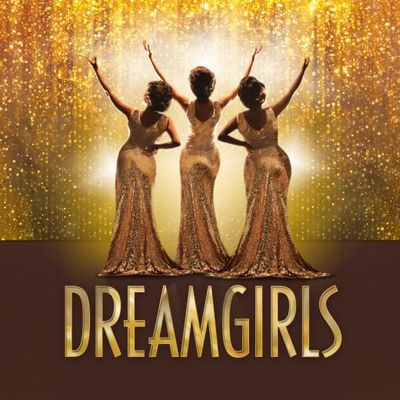
[15:48] Andrew Lippa: Oh, fantastic question. And I love that that's the theme of this program. Thank you for asking me. When I was 16 years old, my mother owned a ladies' clothing store when I was growing up in suburban Detroit. And my mother would come to New York City a few times a year and buy clothes in the market on Seventh Avenue and on Broadway in the 30s. Actually, probably in the building where DGF is currently housed on 8th Avenue. And we were given free tickets one night to a Broadway preview. And the man who gave them to my mother said that some show called Dreamgirls. And my mother said, "What's it about?" And he said, "I don't know. It's about Diana Ross or Motown. You're from Detroit, you'll like it."
And so we went to see the ninth preview of Dreamgirls. And I didn't know this exactly, but what I felt in that moment seeing that musical at the Imperial Theater when I was 16 years old, and the energy I felt and the sense of humanity and life and excitement. I didn't know this then, but it is the reason I wrote The Wild Party, because what I wanted to do with The Wild Party was create something that could repeat those feelings, that perhaps could rekindle that idea of something that never stopped moving. To me, it felt like watching a movie in part because it was so cinematically staged; it just was remarkable to me as a 16-year-old. I'm sure it would be remarkable to me today to see Michael Bennett staging that musical.
And so that I've told Henry Krieger that story, and so that's the composer of Dreamgirls, and that's one of the things I love about the theater business is our ability and everyone's willingness to listen and to support each other in the next generation. And that I got to tell Henry that story was very moving to me because, oh, and the final performance of The Wild Party at the Manhattan Theater Club in April of 2000, I was sitting next to Jennifer Holliday. And during the intermission, I couldn't contain myself. And in the intermission, I turned to her and I introduced myself, and she went all Maria Friedman on me. And she was so generous. And I told her this very boring story again, how that show had been the lightning strike moment and her performance in particular.
And I got to work with Loretta Devine some years later as a music director of a show, and it's really something when you can have those memories. And I know everyone, everyone I know who works in the theater has had one or two or three of those where they were young and something really inspired them.
[18:44] Jeryl Brunner: But up to that point, were you writing? Were you composing?
[18:49] Andrew Lippa: No, I didn't start writing. I started playing piano when I was 14, so I was very young, very old. I was always singing and sang in choirs and in a synagogue. But when I went to college at the University of Michigan, go blue, I started writing musicals then. And when I got to New York, I was accepted into the BMI Musical Theater Workshop. And that was a critical shift in my thinking. Oh, maybe this is the thing I want to do. And what I found out through my life is that writing musicals, A, is the hardest thing I know how to do. I don't know how to do brain surgery, so that doesn't count. But of the things I know how to do, writing a musical is truly the most challenging and therefore the most interesting to me.
And the fact that it allows me to use all of the things that I like to do. It allows me to sing. I sing all the time when I write; I sing when I present songs to colleagues and to investors and to whomever. I get to play the piano all the time. I get to arrange, I get to invent, and I get to live in creative spaces where I can pretend to be other people. And it's really terrible for my family life and wonderful for my musicals.
[20:05] Jeryl Brunner: Well, how did you come upon DGF? How did that come into your life, that organization?
[20:13] Rachel Routh: Andrew, you'll be able to help me remember that. Do you remember how I got asked to join?
[20:19] Andrew Lippa: I do remember. We have a program called The Row Green Visiting Voices, which sends writers out all across the country. And so Andrew first got involved with us by being one of those visiting artists in Chicago. And it was really incredible. You spoke to a high school, and they weren't necessarily writers yet; they were performers, but you were playing music for them, and there were all of these teenagers coming up to you. You could just see all the feelings that they were holding inside of them. And then when you played and they sang your music, you could just see them emerge. And then to be able to talk to you one-on-one and get feedback from you as a mentor, it was really, really beautiful.
And after that session, then I don't know, maybe it was a couple months later, we were looking to add new board members. And I remember I was in my apartment at 29th Street at that time looking out a window and talking to you about why I thought you should join the board and how amazing you are and what a leader you could be for our community because I had already seen you be such a leader for the community. And you thankfully said yes, and then you became, a year later, I think it was, right?
[21:40] Andrew Lippa: It was very soon after they asked me to be the president of the board. And I thank you, Rachel, for jogging my memory. And also, as I mentioned to you, Rachel, recently, I've spent, I'll be 60 in December, God willing. And I have spent a sixth of my life in service to the Dramatists Guild Foundation. And specifically, since I was 48 or 49, that's really when I started like in leadership philanthropy, working in a philanthropic position, but as a leader on a board and serving as the president of the board. And it has been, for me, an extraordinary shift in my life. I love making musicals; I love seeing them be successful. But I want it in a way, I love this more because I get to see Gerald, I can't, we can't say names, but there are people who reach the heights of our profession who get their shows onto Broadway, and then those shows don't succeed.
And because of the way writers don't get paid for so long of developing a musical, there have been people who have had to come to us for some help. And there are people at every level we've been able to help folks who are just starting out, folks who are nearing the end of their lives, who have found themselves in some sort of situation where they needed help. We don't only do relief grants; we don't only do crisis relief grants; we don't only do emergency grants, but it is a large part and a bedrock part of what the Dramatists Guild Foundation does. And to see us being able to do that, and then even better, being able to do that and then have some of those folks come back to us years later and say, "Because I got this grant, it gave me just enough of a lifeline so that I could write, fill in the title, and that play went to Broadway," or "that play was done at a major regional theater," or "that play is licensed all over the world."
Those are real stories. I'm not making that up to try and sell anybody here. Those are real stories. And the fact that we can do that in the way that we can, we're hoping we can double, triple, quadruple our capacity to give in the next five to ten years. And if the last 10 years is any indication, I think we will be able to because now we have something called a Tony Award that can tell people who don't know anything about the Dramatists Guild Foundation, they do know what a Tony Award is. And so, and we have you now. We're on your show, and we've got your stamp of approval.
[24:26] Andrew Lippa: And I have to tell you, Andrew, when and Rachel, people have told me that just like you had your lightning strikes moment at Dreamgirls, they've had their lightning strikes moments at The Wild Party. Oh, several people have told me that. That's very important. Your work is so eclectic when I think about all the different musicals and how they're not in one category, and it's really, they're quite exquisite.
[24:56] Andrew Lippa: I'm either eclectic or all over the place.
[24:58] Rachel Routh: No, no.
[25:00] Andrew Lippa: No, no, no, no.
[25:01] Rachel Routh: Because they make sense and they're beautiful. And Rachel, I'd love to know your lightning strikes moment when you knew you had to follow this path.
[25:11] Rachel Routh: Well, I'll go back to my mother, as Andrew went back to his mother. She was the pianist for three services every Sunday at church and then also the pianist for the community and high school theater. And so I was a happy accident of a child who was much younger than my siblings. And so she would bring me into the pit orchestra with her as my babysitter. I remember seeing a production of West Side Story and just falling in love, learning all the lines as a little child, helping the high schoolers along. And I just thought this is such an amazing thing. It's a safe place, it's a place for play, it's a place for exploration. And why wouldn't I want to be a part of that? And I say that sitting in the middle of, you can't see on this desk, but there are piles of books from our board member Stephen Sondheim, who gifted us his library in his estate. And I have this book, Findings by Leonard Bernstein. And he has an inscription for Steve, "Always with the old affection, Lenny B, 'twas 82."
[26:36] Andrew Lippa: Oh, that book. That book was published in '82.
[26:38] Rachel Routh: Is that what the '82 was?
[26:43] Andrew Lippa: I had that book. I was a senior in high school.
[26:43] Rachel Routh: That's amazing. I didn't know we had that book.
[26:47] Andrew Lippa: We do.
[26:47] Rachel Routh: It's been such a treasure trove going through Steve's books, and I have the Clavinova that he wrote Sunday in the Park with George on next to me as well. You just kind of feel the energy coming from his wonderful library.
[27:07] Andrew Lippa: Sacred.
[27:10] Rachel Routh: Oh, sacred, yes, place to have all of that library, my goodness.
[27:18] Jeryl Brunner: Well, that speaks volumes that he would bequeath his library. I so appreciate your taking the time to chat. It's full of joy to talk with you both. And thank you so much for coming on the show.
[27:33] Andrew Lippa: Thank you for having us and supporting us.
[27:35] Rachel Routh: Thank you.
[27:36] Andrew Lippa: Thank you.
[27:37] Rachel Routh: Have a great day.
[27:41] Jeryl Brunner: When lightning strikes is the moment you know, the theme song was written by Tom McGovern. This episode was edited by Sarah Goodman and produced by Anna Strout.
© Broadway Podcast Network, All Rights Reserved