

Jenny Lyn Bader is a prolific playwright whose stage plays include None of the Above, Equally Divine: The Real Story of the Mona Lisa, In Flight, and The Whole Megillah. She also wrote the audio works Tree Confessions and Communal Table. Jenny Lyn's play, Mrs... Read More
From the show: When Lightning Strikes!
Guests
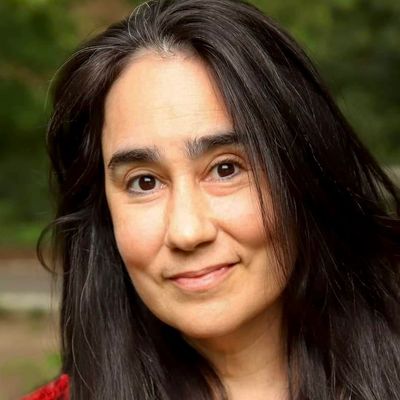
About
Jenny Lyn Bader is a prolific playwright whose stage plays include None of the Above, Equally Divine: The Real Story of the Mona Lisa, In Flight, and The Whole Megillah. She also wrote the audio works Tree Confessions and Communal Table. Jenny Lyn's play, Mrs. Stern Wanders the Prussian State Library, produced by Luna Stage, is currently presented off-Broadway at the WP Theater.
This episode was recorded December 23, 2024.
Transcript
This transcript was automatically generated and might contain errors.
[0:00] Jeryl Brunner: From Shakespeare to Schwartz, from Fawcy to Alvin Ellie, from San Tom to Borelis, from McNally to Faye. It happened to the greats, it still happens every day. When lightning strikes is the moment you know. When lightning strikes, where your matter go. You can stand in Chal Eureka. Do whatever you like. You'll never forget the moments when lightning strikes.
[0:27] Jeryl Brunner: Hi, this is Jeryl Brunner, and you're listening to When Lightning Strikes, where we talk about the tingly mic drop moments that led you to becoming an artist. Jenny Lyn Bader is a prolific playwright whose stage plays include None of the Above, Equally Divine: The Real Story of the Mona Lisa, In Flight, and The Whole Megillah. Her audio works include Tree Confessions and Communal Table. Jenny Lyn's play, Mrs. Stern Wanders the Prussian State Library, produced by Luna Stage, is currently presented off-Broadway at the WP Theater through mid-January. Welcome, Jenny Lyn.
[1:18] Jenny Lyn Bader: Thank you so much. I'm so pleased to be here.
[1:23] Jeryl Brunner: I'm just so thrilled to have you. What a riveting play is Mrs. Stern Wanders the Prussian State Library. Can you tell us about the play? If somebody asked you, what is it about? What would you say?
[1:40] Jenny Lyn Bader: People sometimes do ask me that. And there's a range of answers. How much time have you got? I mean, I could do like the three sentence version, the elevator pitch, and then I thought I'll let you...
[1:52] Jeryl Brunner: Yeah, tell the story.
[1:56] Jenny Lyn Bader: So it's fascinating. It's about Hannah Arendt, who was arrested by the Gestapo in 1933 Berlin. She was a graduate student in philosophy, and she was suspected of doing illegal research or research that just became illegal that week, collecting anti-Semitic materials to let people outside of Germany know what was happening in Germany, and that became illegal. And she was arrested outside the Prussian State Library when she was going to lunch with her mother. Her mother was also arrested. And she later described that she was arrested by a young man with a kind open face. And that young man held her in detention for eight days, and she discovered that he had just been promoted from the criminal to the political police.
[2:44] Jenny Lyn Bader: So it was his first political interrogation. So imagine, Jeryl, it's your first political interrogation. You've only arrested criminals before. You've never before had an interrogation that's all about ideas and politics. And the person you arrest is the woman who's going to go on to become arguably the most influential political thinker of the 20th century. She's gonna coin the term totalitarianism. Yes. And she's gonna conceive of the idea of statelessness. It's a kind of wild thing, and it did in fact happen.
[3:18] Jeryl Brunner: Well, what's fascinating is here's this rookie officer, right? His first interrogation, and like you said, here's who he gets. And he has to, you figure out how he can accuse her, right? And how he can make her guilty, and she's this brilliant mind. And it's a fascinating distribution of power, if you will, you know, of these two people trying to understand each other. And here she is the prisoner. And yet she seems like, and many times the one in some ways has the upper hand.
[4:07] Jenny Lyn Bader: She was not only a brilliant woman and also a heartbreaker at that time. You know, people don't really know that about Hannah Arendt. They think of her when she was kind of older and more eccentric. Many of the important intellectual men in Europe fell in love with her at that time when she was in her 20s. People were just fascinated by her. And so she was a very attractive woman. She was also a very brilliant woman, but she also had an extraordinary sense of empathy for other people and a real ability to connect with people, a real commitment to communication, to friendship, to being able to converse with people.
[4:59] Jenny Lyn Bader: She was famous for having very long-term friendships that included long correspondences, and even when she had ideological differences with her friends, she wanted to continue to, you know, communicate with them. So there is an enormous capacity for human connection there that I think, you know, she has to mine in this situation. And she's alleged to have researched and mimeographed basically anti-Semitic statements, right? And imagery that would be used for a Zionist group to disseminate and make the Nazis look bad. I mean, when they basically she's charged with doing research and disseminating.
[5:50] Jenny Lyn Bader: Yeah, at that time there was a whole new set of laws. We're talking about 1933. Early on the laws are just rapidly changing. And so on one day, you know, people can, Jews can be in certain professions, and the next day they're excluded from that profession. Right. And in one day, you can get any book in the library, and the next day certain books you can't get. Certain newspapers you can't get. In fact, the librarian who suggested that she be arrested actually said she's reading a lot of newspapers. Why would an academic need to look at so many newspapers? She must be guilty. That was the impetus for bringing her in.
[6:34] Jeryl Brunner: And I love what Laura Collins use in the New York Times writes about your play and the relationship between Hale and the officer. She plays him really, but what she appeals to is his decency, his capacity for loving his labor as himself, a low priority historically once fascism rears its head. And I think, you know, that's the writing, Jenny Lyn, that you really you make him out to be sympathetic in some way. Was that important to you?
[7:17] Jenny Lyn Bader: I don't think. I mean, honestly, when I first started writing the play, I thought of him as political police. I didn't think of him as Gestapo, which of course is the political police. And the Gestapo at this point is not fully Nazified. So it's possible that he had to sign a piece of paper or something. But remember, it's spring 1933. The Gestapo was formed the week before. So I feel like this person is not necessarily a convinced, ideological Nazi. It's unclear to me whether he would have had to sign a piece of paper at this point in time, but the Nazification of the Gestapo came later.
[7:58] Jenny Lyn Bader: So a lot of people, you know, they see the play and they think he's probably they think of it as being 1940 something, and they think that this is a horrible Nazi who's bringing in this woman to be interrogated. And actually, this guy just had a different job a week ago. Yes. He had he would just was working as a career criminal policeman for several years, and then he got a promotion to this other thing where people are, you know, being jailed for political activism, they're being jailed for having the wrong sets of friends, they're being jailed for having ideas or for disseminating ideas or for letting ideas, you know, be known, letting know be known in other countries what is happening in Germany. So, yes, I think that I do have compassion for his situation.
[8:49] Jenny Lyn Bader: Because I feel like 1933, I realized increasingly while working on this play is a real time of transition. It's a time where things could go really wrong, and they do end up going really wrong. But they haven't gone completely over, you know, over the line yet. And I feel like he, somebody like him, is at a point of transition. And so sometimes people come out of the play and they say, Oh, I really like the Nazi. But I don't honestly, I don't think I mean, yes, it's possible. I mean, he wouldn't have been wearing a swastika because actually, you know, the Gestapo did not. But I don't I think of him as someone who could become a Nazi and is working in a place that's about to be Nazified, and he hasn't had a lot of an opportunity to think about what he's doing, and that is something that she can teach him.
[9:53] Jenny Lyn Bader: And I feel did in real life. And he's human, that's the thing. He's a real three-dimensional human being who seems as terrified as she is, in a way, you know, for different reasons. I'm so curious what inspired you to write the play when I was reading Helen's obituary in the New York Times, and you know, it's a sentence, you know, that she was in prison, maybe two sentences. It's not a big focus, and it's fascinating because you think this must have shaped her. So what inspired you?
[10:33] Jenny Lyn Bader: It's something she didn't talk about. You know, the truth is that after the war, people didn't tell their stories about what happened during the war. And even Hannah Arendt, who wrote so much about the war and about totalitarianism and about the Nazi period, and wrote so much analysis and so much history, didn't share her own story of her own escape and her own arrest.
[10:59] Jenny Lyn Bader: And I think, you know, after the war, people had a lot of, you know, gruesome things happen. And so people didn't want to talk about those gruesome things or relive them. So that was one element. And, you know, really until Ellie Wiesel kind of opened that up. But there was a whole period where people didn't discuss it. And then if people had less gruesome experiences, they felt guilty or they felt they weren't important or they were inconsequential. And so they also didn't talk about their experiences. So there was a whole time where, you know, this story wasn't shared. In fact, she only shared it one time. And there was an evening of excerpts from plays called More Jewish Women You Should Know, uh, curated by a playwright named Cindy Cooper.
She had done an evening called Jewish Women You Should Know at the Anne Frank Center. And they had liked it so much that they asked her to bring back more. So she was looking for more Jewish women. And she asked me if I had anything, and I told her some things that I was writing about it that involved more obscure Jewish women, and she said, No, I need somebody with a name that I could put on the flyer, because she had several Jewish women on this flyer. And so I had made a couple of suggestions. I said, I don't have anything like that, but I could write something for the occasion. And I suggested a couple of ideas, and one of them was Hanna Arendt, and she said, Hannah Arendt, I like that. But I still didn't know exactly what I was writing about.
And the next thing I know, a few days later, I see Cindy and she hands me a flyer. And it says, More Jewish Women You Should Know. Excerpts of New Plays by Jenny Lynn Vitry. You know, it has my name. It has the names of several playwrights. It has the name, it has pictures of Emma Goldman, Emma Lazarus, Hannah Arendt, et cetera. And I've got nothing. This thing is happening in a few weeks. And everything else is an excerpt of a full-length play. And this is just a, you know, I'm gonna say it's an excerpt of a full-length play, but it's gonna be the first scene I've I'm writing of this play. And I tried to figure out what the best approach was, because of course there was the uh relationship that she had with Heidegger when she was an undergraduate, but there's already a play about that, Hannah and Martin by Kate Fodor, and there's a wonderful movie about the Eichmann controversy and how, you know, what she wrote about that.
And uh that movie is called Hanna Arendt by Marguerite Vantrada. And so I felt this sort of two big dramatic things in her life had already been written about, and I was looking for the next dramatic thing in her life. And I was talking to my husband who runs the Hannah Arendt Center, where I'm on the board of advisors, and so this is where I've gone to a lot of Hannah Arendt conferences, I've met a lot of people in the Hannah Arendt world. I've you know read a lot about her as a result of being involved with this center. And he actually said to me, Oh, the uh the the really dramatic thing in her life is her work on the Cultural Reconstruction Commission. And so he told me all of these stories about the Cultural Reconstruction Committee Commission and uh when she went back to Germany after the war, and uh she they had to decide where all the Judaica went, and she was on this commission, and there were people she hadn't seen, and it was very emotional, and I'm taking all these notes, and we're taking a train ride.
And as the train pulls into the station, he says, or there was the time she was arrested. And I really didn't know anything about this. I'd never heard of it. I mean, I'm pretty steeped in this Han R and stuff, but this is not stuff that anyone talked about. And I actually did try to write the cultural reconstruction play a couple days later, but I wasn't finding my way into it, and I do believe a really good idea writes itself. And it was not writing itself, Gerald. So I was I looked around, I looked through a couple of books, I figured out which book would have that description. I picked up the book, I had it in my apartment. It's called The Last Interview with Gunter Gauss, and I read a few lines of the description of her arrest, and I just gasped.
And I thought, well, there's your play. And I wrote a short scene, or I wrote an 18-minute scene that's sort of like the whole play in 18 minutes, but with only the two characters. And then it was done at the Anne Frank Center, and then I the actress dropped out at the last minute. I ended up performing it, so I didn't watch it. I started being invited to perform this scene in different places for several years, and people kept saying, This is incredible. This is an excerpt from a play, and I really want more of this. And is there more of this play? And are you gonna expand it? And I didn't know how to expand it because I had never seen it. I'd only acted in it. And then one day I had an opportunity to watch somebody perform it.
Um I was out of town, and then the event was postponed, was at the Museum of Jewish Heritage. Kat Kate Hamill was in it. And she was amazing. And I watched this two-character scene, and I said, Oh, wait a second, there's a third character in this play, and I know who it is, and I know how to expand this play, and I know what the that was you you ask when when lightning strikes. That's when lightning struck was at the Museum of Jewish Heritage. And I suddenly understood that a person who Hannah Arendt mentions in the Gunter Gauss interview could actually be somebody that I put on the stage. He's mentioned very much in passing, but uh, but I suddenly realized that if he was there, I could have a whole different structure for the play.
And then I realized I discovered this is a little bit controversial. Some people say she says in the interview that she was in there for eight days. Some people say no, she was in there for a different period of time. But when I realized it was eight days and not 20 minutes, I said, wait a second, this is not a 20-minute play. This play could have different scenes and different days. So that's how the play literally her life was in the balance. You know, she could have not got lava there. And because that could alter history forever if she, if there was no hella arend in the world. So this is and when she tells, when she tells the story on German television to Günter Gauss, she he says, Can you tell me exactly how you got out of Germany or whatever?
He asks, and she says, Oh, yes, well, my the my story, it's it's inconsequential. That's what she says. Because that's how people felt about telling these stories, which were not, you know, violent. How has the experience of writing the play and doing it and you know expanding it? How has that changed you? Is it possible to put into words how that has changed you as an artist, as a person?
[18:09] Jenny Lyn Bader: It has definitely been transformational to experience the play with different audiences and with audiences of different backgrounds. And it's been very deeply meaningful to me that people who are not Jewish, who are of other kind of you know, ethnic minorities will say to me, they really relate to the play, they really feel a connection to the play to between the Jewish experience in this play and the uh Asian experience or the black experience. You know, there have been a lot of different uh people of different um racial, ethnic, religious backgrounds have really related to the play in a way that's been very powerful. And but also people of different political persuasions. That's been really interesting.
Um have really feel really feel that play speaks to them because, you know, in a way it's about the rule of law. And it's about freedom. And I think that's something we're all really grappling with, you know, and people on the left and the center and the right are all really focused on what the rule of law means and how we can how we can attain it and on you know freedom and and truth. And a lot of what the play is about, I don't I don't know. We always say we can't find common ground. We're so politically polarized. And someone said to me, Did you set out to find a common ground when you wrote this play? And I, you know, that's not that's not how it worked, right? It I was what I was trying to do is to tell this kind of incredible story.
But of the nature of of the character and the situation and the connection between 1933 and today. Yes. So timely. Uh I've learned an enormous amount from from working on this play. And do you want to mention who the third character is or make that a surprise?
[20:23] Jenny Lyn Bader: Oh. Oh, yeah. Well, you know, it's I mean, honestly, for people who don't know about the play, it's the the, you know, Hannah Arendt's name isn't even in the title. So even that is a good idea. I know I wondered if we should reveal that, but I yeah, you even know. So the yeah, the uh the no, the third character is is an attorney. And there was an attorney that was was sent to defend her. So that was is something that I uh got from the interview, but we don't know, I mean we don't know the name of the officer either, but we don't know anything about the the attorney. Oh, yeah. And so I I read this uh book called uh lawyers without Rights, and it's about what happened to Jewish attorneys in that era, and it's a extremely sobering, upsetting book. And it helped me to, you know, think about what might be true of this attorney. I mean, if he still is practicing in the spring of 1933, there's certain things true about him, such as he has to be a World War I veteran.
[21:41] Jenny Lyn Bader: So switching gears, I'd love to know your lightning strikes moment when you knew you had to be an artist.
[21:49] Jenny Lyn Bader: Yeah, I absolutely love that your podcast is called When Lightning Strikes, because I am obsessed with creative inspiration, and I'm so interested in how different projects come to be and how different plays come to happen and how ideas become manifested in the world.
[22:11] Jenny Lyn Bader: And then the way that you frame it, the idea that you have an idea about yourself, that lightning strikes and it changes who you are, is really fascinating. And also the inevitability of the way you frame it, right? That you had to become an artist because I don't know about whether that's true, because people can kind of go in a few different possible directions in their lives, and there's so much luck and so much work and so much coincidence that happens.
[22:44] Jenny Lyn Bader: But I can say that I really became very interested in writing at a very young age. I was always writing a lot of poetry and songs and stories and making things up and doing a lot of storytelling. I also used to do a lot of impressions, comedic impressions of my teachers and stuff like that. I went through a phase where I could kind of mimic people.
[23:09] Jenny Lyn Bader: And when I was in the second grade, everyone got a prize, like someone got baseball player of the year or, you know, artist of the year, whatever. And I got novelist of the year. And I said, what is a novelist? And my teacher said a novelist is someone who writes really long stories like you. So I didn't, you know, I didn't have any editing capacity at that time. I just had the stories and they just flowed out of me.
[23:43] Jenny Lyn Bader: And I feel like children often have these creative capacities that are prodigious. And then, you know, the trick is to keep someone from tamping them down, right? And from getting rid of them. So I feel like I was always very interested in the written word. I became very interested in becoming an artist. I think when I read the modernists, like Virginia Woolf to the Lighthouse and James Joyce, Portrait of the Artist as a Young Man.
[24:09] Jenny Lyn Bader: And I started to become interested in the idea of this kind of centrality of art and its importance to the world. And then I always did a lot of, you know, different kinds of writing, and then I also started doing a lot of different kinds of theater writing, not only writing, but, you know, directing and acting. I wrote my first play that was publicly performed when I was 16 at Summer Camp.
[24:40] Jenny Lyn Bader: And that was, I think, a very one of definitely a lightning striking experience for me in terms of the experience of having work in front of an audience. And then one of the people who was in that play, who was 15 when she was in the play, asked my permission to direct the play at her school in Boston. And I went, so when I was, I guess I was 17, I left my school.
[25:12] Jenny Lyn Bader: I went to go see my out-of-town production in Newton, Massachusetts. And in retrospect, when I think about it, it's so funny because I actually, I was also supposed to be in a play that night at my school. But I think it was I was in a play where there was an alternate, so I performed one night and the other person performed the other night.
[25:37] Jenny Lyn Bader: Understood. And so I don't actually remember. I mean, I think we were we were anyway going to do that, but it's just so interesting that I decided I didn't want to be at my school. I wanted to see be at this other school, you know, seeing my out-of-town show and seeing how it played in front of a different audience.
[25:53] Jenny Lyn Bader: And so I had that experience, you know, very young, but then the question is sort of how did I cross over to actually be doing this, which I don't think was inevitable. And I think it happened on the Crosstown Bus. I was reading Booknotes by Esther Fine, and there was an article about someone who had found a missing manuscript.
[26:23] Jenny Lyn Bader: And it was a missing chapter of a D.H. Lawrence book that had never been found before. And I just thought that was so funny because we've been reading this book for years and found that how was there was always a chapter missing? And it just I just started laughing as I was reading this column in the newspaper.
[26:44] Jenny Lyn Bader: And I started imagining a play around someone who finds a missing manuscript and, you know, and someone else who finds another missing manuscript. And it was the thing that in the interview in the newspaper, it was about Sons and Lovers. They had found the missing chapters from Sons and Lovers, and they had said, why did you look for it? And the guy had said, because there was only one son in the book.
[27:14] Jenny Lyn Bader: So I went looking for the other sons. And I thought this was so funny. And I thought, well, did he also find more lovers? And what if you didn't think the women were sufficiently in love and women in love? What if you went looking for more women? And, you know, and then what if you thought, well, Shakespeare has these short plays? He has his, you know, he has these, you know, Shakespeare has his sonnets, and then he has his five-act plays.
[27:35] Jenny Lyn Bader: But when did he write a one act? So I wrote this crazy play called Shakespeare's Undiscovered One Act about these graduate students who go missing looking for missing D.H. Lawrence things and missing Shakespeare plays. And that was my first play performed in New York. That's on the Crosstown Bus.
[27:51] Jeryl Brunner: Well, I have so many questions. First of all, back to Summer Camp. Your play in Summer Camp that also had a life after Summer Camp. What was that about?
[28:01] Jenny Lyn Bader: Um, the first play I wrote at Summer Camp was called Shock Treatment, and it was about a girl who was very unhappy, and her parents send her to a psychiatrist who teaches her to manipulate her family. And this was very interesting because I was not seeing a psychiatrist. So I just I think I got this comedic idea from, you know, watching TV psychiatrists or something, but it was a very kind of a dark comedy about, you know, family manipulation.
[28:38] Jenny Lyn Bader: And then the second year at camp, I wrote a very avant-garde work, which is now lost to the sands of time. But a friend of mine drove me to a camp reunion years later, and he remembered the entire thing very vividly, which was exciting. But somebody was chained to a lamppost and there were dreams, and it was called A Waking to the Rain. And I think it was set in some alternate realities.
[29:00] Jenny Lyn Bader: But yeah, just on the subject of the Crosstown Bus, I have a strong belief if anyone is trying to write or get through a creative block or anything like that. I have a strong belief in leaving the house, going for a walk, taking the bus. These are really important, and I always used to say this when I was teaching a playwriting class. I always used to say this to my class, and there was recently a scientific study about this.
[29:24] Jenny Lyn Bader: And it's actually it's they've actually proven it. I could have told you it was right before, but it has now been proven. So yes.
[29:31] Jeryl Brunner: Is it good to leave the house?
[29:33] Jenny Lyn Bader: Yeah, that's good.
[29:34] Jeryl Brunner: Yes, I read that before. Um that beautiful book, If You Want to Write, Brenda Ueland. And she talks about taking a walk and the merits of her daily walk and how that was a key part of her ritual.
[29:49] Jeryl Brunner: So is it possible to describe how writing plays makes you feel? Or that early play about Shakespeare finally?
[30:01] Jenny Lyn Bader: Yeah, I mean, it's it is, I guess it's possible to describe it. It's I mean, I feel like it is transformational for me because there's an interaction between the audience and the play that you just don't have in other forms of writing.
[30:19] Jenny Lyn Bader: And I do pursue, you know, a lot of forms of writing and have worked in a lot of forms of writing, but there's something very special about being in the room. I'm sure you're familiar with the study where they talked about, you know, heartbeats, audience heartbeats get synchronized during a theatrical event.
[30:39] Jenny Lyn Bader: And also the element of surprise is amazing, you know, because you don't always know, you know, if it's a comedy or even if it's a drama, you don't always know where the laughs are gonna be. You don't always know where the gasps are gonna be. There's an unpredictability that happens in live performance. You don't know what's gonna go wrong, what's gonna go right, what's gonna go slightly differently, and you know, possibly a terrible, but possibly a really good way.
[31:06] Jenny Lyn Bader: So I feel like there's an aliveness, a spontaneity, and it's a kind of sense of danger. But the kind of euphoria that can only come with that level of danger that is why I return to writing for theater.
[31:31] Jeryl Brunner: Thank you so much, Jenny Lyn. I really appreciate your coming on and sharing.
[31:36] Jenny Lyn Bader: Oh, thank you. I just really appreciate that you have a podcast about creative inspiration. I think that is just the most wonderful thing to do. I love how you describe the show. My gosh, it's so articulate how you dissected it.
[31:51] Jeryl Brunner: Take good care.
[31:53] Jenny Lyn Bader: You too. Thanks for having me on.
[31:55] Jenny Lyn Bader: It still happens every day when lightning strikes is the moment you know.
[32:00] Jeryl Brunner: The theme song was written by Tom McGovern.
[32:04] Jeryl Brunner: This episode was edited by Sarah Goodman and produced by Anna Strout.
[32:10] Jeryl Brunner: Lightning strikes.
© Broadway Podcast Network, All Rights Reserved