

Happy birthday and thank you for joining me as Why I’ll Never Make It turns 5 years old today! It was on December 28, 2017 that this theater podcast began from very humble beginnings and has slowly gained attention and even some accolades in the past five years of talking with actors and creative professionals... Read More
From the show: Why I‘ll Never Make It
Guests
Featured Shows
About
Happy birthday and thank you for joining me as Why I’ll Never Make It turns 5 years old today! It was on December 28, 2017 that this theater podcast began from very humble beginnings and has slowly gained attention and even some accolades in the past five years of talking with actors and creative professionals.
There’s a certain kind of magic in the art of theatre, as the Tony award-winning actor Brian Stokes Mitchell once said, ”It has the power to transform an audience, an individual, or en masse, to transform them and give them an epiphanic experience that changes their life, opens their hearts and their minds and the way they think.” The same can be said of podcasting as well.
Why I’ll Never Make It strives to engage and enlighten with every episode as I have insightful and meaningful conversations with artists who truly share from the heart about their own experiences and challenges in this industry. And in this anniversary episode I’ll be sharing some of those former guests of the past year as well as provide an overview for what this podcast has accomplished in 2022.
Guests mentioned and featured in this retrospective episode...
- Matt Vinson and Matte O'Brien - writers of Anne of Green Gables
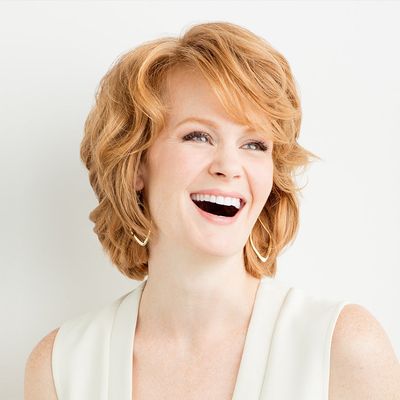
- Kate Baldwin - Tony-nominated actress
- Barton Cowperthwaite - dancer and actor on stage and screen
- Elizabeth Swain - acting teacher and Broadway actress
- Steven Warner - former child actor and professional ice skater
- Brian Patacca - podcaster and life coach for actors
- Briana Packen - actress and movement coach
- Al Blackstone - Emmy-winning director and choreographer
- Judy Tenuta - award-winning comedian
- Muriel Miguel - Artistic Director of Native American Spiderwoman Theater Company
SUBSCRIBE TO WINMI
Get access to Audition Stories, the Final Five questions, and other bonus content by becoming a monthly or yearly subscriber to Why I’ll Never Make It. Producing this podcast is rewarding in its own way, but I’m essentially a one-man operation. So it is both costly and time-intensive to put together each episode. By subscribing you’ll be supporting these podcasting efforts, and have access to extended conversations and other bonus content. Your financial support of this podcast is greatly appreciated!
- Subscribe to get access to bonus episodes and extra content
- Make a one-time Donation to support transcripts and podcast production
- If you’d like to support WINMI but have limited funds to do so, then contact me directly for reduced-price or even free access to the bonus content.
Follow WINMI: Website | Instagram | YouTube
Why I’ll Never Make It is an award-winning, Top Theater Podcast hosted by actor and singer Patrick Oliver Jones and is a production of WINMI Media. Background music is by John Bartmann and Blue Dot Sessions is used under a Creative Commons Attribution-NonCommercial 4.0 International License.
Transcript
This transcript was automatically generated and might contain errors.
[0:00] Patrick Oliver Jones: There's a certain kind of magic in the art of theater.
[0:04] Patrick Oliver Jones: As the Tony Award-winning actor Brian Stokes Mitchell once said, it has the power to transform an audience, an individual, or en masse, to transform them and give them an epiphenal experience that changes their life, opens their hearts and their minds, and the way that they think.
[0:24] Patrick Oliver Jones: Well, I think the same can be said for podcasting as well.
[0:28] Patrick Oliver Jones: Why I'll Never Make It strives to engage and enlighten with every episode, as I have insightful and meaningful conversations with artists who truly share from the heart about their own experiences and the challenges they faced in the industry.
[0:42] Patrick Oliver Jones: And in this anniversary episode, I'll be sharing some of the highlights from this past year, as well as provide an overview for what this podcast has accomplished in 2022.
[0:58] Patrick Oliver Jones: Happy birthday and thank you for joining me as Why I'll Never Make It turns five years old today.
[1:04] Patrick Oliver Jones: I'm your host and producer Patrick Oliver Jones, a professional actor and singer for 30 years.
[1:11] Patrick Oliver Jones: And it was on December 28, 2017, that this podcast began from very humble beginnings and has slowly gained attention and even some accolades in the past five years.
[1:23] Patrick Oliver Jones: The website is whyillnevermakeit.com, and there you can find all the previous episodes as well as show your support for this podcast with a financial contribution in the form of a one-time donation or a subscription to bonus episodes.
[1:39] Patrick Oliver Jones: This podcast is a one-person labor of love, so any support you can provide is both needed and greatly appreciated.
[1:47] Patrick Oliver Jones: Again, that website is whyillnevermakeit.com, or just look for the link in the show notes.
[2:00] Patrick Oliver Jones: This year found me back on stage again for the first time since the pandemic started.
[2:05] Patrick Oliver Jones: I was both overjoyed and grateful to be back in theater at the Goodspeed Opera House in Connecticut, doing what I love.
[2:13] Patrick Oliver Jones: The first show was Anne of Green Gables, and I got to interview the writers of that new musical, Matt Vinson and Matty O'Brien, as they shared both the joys and tribulations of bringing a new musical to the stage.
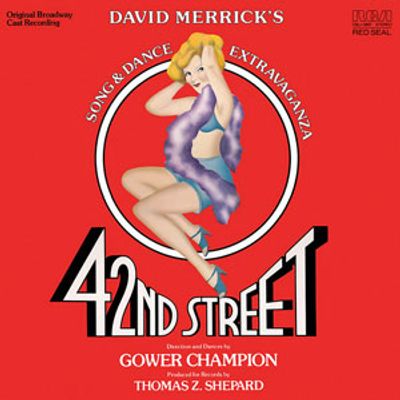
[2:27] Patrick Oliver Jones: Next came the iconic 42nd Street musical, and I was so excited to sit down with my co-starring leading lady, Kate Baldwin, who talked not only about our production and its hope for the future, but also about her own illustrious Broadway career.
[2:47] Patrick Oliver Jones: Now for this podcast, there were definitely some remarkable moments as well this year.
[2:52] Patrick Oliver Jones: The biggest of which came back in May, when Why I'll Never Make It won the Communicator Award of Distinction for its featured episode, A Tribute to Alvinaly, with over 5,000 entries from around the world.
[3:29] Patrick Oliver Jones: That's right.
[3:30] Patrick Oliver Jones: All these awards that you hear about other podcasts winning, yeah, they had to pay hundreds of dollars just to submit to be considered.
[3:38] Patrick Oliver Jones: So for me, in both instances, it was an outside organization acknowledging the work that I've put into this podcast.
[3:46] Patrick Oliver Jones: Being a one-man operation and sitting alone behind this microphone, it can be hard sometimes to realize and recognize the impact this podcast and its conversations have on listeners.
[3:58] Patrick Oliver Jones: The growth in followers on YouTube has also been a very positive development, as this is a podcast I didn't really consider a video element until recently.
[4:09] Patrick Oliver Jones: But as I have put more effort and resources into creating video versions of certain episodes, I'm thankful that it's allowed more people to find and hear these conversations.
[4:22] Patrick Oliver Jones: Having said that, though, there have certainly been those times when I've wondered how or even why to keep going with this podcast.
[4:31] Patrick Oliver Jones: Its title, Why I'll Never Make It, has often seemed like a self-fulfilling prophecy.
[4:36] Patrick Oliver Jones: For example, my efforts to create bonus episodes in order to entice listeners to support this podcast financially hasn't really paid off, as I'd hoped, quite literally.
[4:48] Patrick Oliver Jones: And my five-star rating on Apple Podcasts has now gone down to 4.8.
[4:54] Patrick Oliver Jones: This is due to a single one-star rating from someone who didn't even leave a review, so I don't really know why they left the one star.
[5:03] Patrick Oliver Jones: But in some ways, I'm able to chuckle about this because it's probably just someone who saw that perfect 5.0 and just wanted to mess with it.
[5:11] Patrick Oliver Jones: Now, on the flip side, I received another anonymous message that said, quote, why I'll never make it is the love letter to artists working in the acting and performing arts industry.
[5:22] Patrick Oliver Jones: Patrick gives you an honest and truthful look into an industry that looks super glamorous.
[5:28] Patrick Oliver Jones: The provocative title may scare you, but there is no other podcast like this.
[5:33] Patrick Oliver Jones: So random emails or comments like this from listeners, as well as those awards and recognitions, well, they go a long way to keeping me motivated and energized week after week as I produce this podcast.
[5:47] Patrick Oliver Jones: And I couldn't be more thankful.
[6:03] Patrick Oliver Jones: Most of my time is spent in marketing and trying to figure out new and creative ways to attract more listeners.
[6:10] Patrick Oliver Jones: Because the truth of it is getting people to like you, to follow you, listen, well, that's really the hardest part of any successful podcast.
[6:19] Patrick Oliver Jones: And so far, the main way I've tried to market this podcast, and also the cheapest way, is through social media.
[6:27] Patrick Oliver Jones: Now there is an aspect of it that I enjoy, like creating the post and sharing quotes that I find insightful and meaningful on Instagram.
[6:35] Patrick Oliver Jones: But the art of social media marketing is still something I'm trying to figure out.
[6:41] Patrick Oliver Jones: But this can also be a difficult task even for those who have tons of followers.
[6:46] Patrick Oliver Jones: Someone who I got to know during the filming of a pilot episode back in August of 2021 joined me this past season to talk about his time on the popular yet canceled Netflix series Tiny Pretty Things.
[6:59] Patrick Oliver Jones: And we got into this discussion of social media and its impact on us as performers.
[7:07] Patrick Oliver Jones: As of right now, you're over 200,000 followers on Instagram.
[7:12] Patrick Oliver Jones: Does that at any point start to affect what you say, how you present yourself?
[7:17] Patrick Oliver Jones: Does it start to seep into your brain in that way?
[7:21] Barton Cowperthwaite: I mean, I definitely present a curated version of my life on the app.
[7:29] Barton Cowperthwaite: I was grateful for the following, you know, like it's always amazing to hear people's experience after watching the show and engaging in whatever you're creating.
[7:39] Barton Cowperthwaite: Like it's oh it's all it's I wouldn't say always, it can be very gratifying to hear how your work affects people.
[7:48] Barton Cowperthwaite: It can also be very difficult sometimes.
[7:50] Barton Cowperthwaite: But I think that there's this all like, you know, kids right now are like, I want to be an influencer.
[7:57] Barton Cowperthwaite: And I was grateful for the followers because I knew I could capitalize on it financially.
[8:02] Barton Cowperthwaite: Like I have always kind of approached my career in the arts is like if I just try and do everything, like if I try and dance and model and act and sing, and if I try and literally just offer it all, then like I'll get a job somewhere, like in something.
[8:19] Barton Cowperthwaite: And so I just figured social media was another element of that.
[8:21] Barton Cowperthwaite: Like it's I'll I'll be able to like hopefully create some income out of it.
[8:28] Barton Cowperthwaite: But with that, you're trading an element of authenticity of like of like presenting are you presenting like the honest version of yourself or are you presenting like the product the product?
[8:42] Barton Cowperthwaite: And I definitely think that I try and like have elements of my life, and I think that I do.
[8:52] Barton Cowperthwaite: Like I think that followers know a version of Barton that's pretty close to the truth.
[8:59] Barton Cowperthwaite: But like even if you live with someone or you're married to someone, but like you're never gonna know them entirely.
[9:09] Barton Cowperthwaite: And so social media is just that times infinity, where it's just like you really just get these these snippets and clips, and like having this many followers, I mean it's something I'm grateful for, and it's also like it does kind of it's just something I'm aware of, I think.
[9:25] Barton Cowperthwaite: I'm just kind of like, okay.
[9:27] Barton Cowperthwaite: I'm like trying to entertain in this weird medium where I'm like trying to keep people aware that I exist.
[9:37] Barton Cowperthwaite: It's like not quite the same as like being on a job or on set, but it's like still a version of that energy.
[9:46] Barton Cowperthwaite: If I film something funny and I like that, there's like an element of like excitement where I'm like, should I post it or like should I not?
[9:53] Barton Cowperthwaite: Like, will it be funny?
[9:54] Barton Cowperthwaite: Like, what's the reaction gonna be?
[9:56] Barton Cowperthwaite: So there's like little hints of that apprehension and that excitement and like the kind of hope for for a sense of gratification, you know.
[10:07] Barton Cowperthwaite: Like I'm in deeper than some, but but not as deep as as some as well.
[10:12] Barton Cowperthwaite: And I just hope for myself, I want to remind myself to know that like that's that's not the craft.
[10:20] Barton Cowperthwaite: Like it's it's not the craft of of dance, it's not the craft of theater, like really it's it's an app.
[10:29] Barton Cowperthwaite: I'd rather be creating something for the stage or for the screen in a a theater or in your living room, and maybe sometimes the one for your palm, but like I don't think that that's what I want consistently forever.
[10:50] Patrick Oliver Jones: Well, even though I may not be a master of social media marketing, there are five episodes this year, based upon your listens and downloads, that show my efforts are actually paying off.
[11:02] Patrick Oliver Jones: Coming in at number five is acting teacher and professor Elizabeth Swain. She is a Broadway actress with national tours and television credits, as well as being a director of classic plays like Shakespeare and the Greek tragedies. Now she provided such a unique and wide perspective through her decades of work, both on and off stage.
[11:27] Elizabeth Swain: Credibility was interesting because when I started to teach more serious theater students later when I got my full-time job, shh, people would say things like, I would never do a soap opera. That was the big thing young actors would say. It was absolutely beneath them. And I would say, Well, the money's good. You have to learn the lines fast overnight, and you get to the studio at six in the morning, sometimes earlier, and they've changed the lines, and now you've got a whole new script that I said it's a very, very good training ground for actors, so please don't quit. Plus, I'm racking up weeks for pension, which I now appreciate. I'm getting health insurance. I said there are a few things young people need to think about before you say I'll never do a soap true.
[12:15] Patrick Oliver Jones: Coming in at number four was a personal favorite of mine. In a two-part series, I sat down with Steven Warner, who was a child actor in one of my all-time favorite movie musicals, The Little Prince. We talked about the making of that learner and low musical, as he starred with such legendary performers as Bob Fossey, Richard Kiley, Gene Wilder, and Donna McKechney. We went on to talk about the work he did after that movie as well as his life after performing.
[12:46] Steven Warner: Well, I kind of like to dip my toe back into the acting world if I can, but it's gonna be difficult because nowadays I think anyone that's been born over the past 20 odd years, you know, because there's so many reality TV programs on, um, that they people seem to think, well, you don't need to learn how to do these things. You can just turn up. And if you can sing a song, you automatically you're gonna get into everything. So many people want to be actors and singers. I mean, it was competitive when I was a kid, um, so it's gonna be even more competitive now. I suppose I have got quite a bit of experience behind me and quite a diverse, quite a diverse experience as well. For sure. Since I've been with British Airways, because they have actually got their amateur dramatic society, which of course I gravitated towards straight away.
And I just thought it's gonna be awful. It's gonna be really tacky, it's gonna be this, and it's not, it's actually very good. Uh and I'm not saying that just because I'm part of it. It's they have actually won awards in the UK for best amateur production. And I've been doing that with the BA entertainment group for about 25 years now. And um, so it's just something I think, right? That's just a little something, just to keep it ticking over in the background. So I know what it's like being in the theater. And I have actually tried all the departments. I've done it, I've had a go of producing, I've had a go at directing, uh, swept the stage, you know, I've danced in the chorus line, I've had my parts, I've had a go at everything.
[14:41] Patrick Oliver Jones: The third most downloaded episode was a conversation with a life coach for actors and a fellow podcaster, Brian Patacca. He calls himself the chief inspiration officer as he helps actors land better representation, get more auditions, book bigger and better projects, and overall build a thriving career in the arts. Now, one of the wonderful things about having a podcast like this is that from time to time, others will reach out to me first. And this was the case with Brian, as his team approached me to suggest him as a guest. Oh, for the day when I too can say I have a team working for me. Because if I did, well, it probably would have prevented some of the back and forth issues we had leading up to the interview.
You see, I had been sick for a few days back in March and completely forgot about our initial interview. He showed up on Zoom, but I did not. However, I guess my profuse apology was sincere enough to get him to take a second chance on our interview, and I am so glad he did.
[15:54] Brian Patacca: My mom, uh I'm watching my accent come out now that I'm saying the word mom, and we're talking about Midwest, y'all. Mom, right? Uh so uh I don't want to paint the picture that we were, you know, soup. My my mother was struggling to get by. And there were the two of us, my dad lived in Philadelphia, and we lived in Ohio. And I think that what I took on was the big brother man of the house kind of energy. Like I need to help establish our house and create a foundation, which I don't know if it was healthy or not healthy, right? I can't, I can't now I'm I feel like I'm an okay healthy person. But at the time, I think it made me into be a good student. I became a paper boy at 12 years old. I had a job all the way through high school.
And I think it was my way of saying, and I think that because I was modeling watching my mother do this, is I need to learn how to provide for myself because no one else is going to do it. Because my mother wasn't just, you know, my dad wasn't just shoveling money into a bank account so that she could just take care of us. He was having she was having to work to take care of it. She worked the entire time I was a child, right? Um, and so I think the lesson that I learned was you're gonna have to take care of yourself. And so stepping out and saying that I wanted to be an actor was scary. She I remember my mom saying, who was totally supportive and believed I could do anything I wanted to do.
She goes, I'm just afraid I think only famous people's kids become actors. I remember her saying that to me. And I was like, Well, when Gwyneth Paltrow was the model for who's booking and getting the Academy Award at that time, it's not hard to say. There's a lot of Neppo babies out there. I totally get it. But she believed in me and I was a good student. But I, yeah, I do think I took that lesson on as you're gonna need to cover your ass. You're gonna need to take care of yourself. And I think I really took that on. I took that on in a way that I think didn't allow me to at times ask for help when a, I don't say normal, but in some other families, you might ask for help.
[17:42] Patrick Oliver Jones: In the number two slot, we have the very first guest of the season, Briana Packen. She's an actor and movement coach who talked about the importance of training and mastering our craft while also emphasizing the need for balance and stability, not only as an actor, but as an individual as well.
[18:03] Briana Packen: I think, like many of the actors that go into training programs, was constantly on a quest to be great, to be amazing, to do everything so perfectly at perfect, you know, perfectionism. And I growing up was always just amazing at everything I did. I that was my way of getting attention. It was I was the captain of the swim team, I was the lead in the play, I was the president of the student body, just always working for being amazing and being the best. And it was my way of seeking attention, and it was my way of feeling valid, of getting other people's approval, which is why I'm an actress, right? I I go on stage and people clap and I feel really great about myself. How much does that, you know, come into fruition when you look at it?
But I also thought that my anxiety and my fear, which often came out in anger, where I would just be all of a sudden, I would just be feel like just completely overwhelmed to where I couldn't move or couldn't do anything. And that fear, I would either turn it on myself or I would be explosive to the ones I loved most. I was so afraid that if I felt more stable in my life, that all the magic of my impulses that made me such a talented great actress would go away. And then when I became a teacher, because we want to, you know, we come to teach the things we need to learn over and over again. When I became a teacher, I noticed it as a just a theme in my students of if I'm stable, then I'm not going to be as talented.
[19:56] Patrick Oliver Jones: And finally, coming in at the most downloaded episode of the season, director and choreographer Al Blackstone. Now I first met and worked with him on the musical Annie at the Axelrod Performing Arts Center in New Jersey. But I came to find out that he was an Emmy Award-winning choreographer from So You Think You Can Dance, and has also directed shows in New York and around the country. He not only talked about his work behind the table, but also shared a time when his own talent as a dancer was questioned. Now, this particular sound clip that you're about to hear comes from a bonus episode that only monthly supporters got to hear back in February. But I thought I'd share a little bit of it with you now, and maybe it will lead you to consider becoming a supporter as well.
[20:56] Al Blackstone: I was sort of, I don't know, maybe 23, 24, feeling very confident I'd gotten my groove back.
[21:03] Patrick Oliver Jones: I had felt like I was ready to this was gonna be it. You know, the style was so my style. I had this really vibrant green long sleeve shirt on, and I think I wore khakis because I was trying to be edgy and not wear dance clothes, maybe sneakers. And I just I don't know. I felt really good going into it. And I remember, you know, for dancers learning the choreography. I really felt like oh, I was I felt confident. It was in my body, and I just I don't know. I felt really, really good about it. And it was a lot of people. It was, I mean, it was an invited call, but it was, you know, it was a lot of great dancers, and I knew everybody. Especially, you know, at a men's dance call. It's a pretty small community here in New York.
You know each other. I got out into the floor, I was center stage, and there's a live drummer, they count a sen, and I completely forgot the entire routine. I mean, I just I just lost it, and I was center in the front, so I had no one to follow. And it was devastating, and I just sort of faked my way through it, and then we did it again, and I forgot it again. And I can't really explain what happened. I don't know. I mean, sometimes it just happens. Our brains and our bodies sometimes. Yeah, they don't it happen. I mean, it happens. It does happen. It's terrifying to just for me to say, like, that happens. There's no way to avoid it. It does happen. And I just felt so embarrassed. I mean, there's no resolution to the story. That's the story. And, you know. Well, you didn't book it.
[22:36] Patrick Oliver Jones: I did not book that job, no. And I don't think I ever wore the green shirt again. Well, the main focus of this podcast is on the audio episodes that you are listening to on podcast apps like this one. This year has also seen a growth of the Why I’ll Never Make It YouTube channel as well, with tens of thousands of more people finding the video versions of these episodes. So, with that in mind, this year's most watched and listened to was guest Judy Tenuta, a funny and unique comedian that I grew up watching back in the 80s and 90s. In our conversation, she talked about her remarkable fight against cancer, as well as her start in theater, and how that transitioned to stand-up comedy. Unfortunately and sadly, a little more than six months after our interview, she lost her battle with cancer at the age of 72.
Fans of hers left so many heartfelt and appreciative comments about our conversation on YouTube. I am so appreciative and honored to have had the chance to talk with her and share her story with listeners like you.
[23:55] Judy Tenuta: Well, you know, I in university I did all kinds of things. I did comedy, I did uh I was in Rosencrantz and Guildenstern Are Dead, uh uh Once Upon a Mattress. Oh my goodness. Um, just a lot of things like that. Oh, oh, the Lower Depths was really heavy. You know, I'm like, I really prefer not to do that because it's draining, you know. But uh, it's okay, it's all a learning experience. Everything, in fact, is a learning experience, so you have to look at it as that. Um, and but it was very helpful, and then I realized when I graduated, I wanted to go to New York, which I did. I thought, oh, good, I'm gonna do what Goldie Hawn did and go to these auditions, and uh, yeah. Well, it's not that easy.
You go to an audition, and there's five hundred girls that, you know, and I go, This sucks. Wait, what are the odds that you're gonna get a part with you know a hundred other girls in there? I go, so my friend said, my roommates, you know, Judy, you're so funny, because I can imitate people. Uh they go, why don't you just do your own act? So I did. I did. I made that up. I went back to Chicago because I couldn't afford to live in New York anymore.
[25:05] Patrick Oliver Jones: By the time a conversation with a guest reaches your ears, uh, I've edited down maybe an hour and a half conversation into a 45 to 50 minute episode. The conversation I had with Judy, for example, lasted 30 minutes. So the episode that I released with her was pretty much every minute of our conversation. Having said that, though, the longest conversation I had this season went about three hours with Muriel Miguel. She is the artistic director of a Native American theater company here in New York called Spider Woman. And I honestly could have turned our conversation into three episodes. So whittling it down to just 60 minutes was a task. But there was one exchange we had that I decided to save specifically for this look back episode. It was when she asked me a question that no guest has ever asked before.
[26:04] Muriel Miguel: But please tell me before you go why I didn't make it.
[26:11] Patrick Oliver Jones: Come on now, come on. Well, if I had to guess, I think it's because you've really marched to your own drum beat, and you haven't followed by these rules. You haven't, you know, done what's expected of you, and I think it takes audiences, it takes other creatives, sometimes a little while to figure out what you're doing. And I think you've been doing that for so many decades that you've pushed boundaries in ways that had you just stuck with the rules, you wouldn't have explored as much as you have. So you've made it in your own way, but just not in the quote unquote, I guess, traditional way.
[26:51] Muriel Miguel: Well, one of the things, uh talking about that, talking about egos. You know, this is how I feel. Anybody calls you a genius, run. Because that's the scariest thing, you know, they whip you in, they get your ego all crazy. And then that's when I had the worst times. You know, I uh I didn't think for Lincoln Center. I hated it. There were all these rich people and they were bringing me in as a native woman and they had black people there, they had brown people there, but I was like this thing that they had no idea what I was. I was like, you know, the little worm that no one's paying attention to. And you know, things like, Well, y uh, you'll have to come in every day for so many times. I said, Well, will I get paid the Uber rates?
And I said, Oh no, we don't pay travel. And my reaction was, Well, that's not right. I'm coming here, I'm not getting paid, and you're not gonna pay for my travel. Right. And a big loud silence and then the woman called up and says, We'll pay for your travel. And then two months later we got a check.
[28:13] Patrick Oliver Jones: Yeah, yeah. Reimbursement checks take a long while.
[28:16] Muriel Miguel: Yes, they do. And then uh uh uh this is just one thing. And then what happened was that it got rained out. We were doing it in Lincoln Center, you know, the pool and yada yada and we were rained out and so the producer came over to me and asked me if I would be interested in going up and talking to the producers and uh and uh and having champagne. And then she said, And uh you can uh perform there. So I thought, okay, you know, glasses of champagne, that's not a bad idea. But I was taking off my outfit and stuff and I was thinking about I was saying, wait a minute. She's asked me to go up there to entertain her producers. That's what it was about. And I really got pissed off. I c I didn't call her over, I called one of the young women.
Uh the it doesn't matter what color you are, you're always bright and perky. And I called her over and I said, You realize that's racism, you understand that's racism and they were like and I tell her no, I don't wanna go. Don't ask me again. And I so I I um I don't like the idea of doing what is it, institutions. They always seem to get you. Yeah, and you're not you'd end up not doing what you want to do, and you have to follow certain like laws. Uh uh y y you know? Yeah, it's an institution because it has the four walls, and you're not really allowed to go outside that boundary. Right. So that made me think about, you know, in my real life, what a what a pain in the answer it must be.
[30:14] Patrick Oliver Jones: As I look ahead to next year and beginning a new season, I look forward to continuing the show format that I finally hit upon this year, and that is having each guest bring in three stories of their own personal and professional challenges and how they handled them. I think this not only helps conversations focus on the actual title of this podcast, but it also brings a more personal aspect to each episode, in that the guests themselves are able to share those stories that are most meaningful to them, rather than me just coming up with questions on my own. So be sure and join me for new episodes and new guests starting at the end of January. Monthly supporters will actually be getting episodes a week early, in addition to the various bonus episodes throughout the year as well. So until then, I'm your host, Patrick Oliver Jones, thanking you for a wonderful year, and I look forward to sharing more conversations with you in 2023 as we talk more about why I'll never make it.
© Broadway Podcast Network, All Rights Reserved