

From his first intimate musical, john and jen, to his bigger productions on and off Broadway, Andrew Lippa has been a prolific and award-winning writer. He joins the podcast to talk about his growth along that sometimes bumpy path and what it means to bring a bit of himself into his compositions and lyrics... Read More
From the show: Why I‘ll Never Make It
Guests
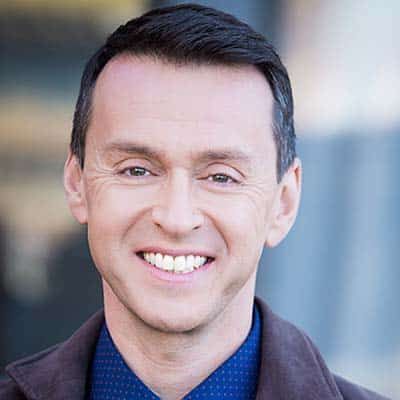
About
From his first intimate musical, john and jen, to his bigger productions on and off Broadway, Andrew Lippa has been a prolific and award-winning writer. He joins the podcast to talk about his growth along that sometimes bumpy path and what it means to bring a bit of himself into his compositions and lyrics.
He shares the disappoints he felt with The Wild Party and Big Fish, the lessons he learned from The Addams Family, and the personal journey he took in becoming Harvey Milk.
Learn more about Andrew...
Website: https://andrewlippa.com/
Twitter: https://twitter.com/lippaofficial
Instagram: https://www.instagram.com/lippaandrew/
His recent shows: The Man in the Ceiling, I Am Harvey Milk, Unbreakable
May this podcast be a resource for you as you discover more ways to pursue a career in this industry and sustain it through the many ups and downs that follow.
- For further insights on the topics covered in this episode: twitter.com/winmipodcast/
- Quotes and unreleased audio clips: instagram.com/winmipodcast/
- Reach out to me with comments or questions: contact.winmipodcast.com
- WINMI is supported through kind donations of listeners like you: ko-fi.com/winmipodcast
Transcript
This transcript was automatically generated and might contain errors.
[0:00] Patrick Oliver Jones: On the podcast today, my second in a month-long look at previous Broadway seasons.
[0:06] Patrick Oliver Jones: And the guest today is composer and lyricist Andrew Lippa.
[0:11] Patrick Oliver Jones: He's been nominated for Tony and Drama Desk Awards and won the Drama Desk Award for Outstanding Music for The Wild Party.
[0:19] Patrick Oliver Jones: We talk about that music all the way through to his most recent work on a Tiger King parody musical.
[0:25] Patrick Oliver Jones: I'm your host, Patrick Oliver Jones, and this is Why I'll Never Make It.
[0:33] Patrick Oliver Jones: Ultimately, I carry around the voices of people feeling like people don't believe in me or don't want to support me or don't think I have any talent.
[0:41] Patrick Oliver Jones: It's really my own voice.
[0:47] Patrick Oliver Jones: Well, thanks for coming and joining me on the podcast once again, where we feature conversations with artists talking about the realities of a career in the entertainment industry.
[0:58] Patrick Oliver Jones: To contact me and learn more about the podcast, that website is WinMePodcast.com.
[1:06] Patrick Oliver Jones: Back in 2011, I landed my first national tour with The Addams Family.
[1:13] Patrick Oliver Jones: The previous year I had made my off-Broadway debut, so this felt like the next step, the next level, and I was so excited to be joining the cast.
[1:22] Patrick Oliver Jones: Little did I know that the touring version of The Addams Family was going to be a chance for Andrew Lippa and the writing team to revamp a lot of what the Broadway show had become.
[1:35] Patrick Oliver Jones: This was their chance to see what had worked and not worked with the Broadway run, and then rewrite it in such a way to make the national tour a slightly different but hopefully better production.
[1:47] Patrick Oliver Jones: One of my favorite memories from the rehearsal period is when we were all called in to the rehearsal room.
[1:54] Patrick Oliver Jones: Chairs were set up and we all sat down, and Andrew Lippa had come in with a new song for Gomez.
[2:00] Patrick Oliver Jones: Our music supervisor, Mary Mitchell Campbell, sat down at the piano and accompanied Andrew Lippa singing that song to us to give us a taste of what it was going to be.
[2:23] Patrick Oliver Jones: It was a really special moment.
[2:25] Patrick Oliver Jones: Now, that song, it kind of got cut up in parts, and part of it went to this one song, part of it went to another song, which makes it even more special that we got to hear it in its original form during that rehearsal process.
[2:39] Patrick Oliver Jones: And so on today's episode, that's a lot of what we're going to be talking about.
[2:42] Patrick Oliver Jones: What it takes to write a musical, Andrew Lippa's process for doing that, and we go through The Wild Party, The Addams Family, of course, and Big Fish.
[2:53] Patrick Oliver Jones: He shares some of the disappointments that he's had in the reception of some of those musicals, namely The Wild Party and Big Fish.
[3:01] Patrick Oliver Jones: But he also talks about the things that he learned about the business through writing and working on The Addams Family.
[3:07] Patrick Oliver Jones: Then we get into some of his other works that he's done since Big Fish.
[3:11] Patrick Oliver Jones: And we end the episode today with your questions.
[3:16] Patrick Oliver Jones: All right, Mr. Andrew Lippa. Welcome to the podcast.
[3:20] Andrew Lippa: Thank you so much for being here.
[3:21] Andrew Lippa: Thanks for having me.
[3:22] Patrick Oliver Jones: Or rather, being there in Ohio.
[3:26] Andrew Lippa: Now, how's the new here?
[3:29] Patrick Oliver Jones: Right, right. It's wherever Zoom can go, that's where the new here is.
[3:33] Andrew Lippa: Yes.
[3:33] Patrick Oliver Jones: And how long have you been in Ohio?
[3:36] Andrew Lippa: I have lived in, I live in Manhattan. I have an apartment in Manhattan.
[3:42] Andrew Lippa: Uh, and I'm in New York about once, but you know, under normal circumstances, I'm in New York for about a week a month.
[3:48] Andrew Lippa: And then the rest of the time I am in Columbus, Ohio, and have been here since uh mid-2017.
[3:55] Andrew Lippa: And uh, and then I'm in Los Angeles about once every two months.
[3:58] Andrew Lippa: So I move around a lot.
[4:00] Patrick Oliver Jones: Yeah.
[4:01] Andrew Lippa: But fortunately for your line of work, uh, your writing can kind of go with you wherever you go.
[4:06] Andrew Lippa: Absolutely.
[4:06] Andrew Lippa: The writing and or collaborating with collaborators, sometimes it's good to be in the room.
[4:12] Patrick Oliver Jones: And and so in terms of musicals, I'm working on three musicals at the moment.
[4:16] Andrew Lippa: One of them I'm writing by myself, one with a colleague in LA and one with a colleague in London.
[4:21] Andrew Lippa: So being in the New York area is the middle, the middle spot in between those two extremes.
[4:27] Andrew Lippa: And uh, so I will travel one way or the other when we have to be together, or my colleagues will travel to where I am.
[4:34] Andrew Lippa: And but a lot of the time because of Zoom and or um just being on the phone, sharing stuff digitally, it's it's easy to write from anywhere now.
[4:44] Patrick Oliver Jones: Because for most of your work, uh especially in musical theater, it's been about collaboration, whether it's uh book writers, lyricists, and other creatives in the room.
[4:53] Patrick Oliver Jones: But when it comes to like, for example, The Wild Party, you were it. You wrote the book, the lyrics, the music, everything.
[4:59] Andrew Lippa: How was that different from your other collaborative processes?
[5:04] Andrew Lippa: The Wild Party came into my life um when my first musical, John and Jen, that I co-wrote with j uh Tom Greenwald, uh, was still playing in New York in the summer of nineteen ninety-five.
[5:15] Andrew Lippa: And I discovered the poem, The Wild Party in a newly published edition that Art Spiegelman, the great uh Pulitzer Prize winning uh author and illustrator, had uh published with new drawings.
[5:27] Andrew Lippa: And the drawings were very compelling, as was the poem.
[5:32] Andrew Lippa: And uh Tom Greenwald didn't want to work on The Wild Party with me.
[5:37] Andrew Lippa: It just didn't inspire him in the way it did me.
[5:40] Andrew Lippa: And I remember thinking at the end of 1995, no one's going to ask me to write a musical, and nobody cares if I write a musical.
[5:47] Andrew Lippa: So it's really up to me.
[5:49] Andrew Lippa: If I want to do something, I've got to put my full uh commitment behind it.
[5:53] Andrew Lippa: And I remember I started writing in the early, early, early days of 1996, and was so deeply passionate about uh those characters and that story.
[6:03] Andrew Lippa: And there was something in my life that was reflective of what was going on in that poem.
[6:08] Andrew Lippa: And um I dug as deeply as I could.
[6:11] Andrew Lippa: I had never written music and lyrics for a whole musical before, and I didn't know any playwrights, and I didn't want that to be an impediment.
[6:19] Andrew Lippa: Um, I didn't want to be the person who went around going, well, I have this great idea, but I can't find anybody to work on it with me.
[6:27] Andrew Lippa: I thought, as I had done in my other creative endeavors in my life in much smaller ways, I felt, you know, I'll do it.
[6:35] Andrew Lippa: You know, why not?
[6:37] Andrew Lippa: Like it felt one of those, it was one of those what do you got to lose kind of things.
[6:41] Andrew Lippa: Um, and or the Woody Allen quote, if we're allowed to still quote Woody Allen, which some people would say we're probably not, um, but I'm going to anyway, um, which was the old the quote is the only thing standing between greatness and me is me.
[6:57] Andrew Lippa: And um, and that's an inspiring quote to me because I don't know that I've ever achieved greatness, but I certainly won't achieve greatness if I don't do something.
[7:06] Andrew Lippa: Um, I remember uh I trained and participated in a Tough Mudder in 2012, which is a really incredible, it's like a Spartan race.
[7:14] Andrew Lippa: It's an incredibly difficult uh multiple obstacle course race with 5,000 people over 21 obstacles and like navy SEAL style obstacles where you just submerge yourself in ice water and all sorts of really insane things.
[7:29] Andrew Lippa: Sounds exhausting.
[7:30] Andrew Lippa: Uh it was amazing.
[7:31] Andrew Lippa: It was the only time I've ever participated in something like that.
[7:33] Andrew Lippa: And I did it at 46, and I really wanted a pre could do something like that.
[7:38] Andrew Lippa: And while I was training for it, I went to a uh a really hilarious in a basement gym with a lot of really intense people.
[7:47] Andrew Lippa: And there were posters all over the world, inspirational posters like the the workout equivalent of hanging there, it's Friday.
[7:54] Andrew Lippa: Uh, Friday's coming, the kitty on the branch.
[7:56] Andrew Lippa: And um one of them said uh that really stuck with me, people will not always believe what you say, but they will always believe what you do.
[8:06] Andrew Lippa: That quote I had never heard before, and it has really really guided my life because any number of people might sit that might say I'm gonna write the great American novel, but don't.
[8:21] Andrew Lippa: And uh don't even write the novel.
[8:23] Andrew Lippa: They don't get started.
[8:25] Andrew Lippa: So I think I had a bit of that in me in 1996, um, that said, just you know, build it and they will come.
[8:33] Andrew Lippa: And uh, and I did, and they did.
[8:36] Andrew Lippa: And so it turned out to be a rewarding experience because I made something I cared about.
[8:41] Andrew Lippa: I got people interested in it, and we got it to happen.
[8:45] Andrew Lippa: And um, so I'm uh and I vowed after that experience it was so challenging to write a piece all by myself that I said I would never do it again.
[8:54] Andrew Lippa: And now, of course, I'm doing exactly that.
[8:57] Patrick Oliver Jones: You're doing a lot of that, yeah.
[8:59] Andrew Lippa: Now, was it disappointing that your Wild Party didn't eventually make it to Broadway?
[9:03] Andrew Lippa: Was that ever even a goal?
[9:05] Andrew Lippa: Um it wasn't a it wasn't specifically uh what the goal was of the production, but it was disappointing that it didn't that it didn't go to Broadway and get the kind of attention a Broadway show can get, um, and certainly get the opportunity to be as successful as it might have been, although who knows, who knows?
[9:26] Andrew Lippa: It could have closed in a month.
[9:27] Andrew Lippa: And the show has lived on in its recording and in multiple productions around the world in multiple languages.
[9:33] Andrew Lippa: I read or I read a review of a production somewhere, I don't remember where somewhere in the US, and the the writer liked the show very much, but um the the whole notion of the of the review was you know, this isn't the show for your grandma, and how you know, like the show is the show is really intense and the show is really uh pisses people off.
[9:58] Andrew Lippa: And I thought, wow, 20 years after its premiere, I'm still pissing people off with something I wrote 20 years that you know that was premiered 20 years ago.
[10:07] Andrew Lippa: I started writing it 25 years ago.
[10:09] Andrew Lippa: And wow, that's for me that's a that's a victory because it has it means it hasn't aged out.
[10:16] Andrew Lippa: It felt relevant to the people who had who were talking about it.
[10:20] Andrew Lippa: And in fact, unfortunately, and I can't say yet, because it'll probably it'll get moved, I hope, but we were meant to do a rather significant production of it this autumn.
[10:30] Andrew Lippa: And uh my hunch is that's all gonna be scuttled.
[10:33] Patrick Oliver Jones: Yeah, a lot of schedules are moving forward and further into the future these days.
[10:38] Andrew Lippa: Yeah, so who knows?
[10:39] Andrew Lippa: You know, the the the joy of making musicals in part is uh I I get to own or co-own them, um, and therefore the get the joy of redoing them.
[10:50] Andrew Lippa: Uh, you know, we did the 2015 production at City Center with Sutton Foster, Steve Pasquale, Brandon Victor Dixon.
[10:55] Andrew Lippa: Uh, you know, what an amazing group of people we got to work with.
[10:58] Andrew Lippa: And that was a thrill to revisit the show and to share it with 13,000 people over five performances who really embraced it.
[11:06] Andrew Lippa: And uh, and we will, I think, if God willing I live long enough, I will see that again and see people embrace it again.
[11:12] Andrew Lippa: So it's a fun thing to keep going back to.
[11:15] Patrick Oliver Jones: Now, with your shows after The Wild Party, they were mostly based upon pre-existing, more popular material, you know, Charlie Brown, The Addams Family, Big Fish.
[11:26] Patrick Oliver Jones: They were, you know, uh cartoons, TV shows, movies.
[11:29] Patrick Oliver Jones: Were there added responsibilities and pressures that came with taking on such well-known properties?
[11:34] Andrew Lippa: Uh sure.
[11:35] Andrew Lippa: Uh I'll I'll I'll address all of those.
[11:37] Andrew Lippa: Charlie Brown actually predated The Wild Party.
[11:40] Andrew Lippa: Uh I I started working on The Wild Party before Charlie Brown came along, but Charlie Brown happened before The Wild Party happened.
[11:47] Andrew Lippa: And um Charlie Brown was an odd situation uh or or less pressured situation because I came in to work on an existing show to uh somehow dust it off a little bit, gussy it up a little bit uh in terms of arrangements and presentation of the material, and uh ended up writing three new songs, one of them being my new philosophy, which Kristen Chenowith uh hit a grand slam with every time she she performed it anywhere.
[12:12] Andrew Lippa: And so um that was a joyful, wonderful experience from beginning to end uh making that show and being seen as someone who had come into uh uh, you know, uh nobody blamed me, as it were, for uh for you know, if they didn't like it or if it wasn't what they wanted it to be.
[12:29] Andrew Lippa: They I got a lot of good reaction from that show.
[12:32] Andrew Lippa: Addams Family is the um the most extraordinary uh blessing in my career uh insofar as I simply got asked if I wanted to do it.
[12:42] Andrew Lippa: I simply said yes. I had to meet a few people and everybody got along at coffee, and that was that.
[12:48] Andrew Lippa: And uh within you know, three years of not even three years, so at the time that I got asked to do it, we were in production uh in for our Chicago tryout before we went to Broadway.
[13:00] Andrew Lippa: Which is a quick turnaround in musical theater. It's an incredibly quick turnaround, especially for a $15 million show.
[13:07] Andrew Lippa: Um and uh the Addams Family um there was a uh a really generous article in the New York Times just a few weeks ago uh about how uh the headline that was of that article was uh the Addams Family was panned and in New York and then it became a hit.
[13:24] Andrew Lippa: And uh that's um that's the order you'd like to see it. And uh it's certainly the truth of the show.
[13:30] Andrew Lippa: The show uh went through many changes both prior to Broadway and after Broadway for the national tour, as well, you know.
[13:36] Andrew Lippa: Right. Uh at the end of the national tour, we had a show that we really loved and was the show that we'd always hoped we would make.
[13:42] Andrew Lippa: We it just took a little longer than the amount of time we had between the time we started and the time we opened on Broadway.
[13:48] Andrew Lippa: And we were lucky we were able to rewrite the show. And and that version is the one that gets done all over the world and has been seen by 37 million people, and has it been the most produced musical in North America for out of the last five years.
[14:03] Andrew Lippa: And when it wasn't the most produced, it was number two. And so we uh who knows what it will be now because uh we're all taking a break, and uh I don't know that licensing of musicals will come back to life for good probably a year or so.
[14:22] Andrew Lippa: Um, and uh we will see what happens. But there's been a lot of uh incredible number of international productions, and writing that show was a big challenge insofar as there was a lot of money, there was a lot of famous people, um, I was the new kid on the block.
[14:38] Andrew Lippa: Uh it was I was seen somehow, I don't know why, but as a more of a sort of indie, indie downtown artist. I think the wild party had something to do with that.
[14:48] Andrew Lippa: And I was working in this, you know, mainstream world, and we were also working with characters who everybody who came to see the show thought they knew.
[15:00] Andrew Lippa: And what I mean by that is everybody comes in with their slightly different version or their different prejudice or preference for a particular character or set of characters and how they ought to behave.
[15:10] Andrew Lippa: And you can't please everyone, of course. And we um learned a lot as we went along about how to uh tell the audience that no more, and no more evidence than in the opening number.
[15:22] Andrew Lippa: The opening number in Chicago was uh a very different number from the one we we had on Broadway.
[15:27] Andrew Lippa: And the one what we realized in between Chicago and Broadway was you know what the audience wants, this is what they want.
[15:27] Andrew Lippa: They want they want to meet the people they know. And we realized that what I needed to write was a this is who we are, this is what we do kind of opening number, which is comedy tonight or in the height or tradition.
[15:47] Andrew Lippa: Um, those numbers where the characters come forward and say, This is who we are, this is what we do. We're not gonna bother you with story, we're just gonna tell you about the world and the who we are.
[15:56] Andrew Lippa: And so I wrote When You're an Adams. That turned out to be the biggest best change because not only did that number really land, but um the um we realized the famous music from the TV show, which we thought we were being clever.
[16:14] Andrew Lippa: We buried it in the show at 20 minutes in. Um and then we revealed it. And I was like, woohoo, here it is.
[16:20] Andrew Lippa: They um no, the audience wanted that snap, snap. They that's what they came for, that's what they paid their marine. That's all they wanted to hear, yeah.
[16:27] Andrew Lippa: And it's what they wanted. We were awake enough, I think. And so, you know, some artists would be screw you, we're gonna do our own thing.
[16:37] Andrew Lippa: And we were recognized that you know it's uh it's a dialogue in the show with famous characters. Uh, we have to think about what the audience is expecting to see.
[16:47] Andrew Lippa: And we ended up putting in that famous music at the beginning. And what it did was subconsciously it said to the audience, hey, we know why you're here, we got you.
[16:58] Andrew Lippa: So we're gonna give you that famous music, and then Nathan Lane is gonna talk to you. And God bless Nathan Lane because he really was the glue that held the show together.
[17:10] Andrew Lippa: And he was also um he has this, uh, like any star, has this unique contract with the audience. They think they know him.
[17:19] Andrew Lippa: So it was a really interesting hat on a hat because they think they knew Gomez and they think they know Nathan, and Nathan got to come out and amalgamate those those uh those things and say, I am this character now, I am this actor you love.
[17:36] Andrew Lippa: Let's go through this together. And that really sealed a kind of um pact you make with an audience that said, We gotcha.
[17:46] Andrew Lippa: And we got that right on Broadway. And and the rest of the things we changed were in relation to what we had learned that we got right.
[17:54] Andrew Lippa: And with regards to Big Fish, that being uh a movie, was that that same process of trying to distill what people thought they knew from the movie into a stage form?
[18:05] Andrew Lippa: I think show people think that uh Big Fish is more well known than it actually was. Big Fish was a moderate success as a movie and more of a culty following.
[18:18] Andrew Lippa: People people who loved it loved it. And um, but we didn't feel burdened. Even John August, who wrote the movie and wrote the musical with me, John August did not feel burdened by what he thought the audience knew or didn't know about these characters, because that movie had been, like I said, a moderate success, not a cultural imprint like the Addams Family characters, the challenge of making a Spider-Man musical or you know, something that at that level of how much the audience really knows these characters.
[18:49] Andrew Lippa: Um so we never we never felt that pressure uh in Big Fish. And we felt the pressure to tell the story in the most magical way possible.
[19:00] Andrew Lippa: And the show, if anything, the show um we we gained so many supporters along the way, and each time we gained supporters, the show got a little bigger.
[19:10] Andrew Lippa: And I think the show getting bigger may not have been what it ultimately wanted to be from when John and I started writing it. And in fact, since since then, when we've done productions in London and recently, Scott Schwartz, who runs the Bay Street Theater in Saga Harbor, New York, Scott just directed an extraordinary production in Seoul, Korea.
[19:33] Andrew Lippa: And that production uh was scheduled again. Here we go, but it was scheduled to go out again as a tour in Korea this fall. Uh perhaps it will happen next year.
[19:44] Andrew Lippa: But um he um scaled it down in a in a certain way that uh just allowed it to feel a bit more bit more immediate, a bit more human, and and sort of the our town version of Big Fish is um more what John and I uh uh see for the future of that show rather than something like a big, big splashy Broly musical.
[20:07] Andrew Lippa: Although that's not to say we didn't enjoy and take part in and approve all of the things that we did for Broadway, because at the time it felt exciting to do these fantasy sequences is huge, as huge as possible, and then make the human moments as human as possible.
[20:22] Andrew Lippa: That felt like the right idea, but I think in the end it may have been, we may have gone too far in the big category.
[20:29] Patrick Oliver Jones: So it sounds like that Big Fish, maybe as it progressed and went along, that someone lost its way, perhaps maybe lost the direction that you had in in mind. Do you think that was a reason why it just didn't seem to connect with audiences as much as Adam's family?
[20:44] Andrew Lippa: No, I think the challenge of Big Fish was not um uh the band's visit is a beautiful show, and the band's visit had a small cast, and um and therefore it was less expensive to run.
[21:02] Andrew Lippa: Our show was very expensive to run, and um didn't have the benefit of a super famous title, and didn't have the benefit. I had great theater actors, wonderful. Norbert Leo Butz is the best there is.
[21:19] Andrew Lippa: And it attracted, uh it attracted people who loved theater and loved uh our cast, but it didn't um have long enough to build or generate an audience.
[21:31] Andrew Lippa: It didn't make a, it didn't reach deep enough into the audience quickly enough. It may have to do with it's difficult to describe what the show's about, and that we can never, the marketing never quite figured it out.
[21:43] Andrew Lippa: And that's an important part of selling a big show. Um Big Fish could be about, oh, it's about a father and a son and the imagination the father has and the and this wonderful relationship between the two of them.
[21:56] Andrew Lippa: But you could also talk about it at work the next day and say, well, it's about this guy who has cancer and he lies to his son all this life, and then at the end he dies and he makes up with his son.
[22:07] Andrew Lippa: You know, it's like I don't want to spend 150 to go see that. That does not sound like fun.
[22:11] Andrew Lippa: And so it is about how you position, like if you described cabaret, the musical cabaret, and you said, well, it's about the this woman who decides to stay in Nazi Germany and like she doesn't care if she dies because she's having a good time.
[22:28] Andrew Lippa: Like, I don't know that you'd go, you know, and and but I think whatever it was about cabaret that people say it it's the songs are amazing, and they put on this show in the cabaret, and it's so funny, and you know that people will go.
[22:44] Andrew Lippa: So it's it's really, I think that was a part of of what happened with Big Fish.
[22:50] Patrick Oliver Jones: Now, you haven't been back on Broadway with the show since Big Fish. Now, obviously, you've stayed busy, but did Big Fish's quote unquote lack of success? Did that have anything to do with that, or you've just gone in other directions yourself creatively?
[23:04] Andrew Lippa: I had three, I had three shows that I was working on in that period of time. Um major projects for me. One was the Addams Family, one was Big Fish, and one was my musical, The Man in the Ceiling, which I wrote uh with Jules Pfeiffer, the great um artist and and writer.
[23:10] Andrew Lippa: The Man in the Ceiling was a show that we uh had hoped would have some sort of New York production. It uh went to Bay Street Theater, as I mentioned, that theater earlier in 2017, and the recording came out in 2019, but uh it never found its way to New York yet.
[23:40] Andrew Lippa: And so that show uh I got was two out of three, is basically you know how I look at that period of time. And during that period of time, really 2009 to 2019, I also wrote I Am Harvey Milk, which was uh has been a major success for me in uh not a Broadway musical, but a big concert work that gets done all over the world.
[24:01] Andrew Lippa: And I wrote a follow-up piece for that called I Am Ann Hutchinson and paired it up with I am Harvey Milk, and we have plans to do that, those two as a as a piece of theater. And I wrote another big choral work called Unbreakable, and uh all of those um with the exception of Ann Hutchinson, I am Harvey Milk and Unbreakable recorded, all related to my association with the San Francisco Gay Men's Chorus.
[24:24] Andrew Lippa: What is it that drew you to the two projects, Harvey Milk and Unbreakable, uh, specifically to work with the gay men's chorus? I got an email uh at the end of 2011. 2011 had been a rough emotional year for me. Uh in um I had a lot of a lot of uh painful things and a lot of growth in 2011. And near the end of that year, I got an email as such things uh hopefully do in your life when you come out or through the tunnel of sad things. Um I got an email from Tim Sealig, who is the music director, or who then was the relatively newly appointed music director of the San Francisco Gay Man's Chorus, telling me that they had reached out uh to about 10 different writers, or they were planning to reach out to about 10 different writers, songwriters, and asking us to uh write a five-minute piece uh based on our observations of or or feelings about uh Harvey Milk.
And I called Tim when I got that email and I said, I would like to do this, but I would uh like to write the whole thing. I would like to write a full-length work myself. We talked about why, talked about my kindred sense of Harvey Milk. Harvey Milk was um 48 when he was assassinated, and when this piece was meant to be premiered, I would be 48. He was Jewish, I'm Jewish, he lived most of his life in New York. I've lived most of my life in New York. He came to politics late in his career. I've come to my political uh uh uh sense of activism and and political life late in my life. Um he was used to work in the theater. Uh, he worked on the original cross name, Jesus Christ Superstar. It was like an assistant stage manager, or I can't remember the job that he had, um, or assistant to the director or something like that.
And uh, and so I had a lot of feelings about Harvey Milk that felt like, oh, I I can relate to this man. Uh Tim said there were about 10 other choruses across the country that were doing this as a co-commission. They had to discuss it and they'd get back to me. About a week later, he did, said, We want you to write this. And I set forth and wrote this uh big 60-minute work called I Am Harvey Milk. Uh, and we premiered it uh in June of 2013. Uh, it was actually the very day that the Defense of Marriage Act and uh Proposition Eight, the hideous proposition that had passed in California in 2008, uh making gay marriage illegal, um, had um been uh struck down by the Supreme Court of the United States.
And the the day that DOMA and Prop 8 were struck down that morning, that night we premiered I am Harvey Milk in front of 1500 people, two blocks away from where George Musconi, the mayor and Harvey Milk had been gun down in cold blood. It was extraordinary. And of course, if if you if you believe nothing is coincidental as I do, uh something larger in play, it felt like to me. And and I got to play Harvey Milk. So that was another thing where I got to bring my performing self into my work.
[27:19] Patrick Oliver Jones: Which I think is something that a lot of people don't know about you. That you know, you're not just this composer, lyricist, writer, you also perform, and you've gotten a chance to do a lot of that. Obviously, you talked about a lot of your personal connections with Harvey Milk. Was that what led you to be like, I'm the one who needs to then perform this?
[27:35] Andrew Lippa: In the winter, in the beginning of the winter in 2013, I put together um uh a two or three-day thing with a group of singers and actors, and just to show the to the piece to some friends and supporters. And Tim flew in from San Francisco to see it. And um, I played Harvey Milk uh at the time because Tim and I had talked six months prior who should play Harvey Milk, and we were batting around ideas about who should do that. And he said, Well, everybody here, meaning his music staff, and I had sent them my demos, me singing the demos. Everybody here thinks you should do it. And I'm like, Well, I don't want this to be I am Andrew Lippa, I want this to be about Harvey Milk, and I don't want to take that away from it.
And then he's and when I came up with this notion of putting on our own little uh presentation, I said, why don't I do it for the presentation and let's use that as my audition? And everybody thought that was a good idea. So I did that little presentation we did in New York, and that was in Bruce Cohen, my friend and frequent colleague on projects who co-produced Big Fish and uh produced many successful movies, TV shows, and and theater. Uh Bruce was in the room as well, and Bruce came up to me and said, I must be involved. I want to co-produce this. Please, please, please introduce me to the San Francisco Game Ins Course people. And that's when that relationship got started, and we've since done a number of things together as a group.
And so uh that was a successful day. That was when the orchestra, which was originally going to be 12 pieces, became 27. And we recorded it. Uh the great Leslie Ann Jones, who runs Skywalker Sound, she recorded it. And uh we did three performances uh in this hall where the room was electrified uh because they were San Franciscans, many of whom who had lived through this period and knew this, knew this history. I was 13 in 1978, but anybody older than me, uh, you know, five, anybody five years older than me, um, had uh many of them had moved when you know high school ended and they went to San Francisco. That's what people, a lot of people did, and a lot of gay people did. It uh it has just been a remarkable thing.
We premiered it in New York at Lincoln Center with Kristen Chenowitz at the Orchestra of St. Luke's. And uh, and then 2016 at the music center of Strathmore in North Bethesda, we added I am Ann Hutchinson. Again, just extraordinarily well received in a great review in the Washington Post, a great review in Opera News. Um, and Kristen Chenoweth and I got to play opposite good guy, bad guys. It was really fun. She played Ann Hutchinson in the first piece, and I played Governor John Quintrop, who was her nemesis. And then in the second act, I play Harvey Milk, and she plays this amalgam of women characters who are sometimes his nemesis and sometimes his uh supporter. Uh we're um we're working on trying to get a version of this that is manageable as a theater piece.
It's right now we've done it with hundreds of people. Uh we did I Am Harvey Milk in Denver in 2016 with 750 people. Oh my and uh in front of 5,000 people. So it has the capacity to certainly be big. And uh we're trying to see if we can do it with a smaller group of people, and uh therefore put it on the stage and to do it as a piece of theater.
[30:46] Andrew Lippa: Yeah, and it's not just Harvey Milk, but uh but you had mentioned the man in the ceiling. You also performed in that at that Bay Street production. You played the role of Uncle Lester. And you had written an article for Playbough when you were talking about the cast recording and the songs themselves, and you mentioned that uh you could replace the name Andrew Lippa for Uncle Lester. What is it about that role that's so personal to you?
[31:09] Andrew Lippa: It wasn't a great stretch as an actor, I must say. Uh, it was about a guy who uh who had devoted his life to writing musicals. In his case, uh rather unsuccessfully. I'm grateful I've had a little bit of support and success in my life. But he uh had reached a point where he moved in with his sister. Uh I have a sister, and um, and he uh wrote songs in the attic at his living in his sister's house and didn't get along with his brother-in-law, and they are no, and the brother-in-law didn't believe in him. My brother-in-law and I have a great relationship, and he's always been very supportive. Um, but ultimately I carry around the voices of people uh feeling like people don't believe in me or don't want to support me or don't think I have any talent.
It's really my own voice telling me I suck, and uh me having to constantly push back at it and saying, you know, you sit in the corner, you sit over there, I'm gonna do my thing. And uh uh that thing I've learned at some point, uh, I hope everyone learns it, which is God, there's so many people out there who really do want to tell me I suck. I don't need to be one of them.
[32:17] Andrew Lippa: Right. So Uncle Lester writes musicals and um reaches a point where he writes something truly spectacularly good and believes um uh as do all the people around him that it's going to be a great success for him and make his name and make his fortune, and he ends up just destroyed, eviscerated in the press, and it rips his heart out. And uh I have had this feeling, I have experienced this, um, quite literally that very thing, writing writing something that I believed in and that other people around me believed in, not just my mother, but people of the theater, people with the capacity to help make it into something successful. Um, and uh is there a particular show that that is personal to you as far as the criticism you received?
[33:03] Andrew Lippa: Oh, the wild party, unquestionable. Um that that has to do with it being the first, and um, and that I wrote it by myself, and and that there was this manic energy around the wild party during previews. Like Michael Eisner, the head of the Walt Disney Corporation came, and Bette Midler came, and Marvin Hamlish came, and like all these people came to the Manhattan Theater Club's 300 seat space, and because they had heard it was this great thing. And then we ended up not getting the kind of reviews we had hoped for. Um, and there was another wild party on going to Broadway, and it just there was no way for us, it just never materialized. So we did a show, it ran for 11 weeks and got recorded, and that was that.
It's like, thanks, you know. Next. And so I was left for a good while uh really sad. And I will tell you, um, I I know one of the questions you're going to ask me is um uh what advice have I ever gotten that uh that is uh profound or useful, and I'm gonna answer it now.
[34:19] Patrick Oliver Jones: Okay.
[34:20] Andrew Lippa: Um I remember John Cander and Fred Ebb, who uh made Freddie Rest in Peace, and and John and Fred um some years later, uh they wrote uh a book with uh an author whose name I uh escapes me at the moment called Colored Lights, which is based on a song title of theirs, and it's an interview with John and Fred about their career. And there are two pages in this book where they talk about having seen the wild party, and Fred uh Freddie said in the book at the end uh of the wild party, he said it it wasn't that I wanted to know Andrew Lippa or something like that. He said, I wanted to be Andrew Lippa. And when I saw that quote, I was like, Are you kidding me? And I called him, and we talked for quite a while, and and he said that's what it made me feel like.
It made me feel like, oh my god, how I I wish I had done that. And John, that was some years after, but right after we opened, about two or three weeks later, John called me and asked me how I was doing. And he did that sort of fatherly, how you doing, kid? And I couldn't be honest with him. And I said, I lie. Oh, I'm great. Uh, you know, so many people are coming to the show, and we're making a recording, and it got extended by a week. And you know, this is a guy who'd been through the process of making shows many times and been through the disappointment of shows many times, as well as the the exultant highs of successful shows. And John said, you know what? You're gonna write a masterpiece, and the wild party may be it, and they are gonna shit all over you.
And you know what? You'll write something else, and it'll be good because you're good, but you'll know it's not the best thing you've ever done, and that's the one that will make your name and make your fortune.
[36:31] Andrew Lippa: And you know what? From show to show, you have no fucking clue which one it's going to be, so just go write another one, okay. You can see in my face, I still feel that from 20 years ago, that comp that that thing that John said to me, and how that was followed up not many months later by a call from Arthur Lawrence asking me to write music and a song for a play he was doing at the George Street Playhouse. And I went over to Arthur's house. This was in the fall of that same year of 2000. And I went over to Arthur at a beautiful brownstone in the village. And we went into his dining room and we sat pretty much knee to knee in two different chairs facing each other. And he started going, you know, Arthur was famously uh uh famously uh told the truth as he saw it, uh, and uh and didn't didn't really withhold.
And he goes, I saw that other wild party, and I won't go into what his opinion of it, but it wasn't favorable. And he said, and I could have told you, I read that poem, I could have told you it's a terrible idea for a musical. And he finished the rant, and I said, Well, and I had never met him before. Well, that's not true. I had met him, I was on the receiving end of criticism at the ASCAP workshop many years prior, and he eviscerated me in front of a bunch of people, and he didn't remember that he had done that. And here he was asking me to write the score for a play that he wrote. And I'm like, oh, how the worm doesn't turn. But he said, I read that poem, and I could have told you it's a terrible idea for a musical.
And there was a pause, and I said, Well, Arthur, say what you will. But the Wild Party turned me into a lyricist and composer in the theater. And the Wild Party catapulted me into the front ranks of people my age making musicals. And you know, come to think of it, the Wild Party is the reason I'm sitting across from you right now. So from where I sit, it was a fucking great idea. And he looked at me with this Cheshire cat grin, and he lifted his hand with his index finger, wagging in the air for about felt like 10 seconds with this grin on his face. And I will tell you though the ensuing 11 years, I would call him, he would call me, I would see him, we would talk, he asked me to write a musical with him, which thank God never materialized.
But we were pals, and we were pals because I found the way in the moment to say, fuck you, it was a great idea for me. Fuck you. And but I made it about him. And I'll never forget it because I will tell you this. All these years later, my relationship with Arthur continues because I am writing the book, music and lyrics to a musical version of The Turning Point, which is Arthur's film that he started Shirley McClain and Bancroft. Um, because he, when I write and work on the show, he is there with me, and his story and his characters and the screenplay on which it's based are my constant companions. And I feel like I when I get stuck in any way, I ask Arthur what to do. And I feel I have this connection with him from the beyond, as silly as that sounds.
And I'm so grateful that I didn't cower, because that's not that isn't me anyway, but I I didn't cower. And I learned a great lesson from Arthur, which is how um I have a right to stand up for what I for what I made and for what I believe in. So those those great the power of that kind of mentoring from the people who have made the things and been involved in things that I want to be involved with. Um really I've met all of them and and they've all of them have offered me um wonderful, wonderful advice through the years. Um but those two in particular, John and Arthur that that year really really profoundly impacted my life.
[41:26] Patrick Oliver Jones: As Andrew mentioned, we'll be doing those final five questions where I ask him about best advice in the next episode. But for now, I want to end today's episode with your questions. A couple of weeks ago, before Andrew and I sat down to record this episode, I reached out on Instagram and asked for your questions about what you would like to ask him. And thankfully, I got a good response and a good variety of questions about his work. A lot of the questions that you asked, I covered in our conversation today throughout the episode. But there were four questions and comments that stuck out, and so I wanted to pose those to Andrew. Well, I did have a few listener questions, and the first few deal with Wild Party. Um Brian, he wrote, he just wanted to say that uh tell him how much I love the Wild Party and wishing for a revival soon. So, you know, the show lives on and still is uh is sought after. Tell him we hope to grant his wish.
[42:26] Andrew Lippa: Yes, yes, we all hope that. Uh Claire had uh a question. What are your thoughts on the La Cusa Wild Party? We developed the Wild Party in 1997 at the O'Neill and uh had a wonderful transformative experience there where the where it really the show came into view, and that's when Jeffrey Seller and Kevin McCullum uh came on board as commercial producers and when the Manhattan Theater Club got interested in producing it. Um and I didn't find out uh that uh Michael John and George Wolf were making a version until sometime late in 1998. And at that point, uh MTC and Jeffrey and Kevin had made a commitment to working on our show, and they said, You're you know, we're we're doing your show. Like that's the show we're doing.
Let's go, let's make it as good as we can. So it really didn't, it didn't have any effect on us. We still did our show and we did it exactly as we would have done it with or without the other show. And there's an argument to be made that said we might not have gotten as much attention had there not been the other show. So um there may, you know, the blessings may the blessing may have been that there were two.
[43:36] Patrick Oliver Jones: Uh and Clay asked, what show has taught you the most and how have you gotten better over the years?
[43:43] Andrew Lippa: Wow. Uh I don't know if there's a show that's taught me the most. Uh I think I learned the most about how to um navigate business and art but through The Addams Family. Like that's um that was a challenging experience. And uh and and I think I always feel like a beginner every time I start. Um and I think I've been willing, I think my willingness grows to seek out um advice and uh to ask people what they think and be willing to listen when I'm developing a show. I used to keep things very close to the best and not want to hear what people really thought. Uh I it would be it would feel hurtful to me to get honest feedback. I don't know, we just saw Little Women, and there's that wonderful scene where Sergea Roman gets really mad at the uh the man's character, I can't remember who he she ultimately marries, but he gives her quote honest feedback about her writing and says that it's not very good.
And he says, I would only I only tell you this because I think you're very talented, and she just couldn't accept that. I was like that early on. I I couldn't accept that you thought I was talented, but you didn't like what I did. Like, how how is that possible? And now I can see someone can say, uh, this isn't this doesn't accomplish what you think it should accomplish, and here's why. And I'm like, huh. And it will really make me think and and rethink. So I think I'm getting better at that.
[45:16] Patrick Oliver Jones: And our last listener question, uh, which is actually something I wanted to end on, is how do you turn a TV series like Tiger King into a musical?
[45:25] Andrew Lippa: Well, what's hilarious about Tiger King is that I floated this ridiculous notion that I was going to turn it into a musical, um, forgetting that people might have actually taken me seriously. And um Yeah, because you created an entire like Twitter uh feed just based upon the Tiger Cup. I I've taken on this persona on Twitter of the of the nut job who's going to make Tiger King into a musical. And uh what's what's been extraordinary, again, it goes back to what I was talking about when I was starting The Wild Party about committing to something saying, I'm gonna do this, and you will come with me. You will follow me. And um this is uh the Tiger King thing, the number of calls, um, the number of people who want to get involved, the number of people who keep going, well, maybe it is a thing, or is it a movie, or should we be doing it as an animated movie?
Or and and like it's just so silly um that it's been absolutely joyful. So am I turning it into a musical? I don't know. I certainly don't have the right to turn it into a musical based on the Netflix TV show. Um so um no. Uh am I allowed to make a parody? Yes, I am. And are we gonna have some new songs for you soon? Yes, we will.
[46:51] Andrew Lippa: So stay tuned. Ever since I was an itty baby thing, I could always keep something control. Give a little pussy just a little string, and it's time to rock and roll. Little pieces, little pieces. That's the way to feed and write. And you'll see. Christy and I have this very, very special friendship. And uh there might be something else coming your way for me and Christy that I'm not gonna tip the boat here. But um we're happily uh cooking up a few new things, so that's a good thing.
[47:35] Patrick Oliver Jones: Thank you so much for joining me and Andrew today on the podcast. To find out more about his work, as well as follow him on social media, you'll see those links in the show notes. Coming up next week is a double episode where I'll be talking with Hannah Ellis from Bright Star and Michael Kilgore from Motown the Musical. The three of us all did a musical reading several years back, and so it's been great to watch their career soar since we did that reading together. And of course, don't forget the final five questions with Andrew Lippa coming up in the next episode. If you enjoyed today's conversation as much as I loved being a part of it, then I would be most grateful if you would share this episode with at least one person who you think could benefit from these types of conversations. I'm your host, Patrick Oliver Jones, and let's get together next time as we talk more about why I'll never make it.
© Broadway Podcast Network, All Rights Reserved