

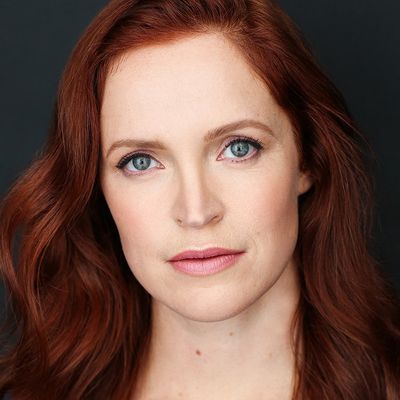
Welcome to another FINAL FIVE Bonus Episode! These are the five questions I'll be asking each guest all season long, as they give concise and and focused insights not covered in our main conversation. The answers given are surprising and revealing, showing another side to Jenny Stafford..... Read More
From the show: Why I‘ll Never Make It
Guests
About
Welcome to another FINAL FIVE Bonus Episode! These are the five questions I'll be asking each guest all season long, as they give concise and and focused insights not covered in our main conversation. The answers given are surprising and revealing, showing another side to Jenny Stafford...
- If you could have any other job outside of the arts what would it be?
- What is a bucket list role or show you still hope to do one day?
- Who do you look up to? A mentor or someone who inspires you.
- Name a lesson or trait that took you awhile to learn or one that you are still learning to this day?
- What’s the best advice you’ve received?
Click here to listen to the previous episode with Grace McLean.
And to learn more about Taylor Mac and his work go to Playbill or the New York Times.
Transcript
This transcript was automatically generated and might contain errors.
[0:00] Patrick Oliver Jones: Hello, and thanks for coming back and joining me for the final five. This is a bonus episode to the conversations I have every Wednesday, where all season long I'm asking the same five questions to each and every guest. Today, Jenny Stafford is with me again to give her own thoughts on these questions. Let's get this started.
[0:37] Patrick Oliver Jones: So, Jenny, here we are at the final five. So, number one, if you could have any other job outside of the arts, what would that be?
[0:45] Jenny Stafford: I think I would like to be a sign language interpreter.
[0:48] Patrick Oliver Jones: Interesting. I've had another guest who has said the exact same thing. What is it?
[0:52] Jenny Stafford: Really?
[0:53] Patrick Oliver Jones: Yeah. What is it about you that draws you into that?
[0:55] Jenny Stafford: I don't I think it's really beautiful. And there's I don't know something that feels theatrical about it. So maybe it's kind of a cheating answer. But I'm taking a sign language class this fall, and I've just fallen in love with it. There's something really fun and exciting about being to communicate in a completely different way.
[1:14] Jenny Stafford: Yeah, when I saw Children of a Lesser God, it was a lot of that. I think that was the first time I'd really seen what you said, the beauty of that movement. And there were there was there were supertitles. So I mean, obviously, those of us who are hearing were able to understand the sign language that was going on, but there were moments where the sign language was so fast where they kind of turned the supertitles off, and we just got to experience it. And yeah, then and that was really, really moving.
[1:43] Jenny Stafford: Yeah, it's a beautiful language, and I've had a lot of fun just sort of learning the signs and picking up more vocabulary. And there's a lot of creativity and imagery that's built into it. And yeah, I love it. So, number two, what is a bucket list role, a show, a collaborator that you still hope to work with one day?
[2:02] Jenny Stafford: Yeah, this was a really hard one. But I think if I had to pick one, are you familiar with the performance artist Taylor Mac?
[2:08] Patrick Oliver Jones: Yes.
[2:09] Jenny Stafford: Oh my gosh. I went inside the I know Taylor's preferred gender pronoun is Judy, which I absolutely love and ruin every time I try to speak about Judy. But I went and saw Judy's 24-hour concert several years ago that went through American music one decade at a time. Right. And it was the most incredible thing I've ever seen. And everything of Taylor's that I've ever been to has been a massive epic piece like that. And I just don't understand the way that Judy constructs stories and is so funny and is so talented and just it's incredible. And if I even got to like just make coffee and be in the room while Taylor creates, I would be thrilled.
[2:55] Patrick Oliver Jones: Yeah, I mean, his brain is working on a different plane, a different level than most of ours is.
[3:01] Jenny Stafford: Yeah. Oh my gosh, it's unreal. And I don't know what I would bring to that collaboration because Taylor feels like such a complete artist, like all-encompassing. So I don't know that I would have all that much to offer, but I'd love to just be in the room while it's happening.
[3:15] Patrick Oliver Jones: Yeah. And this kind of leads into number three. Who is someone that you look up to, a mentor or someone that inspires you?
[3:23] Jenny Stafford: You know, I was thinking about this one a lot, and I loved your podcast episode from a while back where you interviewed Grace McLean. And I recently I teach a musical theater audition class at my university. And so I was trying to find a video clip of Grace singing a song that I wanted to assign to this student, and I fell into like a Grace McLean rabbit hole. And it's funny to like speak of her as a mentor because I think she's probably younger than I am. But I just think she's a really incredible performer and a really incredible writer. I saw her show In the Green at Lincoln Center this summer and could not stop thinking about it for days. I think she just has such a clear voice and a clear perspective and such a unique way of doing what she does.
And what I took from that show was the message that the parts of that are broken of you, the parts of you that feel ugly and broken are actually the parts that are beautiful that are worth putting out into the world. And I've been thinking about that a lot lately since I saw that show. So I admire what she does tremendously.
[4:24] Patrick Oliver Jones: Yeah, I mean, there's something to be said for embracing all of ourselves. It's easy to the parts that are working, the parts that are pretty, the parts that that you know that work well. It's easy to embrace those, but to embrace the parts of ourselves, those bad habits or the things that just don't seem to be quite right, embracing those, I think is harder, but also can be much more fulfilling as we take in the totality of who we are.
[4:53] Jenny Stafford: Sure. And certainly I think you know, social media plays a big part into that because you can put forth a persona that's exactly what you want it to be, and it's very easy to hide those parts of yourself if you want to.
[5:05] Patrick Oliver Jones: Yeah, yeah. One of my favorite things that I love to do on my personal Instagram is that I will put in weird or bad self-tape moments where it's just like, what was I thinking? But this is the reality of what it's like to put a self tape together.
[5:24] Jenny Stafford: Oh, I love that. Thank you for doing that.
[5:27] Patrick Oliver Jones: All right, here we are. Number four, name a lesson or a trait that took you a while to learn or something that you're still working on.
[5:35] Jenny Stafford: It took me a long time to learn, and I'm clearly still working on it, that you don't have to include everybody's feedback in your work. As someone who is sort of a self-proclaimed approval junkie, it took me a long time to get to the point where whenever somebody said something about my work, or like someone on a faculty panel at NYU said, like, oh, maybe this character should do this. I found myself doing it just because, oh, like they said I should do that, and they're really smart, so I'm gonna do it. And I'd end up writing a show that was just a mess because it was not the thing that I had set out to write, and it was not all things that resonated with me. It was just sort of like bits and pieces of what people had told me I should do. And so it's taken me a long time to sort of learn to be true to my own voice and to my own instincts and not need to be a people pleaser as much.
[6:28] Patrick Oliver Jones: Yeah, yeah. I mean, as collaborative as this profession and industry is, it still comes back to us and our individual contribution to that. And I think we have to present the thing that is most us so that it will mean something whenever we put it out there. Because if we're just doing what someone else did, then no one really ever gets to see us.
[6:51] Jenny Stafford: Right, exactly. And it ends up not being your authentic work and the thing that's worth you putting out into the world.
[6:59] Patrick Oliver Jones: Absolutely. So, last one, what is the best advice that you have ever received?
[7:05] Jenny Stafford: It goes right along with that, and that is just being true to who you are as an artist and not worrying so much about how is that going to be received? Is it going to be commercial? Is it going to get you hired? Because there are so many elements that go into that that you don't have any control over. All you have control over is showing up and doing the work and being who you are.
[7:29] Patrick Oliver Jones: Was there a particular person or show that you were working on where that advice came to pass?
[7:35] Jenny Stafford: The moment that I realized this, I was working as the production assistant on a show, and I was sitting in the room during auditions, and this woman came in and gave the most beautiful audition. We've been watching women all day long. She came in and gave this killer audition. And I was like, ah, this woman's amazing. She's definitely gonna get this part. And she walked out, and like the whole creative team was like, oh, she's amazing, she's great, we should cast her. And the director goes, she looks like my ex-wife. And the woman didn't get the part because she looked like his ex-wife, and it was gonna be too difficult for him to like work on this show with her. And I just wished I could like follow her out of the room and be like, it wasn't you, you were amazing.
Something completely out of your control kept you from getting this job. And I think that was the moment that really sank in for me of like, huh? There's always gonna be something that you can't control that you don't know about. So all you can do is what you do.
[8:29] Patrick Oliver Jones: Yeah. And so if that woman who auditioned, if she took that and be like, oh, I must be doing something wrong, and then started changing, and then it never sank in, it never felt right. And her auditions would become worse after that because then she's not owning whatever she brought into that room that you love so much, she would stop owning that.
[8:51] Jenny Stafford: Right. Cause it's sort of a guessing game then for yourself of like, oh, what do they want? Do they want this from me? Do they want that from me? And like, you don't know what they want. They want you to not look like their ex-wife.
[9:00] Patrick Oliver Jones: Exactly. It is a guessing game where there is absolutely no way to find out the answer. It's just impossible.
[9:08] Jenny Stafford: Yeah, yeah. And she'll never know. That's why she didn't get that job, and she should have got that job, you know.
[9:13] Patrick Oliver Jones: Right. But it but yeah, whether it's looking like an ex-wife or sorry, you don't fit the costume. You know, it's these random things.
[9:30] Patrick Oliver Jones: Well, that does it for me and Jenny this week. To find out more about the conversation with Grace McLean, as well as to find out a little bit more about Taylor Mac, if you're not familiar with his work, you can look in those show notes for links to the Grace McLean episode as well as the Taylor Mac website. Thanks again for joining me. And stay tuned next week whenever I talk to the Muni artistic director, Mike Isaacson. He's also been a part of the production team for a few shows on Broadway as well. He and I will sit down together and talk about what it takes to be an artistic director and be in charge of such a legendary theater like the Muni in St. Louis. Take care, and I'll see you next time.
© Broadway Podcast Network, All Rights Reserved