

Follow Luis: Website / Facebook / Twitter. Follow WINMI: Instagram / Twitter / Website. Donate to the podcast: https://ko-fi.com/winmipodcast. Don't forget to check out all the helpful offers available to you through WINMI guests and partners: resources.winmipodcast.com... Read More
From the show: Why I‘ll Never Make It
Guests
Featured Shows

About
Follow Luis: Website / Facebook / Twitter
Follow WINMI: Instagram / Twitter / Website
- Donate to the podcast: https://ko-fi.com/winmipodcast
- Don't forget to check out all the helpful offers available to you through WINMI guests and partners: resources.winmipodcast.com
- WINMI is a Top 20 Theater Podcast thanks to you! https://blog.feedspot.com/theatre_podcasts/
Music and Sound Bites used in this episode:
"Bom Jardim" by Lobo Loco
"Latin Rhythm" by Sunsearcher
"Hot Salsa Trip" by Arsonist
"Escape" (Karaoke Track) by Rupert Holmes
"True Blue Sky" and "Copley Beat" by Blue Dot Sessions
"Smooth Actor" by Podington Bear
"Ayer" (Karaoke Track) - Gloria and Emilio Estefán
"Somewhere Nice" by John Bartman
"Meekness" by Kai Engel
Lin Manuel Miranda on CBS Good Morning
VOX - Why Puerto Rico Is Not a US State
Oscar Hijuelos on New Mexico PBS
Keez in the Pen with DC-7
Transcript
This transcript was automatically generated and might contain errors.
[0:00] Unknown speaker: CFOs and controllers, there's a better way to manage cards, expenses, travel, and reimbursements.
[0:05] Unknown speaker: You need a unified spend platform from Brex that lets you control all your spend in one place, automate compliance, and close the books faster.
[0:13] Unknown speaker: Get started at Brex.com.
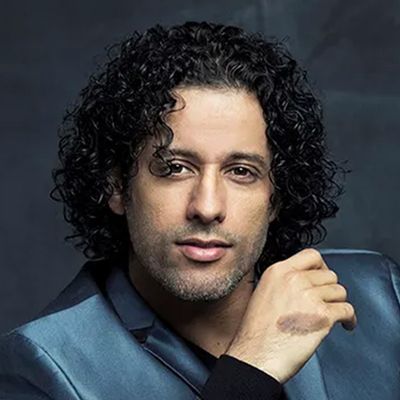
[0:16] Patrick Oliver Jones: Today is the second in a series of guests honoring National Hispanic Heritage Month. Luis Salgado is a Puerto Rican dancer and choreographer with four Broadway credits to his name.
[0:28] Luis Salgado: But as I started out in New York City, I didn't want to be seen as just a Latino performer. In a way, you could say that I was denying the culture by not trying to just be that one thing. You know, and I still think that that's an argument, right? Like, because I'm Latin doesn't mean I can only play a Latin role.
[0:55] Patrick Oliver Jones: Welcome to Why I'll Never Make It, featuring conversations with fellow artists about the realities of life in the arts, all while challenging the notion of what it means to make it in this business. I'm your host, Patrick Oliver Jones, and for more info on the podcast and to sign up for the monthly Win Me Newsletter, go to Why I'll Never Make It.com.
[1:19] Patrick Oliver Jones: Luis Salgado was born and raised in Puerto Rico and studied theater there at the University of Puerto Rico. He moved to New York in 2012, and it was slow going at first for him to book work. But eventually things started to click for him, and his career featured as many credits on stage as offstage behind the scenes, in addition to film and television work.
[1:45] Patrick Oliver Jones: But 2020 has not been kind to so many artists, and work has pretty much come to a grinding halt.
[1:54] Luis Salgado: You know, from the moment that this pandemic began, um, I basically did not really look at life, I looked at action. Because as it turns out, a production of Matilda that I directed and choreographed at Axel Rod Performing Arts Center in New Jersey was canceled mid-run due to the pandemic.
[2:16] Luis Salgado: I had been directing and choreographed in the musical Matilda, the show closed. I left over 30, you know, performers without work because like all of us happened. And immediately my question was, what do I do? How do I make up for people like this people that I just left without work, um, that are now going to need some sort of connection, some sort of relationship while we in our houses.
[2:42] Patrick Oliver Jones: A few months ago, the ensemblist conducted a survey to find out where Broadway performers have been since the shutdown in March. Now, five percent of those say that they've left New York City for good. But the largest number, 35%, say they've moved out of the city only temporarily, and Luis and his family was part of that 35%.
[3:05] Patrick Oliver Jones: And why did they leave and head back to Puerto Rico?
[3:09] Luis Salgado: Basically escaping the reality that exists. Um, my family and I spent three months in New York City, um, literally pretty much in the apartment. The only person that went out was me going to the grocery store, making sure that I had what we needed weekly, and um every now and then escaping the four walls by running the bike.
[3:33] Luis Salgado: Um, but my son and my wife and what I call my adopted daughter, who was with us for six months, um literally they did not go out, so it got to a point that I was like, we need to go to a place that feels um a little bit healthier.
[3:50] Luis Salgado: And so in Puerto Rico, I have my entire family, my mother, my father, my aunts, my cousins, you know, and uh the beach house where we live here. It's um definitely takes away one of the walls and gives you a better sense of the universe and nature and the hope that there is that the same way that nature continues to basically reinvent itself or or be reborn, that at the end of this puzzling time, we will be reborn as well, and we will see that sky again, you know.
[4:23] Luis Salgado: So this is definitely a healthier place to be.
[4:26] Patrick Oliver Jones: But Puerto Rico has certainly had its own times of difficulty.
[4:30] Patrick Oliver Jones: The most recent was the absolute devastation it suffered at the hands of Hurricane Maria, a terrible storm that in many ways the island is still recovering from.
[5:15] Patrick Oliver Jones: Complicated relationship between the U.S. and Puerto Rico. In 1898, at the end of the Spanish American War, Spain ended its 400-year reign of the island and ceded Puerto Rico to the United States as a territory.
[5:36] Patrick Oliver Jones: And in 1917, Puerto Ricans were finally given full U.S. citizenship. Like other American citizens, Puerto Ricans can serve in the U.S. military and are subject to drafts. And like other American citizens, Puerto Ricans also pay most federal taxes.
[5:53] Patrick Oliver Jones: But unlike other citizens who face taxation, Puerto Ricans don't have federal representation. This means Puerto Ricans can't vote on issues that affect the island, such as limited funding for Medicaid or food stamps, as well as a broader economic policy.
[6:17] Patrick Oliver Jones: And while Puerto Ricans on the island can vote in the presidential primaries, they can't vote for the president. Votes in 1967, 1993, and 98 upheld the island's status as a commonwealth.
[6:54] Patrick Oliver Jones: But in 2012, a majority of voters for the first time chose statehood. But it didn't really go anywhere. Again, in 2017, an even larger majority voted for statehood, a whopping 97%. However, turnout was low at only 23% of the voting populace.
[7:15] Patrick Oliver Jones: And again, referendums aren't binding. It's ultimately up to U.S. Congress what happens with Puerto Rican statehood.
[7:24] Patrick Oliver Jones: But while that political debate continues, there is certainly one thing that is not up for debate. When it comes to Puerto Rico, the importance and significance that arts and culture play in society.
[7:37] Patrick Oliver Jones: For example, salsa is Puerto Rico's greatest contribution to Latin popular music. In the 1970s, Cuban and Puerto Rican rhythms combined to give birth to salsa music, and its popularity spread throughout the Americas.
[7:56] Patrick Oliver Jones: You'll hear salsa everywhere in Puerto Rico. Many restaurants have live music nights, and there's plenty of live performances on the streets. And often while listening to and dancing the salsa, they are also enjoying another Puerto Rican invention, the piña colada.
[8:25] Patrick Oliver Jones: Lynn Manuel Miranda, who himself has made some of the greatest contributions to musical theater.
[8:32] Luis Salgado: Well, here's the thing.
[8:45] Luis Salgado: We're playing uh Hamilton, and it was the most emotionally satisfying, artistically satisfying week of my life. I didn't realize how important it was to me that this island that I love so much embrace uh my work.
[8:58] Luis Salgado: And it's hard to get Broadway shows to Puerto Rico. Um, but I sort of realized as soon as we got a nice review in the New York Times, oh, there's gonna be a tour of this show, and oh, I'm gonna get to play this in Puerto Rico.
[9:11] Patrick Oliver Jones: And it is this beautiful, rich and artistic community that Luis brought himself and his family back to during this pandemic, and being back in Puerto Rico gave him a chance to connect with others all around Latin America.
[9:25] Patrick Oliver Jones: You see, back in 2008, while he was performing in his Broadway debut with In the HEIGHTS, Luis began a nonprofit organization called Revolucion Latina.
[9:36] Luis Salgado: Their mission is to activate individuals and promote human growth through artistic experiences that can lead to personal transformation and social change within the Latin community.
[9:49] Luis Salgado: And so with my performing career on hold, I have been able to focus solely on my organization and reaching out to others.
[9:59] Luis Salgado: It was because of Revolucion Latina, because of the audience that we serve. We started providing um classes free of charge and and you know, talks and conversations so that we will all be together, and that the first month took my entire attention, and then immediately realizing that I also needed to take care of myself.
[10:21] Luis Salgado: So I've been I've been sort of really busy in the idea of providing opportunities and services just in the joy of being in touch with humans, um, while not being able to be in a rehearsal studio or in a theater, um, and then at the same time taking care of my family.
[10:40] Luis Salgado: What do we need as a family? What does my son need? What does my wife need? You know, what does my mother need? And I think time has been pretty consumed in those two worlds.
[10:49] Patrick Oliver Jones: Certainly being back in Puerto Rico has given him a chance to focus on these two important parts of his life.
[10:56] Patrick Oliver Jones: Number one, taking care of his family, of course. Number two, also finding that joy in teaching and providing artistic experiences to others, especially children.
[11:08] Luis Salgado: It was at the age of 10 years old that I discovered my love of dancing and performing.
[11:17] Luis Salgado: Well, you know what's interesting? My very first um life experience, what changed my life was dancing first. Um, I had a teacher um in an after school program when I was in fifth grade that really, really touched me.
[11:34] Luis Salgado: From there, you know, acting came through that, and then it became the thing. Um, and I went to college to study as an actor and got actually into college because auditioning, and that that was where I wanted to go.
[11:49] Luis Salgado: But the real thing I I wanted always to do is tell stories, you know, tell stories in whatever form. Um, and and I think that that is why for me, what arts and theater has really given me is an opportunity to know about other people's life, about other people's cultures, by other people's truth.
[12:11] Luis Salgado: I have found myself talking a lot about the idea that the kind of theater that I aim to make is that of giving voice to the unheard voices.
[12:21] Luis Salgado: Um, and you know, this this time is very unique because we're looking at uh at uh all all the movement, all the social movements that are happening, things like the Black Lives Matter movement, for example, um, the the reality of this pandemic and how it affects families, how that you know, five-year-old kid is no longer able to go to school, um, how that people, that community that lives in a town like Chincha in Peru don't even have access to the technology we have access to, to be able to gain something else outside of the of the five miles of their town, right?
[12:59] Luis Salgado: And so um that is what moves me. Um, and I think that is really and I learn it more and more and more every time, every project.
[13:07] Luis Salgado: That is why I do art, because I get to be vulnerable, share my own humanity, my own vulnerability, my own dreams and desires, but also take in, learn and listen to those same realities of so many people all around the world.
[13:25] Luis Salgado: It's a similar journey for all of us artists as we tap in to that that uh part, that spark within us that really lights a new way of looking and of being and of wanting the world around us to be.
[13:40] Patrick Oliver Jones: And so yeah, we all have our own um passions and different ways that we connect with this art form.
[13:46] Patrick Oliver Jones: And for you, your journey to New York City as well as to musical theater were both kind of on parallel paths, and then what was it that finally brought the two of them together?
[13:57] Luis Salgado: I think it was um business, honestly, um education and business. And I say that because I started, you know, I come from a very humble family, and for me to be able to have uh my own dance school when I was 17 years old was a big, big event in my life.
[14:15] Luis Salgado: You know, it was something that none of my family had a business mentality. And I honestly didn't either. I just wanted to make art. But I landed at this thing that I was responsible for eventually around 300 kids.
[14:32] Luis Salgado: And you know, I was teaching them jazz and hip hop and funk styles and Latin. But I knew that there was more that I needed to learn myself, and that began with the technique. I needed to take more technical training.
[14:48] Luis Salgado: Um, and and I also needed to just have more life experiences because the beautiful thing about Puerto Rico is that you know, you're passionate and you're driven, and you're you're going to go beyond and do the things just because you want to.
[15:03] Luis Salgado: But also in order for me to take a dance class, I needed to wait till next Wednesday at 8 p.m. And so it wasn't enough for me. I couldn't train, and if I couldn't train the way I wanted with the ambition and the hunger that I wanted, it was hard for me to, you know, keep being creative and teach eight to ten classes a week without having food for myself artistically. So I started traveling to New York to find that food, and I found that in places like Brady Dance Center, who, you know, I take my hat off to them for being a home to so many people around the world. And so I started traveling as much as I could to learn as much and from as many people as I could.
[15:52] Luis Salgado: And did you have family in New York?
[15:54] Luis Salgado: I had an uncle that lived in Brooklyn that every now and then I'll be like, Dio, can I stay with you like two nights? You know, but I will always try to find my own space because I've always kind of been shy of asking favors too. Um later in time I learned that it was so needed, especially when you have a nonprofit organization. But um, and so I learned quickly that I needed to expand my growth, my hunger, my outlook outside of the ocean of my island, which I love, but at that moment it just simply wasn't, you know, enough for that evolution artistically that I wanted.
[16:30] Patrick Oliver Jones: And your very first off-Broadway show is really a lesson in persistence because you were originally cut from the original set of auditions and callbacks for Fame on 42nd Street. So what is it that what eventually brought you back into the show?
[16:47] Luis Salgado: Well, you know what's funny, it's that it really was a Fame story, period, right? Like this is the little Latin guy who walks into New York City not knowing anything of that industry and how to run it. I go to this audition and I wait outside. There's over 500 people doing the line around the block on 42nd Street by the little Schubert Theater. And uh, you know, like literally the movies, the movies that I saw with John Travolta with Chorus Line with the typical dance movie, and there I was. And so 130 was my number or something like that. Um, and out of the entire day waiting, um then there were 50, then there was 20, then there were 10, and then there was only like literally two people kept to do a lift call.
Um, and the other gentleman, Ryan Scioto, had dropped the dance captain, the Nita Salamita. And I said, in my mind, I have it. This is it. I made it. I made it. And uh and so, you know, I waited one day, two days, three days, four days, and then I realized I didn't make it. Um, and good good for that. It's it was a lesson that nothing is is ever given to you.
[18:06] Luis Salgado: And um, and so like a week later, I get a phone call from this gentleman, Dan Shaheen, who says to me, Listen, um, you did great in the audition. Thank you so much. Would you be interested in coming to a private call? The position that we were auditioning for at that time has been given to Ryan, but now we're looking for another study to the character of Joe Vegas. Would you be available to come in? And I said, of course. And so the words in my mind were private call. So I thought a private call meant that there were gonna be like four or five people in there, and I go back to that little super theater, and there's like 72 people to audition for this private call.
[18:51] Luis Salgado: And the same same story, you know, we were 70, we were 50, we were 20, we were three. And uh among the three, I remember that my friend Hector Flores and I were part of the final, you know, final three, and we finished, we danced, we did everything we needed to do. And then we said, okay, let's go eat something. We walk out of the little Shubert theater, it starts to snow. We are laughing at the audition call, we're laughing at ourselves, we're dreaming about what could be. And I get a phone call like 10 minutes into that walk as we go into a restaurant. And um, it was like, are you available to start tomorrow? And that's literally my movie, my movie audition story. I love it. I love it.
[19:38] Patrick Oliver Jones: Yeah, I've never actually been able to audition on the theater stage where it's gonna happen, you know, for Broadway.
[19:46] Luis Salgado: So good. Sometimes off-Broadway that happens, but usually, yeah, usually it's those uh either audition or dance studios where where I have to go. So it yeah, it's a special thing when you get to be on the actual stage where it happens. And doing Fame where on my very first attempt at a musical on the New York stages where you know you're doing that chorus on the audition, Fame, I wanna live forever, you know, and like your arms are popping up, and you're looking at that final row, and you're like, I wanna be here, you know. So like it was just the it really is like the perfect initial event of my theatrical life in in the city.
[20:25] Patrick Oliver Jones: Now, your next audition, the next show that you uh became a part of uh was actually one that you were reluctant to go to. This would be the musical adaptation of Oscar Hijuelos's Pulitzer Prize-winning novel, Mambo Kings. And why was it that you were so reluctant to to initially be a part of that show?
[20:44] Luis Salgado: It wasn't so much reluctant as like no, you know, but like it it was more like I feel like I was already that I it was a different time, and you know, you you come into the city looking for new opportunities, and I felt like, yeah, the show is Latin, it's Latin, what what would the challenge be? You know, like they want me to dance Latin, they want me to dance salsa or merengue, I don't know. Like I do that. I want to go into an audition that's gonna challenge me in something that I don't know. I want to go again into a hip-hop audition. I want to go into like all of a sudden I have to sing the songs that I am afraid to open my mouth and sing. You know, like I wanted that type of challenge because I didn't know that I was gonna stay the rest of my life in New York.
You know, if I only lasted three, four years, then I wanted to get the biggest experiences that I could come back home and say, I learned all this stuff. I was after the learning, I was after that food, as I mentioned before. So it just felt easy in a way, you know, it fell easy.
[21:46] Patrick Oliver Jones: And you were looking for something that was totally different from your Puerto Rican experience, is that it?
[21:51] Luis Salgado: Exactly, exactly, exactly. In in a way, you could say that I was denying the culture by not trying to just be that one thing. You know, and I still think that that's an argument, right? Like, because I'm Latin doesn't mean I can only play a Latin role. Actually, when I play Chorus Line, funny enough, I play Bobby, you know, and so like that was a challenge, and I had to like lock myself into studying to get rid of my accent and speak like this guy from Buffalo, you know, and so that's the kind of challenges that I was after.
[22:23] Luis Salgado: But as anyone can tell you who has taken an acting or dancing class or stepped foot on the stage, there is a transformative power in the performing arts. It's a chance to express yourself and experience another side of your own abilities. It was Aretha Franklin that said, Quote, be your own artist and always be confident in what you're doing. If you're not going to be confident, you might as well not be doing it. And uh, by just going through the audition process for Mambo Kings, Luis learned an important and valuable life lesson. By entering that room, I was able to be who I am. And I was able to make a statement of just moving the way I learned to move and speaking the way I learned to speak.
And allowing everybody around to understand the value of that presence, of the power of my last name, you know, of the birthmark in my hands. And I remember that that was one of also another outstanding audition where La Jérie and myself, you know, went at it and literally battled this Mambo together and both got the job.
[23:31] Luis Salgado: And people had stopped dancing and just looked at us in the middle of that rehearsal room auditioning. It was so powerful that it gave me a validation that nothing else in the world would have ever given to me. And what happened next um was even more important because the show didn't make it. And then I realized that if I did not stand up to represent and own my culture the best way possible, nobody else could do it. Anybody that's not 1000% Latin and experiences the growing up that I had, or and by I I mean everybody like me that was in that room. From Marco Santana to Carlos Sierra, you know, um, people that that understood what the the baggage of being Latinx in the United States and having people say to you, what where are you from? Like, you know, like you're not American, but meanwhile, Puerto Rico is part of the United States, you know, like that reality, it's so ours that I needed then to really own it, and it changed my life forever.
[24:40] Luis Salgado: In much the same way, Oscar Hijuelos discovered his own pride in the culture and country he came from. Here he is in an interview from 2011. One of the reasons I started writing Mambo Kings, I once heard someone say, you know, uh, I'm talking about Desi Arnaz, and someone said, Oh, yeah, he was that uh, you know, that Spanish guy. It was like irksome to me. Spanish guy. No, he's a cubano, you know, like they're Mexican Mexicanos or Tejanos, they're like Puerto Ricans or Dominicanos, I mean, you name them. Uh so I started thinking about this whole issue of the ethnic identity and and of how Latinos, for example, are all lumped into the same kind of group, and that put me in the direction of thinking about the Cuban identity, and that coincided with the time when I when I was really starting to re-identify with it big time, having been torn asunder from it as a child, I started being drawn back. I mean, I guess it's in your genes, right?
[25:39] Luis Salgado: And so his novel, The Mambo Kings Play Songs of Love, was turned into a musical that follows the same story of two Cuban brothers who traveled to New York City in 1949 with dreams of becoming recording artists. It had already been turned into a movie starring Antonio Banderas, and the film's director was also directing the musical, and also contributed to its book and lyrics. The musical had high hopes of going from San Francisco to Broadway. But two weeks before its California debut, the previously announced Billy D. Williams left the production due to an injury and was replaced by David Alan Greer.
[26:22] Luis Salgado: Now, while reviewers loved the dancing and choreography provided by Sergio Trujillo, they didn't really care for much else. And its hopes of coming to Broadway ended with closing night in San Francisco. But as is often the case, a reviewer's impression of a show can vary wildly from the experience of the audience as well as the actors on stage. We know that on the third number of the show, meaning probably 25 minutes into it, in San Francisco, out of every eight shows, maybe three or four people were standing on their feet, clapping, you know, 25 minutes into the show when the number Rankan Khan came in. We know that, you know, the opening of Act Two did the same. And we know that the ending was a strong. We know that we had performers in roles that were very raw to musicals.
[27:31] Luis Salgado: Um, and yet we also know that we had a very sort of name-dropping Latinx cast for that time that could have done an impact if they had had gotten an opportunity. People like Albita Rodriguez from Cuba, you know, her voice is incredible. Not necessarily a seasoned actress, but an incredible singer. And so I think that there were things like that that we were aware of that we know this is great, but this is could be better. Um, uh, the choreography is definitely the juice of the show. The Pulitzer Prize winning book by Oscar Hijuelos has been proven that it's something that is filled with poetry and passion and relevancy. A film had been made. You know, like we thought, shit, there's so much that we're offering that it's so good. Um, but we also were aware of things that were in weren't really working, you know, or that felt um maybe stereotype-y or cliché.
[28:34] Luis Salgado: And I remember very strongly Sergio fighting against those, you know, and like trying to voice um a real honest representation. But at that time, we were still not in a place in the heights had not happened. The world had not opened the doors to to listening to our voices, you know, ironically as that sounds, um, in a way that that you will actually legitimately be considered for what you had to say in what your culture is.
[29:02] Patrick Oliver Jones: And it's interesting that you brought up In the HEIGHTS because it it hadn't happened yet when Mambo Kings and yet your next show was In the HEIGHTS. I mean, that that show was was really a game changer when it came to Latino-centric musicals. I think what Lin Manuel accomplished and the entire team worked with Lynn to make something that would be as amazing as what Lynn was giving us, but also the hybrid needed um for uh welcome reception, you know, among the audience and the reviewers. And I think I think that I learned a lot from that process because it takes a village, and because you know, anything that before In the HEIGHTS, we were bound to do had the potential of being compared to a soap opera, because you know, we come from that culture.
[29:58] Luis Salgado: The beauty of In the HEIGHTS is also the fact that no guns, no drugs, pure celebration of our humanity and our culture. And so, you know, to get away with that was the game changer. That's the thing that makes people look at us for who we are, and not the Bernardos and Anitas that have been overly portrayed and exploited for so many years. And so for In the HEIGHTS, you were actually a part of working with the choreographer Andy Blankenbuehler to bring those Latin rhythms to life. And in the years since In the HEIGHTS won Best Musical, there's been a lot of emphasis placed on authentic voices being represented on Broadway. So I'm curious if at that time, back in 2008, was it strange or off-putting in any way that you were having to show and teach a white choreographer the ways of salsa and merengue?
[30:52] Luis Salgado: Wow. Okay. So this is a very, very wonderful question. And I'm so honored that I can answer it with Andy Blankenbuehler has the most respect for theater and has the most respect for, um, I believe, uh, I believe at least my personal experience has been for those collaborators around him. Um, and the process was very friendly, educational, um, passionate, supportive. Um, and I'll take you through the steps because I think you're what you're saying is so valuable and important. Um, number one, Andy first hired me to coach him. He first hired me to be, you know, literally training him in the Latin field. I am not one to just come in and do one, two, three, five, six, seven. Like, if you want me to coach you, I'm gonna give you history, I'm going to give you culture, I'm going to talk to you about the heart of the people that are there.
And so, you know, our relationship went beyond dance steps like that. And so that I think was the game changer. If I would have come and just given him dance steps, um, and all of a sudden he took those dance steps and used them however he wanted without listening to the rest of what those dance steps had, I would be like, of course, it was so weird. But it wasn't because he listened, it wasn't because he wanted to learn. Because, you know, the reason why we dance on two on the end of Act One when we do the club number, because one day I walk into the room and I said, this whole club number has to happen through the eyes of Kevin Rosario. Kevin Rosario is the gentleman who immigrated from Puerto Rico, his father was a farmer, and now, and he said, no, I'm gonna go take a new life.
And he went to New York City, and in New York City, people were dancing on two. So Nina and Usnavi and everybody that are under the roof somehow sometimes of Camila and Kevin are learning to dance salsa through them. And so they're dancing in salsa the same way that Eddie Torres was dancing salsa, and so we gotta do the number, you know, the club on two. And so Andy listened to that, and the entire number when you look at Carnaval del Barrio versus when you look at the club, there's an essence of styling in the clavic that is very different because we had those conversations, and that's how I also went from being the guy who was coaching to being the guy who was, you know, collaborating to being the guy who ended up portraying some of these roles on the stage.
And so I am very grateful for Andy. And he's a studier, and he teaches me to study, and he's a storyteller. Andy doesn't care about movement until he understands the art, the purity, the heart, and the actions that every character needs. So before we ever actually decided on a dance step, we had to agree on why these people moved the way they did.
[34:08] Luis Salgado: I think that's really important what you said about honoring not just the story, because this was a very Puerto Rican story, and about being in New York, but it was also about honoring the culture that it came from. And it sounds like that you were really a big part of Andy understanding that culture and then being able to represent it through movement in the most appropriate, but also in the most storytelling way. And I think that the way that that resembles, and it's a little little simple gesture, but I would always take it with me to the day I die, is that when he won the Tony, he had no necessity to mention my name, you know? And the first thing that came to his mouth was, thank you, Luis, thank you.
You know, and so that says a lot. Like I, you know, in one way or the other, was able to contribute to something that has changed the course of musical theater in so many ways, especially when talking about Latinx representation. And whether it is in the books or not, that doesn't matter to me. I was able to give who I am to the piece. And while Mambo Kings was what introduced you to Sergio, it wasn't until the musical On Your Feet that you finally got to do that Broadway show together. And even though that was a new show, did it almost feel kind of like a homecoming of sorts?
[35:32] Luis Salgado: Still does. Today I was in a meeting with Sergio and we were dreaming about a section for a concert that we're putting together. And, uh, you know, que siga la tradición and Mi Tierra, for example, are two numbers that take Sergio and Marco Santana and myself back to what we did together in the Mambo Kings. And so we, I will give you a secret that I shouldn't. We literally went back to that time. We look at, you know, pre-production and rehearsal process that we had in the studio. We're like, how do we bring this back to make the statement that we made it? And so we put dance steps that we had in Mambo Kings inside the Mi Tierra number. And we put dance that, you know what I mean? And so we were like, no, they're not taking this from us. They're not. And so that the same way that we went back and we danced in front of the Broadway theater, um, we went back and we looked at the material and we re-honored it on a Broadway stage.
[36:31] Patrick Oliver Jones: I love that. I love that. And so it seems like that a lot of your shows, you were hesitant at first to embrace and go for these Latin roles, but it seems like these shows have really been pivotal moments in your own career because you opened yourself up to them.
[36:49] Luis Salgado: Definitely. And you know, it's funny on that PBS that this past week's the In the HEIGHTS PBS special came out, I guess, a few times, and people are texting and posting and like, you know, putting that Zoom close in on what you said. And that's like one thing I said is like when I moved to New York, I wanted to be like this. I wanted to be like this. You know, you're looking to be something else. You're looking to be like those heroes you're longing for. And I learned that all I have to do is be myself. And so that is the gift that Broadway and musical theater has given me that I learned that on my face, on a slap through these stories that you and I are having the pleasure of talking today.
[37:33] Patrick Oliver Jones: Now, what's interesting, and I love how it's such a small little theater world, but, uh, Sergio and I did Addams Family together, so I certainly know Sergio, and I am curious, especially me being a non-dancer, Sergio was very intimidating. He is, he is, he's kind of a taskmaster in the room, and he wants it done this way, and he demands the best from everyone, which as anyone should.
[37:57] Luis Salgado: Try being his associate.
[37:59] Patrick Oliver Jones: Right, right. Yeah, and so it was very intimidating to, uh, to try to bring these movements that he wanted to life. And did you ever find that, you know, when getting to know him at first, was there ever any moment of like, uh, okay, I'll try it?
[38:19] Luis Salgado: Sergio is the only choreographer in Broadway's, you know, history that I have had that has made me cry like a baby so many times. Like I've gone and cried and cried, you know. I'll tell you the first time we were doing the chancleta numbers in Mambo Kings. I was really young. Um, I had already had the chance to assist him in teaching classes, running auditions, you know, at this point in the rehearsal process. So we had a relationship. Now, if you're a gringo like me, you may not have recognized that word Luis said. Chancleta. Now, according to Britannica, it is actually dance footwear, a wood bottom sandal that accentuates or embellishes the music with rhythm footwork under loose and swiveling hips.
Yep, that sounds exactly like something Sergio would choreograph. I don't know exactly what happened, but it was something with my chancleta fell or something like that. And he like, what are you doing, nene? He called me nene. Nene, what are you doing? And like I freaked out. And then it's like in my mind, I was saying, why is he screaming to me in the middle of the number? Let me at least finish the number. And so, like, I must have said something back to him, like I felt that it was unfair or something that he would take my concentration screaming at me in front of everybody. So I don't know what it was, but he was like, come outside with me. And like that was, and then I was like, he and I were going at it, and I was crying.
Um, that's one moment. And then, you know, all the way back to On Your Feet, where I remember one day I came back from a leave of absence and he called me at midnight to give me to read me about something that had happened. And again, I cried till 4 a.m. and I wrote like a 17-page letter um that I never ever sent. And you know what's beautiful about Sergio that he is as committed as they come. Sergio, Sergio will get it done. He will get it done, and he will challenge every single person in the room to step up to the plate and be the very best they can be without even knowing they are that good. And so that's why I love him. Sergio's making me cry stories are only a metaphor to how much better he has made me as an artist and as a human.
And so, you know, I thanked Sergio for that. And the funny thing is that thank God I never sent that letter, because after not sending that letter, I became more of his associate and then had another round of crying by being able to be associate director, associate choreographer to a Cirque show, you know, and that's when I woke up at 5 a.m. every day and cried for two hours before I went to rehearsal.
[41:10] Luis Salgado: That's funny because Sergio's been great at being doctor for shows. Since I know Sergio, like the very first um time Sergio called me for a Broadway show, he was being um considered, it was for All Shook Up. And he came in as a doctor to All Shook Up. And I remember going with Tys Diorio and Sergio myself into a room and like creating vocabulary. I mean, Sergio was creating vocabulary, we were dancing for him, and like, and that was his first chat at it, like coming in as a doctor, um, which is a position that I dream of, like because of Sergio, you know, like to be able to gain so much um quote unquote knowledge of the form of musical theater and of the instincts of what happens on stage but also happens on the audience, that you can come in and look at something and say if you change this, that might potentially land a lot stronger.
[41:58] Patrick Oliver Jones: Now, your work is not only, you know, covers stage productions, both on stage and behind the table, directing, choreographing, but you went on to found an organization, Revolución Latina. What inspired you to create this and what were you hoping to accomplish with it?
[42:15] Luis Salgado: I think we talked about a lot of what inspires it, right? Is the no from Mambo Kings and the yes from In the HEIGHTS, the combination of that no and that yes is the thing that I'm saying, okay, what's my position here? What's the role that I play? And the role that I played early on in the history of Revolución Latina was to give a microphone to Eliseo Román, to Priscilla Lopez, to Lin-Manuel Miranda, to Olga Merediz, and to their stories, you know. And so we opened that microphone by doing YouTube interviews. And um, it was the beginning of it. And then people saw it and they were like, hey, I want to come close to you guys. Do you guys give classes? So I started doing educational programming, and then we learned that the big necessity that there was in this relationship between a Priscilla Lopez and a child, and how the being able to say, yeah, my last name is Lopez, and I won a Tony Award, and I represent it this way, gives a validation and a certainty of being of self-awareness and self-value to that child.
And so then in order to do that, there's a middle ground, which is the adult artists who also benefit from following the path of those who have opened gates. You know, the Raul Juliás, the José Ferrer examples are not always the thing we're teaching in schools or in the, you know, training programs. So we must bring the awareness of the value of a man like Raul Julia. We must bring the value and awareness of those awards that José Ferrer won doing Shakespeare and doing Cyrano with a perfect, you know, English speaking word, even with his accents. So we started doing all of that. And so we started providing classes for children, classes for adults, um, bringing kids to see theater, you know, in the shows that I was, I was already in the show, so I sat down with Jeffrey Seller and Kevin McCollin.
I said, hey, you know, can we bring any sort of discount to this population that we're serving? And of course, the Latinx audience is also not a regular everyday Broadway audience. So we were doing a lot of things at the same time, not only educating on this side, but we were also creating that bridge of more audience awareness of the value of theater and Broadway and creating a new market. So all these things were happening without even us being aware as much as that it was happening. And look at now, you know, 13 years later, I think that our work has been valuable.
[44:40] Luis Salgado: What we have been able to contribute and the sort of ripple direct or indirectly that it has had, you know, I think it has been of importance.
[44:49] Luis Salgado: And I will forever be grateful of Broadway performer Michael Baldurama and Broadway performer Gabriela Garcia for saying yes when I asked them, and eventually, obviously, of Broadway Care Sequentified States for opening the doors of their home to us and letting us be part of the community that we all represent.
[45:08] Patrick Oliver Jones: And what kinds of struggles or challenges did you encounter as you started opening your classes up to these kids and that kind of thing?
[45:15] Luis Salgado: Those that came to the program. I think we still struggle and we still encounter the issues. People want numbers and they want equations, and like, how did you prove that a seven-year-old child that's been with us since he was seven and now it's 16, and have gotten so many live experiences, so much self-value, you know, it's become a citizen that believes in the idea of going beyond. How did you prove that to anybody? How do you actually share the human growth? It's that's always every year. That's the challenge. You know, the kids, you know, we just in the middle of the pandemic were able to provide a summer camp to over 300 kids: Guatemala, Argentina, Puerto Rico, Dominican Republic, Panama, you know, all over the world coming to a Zoom and taking classes with the best of the best on Broadway and the best of the best of other people in Peru and Colombia, Mexico who gave their time to inspire the community through the arts.
And so for me, the fact that every year we get to do that, that's that's that's the validation. But in order to do it again, I have to convince somebody that's asking you all these questions about numbers and importance and relevance and where their logo is going to be. And so that becomes really challenging.
[46:36] Luis Salgado: Yeah, it's not so much the, you know, the people that you're trying to help and their stories, it really is the just the business. And whether you're a performer, whether you're a nonprofit, it's that business of show that oftentimes is where we get a little caught up. You know, that book always start with the why or that formula, always start with the why. Um, that's the thing, that's the thing that really matters to me. Why are we doing it? You know, and nonprofit organizations exist to fill a gap that exists in society and ideally finish that gap. Like every year, also the plan is that we should no longer exist. Every year I tell my team, let's put all the funds we got, let's put it into work.
You know, a lot of only two people are staff, everybody else donate their time. With the pandemic, we have made a very different scenario, and we're paying everybody that works with us because we know everybody's in need. But the formula of the organization is that we have two people in staff. Every fund we get, we put into action. We provide it in services, and hopefully at the end of this year, there's no more need. And obviously, sadly enough, you understand that that's not the truth. There's always need in our world because the reality of richers become richers, and those with opportunities get more opportunities, and those that are being ignored are more and more ignored. You know, it's sadly a thing that continues to be, you know, ongoing, and so that's why we exist. That's why that's why we try to serve to cover those necessities that the unheard voices sometimes have.
[48:11] Patrick Oliver Jones: You know, you're back home in Puerto Rico, and as you were growing up, did you ever feel yourself unheard? Did you feel like that you couldn't express yourself?
[48:21] Luis Salgado: Of course, of course, even within your own family. I think we all have gone through that. You know, I have a six-year-old child. Um, I love him, he caddy. Um, his name is light, and I'm so hesitant every time to say these words. And the other day I actually ended up saying it because now he's older, and you know, they get a little bit smart ass. And um, but you know, that moment when you're with your parents and you're like, but why? And they're like, because I say so. I just never believed that that was an answer. I just couldn't couldn't understand that that could because you say so is not an answer. And so that is an example of being unheard. That a six-year-old children has an idea or has a necessity to play hide and go seek for the entire day.
And when you say no, you're saying no because you say so. What kind of this validation to his own desire is that? That's a very simple example. And of course, that's a questional example. This is just a question that I happen to think about as you were talking about being back home and having a child. If you could go back to young Luis back in Puerto Rico years and years ago, what would you tell him? What insight would you give him?
[49:34] Luis Salgado: Don't be afraid. This weekend, I took him to a river. I'm sorry. It's okay. Um, he's only six years old. I didn't do this until I was 12, and I'm still afraid as I'm turning 40 this week. Um, we went into this beautiful river in Otuado. I've never been, um, never. It's my very first time visiting that place. Um, and it's almost like you have to do like, you know, like rock climbing to get to the water. It's either that or dive. Um, and and I, my father, crazy enough, God bless him, went and like rock climb down, and then all of a sudden you hear a splash, and um, and so I look at our family, and it's like, I'm not going because I'm not leaving you guys alone, and Hikari's here, and you know, there's no way to go.
You need you need all of us in order to pass through this rocks. And they're like, No, no, your father's waiting, you gotta go. This is this is the moment for the two of you guys to live this experience. So I go down the rocks and and again, rock climb down, and all of a sudden, and now my six-year old son, there's no way that this little six-year old kid is going to make it to us because he has to jump. But he cried and he was stubborn and he said he wanted to. And his mother, God bless her, said, if you will say yes, I say yes. So he she they together rock climbed down a little bit very carefully, to the point where, and I know that this is no video, so I have to describe every moment, to the point where she is on a rock holding him like cliffhanger by the hand, the little toes, trying to like there's still like a good three feet for him to touch the next rock.
And I don't know how she trusted, but I said, do it. He made his way down, walked to the corner of this rock that if in my in my sides, I'm talking about like the the real the relationship to our bodies would be that of a house. You're in the roof of a house, and you have to jump from the roof of your house. So that for a child, right? And so a six-year-old child that if he doesn't jump, he will not make it back to the rock. And my son jumped, you know, and and that is what I will tell myself. I will say, jump, jump, don't be afraid. There's so many moments in life that the difference of making it or not making it would have been that simple jump, you know, but our fear stop us. And that's not only what I will say to myself, that I will say to the world over and over again, jump.
[52:28] Luis Salgado: Whether on stage or in his organization or with his family, Luis Salgado jumps headfirst into each part of his life with love and passion and persistence. It's not always easy, it won't always succeed, but there's always another opportunity, another chance to do more, to do better. You just have to jump.
[53:21] Unknown speaker: From his early childhood, he loved baseball but came from meager means, using a tree branch as a bat and a crushed can as a baseball. But he persisted throughout his teens playing for local community teams until finally a major league scout saw him in 1954, and he was signed to play for a minor league team as part of the Brooklyn Dodgers franchise. But it wasn't a great first season for him, and he also faced racism for the first time, as black players couldn't stay in hotels or eat with the rest of the white teammates.
[54:15] Unknown speaker: 18-year career. However, the racism continued to follow him throughout that time. I think that I belong to the minority group. I am Puerto Rican, I'm black, and I have I'm between the world. So anything that I do, first I will be reflected on me because I'm black, and second, I will be reflected on me because I am Puerto Rican. But with this one, I tell you that to me, uh I always respect everybody and thanks to God when I grew up. And when I my mother and father never told me to hate anyone, or they never told me to dislike anybody because they're race or color. We never talk about that. Uh as a matter of fact, I I started listening to this stuff when I came to this page. This is something that uh I love everybody, and uh and I have to be very careful what I do because what who I am.
[55:10] Unknown speaker: That was Roberto Clemente in an interview with the Pittsburgh News Channel in 1972, what would turn out to be the final interview he would ever give. Now, he amassed every award imaginable from batting titles and MVP awards to golden glove awards and 3,000 hits. For perspective, about 20,000 players have been in Major League Baseball since its inception. Yet only 32 have ever reached 3,000 hits. So needless to say, Roberto Clemente was not only a star in the US, but most certainly in Puerto Rico. But he used his fame and position not for his own selfish gain, but instead to give back to others, particularly those in Latin America. His untimely death was actually an example of his altruistic philanthropy.
It was New Year's Eve 1972. The 38-year-old Pirate Southfielder was on a relief mission to earthquake-torn Nicaragua. Flying out of his homeland of Puerto Rico, Roberto went against warnings his old DC-7 was seriously overloaded. Just minutes after takeoff, the plane carrying food, clothing, and medical supplies went down off the coast of San Juan. That plane has never been found.
[56:46] Unknown speaker: Well, as I was researching Clemente's life and career, I came across a musical about his time before and during baseball. It was called DC 7, the Roberto Clemente Story, named after the type of small aircraft he was in that crashed the night of his death. The show was produced by the Puerto Rican Traveling Theater off Broadway in 2012. And it also played in a few regional theaters as well. And the choreographer for each of those productions? Luis Salgado.
[57:20] Patrick Oliver Jones: Theater really is such a small little world.
[57:48] Luis Salgado: And for me, he was, you know, it touched my heart because as an actor, I have to give it all. I have to really invest all of my skills and my body and everything into the role. So doing the research about Roberto, I think he has helped me to be a more focused actor, even more intense and more um bold. You're also very um aware of your time here on earth. You don't waste time, just do what you love, go for it and be aware of people and helping others and be aware of where you come from. He was very aware of his upbringing, so a lot of that. He's he has taught me a lot of things.
[58:28] Patrick Oliver Jones: Well, thank you so much for joining me and Luis today as we continue to celebrate Hispanic Heritage Month.
[58:36] Luis Salgado: Thank you so much for having me. It's an honor. Um, in the middle of this crazy time to be able to share stories and life and empowerment. It's it's always a gift. So thank you for having me.
[58:48] Patrick Oliver Jones: This podcast is produced, hosted, and edited by me, Patrick Oliver Jones. The website and all social media accounts which are at Win Me Podcast are also managed and maintained by me. So needless to say, why I'll never make it is my little baby. And if you would like to help me take care of this baby, please go to donate.winme podcast.com to support these efforts with your generosity.
[59:18] Patrick Oliver Jones: Well, let's get together next week as Hispanic Heritage Month continues with Bianca Madarkin. Until then, adios, Miss Amigos.
© Broadway Podcast Network, All Rights Reserved