

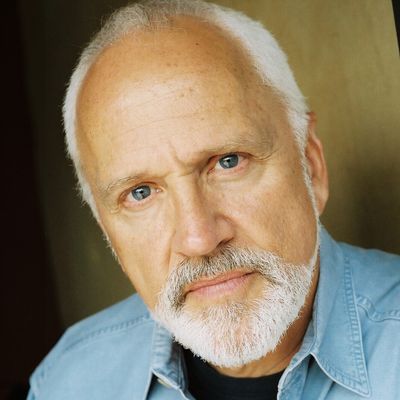
John Rubinstein was born the son of renowned pianist Arthur Rubinstein, and his early exposure to theater in the 8th grade ignited a passion that would shape the trajectory of extraordinary career... Read More
From the show: Why I‘ll Never Make It
Guests
Featured Shows
About
John Rubinstein was born the son of renowned pianist Arthur Rubinstein, and his early exposure to theater in the 8th grade ignited a passion that would shape the trajectory of extraordinary career. He catapulted to Broadway stardom originating the title role in Pippin, directed by Bob Fosse, and won a Tony Award for his compelling performance in Children of a Lesser God.
A true renaissance man, John's artistic pursuits extend beyond the stage into television and film as well, both as an actor and composer, where he’s written the scores or theme songs for several movies and TV shows. We also talk about his work as a director, and even touch on one my favorite topics: the art and craft of auditioning. Never one to rest on his laurels, John also shares the impetus behind his return to New York in the current off-Broadway play Eisenhower: This Piece of Ground, which adapts General Dwight Eisenhower's memoirs, speeches, and letters into a one-man stage play.
Subscribe to WINMI
Producing this podcast is a rewarding experience, but it's also costly and time-consuming as I’m essentially a one-man operation. By subscribing you’ll be supporting these podcasting efforts, and have access to extended conversations and other bonus content. Whether you subscribe or donate, your financial support of this podcast is greatly appreciated!
- Subscribe to get access to bonus episodes and extra content
- Make a one-time Donation to support transcripts and podcast production
- If you'd like to support WINMI but have limited funds to do so, then contact me directly for reduced-price or even free access to the bonus content.
Follow WINMI: Website | Instagram | Twitter | YouTube
----------
Why I’ll Never Make It is an award-winning, Top Theater Podcast with actor and singer Patrick Oliver Jones and is a production of WINMI Media. Background music is by John Bartmann and Blue Dot Sessions is used under a Creative Commons Attribution-NonCommercial 4.0 International License.
Transcript
This transcript was automatically generated and might contain errors.
[0:00] Patrick Oliver Jones: With the many interviews I've conducted on this podcast, I discover connections and similarities with many fellow creatives. And I often marvel at their artistry and talents and tenacity in this business. And although I hate to admit it, there are even times when I'm a bit jealous as well, just hoping that one day I can look back on a career as rich and diverse and fulfilling as theirs. And this episode is one such case, where I had the privilege of sitting down with an acclaimed actor about his artistic journey and multifaceted work life.
[0:39] John Rubinstein: Hi, I'm John Rubinstein. I'm an actor and a director and a composer and a teacher. Yeah, shouldn't have been juggling that for a long time. I was born in Los Angeles, California. I live in Los Angeles, California. I've spent a lot of my time in my youth in New York and in Paris, France.
[1:01] Patrick Oliver Jones: He was born the son of renowned pianist Arthur Rubinstein, and John's early exposure to theater in the eighth grade ignited a passion that would shape the trajectory of his extraordinary career. He catapulted to Broadway stardom, originating the title role in Pippin, directed by Bob Fosse, and won a Tony Award for his compelling performance in Children of a Lesser God. A true Renaissance man, John's artistic pursuits extend beyond the stage into television and film as well, both as an actor and composer, where he has written the scores or theme songs for several movies and TV shows. We also talk about his current off-Broadway project, Eisenhower: This Piece of Ground, which adapts General Dwight Eisenhower's's memoirs, speeches, and letters into a one-man stage play. And of course, we talk about one of my favorite topics, auditioning.
[1:59] John Rubinstein: I get paid to audition and to be rejected. That is where I make my living. And if I get a job, I work for nothing. I work for free. Just so happens that the producers who hire me for a job pay me for all the auditions.
[2:19] Patrick Oliver Jones: Welcome to the award-winning podcast, Why I'll Never Make It. I'm your host, Patrick Oliver Jones, an actor and singer for more than 30 years. Every other week I talk with fellow creatives who bring us stories from their own life of personal struggles and professional hardships with lessons we can all learn from. The website is whyillnevermakeit.com, where you can subscribe, donate, and find past episodes. Again, that's whyillnevermakeit.com.
[2:59] Patrick Oliver Jones: Welcome, John. It is so good to meet you and to have you on the podcast. Thank you for being here.
[3:04] John Rubinstein: It's a pleasure to be here.
[3:06] Patrick Oliver Jones: Now, we as actors, we come to performing in different ways, and for you, it was eighth grade and Shakespeare. Now, now that's not exactly light reading for a 13-year-old. What was it about that experience that stuck with you?
[3:19] John Rubinstein: Well, I had the great good fortune of going to a wonderful school here in New York City called St. Bernard's. It's a private boys' school. But in those days, the early 50s, it was, I'm sure it cost some money, but it wasn't one of those exclusive that you have to know the, you know, president of the United States in order to get into it, or be a multimillionaire. It was a good old school. So my parents sent me there, all boys, and it was run and established by British teachers and masters, as we called them. And they took their public speaking very seriously, as opposed to the, you know, American tradition of, oh yeah, you know, you send your, I have five children, so I've put them all through school here, and I've loved all their schools, and they do their little plays and they do their little performances, whatever they are, and the parents all show up and go, oh, that's my kid up there.
And it's all real cute, but they don't really teach them anything, and they don't take it seriously. It's really just to get them up there and have fun and the parents to come and Google at their babies, which is all great. But in this school, nope, we had to learn these long poems. We had to stand up in front of the school and recite them. We had to memorize all kinds of other stuff. And starting in the earliest grades, we had to perform. And the performing, again, was taken seriously. We had to speak clearly, we had to be heard, we had to understand what we were doing. If it was a joke, we had to know how to time it for the laugh. If it was serious, we had to be serious and not giggle at ourselves while we were doing it.
All the boys played all the girls' parts, of course, because there were no girls. And there was never the slightest bit of teasing or making fun or feeling weird if you're, you know, wearing full makeup and women's clothes. You were absolutely just one of the actors in the play. In eighth grade, which was the graduating class, the eighth grade always performed a full uncut Shakespeare play. And in seventh grade, you were in the homeroom of the director who directed the eighth grade Shakespeare play. So in seventh grade, your entire year in English class was that play that you would do next year. And so everybody in the room read every part. You just read it aloud over and over and over again.
So by the end of the year, everybody had read all the parts. We all knew the play. The teacher, of course, explained to us all the references to whatever it was from Shakespeare, the Greek mythology, even sexual stuff. We were taught what we were talking about. So we knew every word and every reference and got the dirty jokes and everything was ready. And then at the end of the seventh grade year, we were cast and we would learn our roles over the summer.
[6:28] Patrick Oliver Jones: Was there a bit of auditioning, or was it just as you were reading?
[6:30] John Rubinstein: The audition was just him hearing us read it all year long. And then he would decide. He might have that gene going. And so he cast accordingly. I got cast in, well, and then he would use extras from the younger grades if he ran out of people. So in sixth grade, I was a fairy in The Tempest, which was that year's eighth grade play. And in seventh grade, I had a wonderful part called The Boy in Henry V. And it's an actually wonderful role. He's with all the funny people, the pistol and Bardolph and Nim and all the comics. And the boys, the young kid, and they all go off to fight the war for, you know, Prince Harry, King Harry. And he is left alone on stage, and he has a monologue of soliloquy of I want to go and fight and I've never thought I would, but blah, blah, blah. Wonderful speech. So that was my part in seventh grade. And then in eighth grade, our play was Macbeth. It's one of my favorites.
[7:50] John Rubinstein: Yeah. Yes, it's a great, great masterpiece. And I got to play Macbeth. And so in eighth grade, that's what I did. And by the time I finished eighth grade, which I was, I was 13, I was 14, I guess. Um I wanted to be an actor. That's it. And of course, I lived in New York. And in those days, you could afford to go to the theater on your allowance if you were a kid. You can't now. So I really don't know what young kids in this city or almost anywhere, but especially here, who are taken by the theater and want to learn and want to see it. I don't know what they do because they can't go. They can go to maybe one show a year or two. And if they're very rich, they can go to several, but they can't go like I did on my allowance.
I could pay five dollars or less, even sometimes sit in the balcony. And if I loved the show, I could see it three times. So I saw everything: musicals and plays, dramas and comedies, everything that played in New York when I was a kid. That that's what I did. Yeah. Christmas and on my birthdays, everybody could go, don't do anything, just give him a theater ticket. Those were my presents, and I would go and I saw everything for all those amazing years, which are sometimes called the golden years of Broadway.
[9:18] Patrick Oliver Jones: Right, that golden era, yeah. I saw all those actors and all those plays directed by all those directors and written by all those amazing playwrights. And that plus my education at that school, I was gonna be an actor no matter what.
[9:34] John Rubinstein: Yeah, yeah. Well, certainly the location being in New York played a big part of that.
[9:38] Patrick Oliver Jones: Sure helped. And then years later, you got to direct a production of Macbeth. Was that interesting being on the other side of the table?
[9:48] John Rubinstein: Sure, sure it was, because I knew the play very well. I mean, still from a, you know, 13-year-old's point of view, but as I said, we studied it so deeply and had studied other Shakespeare plays and done them as well. So that yeah, when I had the opportunity to direct a Shakespeare play, I picked Macbeth, you know, a little bit out of, you know, insecurity, because I wasn't gonna tackle a Shakespeare play that I didn't know. So yeah, I picked the one that I knew the best. But boy, it's so great. And the actor who played Macbeth in that, that was in 1981 or something, just came and saw my play here in New York. And we I hadn't seen him since then. And he's made a career as an actor himself, and so that was great to see him.
[10:35] Patrick Oliver Jones: That is wonderful. Well, get into the first story here, and this deals with Sunday in the Park with George, the Broadway production. So Mandy Patinkin obviously started the role. And then obviously, as he was starting to leave, they were looking for replacements. And so this is where you step in, sort of.
[10:52] John Rubinstein: Yes. I was doing a play on Broadway a few years earlier. And my parents' dear friends were Garson Kanin and Ruth Gordon, who were married. Garson, of course, great director and great writer, and they both had been writers in Hollywood, so they all knew each other very well. And they were sort of mentors of mine. They had seen me at that school play Macbeth at 13. And it was Garson who sort of took me under his wing. He took me seriously as a young boy wanting to be an actor. And so he brought me to all of his plays and let me watch him direct. And so I learned a great deal from them. And so when I was doing this play on Broadway, they were living on Martha's Vineyard, and they said they had a townhouse on East 49th Street.
And they said, We had two babies right there. You and your wife and your babies can live in our house on 49th Street while you look for an apartment. And that was great. So we did. And one day I was sitting in their living room playing the piano, which I tend to do, and you know, just fooling around, not practicing anything serious, just playing. And suddenly there was a ring at the doorbell. And so I stopped playing, and I went downstairs where the front door was, and I opened it up, and there, absolutely recognizable, was a man I'd never met, but I knew immediately, Stephen Sondheim.
[12:25] Patrick Oliver Jones: Huh.
[12:26] John Rubinstein: And I said, uh, yeah. And he said, Are you the one playing the piano? And I said, Yeah, yes. Well, you can you're driving me crazy. Could you please stop? I'm trying to write music. And all I can hear is you. So just cut it out, would you? I'd be grateful. I said, Oh, yeah, well, I'm really sorry. Okay, sir, thank you. And then he left. Now it's three or four years later. I've done a couple of Broadway shows in the meantime, and I get a call from my agent saying, Um, Mandy Patinkin is leaving Sunday in the Park with George, and they're considering you to take over.
[13:05] John Rubinstein: And uh, could you audition? Or Stephen Sondheim and James LePine. I said, Well, yeah, sure, I'd love to. And they sent me two songs. One was finishing the hat, you know, great solo, very difficult to sing. Um, I'd seen the show, of course. Um, and the other one was the big duet at the end, move on, you know, big love song. We do not belong together, blah, blah. You know, really uh a big deal. So I learned, memorized the finishing the hat, which was the solo. But I was doing a television series out in Los Angeles at the time. Um, and so I didn't have a lot of time. I was working 14, 15, 16-hour days, and I was memorizing the Sondheim song, uh, and then I flew to New York and I didn't memorize the duet.
I figured, okay, look, I'll hold the music and I'll sing it. I know it, I've learned it, I know the music, but you know, they'll understand, and I'll just I'll sing it out off the page, and whatever. Um so I go and I show up at the audition, and I there's song time. We don't we don't talk about our first meeting. And I sing uh finishing the hat, and I think I did a decent job of it. Got all the words and hit all the notes and you know, meant what I was saying, which is basically what we do. And then they said, Okay, now would you sing the duet? And I said, Well, I'm so sorry that I didn't have I couldn't memorize this one just in the time I had, but uh, yes, of course I'll sing it for you. And they said, Oh, good, uh Bernadette, and they Bernadette Peters comes out.
She's not leaving the play, she's still in. She's been doing it for a year. But she was kind enough on their request to would you please sing with the poor idiots who are are auditioning. And she said, Oh God, really do I have to. I mean, I'm making that up, but I bet that's what she said. Um yeah, sure, I'll do it. So suddenly, here there's Bernadette on stage with me. I'm holding this is before the days where where everything was on computers and you could print it up and all that. So I had this oversized, you know, bigger than legal size, just large pages of score, which were taped together accordionated, so that if you opened them up, they they would be 35 feet long. But you folded them up so that you could turn the pages.
So I had that in my hands, but there she is standing looking at me, ready to sing her song that of course she sang last night and to got a standing ovation for with Mandy in his last performance. So I'm terribly uh uh you know intimidated and frightened. But you know, I'm I'm game, I'll do anything. So they start the music, doodly doodly-doodly, move on, and I start singing and she's looking at me like she's singing with me. And but suddenly I'm I'm flipping the pages and they fall out of my grasp, and they unaccordionate themselves onto the stage in this massive sort of train like of a bride, you know. And now I don't know the words, so I I I have to stop singing. She stands there, you know.
Oh God. And I I'm thumpering around on the floor, trying to pick up the pages and fold them back into a usable thing, and the pianist sort of stopped and looks at me, and then finally LePine screams out, that's okay, uh that's fine. That that's good, that was good enough. Yeah, good. Thank you, John. Thank you very much. Bye. And that was the end of my audition. I didn't get the point.
[17:07] Patrick Oliver Jones: Right.
[17:07] John Rubinstein: Oh my gosh. Yeah, it uh uh something like that happens. There's really no recovery.
[17:11] Patrick Oliver Jones: No, no, I mean I could have picked it back up and started again.
[17:15] John Rubinstein: Did you try?
[17:15] Patrick Oliver Jones: Sure.
[17:16] John Rubinstein: They'd seen enough of me by then. And they just they they wanted to put me out of my misery. But the the punchline to that rather sad story, and I was really disappointed because I wanted to do that part. And I think I could have done it real well. I couldn't have sung it as amazingly as Mandy, but I could have sung it and I could have done it. So I was very disappointed. And now it's a year and something later, like 14 months-ish later. I happen to be in Europe with my uh wife and kids on a sort of vacation. And in we're in this weird hotel in Switzerland in the middle of nowhere, and I get a message from the desk. There's a phone call for you from America. Okay. This is of course before cell phones and all that.
I go to my phone, it rings. I hello. And it's um my agent from New York, and he's saying, uh LaPine and Sondheim and George Firth are reworking Merrily We Roll for the first time, because it was a big flop on Broadway, some years before. But they want to bring it back, and they've rewritten a lot of it, and they want to continue to rewrite it, and they want you to play the lead, Franklin Shepherd in La Jolla, California, at the La Jolla Playhouse. First time it's been done again since it closed on Broadway. And James LaPine now is going to direct it. And I said, Yeah, no audition, just come and do it. So they gave me that part based on my horrible audition for Sunday on the park.
[19:01] Patrick Oliver Jones: Well, I'm sure based on a few of your other projects that they probably saw.
[19:04] John Rubinstein: Well, I don't know. Yeah, you'd never but one thing that I was reading, and I didn't realize that Stephen Sondheim also wrote plays. Like we all know his musical work, but getting away with murder lasted a couple of weeks on Broadway. And you were a part of that as well.
[19:21] John Rubinstein: I was. I was. What was that experience like? Because obviously we know his musical genius, but what was it like without his music in a production?
[19:28] John Rubinstein: Well, he's he was always well known as a lover of puzzles and games and mysteries. And he wrote a movie script years before that, uh, that Richard Benjamin was in, and I now can't come up with the name of it. Um, but anybody listening who knows their Sondheim knows exactly which movie I'm talking about. But it was a murder mystery. And he wrote the screenplay. And he loved that genre. He just loved murder mysteries. And uh he and George Firth had written company together, so they were pals. And um and George was somebody that I knew. I had directed a few discalls too. And so um they decided to write a mystery play together, uh, with Sondheim sort of s uh writing the story, what happens and who does what to whom, and George writing the dialogue, writing all the play.
And they worked very well together. And it was a uh a blast. We did it first at the old globe in San Diego, and it was called The Doctor is Out. Um, and then we did it again on Broadway about a couple of months later, and and it was called uh Getting Away with Murder. And um and we didn't. The critics had it's as though they had been waiting for the moment where they could excoriate something by Sondheim. They had just given the Pulitzer Prize to him and LaPine for Sunday in the park, and they they and Into the Woods had opened, I think, and and that had been quite successful, and so they figured, okay, you know, here's here's uh this was Jack O'Brien directing it, but this was Sondheim, and maybe it's time we gave him a little a little beating, and and they did.
[21:26] Patrick Oliver Jones: And we closed quite it was a hilarious, great play.
[21:32] John Rubinstein: Yeah. It's it's kind of crazy whether it's like Andrew Lloyd Weber or these other people that critics just love to beat up on if they can.
[21:38] John Rubinstein: They do. I mean, they've wasted so much of their of their time thumbing through their thesaurus, looking for words of praise for these guys year after year, season after season. Finally, they see some play. They say, wait a minute, this is one we can tear apart. And we can look at the other part of a thesaurus, the part that has all the mean words, and we can use those. And they take great pleasure. I had the same experience with dear poor old, you know, Neil Simon, who had nothing but hits after hits after hits, year after year after year. And um that was another uh you know, sad story for Mark for me. But anyway, um he wrote a play, basically with me in mind and cast me without auditioning, and I played the lead, and I had my name above the title, and it was a huge thing for me. I was so excited. Called uh well, it was first called The Curse of Kulientchikov, and then they changed it to Fools.
[23:42] Patrick Oliver Jones: I can see why they changed that in the and it had a great, great cast of people.
[23:47] John Rubinstein: I mean, uh, Pamela Reed played laid opposite me, uh, Harold Gould and uh Mary Louise Wilson and Jerry Heiken. Uh just the the wonderful cast of comic great actors. And we would have to Hal Gould and I would look at each other and say a line, and we'd have to stand there while the audience not only laughed but applauded and screamed with laughter at the line. Then we went on with the play. I mean, it was one of those things. And the critics all I don't know if there was one good review, every one of them. It was like finally, something that we can tear Neil Simon down with. He's just had too many hits. So here we go, boys. Roll up your sleep. Vocabulary salad, yes. We were out of there pretty quick.
[23:51] John Rubinstein: Well, I tell you, it it was it was it was the way it was the way he approached what he did as a director and as a choreographer, and and as a person, he was he was smart. He had this just you could tell the moment you said hello to him, he looked at you, and he was thinking. And when he talked to you, even if he just said, Where should we have coffee? There was there was depth to it. There was there was a meaning to it. There was a joke in it. He had a twinkle in his eye, and he was thinking all the time. And when he was directing, of course, that's the main part of the job. And he had this sort of direct into intuitive connection to the audience. He was always not only thinking, not how to please them and to give them what they expected or wanted, but what the play needed to do in order to get them what they needed in terms of whatever it was information or surprise or uh a deep emotion or a big joke.
And so as he was directing a play, he was thinking of the audience, of just the public coming in, and how can I make this scene, this moment, this dance step work so that bang, the audience gets what I'm trying to do. And many directors don't do that. Of course, they think about the audience, everybody does. But I mean, they are looking at the the actions on the stage and just making themselves like it, figuring that okay, I'm gonna make what I like, and hopefully the audience will too. And Bob was doing that, but always saying, no, no, no, this joke, I like it, it's funny, we're all laughing, but no, it needs yes extra little things before the audience is gonna get it with us.
[25:52] John Rubinstein: And I loved that about him. It just made you trust yourself with him. Do what you want with me, Bob. I'm with you because I know you're way ahead of what's going on, and you know what's gonna work and what isn't. That was a wonderful feel.
[26:14] Patrick Oliver Jones: Now, in every episode, you get three stories. But if you want bonus segments with extra audition stories and the final five questions about lessons learned and what making it really means, then what you have to do is subscribe to WINMI at why I'll never make it dot com. You just click subscribe there or here in the show notes. Give this podcast a little money, and you'll get the full episodes with all the stories and bonus segments included. And another benefit of subscribing is that you won't have to listen to any ads either.
[26:54] John Rubinstein: For the second story, they're playing our song. And what was your experience with this show? Well, that was an agent problem. Now, agents, uh I've had many agents throughout my career. You know, we part ways just simply because it's not working out, I'm not getting enough jobs, or you know, that they don't answer their phone or something like that. Sometimes they stop being agents, and so uh-oh, I don't have an agent anymore. You know, there are different reasons, but for most actors, there's every few years, oh yes, I have my new agents. You know, with me it was always a thing about LA and New York. I needed to be represented in both cities. I needed even if I was in LA, I needed my agent in New York to say, Hey John, this is happening, get over here or something.
And likewise, if I was working here, I needed an agent in LA saying, wait, there's a movie coming up, there's a TV thing. When your show is over, blah blah blah. If I only had an agent in one city, that didn't work. Or if I had two separate agents that sometimes worked and sometimes didn't, because they were now sort of in competition with each other. So I had just changed, and I had a new agent who was a very, very successful popular agent in New York City. Older guy, I was a young, youngish man in my what, 30s, and he was sort of a you know, the fixture of old New York theater, and he had handled all the great directors and actors and writers, and he was the guy. And so I said, Yay, I'm with him now.
So I'm set. But I didn't know him. We spoke on the phone. He'd seen me in plays and stuff, so he sort of ruled who I was. Um, but all I had done at that point on Broadway was Pippin. I hadn't done any of the other plays and hadn't won any awards or any of that kind of stuff. So I was, you know, I was sort of semi-known in just in theatrical circles, not nowhere else. Uh and I auditioned in Los Angeles because Neil Simon lived in LA at that point, um, for their playing our song, which was going to be I mean, which was about a composer and his partner, lyricist woman, um, and the composer role was the one that I was up for. And I was told to learn three or four scenes or whatever it was that came to the audition.
I read the scenes. There was Marvin Hamlisch who was gonna write the score. I had known him when he was the rehearsal pianist for the original production of Funny Girl, because I was at all the rehearsals because Garson Kanin, my old friend, directed it. So I was at all those rehearsals with Barbara Streisand and everybody where Marvin was the pianist, you know. Um, but now he was the composer. But the joke was hey, I am a pianist and not a pianist, but I play the piano. And so I would play the piano live on stage for myself while singing the songs because he was always playing the piano. That was the deal in that show. So I finished my audition, it goes very well. And my agent, the younger version of my agent, uh at that agency, calls me and says, You got the part.
They want you to do it. They love you. It's in. And Marvin is going to write different kinds of music so that you can play it. I mean, he's gonna write stuff for you because they didn't know if they were gonna find an actor who could also play. But since it's you and you can, that's how it's gonna go. And congratulations. This is the starring role on Broadway in a big musical. Lucy Garnance is gonna play opposite from saying, Oh my gosh, that's great. I can't wait. Now I had done Pippin for two years, signed a two-year contract for very little money. I'm not trying to accuse anybody of anything because you know it was my very first time on Broadway. You don't pay people when they're brand new, and I get it.
But I, you know, during those two years, uh my wife had had two babies, and we struggled just a little bit. You know, it was doing eight shows a week, singing those high notes and leaping about on the stage with no shoes on. Um I now knew what it was to do a big part in a big Broadway musical eight times a week while raising very young children. And I said, you know, this time they have to pay me as though I were actually the lead actor in the show. They can't pay me like I'm just the last person on the list on what on the ensemble. So I said that in a sort of you know very uppity kind of way. And you're telling your agent this, right? My agent, yeah. I said, please have them pay me this time, because they got away with paying me very little the first time, and I absolutely am grateful and glad that I got to do that.
But um, let's not say, well, look, this is what he made in the last show. Let's pay him. We don't need to pay him anymore this time. Because that's basically, you know, producer thinking. And so they started the negotiation and they offered me way less than I wanted. And I said, Oh, come on, let's can't we have a little bit more? And that was it. And then I found myself in these conversations with this older agent who had a German accent. And my father had a it was Polish, but he learned English in Germany as a very young boy in the 1800s. So he also had a slightly I can't imitate my dad, but he he didn't have a German accent, but he had that Eastern European kind of thing, very, very precise, but not quite, and that's exactly how this agent talked.
So I sort of fell into oh, it's he's like dad, you know, he's like an authority figure, he has his foreign accents, he knows what he's talking about, he's handled all the great directors and all the great actors, and he's he's number one agent in New York. So he started talking. Well, John, yeah. Have you heard the music? Well, I said, no, no. Well, you know, I you know, I I know Marvin Hamlisch, I know, of course. Line, I said, wait a minute. I I hadn't learned Bernstein and Leonard always goes to the house of the actor that they're offering the part to, and he plays the score for them in the house before they agree to do it. How can you agree to do a musical eight times a week and you don't know the music?
I said, Oh, geez, you got a good point there. Yeah, yeah, I'd like to hear the music. So then about three days later, I'm waiting every day, sort of looking at the phone, seeing if I can make it ring. Um, and it rings, and it's the director of the play, whose name just now escapes me. Wonderful guy. Um anyway, he called me at my house. It was at night. I remember because everybody was asleep. And I was sitting downstairs in the kitchen. And he said, John, I hear you're turning us down. I said, What? Oh no, no, no, no, absolutely no. Who told you that? Well, I don't know, I've just been told by the producers and people that um you're making all kinds of demands that we can't possibly meet, and that you're basically saying forget about it.
You don't want to do it. I said, Well, oh my god, no, I'm so glad you called me. Uh no, I'll do it, I'll pay you to let me do it. You know, right. I said, Yeah, we're negotiating about the salary, but I think we're something like $500 apart at this point. My last. So either you guys give me the $500 that I want, or I do without it, or we meet at 250. That's sort of how it goes. It's one of those, you know, three choices. But whatever it is, I'm in. So thank you for calling. And I'm glad you that you uh got in touch. So yeah, no problem. And I went to bed saying, geez, wow, that was close. Almost lost that one. The phone rings the next morning, and it's the younger agent, not the old guy, saying, um, John, they they passed.
I said, they who's they and what what do you mean? They're not there, uh they've moved on to their next choice. They're not casting it. I said, What? They can't do that. We I never said no. I never said take it or leave it. I never said, if you don't pay me XYZ, I'm not doing I never said that. And I talked last night to the director, and he said, you know, and I told him that I'm in, I told him I'd pay him to let me be in. He said, Well, they they've moved on. I said, But that's impossible. That can't be. So I called up Neil Simon at his house, because I had his number for some reason. And I said, Neil, what what happened? I was so looking forward to doing your play, but I was just told that you've decided not to cast me.
He said, Well, yes, I was told that you didn't uh that you didn't want to do the play. I said, What? How could you have been told that? Well, I heard that for instance the play wasn't good enough for you. You needed to hear the score before you would even consider doing it. And uh I thought that you rather liked the play, but obviously you didn't think it was good enough for by your standard. So he was like insulting. And I said, Oh no, no, no, none of that is true. I I love the play. And my agent sort of told me I was supposed to listen to the score first and I said yes but I don't care. I I don't care what the score is. I'm sure it's perfect. He said well it's uh sorry we we've moved on it's gonna be uh Robert Klein I said well then no no no no call up Klein and tell him tell him what you told me that you it was a mistake it's mean you offered me the party you know that wouldn't be ethical you can't do that and that was the end of that.
[37:11] John Rubinstein: Wow. Did you stay with that agent much longer? No, that was the day I left that agency. Um but I learned that that old agent had had a beef with uh Neil Simon and Mike Nichols and he had a sort of a vendetta going and he didn't care about me he didn't even know who the hell I was he at a party wanted to make Neil Simon miserable he wanted to be able to say I screwed him he wanted this one actor I made it not happen. That's that's the story that I was so in screwing over Neil Simon he screwed you over. Yes, I I was just you know, you you throw a bomb and you kill all of the people at the wedding instead of the one person you're aiming at. Oh goodness. Yeah, I was just on the on the I was roadkill on on the way to the party.
Oh, goodness. Yeah. And I was I was miserable about that and I I I I I still haven't gotten over it, actually, if you did, if I'm honest uh and yet, because of that, I had the chance to do Children of a Lesser God, which uh was a play that was my second play then on Broadway.
[38:54] John Rubinstein: And um, and that was a very, very big success, and it was a great, great thing for me. That's another one of those things, you know, door closes, a window opens kind of thing. Yeah. It does, it doesn't always happen, but it sure can. Mistakes are painful. I had another similar one with a movie. Ilya Kazan wanted me to be in a movie that he made with Harold Pinter writing the screenplay from a, from a I think an F. Scott Fitzgerald novel. And I was excited as hell. And then again, I had agents and they said, Oh, he wants this and he needs that, and I didn't end up doing it because they cast somebody else. And I hadn't asked for any of that, but the agents had. And then I ran into Ilya Kazan on a back lot when I was doing some TV show, and he was walking.
He said, Hey John, why didn't you do my movie? You know, I said, Oh, I wanted to, blah, blah, blah, blah. We had that conversation. So I missed getting to work with Ilya Kazan. Yeah. And I was also asked to play Muttle but Taylor in the movie of Fiddler on the Roof by Norman Jewison and Johnny Williams and all those guys. And again, it was a thing, you know. It's kind of crazy what goes on without us even there. And then all of a sudden we're in a project or not in a project. Yeah. And they always blame you, and most of the time it is you talking to your agents saying, I'm not gonna do that unless they do this for me and that for me. But with me, it was never that. I had just done a movie in the desert of Mexico for almost four months, and I was sort of crazy.
And I came home and they offered me that, and it was gonna be nine months in Yugoslavia. I said, Oh, oh yeah, yo. Okay, well, then, you know, something I said, I asked them something about billing or something like that. And um, the next thing I knew, they cast somebody else. But those are the things, you know, you go through your life. And it's kind of crazy in looking over your career. I mean, the actor, director, composer, musician, voiceovers, you you've really established yourself in so many different fields. Now, you know, actors of today, yeah, we have to be these multi hyphenates. We have to do it all because we have to create our own work or find it some other way. We can't just rely on agents or other people. But during your time, were you an outlier, or was that the business?
[41:19] John Rubinstein: And that's always been the business as far as like having to do it all and always finding work for yourself through many different fields. No, no, no. It wasn't. It was I never went and looked for work. My agents, you know, they do, and they still do, of course. They look at what they call the breakdowns, which are the lists of TV shows and movies that are being cast by various casting organizations. And uh oh, here's a part that you could play. And then they call those casting people and say, Hey, I've got John Rubinstein among the 19 other actors I had that could also play that part. And they send the list in, and the casting director sort of throws the dart at the list, and the one it lands on, they call in for an audition.
And now, of course, they don't call them in. You do it at home on tape. So it's a whole other self tapes. I hate them personally. What are you doing? I hate them. I used to love driving or walking, depending on which town I was in, to an audition, and you see all the old guys sitting around, you know, people that I knew, we were all teenagers, all auditioning to play the crazy drug addicted, you know, kid. And now we're all in our 70s playing the, you know, the grandpas and the judges and lawyers, and it's still us, you know, we're still hacking away. And then you sit around and you see them, and you hey, you're on your third marriage. Oh, I'm so sorry, or I'm so happy, or whatever you say. And uh and then you go in, and either you meet people like the director and the producer, but more often than not, you meet a camera and then uh casting assistant who has the script, and they turn on the camera and you stand on the mark and you do your scene that you've learned and prepared.
And oh shoot. I if you blow it, you say, Can we do that again? They say, sure, of course, and they do it and they read with you, and it's it's a good experience. And you walk out of there, you say goodbye to all the other guys. Good luck, you say, not meaning it, and uh and you go on with your life. Now, oh, you gotta learn four scenes as 12 pages. You gotta ask your poor wife or partner, or if you happen to live alone, you call a friend, and he has to or she has to come over and read the lines off camera. You have to set up your camera, you have to set up the lighting. There mustn't be a shadow on the wall behind you or whatever. Uh it's a whole thing, and now you do it, and then you get to the penultimate line, and you blow it, and you oh God, we gotta do the whole thing again because you can't hold your script and look down and read when the camera's on.
And so you finally end up doing four scenes each one 17 times. And you have to sit with your computer and look at them all and find the good ones and edit them together and send them. It's a huge big file, and you can only send it via whatever, you know. Oh, it's endless. It takes your whole day and it ruins your life. And that's how we get roles these days.
[44:27] John Rubinstein: Yeah, yeah. It really is. There's nothing like the energy of being in the room, and now the energy in my bedroom just isn't the same. That's correct. That's right. Oh my gosh. The dog comes in and barks at you, and you know, there's a siren, or yeah, anything happens. Oh well. Oh my goodness, yeah. Or else. I know it's a hard life, right? It is.
[44:49] John Rubinstein: But it absolutely is. I mean, it it it is a grind, and there's a reason why they call it the grind. My philosophy has always been, and I've taught a lot at universities, and I always tell my students I get paid to audition and to be rejected. That is where I make my living. And if I get a job, I work for nothing. I work for free. Just so happens that the producers who hire me for a job pay me for all the auditions. But that's where I earn my money is by learning all those scenes and all those characters and putting them on tape, doing them in a theater and being called back and doing them again and blah blah blah. And no, we're hiring somebody else. Thank you.
[45:35] John Rubinstein: Yeah. Well, that is the job. Auditioning. That is our job. That is the job. And then occasionally we get to do it on stage.
[45:41] Patrick Oliver Jones: Yes.
[45:41] John Rubinstein: And then that's a freebie.
[45:43] Patrick Oliver Jones: Yeah, right.
[45:44] John Rubinstein: Well, with all the jobs that you've had, I mean, you've certainly had to juggle a lot throughout your career, whether it's hosting a radio show, acting on Broadway, doing TV, composing. How have you managed the diverse roles and how have you kept energized and focused while having to juggle it all?
[46:00] John Rubinstein: Well, energized, fortunately, so far, hasn't been a problem. I I'm I'm energized. I just I I don't sleep enough. Um and I wish I did, but uh I always hit the ground running. I don't know why that is. I feel very lucky about that. Um but yeah, you know, as I said, I I've raised five children, and that that is a huge responsibility, as everybody knows. And so I couldn't be content with just doing this little part here or that part there, or saying no, uh you know what, this script doesn't really meet my standards. I I'm not gonna do this. No. So I was a yes guy. I was the guy, you call me, I say yes. I think I said no to reading, recording the audio book for one of those Fox News people. You know, uh his name escapes me right now.
I'm grateful to say. But one of those guys, and he wrote his book and they wanted me to read it, and I said, Nope. But other than that, I say yes. I say yes to television shows, to movies, to little parts, to big parts, to Broadway shows, to off-Broadway shows, to tours that go. I love to work. I need to work to make a living. And if somebody says, Will you teach at this university? I say, yes. And will you compose this movie score? Yes. You know, will you record these audio books? You bet I'm there. And sometimes it's a problem with scheduling. That's the only problem. Overlap.
[47:51] Patrick Oliver Jones: Your most recent yes is your off-Broadway return engagement as President Dwight Eisenhower. And it involves adapting General Dwight Eisenhower's's memoirs, his speeches, his letters. What drew you to this project and what made you say yes to it?
[48:06] John Rubinstein: Well, it's a it's a brilliant, brilliant piece of writing. That's what it's a great play. And it's a little, I guess, daunting or off-putting if you just look at it. Uh oh. It's a one-man show. It's Dwight Eisenhower, and it has an intermission. So that means it's two acts and it's one guy. And he's going to be talking to us as I maybe I'll see Lion King for the settlement. Have you done a one-man show before?
[48:33] John Rubinstein: No, no, never have. I always thought I would. And I always imagined it me at the piano singing songs, either Broadway songs or being Jerome Kern or something and pretending I wasn't. But too many people do that too well. And I just gave up on that idea. And then suddenly an email came from the director, Peter Ellenstein, and the writer, Richard Hellison. And I read it and I said, good grief. I I don't know if I can memorize 40 some odd pages of single-spaced monologue and get them right every night. But but that, and then plus what I said, you know, who's gonna want to come and see a monologue by Dwight Eisenhower. So they said, come read it for us, read it out loud. We haven't heard it yet.
So I said, Yeah, okay, I listened to some tapes. I heard Eisenhower's kind way of talking. He had that sort of Midwestern kind of thing, and he was authoritative. He knew what he was talking about. He'd been a five-star general, he'd been president of Columbia University, started NATO, so he he knew how to be in charge. So I got that sort of sound of him. And I met them in a little room and and I read out the play, read it out loud, they didn't interrupt me. And by the time I was done, we all looked at each other and said, okay, got to do this play. Because we were all they who had put it together, and I who had sort of just now heard it for the first time myself. We were all moved and inspired and uplifted, and because of the way this man, Richard Ellison wrote it.
It's not a lecture, it's not a history lecture. It's a it's a day in a man's life after he retires from several of the most powerful jobs in the world. And he's considering how he is thought of today. And he reads a bad thing like a bad review in the New York Times.
[50:41] John Rubinstein: Exactly. And it pisses him off. And so he starts the play saying, wait a damn minute, you know, and that that is a moment. And and as an actor, you can act that. His ego is bruised, and he starts talking. He's talking into a tape recorder because he's recording the book about his presidency that he's supposed to be recording for his editor. But he starts talking instead to the people who wrote that about him in the Times, who aren't listening, of course. Like he's recording it. And over the course of the play, he moves quickly away from his bruised ego and into a contemplation of what it is to be a leader, what the responsibility is, what the demands are, what the costs are, what the what the aspiration, what the hopes and goals are to whoever is in power in whatever way they are in power, and the people that they are in charge of, or commanding, or representing how the job boils down to your responsibility and caring for those people.
[52:12] John Rubinstein: Nothing has been fictionalized or made up by the playwright. Everything I say in the play is something that Eisenhower either said or wrote or was quoted for having said to an interviewer or a reporter or writer or something. So it's all him. And yet an audience of today hears it and says, geez. I don't hear that kind of talk very often anymore from politicians. And so it gives them hope as they leave the theater. It is possible to be that guy and to be in such huge positions of power and still be humble and care more about the people to make their lives better than it is to burnish your image and make some more money on the side or be thought out in some hyphen way.
[53:11] John Rubinstein: Yeah, I mean, we were talking about the golden age of Broadway, but society changes, theater changes. In what ways have you seen through your career, through your eyes, in what ways have you seen theater itself change in good or bad ways?
[53:26] John Rubinstein: Well, in America, both sadly and maybe sometimes not, but more often, sadly, it's always about money. Always, everything. Everything. You know, all of the political stuff and the screaming and yelling, and it's finally about money. The issues that seem to be cultural issues that we talk about, money. Somebody's making a buck off of whatever it happens to be. And that buck keeps changing and growing, and your measure is made by the money you make. And that's true of individuals, but it's certainly true of corporations, and it's even certainly true of countries. And so America is obsessed with money. And that reflects itself in the theater, as I was saying earlier, where I could go to the theater and then see the greatest actors and directors and playwrights work for five bucks, you know, and I could go again and again. Now that same seat cost me $200.
[54:39] John Rubinstein: Uh you know, I wanted to see Hamilton after it was playing for a year. I was in a rehearsal for another show. The first day of rehearsal, I ran downstairs and said, okay, I've got four weeks where I'm working 10 to six before I start working nights. So I've got a month that I can see this show, Hamilton that I hear is the best thing that's ever hit Broadway. And I went to the box office. I knew the guys. They've been with me in another show somewhere else. And I said, hey, oh John, how are you? Uh one seat, any performance at night in the next four weeks. Anything? Oh no, geez, we're sold. Oh no, look, we have one for next Tuesday. I said, Oh, great. How much? $850. I said, are you effing kidding me? And I didn't go. I'm not gonna say that. I eventually saw the show, and I paid $250, which was already too much because I also broke my wife and kids. But you know, that's part of what's changed the theater.
[55:44] John Rubinstein: And in order to scrape up that kind of money, then you gotta attract audiences, not who want to see a play necessarily or have thoughts about things where a play can open, have great directors and playwrights and actors, but maybe it runs for six months or eight months, and it's a wonderful play, and it'll be done throughout eternity in all the other theaters and schools and everything all over the world. But it's not a giant blockbuster hit where there's a line around the block and they're making, you know, six million dollars a week profit. No, it's a little thing. That's no longer the case. You can't have that. All musicals have to be these giant, huge affairs that attract tourists, you know, to make the hotels have more people in them than the restaurants have more people in them. It's all sort of about the economy and the, you know, it gets all lost in the shuffle.
[56:52] John Rubinstein: And a playwright with a great play has a much, much harder time nowadays to get that play on. And if it has more than four people in it, oh my gosh. You know, you can't write a play with 20 people in it anymore because you have to pay them all too much. And that's us actors, of course, too, going on strike to get a better wage. But that's also everybody else, and it's the rental of the theater, and it's the, you know, it's everything else that goes in with it.
[57:22] John Rubinstein: Yeah, it's interesting what you bring up is that they're not there to see a play or be moved, they're there to see their favorite star because they got us liberty.
[57:29] John Rubinstein: Yes, it's about stars, and it's about, you know, huge sets and special effects and, you know, explosions and God knows what. And of course, there are great plays sandwiched in there and great musicals. There's still great work being done, but it has a much harder time getting on. And if you're a playwright and you have this wonderful idea for a play that's gonna have 20 characters, you write it with your soul and your blood, and then you bring it to the producers and whoever, and they say, I get out of here. We can't, we're no way, forget about it. Unless you get Brad Pitt in it, and then okay, maybe we have a shot. But otherwise, no, make this for four people, and we'll give it another read.
[58:21] John Rubinstein: Which makes your off-Broadway show about Eisenhower all the more special because it's, well, it's one person, but it's also about something that probably wouldn't be seen certainly on a Broadway stage, but it can survive in an off-Broadway environment.
[58:36] John Rubinstein: Yes, I think it can. And I and I I'm hoping that a lot of people come to see it. We've had audiences we did it in two different theaters in Los Angeles, and we did it here all summer long, June, July, and August. And the audiences who come that a lot of old people, you know, who remember Ike and are sort of aware of that period, and they say, Oh gosh, yes, I remember. But a lot of young people come who basically almost never heard of them. They know, oh yeah, there was General Dwight Eisenhower's, he did something D-Day, yeah, World War II. But um, he's sort of a forgotten president. After him, things started to get more flashy with Jack Kennedy and he was assassinated, and then oh, Nixon and God knows what else happened after that.
There's been a lot of terrible stuff going on, and Eisenhower is sort of, oh yeah, yeah, he was a president for eight years. He played golf, didn't he? He was bald, and I think that's about it, right? And no, there's a great deal more to it. And young people come to this show and they say, I gotta, I gotta start reading about him. I'm so glad that I know this now. Not just know the facts, but have heard from the man himself, sort of, what people in those kinds of positions go through and try to do, especially if they're decent people, as opposed to so many of the people we're reading about in the headlines these days.
[1:00:07] Patrick Oliver Jones: Well, it certainly is wonderful to hear you talk about it. I certainly look forward to seeing it this month.
[1:00:11] John Rubinstein: And uh good, I'm glad you come.
[1:00:13] Patrick Oliver Jones: Yep, definitely going to come and see it. And it's been a joy to talk to you. Thank you for sharing your stories and your experiences. It's been wonderful getting to know you and listen to you.
[1:00:22] John Rubinstein: Well, thank you so much. I've enjoyed it a lot.
[1:00:28] Patrick Oliver Jones: Thank you for joining John and me for this episode. As you can clearly see, John is a natural storyteller. So I am looking forward to seeing his performance as Dwight D. Eisenhower, which is at theater at St. Clement's in Midtown Manhattan. And I actually did an off-Broadway musical there myself, with my previous guest, Richard Maltby Jr., as the creative consultant in that show. With it also being a church, theater at St. Clement is a unique place for both audiences and performers. So to find out more about John's play, Eisenhower, this piece of ground, go to EisenhowerThePlay.com. That's all one word, EisenhowerThePlay.com.
[1:01:16] Patrick Oliver Jones: Well, that about does it for me. I'm your host, Patrick Oliver Jones, in charge of writing, editing, and producing this podcast, which is a production of WINMI Media, with Maria Clara Ribero as co-producer. Background music used in this episode is by Blue Dot Sessions and John Bartmann. Be sure to join me next time as we talk more about why I'll never make it.
[1:01:44] John Rubinstein: How often did you or how long did you live in Paris, or was it more just going back and forth?
[1:01:48] John Rubinstein: Back and forth. My parents lived in Paris when World War II broke out. And they lived there with my older brother and sister, who were little kids then. And as they realized Hitler was coming and going to take over, they got out of there. I mean, my father did, he was a concert pianist, and he had a tour already booked for America simultaneously, coincidentally. So they hopped on a boat and came to New York in 1939, and gave up their house there in Paris. And the little section where they lived became the headquarters for the Gestapo, all during the Vichy government.
[1:02:36] John Rubinstein: Wow.
[1:02:37] John Rubinstein: And so they lived in New York for a couple of three years. I'm not sure exactly how many, and then they moved out to Los Angeles to where so many European emigres moved during the 40s during that war. And that's why you had all those wonderful European, you know, directors and actors and composers all living in Los Angeles and getting to know each other. And so they were among those, and that's why I was born there, and my older sister just by two years. We were born in LA.
[1:03:11] John Rubinstein: But in the early mid 50s, when Europe sort of started to rebuild itself and came back into function, my dad's career of touring Europe every year and playing concerts in all the cities came back. And so living in California was so far away from Europe. And he would spend like almost half the year touring the United States and sometimes South America and Canada, and then the other half of the year touring mostly Europe and sometimes Asia and places. So they moved back to New York, and that's where I went to school starting in second and third grade, but they also got their house back in Paris, and so they commuted every year, Paris, New York, Paris, New York, and so did we. We went to school in New York, but we would leave early and be in Paris for the spring and summer and into the beginning of fall, and then we come back to New York, do school all year, and then go back to Paris. So that went on for many, many years.
[1:04:17] Patrick Oliver Jones: Yeah, wow, that sounds wonderful.
[1:04:18] John Rubinstein: Yeah, yeah.
[1:04:19] Patrick Oliver Jones: I've visited Paris a few times myself, and yeah, I always love going to Europe. I've mostly been to the Western Europe. I still need to do some more Eastern Europe, but it's a fascinating, fascinating continent for sure.
© Broadway Podcast Network, All Rights Reserved