

Happy New Year to you! And welcome to the premiere episode of Season Five. Today’s guest is Justin Guarini, who you probably know from American Idol but has done so much more and has a lot to teach us about becoming an artist, finding our own path, and realizing that fame isn’t all it’s cracked up to be... Read More
From the show: Why I‘ll Never Make It
Guests
Featured Shows

About
Happy New Year to you! And welcome to the premiere episode of Season Five.
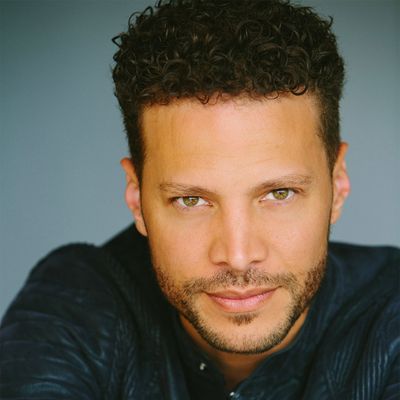
Today’s guest is Justin Guarini, who you probably know from American Idol but has done so much more and has a lot to teach us about becoming an artist, finding our own path, and realizing that fame isn’t all it’s cracked up to be.
Get Justin's book Audition Secrets or possibly win a signed copy of this book by becoming a member of WINMI as a Maker, Producer, or Artist. Sign up for one of these memberships by January 31, 2021, and one lucky winner will get Justin’s tips and secrets to auditioning.
Follow Justin: Website / Instagram / Twitter
Join WINMI: Website / Supercast / Instagram / Twitter
Why I’ll Never Make It is a Top 20 Theater Podcast on Feedspot
Season 5 brings with it a new ways connect with me and the guests and new opportunities to learn and grow as an artist:
- Members-Only Episodes and videos
- Coachings and Consultations
- Ask questions to upcoming guests
- Monthly WINMI Newsletter
- Artist Resources and Offers
All this and more can be found at the newly updated website: whyillnevermakeit.com
Thank you for joining me for part one of my conversation with Justin Guarini. Come back for part two in just a couple of days.
All music used in the episode by Blue Dot Sessions and Borrtex is licensed under a Attribution-NonCommercial 4.0 International License.
Transcript
This transcript was automatically generated and might contain errors.
[0:00] Unknown Speaker: Most enterprises use disparate systems to manage spend. The result? A reactive, manual approach. CFOs and controllers, you deserve better. You deserve a unified spend platform from Brex. Brex makes it easy to proactively control spend with cards, spend management, travel, and bill pay in one place. You can create budgets with controls built in, track and adjust in real time to keep teams accountable, and automate compliance to close the books faster. Ready to control your spend with one unified platform? Visit Brex.com.
[0:30] Patrick Oliver Jones: Hello and happy new year. Thank you for joining me on the premiere episode of season five. Today's guest is Justin Guarini, who you probably know from American Idol, but has done so much more and has a lot to teach us about becoming an artist, finding our own path, and realizing that fame isn't all it's cracked up to be.
[1:48] Patrick Oliver Jones: There you can become a monthly member with early access to episodes as well as other helpful content, coachings and consultations with me, and the ability to ask questions to upcoming guests before their episodes come out. Again, you'll find all that and more at whyillnevermakeit.com.
[2:10] Patrick Oliver Jones: Today's season opener is part one of my conversation with Justin Guarini. He and I met back in the summer of 2018 when I was in the Bucks County Playhouse production of 42nd Street. Now Justin wasn't in that show, but he is on the board of the Playhouse and has also performed there at other productions. He'll talk about one stressful time on their stage a little later. But I wanted you to get a sense of the kind of person Justin Guarini is.
[2:53] Justin Guarini: So I think finding that sense of yourself. That's still something that I'm working on is finding that sense of who I am and being real as I can be. Keep doing it. It's not easy to do. It is a challenge to do in a world that is so filtered in a world that is so face-tuned. Right? You know, it's like we're only the best of. We get to see the best of on social media, and then we're like, oh, my life is not like that. But we forget that we're watching someone's highlight reel; we're not watching the entire story.
[3:25] Justin Guarini: It actually took about a year of back and forth and coordinating schedules, but Justin is finally here to share his entire story. In part one of our conversation, you'll hear about the blessings and struggles in his life that led up to American Idol and why he almost turned it down. In part two, we'll learn from the various Broadway productions he's been a part of and the lessons he took away from each of them.
[3:54] Justin Guarini: For me, my introduction to music and singing came fairly early in life. I started at four years old in the Atlanta boys choir in Atlanta, singing a lot of sacred music, a lot of choral music. And then from there throughout elementary school, I would be in choir, but I never quite did any of the shows. I was a late bloomer when it came to doing like the proper musical or play of the year. And I was a latchkey kid, and certain days of the week we were able to stay in school late and just have fun or whatever till our parents were off work and could come pick us up.
[4:32] Justin Guarini: And one day somebody literally rolled in the AV cart with the VCR and the big TV, and they popped in West Side Story. And that was my first musical I ever saw. And I will never ever forget leaving, walking to my parents' car, and there's a pretty good distance between the front door and my parents' car and doing whatever my approximation was of the Jerome Robbins choreography and feeling like I could fly. I still feel that way when I step on the stage.
[5:12] Justin Guarini: My father was a law enforcement and political figure in Atlanta, and my mother was one of the first anchors on CNN. So having such prominent parents helped me see that being in front of people and being on camera was just a normal thing and nothing to shy away from. So I grew up around heads of state from other countries. I grew up traveling all over the world. And I grew up around a lot of entertainers. And especially in Atlanta, a lot of black entertainers. And it was such a big piece of what makes me who I am and sound the way I sound.
[5:51] Justin Guarini: But there was another specific moment in my life when I found my purpose. And that desire to perform awakened within me. I remember being eight years old and in the audience of a concert where the Jackson Five were getting back together. It was called the Victory Tour. Like the Jackson Five were obviously a huge act when they were younger, right? But they were getting together. And this Michael had already gone into the stratosphere, right? So he was already king of pop. He was coming down from upon high to be with his brothers.
[6:24] Justin Guarini: And I was a part of it because my father was a major in the Atlanta police department, who would later go on to be chief. But the Atlanta Fulton County Stadium, where the Braves used to play, was where this concert was. And this is back in the day, like in the 80s, where you could sell out stadiums where most touring acts would do that. And so I was there in the audience, the lights, the music, the crowd, the bass thumping in my chest, the costumes, everything, just the choreography, the Jacksons. And I remember specifically pointing to the stage and saying to no one in particular, myself, I want to do that. And that was the moment that I realized this is for me. Everything that I'm seeing up there, I resonate with, I feel it, I know I can do it, and I'm going to. And that was that.
[7:15] Patrick Oliver Jones: It sounds like you found that celebratory aspect of being on stage. No matter what role, no matter what song, it's a celebration to be in that character.
[7:25] Justin Guarini: Absolutely. And the celebration of being that character is something that I totally resonate with. But now, especially through teaching and especially through what I've learned through the doing of it for the past 10 years, I recognize that it's celebrating the things that I resonate with inside of that character. And it's not necessarily the good things, but also the dark secrets. I know that I've stood on stage at the Gershwin when I was playing Fiero. And I've told some of my most intimate, deepest, darkest secrets to an audience of, you know, a thousand people or whatever it is, at the Gershwin 1600 at the Gershwin, but I used the words of Fiero. I used the actions of Fiero and his thoughts. And there's something so thrilling about that, that is a depth that I didn't understand until I really got into the craft.
[8:20] Patrick Oliver Jones: So when it came time to go to college, I guess you were looking for colleges to study musical theater or vocal performance, right?
[8:27] Justin Guarini: Well, really, it was just vocal performance for me. One summer I was accepted into the Westminster Choir College summer vocal program. And I had been in choirs and sung plenty of sacred and secular music. But that was my real first taste of getting in touch with my classical voice. And I fell in love with it because I've been listening to opera. My parents played it, and things like Phantom of the Opera, right? Which is like very it was musical theater, but it's still very much operatic and Le Miz.
[9:01] Justin Guarini: So when it came to choosing schools, I was accepted into CCM into their opera program. I was gonna go be an opera major, and then I got accepted to University of the Arts. And instead of studying opera, I had the option to study vocal performance. And that opened up such a huge window for me because I was so concentrated on like choral music and sacred music and all of that. But when I went to University of the Arts, I discovered jazz. And that for me was it. I was like, this is what I want to do for the rest of my life. I just knew that I was gonna be a jazz singer.
[9:41] Patrick Oliver Jones: Was that because there was just a freedom that comes with jazz that you don't have in choral?
[9:45] Justin Guarini: Absolutely. There was something that was laid back. And again, I grew up listening to all kinds of music, everything from ABC, another bad creation to Metallica and Tool, and then to Frank Sinatra and Pavarotti. And I just was like reined on with all kinds of music, but it wasn't until I got to college that I really got to actually dig into it and do it myself. And so I was singing classical music, I was singing jazz, I was singing more operatic, and so it just really gave me a love for all things vocal performance.
[10:23] Patrick Oliver Jones: So you ended up graduating with vocal performance or musical theater?
[10:28] Justin Guarini: No. Oh no. Oh, sweet Patrick. No, I didn't. I may still be, but definitely was for a while, a cautionary tale at my college. My freshman year of college, my internal mantra was what can school do for me, as opposed to what can I do for my damn self in school. And so I was a terrible student, a horrible student. And I think what really did me in was the 8 a.m. go to class, sit in the dark, and watch slides in art history. That was what did me in.
[11:09] Patrick Oliver Jones: Oh, see what did me in was geography at 8 a.m.
[11:13] Justin Guarini: Oh no, you're like, why? Why would you do that to people? I understand you gotta have that in there for the grades, but it just set me off in a way where I was just like, I don't care. I did very well in my actual music classes, but when it came to all the other j I was like, this doesn't make any sense. This is how I felt in high school when I was in economics. I was like, why am I here? I want to sing, I want to do so. I was a terrible student.
[11:41] Justin Guarini: And the zenith of my horribleness was at jury. And jury is one of those things where at the end of the year you are tasked as a vocal performance major to learn a certain amount of songs, and you need to know who wrote them and all the lyrics and all the everything. So I had four songs that I had to know front to back, and I only learned two of them. And of course they're only gonna ask you for those two.
[12:10] Justin Guarini: Right. I well, they asked me to do what they're like, hey, what do you want to start with? I was like, yes, one out of two. And so I did it. And I said, okay, what would you like to hear next? And I'm thinking, like, come on, come on, come on, come on, be the be that one. And then, of course, they chose the one that I didn't know, and I said, I'm sorry, I don't know it. And I look back, and it's like, here I was at like 18, 19. I could not learn being given them months in advance.
[12:35] Justin Guarini: Like, oh. And so anyway, they kicked me out of the program. Long story short. They kicked me out. But it was the greatest thing that could have happened to me because I was like, oh, well, I'm gonna show them. I'm gonna go over to the musical theater. I'm gonna go to the musical theater. I'm gonna be a musical theater major because I love musical theater, right? And it was sort of like an FU, but it was also like a hey, I love this, I'm gonna do it. And uh there are also uh a lot of girls that I can hang around in the dance department, which is right next door. So, like, sweet, I win, right? I win. And so I went into musical theater liking it, um, having grown up listening to it, but I think what really got me, I was like, this is the coolest thing ever, because I took my first stage combat class, and I was like, what?
Oh, that's fun. It was so cool. I mean, like the rolling around, and like I learned how to kick people without actually kicking them, and all the things that we learned, and I was just like, this is sweet, this is awesome, like total, like 100% boy, right? And then I obviously began to fall in love with the actual, like just the the music and the movement, and it was just the culmination of all these things that I love the singing, the acting, and the dancing. And it was while in college that I auditioned for my very first Broadway show that would end up creating a fork in the road, having a major impact on my life and career.
[14:03] Justin Guarini: I didn't really start auditioning until The Lion King came through. And this was in ninety-eight, ninety-nine, 99. And so they came to Philadelphia and they're like, hey, we're doing some auditions for The Lion King. And I was like, yeah, sweet, I'll go to that. I'm a musical theater major. Why not? And so uh my first sort of memory of auditioning, I mean, really going to like a major audition was this Lion King audition. And I will never forget walking into the room, being a musical theater major and being very serious about myself at all of 19. And I could walk into the room and I sing, um, I prepare to sing a Negro spiritual motherless child, which is very appropriate for that setting. And I'll never forget just standing there very still, taking a moment.
I literally bowed my head and I just closed my eyes and I just took a deep breath, and then I lifted my head, and as I was breathing in on the cusp of breathing out to sing, the person on the other side of the table went. And it was literally one of those seconds where I was like, I was like, the note, the note got crammed in my throat, cracked, broke, and I just smiled and looked at them, and then I took another breath and I started singing. But it was one of the greatest things that's ever happened to me because it taught me such a great lesson to a not be distracted by what's happening on the other side of the table, and B to not take a moment. A deep moment. Did he clear his throat on purpose?
Oh, oh, yes. Oh my god. Yes. Absolutely, 100%. Because here's the schmuck. Like, just like deep, like I it was, it could have been 30 seconds for all I know. You know what I mean? Which is an eternity. Like, I really was like, I'm going to deeply invest in this moment. And boy, did I ever. And fortunately, they called me back. And I ended up being uh accepted uh into a master class up in New York for the show.
[16:17] Justin Guarini: A lot of times shows will do this for those of you who don't know. They'll they'll bring in um singers that they're interested in, performers, and just kind of teach them the background of the show. And this is where you'll work with the music directors, choreographers of the show, and kind of get to know the show a little bit better. It's basically a great way for them to prepare you in hopes that you'll then audition and make it into the show. Absolutely. I mean, yeah, it's so beautifully put. For you, what was their process like? They were less teaching us the music, which they they did for sure, but they were more interested in teaching us the culture, because you think 1998, 99, internet does not exist like it does.
You know, we're still in encyclopedia land, uh, forever again, for those of you who remember encyclopedias, books. I I had my stack of world book encyclopedia. Yes, right, and so we just didn't have the sort of reach that we do um now in terms of really understanding and being able to easily digest other cultures um uh without actually being there. And so they focused on okay, this show is all from Leboem, who's from South Africa. Here's the history of South Africa. Here's apartheid. Here are the two different factions, almost races within the race of Zulu and Sutu. And here's how you pronounce these words. And it's like what a lawako and you were wakuma, like all of that clicking and all that stuff.
And that doesn't mean anything, by the way, for those of you who are listening, it means nothing. So I'm not trying to pretend like I know the language. But it's just like all the, and they taught us all these really funny phrases. And uh one the a gentleman who was in the chorus who was kind of like Lebo's right-hand man, was leading this class, and he was just, he explained to me uh there was a time in South Africa during the dark days of apartheid, where you could be walking down the street as a a black person, and a police officer could pinch you. And based upon your response, you know, in American, we go ow, or ooh, or like oof, would be something, you know, out of Spain, maybe. But based on your response, it would uh, I think in their response was um, based on the response, they could jail you because it would tell them whether you were Zulu or Sutu or something like that.
And it, I mean, just wild sort of stories that we would get. And it was such a beautiful moment for me, because I really never truly understood the depth of apartheid. And I had years earlier been with my father in Atlanta when Nelson Mandela came through on his big tour of American after he had been freed. And I knew there was all this pomp and circumstance around it, but I didn't really truly understand what made Nelson's story so special uh until uh this gentleman really explained how obscene the treatment was in South Africa at the time.
[19:27] Patrick Oliver Jones: And as far as you as Justin, did it have a significance to you? You know, what did you grow up around a lot of black history and knowing African history and this in as far as your own background?
[19:38] Justin Guarini: Yeah, my background is um uh I like to say my heritage like is like a UN meeting because I have African American and Italian and England, English and Irish, and and so the the main part of my heritage really is my father is black and my mother is Italian. And when they separated when I was younger, it was almost like my life was split because I would visit my father in the summers in Atlanta, which was then and and now still is a very, very beautifully black city. Uh, and then during the school year and the rest of the year, I would be either, depending upon my dad worked, my stepdad worked in the government. And so uh we would be either in Virginia or Pennsylvania, and two, so two disparate places.
Uh and so when I went down to Atlanta, I would be Justin Bell, son of Eldrin Bell, prominent uh politician. I would go to Black Baptist Church on Sunday. I would be around my family, uh uh, which was almost exclusively African American. Then during the regular school year, I would be up with my stepfather and my mother, who were both Italian, and I would be almost exclusively around my Italian family. And so I loved the richness of both of those, you know, lives that I was living, but there was always a disconnect. And it wasn't until I sat and I really listened and understood the stories behind the stories, you know, it's like the the behind the music of The Lion King that I really began to bridge the gap between those two uh worlds.
And when I understood that there was almost a stigma for people in Africa who were light-skinned black people, that it really started hitting with me. Like, because I never felt growing up, to be perfectly frank, I never felt like I was accepted by either race because I kind of was not I would feel so um self-conscious when I was in Black Baptist Church in Atlanta because I was like the like the lightest guy there, right? And I kind of always felt like a little like an interloper. And then I would be up north, and I I was around all of you know the majority of Caucasian people, and I just was always I had different experiences and I wanted to talk about some of these things, but I felt like it just didn't, it didn't make any sense and they they didn't quite get it.
And and uh, you know, in certain parts of Virginia at the time uh and even some of the older, older people in my family, uh it was hit a hidden fact that I was African American. They wouldn't, my parents, my my stepdad and my mom wouldn't talk about it, not because they were ashamed, but because they did not want me to be ostracized or they didn't want uh me to to suffer as a result of it. And so there was this huge disconnect that began to to come together with uh my masterclass and understanding The Lion King.
[22:52] Patrick Oliver Jones: Did you continue on and and have further callbacks and stuff like that with The Lion King?
[22:56] Justin Guarini: Yeah, I for years, for three or four years, there were like, just keep coming. Come in, come in. I remember I sat in the office in New York, I think in Times Square, with the associate director, uh, directly under Julie Tamore. And she's like, Look, we really love you. We we we know that you're gonna be a part of this. We just don't have a spot for you right now. And I think that was a very kind way of saying, we like you, but you're just not quite mature enough. You're not quite there yet. We know we know you're gonna get there, but just keep going, just keep going. And I was still in college at this point. Um, and so it it just went on for years, and then I heard nothing. And my college days were over.
I think I spent three years in college with three different majors. And I said, okay, this is not for me, or I am not for this, rather. And uh after that I moved down to Miami, and I was like, I'm gonna pursue pop music. And a friend of mine and I moved down there, he's like, I know a whole bunch of DJs, we'll get you, we'll get you going and music. And my music career um in Miami was uh next to non-existent.
[24:07] Justin Guarini: What I basically did was I moved to Miami to be a busser in nightclubs, in one of the hottest nightclubs in Miami. I was the guy who would clean up the the uh limes and sweep up the bottles people had broken at the tables and uh when So you got to hear more music than you ever got to sing. Oh, I got to hear that kind of music, right? Yeah, mostly that. And I never ever got to sing. And there was one time, and I wonder what would have happened, and I I have never told her this story, but I would wonder what would have happened because Jennifer Lopez and P. Diddy back when they were together came in for P. Diddy's birthday. And it was a big deal. And everyone's like, P Diddy's coming in. It was like this whole huge deal. And and I remember being there and working. And somebody was like, yo, you should go up to J Lo and sing. You should go up to J Lo and sing. And I was like, no. What?
[25:07] Justin Guarini: Diddy's gonna kill me. Like, there's no way. Are you kidding me? I'm not gonna do that. And I chickened out. Then I wonder what would have happened if I had gone up to her and sang. Uh, probably would have been fired. But that was like my life that I was just so desperately trying and failing to be a singer. And then I had enough of the nightclubs, and I moved back home to Pennsylvania, and one day to tie it all together, my mom saw this advertisement on TV, and it was for the show nobody'd ever heard of called American Idol. And she's like, hey, here's the website, it's you know, fox.com forward slash American Idol. And we're talking like 2002, maybe even one, where the internet is not what we know it to be today.
Yeah, Amazon was just selling books barely. That's all they were doing at that point. Yeah, exactly. No social media, no nothing. I mean, I went to you know, fox.com forward slash American Idol, and like it was a janky website, links were broken, some things just didn't work, right? So much of it didn't work, but what did work was all that paperwork where you sign your life away, and I signed my life away, and then found myself in New York City standing in line, waiting to audition. Now you have to think back to 2001, 2002, before anyone knew what American Idol was. Yes, tens of thousands of people may have auditioned for that first season, but no one really knew if the show was going to be a success.
In fact, all the networks, including Fox, passed on the show initially. But it was actually the daughter of Rupert Murdoch, head of Fox's parent company, who had loved the original British version of the show and later persuaded her father to buy the series. The rest, as they say, is history. American Idol would eventually go on to eight consecutive years as the highest-rated television program. I mean, you simply couldn't get away from it. According to Billboard magazine, in its first 10 years, Idol spawned 345 chart-topping hits and a slew of pop stars, including, of course, Kelly Clarkson and Justin from that first summer season. But initially, of course, no one, Justin included, knew what American Idol was or how popular it would become.
So he continued to pursue other opportunities. As we spoke about it in college, I was studying vocal performance. I was studying musical theater, I was studying acting for film and television. Then I went into the nightclub scene, and I kind of just was around that mess. And then I came back and I started auditioning for American Idol. But before I actually went to that audition, I felt like I was I just needed to perform. And so I saw in the newspaper an advertisement for a company called Cutting Edge DJs. And they were looking for like singers and dancers. And so I literally go to, I think it was the Adams Mark Hotel in Philadelphia and audition, have a good time. They're like, hey, we would love to hire you.
And so I become a singer and a dancer for a DJ company that mostly does bar and bot mitzvahs, right? So I am like the party bumper and bot, like just like Albert, right? And so I in 2001 was doing at least one or two bar bot mitzvahs every weekend. Just dancing and singing, having a great time. I think they paid me like 125 bucks per mitzvah, which was like, I was like, yeah, sweet. So I'll take that all day long, right? Like I mean, that was big money then for me. And so I was like, yes, doing it, loving it. And I did not realize what an amazing proving ground that was and how it would set me up for everything that would come after that. So I was being forced to entertain 13-year-old children.
Now, anybody knows a 13-year-old or has a 13-year-old, you would love that they could be challenging, right? And so, and so most of the bar and bot mitzvahs that I did were not cheap. Most of them aren't cheap anyway, but these were especially not cheap. And so at times, not always, but at times I was dealing with children who were pampered, shall we say, and who behaved a certain way and who treated me a certain way, and I had to break through that and in a very respectful way, gain their trust and command them, and just keep them away from Bubala and their parents, so their parents could get drunk and have a good time at the mitzvah. They pay like $50,000 for. And so I had to entertain people and be quick on my feet, and just when horrible things happened, you gotta like, hey, make it the best.
And so American Idol came around and I auditioned for that. And I obviously got to the part where they say, Hey, you're going to Hollywood, and I was like, okay, who knew what that was, right? Free plane ticket to LA, a place I'd never been before, California. I'd never been to the West Coast at that point. Um, and so I'm sitting in my car, about to go to the office at Cutting Edge DJs, and after at least a year of silence, I get a phone call. And I'm like, oh, it's a New York number. I pick it up, hello. Hey, it's Bender Casting, the people who cast The Lion King, and they say to me, Hey, we finally got it. We've got this role for you. It's an ensemble role on Broadway. The Lion King, you will be making your Broadway debut.
And I'm thinking, oh my goodness, this is amazing. I've auditioned for four or five years for this thing. I never thought I would get it. And then I had to say, and there's a joke that we all at one point or another say in the theater community. It's like whenever your phone rings, you're like, oh wait, excuse me, this is Broadway calling. Sorry, I gotta go. And literally Broadway called. Broadway called. Broadway called. And I had to say to Broadway, after they said, We've got the role for you, finally we're ready. We want you to make your Broadway debut. I had to say, well, there's the show. It's out in LA. Um, I'm supposed to fly out in a couple days. I might get cut. Can I can I call you back?
And they're like, yes, they hung up in a bit of a huff. And so fast forward to seven days later, um, I've been out in LA, 126 cades came out. It was cut in half, and then it was cut again. And so we're getting down to um what would at the time be the top 30. And the top 30 would then go on to vibe for the top 10, which would be the televised, you know, you know, broadcast after that. And so I knew I had to call Broadway back and say, yes or no. And so I was wrestling with the problem all day. I was uh, you know, going through the throes of Hollywood week, if you've ever seen it, uh, it is it is hard. They make you they put you through your paces and they make it extremely challenging for you, and they try and break you down because they know that on the broadcast, you are gonna be required to do basically what a lot of things.
Which, funny enough, like if you've ever done a play or ever done a musical, I mean, it's just that's that's it. You know, have to learn things super quick and then put them up in front of an audience. That's what we do, right? Right, it's tech rehearsal tonight or 12. That's it. Yeah, boom, that's it, you're done, right? And so, you know, it's like summer stock. I was already feeling a little worn out by that. I knew I had to make this phone call, and I was wrestling with the the problem. And Hollywood Week at the time was held in the Pasadena Civic Center. And I was walking down the aisle, Pasadena, California, and thinking about this how am I gonna call these people? What am I gonna say? Am I gonna go with the show, Lion King?
Or am I gonna go with American Idol? I might be cut. I look at the stage, and for just out of nowhere, I start bawling. Just start crying. And I try and get myself together, and I'm like, please, no, no, nobody see, you know, I'm 20 pure boy, 22 year old boy. And I'm like, oh, nobody seems to cry, right? And I realized in the moment that I looked up at the stage, and on that stage, at the Motown 50th anniversary, that was the moment on that stage that I was performing on for American Idol, trying to make my way through. That was the stage that Michael Jackson first showed the world the moon walk. That was the stage that so many of my heroes in the pop world had performed on, and so many people that I loved and respected, and I was there, and I was on that same, I was treading the same boards, and a voice inside me just said, go with this.
Do this. This is it. This being American Idol, this is it. Please stick with this. I this has been a dream of mine to be on Broadway, but there's something about this show that uh I don't know. I uh I'm gonna go with it. And that was a huge fork in the road for me. I chose American Idol, and um it was just gave me a huge foot in the door. And funny enough, 10 years later, I would come back to musical theater, and my opening night cast party was held in the same hotel, the Millennium Hotel, in the same conference room that I sat and I waited to audition for American Idol. It would certainly be an understatement to say that American Idol changed Justin's life, bringing him to a nationwide audience and providing him with opportunities he had never seen before.
In part two of our conversation, Justin will talk about the roller coaster ride that was American Idol. It's so interesting looking back on it now because I see this sort of epic rise and then this just slow public descent into madness for me. So whatever happened with Lion King, did he ever regret not choosing that Broadway debut? We'll discuss all that as well as the lessons he learned from some of the biggest names on Broadway. And you know, that's what I love about my conversation with Justin. That no matter how much fame he achieved or opportunities came his way, he was still a student of theater. He kept learning and growing as an actor and as an artist.
[36:23] Patrick Oliver Jones: I mean, it's a strange time for all of us. COVID has so upended and changed our lives and the career that we love so much. I mean, for me, it was Christmas Day that I started getting COVID symptoms, and for the next week and a half or so was dealing thankfully with mild symptoms, but it was certainly no fun. A lot, a lot of bedtime. But it is certainly the hope that 2021 will bring theater and performing and our lives back to some version of normalcy. So go to why I'll never make it.com and click join to find out how you can become a win me artist and grow in this business. You can also find a link to that in the show notes. Well, I'm your host, Patrick Oliver Jones, in charge of recording, editing, and producing this podcast. Dylan Adams is the booking producer. Music in this episode provided by Blue Dot Sessions and Vortex. Join me next time for part two of my conversation with Justin Guarini as we talk more about why I'll never make it.
© Broadway Podcast Network, All Rights Reserved