

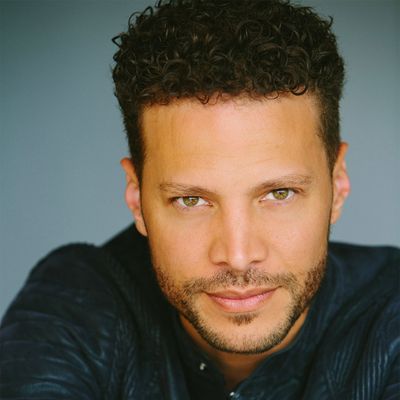
On the second half of AUDITION STORIES we dive into the comparison game with Justin Guarini. This kind of jealousy is so common to actors and affects us in the audition room more than we know... Read More
From the show: Why I‘ll Never Make It
Guests

About
On the second half of AUDITION STORIES we dive into the comparison game with Justin Guarini. This kind of jealousy is so common to actors and affects us in the audition room more than we know.
Former guests share their experiences from onstage to on-camera, from the wonderful to the embarrassing, and everything in-between. (Listen to Part One as well.)
Those featured in this episode:
- JUSTIN GUARINI - "Comparison Trap" (Audition Secrets podcast)
- LAUREN KENNEDY - Artistic Director of Theatre Raleigh
- MEGAN HOXIE - Actor/Singer in FOOTLOOSE
- REMY GERMINARIO - Actor and Stand-Up Comedian
- MEGAN CARVER - Actor, Writer, Filmmaker
- MIATA EDOGA - Actor and Financial Coach
- CHARLOTTE COHN - Actor, Director, Producer (Episode coming in March)
- MAISIE WILLIAMS - Actor from GAME OF THRONES (TED Talk)
- Join The Chain with Megan Carver and Adventuress Films.
- NY Actorfest - Casting Directors panel discussion
I want this podcast to be a resource for you as you discover more ways to pursue a career in this industry and sustain it through the many ups and downs that follow. You can always reach out to me: contact.winmipodcast.com
Also, don't forget Miata Edoga's special financial empowerment offer for WINMI listeners from Abundance Bound.
For further insights and unreleased audio clips of these episodes, you can be a part of the WINMI community on Twitter and Instagram (@winmipodcast).
Lastly, this podcast is supported through kind donations of listeners like you by buying me a coffee.
Transcript
This transcript was automatically generated and might contain errors.
[0:03] Patrick Oliver Jones: She had just been nominated for Sideshow, and the very next day we're sitting in the hallway together auditioning for cabaret. And I'm like, it doesn't matter if she's nominated for Tony. She's still got to come in and she's still got to produce the goods.
[0:21] Patrick Oliver Jones: Well, hello, and welcome to part two of audition stories here on Why I'll Never Make It. I'm Patrick Oliver Jones, and if you didn't hear part one, or you would like to comment on those stories, you can always go to the website, winmepodcast.com and reach out to me there and listen to that episode.
[0:42] Patrick Oliver Jones: One of the main goals of this podcast, but specifically these audition stories, is to remind us that we are not alone. Whether we're directing, writing, acting, dancing, or whatever we happen to be doing in the performing arts, there is a lot of passion and joy and creativity that go into this. But there's also a lot of hard work and frustration and rejection that comes along with that.
[1:11] Patrick Oliver Jones: Now, some seem to never face that frustration or rejection. And they win the Tony Awards. They're constantly being cast in Broadway shows, or they're directing big budget films, and they seem to be doing so well and at the absolute top of this profession. And it's so easy to look at them and be like, I want that. What can I do to be like them?
[1:35] Patrick Oliver Jones: And it's that comparison that can sometimes push us and motivate us to get more training or go outside the bubble that we've been in and really go for something else to get us to that next level. But a lot of times that comparison can lead us down a much darker path. One that gets us concentrating on our failures and wondering what I'm doing wrong, and why can't I just be like them? And why won't someone just cast me in a show? And what am I doing that's not getting me where I want to be? Why will I never make it?
[2:11] Patrick Oliver Jones: A couple of years ago, I was doing 42nd Street at Bucks County Playhouse, and on their board of directors is Justin Guarini. Now you know him from American Idol and his singing career and the Broadway shows that he's done. And he and I met and got to talking and have stayed in touch ever since. And this past year, he started his own podcast called AUDITION Secrets. And he speaks to this subject of comparison.
[2:40] Patrick Oliver Jones: And believe me, someone like Justin Guarini has had success that I don't even know about, success that I've never even seen. And yet, even in his position, he's found himself in that comparison trap. When you think about other people's careers, and you're like, ah, I wish I had that. Recognize that that is their path. Would I like to be as well known as Justin Timberlake? Sure. But I understand that his path didn't just come out of nowhere with Mickey Mouse Club. I mean, he's been doing that for so long.
[3:19] Patrick Oliver Jones: And then once he got out of the club and got into NSYNC, I mean, they got worked half to death. Everything that you see, JT, that he has now in his life, he has damn near bled for. And one of the things that I love most about Justin, besides the fact that he is one of the nicest human beings you could ever possibly meet, is the fact that he has truly earned everything he has. And he's not just a singer, he's not just a dancer, he's an amazing producer, he's an amazing songwriter.
[3:51] Patrick Oliver Jones: I know I'm going off about Justin Timberlake, but the whole point is that that was not my path. Most of the people that you want to have their life or their money or whatever, that is not your path. And most likely, if you had to walk down that path, you would trip and stumble and fall over the place. I want you to focus on your version of that path. And you might not win an award, you might not get the lead or have tons of money, but you are not wasting energy comparing yourself and your life to a life that you will never have.
[4:26] Patrick Oliver Jones: And also, it's just such a losing game. You can't beat yourself up. You can. It just sucks. It doesn't do you any good. And beating yourself up is just like I've spoken about before. It's like if we take the audition room, bring it back to audition secrets. You know, if you beat yourself up, if you're saying, Oh, I'll never be this, I'll never do that. If you disempower yourself when you walk into the room, or even when you walk onto the stage if you already got a job, it's like walking into the room or onto the stage with a huge Santa size sack on your back full of hot garbage.
[5:04] Patrick Oliver Jones: Worse, you take that hot garbage, and before you start singing, before you start acting, before you start performing, you put it down between yourself and the people on the other side of the table, and everybody smells it. They may not realize that they smell it, but it's there, and you carry it with you. And then you're gonna sing, act, dance, perform through a steaming hot pile of garbage. It's all that energy, all that negative crap that you bring into the room. You don't have to do that.
[5:27] Patrick Oliver Jones: Do not fall into the comparison trap because it is a losing game. Focus on your path and focus on emulating, finding your version of the choices. And you can create your own unique choices as long as you avoid the comparison trap. It's so true that what we think about, what we feel is what we bring into the room. Whether it's been a good day or a bad day. Maybe we're sick, or we had a fight with someone, or maybe it's been three months of audition after audition after audition, and no callbacks, no feedback.
[6:09] Patrick Oliver Jones: We don't even know if what we're doing is right or worthy of being cast. And it's these emotions that we can bring into the audition room if we let them. A few months ago, I interviewed Misha Ossirovich, who talked about his own internal demon, that of an eating disorder, and how that battle wore him down, not only in his career, but certainly as a person. So I was getting quite down on myself, you know, my eating disorder thoughts and other just self-deprecation was kind of bleeding into my brain.
[6:41] Misha Ossirovich: And then I got this big old Broadway audition, The Inheritance. And I did it, and then I got the callback. And I didn't actually think that an audition or even a callback would be one of those things that gets burned into my memory as a formative moment as an artist. I thought that only happened in performances or on set. No, I worked on this audition, and you know, it's a beautiful play, and it's so text-heavy, it's so specific. It's like Angels in America in a lot of ways. Right.
[7:10] Misha Ossirovich: It takes skill and attention to detail to execute these long, beautiful monologues and very expansive scenes well. So my roommate, little plug, Jacob Rickelier, one of the best acting coaches out there known to man, was working with me on this, and he knew that I was in a bad place. So my creativity wasn't sparking, it didn't click. And he worked with me and worked with me and worked with me until finally the rest of the world fell away. My hate for myself, my distractions, my financial stress, it all fell away, and I got and I just kind of got into the work.
[7:44] Misha Ossirovich: And I'm a loosely spiritual. It's like my third eye opened. Like I could feel my forehead just blast open, and all of a sudden it all made sense, and I was having ideas, and I was embodying the character in such a way that I walked into this Broadway callback more confident than walking onto a TV show set that I worked on. I showed them work that I was so proud of, I just couldn't wait to do it all for them. There was almost no fear, and I've never experienced that before. That is a truly magical place to be.
[8:20] Misha Ossirovich: Yeah, and like I'm, you know, I'm you can see it, I'm getting goosebumps, literally talking about it. That's something that I'm never gonna forget. And that's something that I'm going to hopefully bring some version of that to every audition and performance that I go forth into. So I'm very thankful for that experience, and that was one that I'm probably gonna celebrate for a very long time.
[8:42] Patrick Oliver Jones: When Misha was finally able to let go of that big pile of garbage, as Justin called it, then his energy, his creativity, his passion for the work was finally able to come through. And he was excited to show his work to that creative team. One other way that Justin mentioned about getting out of our head and ending that comparison game is by emulating others by looking to those artists that we see as idols and those that we want to be more like and learning from them.
[9:16] Patrick Oliver Jones: Lauren Kennedy is an actress and singer who certainly became a Broadway star in her own right. But early on in her career, in an audition for Sideshow, she discovered that valuable lesson of learning from and working with those you look up to. This is the weirdest audition process I'd ever experienced because they called everybody into the room at once. There was like 20 girls auditioning for Daisy Hilton and Violet Hilton. It was like open, like we're all in there together, and we were learning bits of it, and then they'd match us up differently.
[9:53] Lauren Kennedy: It was so old school, like I had never experienced in front of everyone. And then the final callback was they paired us with Emily Skinner and Alice Ripley. And so a girl named Kristen Barrent and myself. But there were a number of people who like just kept falling off. Like every time I come back, there was, you know, it was the same people, less one, or the same people less two. And then this final audition, I came back. It was just me and Kristen and Alice and Emily.
[10:19] Lauren Kennedy: And they had Kristen and I do stuff together, then they had me do stuff with Emily, me do stuff with Alice. And it was like this hour-long audition that at the end of it, they offered it to us in the room. Yes, in the room. I was like, wait, I just got a part. Wait, what's happening? You know, I saw a video of Merrily We Roll Along when they were documenting that, and how they had been auditioning, and then they brought kind of the whole group in, and they were going to kind of just tell them what was, and then they offered everyone in the room, you made it.
[10:48] Lauren Kennedy: And they're like, wait, wait, what? Is this wait, am I in a course? So that actually happened. It literally happened. Where they just bring you in the room and said, Okay, congratulations. And so when Tara Rubin was still working for Johnson Liff and she was there, and they were taking pictures of us, and I was like, and I walked in with a script, and I was like, I guess I got this part. I don't know. Wow.
[11:07] Patrick Oliver Jones: Now, what was that like being with Alice Ripley and Emily Skinner in the room?
[11:11] Lauren Kennedy: Well, it's great because they were the coolest chicks ever. I had also I had just understudied Alice on Broadway in Sunset Boulevard. So I had a familial connection with her, and Emily was just really cool and awesome, and somebody I just looked at like, oh my god, this is somebody who's so unique and amazing, and really isn't sort of boxing herself in. I just thought she was off the hook. And so I was really excited about standing by for her. I learned so much from her.
[11:43] Patrick Oliver Jones: Think about those performers that you look up to, those unique individuals that don't box themselves in. Maybe it's someone like Sutton Foster or Hugh Jackman, both of them in The Music Man right now. Even those megastars still have to audition, are still learning and practicing the craft that we all love so much. In fact, when Hugh Jackman was auditioning for the role of Jean Valjean in the movie Les Mis, he said, in an audition, I treat it like this is our first date. We're getting to know each other, we're getting to work with each other.
[12:20] Patrick Oliver Jones: And I think that that analogy is quite apropos when it comes to the audition process. It is a dating. The creative team is looking to us. What is this person gonna be like? Do I want to stay with this person? Do I want to work with this person? The actors going in and presenting their best self, the best version of themselves, and basically hoping for a second date or a callback. But no matter how much of our best selves that we bring to the room, sometimes it just isn't enough.
[12:51] Patrick Oliver Jones: And these next two stories come from Megan Hoxie and Remy Germinario. And both of them involve dancing. And both Megan and Remy share dancing audition stories that didn't quite go as expected. This story starts out with me not being able to attend my initial appointment that I was given because I had some conflict. Again, I was still in school. So I was like, well, if I can't go to my appointment, like I should at least try and go to one of the open calls.
[13:37] Megan Hoxie: And the dancer's call was first. And I had in my mind, I was like, well, if I go to the dancer's call, they might not see that I'm the best dancer, but they might see that I'm okay. So then they'll call me back to sing, and then they'll hear that, oh okay, she's more of a singer-actor first, and then we'll give her a call back and we'll see what we can do. And I'm like ready to learn like Grease is the Word, Grease Lightning. Nope. We learn a full like lyrical contemporary combination, like Dance Moms style.
[14:10] Megan Hoxie: And I remember being so lost and being like, oh my god, I have no idea what I'm doing. Which after doing cruise ships now, I realized that was for the secondary show because the dancers are hired in the ensemble, right? Which always shine in the second show.
[14:26] Megan Hoxie: And so knowing what I know now, I would never go to a dance call for a cruise ship. Not for a cruise ship, nope. Not for a cruise ship. Nope. Never. So I finally am able to hold on to the combination. And like the last few times we ran it as a group, I'm like, okay, I might not look the best, but I've got it. And all of a sudden, they're like, okay, like let's do the combination, like in groups of two. Of course, I'm in the first group. The music goes on, you hear like the eight counts before you start the combination, and of course, you're bopping awkwardly, trying to like get in the groove, which I hate that so much, especially when it's like non-like descript music. And we go to start the dance.
Me and the girl next to me, we both do the first like four counts of the combination, and then completely blank. None of it was there. And we both go at the same time, can we start over? And they go, No, just pick it up from where you are. And we both just kind of look at each other, and I have to go, I'm sorry, I don't remember any of it. And I'm like, can we have the assistant, please? And they were like, um, okay. And so we do it with the assistant, and it goes much better. I remember it. Having someone in front of me always helps. Um, needless to say, I was cut. Yeah. I was cut big time. And so I was like, all right, well, I really need to get my act together, and I've got to just figure out a way to get to this singer's call.
So I wake up early, I sign up early on that singer's call list, I sing, I dance, I make it through the cuts there. We do a soft shoe tap to cheeseburger in paradise. I build a cheeseburger and eat it on in my time steps, and I booked the job. It's the cheeseburger. You gotta do something with that extra eight.
[16:28] Megan Hoxie: The first one that comes to mind is my I guess junior year of college. They were doing the out-of-town tryout of Newsies at Paper Mill. I don't remember how this happened, but I somehow got an appointment to go in, and I was freaking out because it was at Telsey, you know, it was like Jeff Calhoun was in the room. So it was for the ensemble, but I thankfully got to sing and do sides first. So I go in, I sing, I do sides. It goes well. Jeff Calhoun asks me, um, great, do you dance? Now I was in college and I was dancing. You know, I had dance class all the time. Right. And I was like, yeah, I dance. That's what you say. Sure. I had never seen the movie of Newsies. So I got a callback. I got a dance callback.
And I go in and I should have turned around the second I saw the little boy, the Tony Award winner from Billy Elliott in the room. I should have just turned around. I it was mortifying. I like that's a whole other kind of dance. A whole other kind of dance. I am not a dancer at that stage. So I did like the first like maybe eight and a half counts, and then there was this like double tour jeté into a triple pirouette, and I was just like, I stood there and I was like, all right. I didn't like leave. I stayed through the end of the eight counts. I tried. It was wretched. And then very recently, uh this one in a way is almost more mortifying to me. I was going in for an audition, and last year I was on Accutane.
It's a really hardcore acne medication. Right. You can't drink, you can't be in the sun, uh, you can't get pregnant, which has been a huge was a huge issue for me. It's tough for you. It was hard. But it dries you out. Your face, your voice, your everything. So I had an appointment for a show that I'd been in for before and gotten called back for and it was fine. And I go in and I start to sing and no sound came out. And they were really nice about it, and I tried to do it again. Well, I started okay, but then it got to this high part and no sound was coming out. And I had practiced it and it was fine. But yeah, they were nice about it, but I was mortified. Well, I mean to them, they just thought, well, he's sick or allergies or something.
I hope so. They had to have just known that you obviously just weren't I just felt bad I didn't want to waste their time. Like had I known that it was gonna bomb if I was sick or if I really had no voice, I would have automatically called and be like, hey, I'm really having bad vocal issues today. I don't want to waste your time in that respect.
[18:44] Megan Hoxie: But anyway. But you lived. Yeah. You survived. Thank you, Jagged Little Pill. Yes, you're welcome. Topical. And much like dating, sometimes auditions just don't go how we want them to go. But in sticking with this dating analogy, there's two things that we really need to get rid of when it comes to auditions. Number one is our expectations. We have to not be so attached to the outcome of the audition. I've certainly heard stories and even talked to people who moved to New York, for example, and think a month, maybe two months, maybe three months, they'll go to a handful of auditions and get the ball rolling with their acting career. And that simply isn't how it happens. Now, for every rule, there is an exception.
There are those people that come here and one or two auditions later, they're on a national tour or they're on Broadway. But that is certainly not the common experience for most actors. And so it's important that we handle our expectations realistically when it comes to auditioning.
[20:03] Megan Carver: I was here for a visit, you know, one of those like visits. Can I make it in New York? Do I want to stay here? You come here for like two weeks and audition your tail off, hoping that you just get a big break and then you can just move here with a job already ready. Right. You hope that that happens. So I was here and I found out that a casting director, Carrie Gardner is originally from Portland, Oregon, which is where I'm from. And so I took a chance and I called her. I literally called and I said, Could I speak with Carrie Gardner? And she answered. You just called the office. I just called the office and said, Could I please speak with Carrie Gardner? Okay. I'm curious because I've auditioned for her.
How did that go? She answered and she was so kind. The fact that she even took my call was astounding to me. But she answered and I said, Hi, um, I'm a fellow actress from Portland. I know that you're from Portland, so I hope it's okay if I ask. And I lied and I said, I've been auditioning for about six months now, and I haven't gotten anything. And she very sweetly laughed a little bit at me. Um, and is like, it's gonna take a lot more time for you to start being just literally recognized because we're seeing hundreds of thousands of people every single week. It's facial recognition. I can't recognize you yet. I haven't seen you often enough. And so she was very kind and was like, just keep at it, keep auditioning, you know, do work life balance so you don't get yourself burned out, but you're gonna need to give yourself a lot more time than six months. The fact that she even like looking back on it now, I'm like, A, what were you doing? But B, that she answered my call and was willing to talk to me was astounding.
[21:42] Patrick Oliver Jones: Well, and that she was really so upfront about it because she either could have been dismissive or she could have just like, you know, pie in the sky and just kind of let it go. She gave you real grounded advice.
[21:52] Megan Carver: Yep, and she was honest about it too. Not dismiss, not like like you said, saying, No, you can't, or yeah, that's ridiculous. She was like, Why did you call me?
[21:59] Patrick Oliver Jones: I mean, I think she well, yeah, and I think most casting directors understand the impatience of actors because we all want to do the thing we love the most, and they know that.
[22:08] Megan Carver: Yeah, they're like, I want to give you what you want to do, and I can't yet, but please don't stop coming to me because I'll have it for you. You know, they want you to be the solution. I think that was one of the I can't remember one casting director said that to me in a in a session where they're like, we want you to be the solution, we want you to be here.
[22:28] Patrick Oliver Jones: Because when we go on a date or an audition, we want to be the right fit. We want there to be a match. Both the casting team as well as the actor have high hopes for what that audition can result in. But we have to temper our expectations and know that most of the time it just won't be a match.
[22:50] Megan Carver: And so that's why Megan Carver started The Chain. Through her company, Adventuress Films, she brings together writers, directors, and actors to help with their realistic expectations of the audition process, specifically when it comes to self-tapes. And at the end of this episode, Megan will explain how you can join the chain.
[23:16] Patrick Oliver Jones: And so unrealistic expectations. That's that first thing we have to let go of. The second thing that we have to let go of is trying to be someone else. Probably one of the oldest sayings around is well, just be yourself. And as trite and cliche as that may sound, it really is important that we are our authentic real selves when it comes to the audition room.
[23:42] Megan Carver: Casting director Pat McCorkle, who has handled everything from mega Hollywood productions to small regional theaters, was at the New York Actor Fest several years back, and on a panel of other casting directors, she said, as actors, you are all unique instruments. We're looking for the uniqueness that you'll bring to the information and therefore hopefully to the part. And the best way for any actor, any person to be unique is to be yourself.
[24:14] Lauren Kennedy: Besides being an actress, Lauren Kennedy is also the artistic director for Theatre Raleigh. And as a director, she looks for very specific things behind the table. And among one of the most important is for an actor to be themselves. So um when I was directing and casting Dream Girls for Theatre Raleigh, we saw a number of people in New York, and this one girl came in, and she it was like a chemistry thing. Like I just connected with her immediately because she brought in the energy that I wanted for Effie. Like, just she wasn't shiny, she wasn't like giving me theater vibes, she was giving me human vibes. And um, her name is Zanita Britt, and she's still working, she's also writing, she's an incredible artist.
But I got up there and I literally started like directing the show on her in the room, and everybody's like, clearly she's hiring her. But um, she was like she literally said to me, She was like, I'm j I'm also just having a real bad day. Are you sure you think I'm right for this part? It might just be because I'm having a bad day. I was like, exactly, I love that. I want you, I want that. You brought yourself into the room and we're working with it and we're gonna make it happen. And her voice is spectacular, and she was just so human. It was such a cool um for me as the director to she she defied what I thought it was gonna be. Because girls had come in who had done the international tour, who had done it like in regional productions, and they were polished and they had it together.
And here comes this woman just off the street, you know, who was random. I mean, she's an actress, of course, but she didn't come in, she had never played the role before, she didn't, she wasn't off book, but she had this raw quality that I just connected with, and that was it for me.
[25:58] Patrick Oliver Jones: So that was a big learning one for me, and I loved working with her. As a director, is that something that you look at if if a person's done a role or not? Does that ever influence?
[26:06] Lauren Kennedy: It it doesn't, um, and it shouldn't. Because sometimes it would work to your advantage if they had, because you're we we have a two and a half week rehearsal period, you know, you people gotta know it. So that can work to your advantage, but it it wouldn't um it ever, either way would never sway me. It's like, what are they gonna bring to the role? Will we have a great time in the room together? Does it feel right?
[26:30] Patrick Oliver Jones: Yeah.
[26:30] Lauren Kennedy: Yeah, it really is what happens in in the room in those few minutes or however long it's and that's the beauty of what we do uh um on you know in the Broadway community or the theater community is that it really is based on what you do in the room. Yes, you bring your reputation and your resume with you, but if you don't bring it in the room, you're not gonna matter who you are, you're not getting it.
[26:47] Patrick Oliver Jones: Yeah, you can have 17 Broadway credits, but if you're if you're not right that day.
[26:51] Lauren Kennedy: And that just goes to show you when you are auditioning uh, you know, for shows, it really does it's not personal, you know?
[26:58] Patrick Oliver Jones: It's not at all, not in the least.
[27:01] Lauren Kennedy: So it's it's always a learning experience for me, even now. You know, the theater business keeps you humble and it is about what you bring in the room. I mean, I remember speaking of Alice Ripley again, she had just been nominated for Sideshow, and we the very next day, the n after the nominations came out, the next day we're sitting in the hallway together auditioning for Cabaret. And I'm like, it doesn't matter if she's nominated for Tony, she's still gotta come in and she's still gotta produce the goods. And I just I love that.
[27:27] Patrick Oliver Jones: That I love because then you know it's about merit and you know it's about integrity, and uh that's I think one of the reasons I love this business the most.
[27:39] Patrick Oliver Jones: Both in this episode and last week's episode, most of the audition stories have focused on theater auditions. But on-camera auditions are no strangers to the same struggles that we go to in the audition room for theater as well. For the opening episode of season four, I spoke with Miata Edoga's, who's an actress and also a financial coach, whose mission is to help artists manage their money in a more effective way. There's even a special offer for podcast listeners like yourself that you can find in that episode as well as on the website. But getting back to auditions, Miata is based in Los Angeles, and so most of her auditions are in front of the camera for TV shows and commercials. And one of the most common auditions involve one-liners, one phrase, one sentence auditions that we don't often see in theater.
Generally, if I get a side, it may only be a page, but at least I have three or four lines to go with. Quite often in TV shows, it's one sentence. And so Miata shares a couple of stories of one-liner auditions and how easy it is to overthink something so simple.
[28:53] Lauren Kennedy: I don't remember what the show was that I was auditioning for. But it was a movie of the week, and the lead actress was an actress who, you know, used to do all of these movies of the week. And I was auditioning to be her assistant. And literally, my audition consisted of one line. The line was, shall I reserve the private room? That was the line. Shall I reserve the private room? And so I went in and I, you know, delivered my line. And I ended up having three callbacks. Three callbacks to say one line. And by the last one, and so I walk into the room, and this was pretty early in my career, so I wasn't like I hadn't walked into many rooms, but I walked into the room, and it was like a panel of people sitting there, and they were like, whenever you're ready.
And I literally laughed. I was nervous. I mean, and I'm sure I came across as being rude. I didn't book it, by the way, after all of that. I did not book the job. But I could not believe that there were like seven people in this room for me to say, shall I reserve the private room? So I used to joke that one day I would write a book about my journey as an actor, and that the title would be, Shall I Reserve the Private Room?
[30:24] Patrick Oliver Jones: I love that. I love that. No, no, it really is crazy on those one-liner auditions for you to have callback after callback. I can only imagine by the third callback, you're like, well, I mean, I guess I'm saying the line right, but then you start to think about how am I saying this? Like, what do I do?
[30:40] Lauren Kennedy: It really, and I was like, should I sit? Should I stand? Should I have a stenopath? Like, I mean, it just I started overthinking it, and then I was so just not prepared for all those people. Like, are you kidding me? It's like it really takes all seven of you to hear my one line and knowing that they've heard 50 other people do it.
[31:05] Patrick Oliver Jones: Exactly. What is deceptively hard about those one-liners is that somehow we want to put all of our years of acting training into that one. We want to gesture, we want to sit, we want to look, we want to say it in such a way, we want to have the tone, the force. Like, we want to put all of it, and really it just needs to be a line.
[31:24] Lauren Kennedy: Yeah, and it is true, it really is true. I am always so grateful when I get a little bit of something to work with. Because I believe the one and two liners. I mean, I just did one last year, and I did book this one, um, but it was like for an ABC comedy, and oh yes. Here it was. My line was, Did she die? That was it. Did she die? And it was actually meant to be like a comic moment based on how they were filming it and what they were looking at. But three words, and I it was it was hard. It was hard to audition it, and then it was really stressful with like all the cameras on you and this close-up, and how do I say this line? It's obviously not a big deal, but yet it kind of is a moment. And anyway, so yeah, when I get a little bit to work with, I feel so lucky, like I can work on it a little, make some choices. It's great.
[32:31] Patrick Oliver Jones: Yeah. So as you can see, the simplicity of the one-liner is what makes it so difficult. But imagine if English isn't your native language, and you have one of these one-liners.
[32:44] Lauren Kennedy: Well, that was the case for Charlotte Cohn. She's an actress and director who lives in New York City. And my conversation with her will actually be coming up in April. She was born in Copenhagen and grew up in Jerusalem, and actually served in the Israeli army as a tank commander. Yeah, she's the very first and possibly the only tank commander I will ever interview for the podcast. So you don't want to miss my conversation with her. But she did talk about a couple of auditions that she went to. The first of which is that one-liner audition, just like Miyada talked about. But the second deals with a problem that we face both in theater auditions as well as on camera. Sometimes the casting directors just don't look at our resumes. They go through so many pictures, go through so many agents and managers contacting them, and sometimes they forget to ask the most basic and essential questions.
[33:48] Charlotte Cohn: So I knew Danish and Hebrew, didn't know much English, which is not known to many because my accent is so good. Oh but my vocabulary was non-existent. So very quickly, you know, once I got uh I got sort of an agent that would send me either to go sees or commercials. One was for uh Subway sandwiches, subway sandwiches, and uh if you remember the guy Right, Jared. Jared, right? So uh I ended the audition was as a girl in a bikini on the beach. So have the image of Charlotte wearing bikini, and you know, at the time I did some modeling, so things were okay. And I walked in, and my line was hello, Jared. And I said, Hello, Jard. Jard. Jard. And the guys, all of the people behind, like it was commercial, so it was like the client busted out laughing. And I was like, what did I do? Hello, Jard. I remember telling my friends, and they're like, No, it's Jared. And I was like, couldn't I have told me that?
[34:58] Patrick Oliver Jones: What wait, did they not tell you in the audition?
[35:00] Charlotte Cohn: No, they were like, Thank you. That was it. They just laughed, and that was it. So done. Thank you so much, Charlotte.
[35:04] Patrick Oliver Jones: I was like, okay. You just thought you were really funny.
[35:10] Charlotte Cohn: I feel it. And I was really hilarious. Without even planning it. Well, the other one was uh the show Weeds. My daughter was six months old, and I had to put myself on tape, and it was like a recurring, it was amazing. Okay. And I was like, oh, what's up? And my age and I was like, put yourself on tape. I put myself on tape. And then he called me, very excited, and he said, Hey, you did so well, they think they're gonna hire you off of the tape. And I was like, What? This happens? Okay. Okay. And my husband and I went out and we had we celebrated, and it was great, you know, a little prematurely. Next morning he calls me and he goes, actually, they want to see you in person in LA. And I was like, wait, what?
I was breastfeeding. My daughter was six months old. I was breastfeeding, and I couldn't take her on a plane. And I thought, well, okay, what do I do? So I left at 8 a.m. on a flight at 8 a.m. Went to the studio, auditioned, and turned around and came back. And it was 12 p.m. So I don't know if you know this, but when you're breastfeeding and you're not actually either pumping or breastfeeding, your boobs get bigger. Very big, in fact. Mine were like an H or something ridiculous. And I showed up. First of all, my boobs were out to here, like in ginormous. I was super uncomfortable. And I walk into the room and it's all of them. It's Ginji Con. It's like the writers and the producers and a room filled with like 20 people. Tiny room, 20 people. I walk in and half of them go, oh. And I was like, I guess you're not happy to see me. What's happening? I was too tall.
[36:45] Patrick Oliver Jones: You're but on your resume 5'11.
[36:49] Charlotte Cohn: I was supposed to be acting uh opposite Justin Kirk. And I didn't know he's not 5'11. And he is, I think 5'6 or 5'5. And I was like, could you not have asked my agent? It wasn't on my resume. But I was like, could you not have a it's like the easiest time? What? And I think I'm just gonna be.
[37:10] Patrick Oliver Jones: So then it didn't even matter. Your audition didn't even matter.
[37:13] Charlotte Cohn: It's like all that you went through.
[37:15] Patrick Oliver Jones: I know. But even when casting directors ask the right questions, even when the actors do all the right things in the room, sometimes that's the way it feels. It feels like it was for nothing. Because more often than not, every audition leads to another rejection, another no. And then we just keep coming back for the next one and hoping for that callback, hoping for that eventual booking.
[37:41] Lauren Kennedy: And so as we finish out this episode, I wanted to leave on a high note. And when it comes to television shows, there's probably been no bigger show over the last decade, maybe even two decades, than Game of Thrones. And recently one of the stars from Game of Thrones, MAISIE WILLIAMS, gave a TED talk in Manchester. She talked about how growing up she actually wanted to be a dancer. And so at eight years old, her inspiration was to be like Billy Elliott. So she was taking dance classes after dance classes, and then eventually that got into some acting classes as well. Yet all the time she still was focused on being a dancer. That was until one particular audition that would change her life. After meeting a woman called Louise Johnston in an improvisation acting workshop.
She asked me to join her acting agency. Was this gonna take time away from the 30 hours of dancing I was doing a week? What if I didn't get the part? Was this gonna be too upsetting? And do actresses have teeth like mine? Because if they do, I'm yet to watch any of their movies.
[38:53] Lauren Kennedy: After meeting Louise in February of 2009 and trying but failing to land the part in the hit sequel Nanny McPhee 2, The Big Bang. My second audition was for a show called Game of Thrones. I climbed the steps to the Methodist church with my mother's hand in mine. I perched my tiny bottom on one of the seats outside the audition room and listened to an annoying girl with her even more annoying mother tell me all about the number of auditions she had done prior to this one, and also about her pet fish. My name was called and I stepped inside. I had a hard Bristolian accent and dark rings around my eyes that were so big they took up half my face, and a hole in the knee of my trousers, which I tried to cover with my left hand as I was talking to the kind lady who taped my audition.
But as soon as she pressed record, it all drifted away. Much like when I was dancing in my mother's living room, I harnessed all of my insecurities and self-doubt and let it flow through the words that came out of my mouth. I was cheeky. I was loud. I was angry. And for this, I was perfect.
[40:16] Lauren Kennedy: After getting the part and shooting the pilot episode, the show slowly grew to become one of the biggest shows in television history. We've been nominated for over 130 Emmys, making us the most Emmy nominated show to ever exist. And nearly a decade to the day since my first audition. I'm still wondering when am I gonna get to be Billy Elliott? I joke, but in all seriousness, I have absolutely no plans of slowing down. In a world where literally anyone can be famous, I hope to inspire people to be talented instead. Talent will carry you so much further than your 15 minutes of fame. So trust that you're good enough. If there's one thing that I've learned, it's that there truly is a place for everyone. Ask questions. Be open to learning and admitting when you don't know what the hell is going on. Refuse to hold yourself back and dare to dream big.
[41:37] Patrick Oliver Jones: Remember to follow the podcast on Twitter and Instagram, where you'll find more audition stories and insights into the audition process. And you can follow at WinMe Podcast. As I mentioned earlier in the episode, Megan Carver started something called the Chain. And I asked her to come on and explain a little bit more about what this is and how it can help you.
[42:03] Megan Carver: So, the chain is something that we created as a way to have actors, writers, and directors all support one another in a creative and collaborative environment. So it's a several week long program where actors are given a new scene each week to self-tape and then send in to our directors. The directors then provide feedback in regards to character, technique, audition skills, and writers have access to the videos as well so they can kind of hear how the scenes sound. So this is a safe environment for everybody to be able to help each other out and practice this new skill.com or go to the web link in the show notes.
[42:50] Patrick Oliver Jones: Well, thank you once again for joining me for audition stories. I hope you enjoyed these as much as I did. And coming up next month is Women's History Month, where I'll be talking to some amazing women in the performing arts industry. I'm Patrick Oliver Jones, and I'll see you next time on Why I'll Never Make It.
© Broadway Podcast Network, All Rights Reserved