

On December 23, 2020, Broadway and musical theater lost one of its most beautifully talented leading ladies, Rebecca Luker. In the second half of my conversation with Sally Wilfert, we talk about their close friendship and the last project of Rebecca’s life, a duo album called All the Girls... Read More
From the show: Why I‘ll Never Make It
Guests

Featured Shows

About
On December 23, 2020, Broadway and musical theater lost one of its most beautifully talented leading ladies, Rebecca Luker. In the second half of my conversation with Sally Wilfert, we talk about their close friendship and the last project of Rebecca’s life, a duo album called All the Girls.
We also touch on what made her such a unique and special individual who touched the lives of so many. We also share personal stories of knowing and working with Rebecca, and discuss the legacy she leaves behind.
Sign up for the WINMI Newsletter.
Follow Sally - Website / Instagram / Twitter
Music in the episode by Bortexx is used under a Creative Commons Attribution-NonCommercial 4.0 International License. Other music from YouTube:
- Luker and Wilfert at 54 Below: https://youtu.be/Ndw6NNhlq5M
- "And This Is my Beloved" from KISMET: https://youtu.be/-qvxqRKmuLA
- "All I Ask of You" at the Mormon Tabernacle: https://youtu.be/bqGcB1f6Z9E
Season 5 offers new ways to connect with me and the guests as well as new opportunities to learn and grow as an artist:
- Members-Only Episodes on Supercast, only $3-10/month
- Coachings and Consultations
- Artist Resources and Offers
- Instagram and Twitter
Why I’ll Never Make It is a Top 25 Theater Podcast on Feedspot, is a part of Helium Radio Network, and is a member of the Broadway Makers Alliance.
Transcript
This transcript was automatically generated and might contain errors.
[0:00] Unknown speaker: CFOs and controllers, there's a better way to manage cards, expenses, travel, and reimbursements.
[0:05] Unknown speaker: You need a unified spend platform from Brex that lets you control all your spend in one place, automate compliance, and close the books faster.
[0:13] Unknown speaker: Get started at Brex.com.
[0:16] Patrick Oliver Jones: On December 23rd, 2020, Broadway and the musical theater community lost one of its most beautifully talented leading ladies, Rebecca Luker. In the second half of my conversation with Sally Wilfert, we talk about their close friendship and the last project of Rebecca's life, a duo album called All the Girls. But we also touch on what made her such a unique and special individual who touched the lives of so many.
[0:55] Sally Wilfert: But she was just an authentic, real individual that was genuinely interested in the minutia of your life.
[1:07] Patrick Oliver Jones: Hello and welcome back to Why I'll Never Make It, one of FeedSpot's top 25 theater podcasts.
[1:14] Patrick Oliver Jones: I'm Patrick Oliver Jones, actor, singer, and host who talks with fellow creatives about the realities of a career in the performing arts.
[1:23] Patrick Oliver Jones: The website is why I'll never make it.com, where you can sign up for the Win Me Monthly Newsletter.
[1:30] Patrick Oliver Jones: It'll keep you up to date on upcoming guests, fill you in on members-only bonus episodes, and gives you a peek behind the curtain of this podcast.
[1:40] Patrick Oliver Jones: So sign up today at why I'll never make it.com.
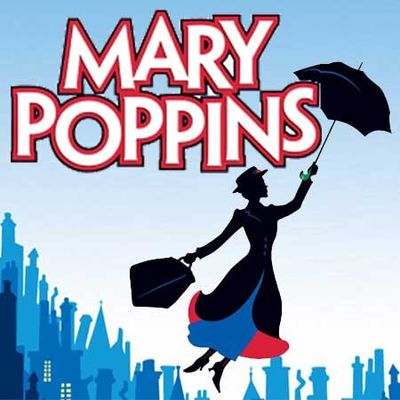
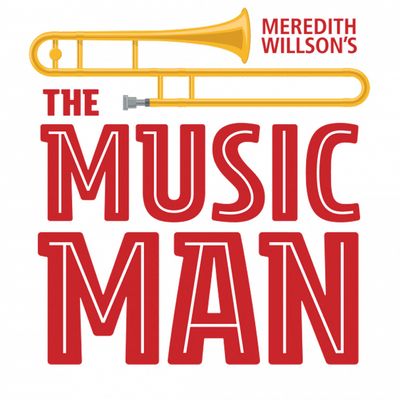
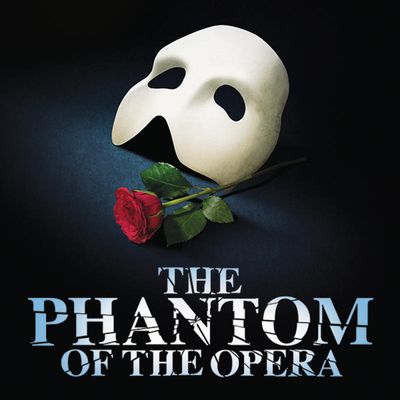
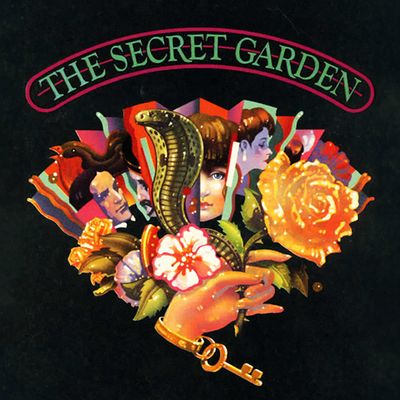
[1:51] Patrick Oliver Jones: It's been almost three months since the passing of Rebecca Luker. Though she had been battling ALS for quite some time, it was still a surprise when her death came during the Christmas holidays, and on the eve of her latest album with longtime friend Sally Wilfert. She has been a part of so many important and legendary musicals like The Phantom of the Opera, The Secret Garden, Mary Poppins, Fun Home, and The Music Man, for which she received a Tony nomination. In today's episode, we talk about some of those shows, as well as that duo album with Sally. We also share personal stories of knowing and working with Rebecca and discuss the legacy she leaves behind.
[2:43] Patrick Oliver Jones: At the end of 2020, what was already a crazy tumultuous year, right? We lost Rebecca Luker. For you, you have known her years and years now, and I can only imagine the loss of such a close friend like that.
[2:59] Sally Wilfert: Yeah, yeah. It was it has not been easy. It's been rough. It's hard to wrap my brain around that. Um, but yeah, we met in 2004. We did a we were doing a reading of Jenny Gehring's piece called The Mistress Cycle. And we just hit it off as gangbusters, like immediately. Like we tell we we would laugh and because I said, Oh, I'm gonna go to the bathroom. It was like first day rehearsal, and she's like, Oh, I'll go with you. And um, so we were like talking, you know, she's in the stall next to me. Where are you from? What are you doing? And we just had this whole thing, this whole conversation, and I thought, I love that girl. And of course, I knew about her. I was like such a fan of hers. She is just a completely authentic, down to earth individual, which is you know my requirement for all of my best girlfriends.
[3:54] Sally Wilfert: No, don't you know, don't be bringing me crazy, okay? Um, but she was just an authentic real individual that was genuinely interested in the minutia of your life. She wanted to know about you, your life. And we also, even though she's from Alabama and I'm from Ohio, we had very similar sensibilities and also very similar approaches to our work. And the friendship was not only just as pals, but also as artists, which was really cool. And we supported each other through all those years. I would see her in shows, she would come to see me in shows, and you know, got stronger and stronger.
[4:47] Sally Wilfert: And then we always said, Oh, we have she would guest on some shows that she did on like her Kern show. I ended up guesting, we played ukuleles together. We created this hilarious number called the Bullfrog Patrol, and then she guested. I she guested on some shows of mine, and so we were constantly wanting to work more together. Um, we were always socializing together. We'd say, Oh, you gotta do a show together, we gotta do a show. We were in our minds, we're thinking, you know, a Broadway show together. But then we had this opportunity in 2017, Jen Tepper from 54 Below, who was programming at the time.
[5:25] Sally Wilfert: Um, they were doing a duo series, and so Jen called me and she said, Hey, we're doing the series would you be interested in this? And I said yeah let me get back to you and I just picked up the phone call back and I said hey listen they're doing this would you be interested? And she's like yes and we just immediately and then we ended up calling Joe Thalken our extraordinary musical director and began working on it.
[5:48] Sally Wilfert: Everybody says don't everybody says don't everybody says don't walk on the grass don't disturb the peace don't skate on the people have always said to me don't ever do a show with your best girlfriend. Don't ever do that. It will ruin the friendship. You know because you never know someone till you live with them there's that saying but you also never know someone to your day in, day out like when you're on the road with the same with the national tour. They become everything and that's the highs the lows the everything in between.
[6:25] Sally Wilfert: Crazily we were so it was kind of crazy how much we loved working on it and any time there was even a hint of I don't agree with that we would we would say we'll try it let's try it let's see if it works and if it doesn't it doesn't we also chose all of the material is like by committee I mean even our solos we were like auditioning our solos and we'd be like no and so that we could settle into what we were how we were programming this.
[7:03] Sally Wilfert: And one thing too that we really agreed upon was that we didn't want it to be your typical duo show where it was just, you know, basically us both opening up our, you know, our audition books and saying, I got this song, I got this song, I got this, and just a bunch of solos, and then okay, and then we'll throw in a duet here and there. We wanted it to be a true duo show.
[7:25] Sally Wilfert: And we wrote vocal arrangements. We would go, we were out, we would be in her house in the Poconos. We wrote a lot of it out there, and we would be sitting either on the dock on the lake or in her in the kitchen or on the deck, just listening and trying different harmonies for things. And we also wanted the listener to not know who was on top and who was on bottom. So we were constantly weaving out of each in and out of each other, just to keep it interesting, not only for us but for the listener.
[7:59] Sally Wilfert: Um so it was creatively probably one of the funnest times I've ever had with another human being just to just to create something like that together. And we kept we were never satisfied until we felt like, okay, that's end. Like, you know, we'd finish the song, or like, okay, that one's done, and we'd listen back to it. And then one of us would be like, you know what? We really should, you know, that do you feel like there should be a modulation? Oh, yeah.
[8:30] Sally Wilfert: And um, and then we take it to Joe and Joe would work his magic and all of this. So how did the show change through its various incarnations in its live performances?
[8:40] Sally Wilfert: Um, we the 54 Below version was like a 65 minute production that that product was about 50 or 65 minutes, and even when we were starting that night, there was one song in there that we knew as we were, it was actually we were rehearsing like a couple days before, and we both looked at each other, we're like, this should be cut. Um, but we were stuck with it, and we loved the song, but we just thought, uh, it doesn't quite fit.
[9:08] Sally Wilfert: And so then after that, Sean Hartley from Merkin Hall contacted us and said, We'd really love for you to do All the Girls, but in a larger format and to expand it. So we expanded it to 90 minutes, which was a lot of material, and really, and it gave us the opportunity to say, uh, we need to trim that medley and that one song that we had, although we love it, that had to go, and then what to put in its place.
[9:36] Sally Wilfert: And we had two other solos each. And what ended up happening was we said, you know what, we should put like a a new songwriter section in here, some compositions. And we were looking and and we were exploring and and doing a deep dive into all these people we knew personally, a lot of them, and then other people we heard their songs, and we were kind of putting them together and we couldn't figure out how to chain things, you know, kind of link them together.
[9:59] Sally Wilfert: And all of a sudden we were like, we were like, what are we doing? We have Joe Thalken right here, who's an extraordinary composer who writes songs for Rebecca and me, and we thought, what are we doing? Looking Joe, we should do a suite of your music, which is what we did.
[10:19] Sally Wilfert: And they were different poets set, and that really took the concert to a really different level to have that moment um to show not only do we sing there was pop music in the show, and there's tons of musical theater, of course, but then to sort of kind of raise the bar a little bit and put in a semi-classical section, a suite of songs by composers mostly dead poets. Um, and it was just so wonderful. It just uh kind of raised the bar for the whole concert. Um and showcase the fact that what we bring to the table is we have chops enough to do many different genres um and to show our talents in that way, which was wonderful. Now, finding those different poems was uh what was that process like? Because obviously there's a canon of musical theater, and you know, you and Rebecca are very adept at finding the songs you want there, but finding poems is a different process, I would imagine.
[11:20] Sally Wilfert: Yeah, and that was really Joe. I mean, that was really him, and he had already set some of these poems, was like Dorothy Parker, and so yeah, so he it was more him, and the audience just went, it was gangbusters with them. Um, and at the time they didn't know too, but she was we sort of passed it off in the moment. She had already been having some sort of symptoms uh for her ALS by this point, which was so that was September of 2019 that we did the concert at Merkin. And before that, it had been going on for several months. They were trying to get to the bottom of her, she was having a weakening in her left foot and then down her left leg. So she thought, which they were absolutely right in searching, but they thought that she had a pinch nerve in her back.
So she had back surgery in July of uh 2019, and then it didn't help in any way. So then they knew, okay, there's something else going on. So she didn't know what was going on, but she definitely was having difficulty.
[12:22] Sally Wilfert: So that night at Merkin, I have never seen anybody in my life. Like she was like, I said, Are you sure? She was kind of using a cane a little bit at that point. And I and we were both discussing, you know, do you want to use your cane? We'll change. We changed, we had already changed choreography and stuff like that, just to sort of simplify so that it didn't she, you know, so that she looked comfortable so that the audience wouldn't we be worried about her. And um, she's like, No, I want to do it without it. And she conjured up sh the most incredible strength to get through that night. And there were definitely moments um where she just like would almost start to fall, and I'd be like, Okay, and I gotcha, and we're just arm in arm.
And so it was a beautiful evening, and I was in awe of my friend for she was grace under pressure, and no one would have known. And we and she mentioned she's like, Well, the show must go on. I just had back surgery, and so it gave the audience they could sigh and say, Oh, she's just recovering from back surgery. But we knew there was something else going on.
[13:27] Sally Wilfert: When did the actual diagnosis of ALS come about? I believe it was right at the end of October. Um I remember when she called me because there they had ruled out a lot of other things, and I remember at one point she said, I can't believe I'm praying for MS, but please pray for MS. And then that didn't happen. So yeah, so then she got the diagnosis and um and again was facing it with, you know, as you can imagine, bravery and chutzpa and strength and yeah, grace, a lot of grace. And um, I was in awe of that. Yeah, just was.
[14:15] Sally Wilfert: And so on September 23rd, 2019, Rebecca and Sally took to the stage at Merkin Hall, celebrating their friendship and the many facets of womanhood, drawing inspiration from the American songbook, both pop and rock music, as well as their own experiences as women in musical theater. This new version of All the Girls featured songs from Hamilton and Steven Sondheim, Peter Allen, Steven Schwartz, The Indigo Girls, and more. But unbeknownst to both of them, it would be the last time that the two of them would perform All the Girls. Her mobility was getting worse, and so that just wasn't gonna happen. She was still singing, and the plan was like right after Merkin, we got the call from Tommy Crasker, who is PS Classics, he is PS Classics, and he said, I really want to make All the Girls. I want to record the album. We're like, great. So we were slated to go into the studio April of 2020, and then the pandemic hit.
[15:22] Sally Wilfert: So there we were, and um, and her it was it was progressing, and so by the time we were able to get into the studio, which was August of 2020, it had progressed too far, and she was not able to sing the way that we would have needed to have sung on that album. So we thought, oh, you know, it's a lost opportunity, but you know, we have you know videos of 54 Below. We were just happy to have the memories, honestly. And then Tommy contacted us and said, Hey, did you guys record Merkin Hall? And I don't know, honestly, I don't know why we thought to do this. I think we thought for archival purposes we would record Merkin, and thinking we didn't know at that point she was gonna have ALS. We were thinking, we were like, okay, we're gonna book this in lots of different, you know, we have a cabaret version, and now we have a big theater version. So we can book this in venues all across the country, around the world, whatever we want to do.
[16:18] Sally Wilfert: So we decided to go ahead and record both the rehearsal and the performance. And thank God we did. Because then Tommy said, Did you guys record it? And I said, We do. And he goes, Where are the masters? And I said, I think Merkin still has them. He got them. He said, I'm gonna make this into a live recording. So the recording you hear is us singing live, September 2019. And then he went even a step further and said, I think this would be a great studio album. And he, by the magic of Tommy and Bart Meigel, his producer engineer, they stripped away all of the audience, and then they wanted to make it sound fuller. And Joe wrote orchestrations, filled out orchestrations with like 10 more instruments. And these beautiful musicians during the pandemic sat at home and recorded these parts, sent them in to Bart, and it was all mixed in the studio, and that's what this recording is.
[17:19] Sally Wilfert: Wow, talk about an undertaking. I mean, they I don't know how they did it. So it was really cool. Becca and I were so happy, and she was so happy. And even though you know, she was rapidly progressing um with that awful, awful disease. Um, and I was with her every I was lucky enough to help her. Uh, you know, I live seven blocks from her, and she had a beautiful revolving door of care team and other friends who were helping as well. But in the last month of which we didn't know was gonna be the of her life, um, we were constantly listening to the Joe and Becca and I would listen to the edits, and then we'd take notes and then we'd go back, and then they'd make the questions and listen again. So we would listen constantly to it, and then Becca and I wrote the thank yous together. We chose all the photos for the booklet, and she was so happy and so proud.
[18:19] Sally Wilfert: And every single time I walked in the apartment to you know, say, Hey, do you like this picture? And she'd be like, you know, get rid of the cellulite on my arm, and I'd be like, and or she'd say, look at your chin. You need to they need to fix your chin. And um, uh, but every single time I walked in, it was like, say it was Emily Skinner there that day, and Emily's like, your album sounds so good. And Becca's like, I'm sorry, I know I shouldn't be playing a four yet. I know it's not released yet. I'm like, oh, please, it's fine. But you know, it was all these beautiful people, David Stoller and Judy Kuhn, and all the people that were lovingly coming and helping, and she would play it for all of them, and it was so awesome.
She was so excited and proud of it, and um, and then you know, she missed it by just two days seeing the release, but she saw it released, you know, she thought before she died. So I was really happy that that was. But but yeah, I mean, my life is um, it's forever changed, you know.
[19:27] Sally Wilfert: She was a remarkable person that I met the very, very first professional show I ever did was Kismet. And she was just coming, you know, she had done Phantom, she was just coming off of Secret Garden, and you know, which really launched her. And so she came back to Birmingham. I I'm from Alabama, she's from Alabama, so this was kind of like a homecoming of sorts for her. She was coming back to do this summer stock theater of Kismet, a one-week run, you know, you know, you know, and then the next week we're rehearsing for the next show, you know. So it's that kind of summer stock thing. And every night she sang, and this is my beloved, which is a beautiful song to begin with, but adding her voice to it and her presence.
It was she she was center stage, and every night I was backstage, just kind of mesmerized watching her on stage. It was it was really phenomenal. And she was gracious, kind, always ready and open and talking to people, and because I like brought in my Phantom of the Opera score and said, What will you sign Think of Me? You know, because I didn't really know who she was until I met her, and then I found out who she was, and I was like, Oh.
[20:44] Sally Wilfert: She was really just at the very beginning of her kind of stardom there on Broadway and doing all that. But she was just so warm. And at the time she was with Gregory Jabara, another Broadway actor, and like we rode together in their car, their rental car, to the opening night party. So it was just it she she was just very, very kind to this little, you know, 19-year-old who was just doing his first little show for 150 bucks a week. Woo! Just excited to be there. She never knew a stranger. She was really interested in knowing people. Oh, I'm Rebecca, what's your name? And she just would, you know, where are you from? Oh, tell me more. Tell us. That's the Southern Hospitality guy. Right? That's just who she is.
And she was a phenomenal cook. Phenomenal. I never never got a meal. Oh my goodness. And a food pusher. Food pusher, you know. Is there anything you're not eating? Back, I'm trying, I'm just trying not to do bread, and I just don't like cheese. And then we would get, you know, to she would either show up here and we'd cook at my apartment or we would be at her lake house. And she's like, I know you don't like cheese, but yeah, I just brought this so you could have it. Or you know it was every meal. I'm like, there's two of us here. You've made enough. There was, it was always these beautiful recipes. I learned so much about cooking from her. And she loved the entertaining part of it. She liked the congregation. She liked the connection that people would get over food over breaking bread.
[22:17] Patrick Oliver Jones: What do you think would surprise people that don't know her, or just you know, fans of her? What would surprise them to know about her?
[22:26] Sally Wilfert: I think I think that uh just the fact that she could be just abroad. Like she, you know, she was um, you know, always, I wouldn't say typecast, but like the roles that she would create were a little bit more mysterious and um, you know, with that voice, you just expect a certain personality to to encapsulate that. And she was really so down-to-earth, um, uh, in a lot of ways. She loved um just tank tops and no makeup and baseball cap and mowing the lawn she would learn lyrics by mowing the lawn and she also told the dirtiest jokes ever she was a little wicked just wicked little woman sometimes she she she would just say things and she'd say and she would lay her head back and laugh she's like I'm so bad oh I'm bad I know I know I won't okay I'm gonna go to hell I'm going to hell I'm going to hell aren't I you know and it was just so fun we would just cackle over everything um I I think the other thing that was very surprising she was very outspoken politically she was she could she was so smart when it came to politics and um honestly I think would she have would ALS not happen I truly think she probably I would say this to her I'm like you should be running for an office of some of some sort she was a huge believer in women's rights the rights the right to choose she knew every senator's name every house congressperson's name and she was just really passionate about all of that and where we were going with this in the world and um that was very surprising to me I I always felt a little dumb when I was around her about that stuff or I would just be like you know yeah what what's happening again I don't really know if I'm paying attention but she knew she she was a voracious reader in that regard and um yeah and she also she'd re she could remember, she had the most amazing memory.
[24:34] Patrick Oliver Jones: What do you remember about her memory?
[24:34] Sally Wilfert: She could remember years and specific events when they happen and my my ability to to have the memory, I'd be like, was that after I did that show or before I did that show? It's always based on like what show I received. Yes, yeah. I I have like these moments, like, you know, that there's there's college years, and then there's this show that was around that time. So yeah, that there's like these little anchors or markers in my timeline, and that's how I can remember if something was before or after that. Yes. Yeah. And she liked to do her own makeup for shows. Yeah. Like if we would get a hair makeup person, if we were doing something together, they would always do her hair. And she would do our makeup. I like someone to do my makeup, but I I don't touch my head. I like to do my own hair. Um, so she was funny that way with makeup and she liked to share, share earrings. And she was early. We were like sisters, you know, we just share things.
[25:32] Patrick Oliver Jones: What will you remember most about her?
[25:37] Sally Wilfert: I think I will remember most that she was, she always said yes. She always said yes. Always. And she also said something to me that I really anytime I would get nervous, say there was a audition or a callback, and she'd always say, Yo, yo, you're gonna do great. You'll do great. And she said, and I'm like, don't you get nervous? She's like, I do, or if we were performing in like those new voices concerts where you have two seconds to learn the songs. I always got the songs that were like the really fast pattern songs, because I could be really funny, but also you had to have a really good singer, and I'd be backstage going, just trying to remember each lyrics. And she's like, Oh, are you nervous?
And I'm like, Yes. And she's like, Oh, you know what I do? I sit and I think about how I want to feel when I'm finished. Before I go on stage, I visualize how I would like to feel when I finish. And I was like, you're kind of blowing my mind right now. Like, yeah, that's how I want to feel when I'm finished. So then you walk on stage and the nerves kind of go away, or at least they subside a little bit because you're like, that's how I want to feel. So let's just start now. I love that. You know? So that's the greatest advice. Um, but she was, she fiercely believed in me, and I will remember that forever. She just would always say the most wonderful, kind things anytime she would come to support me in whatever show I was doing.
She was just so generous, and I'll remember it's like it's a huge hole in my life. And she's left a huge hole in theater in general, especially here in New York. And besides just her resume, which is long and wonderful roles that she's done and Tony nomination.
[27:22] Patrick Oliver Jones: What do you think is her impact, her legacy when it comes to theater to Broadway and to performing?
[27:29] Sally Wilfert: You know, I think she really transformed the idea, not that she was ever an ingenue, but I think she really transformed that into something that had more gravitas. And she had a depth to her that she brought to every role. And with a voice like that, that voice could mesm had would have the um uh the trappings of getting you it could mesmerize you and you could get lost in it and not see what an extraordinary actor um she was and what she brought to a role. So I think that her legacy is that she had never stopped working on the craft, and as she aged, it got richer and richer and richer, and she never lost that sort of effervescent, beautiful verbato that she had. So I think that the joy she brought to every role. I think that that is is kind of it's part of the tapestry of her legacy. Yeah, she just knew how to stand in the middle of a room or in the middle of a stage and make an audience feel take a breath of like, uh, we're in good hands.
[28:50] ♪ Musical number ♪
[29:24] Sally Wilfert: Excuse me, Henry, wake up.
[29:55] Patrick Oliver Jones: That's why.
[30:00] Patrick Oliver Jones: Thank you so much to Sally Wilfert for joining me not only to share her own experiences and insights into musical theater, but especially for reminiscing on and showcasing the beautiful life and career of Rebecca Luker. I'm your host, Patrick Oliver Jones. Check the show notes for links to all the music featured in this episode. Join me next time as Women's History Month continues here on Why I'll Never Make It.
© Broadway Podcast Network, All Rights Reserved