

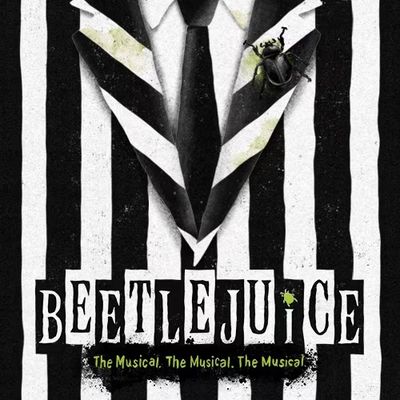
The third and final Awards Season Bonus Episode features Kelvin Moon Loh of BEETLEJUICE, nominated for eight Tony Awards. We discuss his audition for the role of Otho...or rather lack of an audition... Read More
From the show: Why I‘ll Never Make It
Guests

Featured Shows
About
The third and final Awards Season Bonus Episode features Kelvin Moon Loh of BEETLEJUICE, nominated for eight Tony Awards.
We discuss his audition for the role of Otho...or rather lack of an audition. Then there's the other fellow performers who Kelvin simply gushes about, sharing his love and gratitude for such a wonderful group to perform with. But we also delve into the business itself and what keeps us going and how to treasure the moments along the way.
It's wonderful and far-reaching chat about this fun show about death as well as the Great White Way that keeps us all striving and hoping for our chance to one day be under the big lights.
Follow Kelvin on Twitter and Instagram as well as BEETLEJUICE.
As you enjoy these guests and conversations each week,
please consider buying me a coffee to support this podcast.
I wouldn't be here without listeners like you,
so your donations are greatly appreciated.
(support.winmipodcast.com)
Find out more about the WINMI blog and other episodes,
go to winmipodcast.com.
Transcript
This transcript was automatically generated and might contain errors.
[0:24] Patrick Oliver Jones: Hello and welcome to the third and final award season bonus episode. Thank you for joining me once again. I am so happy to have Kelvin Moon Loh back on the program. You'll probably remember him from last year's episode on SpongeBob SquarePants. So he is now an official friend of the podcast for coming back on and talking about Beetlejuice. And speaking of Beetlejuice, as I have done with the other two, let me just run down the list. They have eight Tony Award nominations, and those eight are Best Musical, Best Book of a Musical by Scott Brown and Anthony King, Best Original Score by Eddie Perfect, Best Performance by a Leading Actor in a Musical, Alex Brightman, who is Mr. Beetlejuice himself, Best Scenic Design of a Musical, David Corins, Best Costume Design, William Ivey Long, Best Sound Design, Peter Helenski, and Best Lighting Design, Kenneth Posner and Peter Negrini.
Now, Peter Negrini, that might be a name familiar to you if you listen to the Ain't Too Proud to Beg episode. He is also nominated, but this time not in lighting design, but in scenic design for Ain't Too Proud to Beg. So he certainly had a busy and looks like an award-winning year. So if you know anything about the Beetlejuice name, it was a Tim Burton movie back in the 80s, and this musical is certainly based upon that. Even though it has an original score, the classic Harry Belafonte songs are still in this musical. So I'm so glad that they made that choice to keep them in. But the rest of the music is all original. And the story itself is also, while inspired from the movie, it kind of goes in a little different direction and kind of focuses in more on the daughter, Lydia, which was played by Winona Ryder in the movie.
And I'm so glad to have Kelvin on the show today to talk about the process of putting this show together, the similarities, the differences from the movie. And we also just drift off, as us actors always do, we drift off into the business and auditioning and the process of performing and having to gear ourselves up for every night of doing a show. Certainly, having seen Beetlejuice, it is a jam-packed, I mean, the train leaves the station and it doesn't stop for two and a half hours. And it is a really, really fun show to see. And Kelvin really exudes a lot of that joy and that enthusiasm that the show portrays.
[3:18] Kelvin Moon Loh: Hi. Here we are. We are here upstairs in the dressing rooms in the Winter Garden. The fourth floor, looking out over Applebee's New York City. And you know, on my way here, I was walking, and the Stardust Diner had a line out the door. It's um so Beetlejuice also has lines around the door. Yes, when we're about to do the show. And sometimes it's a little confusing. It's like wrapped around one side. You have Beetlejuice, theatergoers, and the other side is Stardust Diner. So when you get to a line, you'd be like, Are you Stardust or Beetlejuice? You know, one or the other, they're gonna get a show, apparently.
[3:54] Patrick Oliver Jones: This is true. Now, this is actually because I just saw the show a couple of weeks ago, and it was actually the first show I've ever seen at Winter Garden. Have you ever performed here?
[4:02] Kelvin Moon Loh: I have never performed here before. I've never been backstage here before either. You know, it's been the same couple shows that have been running for decades.
[4:14] Patrick Oliver Jones: Well, it was Cats for decades.
[4:16] Kelvin Moon Loh: Forever. And then it was Mamma Mia Forever, and then School of Rock.
[4:16] Patrick Oliver Jones: And then School of Rock. There were two other shows here. I think Wolf Hall was here, and I think—
[4:25] Kelvin Moon Loh: Oh, that's right. Yeah, I think right before School of Rock. And Rocky was here for like a hot second.
[4:29] Patrick Oliver Jones: Yeah, Rocky came and went.
[4:31] Kelvin Moon Loh: And came and went.
[4:31] Patrick Oliver Jones: Yeah. But you know, for all those reasons, I never saw Mamma Mia.
[4:35] Kelvin Moon Loh: I mean, nor did I, nor did I. And I saw the revival of Cats, but I didn't see the original.
[4:40] Patrick Oliver Jones: Yeah, yeah, I didn't see that. The Winter Garden's legendary.
[4:43] Kelvin Moon Loh: Oh, yeah, because shows are known to come here and stay.
[4:47] Patrick Oliver Jones: And stay. So hopefully Beetlejuice will fall into that category. But you know, some amazing things opened here many, many, many years ago. You know, the Winter Garden's home to West Side Story, the original.
[5:02] Kelvin Moon Loh: I did not know that. Um, we should I B DB the whole thing, right?
[5:05] Patrick Oliver Jones: Right. Just see the long history of Winter Garden.
[5:08] Kelvin Moon Loh: Yeah, I'm not gonna say any other shows because I'm like, ah, I think Funny Girl, or I think Gypsy. I don't know.
[5:13] Patrick Oliver Jones: Yeah, it's probably not, but it does.
[5:15] Kelvin Moon Loh: Now, you're basically a friend of the podcast now because you were on last year with SpongeBob, right?
[5:21] Kelvin Moon Loh: Yes, and so now your second year and a second show. And so I mean, not your second show. This is what how many, how many shows?
[5:28] Kelvin Moon Loh: This is Broadway show number four for me.
[5:31] Patrick Oliver Jones: Wow.
[5:32] Kelvin Moon Loh: Which I always tell people that number four in Chinese numerology, which I am, um, not numerology, Chinese, uh, is um it's the death number.
[5:45] Patrick Oliver Jones: Right, right.
[5:45] Kelvin Moon Loh: It's a bad luck number, right?
[5:47] Patrick Oliver Jones: Bad luck number because it the word means you know, number four, but it also means death. But I think it's completely appropriate and good luck for this show because you know Beetlejuice is about death.
[5:56] Kelvin Moon Loh: Hey, listen, you get to the opening number, it literally says, Welcome to a show about death. So yeah, the opening scene is a funeral. So yeah, you kind of know what you're in for.
[6:05] Patrick Oliver Jones: Yeah, totally. You know, it's for anyone who's listening who's a big Beetlejuice fan. You have to know that this is definitely an homage to the movie. It's not the movie completely, but there are definitely enough Easter eggs in the show where you go, uh, this is completely inspired by the movie. The characters we know, you know, um, but the movie is Tim Burton's first movie. It's kind of a shorter story that needed to be expanded for a musical.
[6:34] Kelvin Moon Loh: Yeah, we're going from a 90-minute show to a two and a half hour musical. There's definitely more material to cover. I think I rewatched the movie just as I was auditioning for the show again. You know, to get a refresher of who's this character, who what's this world? And I just wanted to get a vibe of what the show could potentially be. But ultimately, it's its own beast now. It's its own entity. There's a musical theater, super Broadway aspect of the show, and it still has that dark comedy that is completely stolen from the movie, which I think it makes it a super entertaining night of theater. Oh, you'll judge for yourself.
[7:13] Patrick Oliver Jones: Now to now now you were talking about that you watched the movie before you auditioned. What was that audition process like?
[7:19] Kelvin Moon Loh: Ooh, you're gonna get the scoop on this. Right. Uh I'm gonna admit this right now. I never walked into the room to audition for this musical.
[7:30] Patrick Oliver Jones: Really? How about that?
[7:32] Kelvin Moon Loh: So I did this concert uh over the summertime with our amazing conductor um and music director, Chris Kukel. And uh it was a four-person concert, we're doing it at Carnegie Hall. It was great. Um, but I was singing, and I have a lower register voice, and they were looking for a bass at the time. And he knew that I was doing SpongeBob at the time and I was singing bass, that David Bowie song, and he said, So, what's your availability for SpongeBob for Beetlejuice if you have a contract with SpongeBob? And I said, I'm unavailable, sign up for a contract. It's just you know, business things. So lo and behold, unfortunately, SpongeBob closed early. Um, as that was happening, my phone rang and said, Hey, I heard your show's closing. I'm so sorry. Would you like to audition for this? And it was completely fresh, you know, uh like a fresh wound of I don't know if I'm ready to move on to the next thing, but you know, the bills have to be paid.
[8:34] Patrick Oliver Jones: Right.
[8:35] Kelvin Moon Loh: So Alex Timbers, who is a very busy man and is incredible, um, was in Boston at the time workshopping uh Moulin Rouge out of town. Oh, that's right. So uh Alex and I had worked together a long time ago. I'm giving you the whole resume. His resume, my resume. So how they intertwine. Yeah. So years ago we did this uh off-Broadway show called Here Lies Love of the Public Theater. And uh they said, Well, Alex is out of town, he can't really audition right now, you in person. Can you just send a video? And so I hired a good friend of mine to put the video together. We did it in an afternoon, and you know, sometimes you open up you know a set of sides, just read the lines and you go, This is me. I think this is I think this is right for me.
And I prepared in an afternoon, we got it on tape, we sent it off to casting, and it took them a couple weeks to review it and send it around, and they were toying with the idea of having me come in to work with Alex. But again, we've had a working relationship before, so he knows what I can do and what I can't do. Um the offer came in. I never walked into the room and auditioned at all.
[9:52] Patrick Oliver Jones: It it's so nice when that happens.
[9:54] Kelvin Moon Loh: Uh it's never happened before. So I can say it's certainly is nice. Uh, you know, you hear all these stories about oh, or you know, myths of you'll never you'll never book a show off of uh a video recording.
[10:09] Patrick Oliver Jones: Right.
[10:09] Kelvin Moon Loh: I was just about to ask because self-tapes are the bane of my existence, and I think for a lot of actors they are. They're terrifying.
[10:15] Patrick Oliver Jones: They're terrifying, and you know, there's I always think that theater is something that needs to be experienced live in the room, including auditions, so you can feel what that is. But here is a perfect example where that wasn't necessarily true. So I'm gonna stop counting myself out for when I have to do self-tapes. Um, because it's honestly, as we get further and further into the future, it's uh become a part of the—
[10:33] Kelvin Moon Loh: Oh yeah. I mean our phones are cameras now, so I mean we can audition anywhere. It's not that grainy quality videos anymore. My iPhone can shoot you an HD movie.
[10:50] Patrick Oliver Jones: Oh right. It's a night definition.
[10:51] Kelvin Moon Loh: Yeah, it's great. Oh my gosh. This is uh a bit off topic. But with that self-tape, how did you go about doing that to make it look, I guess as best as you could?
[11:00] Kelvin Moon Loh: Well, uh if I can plug my friend Jordan Grubb away. Jordan Grubb, his uh last name is G R U B B. Uh he has an amazing company. There are companies out there who create these videos for you now, and they are completely professional. He's amazing. He's able to do the lighting for you, he sets a backdrop for you, he watches you on the camera just to make sure you're completely in frame. So that you don't have to worry about anything except for acting. But that's being said, it's a complete luxury to have that. Um to have a service that's able to provide that for you. I need that for myself because I just want to focus on the lines. Um, but people do shoot on their cell phones a lot and it's in their living room.
[11:42] Patrick Oliver Jones: Oh, in their living room and whatever it is.
[11:44] Kelvin Moon Loh: It's just about having a very clean image of yourself and saying the lines clear and concisely. But there are just know that there are people out there who are competing with you who are using these other uh sites and you you can see a difference in quality.
[11:59] Patrick Oliver Jones: And I don't know if that factors in to—
[11:59] Kelvin Moon Loh: Because I yeah, 'cause like you said, it's a live theater. So you hope that video quality right isn't the determination.
[12:07] Patrick Oliver Jones: It shouldn't be the determination.
[12:10] Kelvin Moon Loh: But we are all programmed to look at the shiny sparkly object as opposed to something that is not as perfect. So, you know, I I don't want to say that you can never book a a show off of something that you've filmed yourself, but if you have the ability, it's not expensive, you know, to just go that little extra mile. You know, that's not even just to say anything about video services or doing um recordings for self-tapes, but the extra mile for any audition process tends to be what gets people jobs.
[12:45] Kelvin Moon Loh: You know, if you do the extra coaching with them, with your music coach, if you go the extra mile by renting the movie and watching something that you're auditioning for, or doing that extra amount of research, it tends to really pay off in my experience for sure. And I've watched in other people's experience. It's about a level of preparedness that frankly not everybody comes in with. And when you are prepared and you look prepared, you look like a professional, and suddenly you become extremely more hireable to people. I see it all the time. Yeah, I've been a reader in the room. And you can easily see the people who came in and made choices; they diagrammed the whole scene and they know what you're doing, and then those people who are facing the sides just reading it.
I think it's the most valuable experience to be a reader. It's the best thing I've ever done in my entire life. If you ever have a casting director or ask a casting director, or cast your own project for fun and sit in the room and you watch auditioners come in and you realize that you're seeing a hundred, two hundred people in a day, you know, I don't know how many people, and it's so hard to weed people out already. So the first place that a lot of people just start is do you know what you're doing? Right. You know, and it's fascinating the amount of people who really want to do the industry, who really want to do the business and come in, and I sometimes feel gosh, I don't think you know at least you're not presenting me this morning that I can even hire you, you know. So and trust me, as I give this piece of advice, I'm sure I was that person many, many times.
[14:24] Patrick Oliver Jones: Oh, I d I'm thinking back to an audition. Because the thing is like, yes, I can fully admit there have been those auditions where I was not as prepared as I need to be. I didn't go over the material as much. There's that. Then there's those times where I did prepare, but then my voice is like out, you know. I have a cold, laryngitis. What is it? Life happens.
[14:44] Kelvin Moon Loh: Life happens. Um, but in that way, because life happens, you have to counteract life at every turn. You have to try to put yourself in the best position possible.
[14:56] Patrick Oliver Jones: Absolutely. Um, that's really the best audition advice I can give.
[15:02] Kelvin Moon Loh: Well, it has certainly put you in one of the best positions, you know, being a returning Broadway performer, you know, now in your fourth show.
[15:10] Kelvin Moon Loh: I think I've completely hoodwinked the industry. They don't really know. They don't know. They don't know I'm a beautiful disaster wrapped in Christmas wrapping paper.
[15:21] Patrick Oliver Jones: Right, right. You are the shiny object with just a lump of coal on the inside.
[15:26] Kelvin Moon Loh: There's no value here. Sorry.
[15:29] Patrick Oliver Jones: Well, having seen the show, you certainly bring a lot of value to Otho.
[15:33] Kelvin Moon Loh: Thank you. That must be just a tremendously fun role to do.
[15:38] Kelvin Moon Loh: It's a joy to do. Um, see, you can hear the alarms in the background.
[15:42] Patrick Oliver Jones: Oh, yeah, because they're coming to get you.
[15:43] Kelvin Moon Loh: They're coming to get me because they know I'm a fraud. Uh, this is beautiful Times Square. Uh, to play Otho is a complete joy. First of all, I love the movie growing up as a kid. Um, it was definitely a movie that I found myself that I wasn't supposed to watch. It's definitely, you know, more of an adult teen film. Right. But I remember Otho distinctly. He's a huge fan favorite from the movie. And you know, the late Glen Shattox, who is amazing in the role. You've seen him in every movie. And he just walks onto the screen and he is a king. You know, he is hilarious. Every single he will pull the tempo of his speech so slow and deliver just, you know, we'll call the most fabulous lines, but they're definitely dry and hilarious. And so when I read that they were even asking me to come in for the role, I said, I think I'm right for this, but regardless of whether I am, I'm going to make myself right for this because it's an amazing role.
[16:52] Kelvin Moon Loh: Right, right. He comes in and he just holds court. He is that character. Which I wouldn't say is so different from my real life in a social setting. Uh, somebody who just wants to walk in and just starts telling his philosophies of life. And uh, it is really, really fun. I get to act opposite uh Adam Danheiser, um, who plays Charles Dietz, and also the incomparable my queen, my diva Leslie Kritzer, who plays Delia. Who is absolutely hysterical? She is so funny. So, you know, and yeah, I'm not gonna give away the whole plot of the show. Uh, it isn't completely different from the movie, where I come in closer to act two than anything else. But once I do enter, it's I mean, I mean you take the stage.
[17:45] Kelvin Moon Loh: I take the stage, but really what it is is it's the Kelvin and Leslie hour. You know, it's not an hour, but it's a couple minutes of just us, you know, having the time of our lives because we have a great friendship off stage. Yeah, and it's I think that's super important. We trust each other. We look in our and we look in each other's eyes and we go, Well, what do you want to do today on this stage? We've got the lines that we have to say, but it's just a lot of fun.
[18:13] Patrick Oliver Jones: So yeah, how is that in the rehearsal process? Did it kind of morph and change throughout that process?
[18:19] Kelvin Moon Loh: I always say that when we're rehearsing the show, and they're like, and was it difficult? And I go, Yes, it was really difficult to rehearse the show. Why? Because you're in the room with some of the funniest people you've ever met. You know, you're not just Adam and not just uh Leslie, but you also Robin Clore, Carrie Butler, you have Alex Brightman, who you stand around and we get nothing done because we're just cracking jokes. Yeah. It becomes a room of people just trying to make each other laugh.
[18:46] Kelvin Moon Loh: Yeah. And to do anything. Anything to get that laugh. And uh, so it after a while, you know, every now and then stage management or director has to go, come on. All right, guys, we focus. We're gonna have to actually rehearse the scene, not rehearse Blazing Saddles for the 80th time. You know, like whatever we want to do in that minute, you know. Um, but it completely morphs. And you know, the room is one thing where you have the set lines. We have our brilliant writers Scott Brown and Anthony King, who come from the UCB world. They write for television, they write for great comedies. Um, and because of that, they have some super funny material, but again, I always say the last character to get added to any comedy is the audience, you know, right.
You have to know where they're gonna laugh, what that does to you, and they're just as alive every night. And sometimes they'll laugh at a joke that you know has never gotten a laugh, and sometimes your surefire jokes, they'll be like, and I go, hold on.
[19:52] Kelvin Moon Loh: Yeah, you have to play with them, you know, you have to work with them the same exact way that you work with your actors on stage. And so the room is one thing, and you know, the writers will laugh at their jokes, and over a short amount of time, a very short amount of time, everyone stops laughing because they've all heard the jokes before. And so now you're pushing for new jokes to try to get them to laugh, and um, and then once you get into a real audience, they'll tell you, oh, maybe the joke that you all thought in the room was too inside for whatever the rehearsal process was, and they need something that's you know, immediate, visceral to them. It's always so interesting once you say, once you get that audience in because they're gonna hear something for the first time, sure, and they're gonna react to it, and yes, from time to time audience will be different, and they won't like this one or they'll like a different joke. But for overall, probably about 75% of the lines will always hit. And you find that rhythm only once you have an audience.
[20:49] Patrick Oliver Jones: Well, and I think that when as they're writing jokes too, they're thinking of jokes within a range, you know what I mean? Like it will always be funny, you know what I mean. But how funny is up to the performer and the audience by day, yeah, and to kind of navigate that, and you kind of you can't ever you can't really phone it in, you know. You know, you kind of have to completely work off of that audience every day. They and they will tell you. They and they will know if you're just trying to pull one over on them.
[21:19] Kelvin Moon Loh: But I think that's the joy of doing it. You know, I think that's a joy of doing live theater every single day. Because it really is different every single day.
[21:28] Patrick Oliver Jones: Oh, it's completely different. I don't care if the audience, there are repeat customers in the audience, as far as the combination of people, you know, it's a mass entity of human beings sitting in the dark coming to see you. And then it is never the same chemistry of people that are on that stage or off that stage. It's completely new, and that's probably the most exciting thing of theater to me.
[21:51] Kelvin Moon Loh: And to be able to play comedy, oh I hate to say it, it's like an addiction. It's a dirty, dirty addiction to hear that laughter and suddenly you're like, I had a great day today.
[22:03] Patrick Oliver Jones: Right.
[22:03] Kelvin Moon Loh: Or if they don't get one of your jokes or you just didn't land it the way that you usually do, you walk around you're like, oh, I had an awful day today. But it's not. Yeah, it's just a different day. It's just a different notice. It's just, you know, it's how much, it's how much liquid substance of laughter that they're sending you, you know, that you're like, oh, I feel great, I feel awesome, or versus, you know, feeling like it's complete sham. Because in those dramatic roles, you don't often hear the gasp, the sighs, the sniffles as well.
[22:32] Patrick Oliver Jones: No, you don't hear any of that.
[22:33] Kelvin Moon Loh: You don't hear that, but when an audience laughs, you know it. You know it. You know if it's funny or not.
[22:38] Patrick Oliver Jones: Oh yeah.
[22:39] Kelvin Moon Loh: And it's you there's certainly there's certainly um, you know, let's be honest matinees versus evening shows, weekend shows versus weekday shows. It's where people are coming from, whether they're coming from work, or you know, if it's a huge school group, or if it's a huge, you know, an older crowd. There are certain realities of that as well.
[22:59] Patrick Oliver Jones: But I never do any I still look at them as all the same targets.
[23:04] Kelvin Moon Loh: Yes. You know, I don't first of all I can't see what's happening out there. You know, the lights are very, very bright in the show, which you know, the design of the show is incredible. Um, the set is absolutely different. David Corins, he is the best. And I mean, I again, we're not going to give it too much away here, but there are it's the same basic set, but they basically do three or four different things with it throughout the show where it's almost like a new set. You know, it's one of those things. It's the last set that I remember that was a huge set, and I always wondered, and I won't tell you the secret here, so it's not coming. Um, but I always wondered, wait, they have two of those sets? How is that even possible? Was the producers years ago? Remember they had that big office set?
[24:38] Kelvin Moon Loh: Um, everything is inspired by Tim Burton as far as the creation goes.
[24:45] Patrick Oliver Jones: Has he come and seen it?
[24:46] Kelvin Moon Loh: He's not been here yet. He's coming though. Um, he's a busy man, apparently. I guess he's got other things.
[24:47] Patrick Oliver Jones: Yeah.
[24:48] Kelvin Moon Loh: That you would walk into uh Beali Stock and Bloom's office, and you know, it was this really kind of like New York City office, which is no office has ever been that large. Of course. Uh, but they housed at the St. James. And uh in Act Two, suddenly it's the same set, but it's all painted white. Right. And I worked at St. James as my in the first place, and I go, how did they have both those sets? Did they live on top of each other? Did you fly the whole thing out? And they gave me the secret there, and it's a very similar secret here. But I imagine I have my own theories as to how it's happening, but it's done very well. And if you are if you're lucky enough to get a backstage tour, you'll see it. Because that's it'll just be hanging out, and you'll be like, Oh, but you know, in the moment it's you go, this is great design. It's really super appealing.
[24:52] Patrick Oliver Jones: He's got other whatever.
[24:54] Kelvin Moon Loh: Um, but as far and he's completely approved everything. So he's seen the designs. And it even goes to the costumes. So William Ivy Long, the legendary William Ivy Long did the costumes for this. And he asked Um Tim Burton if he could source some of the original sketches that he did for the movie.
[25:12] Kelvin Moon Loh: Wow. Some reject sketches, some of the sketches that got into the movie. You know, you have some iconic characters that make appearances in this in the show as well. Um, what's amazing is William does this crazy thing that David Corrance also does is uh Tim Burton has a very specific aesthetic when he draws, you know, it's like a hand-drawn feeling, and it makes its way into the movies.
[25:38] Kelvin Moon Loh: Well, here, including Peter Negrini, who did the projections for our show, there's a lot of things that are hand drawn. So even the costumes, you know how they distress costumes sometimes? Like Le Miz, they do like they add the dirt or something to like make clothing look older. Well, we do the art distressing here as well, but sometimes the fine-tuning of costumes, for example, the Beetlejuice costumes, he's wearing the iconic stripes, right? It would be so easy to go to the store and buy a fabric that is striped already and then, you know, throw some dirt on it. I remember when we did our out-of-town tryout in DC, William I.V. Long's studio, his out-of-town studio, was across from my dressing room, and you would see William with his glasses on hand painting every stripe.
There's a little hand-painted thing on every single piece of costume, just the same way that Tim Burton had in his sketches. And it's the same on the set too. If you get really close to it, you go, this is hand-drawn. Like this is not, nobody spray painted the lines here. Like these are completely hand-drawn lines, hand painted. So it has that kind of, it's just a little bit more of like jagged edges, or it just feels a little bit more like a full sketch of something. And yet, when you take a step back, the ultimate product is so glorious.
[27:06] Patrick Oliver Jones: Yeah.
[27:07] Kelvin Moon Loh: You know, and you would never see those details, but it really mattered to them because they wanted to capture that essence of what Tim Burton had created long ago, which was Beetlejuice is kind of his first movie that he created his signature aesthetic. When we see a Tim Burton movie, we know. Oh, was that really his first movie? He's done other things, but as far as when we, the general public, were introduced to it, I would say Beetlejuice was probably the first.
[27:32] Patrick Oliver Jones: How about that?
[27:33] Kelvin Moon Loh: Yeah. And so how have you, so you saw the movie and are now in it? What would you say is one of the biggest differences? Not just necessarily storyline, but as far as like the character and the emotion, the setting of it all.
[27:48] Kelvin Moon Loh: I would say for sure that Lydia's journey through Lydia, played by Sophia Anne Caruso, you know, the role made famous by Winona Ryder, which will newly be made famous by Sophia, who is a genius. She's the best actress I've worked with. Um, sorry everyone else. I'll retract that when I talk about your show later. So, but Sophia's really great in it. Um, they've created a role about, they wanted to create an emotional arc for Lydia that didn't exist in the movie, you know. Some, why is she so unusual? You know, her line is famous in the, I too am strange and unusual, and what exactly what it is and what it is that makes her tick and what she's trying to find in the world. And really it comes down to you ask, well, what is Beetlejuice about?
And you know, you can throw a lot of shade at a movie that a movie that's been adapted to musical. It's like, oh, it's not about anything, it's about commercial, you know. The commercial, there's a reason why this show worked as a movie before, but in order to captivate a Broadway audience, you kind of have to put an emotional arc into it that we can follow for two and a half hours. And it starts with her, and it's, and this is not giving anything away because it's similar to the movie, but also it's where we start is Lydia's recently lost her mother, and it ultimately sets up the entirety of the show, which is, yes, it's a show about death, and yes, there's lots of comedy in it, but really what is it to process death?
You know, what is life after you've experienced death in a way? Who could possibly be closer to you than a mother or a parent, you know? And what that journey is in the real life, in the real world, and of course, we go to the netherworld, and what is that journey there? And so we kind of follow her that way. And the theme of motherhood really plays throughout the whole show. And you're, and now you also have to expand the roles of the Maitlands played by Rob McClure and Carrie Butler, and what their journey is of not becoming parents, maybe stripped of that opportunity to have children too early in life, and to see exactly how you process that. That's a death of another kind, a death of a dream that never came to fruition. That's a really significant difference from the movie.
[30:27] Patrick Oliver Jones: Yeah.
[30:28] Kelvin Moon Loh: Where it's closer to, which I was a huge fan of, there was a Beetlejuice cartoon series.
[30:34] Patrick Oliver Jones: Oh, I remember that.
[30:35] Kelvin Moon Loh: And it was a Saturday morning cartoon. I'm fully dating myself, which is fine. You all should know that I'm old and I'm tired. Do they even have Saturday morning cartoons anymore?
[30:47] Patrick Oliver Jones: Oh, I, they don't.
[30:48] Kelvin Moon Loh: Well, well, yeah, because with the Netflix and Hulu, you can just watch it whenever. There's no Saturday morning. I was babysitting my nephews the other day, and they, everything's on streaming services now. So, but back in the day, you had to get up to watch Saturday morning cartoons, or you had to record them on your, you know, your VCR. But one of the cartoons that I used to wake up in the morning to watch with my brother was Beetlejuice, and that cartoon series really focused on Beetlejuice and Lydia's story, you know, that their, it was their adventure time.
[31:22] Patrick Oliver Jones: Yeah.
[31:23] Kelvin Moon Loh: Would you say that this musical kind of is an offshoot of that? That seems, it's closer maybe to the animated than the movie itself.
[31:30] Kelvin Moon Loh: I wouldn't say either or, but I would say that it's closer to the movie, but there's definitely aspects of that relationship between Lydia and Beetlejuice. It is closer to the cartoon series, which personally was the thing that I, it was an extension of the brand that I watched over and over and over again, and it was so fun, and it was so wacky. Cartoons in the 90s were different than cartoons in the, you know, 2019.
[31:58] Patrick Oliver Jones: Well, yeah, I mean, just think Animaniacs for Mike. I mean, to take all those Warner Brothers, like the old time cartoons, and then to make them into the modern era. I'm not sure it could happen.
[32:11] Kelvin Moon Loh: Yeah, I'm not sure it could happen. I certainly think that the cartoon series is a huge influence to everybody who's created this, created the Broadway version of it. And if anything, it's just the more colorful version of the show. You could get a little bit wackier in the cartoon for sure by animation. But what you weren't able to achieve in movies back in, you know, when the original movie came out for Beetlejuice, and you can only achieve in cartoons. Well, 2019's a new day. You can achieve a lot of new things on that stage. And I can assure you that they've pulled out all the stops. We have, first of all, we have Michael Weber who did a lot of magic for the Harry Potter show.
[32:58] Kelvin Moon Loh: Oh, that's a problem right now. So we have the best of the best for doing magic tricks. There's pyro, there's, I feel like Alex Brightman who plays Beetlejuice is doing a magic trick a minute, you know. So we have him doing that. And then you have Michael Curry who did the puppets for The Lion King. And so he's done some crazy puppet work here. I will tell you for sure that there is a sandworm, and that's not a spoiler because great, you now know there's a puppet sandworm, but until you see it, you're like, when you see it, yeah, it will just far exceed your expectations there too. So you have both those people working with your already crazy creative team. Alex Timbers, who has a mind of a creative genius in a way, he understands the visual components of creating the craziest spectacle you can see on his own.
I mean, he's not exactly the same as Tim Burton, but I put them in the same category in that aspect that he kind of has a quirky, off-center view of how to put a show together. I think that's why we have the cast that we have, and that's why the show looks the way it is. It's whatever you expect to see, or what it's just a little skewed, and so that's what keeps it interesting. Is that the theme of Beetlejuice? You know, we're treating a ghost story, you know, or a demon story like it's completely normal, you know?
[34:25] Patrick Oliver Jones: Yeah.
[34:26] Kelvin Moon Loh: And it's supposed to have that just that eye of, you know, everything's just a little turn on its head. You even see in the design with David Korins, you know, one of the things that drives me nuts looking at it, because I would never put it in my apartment, but it looks amazing on the stage is the fireplace. You know, there's a fireplace on the set, and it's just tilted just the wrong direction.
[34:50] Patrick Oliver Jones: Yeah, yeah, yeah.
[34:51] Kelvin Moon Loh: There's no symmetrical things on stage, everything's just a little bit cattywompus, which is so wrong for real life and so right for Beetlejuice, the musical. You know, it's incredible the way that they think. And I go, who would ever think to do that? And yet it's completely correct. But that's really kind of all born from Alex Timbers. It's really born from the fact that he knows what he wanted, and he had an amazing team that worked with him. Warner Brothers has been amazing because they were able to allow him to do all that and explore and take this piece of property and say, hey, listen, it would be very easy to just put the movie on stage, but we understand that there is a craft to creating Broadway musicals that you understand. Go and make a real musical, you know. Although I am glad that there are some iconic movie moments that made their way into the show. There are.
[35:50] Kelvin Moon Loh: It will ease people's fears that if there are Harry Belafonte songs and Harry Belafonte is there, and they didn't like rewrite or come up with something Belafonte-esque. Nope. They got the songs.
[36:04] Patrick Oliver Jones: No, we sometimes you just have to. You just gotta get the guy to give you the song.
[36:09] Kelvin Moon Loh: Yeah, and I mean, because not to disparage other shows, but like Sister Act, for them to have not gotten some of the iconic numbers like My God or all these other things into the musical, I think kind of put them a bit behind from the get-go.
[36:24] Patrick Oliver Jones: I didn't see it.
[36:25] Kelvin Moon Loh: There's certainly expectations from audiences of what they want, right? You know, and what is familiar to them, and when it comes to Beetlejuice, I think that we give you exactly all the things that you are expecting and you really desire as an audience member for those who know the property. And I think that there are plenty of things to explore that are brand new, and so you get to go, hey, if I really just want the movie, I can go get the movie. But now I have this brand new thing to love that it's its own entity. You have the score by Eddie Perfect. You know, he's perfect. Okay, I'm gonna say this out loud. Eddie is from Australia. I don't know what they put in the water in Australia. He's not just a great, yeah, whatever, Eddie, you're a great songwriter.
I love you to pieces. But he's also really gorgeous. Right? What is it about Australians? Because like you're right. There is something in the water. Why are all of you beautiful? And he's a beautiful man too. I mean, personality-wise. He just, he's hilarious. He's a funny person, he's wonderful to work for. He's provided a score that, you know, he's got a tough job. He's got a super tough job. You're competing with Harry Belafonte's songs, so you can't just have those songs just sit out in the wild in the score and be completely separate from everything else you're doing. Yeah, you have to kind of bookend those and you have to frame them in such a way that it all seems seamless. Right. And so now you're, and there's a certain, I would say soundscape that you have to create that is reminiscent of Beetlejuice. So now you have to do these inspired things that people know and people treasure, and then create your own songs on top of that.
[38:13] Kelvin Moon Loh: And I think that there wasn't really a better person to get to do that job. He works in the pastiche a lot, he uh he works in cabaret a lot. Uh he's just able to write, he's able to create a score for this that really takes those inspired themes and is able to create his whole new thing. He's got a couple of songs that I find myself just walking around singing all of Lydia's songs, wishing that I was a teenage girl again, you know, just to belt it all out. And you know, he's got the angsty moments. He's written songs for the Maitlands that I'm just like, you know, just showcasing some Broadway legends, you know. You've written two songs for Leslie Critzer alone, you know. And if you want, I'm a sucker, I'm a sucker for high belting.
I'm just gonna say it out loud. I'm sucking. Especially when it's just ballsy and in your face and moxy and she doesn't know how to do it any other way. Right, you know, it's just like I yeah, and she won't like me telling this story, but she'll get over it. Is that she wasn't feeling well one day. This is the only time in DC. And you know, the swampy DC, you know, allergies was getting everyone, and it finally got her, and she's got some of the most difficult songs to sing. And she comes out and she just starts, and I could hear it in her voice that that night that she didn't have the last note that she usually sings, or you know, some of the touchstone notes that she needs to hit for that song.
Well, you're out of town. Welcome to the out of town process. We have an understudy, but that understudy is not ready, you know. They have barely set the script, they don't have costumes. And there was, you know, this is a testament to Leslie. She was like, I'm not calling out. I can't call out. So she's got to figure a way to navigate through this song. Patrick, if I tell you that my biggest regret is not recording that moment as a voice memo or something to say for all time. It just proves what kind of musicality she had. And to be able to create an alternate melody line that sat just underneath where she usually sings it and still performing it like her life depended on it. And that was the day that I was sitting in my dressing room, I fell out of my seat, I ran to the stage to listen to the rest of it.
And then I immediately went to the church of Leslie Critzer and became a convert. And I said, this is it. Like I don't, I don't know if I believe in any other God besides you now, because it was insanity, you know, that somebody to be able to work with somebody of that caliber who really will always perform like it's the last time they'll ever perform ever. It's a gift, it's a lesson that I will completely cherish, and it's kind of a pleasure to work with her.
[41:16] Kelvin Moon Loh: It really is something special to have those kind of people in a cast with you because they tend to elevate everyone around them because you're, as you said, you're in awe, you're inspired by them, and so it makes you want to lift your own artistic endeavors. Sure, and you also just don't want to be that sleeping person. You don't want to be the sleepy person in the cast. You want to be like, go, go, amazing, amazing, you come out. Oh, that's the huge fear. But then, you know, so then you lift up your game and you try to match everybody else on that stage. But again, it's like what has been created on this stage, it's fun. It really, really is fun. I love Le Miz. This is my 19th time referencing it this hour alone.
I do, I love Lay Miz. And but you know, sometimes you'll be like, I can only sing about being depressed and poor and starving for so many times before you actually feel depressed, poor and starving. Here it's like it's a playground. And I've been very lucky. I feel very blessed in my time to have come from Spongebob and to come from the city. I was just about to say, they seem very similar in their playfulness and energy. It comes from the cast, and that comes from the top. You know, it comes from directors that allow us to play and to be imaginative. I often, you know, sometimes when I get on my old man high horse, I talk about the death of imagination in 2019. Everybody's being fed so much material and being fed, you know, they drown themselves in their cell phones and they don't use their play skills anymore.
And I'm very thankful that I have the ability to come to work every day, um, and play. You know, it's and to have material that is literally crafted so that you can all go in and play and be as silly and as wacky as you want and to tell a story and ultimately it has a story that still can strike you in, uh, and it does strike you. I people are often telling me at the stage door, they're like, I was crying, I was sobbing, and I was like, you know, that's something that I'm not sure the movie achieves, um, that the musical can. And um, so if you're able to be playful and still tell a story that has heart in it quite a bit, actually. Uh, and a subject especially in a subject matter that not many people like to talk about, you know.
Who likes to talk about death? And yet here is we we kind of usher you in and say, Hey, get over it. We're gonna talk about it. We're gonna talk about a funeral that is both, you know, sad and nobody wants to be there. But I've also personally been to funerals where it's a huge celebration of life, you know. It runs that range of things that you don't want to talk about and things that you absolutely want to celebrate a life about, and there's the joys and the laughter and there's the sadness, and it's all kind of wrapped up into one. But where you know that that Alex Timbers eye skew of how he sees the world is we're gonna talk about it all, and we're gonna talk about from zero to a hundred, uh, what that world is, and then we're gonna talk about the intricacies and the writers too, of course. We're gonna talk about the intricacies of what that means, you know, and we kind of take the audience on a ride, and it's fun to do every night. It really is.
[44:47] Kelvin Moon Loh: And it must be an exhausting ride because in watching the show, I mean, certainly Alex Brightman, who I, he barely leaves the stage, right? And then everyone else who is supporting him and the story, it looks like an exhausting musical. And it is, I'm sure someone else, it's exhausting. Um, I'm sure somebody else has described it as such. It is and it isn't. It's exhilarating, you know what I mean? I think it's, I think the pacing of this show is, you know, you don't, if you are going to tackle a subject matter like death, you know, if what are you gonna do? Like an Arthur Miller play, where it's like it's exhausting because like we can languidly get through the subject matter, but here it's like, you know what, we're just gonna keep the pacing of the shows, we're just barreling through, you know, and we'll explore an idea and you can all digest it later.
But the reality of life is you don't get to sit in that moment for too long, you know. You know, you are getting introduced to sensations that maybe is uncomfortable for a minute, but ultimately if you just go through the motions and you kind of explore together, which ultimately is the theme. How do we navigate life? It's about navigating life together, you know?
[46:02] Kelvin Moon Loh: Yeah. And so if when we put it all together, it doesn't feel like the whole burden of the show is on one person. It is completely spread apart. The ensemble in our show is killing themselves. They're killing themselves. Um, because they literally are amazing. Yeah, they're incredible dancers. But if you're looking for an ensemble where every single person looks just the same, you're not gonna find them. You're gonna find independently within every man and woman in the show that they are their own freakish weird comedy actor. And that's why they were hand-picked. That's why they were hand-picked by our choreographer Connor Gallagher and by and by Alex Timbers. It's because when they dance or when they deliver their lines or whenever they're in any scene, they also have that little, they're just a little weird.
Just a little their view on life and their view on performing is just a little skewed. And so their energy, plus all the principal actors, you know, you have some of, oh I, it would be a failure of me to not mention the other character actors who are doing everything else. Jill Abramowitz, Dana Steingold, and Daniel Rattigliano, who they are comedy legends in their own right, you know. Um, but you put everybody together in one room and they take you on this joyous ride. You know, it is a lot of energy to put out there. Um, but ultimately it's a story about doing life together and what happens if you lose somebody along the way and how do you reclaim yourself and how do you move on with your life with the people around you?
Do you just bury yourself into your work or just disappear into the world or do you come back to life because that person has passed and find the life and love with everybody else who's still here? You know, that's a huge thing that I think I'm exploring in my real life every now and then, you know, it's not anything that is exciting to report about but it's true, you know, when somebody leaves this world you start to cherish the people around you even more, you know, you ask the questions why did that person, um, why has that person come and gone from my life? There's death can be metaphoric for many different things.
[48:23] Patrick Oliver Jones: Well yeah, I mean because we all have those relationships that die, you know, and then someone is now an ex and we probably never see them again. Or if you're one of those weird people then you keep them in your life and you're still best friends. I don't, I don't know those people but then I'm about half and half half my I have like a couple that have stayed in my life but for the most part nope never see them again. But you know when that happens you will wonder what it's all for, you know, and you piece it together and you say it's because it helps first there's tons of lessons in each one, you know, in every relationship that you have and as you move forward, you think to yourself, well, those are mistakes or those were achievements, and I hope to use that as perspective as I continue my life. You know, it's I see even, you know, let's talk about a death of a Broadway show, you know.
[49:18] Kelvin Moon Loh: Right.
[49:18] Kelvin Moon Loh: Yeah, like Spongebob. Spongebob is a very early death of a show, and yet, you know, it will have new life along the way, and the lessons that I've learned from that are something that can never be taken away, and that brings life to the next project that I'll do. You know, you stay, and one of those things is the theater itself creates relationships that are everlasting, you know. I know that some people you'll never see again, you know, you won't see every, I'm not gonna pretend I'm gonna tell you that. Oh, I'm gonna be friends with everybody in the Spongebob cast for the rest of my life. Life happens, yeah. And people go away, and but you cherish that experience, and I know that I've stayed actually pretty close to a large amount of the casts, and so that is how special that experience is.
But you take them along the way, and it makes you think that when you're doing it, when you're doing a show, sometimes you think of like, oh, it's eight shows a week, and I'm tired, my body hurts, or this or that, and you get lost in your own diatribe of pain and suffering, right? You know, you can because you know, these are serious first world problems, right? These are serious champagne problems. Um, and nobody's immune to them. No one, nobody is good enough to say that they don't have a day where they come and they think to themselves, oh, I wish I wasn't doing this today. Yeah, but only you can I can only um justify having those moments if you go back and you really balance your life and say, Oh, I can't believe I get to do this every day.
[51:02] Kelvin Moon Loh: You know? Where the I read this yesterday, which was so appropriate. I don't have to go to work, I get to go to work, you know. And as long as the balance in my heart from my personal self—I'm not telling any other actor or theater person what they should do, although you should, which is to check your balance of like, you know, are you finding the joy in your life every single day? Are you or you just going through the motions? It's so easy to go through the motions in any work thing. But what a joy and what a special gift it is to be on Broadway. Um, that you need to check in with yourself and just go, just look around, just take a breath of where you are and go, I'm so damn lucky to be here.
Um to try to constantly remind yourself of that. And as long as that the balance is in that direction of always thinking and remembering how positive your life is and what we get to do every single day and how much joy we get to bring to other people every day. Yes, the addiction of getting that laughter from the audience is great, but also to give people an opportunity to sit and escape into joy is just as rewarding, you know. Um, so as long as that balance is in that direction, I think you're good to go.
[52:23] Kelvin Moon Loh: I think that's very important because I have yet to achieve that Broadway level. Sure. But I have imagined that for that first show, when I step on stage for that first time, there will be that moment of me just walking the stage, looking out at this audience, looking at the theater that I'm going to be performing in, and just taking in that moment. It's overwhelming. Yeah. It's overwhelming. Uh the longer you do it, you for you forget to do that as often. Um, you know, this is show number four, but I remember show number one every day felt like that. Every day felt like walking out onto that stage and going, Oh my god, I'm here. You know, this is what's so crazy is my first show was Sideshow, The Revival, and we were at the St. James Theater, and I worked in that theater.
I worked in that theater in more capacities than I like to admit. Um, but one of them was the reason why I know the producer so well is when I was in college, I was ushering in the balcony of the producers at the St. James Theater, and you know, watch, you know, the other ushers who have been there a much longer, that show ran for quite a while. Um, they would, you know, they would seat the patrons and then they would go read a book or something. But for me, because it's my dream, was I would seat the patrons and I would sit on the stairs in the balcony and I would watch every scene and I would study it and dream and pray that I would get to be that person on that stage. And so when that became a reality, it's completely shocking.
It's shocking to be like, is this you kind of you do have to pinch yourself. I think I actually pinched myself to be like, you know, people do this. Um but anyway. Um, but I then I remember one day there's a lot going on in the theater with tech and whatnot, and I never slept through tech. I would go sit, I or I never like hang out in my dressing room. I want to see the process of how it was all being put together. Even though we had tech the show twice prior, because we did it out of town at the Kennedy Center in La Jolla, I still wanted to see everything. Um, and then one day during intermission, I decided I want to walk up to the balcony, which is a trek to get to the balcony of the St. James, and I just sat there and I looked back down at that stage.
I was like, wow, the view has completely changed and has not at the same time. You know, it's still this is I always say that a theater job is a theater job, you know, to be a part of the theater is really what my dream has always been. Broadway will be here right now, and I've been very, very thankful, but I'm not gonna pretend like even the greatest stars, the people that you are often thinking of as always working. I'm I don't think that they're always working. I know the realities of what the theater business is, and sometimes you find yourselves unemployed for X amount of years, X amount of months, you know, whatever it is. Um and so that enhances the idea of wanting to cherish the moments that you are given.
[55:33] Kelvin Moon Loh: Um that being said, I also cherish the moments that I'm not on Broadway where I'm doing other theater. Some of the greatest projects I've done were not on a Broadway stage. And do I think they're any less caliber than what we're doing just because it has the word Broadway attached to it? No, not in the slightest, you know. I there are some of the theater projects that I've done where I got paid with a handshake and a Starbucks card, you know, and those some of those moments are the fondest moments. Um, and I've made some of the greatest friendships at that time because you'd go, we were in the trenches together. We and but really what it has always been my dream is to be part of a theatrical community.
You know, and the Broadway community is super super special. I'm not taking that away from anyone. But that community extends way beyond the handful of performers who are performing in the season. You know, there you have to remember all the different theaters that I've worked for before, you know, and all those and all the actors who are constantly trying to be a part of the quote unquote Broadway community and all the people who work as support to that. It's a huge community. The theatrical community, the people who love theater, whether they're an audience member or whether or not they are a performer, they're all included into one. It's what makes a project new like Beetlejuice even be viable to be created again. It's the living theater we need to keep that art form alive and well, and it far extends beyond the people who are just performing on the stage today.
[57:17] Kelvin Moon Loh: Wow. Yeah. That's why I do these little bonus episodes about what's happening in theater and about what's happening here in New York, because it's you know, whether it's Broadway, off Broadway, off off Broadway, there's wonderful experiences, wonderful shows, wonderful stories to be told. One you know, one of the things I get to do every day, and I really love it unless the weather is terrible, is I love the stage door, right? It's something that I'm a Long Island kid. When I came in and I saw shows, I didn't have to run back to the bus or the train or anything. So I used to stage store every Broadway show that I saw, which is, you know, a great way for the fans to touch base with the actors and um and vice versa.
But I often think, you know, it's so funny that people get autographs from the actors and not everybody else. I was like, do you know how much work those other people do? I want those people's autographs. I get it, you know, in the tradition of wanting to get autographs from actors, but it every I would be applauding every single person who walks out that door. Every musician, every usher, every porter, every stage hand, you know, the stage managers, my god, they're kill they're they are here 24-7 in the theater. You know, I get to stroll in in half hour and just do my little show and then go. But this you forget how many people really work on a production. There's so many people that you don't get to see that stand in a spotlight that really should have the spotlight on them.
I'm not even just trying to say this to be like, you know, be the falsely, you know, humble or modest or whatever. It really is like, God, if I I don't know how to celebrate these people appropriately. I honestly don't. The amount of work that that it takes to to get a theater to be running and operational every single day.
[59:15] Kelvin Moon Loh: Yeah. You know, it's insane. The person who screws the light bulbs into the marquee outside, you know, the mark. Yeah, every little bit goes into putting on the show, to putting out the story to making an audience want to come in here. Sure. Every little bit. But that's that's a huge, you know, comments on um about theater artists that I really love, and then theater artists that I don't really love. Uh, and that comes down to the theater artists that I don't really love are people who you can kind of sense a strong ego where they come in and they're like, oh, I want to be a star and this is my moment and this is that. Now everybody has those thoughts, you know what I mean. But I find that the theater artists that I'm I gravitate towards are the people who always have an understanding that they couldn't possibly do this alone.
They couldn't possibly create anything alone. In fact, if you create a theater in a vacuum, if you yourself were an actor and so great, and you're like, oh, it's all about me, I can do this all by myself. You would be performing inside a closet to yourself. You know what I mean? It really has nothing to do with yourself, it really has everything to do with everyone else.
[1:00:22] Kelvin Moon Loh: Yeah. And that is the reason why I choose to do theater versus any kind of other solitary um art medium. I'm not a painter, I can't paint in a room. You can paint in a room by yourself, but that doesn't interest me. Um I'm not a film or theater act uh film or TV actor, really, because once you've shot that, now you work with a lot of people, but once you've shot it, it's done. Yeah. You don't get to revisit that moment again. It's amazing to be able to And and as an actor, you don't really know what did it really look like. Like we did three or four takes, but which one is was the right one? What yeah. And theater, on the other hand, is is immediate. Yeah, you know exactly what worked, what didn't, how it came across, and how to fix it.
And you get to do it again and again. And I know that sounds sometimes it sounds um daunting for people to say, how do you just do it over and over and over again? And I often the same answer is always true, which is well, it's brand new to those people. It's it's may not be new to me, but it's brand new to those people, and therefore my experience is new. It's not the same as it was yesterday because it couldn't possibly be the same. But to share that energy with other human beings in a theater is ultra ultimately, you know, I'm sure if aliens came to earth, they'd be like, this is the weirdest anthropological study of all time. You know, being like, so you all just sit in a dark room and you watch other people do things, you know, with light on them, but you just sit there in dark and and share this collective human experience.
And the answer is yes. And why? I think our uh the nature of who we are as human beings wants that human connection in a weird way to s to be able to trust your neighbor and sit in a room with each other to be told to have this time honored tradition of storytelling. You know, this it theater goes back to you know, it's been documented as early as human civilization, you know, and so here we are again. I still say theater is theater is theater, you know, on the Broadway level or not. And again, not to diminish what is happening on Broadway, but it's it's the fact that just because you labeled something doesn't mean that it it hasn't been in effect for as long as humankind has been around, you know, and it happens everywhere, and it's beautiful. It is, it really is beautiful.
[1:02:49] Patrick Oliver Jones: Well, it's been a beautiful time with you. So thank you so much for joining me on the show.
[1:02:54] Kelvin Moon Loh: Thank you so much for having me. I love being a friend of the show.
[1:03:01] Patrick Oliver Jones: Well, if you would like to find out more about Kelvin and about Beetlejuice, you can find those on WinMePodcast.com. You can also check out the other award season bonus episodes on the website, listen to those, and join me for my next regular episode, which will be with an idiot on the stage. That's going to be a little teaser. You can find out what that means on my next regular episode of Why I'll Never Make It. Thank you again for joining me in Kelvin today. I'm your host, Patrick Oliver Jones.
© Broadway Podcast Network, All Rights Reserved