

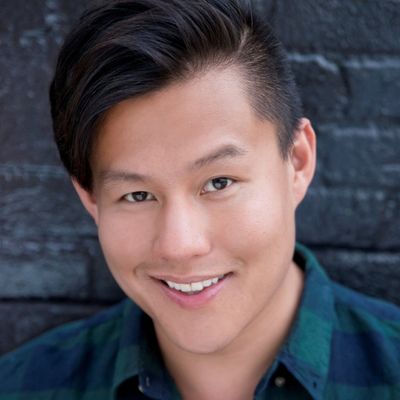
Tying for the most Tony nominations this Broadway season, SPONGEBOB SQUAREPANTS The Musical is as energetic and colorful as they come. In this bonus episode Patrick sits down with Kelvn Moon Loh, who plays Perch Perkins in the show, and chats about the 10 years it took to bring SpongeBob to the stage... Read More
From the show: Why I‘ll Never Make It
Guests
Featured Shows
About
Tying for the most Tony nominations this Broadway season, SPONGEBOB SQUAREPANTS The Musical is as energetic and colorful as they come. In this bonus episode Patrick sits down with Kelvn Moon Loh, who plays Perch Perkins in the show, and chats about the 10 years it took to bring SpongeBob to the stage. From the songs to the staging to the sound effects, every detail has been lovingly and tirelessly crafted to give audiences a true musical experience, welcoming one and all to Bikini Bottom.
Please consider buying me a coffee to support this work that goes into each episode. Join the WINMI community by following on Instagram or Twitter as well as reaching out to Patrick with any questions or comments: contact.winmipodcast.com"Hot Swing" by Kevin MacLeod (incompetech.com)
Licensed under Creative Commons: By Attribution 3.0
http://creativecommons.org/licenses/by/3.0/
Transcript
This transcript was automatically generated and might contain errors.
[0:09] Patrick Oliver Jones: Hi there. This is Why I’ll Never Make It, and I'm your host, Patrick Oliver Jones, back again with another Tony Awards bonus episode.
[0:16] Patrick Oliver Jones: Today we are looking at SPONGEBOB SQUAREPANTS the Musical. Yes, it was a cartoon, it was a movie, and now it's a musical.
[0:26] Patrick Oliver Jones: And not just any musical, but a 12-time Tony Award nominated musical. Along with Mean Girls, it is the most nominated show of the 2018 Tony Award season.
[0:40] Patrick Oliver Jones: Now let's go through that list of nominations.
[1:14] Patrick Oliver Jones: Now it was also nominated for Best Score, and the reason why I've saved this for the end is because if you don't know much about SpongeBob, well you probably know about SpongeBob, but with the musical itself, they have gone to the depths of the pop, rock, soul, R&B genres, and have pulled some of the best artists from each of those genres to write songs for the musical.
[1:39] Patrick Oliver Jones: So this is a rather lengthy list, but I think it's important that we should give a shout out to each of these artists that have contributed to this Tony nominated for Best Original Score, Music and Lyrics. Here we go.
[1:54] Patrick Oliver Jones: Yolanda Adams, Steven Tyler, and Joe Perry of Aerosmith, Sara Bareilles, Jonathan Colton, Alex Ebert of Edward Sharpe and the Magnetic Zeros, The Flaming Lips, Lady Antebellum, Cyndi Lauper and Rob Hyman, John Legend, Panic! At The Disco, Plain White T’s, They Might Be Giants, T.I., and finally, Domani and Little C.
[2:22] Patrick Oliver Jones: That is quite a list. So basically, each of them, each of these groups are either individually or together as a team, like with Aerosmith, they came together and wrote individual songs that are performed throughout the musical.
[2:36] Patrick Oliver Jones: Now, one of the nominations is Best Orchestrations, Tom Kitt. Now, he's the man who put all of these songs together, orchestrating them so that these various groups, various different songs and genres could all come together seamlessly into one big epic musical.
[2:54] Patrick Oliver Jones: So you can definitely see why Tom Kitt was nominated for Best Orchestrations, putting it all together.
[3:00] Patrick Oliver Jones: Now, speaking of putting it all together, you've seen the cartoons, you've probably seen the movie, but what is this musical story all about? Well, let me tell you, the stakes are higher than ever before as SpongeBob and all the Bikini Bottom face the total annihilation of their undersea world.
[3:17] Patrick Oliver Jones: Chaos erupts, lives hang in the balance, and just when all hope seems lost, a most unexpected hero rises up and takes center stage. So there's a little hint as to what this show is about.
[3:31] Patrick Oliver Jones: Now, the cartoon was first created by Stephen Hillenburg, and that came out in 1999. Yeah, so almost 20 years ago, SpongeBob first hit the airwaves with Nickelodeon.
[3:45] Patrick Oliver Jones: And here we are 20 years later with a musical on Broadway. And I must say, it is quite an experience. I mean, you walk into the theater and it is all neon and all bright lights, and you know exactly where you are.
[3:58] Patrick Oliver Jones: You are underwater from the moment you step into the theater. I had the chance to sit down with my good friend Kelvin Moon Loh, who plays Perch Perkins, the news anchorman for Bikini Bottom News in the show.
[4:13] Patrick Oliver Jones: And he and I talked about the production itself, the nominations, as well as he gives some insider information as to what went into making this show and how it differs from the cartoons and the movie that came before it.
[4:36] Patrick Oliver Jones: We are here with Kelvin. Kelvin, thank you so much for joining us.
[4:39] Kelvn Moon Loh: Hello.
[4:40] Patrick Oliver Jones: Hi.
[4:41] Kelvn Moon Loh: Welcome from SpongeBob.
[4:43] Patrick Oliver Jones: Oh, the land down under the sea.
[4:46] Kelvn Moon Loh: Right, right. So this has been a journey for you for about how long now?
[4:50] Kelvn Moon Loh: I think it's almost been about a year and a half, two years for me.
[4:54] Kelvn Moon Loh: Oh, okay. So I joined the company in Chicago. So we did our out-of-town tryout, but it's been going for 10 years before me.
[5:02] Kelvn Moon Loh: Like the actual work on the music on the show itself. I think from where we had our first meeting, Tina Landau, our director, had said that she'd been working on it already by that point for 10 years.
[5:13] Kelvn Moon Loh: So maybe we're on year 12, I'm not really sure of the timeline. But it has, that seems to be a decade. It seems to be the gestation period of any new musical.
[5:22] Kelvn Moon Loh: Yeah, yeah, yeah. Because it has to start with an idea. Although this one came from an already existing show.
[5:26] Kelvn Moon Loh: Sure.
[5:27] Kelvn Moon Loh: Yeah, yeah. And so I read an interview with her that she wanted to really go in a different direction from the animated show.
[5:34] Kelvn Moon Loh: And then so that it wasn't just, you know, recreating that on the stage. She wanted to make it something else.
[5:39] Kelvn Moon Loh: There is definitely, if you search the depths of the internet, you can find that there was a SpongeBob stage show at some point, and it was, you know, what people imagined the show would be like.
[5:52] Kelvn Moon Loh: It was mascots, right? It's just mascot costumes, big giant heads, people look just exactly like the cartoon.
[5:59] Kelvn Moon Loh: And I think 10 years ago, they, I'm sure that Viacom and Nickelodeon had sent out some emails to a bunch of directors, some big, probably up and coming directors, established directors, but at that time Tina was a very established director.
[6:15] Kelvn Moon Loh: Um, and asked them what their interest was in doing a SpongeBob musical. And a story that Tina had relayed was that she replied simply to that email, no.
[6:26] Kelvn Moon Loh: Um, you know, and then I think they came back to her and said, well, we'd be interested in seeing why you're saying no or what you might do with the show.
[6:37] Kelvn Moon Loh: So Tina had told us many times before that she had put together a package, some avant-garde, crazy, you know, in the world of something that she usually directs. You know, she's uh I saw a check me play of hers, which was completely bananas and bonkers, yeah, but super theatrical in a way that she wanted to pitch something that was completely anti-mascot, something super real. Uh, and she was sure that they would say no. Well, apparently it's been 12 years of just yes after yes after yes after yes of this crazy brainchild of Tina's, and that's why we have SpongeBob Musical that we have today.
[7:14] Patrick Oliver Jones: So you've been with it a year and a half, two years. What have you seen it morph or change into over the time that you've been with?
[7:20] Kelvn Moon Loh: You know, when I came on to the project, uh the music was there, you know, a lot they had gotten all these amazing composers at the um composers that we all know, right? You know, Cindy Lauper, everybody knows David Bowie, we know John Legend, we know Aerosmith. So that was already in place. The design by David Zinn, he does the costumes and sets has already been in place. The only thing that was kind of in flux was, you know, exactly how long these songs were gonna be, or choreography that they had been working on. Even that had um several workshops that before that I ever came into it. Um we worked on the script, some of the books and some of the some of the book scene and some of the jokes were still being tinkered with, and all the way from Chicago to New York, we saw several versions of the book that you know they kind of looked like each other, but they were definitely fine-tuned over and over and over again.
The whole purpose of doing anything out of town is so that you can put it up on its feet for its very first time and kind of look at the whole picture. Right. Thankfully, we had a whole year in between the Chicago production and the Broadway production to allow the creative team to go back and look at the whole piece and say, okay, what really worked and what really didn't? And what could be better? And I think that they took that time and they saw it as a blessing, and they went away and they really did their work and came back to it. And uh we're really happy that it's being well received in the theatrical community.
[8:44] Patrick Oliver Jones: Yeah, well, what would you say is like the biggest change that they did that you love the most? It's like uh coming from Chicago, had that year off, and then when you came back to the project after they tinkered with it, what was added that you were like, Yes, this is what it needed?
[8:59] Kelvn Moon Loh: You know, there was this problem in Chicago. Uh we had this issue with establishing the stakes right off the bat. And so we reorganized a couple of the opening scenes. There's something about getting the show off started right, right? Everybody uh uh so many times I've talked to writers and composers before who worked on musicals and they go, Okay, once you've written the whole musical, once you've staged the whole thing, go back to the beginning, right? Go back to the beginning and see if that needs to change, right? And something about they had reorganized the first three numbers, right? So Bikini Bottom Day opens the show, No Control is second now, and BFF is third. Well, that was all uh Bikini Bottom Day still opened, of course, and but they had switched No Control and BFF because we realized that for the first 15 minutes, we hadn't established that there was a problem in the town.
Oh right. You know, this isn't giving it away. You could read any synopsis of SpongeBob and you would know that okay, a volcano's gonna happen. Right. And he has to save the day and figure out what to do about it, right? Your typical hero's journey. Right. Except for SpongeBob. Um but we realized in Chicago, without doing uh our kind of uh, you know, the end is coming number sooner, we had 15 minutes of the show where we were just introducing characters that people loved, but there was no stakes. There was not we hadn't got to the story. No, we haven't gotten to the story yet, which is like, let's go. Yeah, you know? So now it's switched, it's it's right. Um opening number as well, you know, we've added two new cast members on stage.
Now that we've now that we're situated at the Palace Theater, we knew what the space is gonna be. We have added a lot of flying elements of the show to the opening. The opening number has always been something we did a little workshop between the show in Chicago and New York, and Tina was like, I wanna make the opening of with Bikini Bottom Day just to be more spectacular. Yeah, yeah. I mean, it really has to grab the audience. It has to grab the audience. And so you walk into the show at first and you see this giant wall made of sponges. We call it the sponge curtain. Now d now I I will admit, yeah, yeah, walking into the show. I have never seen, nor still have yet to see a single episode of SpongeBob.
I've never w I've seen like maybe a 30-second clip here and there, but never a whole episode. So right, so I come to So I came to it completely. I mean, I was a SpongeBob Virgin, basically. I knew nothing about it. So when I came in, yeah, you walk in and it's and it's all blue and psychedelic and these pastel colors and bright neon and yeah, yeah, you have taken over the entire theater.
[11:45] Kelvn Moon Loh: We have. And but still, the first I would say about four or five minutes, we do this kind of in one in front of the curtain, like pr just the proscenium kind of uh, it's not a puppet show, it's kind of like a storybook, you know, just that just kind of flipping open the first page of a storybook, right?
[12:05] Kelvn Moon Loh: But once that curtain goes up, you ha the whole world has to explode on that stage.
[12:10] Patrick Oliver Jones: Yeah.
[12:10] Kelvn Moon Loh: And the work that David Zinn, the designer, and Tom Kitt did with reorchestrating some of the opening number, um, and Tina just recreating this opening moment to really be a full explosion of hello, this this is what you're going to get a glimpse into. This is the kind of the magic in the world uh that you're going to see for the next two plus hours. Um, and I I think it's been super exciting to see how they have really gone again, gone back to the beginning and taking a look at that very important moment to catch the audience's attention. And I think it's it's done wonders.
[12:48] Kelvn Moon Loh: I'm sure you can compare for yourself via the YouTube bootlegs.
[12:53] Patrick Oliver Jones: Right.
[12:53] Kelvn Moon Loh: I don't recommend it, but well, yeah, I mean, theater's always it's it's a much different experience. But yeah, you're right. Within that first four or five minutes, not not coming from the world of SpongeBob, it really set the groundwork for me. It's like, okay, this is now what I'm in for.
[13:08] Patrick Oliver Jones: Yeah.
[13:08] Kelvn Moon Loh: It's all about establishing a language. Um, you know, I I think that if you really watch the show, you will see a very strong point of view. It's something that is it takes a long time, it takes ten plus years to develop such a specific POV. Uh such a to really define what that is over time. And I I there's not many more people that I can really trust more than Tina Landau to obsess, obsess over this project. Every little detail. Every little detail. Yeah. Every little detail. She will walk around, you know, she probably doesn't want me telling the story. You can just during tech, you would just see her standing in the middle of the stage sometimes, just like looking at just one object and just staring at it. You know, between her and David Zinn would do this, you know, and they would just stare at and just obsessed with the tiniest little detail that in my brain I'm thinking, not one person would even know that that thing was there. But they'll know.
[14:10] Patrick Oliver Jones: But they'll know.
[14:11] Kelvn Moon Loh: Yeah. And it's enough for them to make it right. And that is the level of detail and craft that I aspire to really kind of take on in the future of my work.
[14:24] Patrick Oliver Jones: Yeah.
[14:24] Kelvn Moon Loh: You know, that's I don't think anybody slept in the last ten years while creating this.
[14:30] Patrick Oliver Jones: Yeah.
[14:30] Kelvn Moon Loh: And I don't think, you know, there's there has been not any more. It's changed. It's changed thanks to award season. Not that awards mean anything, not that they're any great arbiter of what is good and what is bad. It means a little something.
[14:44] Patrick Oliver Jones: Yeah, it means it helps.
[14:46] Kelvn Moon Loh: Of course. But leading up to this point, you know, I'm such a sadist. I feel like I've been I've been reading the Broadway World uh dot com chat boards to see what people think. And you know, for and for years, even the mention of SpongeBob the musicals, people have, you know, just that throw up emoji like comes up like nobody wants nobody wants to see it. And I'll admit that it seemed odd to me. I I wasn't quite throw-up emoji, but I was more like the quizzical emoji. Like sure why why? Hey, I get it. Listen, I don't I'm not gonna pretend like I'm not one of those people who when I first got the audition go, huh? Okay. Well oh yeah, speaking of audition, whenever you went into audition, did you did you know the specific part or did that kind of morph over time like that?
[15:33] Kelvn Moon Loh: That's that's uh I think they called me in for a specific part. Yeah, by the time I came in, they knew they knew what they were looking at me for. They kind of knew the track. You know, but in the same thing as I'm going into the audition, I'm like, I don't know what this is gonna be like. I there's a lot of there's been some doubt, you know, about w how good this project, how good this musical could potentially be.
[15:56] Patrick Oliver Jones: Right.
[15:57] Kelvn Moon Loh: Right. And I I think that, you know, as I as I kind of you know, gotten to the audition process, Tina explained the world very clearly. She's like, I don't, I don't want it to be cartoony, you know. I want it has to be real. The cartoony part will, the cartoon aspect of the show will happen naturally. Listen, you're gonna be wearing bright colors, and you know, the music is fun and it's poppy, and you all, you know, all of us on that stage have to exist as one very real community in that world. Otherwise, this isn't gonna work. Otherwise, you know, mascot giant head costume or not, you're gonna feel like that. So you need to, we need to develop a language in which we create the show that, you know, is is theater forward, you know, it's it's truth forward.
She's got a lot of commentary in there, you know, a lot of political commentary that's like kind of interwoven into her script, but but it's not, it doesn't hit you over the head as far as oh, you know, I'm I'm a left-wing anything, or I'm a right wing anything. It doesn't matter what it is. It just has to be, you kind of had to find a really honest story that is not unlike any other musical. Uh I somebody said, well, if somebody were to really look at SpongeBob with just remove the title, right? And just looked at the aspects of it. If you knew that it wasn't connected to any property before that, you would realize that this is the musical that everybody's been wanting for so long. It's a thing that they want, they've been asking for.
You know, they've been asking for something that's tuneful, you know, something that's funny, something that has big production numbers. It's it's going back to a time when the that's the same cyclical conversation that we've had in the musical theater for for decades, right? Remember the concept musicals of Steven Steven Sondheim versus Jerry Herman, right?
[17:51] Patrick Oliver Jones: Right.
[17:51] Kelvn Moon Loh: And so it's like, well, if you really look at SpongeBob musical, it falls, not that I ever want to compare anything to Jerry Herman, Jerry Herman's a genius. Or Sondheim.
[17:59] Patrick Oliver Jones: Or Sondheim.
[18:00] Kelvn Moon Loh: Yeah. But it falls in the world of like, listen, just because it's happy, just because it's a pretty straightforward concept, maybe it has a recognizable commercial entity behind it at some point. Yeah. But if you're looking for something really bright and fun and has production numbers and numbers that you can walk out humming out of the theater, it's super tuneful, like that's what you got in SpongeBob.
[18:25] Patrick Oliver Jones: Right.
[18:25] Kelvn Moon Loh: You know, and yeah, because you don't really have to like beat over the head what SpongeBob is and and play to what the cartoon was because the audience coming in already knows that they're already filling in those blanks. I was counting the other night. I was counting the other night how many jokes are specifically there as Easter eggs for the audience who know SpongeBob, you know.
[18:50] Kelvn Moon Loh: So there are six jokes that I think are funny, you know, but they're extra funny if you are a SpongeBob fan. It is from the it's from the television program. And I counted six. That's it.
[19:03] Patrick Oliver Jones: Yeah.
[19:04] Kelvn Moon Loh: Six. The rest of it is, oh, I recognize that character. Oh, I recognize, you know, these are that's that is some of the things that are funny, and people are like, that's so SpongeBob. I was like, no, we did work in the rehearsal room with professional minds. Yeah, you know, we had a professional clown who came in and worked on some of the stuff. And so it is that to me is lotsy, you know what I mean? That's that has been part of the theater for hundreds of years. But uh but but it almost says something uh about SpongeBob that you because you still have to stay within the world. So the jokes, even though they would be a regular joke in another musical, they become a SpongeBob joke. They and so it I think it shows that you've really inhabited and really taken on the characters. If if you can take a normal joke that would be out there and make it a SpongeBob joke.
[19:56] Patrick Oliver Jones: Of course.
[19:56] Kelvn Moon Loh: Yeah. Yeah. It's it's no, it's no different than any other construction of a musical. It's it's also funny to me. I did a uh we did the Easter bonnet a couple weeks ago.
[20:05] Patrick Oliver Jones: Oh, that's right.
[20:06] Kelvn Moon Loh: And so I ended up writing the sketch and I ended up directing the sketch, and there was uh this this producer and this writing team start off the sketch. And this writing team comes in, they were pitching the show, they're like, it's tuneful, it's funny. And the producer's like, it's based on a cartoon, no, it'll never work, I never want to do it. It's terrible. Anytime I see the the next time I if I ever see um a cartoon be on a Broadway stage, I'll eat my hat. It ends up being Annie. We end up doing a full number from Annie, right? And uh the point of that being is that for a commercial property or a cartoon or anything new, it's been done before. It's been done before on Broadway before Disney had taken over Broadway, which is I think that Disney has done great work. You know, and they had have really cr changed, they have really lifted the game of what is possible on Broadway.
[21:01] Patrick Oliver Jones: Yeah, yeah, because I think for the most part they've they've thought they've thought well into which which of their properties is best suited for for the stage.
[21:10] Kelvn Moon Loh: Oh yeah.
[21:11] Kelvn Moon Loh: They've had a couple of misses, but I think overall they've they've hit it on the head. I've I was blown away by Beauty and the Beast. Nobody can nobody now can argue that The Lion King is a musical theater masterpiece.
[21:25] Patrick Oliver Jones: Right, right.
[21:25] Kelvn Moon Loh: I mean it was a game changer when it came out huge game changer. And it's just a matter of of that's okay. It's uh but yet there are you know I don't want to feel like this whole thing is defending SpongeBob the musical SpongeBob the musical at this point everybody loves it. Anybody who gets anybody who comes to comes to see the show becomes a convert immediately. They're like we love it. It's great because I because I I went in with kind of no expectations I didn't I didn't know what I was going to get and I walked away I was like all right they did it. I I I didn't know what they were going to do but they did it.
[21:55] Patrick Oliver Jones: Sure.
[21:58] Kelvn Moon Loh: Yeah. And so yeah it's a kind of a give it a chance moment. And uh I think that audiences are super super excited and I kind of love watching the audience. There are a few moments we have a lot of it in of course in the clown world and also in the SpongeBob world our villain can freeze time and suddenly we have to freeze. And uh sometimes I catch myself just freezing and staring at the audience and you just see these kids you know that are in the audience and they look like they're about to explode with joy.
[22:30] Patrick Oliver Jones: Yeah and that's something that you know I've done some I've done classics in my time I've done some a lot of dark pieces in my time and you know I don't remember the last time I was I had really been such a part of a joyous production.
[22:47] Kelvn Moon Loh: And uh you see, but also you know, tender little moments, tender little moments you can catch from the audience. There are there is there are a few recognizable tunes that are from the cartoon that's been repurposed for the musical.
[23:02] Patrick Oliver Jones: Okay.
[23:02] Kelvn Moon Loh: Um, and when they come up, you kind of I've caught moments when I look in the audience and I see, oh my gosh, that woman is a mother, you know, 40, 50 years old. And you know, with their now grown adult child, because remember, SpongeBob has been around for 19 years. It's been around a long time. Nearly two decades.
[23:23] Patrick Oliver Jones: Yeah.
[23:24] Kelvn Moon Loh: 19 years. So some of these songs are s it's about the most the sweetest, most optimistic sponge ever. So it's those songs have kind of gotten themselves into the pop culture zeitgeist in a way that you know you can see a very loving maternal relationship that has been built on one of these songs.
[23:43] Kelvn Moon Loh: It's called Best Day Ever. That's one of them. Where sometimes you'll just hear and then taught and the entire audience, usually the mezzanine section just spontaneously start singing along. There's nothing there that says sing along, but it just can't help it.
[23:57] Patrick Oliver Jones: No, no, no, no, when I when I was in the audience, that there were people who are. Does that happen?
[24:00] Kelvn Moon Loh: Yeah, of course. Yeah, it happens every other night. Yeah. And it's totally okay. In fact, it's quite sweet. Um, you know, and there's other little things that happen in the audience. You know, you know, we're we're running away from the volcano a lot of times, or Squidward's a very popular one played by Gavin Lee, Tony War nominated, you know, for yeah, yeah. His his dance that he does is that's in the second act, right?
[24:25] Patrick Oliver Jones: Yeah, tap dancing on four legs.
[24:27] Kelvn Moon Loh: It's moments like that where sometimes you'll just hear like the tiniest little voice.
[24:31] Patrick Oliver Jones: Yeah.
[24:32] Kelvn Moon Loh: And it's not, it's just a high-pitched voice. It's not quite tiny because they'll yell it right at the stage and they'll be like, Squidward, no. And it's they are they're fully invested in the characters.
[24:42] Patrick Oliver Jones: They're fully now now. One thing that I wanted to ask that that was specific to the storytelling is that the conductor, she was very integral to the story, and and and added things that things were being thrown down at her.
[24:56] Kelvn Moon Loh: She was throwing things back up. Julie McBride is her own is uh the unsung hero of our production. You know, there's two. There's two people that I find uh which are incredible. One is Julie McBride, who is conducting the show, she's full of life and energy. She has a full costume, she's dyed her hair blue at this point.
[25:17] Patrick Oliver Jones: That's my choice.
[25:18] Kelvn Moon Loh: She wanted it. Right. But yeah, she's completely invested in the story in a way that I haven't seen another conductor in a long time. We saw, okay, Andy Einhorn, he conducts over at Hello Dolly.
[25:31] Patrick Oliver Jones: Uh huh.
[25:32] Kelvn Moon Loh: I saw him toss a giant baton off the bed midler, you know, and so that's one thing, you know. But just imagine that times like 20 for a Julie.
[25:40] Patrick Oliver Jones: Yeah, yeah, because there's certain time where she has props. She has to she has like a storybook that she opens and does things with that. She's got props, she's got storybooks, she's playing an accordion, she's playing the piano, she's conducting a huge orchestra.
[25:54] Kelvn Moon Loh: Yeah, she at the beginning of the show, she's playing this crazy kazoo, which is amazing, as a little kind of like a tiki band pre-show. She's super, you know, but that's one of those things where I'm like, that's cool, because guess what? A musical doesn't really work without every single person kind of being in harmony with each other.
[26:14] Patrick Oliver Jones: Absolutely.
[26:15] Kelvn Moon Loh: And if you talk about anybody who's more in charge of the music department ever, is the music director, right? So and she kind of controls the whole thing. So for her to be part of the story as well, all along the way, is is incredible.
[26:29] Patrick Oliver Jones: Yeah, because music directors, I I know in my own experience, I've had those that they conduct very well, but they they do their job, and that's what they do. It's it's a it's a fine standard production. But then you have those that are dancing, that are beephopping that like they're almost like just pulling the songs out of you, and they're like bringing the instruments, and then it's like a party every time that they are up there to conduct.
[26:50] Kelvn Moon Loh: And that can change the whole mood of people on stage. You know, I it goes back for me, you know, Julie McBride is is phenomenal, but I you know, you kind of remember those music direct those conductors, right? Because I'll never forget watching uh The Light in the Piazza up in Lincoln Center, and you can see this on some kind of archive video too.
[27:12] Patrick Oliver Jones: But Kim Grigsby, as another music conductor, oh my gosh, you won't ever watch her conduct anything. It's it's her her own musical. It's glorious. You realize, oh yeah, that orchestra is playing as beautiful as possible because uh it's she's dancing with the music.
[27:29] Kelvn Moon Loh: Right. You know, that makes me I mean, and so many conductors are doing that. If you yes, you want to focus up there, but you know, when I used to go see Broadway shows as a kid, the first thing I would do during any intermission, my seat was never close enough to the orchestra, uh, was I used to run up to the pit down and I go and I look down.
[27:48] Patrick Oliver Jones: I don't know, you want to see who's there, and see and realize, you know, I love this the sound of hearing uh hearing the instruments, the the musicians tune before uh Broadway show. Like that to me always is is so iconic of my Broadway experience.
[28:05] Kelvn Moon Loh: And you know, it's we're at a very we're at a very fortunate time at the beginning of a very successful musical that you the energy is super high and it still bubbles in me, you know, to to hear to hear the show start, you know, and to look down at her and realize oh my gosh, I'm standing on the other side of this.
[28:29] Patrick Oliver Jones: I'm not I'm no longer staring at the back of a conductor's head anymore. Now I get to look at her every single day.
[28:35] Kelvn Moon Loh: It's incredible.
[28:36] Patrick Oliver Jones: That's amazing. So what would you say is is your favorite part once you were cast, once you started into rehearsals, what started to connect with you and what really just resonates like every night I can't wait to do this.
[28:48] Kelvn Moon Loh: You know, it's it sounds um it sounds a little like a canned answer.
[28:54] Patrick Oliver Jones: That's okay, uh, but it's not, it really isn't. And I'll tell you why.
[28:57] Kelvn Moon Loh: Uh, my canned answer is my favorite part of doing the show is my cast members that could share the stage with they're amazing, yeah. They are incredible, they are freaks of nature, the things that they're able to do.
[29:10] Patrick Oliver Jones: Um, I sometimes feel completely unworthy to be around them because they couldn't be funnier.
[29:16] Kelvn Moon Loh: Yeah, because your lead, Ethan, I don't know how he can do that for two hours. I have no idea. He he is a ball of bundle of just bubbly energy, yeah. Just hanging upside down, yeah, belting high C is yeah, no big deal.
[29:28] Patrick Oliver Jones: You know, the ensemble members, we have like 15 costumes each, and we're changing all the time, and people are dancing their faces off, and we're singing non-stop. The other principals are you know, uh go back to Gavin dancing just four legs, yeah, just inhuman, just really not human at all, you know.
[29:46] Kelvn Moon Loh: Uh and the but the thing is with the why I can say this is because I believe that everything in any success is always cultivated from the top, and that's how it trickles down, right?
[29:57] Patrick Oliver Jones: And I will say that before we start a rehearsals, you know, the Tina Landau is you would know that her technique is viewpoints, right?
[30:07] Kelvn Moon Loh: She works with viewpoints all the time.
[30:09] Patrick Oliver Jones: For those of you who don't know, explain that just a little bit.
[30:12] Kelvn Moon Loh: Viewpoints, uh, good, good. This is my quiz right here, right? Right, right. Um, viewpoints is it's an acting technique. It's a way to open up your perspective and how you see the world, and you look at spatial relationship, you look at how fast your body moves.
[30:26] Patrick Oliver Jones: It's it's it's a technique which I highly recommend that you read more about, um, in which you just get a better understanding of how your body is moving in relationship to other people, in relationship to yourself, and in relationship to your environment, and how that inf in turn informs the story.
[30:44] Kelvn Moon Loh: Which which I think is so important for SpongeBob because it's more than just the words and the music, it's about a whole body experience and interacting with other bodies to create especially because you know we're playing aquatic animals, you know, and and and we're not wearing fish costumes, and we're not there's we're not painting scales in yourself.
[31:03] Patrick Oliver Jones: So you kind of have to figure out a way in which you move in this world, you know.
[31:07] Kelvn Moon Loh: We don't we're not underwater, we're not in a giant, you know, fish tank ourselves. So you kind of have to h understand how that works. But because she works in this world in which we have to gain a little bit more perspective, you know, gain a little bit more awareness of what we're doing and how we've created this world, you start to become a little bit more in tune with your cast members in a way that maybe not necessarily true in every other rehearsal process.
[31:34] Patrick Oliver Jones: Um when we started our day with Tina, she would sit us in a circle.
[31:40] Kelvn Moon Loh: And you know, we all know that when you create a Broadway show, every minute cost thousands and thousands of dollars.
[31:49] Patrick Oliver Jones: Every minute, yeah, every second costs thousands of dollars because everyone is on the clock and everybody's looking to you to create this piece of theater uh that is supposed to make it's supposed to make art but also supposed to make money, show business, yeah.
[32:05] Kelvn Moon Loh: But she would sit us down at the beginning of every rehearsal and simply go, okay, around the circle. How's everyone feeling?
[32:16] Patrick Oliver Jones: What? When does that happen?
[32:19] Kelvn Moon Loh: You have a huge company, and it wouldn't be just the cast. She would sit the stage managers down. If you were an intern in the room that day, I think the delivery guy, the FedEx guy sat down with us one time.
[32:31] Patrick Oliver Jones: But it is about that.
[32:33] Kelvn Moon Loh: It is when you're creating theater, it is about people, you know, and it's about community. I constantly say this whenever I'm teaching any of my classes, where I go, theater is the is by far to me the most special art form, right?
[32:50] Patrick Oliver Jones: If you're a painter, you can get your paints, you can get your easel, you can get your canvas up, and you can paint a whole painting, and then suddenly it's done, and you and yourself and your paintbrushes have created it.
[33:00] Kelvn Moon Loh: One human being have has you have created your piece of art, and you can put it on the wall, you can put it in a museum, you can do whatever you want with it.
[33:06] Patrick Oliver Jones: Theater as an art form is not that.
[33:09] Kelvn Moon Loh: It is 100% a collaborative art form. It really doesn't work without a single other human being.
[33:16] Patrick Oliver Jones: If you're doing theater by yourself, all by yourself, you're singing in the bathroom by yourself.
[33:24] Kelvn Moon Loh: You're singing into a void and into a vacuum. There's nothing happening. The theater is meant to connect yourself with other individuals.
[33:32] Patrick Oliver Jones: So it's just the simple act of sitting in one room, sitting in a circle with grown adults and saying, Hi, look at me, look at you.
[33:44] Kelvn Moon Loh: How are you feeling today? Where are you in the process of putting the show together? And knowing that that valuable minute can turn into an hour, can turn into two hours, can subsequently end up being hundreds of hours of just saying, Hi, how are you?
[34:02] Patrick Oliver Jones: And all those hundreds of hours equaling hundreds of thousands of dollars of time, you realize that oh my gosh, there is a greater purpose for this.
[34:02] Kelvn Moon Loh: There is a greater purpose of why we're doing this. And it does lend itself to creating the world that we have created of Bikini Bottom and SPONGEBOB.
[34:26] Patrick Oliver Jones: Yeah. It's about community.
[34:27] Kelvn Moon Loh: I think it's I think it's so strong that the show is about community. Which is the same, as you said, in show in business, and I I think in whatever field, the community that you surround yourself with, it's it's only as good as as each individual person.
[34:41] Patrick Oliver Jones: And once that once those people come together as a group, that's what that's what can make magic or it can make a tragedy.
[34:47] Kelvn Moon Loh: You know, because I've I've been on both sides of the course. Where a cast can really make or break a show.
[34:52] Patrick Oliver Jones: Yeah.
[34:52] Kelvn Moon Loh: Both on stage as well as backstage. We you walk onto that stage, and you know, I've I've brought a lot of friends on the stage after the show, and they look around and they see what's created, even with the lights off, you know, even with no projections, no light, it's just the blue stage, and but you see the shimmery Mylar, you know, hanging, and they're they look around, they go, it's like a playground.
[35:14] Patrick Oliver Jones: And I go, it is. It absolutely is a playground. It is a playground where it it takes you and your imagination to have created this world. It took one person's imagination to begin the seed of that.
[35:26] Kelvn Moon Loh: But she's allowed everyone else who's stepped on that stage to this point to treat it like a playground to enjoy themselves.
[35:34] Patrick Oliver Jones: That's what makes uh when I can't I listen, I've been to I've you and I have done plenty of theater shows at this point, right?
[35:41] Kelvn Moon Loh: Yeah.
[35:41] Patrick Oliver Jones: And there have been plenty of shows that you show up right at half hour, and that curtain comes down and you're at a costume and you're like, bye.
[35:48] Kelvn Moon Loh: Yeah.
[35:49] Kelvn Moon Loh: I find myself at the theater so early all the time. Um, just because I enjoy being there around with I enjoy the environment. I think they've built a world in which we really enjoy seeing each other. When you start to realize that work feels more like play, you know, and you're like, oh god, I have to go home and do laundry. That's work.
[36:10] Patrick Oliver Jones: Yeah.
[36:10] Kelvn Moon Loh: Right. That's work. Oh, but going to work, oh, that's I can't wait. You know, get me there earlier, you know, get me out of the house sooner so I can not focus on the work at home, but go to playtime, right? Which is at SpongeBob the musical. And I think that that energy is really real. I'm not selling that to you because we're on a podcast or no, no, no. Having seen the show, I can vouch that energy comes off the stage.
[36:37] Patrick Oliver Jones: It's like we're goofs.
[36:38] Kelvn Moon Loh: It's absolutely so, you know, this this gets to you at some point because you just go, Wow, I I think I'm in a cast where every single person won class clown, you know, and as a superlative. They're all the class clown of their high school or anything in life, and you just go, just sitting around laughing all the time. Everyone's the funniest person you've ever met. Um, and they think so too. Um, but they're they're sweet, and it's it's because of that. We we're having a really good time, and and the importance of that all, you know, any of the business things, you know, business show business will always try to creep into your brain and what's happening in awards season and this and that will keep up.
[37:26] Patrick Oliver Jones: Yeah, which was my next question. Like, like how how is this award and being nominated for 12? How has that changed the show, if at all, or changed any of you?
[37:34] Kelvn Moon Loh: The morale's always been high, and now it's like morale validated, yeah, you know, yeah. It's great. And nobody's gonna tell you that you're getting 12 Tony nominations. We're the most nominated new musical of the season, you know, across the board, and the drama desk, the there's tons of other awards that we've been doing really well at the best ensemble for Cheetah Rivera Awards.
[37:56] Patrick Oliver Jones: Nice, yeah.
[37:57] Kelvn Moon Loh: We gotta go to a nice little reception. But that was a lot of fun. Um but it I say that if you have to believe in the awards, the same thing with with um reviews, right? Good and bad reviews. If you believe the good reviews, you have to believe the bad ones too. And if you believe that the awards mean everything, you have to believe that, you know, not winning awards is means everything. That being said, we're really happy, we're super excited that we've been nominated. It's incredible.
[38:23] Patrick Oliver Jones: Yeah, you know.
[38:24] Kelvn Moon Loh: I it's it feels really great to the thing that we had known is great and wonderful, and all the work that we put on to it, it's really nice to be recognized, you know, and uh I remember getting up, I've done this for many, many, many years. Okay. Not even when I'm in not in the production, I get up and I watch on New York New York 1 every single year the Tony nominations. You know? And I'm sitting there, it's 8:45 in the morning, and you just like wipe the crust from your eyes, and you have the sheets, and you turn on, you're sitting in the dark watching the TV, and you pray on those mornings that you the people that you're rooting for, you hear their names.
[39:09] Patrick Oliver Jones: Yeah, you know, and to hear them over and over and over again. I mean, I couldn't go back to bed. Usually I can go, okay, great, everything I expected. Good night. Okay, bye. You know, but I I try not to set myself up for any kind of disappointment. Um, and then to wake up and realize, oh, well, we we got the most nominations that we could have. Uh so great, cool. I'm up. Let's let's start the day.
[39:36] Kelvn Moon Loh: Yeah.
[39:36] Kelvn Moon Loh: Um, and it's it's been super joyous. I'm super excited. I'm rooting for Ethan, I'm rooting rooting for Gavin, I'm rooting for I'm rooting uh for everybody on our team, especially, you know, it's funny. The other person I was telling you, besides Julie McBride, uh, our music director, is no other, not that I know of, no other sound designer is nominated for a Tony Award that also performs in the show eight shows a week. Mike Dobson, he is nominated for uh Tony Award, he's in our show, and he's our fully artist.
[40:08] Patrick Oliver Jones: If you don't know what a fully artist is, he creates all the sound effects.
[40:11] Kelvn Moon Loh: Oh, the oh, that's right.
[40:12] Patrick Oliver Jones: Yeah.
[40:13] Kelvn Moon Loh: Oh, oh, okay. So the so the person running the sound is the one also creating all those now. Now, if you haven't seen the show, I mean you you should have by now. You should have. But if you haven't, yeah, yeah. The sound effects, there are there are flicks of a wrist, there are kicks, there are all these different kinds of motions that the actors do, as well as props that come up. All of these things make a sound that that's that this foley artist is creating on the fly.
[40:38] Patrick Oliver Jones: Yeah.
[40:38] Kelvn Moon Loh: And so it's amazing. Every step that SPONGEBOB takes, yeah. You know, in the cartoon, it's part of in the cartoon, it's part of the language. And without it, they realized that there was something missing. You know, there was something missing there. And so this Foley artist, his name is Mike Dobson. He's worked with the circus, he's worked on television shows and movies and creating sound effects. He performs live every night.
[41:05] Patrick Oliver Jones: Live every night.
[41:06] Kelvn Moon Loh: It's not he's not hitting just random buttons. He's making these sounds like the same way you've seen anybody make sound effects in a movie studio. He's making them live, and he's part of the sound design in a way that he's also being nominated. I uh could not have to be a good one. I mean, he he's basically uh I mean, even though we hear everything, he's an off-stage performer, but you hear and and are a part of everything that he does.
[41:30] Patrick Oliver Jones: Yeah, moment to moment.
[41:32] Kelvn Moon Loh: Everything every single thing. He's got so many monitors around his station. And you can see him, you know, you can see him and just watch you look around and you go, okay, so there's a trash can lid, there's a rubber duck, there's sliding whistles, there's a whole percussion station of everything. There's a pizza bass drum, just like crinkly bags, like all just like anything that makes sound.
[41:54] Patrick Oliver Jones: Wow, yeah.
[41:54] Kelvn Moon Loh: And he has it programmed in a way, and he's also dancing the entire show.
[42:00] Patrick Oliver Jones: Oh, because he's he's he has to.
[42:02] Kelvn Moon Loh: He's moving, he has to dance with the music, and it's it's incredible to watch him. So I I you know, I love all the sound designers that have been nominated. I've worked with a bunch of them before, but I don't I don't think I've seen any of them quite have to perform the same way that Mike has to every night. And I I really hope, you know, I'll be cheering for him the most. I'll be cheering, but I'll be cheering for the whole team. We're we're super excited, and we're super excited what the Tony Awards may be. It's it's the ultimate recognition from the theatrical community, which is you know, kind of going back, is saying that was the thing that I was most nervous about. I was most nervous that that not that SpongeBob would be overlooked as a beautiful real piece of musical theater.
[42:47] Kelvn Moon Loh: Uh something that was could be part of the canon, something that could be not just part of the canon, but well respected. Well, it can stand on its own apart from the cartoon. It can stand as as just a musical theater piece on its own.
[43:01] Patrick Oliver Jones: Yeah.
[43:01] Kelvn Moon Loh: Our executive producer and the head of Nickelodeon, it's so easy to think that they had created SpongeBob the musical to be a cash grab, right? People are honestly, they lumped us in with a lot of other shows throughout the musical theater history that commercial properties have come in to become a cash grab. And they said, listen, SPONGEBOB is their highest grossing television show of all time. If it's about money, it's not gonna if they want to make more money, it's not gonna be through the musical theater to try to do that. They want to do it right or not at all, you know, and that is that is a kind of a great starting philosophy to create great art, you know what I mean? To to never really say, okay, we're gonna do this to appeal to the greatest amount of people and see how much money we can get from them. It's not about that, it's never been that. I have never sensed that. It has been told to me over and over again that that's not what it's about, and I believe it. I'm sold.
[44:00] Kelvn Moon Loh: I know. Because there will be some things that I go, wow, that sounds really expensive and very little payoff except for artistically. They're not gonna say yes to that, are they? And then they do because it's the thing that is most artistically better for the show. You know, we could you could have easily just kept the same thing that was up there that was lesser than because it went less expensive, and then you could recoup faster. But that wasn't, it's never been the intention of SpongeBob. It's always been in the intention to create something that's kind of really good.
[44:32] Patrick Oliver Jones: Well, I mean, I mean, it's it's great that they had that philosophy because yeah, it it would be too easy to to go with the popular product and just make it another popular product instead of an artistic endeavor.
[44:42] Kelvn Moon Loh: We've heard in so in so many creative rooms you've you've sat through where you you hear the conversation. You hear the conversations like, well, what does the audience want, or you know, what is gonna what is what is gonna sell more tickets, right? That question.
[44:56] Patrick Oliver Jones: Right.
[44:57] Kelvn Moon Loh: And that's not it's not uh it's thankfully that hasn't been the priority in in this endeavor. It hasn't been, you know, and that's and you know it's something that my back to my father would say. It's like, you know, do what you love and the money will follow, you know. And I think it's this whole thing has been do what you love and the money will follow. People loving what they're doing. Yeah, and they're coming back and they're enjoying the show, and yeah, you know, we're enjoying and we enjoy having them. Having seen it, it is certainly uh a great musical to just be a part of. And you know, as I said, I came to it with fresh eyes, not knowing and and I I walked away laughing and and enjoying myself. Surprisingly, at some points where things unexpectedly happen, that there's two specific moments that I won't give away, but they're two specific moments that caught me so off guard. I had I I was like falling over laughing. I loved it.
[45:51] Kelvn Moon Loh: So it was it's a it's it's a great show, and you do wonderfully as well.
[45:55] Patrick Oliver Jones: Thanks.
[45:55] Kelvn Moon Loh: So I'm I I appreciate you so much for coming and talking about it. You guys are going to be performing at the Tony's.
[46:01] Patrick Oliver Jones: So we'll be performing at the Tony's.
[46:03] Kelvn Moon Loh: So we'll get to see you and um June 10th. You'll see the cast.
[46:06] Patrick Oliver Jones: Yeah, you know, in the in we'll be shimmering on the stage of Radio City.
[46:10] Kelvn Moon Loh: I have no doubt it will be the most colorful and energetic number of the night.
[46:14] Patrick Oliver Jones: Well, thanks a lot for joining us.
[46:15] Kelvn Moon Loh: Thanks, thanks for having me.
[46:16] Patrick Oliver Jones: All right.
[46:48] Patrick Oliver Jones: Join me and Dewey next time when we take an inside look into Disney's Frozen, the musical, with Drama Desk Award nominee for leading actor, Jelani Aladdin. You do not want to miss that. We'll see you then.
© Broadway Podcast Network, All Rights Reserved