

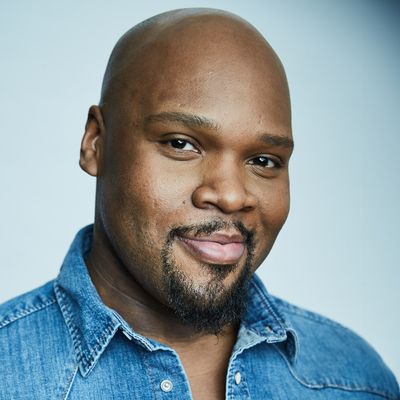
Aladdin & White Supremacy, what do they have in common? Michael James Scott has experienced them both. This is another episode of Spotlight: the redpilling of America... Read More
From the show: You Can't Say That!
Guests
Featured Shows

About
Aladdin & White Supremacy, what do they have in common? Michael James Scott has experienced them both. This is another episode of Spotlight: the redpilling of America.
More about Red Pilling America:
A thought-provoking series, featuring stellar guests, discusses democracy, American politics and our current socio-economic climate through the lens of Tonya's new socio-political horror film, RED PILL, which has received national coverage on Deadline, Playbill, and more. Guest stars include Metropolitan Opera star Meagan Miller, acclaimed actor Jay Armstrong Johnson, American civil rights leader Rashad Robinson, Hamilton stars Nik Walker, Paul Oakley Stovall, Jon Rua, Aladdin stars Telly Leung and Michael James Scott, actress and activist Joanna Carpenter and many more.
Red Pilling Of America takes place through Marissa Lynn Daniel Studios on Zoom. Proceeds will go towards the funding of Red Pill and to supporting actors during COVID-19. For more information and to enroll, visit, www.marissalynnstudios.com.
You Can't Say That is produced by Dori Berinstein and Alan Seales, edited by Derek Gunther, music by Cat Dail.
A proud member of the Broadway Podcast Network.
Transcript
This transcript was automatically generated and might contain errors.
[0:00] Tonya Pinkins: Hi, my name is Tonya Pinkins, and I'm the host of the podcast You Can't SAY THAT on the Broadway Podcast Network.
[0:07] Tonya Pinkins: This fall, I have a special treat for you.
[0:11] Tonya Pinkins: In honor of my debut feature film RED PILL, Marissa Lynn Daniels Studios has been hosting weekly conversations with my fellow Broadway colleagues and co-host Sierra Renee about the red pilling of America.
[0:27] Tonya Pinkins: These conversations create a safe space for us to talk about the things that are on our mind with an election and a global pandemic.
[0:37] Tonya Pinkins: So join us for The Red Pilling of America, a spotlight series every Saturday at 5 p.m.
[0:45] Tonya Pinkins: Or on the Broadway Podcast Network, You Can't SAY THAT, BPN.fm forward slash YCST.
[0:54] Tonya Pinkins: Join the conversation.
[0:57] Tonya Pinkins: We gotta speak to live.
[1:01] Tonya Pinkins: We gotta say what's new for you.
[1:17] Tonya Pinkins: You is smart. You is important, you is dead.
[1:22] Tonya Pinkins: Tonya Pinkins' horror film RED PILL brings African American perspective to the progressive movement.
[1:30] Tonya Pinkins: We are a majority in this country.
[1:33] Tonya Pinkins: And we want to win the election.
[1:39] Tonya Pinkins: Do you know what the red pill is?
[1:41] Tonya Pinkins: A red pill is someone who infiltrates a group and then destroys them from the inside.
[1:50] Tonya Pinkins: This place is spooky.
[1:51] Tonya Pinkins: Some people like to live dangerously.
[1:54] Tonya Pinkins: Cass, why are you so jumpy tonight?
[1:57] Tonya Pinkins: You know what, guys? I'm gonna go back tomorrow.
[2:00] Tonya Pinkins: Did you hear about the creature woman that attacked a father and son hunting down here?
[2:04] Tonya Pinkins: I don't see the case.
[2:06] Tonya Pinkins: This place creeps me out.
[2:11] Tonya Pinkins: I think we should call the sheriff's office.
[2:34] Tonya Pinkins: They're after all of us.
[2:38] Tonya Pinkins: What do we do, Amelia?
[2:40] Tonya Pinkins: We die.
[2:42] Tonya Pinkins: But we take some of them with us.
[2:55] Tonya Pinkins: The vote.
[2:56] Tonya Pinkins: Oh yes.
[2:57] Tonya Pinkins: Yes, I was participating in a text party today.
[2:59] Tonya Pinkins: It was super confusing, but once I figured it out, then you know, I sent over 500 text messages today.
[3:09] Tonya Pinkins: And you know, not everybody replies, but you get some replies, and some people say, Yes, I am gonna vote, and no, I'm not, or fuck you, or Trump 2020, or you know, I'm not gonna.
[3:20] Tonya Pinkins: I was specifically, like there were lots of different campaigns, and I was specifically working for Reverend Raphael Warnock in Georgia.
[3:32] Tonya Pinkins: He's a Democrat trying to unseat Kelly Leffler, a Republican.
[3:37] Tonya Pinkins: I don't know that much about Rev. Raphael, but I was learning as I went along.
[3:43] Tonya Pinkins: And, you know, I think one of the biggest issues that we discussed on this text party thing, a lot of these people were saying, Well, I don't believe in killing babies, aka abortion.
[3:56] Tonya Pinkins: And Rev. Raphael is pro-choice, is for women's choice, women who are alive who get to make decisions about their own bodies who are already alive.
[4:08] Tonya Pinkins: So as well as other things like, you know, affordable health care for everybody, and you know, things that also keep people alive.
[4:18] Tonya Pinkins: But anyway, so that's kind of got to me. I was like, that this is hard to have these conversations about a complicated issue, and for people to think, well, this one issue is the reason why I'm not gonna vote for this person, even though all these other issues that Kelly Leffler is, you know, doesn't support, you know, Affordable Care Act doesn't support all these things that are super helpful and keep living people alive right now.
[4:45] Tonya Pinkins: They clearly don't care about that. They just care about this one issue, which is really tough.
[4:50] Tonya Pinkins: But it was, you know, good to do, and I'm gonna do some more of it once we're done here.
[4:54] Tonya Pinkins: And then I'm also training to be a poll protector.
[4:59] Tonya Pinkins: Yeah, so on the day I will be sent out. I don't know where I'm going yet. I'll find out, I think tonight or tomorrow.
[4:59] Tonya Pinkins: I will be sent out to a polling place in Pennsylvania, and I will have been trained by tonight on what I'm looking for, if there are any issues, if people have any questions about what is or is not allowed, like you know, looking people looking at your ballots behind you or trying to take your ballot to insert it, unless if you didn't ask them, all sorts of stuff that's already been happening in the early voting.
[5:30] Tonya Pinkins: So I'll be there to help protect against the bullshit.
[5:35] Tonya Pinkins: So in Pennsylvania, they say whoever wins Pennsylvania will win the White House.
[5:41] Tonya Pinkins: It is the most important state this time around, and the margin is narrow.
[5:47] Tonya Pinkins: It is narrow. It's been a very interesting time.
[5:51] Tonya Pinkins: I, you know, growing up, I wasn't very politically involved or knowledgeable.
[5:55] Tonya Pinkins: And I didn't quite understand how deeply embedded racism is in this state.
[6:02] Tonya Pinkins: So I was kind of in a bubble, but now looking around, it's very clear where people stand.
[6:10] Tonya Pinkins: And we've got Biden Harris signs right next to Trump Pence signs, one right after the other, everywhere here.
[6:18] Tonya Pinkins: And it's also like very clearly delineated by class.
[6:24] Tonya Pinkins: So very, very poor whites or very, very wealthy whites have Trump Pence, which is really interesting.
[6:32] Tonya Pinkins: And then like middle class whites have a lot of Biden Harris.
[6:37] Tonya Pinkins: Almost all people of color have Biden Harris here.
[6:40] Tonya Pinkins: It would seem like this is my anecdotal understanding of driving around because I've actually been quite a few places driving around in Pennsylvania.
[6:46] Tonya Pinkins: So it's just it's just interesting.
[6:49] Tonya Pinkins: But yeah, yeah, it's gonna be a close one and we shall see.
[6:55] Tonya Pinkins: Oh, yes.
[6:57] Tonya Pinkins: Yes.
[6:57] Tonya Pinkins: But on that note already, have you voted already?
[7:01] Tonya Pinkins: Both of you voted.
[7:03] Tonya Pinkins: Yes.
[7:04] Tonya Pinkins: I yes, and I've actually voted in Florida.
[7:08] Tonya Pinkins: I'm registered in Florida. I have been registered in Florida.
[7:12] Tonya Pinkins: That's where I was raised, and I am still there.
[7:18] Tonya Pinkins: So I'm actually I voted there.
[7:22] Tonya Pinkins: Mm-hmm.
[7:23] Tonya Pinkins: In person.
[7:25] Tonya Pinkins: Yes.
[7:26] Tonya Pinkins: Yes.
[7:27] Tonya Pinkins: Yes.
[7:28] Tonya Pinkins: Yes.
[7:28] Tonya Pinkins: You flown across the country this in the last couple of months.
[7:32] Tonya Pinkins: I yes, I just got back actually this week.
[7:36] Tonya Pinkins: And I was and I have to say it was actually pretty I flew Delta Airlines.
[7:43] Tonya Pinkins: I'm not being paid by Delta, but it was pretty amazing.
[7:48] Tonya Pinkins: They were really on it.
[7:50] Tonya Pinkins: They're the only airline that does not sell middle seats right now up through January, just a little FYI, which is lovely.
[8:01] Tonya Pinkins: It was very interesting in Florida with the number of not wearing masks and so that was a very interesting thing to come from LA or New York where it's just different, you know.
[8:17] Tonya Pinkins: We've so that's that was a very interesting thing to experience to say the least.
[8:25] Tonya Pinkins: But you know, it is what it is, and I feel like we're we will we're we are getting through, aren't we?
[8:34] Tonya Pinkins: Yes.
[8:35] Tonya Pinkins: I have a friend, actually a student of mine, also a friend and co-star from a movie that I did last winter.
[8:44] Tonya Pinkins: He was just texting me to reschedule our Monday lesson because he has to fly back to New Orleans from New York because they won't accept his ballot unless he does it in person, which is crazy because also New Orleans is like out of power right now because of the storms.
[9:04] Tonya Pinkins: He's like, I don't know what I'm about to step into.
[9:07] Tonya Pinkins: He's like, but I'm going there. There's no way anyone's gonna stop me from having my vote counted, which I fully appreciate.
[9:14] Tonya Pinkins: But it's also who has money to just on a whim fly back, you know, like some of us do, and some of us a hundred percent do not.
[9:22] Tonya Pinkins: And it's just like that's a huge barrier to people.
[9:26] Tonya Pinkins: Like it used to just be like, you know, the fact that it's not a national holiday is already a huge barrier to people because people have to work, like what?
[9:36] Tonya Pinkins: And now it's like you, if you are anywhere else in the world, which a lot of people are displaced and in different places because of this pandemic and not able to live where they normally live and financially in distress.
[9:48] Tonya Pinkins: Now we have all of these extra barriers on top of the some suppression that's already occurring with people putting, you know, ballot boxes on the side of trash cans and things like that.
[9:58] Tonya Pinkins: It's all the things it's nuts to me, but it also is just it makes it so abundantly clear in my eyes that our voices are so important.
[10:09] Tonya Pinkins: They wouldn't be working this hard to make us feel like our voices didn't matter unless they really did, right?
[10:18] Tonya Pinkins: Absolutely.
[10:19] Tonya Pinkins: I was listening to Heather Cox Richardson this week.
[10:23] Tonya Pinkins: She's a historian and she actually puts out a daily letter to Americans.
[10:30] Tonya Pinkins: And she was explaining that there's always been two branches of ideas about what a democracy is.
[10:41] Tonya Pinkins: And one of them, which most of the founding fathers believed in, was rule by the elite, democracy as rule by the elite.
[10:53] Tonya Pinkins: And then the other branch was democracy as rule of the people by the people for the people.
[11:00] Tonya Pinkins: The rule by the elite branch, of course, they had the money, they had the newspaper so they could get their message out.
[11:08] Tonya Pinkins: And their message was one if you let all these people vote, then income will get redistributed and we'll have less.
[12:15] Michael James Scott: Of our country right, and you know having Amy Coney Barrett come in at the last second just slide on into the plate, um even though you know there was the uh Merrick Garland, is that is that the name? Um, you know they didn't want to let 11 months before the election, they didn't want to bring in a new justice because it just wasn't right to the majority of the people who were going to vote that year, and it's like such total hypocrisy, right? But their whole plan and point is that they want to have this minority role, like the top percentage of people with the most money and get to make the decisions. They feel they are entitled to it. They feel that, you know, the common voter is uneducated and whatever they feel like what Tonya just said, it's oh it's black people and then it'll be godless and it'll redistribute wealth, which it's interesting like I still, I guess I don't know enough about socialism or communism because when I hear like just the concepts, you know, not how they've played out in reality necessarily, but when I hear the concepts of like everyone is taken care of, everyone can meet their basic needs.
You know, things are redistributed in a way where there's not these huge gaps between people, that sounds good to me. But, well, I'm in Korea and what was interesting actually last night when I, because I'm a day ahead of you guys, um this new friend here was explaining to me because he happens to be reading uh Marx right now and what he was saying is socialism focused on the group, and it wanted to make everybody the group.
[14:10] Michael James Scott: Like there's just a group, and the group, everybody gets the same thing identically.
[14:15] Michael James Scott: And capitalism focused on the individual.
[14:19] Michael James Scott: And he said, what we've been missing is something that says they're both in the same way that light is both a particle and a wave.
[14:27] Michael James Scott: We are both very individual, but we're also very community oriented.
[14:33] Michael James Scott: And we haven't come up with a system that allows us to be both.
[14:37] Michael James Scott: It's either you're, you know, fiercely individualistic or you're for the group.
[14:42] Michael James Scott: And we are both.
[14:42] Tonya Pinkins: Yep.
[14:42] Tonya Pinkins: Absolutely.
[14:48] Tonya Pinkins: I think that's, yeah.
[14:50] Tonya Pinkins: I mean, I think that speaks to a lot of the issues that we had this year, um, and just in general, but this year especially, just being feeling incapable of holding both things, right?
[15:04] Tonya Pinkins: Like you can be a liberal who doesn't agree with abortion, right?
[15:09] Tonya Pinkins: Or you can be a, or you know, or you could be a conservative that feels like they could be pro-tourist, or whatever.
[15:16] Tonya Pinkins: Do you know what I mean?
[15:16] Tonya Pinkins: Like we can have things that feel like they're separate or different, and they can actually exist in the same being, right?
[15:24] Tonya Pinkins: They can't exist in the same group, they can exist in the same system, they can exist like all like even just, um, I don't know, like racism can exist in a person who is also generally kind.
[15:39] Tonya Pinkins: Do you know what I mean?
[15:40] Tonya Pinkins: Like we struggle to understand that, you know, we are these supremely complex and complicated human beings that can hold more than one thing at the same time.
[15:52] Tonya Pinkins: Um, Michael, do you wanna speak to that at all?
[15:55] Tonya Pinkins: Just about, you know, I think also just the experience of being like the duality of being, you know, a person of color in this time as well, is holding space for different things at once.
[15:55] Michael James Scott: Absolutely.
[16:10] Michael James Scott: I mean, I firstly feel like that there is no, I feel like we need to have grace for growth.
[16:16] Michael James Scott: And we, um, we are lacking grace.
[16:22] Tonya Pinkins: You gotta define grace for us.
[16:23] Tonya Pinkins: Define grace.
[16:24] Michael James Scott: Yeah, yeah.
[16:25] Michael James Scott: What is, what does that look like to graceful growth?
[16:28] Michael James Scott: Yeah, so I, I uh, the compassion, um, the idea that we can coexist in a, in a, uh whether we don't agree, we may not agree on certain things, that there's that there is um a, you know, a brother's keeper moment.
[16:48] Michael James Scott: It's like, it's like a one-on-one thing.
[16:49] Michael James Scott: I just like think about being raised and my mom's just saying like look out for your brother.
[16:55] Michael James Scott: And, uh, while there is a capitalist and a, we have both in this country as, as you say, Tonya and, and Sierra, I completely agree.
[17:05] Michael James Scott: There's that thing, right?
[17:06] Michael James Scott: That there's sort of that, that both thing.
[17:08] Michael James Scott: But like, why can't we have, why can't there be a moment of us being together, like actually just looking out for each other on a fundamental level?
[17:20] Michael James Scott: Not, not, you know, we can put aside all of the social, uh things, but what about like decency?
[17:27] Michael James Scott: Like let's just go, let's just start 101.
[17:30] Michael James Scott: Like I, and I think, and for me, that is what I feel like has been a huge thing that seems to have just completely gone away, um, on so many levels.
[17:45] Michael James Scott: But I think it's like I was raised in a home where we, if we saw someone who didn't have, we brought them into our home.
[17:53] Michael James Scott: And so I grew up with all of these complete strangers to me.
[17:58] Michael James Scott: They didn't have a home.
[17:59] Michael James Scott: We moved them into our home because we could afford to share a bed or share a meal.
[18:05] Michael James Scott: Um, the rule by elite people believe that if you don't have, it's God's will, and you're not supposed to have.
[18:13] Michael James Scott: And that they do have because God, you know, ordained that they would have.
[18:19] Michael James Scott: And they don't even, they are, they're able to ignore the fact that they lied, they cheated, they stole.
[18:25] Tonya Pinkins: Yeah, yes.
[18:27] Michael James Scott: Um, you know, that that disconnect, that cognitive dissonance is, um, we can't ignore it.
[18:27] Tonya Pinkins: Absolutely.
[18:38] Michael James Scott: I think that the biggest thing that has come, one of the, you know, out of this insane time, um, is while before, like pre-pandemic, the world was just the go go go and the like extreme um abundance, if you will, that we all, uh, participated in, you know, whether it's uh flying here to go and, you know, do this now.
[19:08] Michael James Scott: I'm coming back to do my show.
[19:09] Michael James Scott: Now I'm coming back.
[19:09] Michael James Scott: Oh, well, I'm gonna go do this now, now I'm gonna go do that.
[19:12] Michael James Scott: Oh, right, but now like let me get, now.
[19:14] Michael James Scott: Wait a minute, let's get some social stuff in there.
[19:16] Michael James Scott: Like it literally, it feels like there was so much going on.
[19:20] Michael James Scott: And what this time I feel like is really, really exposed is this idea of decency and like the sides have, everyone went into their troops, everyone went into their, their, their sides and, and, and an explosion happened.
[19:20] Michael James Scott: And so, uh, I am, it feels for me, it feels so, um, I'm kind of unfortunately, I've, I got, I've gotten numb to where we are and I've had to really, uh, figure out what it is that like, what was my protest?
[19:18] Michael James Scott: Like what was my protest to this all?
[19:21] Michael James Scott: Like to, to this thing in terms of like what can, what can I add to the conversation?
[19:20] Michael James Scott: And what I have come up with truly out of all of this was joy.
[19:20] Michael James Scott: I was like, well, my protest is going to be joy.
[19:20] Michael James Scott: I'm going to be a gay black man living in joy.
[19:20] Michael James Scott: That to me is saying that, you know, whether it's the elite, the um, whoever, whoever who doesn't want my voice and what my, what matters from me that I'm gonna say, okay, well that's my protest because actually it's the complete opposite.
[19:20] Michael James Scott: I don't have to be the face of a black man that is getting leaned on, like bent on and knelt on and like what can I do now to support, to, to be able to support that because I'm completely against it obviously, but I can't just be a face of a black, of a black person who is down.
[21:03] Michael James Scott: And so what can I do to show, you know, that there's actually a lot of us.
[21:09] Michael James Scott: And a lot of us have joy.
[21:11] Michael James Scott: And I'm, I like to play devil's advocate.
[21:14] Michael James Scott: So I, I do think that my superpower is my ability to know that my joy is independent of the material.
[21:23] Michael James Scott: So here's my question to you.
[21:25] Michael James Scott: Let's say the Supreme Court makes homosexuality illegal.
[21:31] Michael James Scott: How are you gonna mean it could be anything joy?
[21:36] Michael James Scott: I'm going to, I am going to have to one get okay with my husband and I, and that we still believe with, we still believe in our unity.
[21:49] Michael James Scott: Whether it is, whether it is um recognized, you know, from, uh, from exactly that which P.S.
[22:02] Michael James Scott: was the way it was only five years ago.
[22:06] Michael James Scott: Uh, and at our wedding, the first thing that was read was the, was the uh, was the same-sex, you know, and uh Justice Galia's uh reading, like that was read at our, that was, that's how our wedding started.
[22:18] Michael James Scott: Um, and so that was only in that point that was four years before that, you know.
[22:23] Michael James Scott: It's only technically been a year since we've technically been married, we've been together for 11 years, but before that, we were still doing the same thing, but we believed in us, and I still walked around in my light, big really uncomfortable with, you know, the stuff that I had to get through with being grown up, growing up Baptist, growing up that I'm not told I'm not, I'm less than because I am gay, because I am black, because of all, you know, all those things.
[22:50] Michael James Scott: So, what is it that I had to get right with Michael James Scott first to be able to walk in that light so that nothing around me affected my joy?
[22:58] Michael James Scott: I think it would be very, very hard.
[23:01] Michael James Scott: Uh, and I'm not saying it would be easy at all to, but it's definitely something I've thought about because you know it's scary to think about what that could mean right now with our system.
[23:12] Michael James Scott: It's illegal now. It's illegal. You can't walk down the street and hold hands. You can't, uh, you can't even live in the same house anymore. You know, that I mean, there's China, it's illegal to be homosexual in China. It's illegal. Right. There's a place in the world where homosexuality is illegal. Yes. What if that comes to America? How are you gonna live every day? I'm going to have to surround myself with the people who I know support that and trust that we can all, I mean, unless I move to somewhere out of the country and I am somewhere that it is accepted or, you know, whatever it is, but I'm going to have to rely on the people that I know, sort of the tribe that I am with who believe in it and that it's okay and I'm protected.
I know that my parents and the people in my, in that the circle around me who have raised me and all those things will protect me in that light. And so I will have to depend on that. That would, that I would have to sort of really walk in that, you know. But I also, I also, uh, come from a place of people who have fought for me beforehand, and not just the gay community, but my, my black ancestors who've died for me to stand here, sit here and say to you this stuff. Are you willing to lay your life on the line to fight for the rights that you now have? Well, I have, I have, I mean, I have marched, I have walked, I have been, I don't know if I mean, I have, I have been discriminated against with cops, you know, sort of looking at both my brother and I who are black men and, you know, put us, you know, basically like saying you're, you're this, you're, you're, you know, I was called the N-word from a teacher, uh, like my fifth grade teacher, um, in, in school and figuring out what that actually means.
So I, in terms of dying for it, I feel like if I am walking in my light, and if something were to happen to me because I am marching or whatever it is, then I'm gonna have, then that that's the consequence that I have to face for that, right? So what I can't do is I can't sit in the house all day. I can't. Um, because there are too many other people who have fought for me to be able to not sit in the house.
[25:41] Tonya Pinkins: Is your husband black?
[25:43] Michael James Scott: No, he's actually, he's actually white. So we're, there's another element, an interracial, um, couple, and we are, it's a, it's, it's, that's a very interesting thing with our families. You know, we've, we've, we've made a modern, you know, we've combined our families and, uh, on so many, uh, elements. I have, I have Trump voting family members and as well, P.S. as a black man. Yes, so I see your face, Tonya. Miss Bacon said. Yeah, so you get it. Like, you know, I mean, I, you know, which is a very interesting thing. I have that, and then I have not that, you know, and, and so, um, that is a very, again, I come back to grace, come back to what that means in order for me to be okay with all of that.
[26:41] Michael James Scott: Yeah, it is, it is, it this no, this question of grace, I think it's really great. And we talked about it a little bit with like the cancel culture and things like that. It's like the question of what do you ultimately want at the end? Like, what's the end goal? Do you want to change people's minds and like bring them to your side so we can all coexist? Or do you just want to strike down the thing that you don't agree with, right? Like, I just watched like the last 45 minutes of the sequel to the Borat um movie. Did y'all, did y'all see? I haven't seen it yet. Is it good? There was a moment, there was a moment where, I mean, I don't think I'm giving too much away, but there was a moment where he's at a rally, um, very conservative Trump rally.
Um, I believe in the South, I don't remember where he was, and he starts just kind of improving like this, this song, uh, about, you know, F the Democrats, and you know, and what do we do with them? What, what are we gonna do with them? Should we, you know, do one of two things? And the one thing was like cut them up like the Saudis do. And all these people, and these are, I mean, these are real people. All these people are like, yeah, cut them up like the Saudis do. He made a song of it. He made a song of it, and they were like chanting along and being like, Yeah, we love that, and thinking it was so funny. And like it, it, I mean, you're like laughing and also like, ah, this is horrifying. Because like I do not in any way want anybody to be chopped up like the Saudis do. Okay. I don't. I, I don't. I'm speaking for me. I don't want that. What I want is to call people in.
[28:29] Tonya Pinkins: Well, this is why you wrote, look, she wrote RED PILL.
[28:33] Michael James Scott: I did not write it. Right. So that's where it's like, it's like, what is the end goal? Is the end goal to cut down anyone who doesn't agree with you, or is the end goal to help bring humanity forward? Like that's, that's what I, yeah, kind of done. I'm of two minds. And I go back to the Great Iroquois Confederacy and the Inuit people. And, um, those were cultures that believed that certain people were irremediable. And if you had an irremediable person, it was the responsibility of the group for the group to kill them because their threat to the group was too great. Their commitment to the group was greater than allowing any individual. And that was raping, killing, you know, causing great harm to the group.
So I think about that, and I'm like, you know, these are what we call the peaceful cultures that colonialism came in and wiped out, but the way they maintained their peace over 10,000 years was by going, you're dangerous to us, we're gonna kill you. And essentially, those people from the groups that allowed those people to rise to the top came in and wiped them out because they didn't have those kind of evil people to fight the colonials who gained. They had wiped them out because they wanted to live peacefully.
[30:10] Michael James Scott: Right. And, and I think that's what also what we're seeing, right? Is that like true peaceful protests or true like peaceful anything doesn't actually move the needle quite as much as we'd hope, right? It's only when people start feeling like, oh, you coming from my check, you coming from a neck, I'm scared. That's when we start seeing movement, right? That's the tough part about all this stuff. You know, I, it's so hard when you're like, you have all these, you know, pundits or whatever talking, and they're like, obviously, the injustices against the black people are so bad, but destroying property, guys, come on, you know, and you're like, well, first of all, the priorities there are just wrong.
But it's like, but the point is, y'all haven't listened, and the only way that you have started listening, the only way that we started seeing movement was destruction. So it is really tough. I mean, I'm down for burning buildings, trying not to burn humans. And it for me, it's hard for me to think that there are irredeemable people, like they can't be shifted in some way. However, I, I mean, maybe they can't be in this lifetime, but if I think that, then it comes down to the question of who gets to decide who is irredeemable, right? Like who gets to decide, and then what we have right now is people deciding who doesn't have value, who doesn't matter, who is irredeemable, who doesn't, who doesn't serve society.
You know, we have people deciding that, and because the concept of irredeemable exists, and so I'm almost like, what happens if we get rid of that concept? Then we're not allowed to do quite the same things of like wiping people out, enslaving them, like mass incarceration, all sorts of things. Like we're not, we shouldn't be able to do those things then. But we did get rid of that concept when it comes to white men, because there are mass murderers.
[32:06] Tonya Pinkins: Well, there you have it.
[32:07] Michael James Scott: And yet they are always redeemable. Right. So the concept exists, but only for some people. And in the, in the Great Iroquois Confederacy and the Inuit cultures, you also had the concept of a real democracy, which is we do not have an unhappy minority. So if the entire group cannot agree, then it's not time to make the decision. Ooh. So we have to wait for more information. If the, there's no such thing as an unhappy minority, like the concession thing that we talk about now. Okay, I'm happy, but I'm gonna concede. They didn't believe in that. If we couldn't come up with a solution that everyone was happy with, then it's not time to make that decision. And so we all have to live in our discomfort until circumstances change such that we can come up with a decision that everyone can be happy with.
Not that they're conceding to and accepting their unhappiness. We have to wait until circumstances shift that we can come up with a solution that works for everyone. We don't even have a law game. We don't even have a culture now that will sit with being with not having a solution. We're looking quick to come up with what's the fix. What's the fix rather than just sitting in the discomfort of something's not working? Right. We might be uncomfortable in what's not working until we can see all of the parts of what's not working and what's not working for different people and bring all that to the table to even begin to find a new solution.
[33:55] Tonya Pinkins: I mean, I'm definitely one of those people that wants some freaking solutions, though. I'm like, what is the solution to this year?
[34:04] Michael James Scott: I am a solution. I am a solution person as well. Please process person. We need each other. We need each other. We balance each other out, right? It takes all kinds.
[34:22] Tonya Pinkins: This is Tonya Pinkins. You're listening to You Can't SAY THAT on the Broadway Podcast Network. That was part one of my conversation with Michael James Scott on Spotlight, the red pilling of America. Come back for part two.
© Broadway Podcast Network, All Rights Reserved