

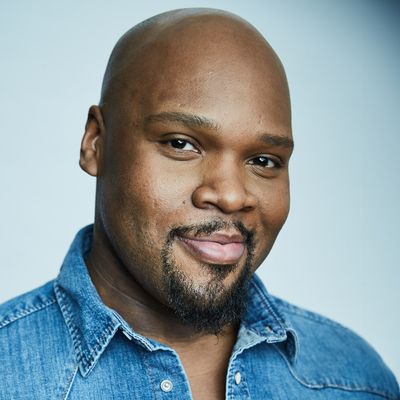
Aladdin & White Supremacy, what do they have in common? Michael James Scott has experienced them both. This is another episode of Spotlight: the redpilling of America... Read More
From the show: You Can't Say That!
Guests
Featured Shows

About
Aladdin & White Supremacy, what do they have in common? Michael James Scott has experienced them both. This is another episode of Spotlight: the redpilling of America.
More about Red Pilling America:
A thought-provoking series, featuring stellar guests, discusses democracy, American politics and our current socio-economic climate through the lens of Tonya's new socio-political horror film, RED PILL, which has received national coverage on Deadline, Playbill, and more. Guest stars include Metropolitan Opera star Meagan Miller, acclaimed actor Jay Armstrong Johnson, American civil rights leader Rashad Robinson, Hamilton stars Nik Walker, Paul Oakley Stovall, Jon Rua, Aladdin stars Telly Leung and Michael James Scott, actress and activist Joanna Carpenter and many more.
Red Pilling Of America takes place through Marissa Lynn Daniel Studios on Zoom. Proceeds will go towards the funding of Red Pill and to supporting actors during COVID-19. For more information and to enroll, visit, www.marissalynnstudios.com.
You Can't Say That is produced by Dori Berinstein and Alan Seales, edited by Derek Gunther, music by Cat Dail.
A proud member of the Broadway Podcast Network.
Transcript
This transcript was automatically generated and might contain errors.
[0:00] Tonya Pinkins: Welcome back to part two of my conversation with Michael James Scott on Spotlight, the Red Pilling of America.
[0:07] Tonya Pinkins: You're listening to You Can't SAY THAT on the Broadway Podcast Network.
[0:13] Michael James Scott: We gotta speak to life.
[0:17] Michael James Scott: We gotta say one pill's for you.
[0:31] Michael James Scott: You is kind. You is smart. You is important. You is dead. Tonya Pinkins's horror film RED PILL brings African American perspective to the progressive movement.
[0:46] Michael James Scott: We are a majority in this country. And we're gonna win the election.
[0:55] Tonya Pinkins: Do you know what the red pill is?
[0:57] Michael James Scott: A red pill is someone who infiltrates a group and then destroys them from the inside.
[1:05] Michael James Scott: This place is spooky. Some people like to live dangerously.
[1:10] Tonya Pinkins: Cass, why are you so jumpy tonight?
[1:13] Michael James Scott: You know what, guys? I'm gonna go back tomorrow. Did you hear about the creature woman that attacked a father and son hunting down here?
[1:20] Tonya Pinkins: I don't see the case. This place creeps me out.
[1:27] Michael James Scott: I think we should call the sheriff's office.
[1:48] Michael James Scott: They’re brown people. They're after all of us.
[1:54] Tonya Pinkins: What do we do, Emilia?
[1:56] Michael James Scott: We die. But we take some of them with us.
[2:02] Michael James Scott: It takes all kinds. It really does. We do need to hear all of the craziness and all of the logic and all of the—we need to kind of have just a better, wider understanding of things.
[2:14] Michael James Scott: Because knowledge is power, right? Like even if it's crazy knowledge, it's still knowledge. You're like, oh, I learned something here. And I at least see why you think this or why you feel this or how you got brought up to believe this thing, you know.
[2:28] Michael James Scott: Like I think I always get so nervous when people are like, I don't listen to Fox News and I don't look at any of these things. And you're like, so you just don't know what the people that you're fighting against are believing, thinking, talking about, lying to each other about, whatever.
[2:46] Michael James Scott: Like you just don't know what's going on then. How can you fight? How can you make any change? How can you strategize? It's beyond important to do.
[2:54] Michael James Scott: I'm like, if I'm not looking at that, I as well, so that I understand, you know, because it's A, you're trying to—it's very hard to try and like, you know, you can have all the conversations you want with people who are like-minded as you, right? And there's a general understanding and all of that, but like, but then that's really it.
[3:20] Michael James Scott: So it's kind of like, well, where—how do we figure out how do we move forward? Because the idea would be that whether it's because I am not a—I don't believe I can change anyone. I can give out what I put out, but I definitely have, especially in that—in the now, knowing how extreme the sides are, or whatever it is, there's no way I can—I'm really gonna change someone's opinion on literally right from wrong.
[3:55] Michael James Scott: Like I don't really understand how we're having this debate, but okay. But you know what? The algorithm can change people at this point. Our technology has hacked us and understands how we work as a piece of technology better than we understand ourselves.
[4:18] Michael James Scott: Very true can predict at about a 98% accuracy what your next decision is going to make. The algorithm can look at your last six decisions and predict what's going to happen in your life. And because the algorithm is driven by capitalism, the algorithm is changing people's minds every day in the service of someone making more money.
[4:45] Michael James Scott: So you and I personally can't change somebody, but I think we've reached this point that what I haven't seen talked about very publicly in mainstream media, where we as a community of people on the planet must get control of the algorithm so that it is no longer serving interests that are against our humanity.
[5:08] Michael James Scott: Which means voting out the motherfuckers that are currently there, especially the dinosaurs who don't even fucking understand how social media works. Like, I just always go back to when they were questioning the guy who runs Facebook, whatever his name is, um, Demon Man. They literally were like, Mark Zuckerberg.
[5:25] Michael James Scott: So yeah, how do you run this Facebook? How do you make money? And he's like, the ads, the ads, the thing that we're here to talk about is the ads and like the marketing and the stuff. Like, they have no concept of how this works.
[5:41] Michael James Scott: And like all of our laws or regulations around the internet were like written back right when it began. Like right when it became popular. And it has, it has. If you talk to anybody who's in technology or in social media, if you watch The Social Dilemma, whatever, there's a couple TED talks that are out there talking about how technology has moved exponentially.
[6:02] Michael James Scott: Like, if you look at the graph from like, you know, 1975 or whatever to now, it's like doodly-doodly-doo, whoa. It like has shot up. And so, like, I think actually on that podcast, um, was it Heather Cox or that you were talking about? Tanya, is that her name?
[6:18] Tonya Pinkins: Heather Cox Richardson.
[6:20] Michael James Scott: Cox Richardson. Um, she was talking about like the wild west of it, right? Like when we're in a new territory, which we are in a wildly new territory, with the way that we are able to connect with each other, the algorithms, all of that, and it's fully unregulated at this point.
[6:36] Michael James Scott: Like, we are in the wild, wild west, and so everything is gonna be destruction and chaos and craziness for a while, which it is, right? And it's super harmful, and we're seeing that now, but it takes longitudinal tests and things like that before we can like conclusively say, oh, this is a problem.
[6:54] Michael James Scott: We're getting to that point now, but everything's moving so fast that it's sort of like outside of our range of like, how do we do this? The only way that I can see to do it is to somehow move all of the old white men out so that we have people who are making laws and regulations about this wild, wild west territory that we're in that actually understand and even maybe use the mediums that they're trying to like regulate.
[7:22] Michael James Scott: On a deeply spiritual level, I don't believe we can create anything that we are not. So there's a spiritual level in which I believe we have the capacity to do everything our technology can do, but we are not choosing to live at that capacity.
[7:49] Michael James Scott: Like I, you know, I listen to podcasts, I have to speed them up. It's just going too slow. And I can listen to two different podcasts at the same time. You know, I can be so like—the being that we are has this ability to take in so much more than we credit it for doing.
[8:16] Michael James Scott: We just aren't pushing ourselves to do that. And the culture doesn't push us to do that. I mean, we don't have an education system that tells, you know, children that you can read, you know, your eyes can see an entire page at once. You don't have to read line to line. You can go and take in a whole page and get the information from a page. Your eye can do that.
[8:43] Michael James Scott: Um, we're not even trained to use this instrument that we have in the best way possible.
[8:50] Tonya Pinkins: Hmm. That is true. Did y'all see the use? Um, well, there's The Social Dilemma, and then there's the other one too.
[8:57] Michael James Scott: Agents of Chaos.
[9:00] Tonya Pinkins: Yes. Yes. Yes. Yes. But we just saw those a little bit ago and I was like, oh God. Like, oh God. Oh my lord.
[9:15] Tonya Pinkins: I mean, it's just, it's also stuff that I've known for a while. Like we've—I understand it. I understand, like, you know, the algorithm rhythm of it all. And like I absolutely understand it. However, it's just really, it's scary because it keeps getting more and more.
[9:34] Michael James Scott: And it, as you said, Sierra, it's unprecedented. Like we—we're in crazy uncharted territory. Like we are truly in the wild, wild west.
[9:40] Tonya Pinkins: It's—I well, we're not. Well, there are people who do understand it, and it could be used to serve us. It's just not.
[9:51] Michael James Scott: I'm in Korea, which America thinks of as like, you know, their backwards. They have the same surveillance technology that we have in America. The difference is they have used that surveillance technology to track anyone who has come down with COVID to every place they went and every human being they came in contact with.
[10:14] Michael James Scott: And so anytime you go into Starbucks and somebody at Starbucks gets COVID, you've written everything down and they track you, and then they send you a text message all day long. The 127th person in this neighborhood came down with COVID. They were in a Starbucks. They went in, they didn't have a mask on. Four people got it, 26 did not. When they left there, they went to the gym. They came into contact with 400 people. That techno we have that technology. We're just not using it on behalf of the people. So in this country of 50 million people, less than 500 have died of this illness.
[10:54] Michael James Scott: Yeah. I always find it really funny when people are like, you can't be watching me. Don't watch me. Don't, you know, when they also still use social media, which means you are being watched, and every move is honestly being you're being puppeted then in that respect, like we all are. But they're like, you can't watch me, blah blah blah blah. And like to an extent, I understand, obviously. But to the other extent, I'm like, your life is boring. Most of our lives are really boring, guys. Like the government doesn't actually care what the F you're doing. They don't care, they don't care, you know. Like I kind of love those like funny memes where they're like, I've been talking to the CIA agent in my laptop screen or who's watching me or whatever.
It's like that's not happening though, honestly, because they don't care. Like, what do you think that you are doing in your life that's so like, you know, would raise so many alarms? Like, what are you doing? What do you think you're doing? That's so cool.
[11:53] Michael James Scott: Well, I got banned from Twitter for a week because I was making a joke, and I could have said it in a different way, but I didn't realize that they're, you know, the censorship thing was so strong now. So I saw a post about a man who went into a hospital without a mask, screaming, where are the sick people? And then he began confronting teenagers without wearing a mask, and so I wrote, someone should have beat his ass, and I've gotten banned for a week.
[12:24] Tonya Pinkins: Oh my God.
[12:26] Michael James Scott: Oh that's behind. That might have been okay. But because I said beat his ass, I got banned for a week. That's violence. I'm inciting violence, I guess. Meanwhile. So funny. Cut to, you know, like full-on leadership and full on like that that not only been inciting violence, like I mean, it's all right there. The actual leaders of the official states. I mean, like, I that's just unbelievable. That's also just like that is such a like that's just like a black community thing. Like you say beat his ass. You that's just like what your mama says. Like, I'm gonna beat your ass if you don't sit down and listen to me. You know what I mean? It's not like I want to bloody you into you, I don't want to cut you up like the Saudis do. Like, that's not what I'm saying.
[13:21] Michael James Scott: Right. So you just sort of said, I want to, I want to hit his booty. The algorithm isn't culturally proficient.
[13:33] Michael James Scott: Oh no. It's made by white people for white people, you know. F man. Yeah, it's a it's a fine line, I guess, between like trying to shut down scary things and then like also just actually just censoring people and not being able to have like comedy or you know what is and the algorithm doesn't understand humor in a certain sense.
[14:00] Tonya Pinkins: Well, it's like that's like, you know, uh you I think that you know, us having like comedy, all of the fit like you know, the satire, all that, I believe it's very important. I still think that it is like, you know, it should we should we should still be living in a time where that should be happening and that it is absolutely needed, and to it we're in this fine line of people not, you know, people being offended by it, which that's I mean that's fine that you're offended by it, but I also am like how do we not like it's a it's a it's satire. Like, why wouldn't that be a part of it's so important to be a part of our culture? All of that, all of that. Like that's actually some of the most brilliant writers, I mean comedians in general, you know, like let's really be real, like that what if we didn't have them, if we didn't have that, we would not we would have missed out on some pretty incredible artists.
Like, and and truly, like for us is sort of like, you know, understand what that means. I've learned a lot through satire as well, you know, as a just as a person, and not not as a not even as an artist, but like just as a person and seeing somebody's brilliance being written out or whatever as satire. And so it's a very fine line with that.
[15:31] Michael James Scott: Did you guys see the uh SNL with Adele?
[15:36] Tonya Pinkins: I missed it.
[15:37] Michael James Scott: I didn't get to see it.
[15:39] Tonya Pinkins: You should you should watch it. Some of it, some of it was really good, some of it was like meh, as per usual with SNL. And then there was this one sketch that apparently everyone was up in armsville that I found to be horrifying and hilarious. But it was it was like Adele and uh and uh Kate McKate is that her name is Kate McKinnon? The really funny one. Oh my god. Yeah, McKinnon's funny. And another like another white woman, it was all these like white women um talking about like the big bamboo in Africa. Like once you get divorced as a 35 or 40-year-old white woman, go to Africa and there will be big bamboo for you and things for you to and there's like you know, sexy black men walking by and like holding up white women or whatever.
And it's like the hilarity of it is like I'm sure that there's like you know, true some truth to it, but also it's like it's fucked up, and that's what's funny. And the whole time Adele is like trying to not laugh the whole time, and she's just like this is so off on it, so fucked up, and it's super like I found it be to be really hilarious, and I also understood that like this is fucked. It's really it's not they're not glorifying it, you know what I mean? It's funny because it's fucked, and I was like, and that's SNL, right? Like that's the whole point. And people were so mad about it, they're like, you know, you're not valuing black men, and I was like, Yeah, that's the whole point. That's the whole point. You know, like it's it's it's tough.
[17:11] Michael James Scott: Yeah, I really think that the best art, people both love it and they hate it. Like that's the best. It just makes you feel something. I don't want my art to be tepid where you're just like, I don't know.
[17:27] Tonya Pinkins: Right. I want to get it for numbing something that numbs you out, which is a lot of what we have, you know. It's just kind of like it's formulaic, it's predictable, which can feel very comforting. And I think that, like, to an extent, like, cool, we should have some of that. Like, we need that, that's valuable. But like, if 90% of what we create out there, or what is pumped into the public view, is formulaic, predictable, easy, easily consumable, one kind of demographic, or you know, or each demographic exactly how they're always, you know, stereotyped or represented or whatever, that's when we get into the issues, which is why I'm so glad that you were making your film, Tanya.
[18:10] Michael James Scott: Well, yeah. And um I realize that I have this canvas, and that for the 90 minutes that I have an audience, you have their attention. They've paid and you have their attention. And as I'm doing my end titles and my credits, and all of you will be listed in the credits, participating in the spotlights. I realized that I could put anything on that canvas I want. And so one of the things I uh said to my producer, I wanted to end the last credit on the screen, is that this film was shot on the ancestral lands of the Lenny Lenape Mehican people, whose uh ancestors were the Natikoki people, and this was their homeland for 10,000 years before the European colonials came in and stole their lands and genocided them, and they did not even get citizenship in their own homeland till this year, and they didn't get the right to practice their religions until this year. I was like, that's the last statement that you will see on the screen from my film.
[19:21] Tonya Pinkins: And um, my producer, who is a direct descendant of the pilgrims, she wrote to me and she said, Well, do we have to say European? Can't we just say colonial? And I was like, they weren't from Asia. They weren't from Africa. They weren't from the Middle East.
[19:39] Michael James Scott: Right. But that I get to put that up there. Can you think of the overviews of cinema? How many wonderful messages or empowering things could have just been put on a screen for someone to see. And so I'm like, I'm gonna take that opportunity. Um, you know, I'm going to take that opportunity to put something positive for a community that really gets very little voice.
[20:04] Tonya Pinkins: Yeah. Yeah. Wow. I love that you're good. That that's that's pretty powerful to put that at the end of that. Just sort of just the acknowledgement of it all. Um, because it's it's it speaks very true to, you know, the thing that we that so many people don't talk about.
[20:26] Michael James Scott: They don't put, you know, they don't honor that. And so I'm that's that's that's um that's pretty powerful that you're that that you're doing that.
[20:36] Tonya Pinkins: Yeah.
[20:36] Michael James Scott: I and honestly, I I truly did not understand, like I'm still learning. I think ever since like the Dakota pipeline thing started, I've been learning like about you know, we're all in our own individual experiences here, right? Because it's capitalism and we're supposed to be individuals and whatever. And so, like, I have in some ways lived in my own individualistic bubble and like also been dealing with oppression on different fronts. And so that puts me in a survival mentality and makes it harder for me to see outside of myself, right? Like I have empathy when I am able to see outside of myself, but it it's hard for me to even just see outside of myself. And so I think I've been really learning about, you know, indigenous people and just different cultures that I don't like I am actually bloodline a part of, but like don't know anything about, you know.
Um like truthfully, TikTok has been one of the most educational things for me. I started following, you know, native um um content creators, and the stuff that you learn about, you know, like you said, like the people are are just now getting rights, like just human rights for things, and like just now finally, or or not at all, right? And there's no protections and like COVID is rampant and they're not being taken care of, and there's like one hospital for like thousands of miles, and like all you know, all these things that I have no idea about. And North Dakota just voted that just passed a law that you cannot vote if you don't have a residential address. And on the res in North Dakota, they use P.O. boxes, so that just wiped out that wiped out the entire exactly.
Exactly. I had no clue, you know. There's just there's always there's always so much more to know and to learn. And I think that's that is the beauty of like social media and the internet is like that we have the capability to learn these things. The the the downfall is that like the human instinct is A for survival and likeness, right? And then B, we are we are being guided to the things that you know are easiest for us to consume because we want to spend the most time on that. It it's it's just easier, right? It's easier to just see things like yourself. Go ahead.
[23:07] Tonya Pinkins: But I think that's the responsibility of being human. I think that we were given a consciousness which no other animal on the planet has, and we are animals, and we keep wanting to live in our lower nature.
[23:20] Michael James Scott: Yes.
[23:20] Tonya Pinkins: And the fact is we have this higher consciousness, and we have the responsibility to weigh that whatever choice we make has good and bad sides. And in each moment, we have a responsibility to decide how can we do it, use this thing for good. The next moment we might have to make a different decision about the same thing, but we want to live in our lower nature, which is like, you know, when the fox is over there, we can go to the water. Just like we have a simple decision foxes. Very, very simple. Well, you know, the fox might be hiding. It's not you don't see the fox, that only the fox ain't there.
[24:06] Michael James Scott: I had this great up. I um a few years ago, I worked in Australia for almost two years, actually. Um, and it was incredible. And I had not, I did not, I had I was very uneducated about the indigenous people of Australia and what that actually meant. They were flora and fauna until like 1940.
[24:31] Tonya Pinkins: Florida and Swana.
[24:34] Michael James Scott: Yes. Like what was unbelievable was to really be immersed in that country and understand truly the um the magnitude of the indigenous people and being a part of that land there. And I actually, my husband and I, we were so uh I mean it was it was the whole thing, the whole the whole experience was life-changing, just being in Australia and being a black man, not indigenous to the land there, but being a person of color in Australia, which is also a whole other thing, then being gay. I mean, like, it's just like it was like they literally were like, whoa, wow, you're really different. Like, I mean, it was a whole interesting thing to imagine, right? And and and and and Disney putting you on the billboards of things.
I'm like, yes, and I'm gay, and I'm and I I'm actually a normal person too, right? So there's that. But like it was this unb we were so inspired. We went to the middle of the country, we went to Ularu, we went to we visited Air's Rock, um, where uh this where like the sacred land is for the indigenous people there. And it was unbelievable to see and hear about them in their still to this day, in their their tribe, in their land, in their enclosed area. In order to even see it, we had to be on a helicopter to sort of see like you know, how they live and and and um and I just thought, wow, like it was just so eye-opening to that. And so I'm just uh it reminded me of you, what you're saying at what you're doing at the end of your movie and acknowledging those people like acknowledging what that is because it's quite extreme um and a forgotten a a whole forgotten group of people that I'm just watching David Attenborough's documentary about life on the planet which is extraordinary because he's been doing this for 70 years and so he has video of visiting places in the world and you know what he made me think about is for over 10 000 years on the planet human beings lived sustainably and then a small percentage of us evolved to the place where we started thinking that the people who had managed to live for 10,000 years sustainably were savages and we were going to bring civilization to them and in the course of us doing that we have taken the earth to the point of almost a sixth extinction in less than two thousand years in our supposedly elevating the savages who lived with the planet we are bringing the planet on the on the verge of extinction so who were the savages really savages savages even human savages no there no there they but still I can see see the savage one is me how can there be so much that it yes, honey.
[28:02] Tonya Pinkins: Poker for the win.
[28:04] Michael James Scott: Don't know bum bumper.
[28:09] Tonya Pinkins: Two, three, four. Come run the hidden pine trails.
[28:14] Michael James Scott: Can we do a two-person Pocahontas? Let's just we'll go through together.
[28:22] Tonya Pinkins: Can we close out with that? Dig, dig, dig, dig, dig. I'm trying to think like what are all the songs? Oh my god.
[28:30] Michael James Scott: Well, don't you can't forget. Ha uh uh uh um oh my gosh. Just from the river bed, yes, the river.
[28:40] Tonya Pinkins: Yes, riverbed. Yes, yes, just around the river bed. I look once more, just around the riverbed.
[28:52] Michael James Scott: Why?
[28:53] Tonya Pinkins: Why is that not a show?
[28:55] Michael James Scott: I know. Should I care to smooth the diversity? Steady as the beating drum. Should I marry Coco? Cocoa.
[29:07] Tonya Pinkins: So my dreaming at an end.
[29:12] Michael James Scott: Oh, you want to wow.
[29:18] Tonya Pinkins: We I think we could probably really do this all day, but I were actually at time. This was such a lovely conversation. Thank you for joining us, Michael.
[29:27] Michael James Scott: And uh thank you for coming back, Carolina and Patrick.
[29:31] Tonya Pinkins: I love to do that. Thank you all for having me. It's so lovely to chat with just you know, gorgeous, intelligent women.
[29:39] Michael James Scott: Like, why not?
[29:40] Tonya Pinkins: Like, that's fabulous. Women of color who are gorgeous and intelligent and not afraid to talk and in and in it and unapologetically themselves.
[29:52] Michael James Scott: So thank you all for that. That is that to me is beautiful, and I am inspired by that and so excited about the movie and all of the things that you're doing and and uh yeah it's it's it's beautiful. So I'm I'm grateful and very very um thankful that you all had me on to chat.
[30:11] Tonya Pinkins: And it's coming soon right do we have a date wear a mask they save lives.
[30:15] Michael James Scott: Oh my gosh.
[30:17] Tonya Pinkins: All right sending love to you all bye bye okay bye say no when you meet no when you meet no.
© Broadway Podcast Network, All Rights Reserved