

Artist, Activist, Athlete, Joanna Carpenter on Spotlight: The Redpilling of America. More about Red Pilling America: A thought-provoking series, featuring stellar guests, discusses democracy, American politics and our current socio-economic climate through the lens of Tonya's new socio-political horror film, RED PILL, which has received national coverage on Deadline, Playbill, and more... Read More
From the show: You Can't Say That!
Guests
About
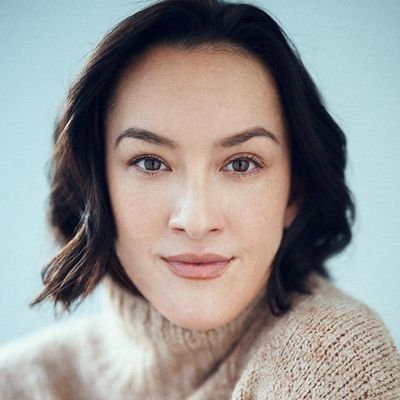
Artist, Activist, Athlete, Joanna Carpenter on Spotlight: The Redpilling of America.
More about Red Pilling America:
A thought-provoking series, featuring stellar guests, discusses democracy, American politics and our current socio-economic climate through the lens of Tonya's new socio-political horror film, RED PILL, which has received national coverage on Deadline, Playbill, and more. Guest stars include Metropolitan Opera star Meagan Miller, acclaimed actor Jay Armstrong Johnson, American civil rights leader Rashad Robinson, Hamilton stars Nik Walker, Paul Oakley Stovall, Jon Rua, Aladdin stars Telly Leung and Michael James Scott, actress and activist Joanna Carpenter and many more.
Red Pilling Of America takes place through Marissa Lynn Daniel Studios on Zoom. Proceeds will go towards the funding of Red Pill and to supporting actors during COVID-19. For more information and to enroll, visit, www.marissalynnstudios.com.
You Can't Say That is produced by Dori Berinstein and Alan Seales, edited by Derek Gunther, music by Cat Dail.
A proud member of the Broadway Podcast Network.
Transcript
This transcript was automatically generated and might contain errors.
[0:00] Tonya Pinkins: Welcome back to part two of Spotlight, the Red Pilling of America.
[0:06] Tonya Pinkins: I'm Tonya Pinkins with Joanna Carpenter on You Can't SAY THAT on the Broadway Podcast Network.
[0:18] Tonya Pinkins: We gotta say one truth for you.
[0:32] Tonya Pinkins: You is kind.
[0:34] Tonya Pinkins: You is smart.
[0:35] Tonya Pinkins: You is important.
[0:37] Tonya Pinkins: You is dead.
[0:39] Tonya Pinkins: Tonya Pinkins' horror film RED PILL brings African American perspective to the progressive movement.
[0:47] Tonya Pinkins: We are a majority in this country.
[0:51] Tonya Pinkins: And we're gonna win the election.
[0:56] Tonya Pinkins: Do you know what the red pill is?
[0:58] Joanna Carpenter: A red pill is someone who infiltrates a group and then destroys them from the inside.
[1:07] Tonya Pinkins: This place is spooky.
[1:08] Joanna Carpenter: Some people like to live dangerously.
[1:11] Tonya Pinkins: Cass, why are you so jumpy tonight?
[1:14] Joanna Carpenter: You know what, guys? I'm gonna go back tomorrow.
[1:17] Tonya Pinkins: Did you hear about the creature woman that attacked a father and son hunting down here?
[1:21] Joanna Carpenter: I don't see the keys.
[1:23] Tonya Pinkins: This place creeps me out.
[1:28] Joanna Carpenter: I think we should call the sheriff's office.
[1:45] Tonya Pinkins: The only people missing or dead are brown people.
[1:51] Joanna Carpenter: They're after all of us.
[1:55] Tonya Pinkins: What do we do, Amelia?
[1:57] Joanna Carpenter: We die.
[1:59] Joanna Carpenter: But we take some of them with us.
[2:04] Joanna Carpenter: I think the most fascinating thing for me about the party of the Republicans is that they are a party that actually does not live by any of the values that they preach to their constituents.
[2:25] Joanna Carpenter: So they don't have a problem with abortion, same-sex marriage, you know, the things that they do in their own homes and their families, but it's about power over and what is the argument that will get us power.
[2:41] Joanna Carpenter: Yeah, and it's that's fascinating because it's a manipulation and it's a dishonest one, but it works.
[2:48] Joanna Carpenter: It works because the underlying thread to all of it is white supremacy.
[2:55] Joanna Carpenter: It is white power and it is white supremacy.
[2:57] Joanna Carpenter: People, the amount of I've gotten perhaps unreasonably frustrated at the amount of people who I've seen over the last four years go, I can't believe this is America.
[2:57] Joanna Carpenter: I can't believe this.
[3:08] Joanna Carpenter: This is, you know, it's like, and so many people going, this is not America.
[3:12] Joanna Carpenter: No, this is because this is exactly who America is.
[3:16] Joanna Carpenter: The constitution, the white to me.
[3:21] Joanna Carpenter: And honestly.
[3:24] Joanna Carpenter: Do what?
[3:25] Joanna Carpenter: You get to be white.
[3:27] Joanna Carpenter: That thing is all white, because I don't believe in white, but that thing that people call white, do you get to be it sometimes?
[3:35] Joanna Carpenter: Um, I mean, it's not my problem what other people think of my ethnicity.
[3:42] Joanna Carpenter: Um, you know, I've dealt with enough erasure and enough sighs of relief out of people who've gone, oh my god, you don't even look Asian, that the damage has been done from things like that.
[3:42] Joanna Carpenter: The damage has been done and it's been done very deeply.
[4:00] Joanna Carpenter: Um, and it has stymied my ability to continue searching for myself.
[4:06] Joanna Carpenter: Um I think I perceive myself and my identity, how I perceive myself and my identity.
[4:16] Joanna Carpenter: There are things about, you know, being raised in a very small, very white racist town that made it very clear that I was an other.
[4:25] Joanna Carpenter: And there are things about my family, you know, my white family that I'm very proud of because of the quality of the actions that those were, not because they're rooted in whiteness.
[4:39] Joanna Carpenter: Um, there's also a lot of things that I'm ashamed of, you know, like my mom, bless her, I love her dearly, but it's like she is of the generation that you know, she's she's she's a child of the 70s and thinks that she's like super progressive and thinks that she's not racist, and she constantly erases my identity and she constantly devalues um, you know, the what it's like to be Asian American in America right now, especially in the midst of the China virus, which is super fun.
[5:11] Joanna Carpenter: Every time I have to sneeze on public transit, I freak the fuck out and I just like I just like cover my dick because there's nothing that can be done.
[5:17] Joanna Carpenter: I'm like, oh, sneezing while Asian, it's no good.
[5:20] Joanna Carpenter: Um, but you know, I choose to be who I am, and I choose to take pride in the good, bad, and ugly of both my Chinese heritage, which there's a lot there that I'm not proud of.
[5:33] Joanna Carpenter: Um, you know, Chinese culture is very racist, very, very racist.
[5:38] Joanna Carpenter: Um, and I choose to look clearly at what I don't like about both sides culturally.
[5:46] Joanna Carpenter: Um, but I've with the help of you know, my immediate community, I have been able to kind of just get to this point where I don't really give a shit how people perceive me because just because someone sees me as white doesn't make me any less Asian.
[6:05] Joanna Carpenter: And it's my job to continue showing up with integrity and showing up with truth and questioning my culture and exploring my culture and you know, looking at all sides of it and understanding how I can be the most of service from the perspective and lived existence of a Chinese American woman.
[6:24] Joanna Carpenter: That's my job.
[6:26] Tonya Pinkins: Now I know you were a bartender.
[6:28] Tonya Pinkins: I bet you got like I want to hear a crazy bartender story because I bet you got one or two or three or four.
[6:35] Joanna Carpenter: Oh my God.
[6:36] Joanna Carpenter: You know, I've been in hospitality for like 17 years, um, and been on been on all sides of the bar.
[6:42] Joanna Carpenter: Um, in terms of crazy stories, all sides of the bar, like how many sides does a bar have?
[6:48] Joanna Carpenter: No, I mean, in terms of the positions that can be held on either side of the bar.
[6:51] Joanna Carpenter: Uh I've been a bartender.
[6:54] Joanna Carpenter: I've been a bartender since I was 18.
[6:57] Joanna Carpenter: Um, and obviously bartended for quite a long time when I got to New York.
[7:00] Joanna Carpenter: Um, but I've also uh, you know, I've worked for brands, um, I've done creative consulting for brands, I have built beverage programs at some very recognizable places.
[7:13] Joanna Carpenter: Um, I've done a ton of uh diversity and inclusion education behind the scenes.
[7:19] Joanna Carpenter: Um I have uh I've produced a ton of events.
[7:31] Joanna Carpenter: I built and ran uh a bar program you know for about a year before I stepped away from that.
[7:39] Joanna Carpenter: I've kind of I've just like done a fuck ton of stuff.
[7:43] Joanna Carpenter: Um so in God, crazy stories.
[7:46] Joanna Carpenter: It's funny because I try and like block them out because it's just so much.
[7:51] Tonya Pinkins: I think why do you try to block them out?
[7:54] Joanna Carpenter: Because people are so crazy when they go out.
[7:57] Joanna Carpenter: It's like it's the same mindset where it's like you go to a hotel and you jump on the bed with your shoes on because it's not your house and you don't have to clean up after you.
[8:07] Joanna Carpenter: It's that same mentality that people go to bars with.
[8:12] Joanna Carpenter: Um actually not a nightmare story, but a very cute story um that I cherish uh probably will cherish for the rest of my life.
[8:20] Joanna Carpenter: So um I was head bartender at a French restaurant on the upper west side, and Roger Reese, Rest in Peace, and his partner came in one night.
[8:29] Joanna Carpenter: Um and they were so lovely.
[8:31] Joanna Carpenter: And I just kept looking at him and I was like, God, he looks familiar.
[8:31] Joanna Carpenter: He looks familiar, he looks familiar.
[8:36] Joanna Carpenter: And I like at the time prided myself on being like, you know, a working actress and I'm auditioning all the time and I'm booking summer stock and I'm doing all this stuff.
[8:45] Joanna Carpenter: And I know so much about the industry.
[8:48] Joanna Carpenter: And so I had made them like their second martini, and then I it clicked, and I was like, oh my God.
[8:48] Joanna Carpenter: And I was like, I'm so sorry to interrupt you, but did you play Fred in the movie A Christmas Carol with George C. Scott?
[9:01] Joanna Carpenter: And he was like, Oh, yes, I did.
[9:04] Joanna Carpenter: And I was like, Oh my god, I've grown up with you.
[9:06] Joanna Carpenter: That's like my favorite Christmas movie.
[9:08] Joanna Carpenter: Like, thank you so much.
[9:09] Joanna Carpenter: He was literally on Broadway right then at that moment in the Adams family.
[9:15] Joanna Carpenter: Uh-huh.
[9:15] Joanna Carpenter: Yeah.
[9:16] Joanna Carpenter: So she knows so much about theater.
[9:18] Joanna Carpenter: This was years ago, obviously.
[9:20] Joanna Carpenter: But I like just like Joanna, sit down.
[9:23] Joanna Carpenter: But he was so gracious and so lovely and just such a gem of a human.
[9:28] Joanna Carpenter: And we like, we chatted and just, oh my God, just the kindest.
[9:33] Joanna Carpenter: Um so that was that's like a behind the bar memory that I'm always like, oh.
[9:37] Joanna Carpenter: I love those humbling moments.
[9:39] Joanna Carpenter: Like one day I was walking in my hallway, and there was a woman in a wheelchair down the hall, and she dropped something, and I walked down the hall.
[9:48] Joanna Carpenter: And I live in an artist building, okay?
[9:50] Joanna Carpenter: You know, Manhattan Plaza.
[9:51] Joanna Carpenter: I walked down the hall to pick it up because I knew it would be hard for her and her wheelchair, and she was like, Oh, thank you.
[9:56] Joanna Carpenter: Which agency do you work for?
[10:01] Joanna Carpenter: Oh my goodness.
[10:02] Joanna Carpenter: And I was like, I love it.
[10:04] Joanna Carpenter: You know, people will just take you right back to being humble right in a moment.
[10:10] Tonya Pinkins: They will.
[10:11] Tonya Pinkins: Oh my god.
[10:12] Tonya Pinkins: No good deed goes unfortunate.
[10:16] Joanna Carpenter: They're good, you know, they're they're good, especially.
[10:19] Joanna Carpenter: And I always have those moments just when I think I'm on top of shit.
[10:22] Joanna Carpenter: You know what I mean?
[10:23] Joanna Carpenter: Like, just when I get to the moment where I'm like, oh, I know so many things.
[10:27] Joanna Carpenter: This is rad.
[10:28] Joanna Carpenter: There will be something where I will just like step on a proverbial rake, and it's like, take a seat, sweetheart.
[10:34] Joanna Carpenter: You know a lot of things, but you don't know everything.
[10:36] Joanna Carpenter: You need to just I think that's the universe really blessing you when it when it keeps reminding you that there's just no end to what we can learn.
[10:45] Joanna Carpenter: We never know enough.
[10:46] Joanna Carpenter: I'm reading a sand talk by Tyson Yankaporta, and he says the original sin, and what the first people aboriginal people say is Lucifer or Satan or the devil is to believe you are above anything, including which is sentient, which I've always known rocks were sentient.
[11:09] Tonya Pinkins: Yes, yes.
[11:10] Tonya Pinkins: It's all my I mean, yes, yeah, all of that.
[11:14] Tonya Pinkins: I'm just I'm agreeing in all caps.
[11:17] Joanna Carpenter: So I would imagine that you get you're not Asian enough, you're not white enough, you're Latina enough.
[11:23] Joanna Carpenter: They're like, what are you?
[11:24] Joanna Carpenter: We know what are we gonna do with you?
[11:26] Tonya Pinkins: So um, how are you shaping your own path of your work in terms of what you want to do?
[11:36] Joanna Carpenter: Because it doesn't really matter what they decide you are, you're gonna have to say this is what I am.
[11:41] Joanna Carpenter: I am leaving theater.
[11:43] Joanna Carpenter: Um pursuing television full-time.
[11:47] Joanna Carpenter: Um, I mean, because here's here's the thing about me is I the amount of casting directors in this city who have had the audacity to take me all the way to final callbacks for the ingenue of tracks, um, some classic ingenues, some new contemporary musical theater ingenues, and then turn around and go, God, you're not gonna book this because you just read as too smart.
[12:10] Joanna Carpenter: Okay, I can't, I can't play stupid.
[12:14] Joanna Carpenter: And if me playing stupid is going to be what best services the text, this is not a show that I want to be a part of.
[12:20] Joanna Carpenter: And the amount of casting directors and gatekeepers who have said, I just don't know what to do with you.
[12:26] Joanna Carpenter: You're so ambiguous and like edgy and making it seem like it's my fault.
[12:33] Joanna Carpenter: And the thing is, I have always had a skill for drama.
[12:33] Joanna Carpenter: I have always had a skill for comedy.
[12:39] Joanna Carpenter: And now what I started last year is stunt training because the goal is to have like the Charlize Theron track.
[12:45] Joanna Carpenter: So now I'm doing weapons work.
[12:47] Joanna Carpenter: I've been boxing for four years.
[12:48] Joanna Carpenter: I'm doing MMA.
[12:49] Joanna Carpenter: We're getting into sparring now.
[12:51] Joanna Carpenter: And so in TV land, while it's definitely not ideal yet, and we know this.
[12:56] Joanna Carpenter: Um in TV land, I don't have to diminish myself anymore.
[13:00] Joanna Carpenter: And I don't have to dumb myself down and put myself in a box for creative teams and casting directors who do not know how to be creative with a classically trained Asian American woman with short hair now.
[13:13] Joanna Carpenter: Like they'll listen to them.
[13:15] Joanna Carpenter: You'll meet them.
[13:16] Joanna Carpenter: I promise you, the universe will introduce you to them.
[13:19] Joanna Carpenter: I trust the universe.
[13:21] Joanna Carpenter: I trust the universe exactly what I am supposed to be encountering.
[13:26] Joanna Carpenter: But as theater is now, I'm so disgusted with the fact that there is no place for me in it, and there has not been a place for me in it.
[13:34] Joanna Carpenter: I don't want to do the God.
[13:36] Joanna Carpenter: You get to play God.
[13:38] Tonya Pinkins: Tell me the next five years of your post-COVID career.
[13:42] Joanna Carpenter: Tell me it. The next five years of your post-COVID career. What's it look like? Uh, Marvel. Marvel cinematic. Um, and it looks like I would love to do a movie musical as cheesy as those are. Like when Chicago came out, I was like, that shit right there. Um, but also, you know, I have fallen in love with Shakespeare recently, and I would like to just like start from the bottom and really dig into Shakespeare, even if it's some just like nitty-gritty bullshit production that nobody sees in a place that nobody knows. Um, I want the opportunity to do that. Do you know Alice Alexandra Silver? God, that name sounds familiar. I probably should. Maybe you favor her to me, and she's super, super smart, super, super talented.
Um, like you could play her body double or stand in and something. Really look her up. And she's written like three novels. Um, yeah, yeah. Look at her. She's got a very I think she got her book deal because of a blog that she did. Uh, just a super smart girl, but she still can play that ingenue track. And she let me tell you, but her knowledge of Shakespeare, she has memorized it all, and she can quote chapter and verse, you know, which folio.
[15:14] Tonya Pinkins: Okay. I will look her up. That's amazing. That'll be some good inspiration. I need that.
[15:21] Joanna Carpenter: Yeah. Yeah. Yeah. She's what about you, Tanya? What are the next five years for you?
[15:27] Tonya Pinkins: Um, I don't know if I'll be here for the next five years. So um, you know, for however much time I get to be here, I want to um keep creating. I want to be of service and make places a little better for my having been there. Um, I want to keep showing a path for people who come behind me that hasn't been there before. So, like with my movie RED PILL, um, the black woman's voice, you know, as much as media goes, oh, black women saved America, oh, black women delivered Georgia, there's the fact still remains that um our stories and our point of view is very rarely seen. And, you know, I sit in um, you know, I'm in collectives with black women filmmakers, and even the ones who have quote made it talk about how what ends up being on the screen is not really their vision.
So Red Pill is my vision. Um it is, you know, if you had to step into my shoes and look through my eyes, this is what you would see. And so I'm aware um that many people because that doesn't make sense. That doesn't make sense. And I'm like, of course, it doesn't make sense through your eyes. So you have to stop and go, but this is somebody else's eyes. And you know, I can't wait to see what you create through your eyes, through the world that you see through your eyes, because the only way we're going to know it is for you to create something, and then we have to surrender our stories about the world existing as some kind of objective thing because it's not. When I walk out of my apartment on Ninth Avenue, there are people with masks and there are people who are partying like COVID never existed.
And for many of those people who are not wearing masks, that their reality is gonna be true. They're not gonna get sick and they're gonna be fine and they're gonna be like, What were you guys talking about? And those realities are existing simultaneously, and they're all valid.
[17:43] Joanna Carpenter: This does that's that that's actually a perfect segue because my question for you next was gonna be you know, what is what is the impact that you seek to make with the film? And is it is it a period or a comma on the narrative of what reality is for you, but also anybody else like you?
[18:07] Tonya Pinkins: It's a comma. And um, I had the privilege of uh interviewing a number of editors when I was looking for my new editor, and what was beautiful about that is they were from different cultures, and so each of them had a different experience of it, and it was like I could see, oh, so there's an audience who'll experience that. Oh, there's an audience who'll experience that, oh, there's an odd, and so it was like to me, that's the best part about creating art is that you know that people need it and bring something, you know, they bring a new world back to you, like the art becomes something else through their eyes if you're willing to go through theirs and really you saw that that scene wasn't even in it.
I don't you love it when people come up to you and tell you about a scene that they loved that wasn't in the show, but it was the scene they needed to see, and it's like you like it to go on a journey that wow. You're like, Thank you. I worked so hard. I love that, but it's like the reality is completely flexible and malleable, and every one of us is in a different one. And for me, what is exciting is when I can sit down with someone, like I'm sitting with you, and every week I sit with someone and they show me their world.
[19:19] Joanna Carpenter: Yeah, yeah. What do we do about when somebody else's world crashes into ours in a way that causes harm that the other resident of that world just refuses to see?
[19:39] Tonya Pinkins: Well, you see, I think you're speaking euphemistically rather than being direct about it. And here's my feeling. I am neither above nor below any behavior that a human being could have. I can do the anything a human can do, I could do it in the right circumstance. So I'm a gun owner. Um my love and my intelligence is not gonna stop a bullet. But if you know I have a gun, you I'm not gonna be the first person you target to go shoot. Cause you see that I'm armed too. So I'm very practical about it. Love and intelligence do not stop bullets. I think that's something that uh a lot of folks to pull back to politics, I think that a lot of folks on the left are really struggling with right now because there is a there is a propensity to cling to this idealism. Um, where to made up stories that have no basis in any truth or reality.
[20:54] Joanna Carpenter: Yeah, yeah. I mean, take guns for an example. Like, I hate guns, I hate violence. We talked about this, but I'm also on my way to becoming a gun owner. And I never thought I would say that. Hate is such a strong word. So if a bear was coming after your baby, would you hate violence right then?
[21:15] Tonya Pinkins: No, actually.
[21:16] Joanna Carpenter: Okay, so then you don't hate violence.
[21:18] Tonya Pinkins: Okay.
[21:19] Joanna Carpenter: So nope, no, no, no, no. You got you got different for different places. And so I'm saying my rule is whatever is appropriate to the moment. I can do anything. And I'm gonna decide what that is in the moment. I don't have blanket rules about how I'm gonna live my life because I don't know what life is gonna bring me. And I need to be, I need to be flexible enough and available enough spiritually, emotionally, in conscious that I can take the appropriate action.
[21:49] Tonya Pinkins: This is what I was about to say, because I wonder if you know, because this is making me think now. I wonder if leaning into the phrase I hate violence is too much of a blockade to acknowledging the fact that I fear violence.
[22:03] Joanna Carpenter: That's a different thing.
[22:04] Tonya Pinkins: That's a different thing, but also one of them is closer to reality. Guess what? I fear violence too. I don't want to be hurt.
[22:14] Joanna Carpenter: Okay.
[22:14] Tonya Pinkins: I was watching a horror movie, and because I always thought, oh, I don't care. If somebody's gonna tell me get in the car or they got a gun in my head, I'm like, shoot me, kill me, because I'm not going with you in that damn car where you're gonna do worse things to me than that. Kill me now. But in this horror movie, that wasn't a choice. They were not going to kill you, they were going to torture you until you went along with what they wanted.
[22:43] Joanna Carpenter: Yeah, and I was like, that's my kryptonite. That's my kryptonite. I'm not I'm gonna go along real quick. Yep. Yep.
[22:55] Tonya Pinkins: Cause those, yeah, I mean, because we I think we think of things on the binary to keep ourselves safe, whether it's thinking about violence, thinking about race, thinking about religion, thinking about gender, you know, like whatever it is. We humans automatically need to compartmentalize in order to survive in some ways, and some people who are less emotional.
[23:17] Joanna Carpenter: I'm gonna say that every single one of these statements you make, that they're not anyone you said. There's nothing you said today that was true. There's a circumstance in which everything you said to me tonight is not true.
[23:31] Tonya Pinkins: But if it's my lived experience, then it's true.
[23:33] Joanna Carpenter: It's all a story, it's all a story, and there is a place in a space where it doesn't apply. Maybe for other people, sure. Um, I'm gonna just tell you what I know. I know that truth, what is true is the combination of both poles. That if you experience something truth, you will be in the presence of an equal thing of both poles because there are no opposites, there really are no opposites.
[24:12] Tonya Pinkins: You know, I don't say this often, but that man in the White House, he is a phenomenal magician, metaphysician. And we have to thank him for bringing us to this moment. We needed to come here, we needed to see this. This needed to be revealed. He is the instrument of this waking up and this us seeing one another and seeing the polls, and we're not going to um, we're not gonna change 73 million people's minds. That's not going to happen. We're going to have to be a country where we got 73 million here and 78 million here, and a bunch of people not franchised, and we're gonna have to figure out a solution that works for all of them, where nobody has to change their minds, but everybody's needs can be met. That's the solution I'm looking for. And I don't even see people thinking that way.
[25:14] Joanna Carpenter: Yeah, and this is you know, this is what I'm saying is people feel safer compartmentalizing on the binary, but the actual existence, the actual work, the actual uh, you know, kind of like meat and potatoes of whatever the issue at hand might be is always in the middle. It's always in the middle. And I think it goes back to that mentality of like reading the the headline and thinking you know the contents of the article. Um, because when you're just a headline reader, you're able to be manipulated. And when you don't read the contents of the article and analyze it for yourself, you become target practice for somebody like Donald Trump.
[25:48] Tonya Pinkins: If it bleeds, it leads.
[25:51] Joanna Carpenter: Uh-huh. Uh-huh.
[25:52] Tonya Pinkins: So I'm so grateful for you spending this hour with me this week. I'm going to have to give you my address for my gingerbread. Thanks so much, Joanna, for coming and spending this spotlight with me.
[26:06] Joanna Carpenter: Um for having me. Be safe, wear a mask, they save lives.
[26:11] Tonya Pinkins: Always, always, always. And I know you are gonna be kicking ass and taking names.
[26:17] Joanna Carpenter: Trying.
[26:18] Tonya Pinkins: I look forward to um seeing the metro ripple effect has.
[26:23] Joanna Carpenter: Yes.
[26:24] Tonya Pinkins: Very exciting. Thank you, everybody, for coming this week and uh join us next week when I'll have Maria Judice, uh filmmaker, producer, um, who runs a program called Black Films is Protest, where I've been learning about all kinds of movies I'd never ever seen or heard before. So thank you all. Please stay safe. Wear a mask, uh, cancel Thanksgiving. Uh give thanks for your health and your family wherever they safely are and stay safe. You know, if you're lucky, there will be another Thanksgiving delay gratification. Delayed gratification. It's a sign of maturity.
[27:02] Tonya Pinkins: It's not in all. Hi, I'm Tonya Pinkins, and I would love to hear from you. You can text me at 917 724 8998. Tell me what you're up to, and I'll let you know what I'm up to. Text me 917 724 8998. Let's keep in touch.
© Broadway Podcast Network, All Rights Reserved