

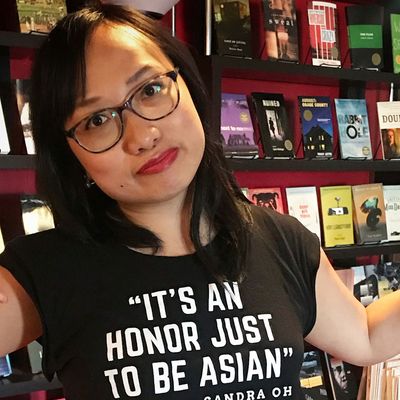
Diep Tran is the Chief Executive Editor of Playbill, an arts journalist and critic. In this two-part interview, we discuss cultural context in journalistic writing and why the framing of a subject can be problematic if the journalist lacks cultural context... Read More
From the show: You Can't Say That!
Guests
Featured Shows

About
Diep Tran is the Chief Executive Editor of Playbill, an arts journalist and critic. In this two-part interview, we discuss cultural context in journalistic writing and why the framing of a subject can be problematic if the journalist lacks cultural context.
Connect with Tonya via her community phone number at +1 917-724-8998!
Produced by Dori Berinstein and Alan Seales, edited by Justin Payne, music by Cat Dail.
A proud member of the Broadway Podcast Network.
Transcript
This transcript was automatically generated and might contain errors.
[0:00] Tonya Pinkins: Welcome back to my conversation with Chief Executive Editor Diep Tran of Playbill. I'm Tonya Pinkins, and you're listening to You Can't SAY THAT on the Broadway Podcast Network.
[0:15] Tonya Pinkins: We gotta say what news for you. I mean, to me, the purpose of the conversation with you is to like talk about these little sticky things. Um, because it helps me to understand and hopefully it helps other people to understand. You know, uh in the last month there was that young girl from 1776, who that article was like. And I read it and I just I felt so bad for her. I thought, you know, she's not done many interviews, and she got real comfortable and thought she was talking to her girlfriend or something, and didn't know. So it was like there was a part of me that was like, I don't know what you said or the context of what you said it in, but you have to learn how to do interviews better.
[1:19] Tonya Pinkins: But and the sense for me as someone coming from any other side, and that is why I decided to use the bullshit quote from you was the fact that for me as a journalist for uh I've been doing this for a decade, and like I've interviewed so many celebrities, like so many famous people and artists, and there's always a guardedness, and there's always a sense of like you're holding back because you're trying to promote a show and you're trying to curate a specific image of yourself. And so for me as a journalist, whenever I am able to like pierce that veneer a little bit, or whenever I see another journalist pierce that veneer, I'm always thinking, yes, finally, someone is being honest. We can finally have a real conversation about what it is to make theater, and it's not always a positive experience, even when it's even when the marketing, you know, demands that it be framed as a nourishing experience for everyone.
[2:23] Diep Tran: Yes, and and that is, I guess when you say it like that, I'm like, yes, that is exactly what happened in that moment. I was sharing with you from a specific personal conversation. Um, and uh and I shared intimately the details of that conversation, and so I think probably when I was talking to you about that, I was a little off guard and not thinking that I was sharing this intimate thing, so I wasn't expecting to find it uh because uh to be specific for people, um, one of the things I experience as an artist is that the gatekeepers are always trying to uh have a let's you and them fight, even between artists, so that they can be the mediators and arbitrators between people.
[3:15] Diep Tran: Um, you would think that it would be better for everybody to be getting along and working cooperatively, but some people like to keep a little tension going so that they can have responsibility for keeping it all together, like that there is some power for them in being able to even just say that, you know, those crazy people are going, but you know, I've got them under control, and so I'm accustomed to uh that happening. So uh even coming into uh doing A Raisin in the Sun, the approach to me was like um, well, this is a tentative offer, you know, pending you having a meeting.
[3:57] Tonya Pinkins: Okay.
[3:58] Diep Tran: And so I'm already my my my I'm already you know bristling. A tentative offer, you're gonna tentatively offer me something, but but if the meeting doesn't go well, we we reserve the right to take the offer back. Do you not know who I am, sir? I it was just like, what? Now, as they're doing that with my representatives, me and Robert are texting with each other. So, you know, there's these two worlds going on where I've already been presented as a problem, and we we we we have to we have to meet with you, problem child, before we can firmly decide we want to work with you.
[4:32] Diep Tran: But Robert and I are already texting with each other about ideas, and so I'm walking in those two worlds, and the problem part of it, it it upsets me because it's this awareness that people are setting me up to be received as a problem before I walk into the room, and that even uh traveled on to our costume designer who I'd worked with like three or four times before. She came to me with, well, I've heard you, blah, blah, blah, blah, blah. And so the um so I've already got my haunches up, and it's like I've been primed to come in as a problem because you've already treated me like a problem before I even get there.
[5:13] Diep Tran: And when, you know, Robert said, I heard you have needs. What are your needs? I was like, my need is for there not to be any bullshit in the room. Um, so it's like I felt attacked and I responded with an attack. So um, yeah, that was why it was because the whole context around always being presented as if you're a problem and we're somehow doing you a favor to bring you in the room, it it rattles me. Um, Avon Long said to me uh when I was a young, young, young girl, he said, you gotta know your nuisance value.
[5:49] Diep Tran: And what that means is you gotta know that whatever you deliver is worth whatever nuisance you're going to bring. And I've always said, Well, I must have some nuisance value because they keep bringing me in the room, even though they keep you know telling the world I'm so difficult and I'm such a problem.
[6:05] Tonya Pinkins: Right.
[6:05] Diep Tran: And and for me, for me, as someone who is trying to tell the readers, like why you why you have gotten this reputation as being quote unquote difficult, when in reality it's just you speaking up for your needs and doing the thing that everyone says they want, which is you know, more equitable workplace environments. I found that like that quote of, you know, I want there to be bullshit in the room. Like for me, it read as I have, you know, I have limits. If I see anything going on that I don't agree with, then I'm going to speak up. I'm not going to be afraid.
[6:40] Diep Tran: And I feel like that was like I I followed along when the MOTHER COURAGE debacle was going down. I remember how frank you were about that and outspoken. And I thought, well, I cannot explain what happened there, but maybe if I just put in this really illustrative example, this really illustrative quote, then it it will help people give people some context, and maybe they'll look up what happened in 2017. Are you able to understand why for me that frame felt problematic?
[7:20] Tonya Pinkins: Yes.
[7:21] Diep Tran: Yes.
[7:21] Tonya Pinkins: So what tell me what that means for you.
[7:26] Diep Tran: It becomes a challenge. Because as a journalist, if you if you for me, I I want to show people what you're what you're like and how you speak and and your personality. And if you're an outspoken woman, I feel like it would be dishonest to not address that.
[7:57] Diep Tran: So how do I put it? So for me, in our 45-minute interview, there was that one comment, and that was in a conversation. And for and so for me, I'm like, I don't speak like that when I'm speaking to journalists or to the public.
[8:23] Diep Tran: So I guess for me, it it um because clearly I speak like that. I said it, but it is uh a piercing of my own idea of myself that that would be chosen uh to as the description of me because I don't think of that as like if that's what you were it to me, like if that's what you're expecting of me, you're expecting me to come in and curse you out. You know what I mean? And I don't think of myself that way. In fact, I think I work very hard not to be that, but maybe I have to let that go.
[8:59] Tonya Pinkins: And when people come in, maybe I should just start cursing people out now.
[9:03] Diep Tran: No, I don't I don't think so.
[9:05] Tonya Pinkins: I don't think so.
[9:06] Diep Tran: I and for me, when I read uh for me when I read that when I heard that quote, I heard it as not as someone who's gonna curse person curse people out. It's like not as someone who's going to tolerate, you know, foolishness.
[9:19] Tonya Pinkins: Right.
[9:20] Diep Tran: I no, I I completely get the why for you. I'm just saying for me, as someone who is literally always erased and made invisible in the room. That is just my experience, even as an elected on Actor's Equity, you know. I get up, I speak, there's a pause, a silence, and then people just move on to whatever subjects is like we don't we're not even going to have a conversation about what you talked about.
[9:49] Diep Tran: So um I was like, you know, I try to be articulate, I try to come with the facts, I try to be give you know reasons-based logical arguments. Um yet, if I look in my experience, sometimes the people who I experience who get up in the room and use the swear words, they get a kind of uh praise and celebration that makes me cringe.
[10:15] Tonya Pinkins: Yeah, yeah.
[10:16] Diep Tran: I think that was that was what I was alluding alluding to when I said for women of color, there are certain just certain things you're not allowed to do. Like when you say I'm not allowed to be when you, Tonya said, you know, you're not allowed to be angry, you're not like you're not allowed to raise your voice or to curse people out. I I just I I understand that very deeply.
[10:38] Tonya Pinkins: Yeah, and so it's this I feel I feel like the larger picture is how do we as uh people who are invested in uh creating more equality for uh for everybody and and particularly for arts because I feel like artists are the soul of a society.
[10:56] Diep Tran: Um it's what we really have to pierce is the people up above who are trying to keep it that lets you and him fight, you know.
[11:03] Tonya Pinkins: And I I don't know what the answer to that is, but that's certainly why I wanted to have this conversation because journalists are um are artist friends.
[11:13] Diep Tran: If people aren't writing about you, nobody knows about you, and you don't get attention and you don't get opportunities.
[11:20] Tonya Pinkins: So there's just no there's nothing good that can come of having an adversarial relationship with journalists unless you're you know, just from that someone's gonna keep writing nasty things about you, and in the world that we live in now, the algorithm will have everybody talking about you because of the nasty things about you.
[11:35] Diep Tran: But I don't think many people like to just have nasty things written about them.
[11:41] Tonya Pinkins: No, no, no, I don't think anyone wants to be Twitter's villain of the day.
[11:46] Diep Tran: Though I will give you a little insider, a little insider trick that journalists do to get artists comfortable because for for me as someone who's done this for a long time, I've noticed that the longer I speak to someone, the more the more comfortable and the less guarded they become, and you know, I share some things about myself, just so that it feels like we're having a conversation.
[12:09] Tonya Pinkins: And so there's an art to like writing like a really good profile about someone, and it requires you to spend hours of time with them so you can get past the veneer of, you know, like the the air that they have put upon themselves in order to get to the truth of what it is that they're trying to do and of who they are.
[12:34] Diep Tran: Absolutely.
[12:35] Tonya Pinkins: Yeah.
[12:35] Diep Tran: And so I think I think with our conversation, I think because it was about 40 minutes.
[12:42] Tonya Pinkins: You did your job.
[12:48] Diep Tran: You did your job.
[12:50] Tonya Pinkins: Um it's all a trap, Tommy.
[12:54] Diep Tran: Well, it is kind of a trap.
[12:56] Tonya Pinkins: I mean, the fact is that for us as artists, we could be in a show that we think is a piece of shit.
[13:02] Diep Tran: And it's our job to go, oh my God, it's the best, it's the greatest, it's the hottest.
[13:06] Tonya Pinkins: It's you just gotta get there.
[13:08] Diep Tran: And really, we think it's a piece of shit.
[13:10] Tonya Pinkins: You know, that's what that's our job.
[13:12] Diep Tran: We have to sell it.
[13:13] Tonya Pinkins: Because if we don't sell it, we won't have a job.
[13:17] Diep Tran: And that is the show business, the business of show.
[13:21] Tonya Pinkins: And I think that's what the Sarah Porkalov 1776 interview.
[13:25] Diep Tran: I think that's what where a lot of the backlash came from was the fact that she was very honest that of how it was just a job.
[13:35] Tonya Pinkins: And she wasn't just she was not just going to say nice things about the show to sell it.
[13:40] Diep Tran: Yes, yes, which for the people who have spent whole careers doing just that.
[13:47] Tonya Pinkins: It was like, how dare you?
[13:49] Diep Tran: And which is the same thing I sort of do of walking away from MOTHER COURAGE or you know, speaking out about things, it it becomes an attack on people who have felt I'm doing something noble and honorable by supporting my job and my employers.
[14:04] Tonya Pinkins: So that's something I think that we as artists have to look at.
[14:09] Diep Tran: You know, and and I don't know what the answer to that is, because yes, as artists, you gotta sell the show or you don't have a job.
[14:15] Tonya Pinkins: Yeah.
[14:18] Diep Tran: Yeah, and and when it comes to commercialism, like I've spoken to you know, TV, film TV actors doing like superhero movies.
[14:27] Tonya Pinkins: And it's it's this interesting dynamic of we both know what we're you, me uh me as a journalist, you as the artist, we both know why we're both here, and we both know you're kind of lying to me a little bit, but we just have to play this game because we both have jobs to do.
[14:43] Diep Tran: Yeah, I think I think for people coming into the business, it's important for them to realize that there's a job being done.
[14:51] Tonya Pinkins: Um, because I think I feel a lot of times I don't know if the generation coming up is able to distinguish between reality and media, in that, like I think most of us are raised to believe that if it makes a movie or if it's a headline, it's because it's important, and important means positive.
[15:13] Diep Tran: So that makes me get even concerned about all these shows about people who are murderers or criminals or thieves.
[15:22] Tonya Pinkins: Is that telling people that's what you should be because it's so important that we've given them a whole TV show and you you're spending all these hours of attention on someone who has done something despicable?
[15:33] Diep Tran: Are we setting that as an aspiration?
[15:36] Tonya Pinkins: Mm-hmm.
[15:37] Diep Tran: No, and and I think, and I think there's also a um a blurring of of media and the truth, because I'm and and I'm millennial, and so I have a slight different.
[15:52] Tonya Pinkins: It's like I remember I remember a time before so social media took over my brain, and after, and I think what social media has become is there's this veneer of authenticity of people sharing and sometimes oversharing about their lives in a way to generate engagement comments likes through portraying an authentic a quote unquote authentic version of themselves, which is also in and of itself a performance, yeah.
[16:30] Diep Tran: Like the world is performance now, and now they can deep fake your performance.
[16:35] Tonya Pinkins: You don't even have to do the performance.
[16:37] Diep Tran: You could literally hire someone to go out and do a whole bunch of crazy fun looking things and just put your face on it.
[16:45] Tonya Pinkins: Yeah, yeah.
[16:47] Diep Tran: And and then people will think it's oh yeah, it was kind of like um I read like how Disney created deep fakes performance of Mark Hamill for Star Wars for one of the Star Wars series, and I just thought, what does that mean for actors?
[17:04] Tonya Pinkins: Do you still get paid for that?
[17:06] Diep Tran: Like, I don't it's your image, it's your image.
[17:09] Tonya Pinkins: Didn't um Bill Bruce Willis just sold the deep fake rights for himself because he can't do it anymore?
[17:16] Diep Tran: So someone can stand in and they can just put Bruce Willis over it.
[17:20] Tonya Pinkins: And I was on uh TikTok the other day and I saw uh Kiana Reeves doing silly things, and I thought, really?
[17:27] Diep Tran: Kiana has time to just be silly on TikTok, and then I saw that it was the unreal Keanu Reese, but there's a lot of posts of of that face, and it looks really good.
[17:40] Tonya Pinkins: Yeah, and and the thing is, and what's challenging to me is like how to differentiate between when someone is pretending to be authentic and honest versus the truth well the truth of it.
[17:54] Diep Tran: When when you finally found someone unguarded.
[17:58] Tonya Pinkins: And I feel like, yeah.
[18:00] Diep Tran: How do you know that?
[18:02] Tonya Pinkins: I have no idea.
[18:05] Diep Tran: And and for me, and for me as a journalist, like I just have to go by instinct and by like, do I feel like they're actually trying to connect with me right now versus talking points?
[18:19] Tonya Pinkins: Right.
[18:20] Diep Tran: Well, we're all trained to do the talking points.
[18:22] Tonya Pinkins: And if we're on a show, the press department has sent us a list of written talking points that they want us to be sure that we speak these talking points.
[18:31] Diep Tran: I mean, that's that's the job.
[18:33] Tonya Pinkins: Uh interviews are advertising opportunities.
[18:37] Diep Tran: So yeah, we're we're given talking points, and we've got to figure out how to naturally weave that into our conversation as we're talking to journalists.
[18:47] Tonya Pinkins: So what do you think really is the job of the journalists if in a way you they've come to you because they want advertising, and yet you want to get to something authentic, like what is your job, and how is the capitalist part of it interfere with your job?
[19:06] Diep Tran: That's challenging.
[19:08] Tonya Pinkins: Wow, that that that's a big question.
[19:10] Diep Tran: I mean, the capitalist part of it is very simple, which is I need to get as many eyeballs on this article in order to justify the money the advertisers are putting, right?
[19:23] Tonya Pinkins: Are paying to advertise on the site and to and to gain rep and to gain revenue and so that is the capitalist part of it and and but the thing at the same time most of the things I've written that have you know quote unquote gone viral I never intended it to do that it was me following my own instincts on what makes a good story and what I would want to read or what I would want to get out into the world it it's kind of like for an artist um what show am I gonna what show am I gonna pick or what project am I gonna pick and how well is it gonna do and is it going to sell I feel like at certain point you can't think about the marketing aspect of it or it kind of hinders your ability to do your job well to create the thing.
[20:14] Tonya Pinkins: And so do you think of yourself as an artist too?
[20:16] Diep Tran: I'm and I wouldn't say that because I don't create from whole cloth I I take what uh what artists have given me in terms of their time and their input and I try to create some and I I I consider myself like the middle person between what the artist is making and and the what the readers want to know and how to translate that because there are certain industry insiders type terms that perhaps we don't we don't get into because it's not people are not going to understand that or if we want to then how do I talk about it in a way that is easily understandable to someone who didn't who doesn't have BFA in theater.
[21:05] Tonya Pinkins: And and for me, and trying, and and for me and talking to artists, but that I think that's what that was why I was talking about earlier with like piercing by veneer of all of you know that veneer of marketing.
[21:19] Diep Tran: It's for me, I can I I think audiences can tell when if there's when this is just an this article is just an attempt to sell a show.
[21:31] Diep Tran: I mean it's it's an art, not a science, right? And so I think when the person I'm interviewing just sounds like they're they're they're giving talking points, and then I'm I'm publishing that into an article, I think people can tell. And so I think people want something a little bit more honest, because it frankly, it makes it more interesting. It makes it more interesting read. It doesn't feel as I mean, granted, we do it's a capitalism is the air we breathe, and so if someone's always trying to sell something to us. And I think my job these days is to try to move into something a little little bit deeper than that. And but as a as I told you since I just started this job, it's a continual struggle of how to not have how to do that versus the capitalistic imperative to make gain revenue.
Right. And I I I I like I said, I don't think struggle is a is a problem. I think when you surrender to the struggle and go, look, I just gotta get the eyeballs, that's the problem when you aren't still struggling to do something that's going to plant a seed that's gonna move us evolutionarily forward to something better. Like as long as you're engaged in the struggle, uh succeeding is not to me the point yeah yeah and and and and I think for me when I'm covering a show or of a movie for me it's there's always an audience for there's an audience for most for everything. I mean it won't be the same audience but there is an audience for a particular type of work and so like what so what can I ask the person I'm interviewing that can reach that audience or what what can I ask what can I ask them that will build interest around around the work beyond you know the the perfunctory art making is important. Right.
[23:48] Diep Tran: You know uh someone a friend of mine said at one point that um they thought that the most you know the people that become the superstars are generally mediocre and that there's a part of capitalism that elevates people who are not the best because then the audience can look at it and as they're admiring it they can think inside of themselves I could do that if I wanted to whereas if it's something that's too otherworldly you know it make it it it makes people shame they can't give their love to it because it's not even reachable for them. What do you what do you think about that idea?
[24:30] Tonya Pinkins: I think relatability is an important part of it. Because you know what I mean what what is art? It's it's it's like a study of being human, right? And it's and like there has to be, I feel like for something to connect with an art with an audience, there has to be like a core, like a common core of just something. Like a there has to there has to be a heart or like a reason for this thing to exist or or like something or something that can grab onto an audience's imagination, even if it's even if it's something extremely commercial, like a superhero film. But there are audiences for that. And so my job isn't to dismiss like the thing that I find cravenly commercial, it's to figure out okay, what who is who who does this appeal to and how will they relate to it?
Like what what's gonna be that thing that makes them want us want to return to this multiple times? And so I think and I think it it that's also why people like grab onto art to artists and celebrities, is because like there is an aspect of you that they want to that they admire or like they want to build in themselves or they relate to. And I think that's and you know, sometimes that can be toxic, because then they think they're entitled to every aspect of your life, but I think I think that's the balancing act of entertainment of trying to give something of yourself so that people can relate to it and can see the art and become invested in the work that you're doing, but also leave some parts of yourself, you know, private.
[26:39] Diep Tran: And I think social media makes it more challenging because you know, now that now that private lives is now currency. Yeah, our private lives are currency. I sometimes feel very sorry for people who are super super famous. I mean, my own experience just with the little bit that I have is just that sometimes people don't even experience me. They have an idea of me. You know, oh Tonya Pinkins. I'm like, I'm right here. I'm right here. And they're like, they're seeing some character I played. And I don't I don't exist.
[27:16] Tonya Pinkins: Then Hotton, how do you how do you reconcile the version that they have with who you are and learn to not and learn to live with that?
[27:29] Diep Tran: It is just honestly been my experience that when you meet someone who has uh an idea of you, there is no changing it. And so um I have to deal with them as who they are experienced to me as. I remember I once had a dresser who clearly had an idea of me as some tyrant slave driver. I don't know where it came from, but she always treated me like I was gonna scream at her or beat her at any moment. And it didn't really matter how nice I was or whatever. That was, and I don't even know if it came from me, but I let go of trying to um to change that. I had to go, okay, well, that is another version of me, and there's a world, and and then that's who she's gonna tell people I am. And you can always tell when you're meeting people who are having a relationship with their idea of you.
Uh sometimes you get to break through that, and it's usually in some amusing way. I remember I went out with my friend a friend once, and he it was like a birthday party. Oh my god, this is such a funny thing. Anyways, and someone was talking about Tonya Pinkins. And then you walk into the room. No, I'm sitting there listening to about myself. And I'm like, well, you know what? I am Tonya Pinkins. They're like, oh, you a lie, you a lie, and we've become friends because I was sitting there listening to them tell stories about me, and they didn't even know me.
[29:11] Tonya Pinkins: Yeah, and and that's also partially why I'm really glad you reached out and called me and that we had this conversation because I feel like at a certain point people don't think that you're worth talking to anymore. Right. Or right, or that they like they can that they can only talk at you or talk around you, or instead of just doing the very human thing, which is like writing, writing someone or calling them. And and like that, that's very that's very funny to me. It's like my DMs are open, you can just, you know, reach out to me and ask what I meant, versus, you know, yelling at me on Twitter, or making up a story in your head about what that is. And I think that that's I feel like I hope that that's part of my growing wisdom is that I try to catch myself when I'm writing a story about something.
And um, you know, reach out to the person to stop my story. Now you'll go, well, why didn't you do that with Jesse? Because Jesse gave me an opportunity to talk about a whole lot of things beyond just a raisin in the sun. It was like his uh his review was uh a jumping off point for a larger conversation that I wanted to have with American theater. But I am so grateful that we got to have this conversation. Um, and I hope that it um inspires other people to know that uh our artists and journalists are not um, you know, are not untouchable, not unreachable. Um but sometimes I do think that people are invested in their stories, and they'd rather keep the story than actually find out the truth.
[30:59] Diep Tran: Yeah, well, it's easier to make up the story in your head and to write something and then you'll post on social media versus talking to someone, and then you'll get l because then it leads to less validation from other strangers about your viewpoint. And I mean, I I do think I would listen to the podcast if you're talking to Jesse Green.
[31:19] Tonya Pinkins: Well, maybe I'll reach out to Jesse and ask him if he wants to do a podcast with me as well. Um I'll ask him.
[31:27] Tonya Pinkins: So thank you so much for this. Um, you're listening to Tonya Pinkins, You Can't SAY THAT on the Broadway Podcast Network. And my guest, Deeptron, thank you for listening and subscribe.
[31:39] Diep Tran: Thanks for listening to You Can't SAY THAT.
[31:42] Tonya Pinkins: The show where you can. I'm Tonya Pinkins, and You Can't SAY THAT is part of the Broadway Podcast Network.
[31:50] Tonya Pinkins: Produced by Dori Berinstein and Alan Seales. With music by Kat Dale. If you like what you hear, don't forget to subscribe and rate this podcast highly wherever you stream.
© Broadway Podcast Network, All Rights Reserved