

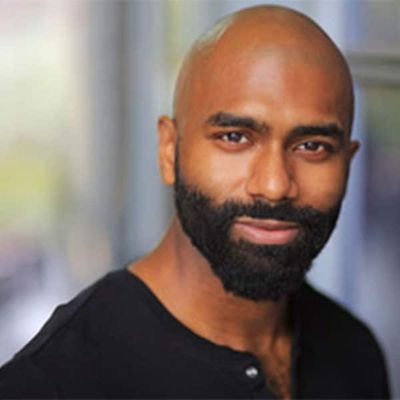
Nik Walker and Paul Oakley Stovall are both Hamilton Musical Company members. They join Ciara Renee and myself for another Spotlight: The Red Pilling of America... Read More
From the show: You Can't Say That!
Guests
Featured Shows

About
Nik Walker and Paul Oakley Stovall are both Hamilton Musical Company members. They join Ciara Renee and myself for another Spotlight: The Red Pilling of America.
More about Red Pilling America:
A thought-provoking series, featuring stellar guests, discusses democracy, American politics and our current socio-economic climate through the lens of Tonya's new socio-political horror film, RED PILL, which has received national coverage on Deadline, Playbill, and more. Guest stars include Metropolitan Opera star Meagan Miller, acclaimed actor Jay Armstrong Johnson, American civil rights leader Rashad Robinson, Hamilton stars Nik Walker, Paul Oakley Stovall, Jon Rua, Aladdin stars Telly Leung and Michael James Scott, actress and activist Joanna Carpenter and many more.
Red Pilling Of America takes place through Marissa Lynn Daniel Studios on Zoom. Proceeds will go towards the funding of Red Pill and to supporting actors during COVID-19. For more information and to enroll, visit, www.marissalynnstudios.com.
You Can't Say That is produced by Dori Berinstein and Alan Seales, edited by Derek Gunther, music by Cat Dail.
A proud member of the Broadway Podcast Network.
Transcript
This transcript was automatically generated and might contain errors.
[0:00] Tonya Pinkins: Hi, my name is Tonya Pinkins, and I'm the host of the podcast You Can't SAY THAT on the Broadway Podcast Network.
[0:07] Tonya Pinkins: This fall, I have a special treat for you.
[0:11] Tonya Pinkins: In honor of my debut feature film RED PILL, Marissa Lynn Daniels Studios been hosting weekly conversations with my fellow Broadway colleagues and co-host Ciara Renee about the red pilling of America.
[0:27] Tonya Pinkins: These conversations create a safe space for us to talk about the things that are on our mind with an election and a global pandemic.
[0:37] Tonya Pinkins: So join us for the Red Pilling of America, a spotlight series every Saturday at 5 p.m.
[0:45] Tonya Pinkins: Or on the Broadway Podcast Network, You Can't SAY THAT, BPN.fm forward slash YCST.
[0:54] Tonya Pinkins: Join the conversation.
[1:01] Nik Walker: We gotta say what's new for you.
[1:15] Paul Oakley Stovall: And yeah, news, not noise, right?
[1:16] Nik Walker: And she that is what I need. I just need facts. Just give me facts. And I think that what we all saw in the debate was pestilence and a lot of smoke and a lot of bull and just and nothing, you know, so few things that were said that were actually of inherent tangible value.
[1:41] Nik Walker: Um so I I'm always curious to find out what it actually is as opposed to what we think it is or what we fear it is. And um, and I you know, I think that that's kind of also just the story of our nation. Because I think I think that I think that we just as a as American people, I think that we have a very skewed and abusive view of what this country is as opposed to what it actually is.
[2:11] Nik Walker: And I think that that yeah, that gets us into trouble. And I think I think we're at a point now where we're actually starting to reckon with the roots, you know. Like there's been talk of like, are we gonna like change the amount of justices? Are we gonna have a constitutional convention? Like, are we gonna actually start from the ground?
[2:32] Nik Walker: Like, you know, I was having a conversation with a friend, and uh, you know, he said the ideals are beautiful, right? Like that that is all like freedom and equality and the right to pursue, yada yada, whatever. Like that all sounds great. But the truth is it was it was actually never created that way.
[2:53] Nik Walker: And there were there was always an in-group and an outgroup, there was always an us and a them, there was always division, there was always class divide. There were always these things. So even as they wrote these ideals down, feeling as if they were starting at you know, ground zero, just like no, you know, with nothing, a blank slate, that never really happened, right?
[3:13] Paul Oakley Stovall: And you were talking about that as well. It's like we gotta really start reckoning with we gotta go back 1619. We gotta go back like when things really started. Go back to the beginning. France has had five republics and five constitutions since the French Revolution. Five.
[3:30] Paul Oakley Stovall: Like there's nothing to stop us from starting anew. We can learn. Well, and Tonya, you're in where you are in the world right now is a place that used to be one country and now it's two. You're in a place where people said, you know what? We think so different. We're just not going to, we're gonna separate from you.
[3:54] Paul Oakley Stovall: It wasn't always North Korea and South Korea. Why would they come up with those two names? It wasn't always uh Czech Republic and Slovakia. It wasn't, you know, so radical things happen, and um, you know, it's many people that say to me, like, oh, we'll never split, the country will never split.
[4:11] Nik Walker: There are 50 states. It's I think it's just untenable. I I feel that I I worry though, and we had talked about this as well. It's just like you'd asked, is is there a world in which like even just in the entertainment industry or whatever, like do BIPOC or POC people, do we just make our own thing and we just say no, thanks.
[4:32] Nik Walker: We don't want to be a part of what's there, the system that is like, do we just make our own thing? Is that reasonable? Is that like what would that look like? You know, um is it that is that you know, the the blue states like California, New York, we fund the country, right?
[4:51] Paul Oakley Stovall: Um, but the people around us are heavily armed and need our money. So and we need we need their food, they right? Like they would attack us to keep us enslaved, working to keep them supported. You know, that that is the issue. Right.
[5:08] Nik Walker: Do we think it's gonna come to blows? Are we moving towards a civil war thought?
[5:14] Paul Oakley Stovall: It's already come to blows. The civil war has already begun.
[5:17] Nik Walker: You're right. I I unfortunately agree with you on that one.
[5:22] Paul Oakley Stovall: Yes, yes, yes, yes.
[5:24] Nik Walker: Um, okay. So I wanna, so I wanna this face because it's not it's not that I disagree, it's not that I disagree, it's not that I disagree. I also here's my thing.
[5:39] Paul Oakley Stovall: And I we talked about this.
[5:40] Nik Walker: Uh turn off living room earlier.
[5:43] Paul Oakley Stovall: Okay. We talked we talked about this earlier.
[5:46] Nik Walker: I think that um I think that we have to challenge our ourselves to hold space for more things than one. I I think that in this this might just be me and and also, you know, I'm look, I'm a child of divorce, so I'm always trying to keep the family together. Do you know what I mean?
[6:03] Nik Walker: So that's that's just what it is. But I do think that to me, if we view this as something that's irreconciled, if if it's truly irreconcilable, I mean, Tonya, to your point. We are we are babies on the global stage. America is is an infant.
[6:20] Nik Walker: We have not been around as long as these other countries and empires have been around and have gone through so many different types of government and so many different you know, regions and splits and all these things, and we haven't done any of that.
[6:32] Nik Walker: We've we've been around for 400 years. That's that's a that's not even a blink in the span of time, let alone in the span of civilization. So I'm not saying that these things aren't possible and that we shouldn't be thinking about do we want to split, do we not want to split.
[6:46] Paul Oakley Stovall: However, I also think that in order for humanity, I think that this is so many things wrapped up in one, so I'm gonna try to keep it concise. Right now, we are in an age where we are told everything about the technology that we give into that we invest in Instagram, Facebook categorization.
[7:04] Nik Walker: We are we are we are a society right now that thrives on categorization on knowing exactly what this is, and if it's not that thing, then we can't be a part of it. And my thing is I'm an American, I'm an American, I'm an American with all that that entails with the with the history of prejudice and racism and and and abuse that that entails.
[7:24] Nik Walker: I carry that as much as I carry the American dream. And we the need to say I am one or the other, I think that is what's killing. I think that's that might just be me. But I truly think that the challenge to that I put to the country and that I I challenge myself is like, can we hold space for all of it?
[7:46] Paul Oakley Stovall: Can we be both a country with racist, horrible roots and a country where people fulfill their dreams? Can we do that? If we can't, okay. But I also I don't think we've ever tried.
[8:00] Nik Walker: I think that we I think that we've tried to be like, no, we gotta move forward, or we're stuck. We have to do both. We have to both look in the mirror and wrestle with who we are and keep stepping forward. And and I and I I think that we have space enough for both.
[8:15] Paul Oakley Stovall: Maybe we don't. Maybe we don't. So I don't know. I don't know.
[8:19] Nik Walker: Well, and to clarify, so you're saying hold space for and understand that we have this issue and it needs to be fixed, and also we have all these great things as well, right?
[8:31] Paul Oakley Stovall: Like just being more objective and realistic, seeing the whole piece instead of just pieces of the we can't even come into agreement that we have this piece that's not good.
[8:42] Nik Walker: I mean, the president just signed an executive order saying that talking about anti-racism is racist, and so we funded anything that could even have a conversation about that.
[8:54] Paul Oakley Stovall: So we, you know, we can't even agree to disagree or like, you know, I want to have anti-racism. Like he said, no, that's racist, that's abusive. We are not gonna even discuss it in any place that gets nothing from the government.
[9:09] Nik Walker: I mean here's the thing the unique challenge. Um, because I think I love and and I mean this, I love Nik's idealism, and I mean that in the truest sense of both of those words, love and idealism.
[9:25] Paul Oakley Stovall: I think the unique challenge is you look at other countries like um Ireland, who absolutely had borderline slavery, indentured servitude, you can call it, but the uh and other countries that have had the like over centuries, the people that were put in that position were the poorest from that same country.
[9:47] Nik Walker: So as they work through it, it's purely economics, whereas it's very unique the system of how we people of color got here.
[9:58] Paul Oakley Stovall: So the intention we so that uh to work together, if we're really gonna go back, we have to go back to the people who were on the land first and ask forgiveness and let them lead the way.
[10:11] Nik Walker: And if we can't do that, that is a huge challenge, and I think that's the heavy lift for all of us to say, and you know, listen, I do think black people have a different, you know, it's not the same thing that white people will have to do, but there is a reckoning.
[10:28] Paul Oakley Stovall: You you you can't you can't walk up, walk up and down across a graveyard and not expect that eventually that's gonna come back on you, and you can't be naive about the sentient ability of the earth to take care of itself.
[10:43] Nik Walker: Yeah.
[10:44] Paul Oakley Stovall: The earth is a sentient being, it's a woman, and we've been clowning, and now she's putting us in our room.
[10:50] Nik Walker: Yes, she is a woman.
[10:52] Paul Oakley Stovall: Yes, mother. We've just been clowning. Now she's like, go to your room. I've had enough. You I've told you not to smoke in my house.
[11:00] Nik Walker: You've been smoking in my house.
[11:01] Paul Oakley Stovall: You're burning up my lungs. I can't breathe. You're you're crowding me out. You're putting concrete over me. I can't breathe. I'm heating up. I'm hot flashing. I'm going to get rid of you.
[11:10] Nik Walker: And it is in a very at us, it's in a very insidious way that she's doing it because COVID is something that hits us at our core that I can't come and talk to you.
[11:26] Paul Oakley Stovall: So what is that doing to us mentally? So I think there I think Nik is right with the challenge, but I think it's huge.
[11:33] Nik Walker: And I I So how do we mention a documentary that's on YouTube? It's called Aluna.
[11:39] Paul Oakley Stovall: And it is about the it is um the Kogi people of Colombia, who are a group of people who survived the colonialists, they outlived the Aztecs, the Mayans, because they went and they hid.
[11:53] Nik Walker: Oh, yeah, yeah, yeah.
[11:54] Paul Oakley Stovall: And um they talk a lot, you know, the way what they take is they take one of their children, several of their children at birth, and they raise them in a dark cave in constant meditation with Mother Earth.
[12:07] Nik Walker: And so the reason they made this documentary 15 years ago was to tell us the message from Mother Earth of how um little brother is misbehaving and and harming harming her and therefore harming ourselves.
[12:25] Paul Oakley Stovall: Um, you know, capitalism, I think, is the real boogaboo because capital requires labor.
[12:33] Nik Walker: And uh you can't get wealth without labor.
[12:36] Paul Oakley Stovall: And we have a culture that devalues labor and doesn't even want to pay labor to be able to survive.
[12:44] Nik Walker: And yet you can't get wealthy without labor.
[12:47] Paul Oakley Stovall: So it's the capitalist model for me has to go away to something someone said today to a commerce model, which is that we um we keep circulating and reinvesting in ourselves and one another into a model where we really do feel responsible for everyone, everyone feel responsible for everyone on the can you talk about what's the difference between that and that dirty word that gets people confused and upset about sharing everything, you know, the word I'm talking about that makes sense.
[13:16] Nik Walker: Socialism.
[13:19] Paul Oakley Stovall: Yeah. So the difference between what you're talking about, so that we didn't we might not have to use that word, because I like what you're saying, and put that way, I think everybody would be on board.
[13:29] Nik Walker: And then somebody would raise their hand and say, ain't that socialism?
[13:32] Paul Oakley Stovall: And everybody would shut each other. Well, this is one of the weird things that I always do when I go out and talk to uh communities, like, you know, when I get to be in the community and talk.
[13:42] Nik Walker: I think the biggest thing that America has done in the world is we are the masters of spin and PR. And so we sell people on ideas that we actually don't live by. So this idea of socialism. Well, the military. That's the constitution. That's literally the start of it. But for you to want socialism, for you to want to even collect your unemployment check or a welfare check that you've paid taxes for, that is shameful. And we've been sold this idea so that we don't even look at the fact the factuality, like Trump not paying taxes, that's just considered being a good businessman. I bet if you looked at 90% of the wealthy people you know, they're not paying taxes. Right. And they consider that good business.
And they're not going to talk about it because they understand that they need the poor people to pay taxes so they can have the roads and the lights and the fire department. But it's like, well, you know, you don't know better. So that's the price of you not being smart enough to understand the way this system works. That the system says one thing and does another thing. And that's why we don't have a good education system because they don't want us to be able to think.
[14:56] Paul Oakley Stovall: 100% to all of that. Yeah, you're not wrong. You're not wrong. So here's my question. Do you guys ever feel hopeless? And what do we do about that?
[15:08] Nik Walker: Oh, well, that's okay. That's my point all the time in answer to your question. Yeah, all the time. Because when you look at this thing, and you when you look at how exactly like Paul said, exactly like Tonya's saying, like, the challenge is overwhelming. The amount of spin that we have to fight through is overwhelming. And it was designed to be so, right? It was designed to exhaust us. So that, you know, the my I was I was just watching the big short yesterday. Um, and my favorite thing about that movie is how they explain that like so much of the jargon that is used in trading stocks and investing is just bullshit. Like it's not real. Nothing about it is real. It's literally words to confuse you, so that you don't take onus of your money and let these people handle your money.
That's the whole thing. Like it actually, when broken down, is not that complicated, but it is made to seem such. And that I completely agree that that is the core of America. Um but I think in terms, you know, I don't ever want to be prescriptive about what anybody should do about anything, but I can say for myself, what has helped me is just taking one bite at a time of this freaking whale, taking one bite at a time, and not, and I think the because I think the other lie that the country tells you is that it's all or nothing, that you either have to be saving the world or you're useless. And I think that is the biggest lie that anyone could say, you know, I because think about that. Think about the things that I you know, I talk to my wife about this all the time.
Um, right, we have it we have a wage gap. We have not beyond beyond a wage gap, we just have a complete inequality of sexes. And speaking honestly, the people that are on the bottom of this totem pole are black women. Let's just be real about what this country has done. And the amount of gaslighting that goes on to our black sisters, and the amount of lies that we are told about our bodies and ourselves, not just as black people, but also, but especially to women, the amount that my wife's had to school me and be like, you don't know the amount of shit that I have to fight through on a day just to maintain my sanity, just to wake up. And it was truly jarring for me because I know what I got to do as a black man.
I have no idea what you all have to do as a black as black women or as women's color. Like that's a whole separate thing. What I do know is that my mind is my own. And finding those little ways to just remind yourself that they can't take it away from you. And that goes across race and across everything. I think that in a world that sells and that works on your manipulation. What can you do to take back control of this? What can you protect? What are the boundaries that you can put up to protect your space?
[18:11] Tonya Pinkins: Oh, but boundaries, we don't talk about those. We don't talk about healthy confrontation. We don't talk about boundaries. We don't talk about agreeing and disagreeing healthfully. Like we don't talk about anything. With the queen of healthy confrontation, Tanya, here we are.
[18:25] Nik Walker: Here we are. She never saw a confrontation that she didn't go toward.
[18:33] Paul Oakley Stovall: Yeah. Honestly. If I value you, I want to be radically honest with you. Because um, then I you know, I think clarity is security for me. Um put that on teachers. No, and I've and I and I try to be radically honest with people because that's when I know who are the people who are gonna be in my life for the long haul. If I can't bring that to you and have you like be crunchy and uncomfortable with that, and we survive that, then this is gonna be a transactional relationship. And I don't want to have that many transactional relationships in a lifetime because for me, really, it is the relationship with others that make being human so meaningful. So I'm looking for where are the real relationships that we're gonna struggle and wrestle with and learn from each other because we're different. Like I welcome difference and I welcome valuing somebody being different from me and being able to understand and accept and ride with that.
[19:31] Nik Walker: Do you do you feel like and I I love all of that and I I agree. Like I want people, and I think I do. Like my friends are all very different and they don't actually really intersect much. Like I feel like I'm one thing and there's all these different spokes of people, you know, like when I bring them all together for like a going away party, they're like, who are you?
[19:53] Paul Oakley Stovall: Yeah, yeah.
[19:53] Nik Walker: Yeah, like how um, but that is so this is this is a spot where I feel like sometimes I feel like I'm hitting my head against the wall or I feel hopeless a little bit. Is like I feel like because I have felt othered, I am capable of the empathy necessary and like compassion or whatever necessary for me to say, oh, you know what? I actually I can see all these different points of view and value them and respect these people and love and have compassion for them, even if we disagree on things. Like I'm able to be in that space. And I'm I'm not the only one. I think well, a lot of people are, right? But I feel like because I was othered, like what do we do we feel like it's possible, or do you guys feel like it's possible for people who haven't necessarily been othered to find that kind of um open space?
Because that's essentially what I would say we need, right? Is we need the people who are not consistently oppressed, who are not who are a part of the system oppressing, whether they are meaning to be or not, you know, intentionally or not, you know, the people who don't have to think about only survival, the people who don't feel othered, the people because there are a lot of people who, you know, there's there are some classes of people in in this country who don't have to think about this stuff. And it doesn't make them good or bad or otherwise. But I have conversations, you know, with you know, cis white men, and I'll say, well, but this is how I see the world and how I've experienced it and things I've been through.
And they're like, Huh, I never would have even thought of that. You know what I mean? And right. So it's like a fish doesn't know that it's in water. So these white men, they don't even know which it's so alien to them. I'm sorry, right? But but but that is, and that and that's what makes me nervous, is right. So like I I want to I want to be able to connect with all of these people, and like just like uh going back to what you were talking about, like we can hold two things at once. I was like, I don't think we're ready because as a mixed person, that never happens. That doesn't occur. Okay, I don't get to be two things at once, or even the four or five things that I am, I get to be one thing the way you see me or you see me.
Like that's all that it is. So we're not at a place yet where we're holding two things, but I'd like to be. But my biggest question is do we think it's possible to have these conversations? Like, how do we get to a place where the people who never have to think about this are open to thinking about it?
[22:13] Nik Walker: I do feel like we've made some progress in 2020, like, but I don't know if it's it right now.
[22:18] Paul Oakley Stovall: We're doing it right now.
[22:19] Nik Walker: Yeah, okay. It's happening. We are it is we are doing it right now as we speak.
[22:28] Paul Oakley Stovall: And I also gotta I also gotta pick piggyback off of that because I think I think going back to your other question about how we maintain hope, and this is gonna I do not look, I'm gonna I'm gonna preface this by saying, I do not wish this virus on anyone on any single person. I do not wish it, I do not wish it, I do not wish it. Please be safe. Please wash your hands. Please wear a mask. However, the arrogance of a group of people to get together days, mere days after a Supreme Court justice has died, who her dying wish was please wait to replace me and get together having a party to celebrate the nominee that will replace her. And you get together in this party, and you're not wearing masks and you're not social distancing and you're hugging each other.
And now you are a super spreader of this virus. The irony of that, because the thing, and somebody tweeted out today, I was like, I'm holding on to that. You know what wasn't a super spreader was the goddamn Black Lives Matter protests. We did not super spread anything. We did all those protests, and that virus didn't go buzzing around. Y'all had one party, and that virus said, shut the F up. And you know they weren't washing their hands either, let alone. I mean no, they were of course they don't want. And I was like, and what better what occurred to me, Tier, to your point, the arrogance that that takes to, in the middle of a global pandemic, think that your money or status will save you.
[24:05] Nik Walker: But that's but it has, but it has, it has up until this point, it has, and it almost probably still will. I'm in Korea. I'm in Korea, and um a country of 50 million people that has only had 400 deaths. Everyone wears a mask everywhere all the time. We can go into restaurants, we sign contact tracing things, the newspaper, your phone, when you come into the country, your phone sends you a message every day. The 124th person with COVID was in this place, and they went here and did. I mean, like the information that you're given every day, all day about where it's happening, what's happening is that's available to us, but I think it's our immaturity as a nation that we're like toddlers. I you can't tell me what to do. No, no, no.
[24:54] Paul Oakley Stovall: Well, because Nick, because Nick, the problem is it's not that they think that uh the global pandemic is not going to get them or that they're gonna be protected from it, is that they don't believe that there is one. That's the problem.
[24:54] Nik Walker: Not that they think they're involved, they don't think that the thing itself is a thing. It's like what I was saying about you know, a lot of cis white men, a fish doesn't know that it's in water because that's just what it's always been in. So if it ever came up to the air and saw how everyone else is living, that fish was starved, and you'd have to calm them down. And you know, that that's they just oh, and that's that's kind of what that's that's why I say it's kind of not what I've because enjoyed is the wrong word, but even to even the thought of these people getting a little taste of being like, hey, that's what it feels like when you can't breathe. Just so you know, just so you're aware. I know you're gonna get the best, the best medical treatment in the world, and you'll be fine tomorrow. Whereas you know, everybody who looks like us has died. But just so you know what that feels like, that's kind of what it feels like a little bit.
[25:57] Paul Oakley Stovall: So, how do we do it? But what we also don't know with this virus is there are long term effects. I have young friends who have recovered and they still are wheezing four months later. The cognitive issues, the respiratory issues. This virus sticks around for a long time and it is working on every single bodily system. I mean, it looks like it's trying to just um use us as a host and just live in us forever. Because remember, a virus doesn't want you killed, it needs a hook. It needs to be fed. Right. It needs a host. So it's not trying to kill you. It's trying to figure out how we can live together. And I'm gonna just take enough so I get what I want and keep you going. Right. And the ones that are had pre consist pre existing conditions have died, but the majority of people do continue to live because the virus is like cool, cool, cool, cool, cool, cool, cool. Now go on over there. Take, don't put a mask, don't put a mask, no, go on over there. And spread some more so we can, yeah. That's what the virus wants.
© Broadway Podcast Network, All Rights Reserved