

Kristin Chenoweth first auditioned for You’re A Good Man, Charlie Brown, having no idea which character she was reading for. It wasn’t until she got to the first day of rehearsal and she looked at the place card by her seat and it read “Kristin Chenoweth as Sally Brown.” That was the beginning of a journey that took Kristin from working actress to global star... Read More
From the show: And the Award Goes To... Hosted by Ilana Levine
Guests
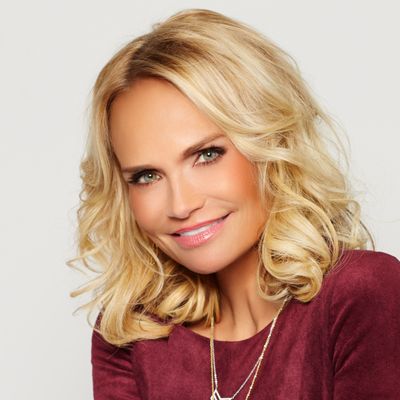
About
Kristin Chenoweth first auditioned for You’re A Good Man, Charlie Brown, having no idea which character she was reading for. It wasn’t until she got to the first day of rehearsal and she looked at the place card by her seat and it read “Kristin Chenoweth as Sally Brown.” That was the beginning of a journey that took Kristin from working actress to global star. The reaction by audiences and press alike was unprecedented. Her uniquely operatic voice, her comedic timing, her ability to portray a child even though she was an adult- were all the ingredients for a perfect marriage of actress and part but the true game changing moment happened when composer/lyricist Andrew Lippa (The Wild Party, I Am Harvey Milk) showed up one day with a new song for Kristin called “My New Philosophy “ history was made.
Welcome Tony Award winner Kristin Chenoweth to the podcast.
Hosted by Ilana Levine, Produced by Alan Seales, part of the Broadway Podcast Network.
Transcript
This transcript was automatically generated and might contain errors.
[0:00] Kristin Chenoweth: Hi everybody, this is Kristin Chenoweth, you’re listening to And the Tony Goes To…
[0:22] Ilana Levine: Have you ever dreamed of winning a Tony Award? Did you ever practice your Tony acceptance speech in the bathroom mirror? Did you grow up watching the Tony Awards every year? Do you have a collection of Tony Award shows on VHS tape that you refuse to throw out? Well then this is the podcast for you. Every week I interview your favorite Tony Award winners, and together we go down memory lane as my guests share intimate and never before shared details about their Tony experience. By the end of every episode, you’re going to feel like you just won a Tony. Welcome to And the Tony Goes To… I’m your host, Ilana Levine.
[1:02] Ilana Levine: Welcome today’s Tony winner, Kristin Chenoweth.
[1:09] Ilana Levine: And the 1999 Tony for Best Featured Actress in a Musical goes to… Kristin Chenoweth, You’re A Good Man, Charlie Brown.
[1:19] Kristin Chenoweth: I’ve never changed my clothes so fast in my life. I have two families to thank. B.D. Wong, Ilana Levine, Roger Bart, Stanley Wayne Mathis, and Anthony Rapp. I love you guys like brothers and sisters. Michael Mayer, I’d work for you anytime. Andrew Lippa for writing me a great song. All the producers that believed in our show. Clark Gessner, Charles Schultz, Jay Bender. My agents at Richard Baumann and Associates. Mom and Dad, you drove me to many, many hours of ballet and dance classes. I hope you feel it’s worth it now. My brother, you sat through all those recitals. You’re the man for doing that. My fiancé, Mark, I love you. Thanks for holding my hand through all of this. My mentor, Florence Birdwell from Oklahoma City University for teaching me how to sing. Thanks to the voters. Love you guys.
[2:09] Ilana Levine: Hi, Kristin Chenoweth.
[2:11] Kristin Chenoweth: Hi, Ilana Levine.
[2:13] Ilana Levine: So as you’re listening to that, can you kind of share whatever memories are running through your brain?
[2:20] Kristin Chenoweth: Yeah, yeah. It’s emotional because can you believe Laverne, we call each other Laverne and Shirley. Can you believe Laverne that that was 1999 first of all? Yeah, crazy. And then I remember as I listened to the speech, I remember definitely saying that I had two families and obviously you know what I meant by that because people think that, oh, things just happen. It’s by happenstance sometimes or luck or right place or right time and all of that is true. All of that is true. Universe, timing, training combined with timing, all that. But really it’s about for me that moment was about the people that had helped me get there and that was two families. The immediate one which is my mom and dad, my brother and then my, you know, I don’t like it when actors say, and I’d like to thank my cast.
But when I think it’s confusing when people say that what they mean by that is you’re mine, I’m yours, you guys helped, you guys won that Tony with me is what it felt. And I wanted to say each of your names because I wanted y’all to know that it wouldn’t have happened without, it wouldn’t have happened. We were six of us in total and it just wouldn’t have happened without everybody. And you know, what else I think about too is how quickly I ran through, you know, I didn’t plan that speech, Alana. I didn’t plan it because I think that that’s bad luck. If you plan something for sure, you’re not going to get it. But as you know, I had like a, I don’t know, 30-second change backstage and the very first thing I thought is if I don’t win, I’ll have changed and gotten all dressed up with no place to go.
But I was so happy to be to the party. And then when I hear your voice, and this is not because we’re on this show together. I’m just telling you the truth. When I heard your voice scream so loud for me, so loud for me, a woman, another woman who was as celebrated as I, screaming for me that I won, like from her gut, having to go out there and then not wanting to forget anybody. You know, it’s very, it’s a very emotional, maybe it’s because I’m 52 now, maybe I’m not sure why, but it’s very emotional to listen to. It’s something I know that we all worked hard for because our show closed a week later. And, you know, it just wasn’t done, it wasn’t done alone. So that’s what I think when I listen to the speech.
And also, I have to bring up the obvious. I was engaged at the time to the wonderful actor and singer Mark Kudisch, who we remain extremely friendly today, and I’m definitely, his family is like my family, and my family is like his family. We still stay in touch, and when I go to Florida, I see his mom and sisters, they’re like my own. But, you know, we didn’t make it as a couple, but he was there for me too, and he really walked me through that whole awards season thing. I didn’t know what that was, really. I’ve never been through anything like it. So, those are the memories I have when I hear the speech.
[6:11] Ilana Levine: So, how did you get cast in You’re a Good Man, Charlie Brown? Can you remember from the beginning of the process how the show came to you and became a game changer for you?
[6:27] Kristin Chenoweth: Yeah, you know this story so well, and I enjoy telling it for many reasons. The main reason is because I want the young listeners, y’all’s young listeners to really hear that you have to follow your gut. Because I had been cast as the role of Winnie in Annie Get Your Gun, opposite Bernadette Peters. And who doesn’t want to do a show with Bernadette Peters? That probably means job security at the time, that means a revival, that means a supporting character, that means singing and dancing, and it means just all those things. But my agent brought me up the idea that they wanted to see me for Charlie Brown, and I said, what part? And they said, they don’t know, they just want you to come in. But you already have the job of Annie Get Your Gun.
And I said, you know what, I think I’m going to go in. Something told me. Then I get there, and B.D. Wong is there. And I’m thinking, well, if B.D. Wong is in this show, you know, that’s pretty cool too, right? Yeah, yeah. So, and Anthony Rapp had already been announced, and I go in and I decide to sing a song that, it’s very long and a storytelling song, I’m not sure why I chose it. That’s, I don’t know why, but I sang Taylor, the Latte Boy. And that’s how long that song has been in my life. And Michael Mayer sat behind the counter and he said, I have an idea, but I can’t tell you what it is yet. You’re just going to have to trust me. But I’m going to want you to be in this show. And I said, well, is it for Lucy?
He said, no. I said, is it Peppermint Patty? He said, I cannot go any further at this time. You’re just going to have to trust me. So I left the audition, you know, kind of going, what does this mean? Right. I don’t, you know, would you ever take a job now without knowing? No, we wouldn’t. Or would the words trust me? Trust me, right? I want to trust you, but. But I don’t know what you mean. So I called my agent and they were like, well, you have to do Annie Get Your Gun. Mark Kudisch was like, I think you should, you know, you could take a risk, but Annie Get Your Gun is going to be the better, going to be the more safe option. Right. And in my gut, and Alana, you know, I’m a spiritual person.
In my gut, that voice was saying you have to do Charlie Brown. You have to do Charlie Brown. So I went with it. I took a risk on myself and I trusted Michael Mayer, thank goodness. And next thing I know, we’re having our first table read. And do you recall when we arrived, how our places were all set together and we had hats with our characters on them? Do you remember? Yep. Okay. Mine was Sally. And he said, I said, Sally, Sally, Charlie Brown’s little sister. Oh, my gosh. And he said, yeah, we want you to create that role because you are her. And I was like, oh, no, she’s a little brat. But anyway, that’s how that role came to me. And then I was lucky enough that once I trusted him, he trusted me.
I went and he went through every sketch that Charles Schultz had written with Sally. And we tried him out, as you know, in Skokie and everywhere else to see what was going to work. And then Andrew Lippa wrote My New Philosophy because we just kept laughing that every other strip in the beginning, it was My New Philosophy for today is. And it was, that’s how that part was born. Can you believe that story? It is true.
[10:38] Ilana Levine: Well, I mean, talk about building something in a revival, the idea of bringing something in from the ground up that didn’t live before. It’s so incredible. I mean, it really is an extraordinary thing because in the middle of all of this and it is it is well documented that this cast and this production was one of the most like aside from how joyous it was to be in the audience because these are such beloved characters and so many of the songs, you know, like Happiness were known to the audience already. For us, it was probably to this day one of the most joyous experiences I know I’ve ever had. And I think as a cast, we reunited often enough to share with each other that it remains just so special.
But I want to talk about the thing that really changed the balance because Sally hadn’t been a character in the show before. Sally didn’t have her own song. And so something had to be written, not just because the vocal stylings of Kristin Chenoweth are the most extraordinary on the planet. And what a waste to not have it. But in all fairness to the character, she deserved an anthem, as it were, when all the other characters had one. So talk about how My New Philosophy, which is a song that has gone down in musical theater history, is the song for so many young musical theater artists. How did you walk me through your memory of how that song came to you and the kind of back and forth working on it? And when did you know it was like, this is the song?
[12:09] Kristin Chenoweth: Okay, I’m going to start with your last question first. Okay. I never knew it was the song or like a powerful moment until we opened in Skokie, Illinois. I never knew because Michael Wisely, our director, kind of because we were playing
[12:41] Kristin Chenoweth: You’re A Good Man, Charlie Brown, Ilana Levine, Kristin Chenoweth, Ilana Levine, Kristin Chenoweth, Ilana Levine, Kristin Chenoweth, Ilana Levine, Kristin Chenoweth, Ilana Levine, Kristin Chenoweth, Ilana Levine, Kristin Chenoweth, Ilana Levine, Kristin Chenoweth, Ilana Levine, Kristin Chenoweth.
[14:01] Kristin Chenoweth: And even Ilana Lucy's song, Do You Know Something Schroeder? I mean, everybody knows that song. Like, all of our songs, and This is a Cloud, da-da-da-da, da-da, that song. Like, everybody knows those songs. The snow comes up, Charlie Brown, it comes up. Everybody knows, and I didn't want to, and Kite, Flying a Kite. I wanted the song to, I wanted it to rise to the occasion of what Clark Gessner and all the people had done before, and I knew Lippa could do it, but I wasn't sure we were going to nail it. But when the philosophies of Sally kept coming up, I was in, I can't remember what day it was, we were in rehearsal, and he said to Michael, I need five minutes with Kristin privately. And he took me into the other room, and he played it.
And this is how you know when you found a person that you, that really understands what kind of gifts you can bring, because I completely understood the song, and I knew exactly how it needed to be done. And I knew exactly what to do with it, and I knew my way around it from the very beginning, and that's a testament, not to me, not to me, to Charles Schultz and to Andrew Lippa. So, once I got my brain and memory and mouth and words and heart and spirit around it, I knew that that was, that was going to be the song, perfect song for the character. A little sidebar, and this is an ode to Jerry Mitchell, our incredible choreographer. He was so sweet, and he was like, we'll choreograph the crap out of it, because you can dance, and I was like, okay.
So we get into dance rehearsal one day, and we had all this choreography, and I said, I just kind of remember slightly raising my hand, I don't know why I did that, it was just me and him and Stanley. I said, I don't, I don't feel like I need this choreography, because I think this is not a dance song. This is a, this is a character song. This isn't a dance song. I mean, there can be movements and there can be Sally-isms in there. And he said, are you sure, are you sure? And then we showed Michael, and Michael goes, now do it how you think, Kristen. And this isn't, this is also an ode to Jerry, because Jerry also was listening. And, you know, when you live in a character, you kind of feel stuff.
And he listened, and he goes, I think you're right. I think she's right. And Michael goes, let's go with that. Let's go with that right now. I think she's right too. Now, it wasn't about me being right, Ilana. It was about me, when you're an actor and you live in a character and you have an incredible team who will listen to you and go, I'm living in her shoes. And my new philosophy is the star. The words are the star. Not, it's not going to be, you know, Jerry Mitchell extravaganza amazingness, which I've worked with him several times since. And it's incredible. But it wasn't that. So that's just a sidebar that when you think you should get married to something, especially I'm speaking to the young artist right now, don't get married to it. Never know what it's going to be. Never know until you get in the room and you start playing.
[18:08] Ilana Levine: When I watched you create Sally, there was such a kind of perfect symmetry between you and the character from day one, your humor and your certainty about how the world should be. We're just kind of glorious to watch as the whole thing kind of snowballed into what we all know now as Sally Brown. But talk a little bit about how you created that character and where you drew from and what were the inspirations as you started really getting to know her?
[18:27] Kristin Chenoweth: Oh, OK. I'd love to, because I love talking about character, as you know, so much. I went to the park. I wanted to watch meltdowns. I wanted to watch how they ate. I wanted to watch how they treated their siblings. I wanted to watch especially, you know, little brothers and little sisters. So I went and I watched that for physicality things. I watched my niece who did this weird thing, which you know about it because I put it directly into the character. Whenever she pointed at something and said no, she did that all the time. No, that's Emily Chenoweth. She pointed, but whatever item she was pointing at, her finger would kind of go off to the side. So she wouldn't point exactly at the thing that she was trying to.
So if you watch the performance online anywhere back then, you'll see me doing that. She inspired me a lot because she was also a little sister to my nephew, Zach. And she was frustrated because she couldn't get things to do and work. I was a little brother to Mark Chenoweth who all they ever wanted to do was keep up with him. And I didn't like to be left out. But he has a chemical engineer brain and I had an artistic brain. And I was frustrated when I couldn't understand algebra. And I couldn't understand the scientific reason for A, B, and C. I couldn't understand the way sometimes his brain worked. And I'm sure he didn't get sometimes the way my brain worked. But I just went back to those times as a little kid trying to keep up and getting so frustrated that I couldn't. Also, I'm petite.
So I couldn't keep up physically with him either. That frustrated me as a child because I wanted to run like him. I wanted to do everything like my big brother. Finally, though, I think the key for me what really clicked after physicality and taking myself back in time and remembering was, you know, Sally was written by Charles Schultz. And the way she was written was very adult. So I decided that Sally was an old soul. And I know lots of people wouldn't say this necessarily about me, but I have been told my whole life the same thing. It sounds funny coming out of this weird speaking voice and being petite, but an old soul. And so I decided to play Sally as almost as an adult. Because if I played her as a child, if I went and played a hat on a hat, so to speak, then it wouldn't have worked.
It would not work. When you have a character that says that does a whole monologue, as basically I viewed her as a lawyer pleading her case most of the time with the teacher. Right. And those monologues were long and a whole, you know, diatribe about ice cream and why, you know, chunky monkey was the best and the wire hanger sculpture. And exactly why did she get a D? And this is why she didn't deserve it. So I began to, yes, have the physicalities down and took myself back in time. But then I thought this little girl doesn't know she's five. She thinks she's grown up. So that was the key to unlocking the character.
[22:12] Ilana Levine: You know, I got a front row seat to watching the world catch on to something that I felt like I had had such access to and was so privy to kind of watching this star emerge. And it was an incredible thing to behold. But you had to live it. You were sort of in the middle of a still doing the show while suddenly in this ensemble with someone who is now sort of becoming a rock star at the same time. I mean, the reception to what you were doing, people identifying and feeling so seen by Sally. I mean, that was the key to it. There’s your talent, your unbelievable, one of a kind, singular, never seen before brilliance. But also coupled with people going, that’s me. That’s me. And watching you navigate this sudden rush of attention on you when you had just been making your way with tremendous integrity and commitment to your craft.
And everyone knows, I mean, you not only have this incredible belt, you're an incredible opera singer, right? I mean, you have all of these things that you've been working on your whole life. And suddenly it's not just you and your incredible singing teacher and your family and some casting people. It's the planet. And that doesn't happen a lot. And how when you look back at that, how do you remember that?
[23:53] Kristin Chenoweth: Well, I remember a couple things. Again, I'd like to start with this because it's not just because we're on the phone. And I wish our cast was on the phone, too, because I wish if I never said this to you. I know I've said it to you, but I'm sure I've said it to BD. I'm sure I said it to everybody, actually. I remember when it changed overnight, literally for me. Meaning just overnight. And then I believe we had to go on a Rosie show the next day. I believe. I can't be for certain if I have the timing down. Yeah, we opened and then went to bed at 4 in the morning and got to Rosie at 530 in the morning. So it was a crazy night. It was a crazy night. And I had not been a usually a reader of a of reviews at that point because I just thought if I can be even mentioned in a review, I would.
That'd be fine by me or in a good way. Not not in a bad way, but in a good way. Right. Nobody wants to be reviewed badly. That would be a lie to say that you would want to be reviewed, have your name brought up in a negative way. But my doctor, can you believe this? Called me at home at like three in the morning and said, you need to get the New York Times. You need to go get the New York Times. I said, no, no, I can wait till in the morning. I've got to go to bed.
[25:23] Kristin Chenoweth: We have to do this thing tomorrow. And he said, No, no, no, this is a once in a lifetime. It will never happen this way again in this fashion is what he was saying. You need to go get it. So dad, mom and dad, who you know, Ilana, went down to the corner store back when we had corner stores and everything was open. Right. And before you can read the review on your computer when you had to go buy the physical paper. Thank you. Exactly. And he went and brought the New York Times. And dad said, Well, do you want to hear the headline? I said, Well, uh, do I? And he goes, Yeah, you do. And I said, Okay. And he read it to me. And he said, Your sister's gutsy, Charlie Brown. And as he began to read it, I thought about all the times my dad sacrificed for me, my mom and my father sacrificed for me so I could continue taking lessons ballet, piano, even at a time when we didn't have very much money at all.
And the review was so much more than it was about us. It was about our family, because I know there had been sacrifices made. And I was celebratory with them, you know, and I, and as I heard his voice began to kind of shake as he was reading it, you know, that's an interesting thing to hear your dad get emotional for you, you know, so then I'm just reliving it right now. I'm going back into my apartment, my then apartment, I'm thinking about everything. So then I'm going back to my apartment, my then apartment, I'm thinking about everything. So then when we showed up the Rosie O'Donnell show, I remember thinking, I don't want anybody to, I don't want anybody in our cast to feel less than or I want everybody to be together still.
I don't want anyone to go away from me. You know, because that had happened before younger, and in Oklahoma, and it doesn't matter, I was the only one pretty much in my town who's saying, but you know what I mean? Right. And not only did y'all come towards me, but you held my hand. It was like, as if we had all had that. And by the way, the review was lovely about a lot of, you know, all of us, but it focused on and I just thought, I don't want to even, I want to act like that never happened now, because I want us to keep doing our show. And a testament to the cast and our brothers and sister, we, y'all did that for, y'all did that for not just me, but for us and for the show. And I never once felt that I was being shunned or getting in trouble or people were mad at me.
And that's probably what made the whole experience even more special, because I thought to myself, next time, Kristen, when you're in a show, and somebody blows up, I mean, blows up and gets the reviews and you remember that, that how you're being treated. And I remember doing Promises, Promises with Sean Hayes, and he just was so beloved and perfect, literally hand in glove role for that. And you know, nobody really wanted to see Kristen Chenoweth play a woman who was having an affair, who tries to commit suicide. I had to do it for myself. I had to do that. I had to, you know, play, play that role for myself. I wanted to sing the score. But people loved Sean Hayes so much in the show that because of examples I had been shown in Charlie Brown, I held his hand.
I was with him. I- And you supported him. Yeah. Yeah. And I, you can do this. You can do this. And you and BD and Stanley and Anthony and Roger did that for me. So that just shows you the power of true kindness, I guess is the word, kindness shown towards somebody. You know, it wasn't a thing I expected. I didn't know this was going to happen. I didn't know. You know, I didn't know. That's the truth.
[30:02] Ilana Levine: Well, I got to tell you, the first time you opened your mouth and said one Sally-ism, I was like, if this doesn't happen, I will be furious and I'm leaving the business. Because if people don't understand what is happening right now, and if they're being vivid, then I'm sorry. And that is how I feel. And the reason no one felt anything except love and an overwhelming pride is because working on that show, the sentiment of You're a Good Man, Charlie Brown, really is love and family and there's room at the table for everyone. And we all got to shine and we all lifted each other up. And we all had more laughs during that show than people should be allowed to get paid for, right? Like it wasn't, it was just the most extraordinary time.
And I really hope in the future, there's another revival because the feeling of community and love and the spirit of goodwill in that musical, in that tiny little musical, so powerful. It's as big as any of the hugest, you know, Andrew Lloyd Webber pieces, like the weight it carries, even though it's a little band and a little group of misfits, is really just magnificently representative of the world and what we can do when we hold each other up. And you have continued to hold me up. And when you said, like, how many years ago we did that, I still can't even wrap my brain around it. But before you make me cry again, we have to just wrap it up with like a couple of happy, superficial questions. I love those.
[32:01] Kristin Chenoweth: So, who did you bring to the Tony Awards?
[32:05] Ilana Levine: I brought my then fiancé, Mark Kudisch, and he was a wonderful date. And anybody else, like was anyone else in the mezzanine? Were you allowed to bring more people or that was it?
[32:14] Kristin Chenoweth: My parents flew in from Broken Arrow, Oklahoma to New York City and they sat in the balcony. They were in the nosebleeds, but they loved every second of it. Yes. And then we were, we were all brought together by, I can't remember, maybe the show's publicist at the time. We found each other. And at the Tony party, I remember getting to meet Bernadette Peters and thinking, wow, this is just, you know, talk about full circle and somebody that I admired, but yeah, that's who was there.
[32:49] Ilana Levine: Wow. Okay. What did you wear? And guys, the story of Kristen's quick change, just quickly, Kristen performed My New Philosophy. I did a little cameo in it with Stanley Wayne Mathis at the Tonys. And then the Tony Awards people had her category happen right after her song. They made it up to you by giving you the Tony in all fairness, but this was a crazy quick change that had to happen. What did you change into in the seven seconds that you went from Michael Krass's extraordinary Sally costume to who's dress?
[33:22] Kristin Chenoweth: Tommy Hilfiger. I remember that the show's publicist said, who's going to dress you? I said, why me? I guess, you know, how about, how about I reach out to Tommy Hilfiger? I was like, you do that? You know, I didn't even know that was a thing. Of course. Of course. So I went for my fitting and I remember Gwyneth Paltrow had worn a really pink, pretty pink dress for Shakespeare in Love. Do you remember that? Of course. So I wanted that pink and I wanted little, you know, something studs on it. So he built me this beautiful dress. And then I find out that my category is right after, and they want me to stay in my costume. And I was bemoaning this to Rosie and she said, no, no, no, we're going to get you extra dressers.
We'll be backstage. And I go, but what about the Sally Brown wig? Oh my gosh. Well, I had a wig master from Steel Pier, another Broadway show, my Broadway debut in a musical. And he said, why don't you plop that wig on? I'll straighten it out. And so he straightened out that wig. You were there, Alana. I think three people changed me. That's crazy. It was like the Indy 500. If you imagine all those guys in the pit.
[34:40] Ilana Levine: Like they changed my tires. I didn't move. I did not move. It was crazy. And then we plopped that wig on and then they called my name. Wait, but you forgot one thing for a second, the dress, your Sally costume got stuck. So the whole plan was almost thwarted.
[34:56] Kristin Chenoweth: Oh my God, I forgot. Because like the zipper or something got stuck and you were like, get it off. You know what? That's when I became Satan. For one second. Yes, I was like, cut it off. I don't care if you have to cut it. I wanted to wear that Tommy Hilfiger gown. Okay. I wanted to be viewed as an adult.
[35:17] Ilana Levine: And you were, and it was like just watching it. If people had seen in the audience and all over the world watching literally what was going on. And then you glide effortlessly, like literally with someone like putting one more pin in your head and one more shoe on your foot. And then you're like, that was, and then you said the greatest thing, the perfect transitional line from chaos to winner, which was, that was, what did you say? That was the quickest. I've never changed clothes so fast in my life.
[35:49] Kristin Chenoweth: I know. All right. Where, so you got the Tony, where is it? Where is it?
[35:56] Kristin Chenoweth: I have a theater in my hometown that now has a, we're building a school and we have Broadway bootcamp every summer. And it has some memorabilia of mine in the lobby. And it's, it sits there at the theater, which is where it should be. So that when my campers come in, my Broadway bootcampers, and when we do shows there, five shows a year, equity shows that people can come and see it and see some other things that have meant things throughout my life. And that's where it will always be. That's where you get to visit it.
[36:37] Ilana Levine: That's exactly right. Sometimes I go, did I actually win that thing?
[36:43] Kristin Chenoweth: You did. And you were there beside me. I have not left your side since. I love you so much. I'm so proud of you. I cannot believe all the things that have happened since then, but that's a conversation for another day. Thank you for being on. And the Tony goes to, I love you so very much.
[37:11] Kristin Chenoweth: I love you too, sis. And just remember that you were, you guys were all with me. And I, it was a moment in my life. I'll never, ever, ever, I'll never forget. And I love you.
[37:27] Ilana Levine: And the Tony goes to is produced by Alan Seals for the Broadway Podcast Network. The music and lyrics for the theme song were written by Georgia Femusa. Theme song orchestration by Alexander Sage Oyen. Episodes are edited by Derek Gunther. Thank you to Parody Bill for the graphics. And please don't forget to go to the iTunes show page and rate and review the show. Thanks for listening. Excerpt from the Tony Awards used with permission of Tony Awards Productions.
© Broadway Podcast Network, All Rights Reserved