

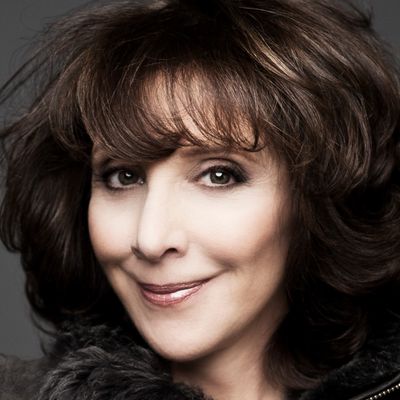
Andrea Martin is an actress, singer, and comedian, best known for her work in the television series SCTV and Great News. She has appeared in films such as Black Christmas (1974), Wag the Dog (1997), Hedwig and the Angry Inch (2001), My Big Fat Greek Wedding (2002), My Big Fat Greek Wedding 2 (2016), and Little Italy (2018)... Read More
From the show: And the Award Goes To... Hosted by Ilana Levine
Guests
Featured Shows
About
Andrea Martin is an actress, singer, and comedian, best known for her work in the television series SCTV and Great News. She has appeared in films such as Black Christmas (1974), Wag the Dog (1997), Hedwig and the Angry Inch (2001), My Big Fat Greek Wedding (2002), My Big Fat Greek Wedding 2 (2016), and Little Italy (2018). She has also lent her voice to the animated films Anastasia (1997), The Rugrats Movie (1998), and Jimmy Neutron: Boy Genius (2001).
Andrea has been equally prolific in the world of theater, winning Tony Awards for both My Favorite Year and the 2013 revival of Pippin. Martin also appeared on Broadway in Candide, Oklahoma!, Fiddler on the Roof, Young Frankenstein, Exit the King, and Act One. She has received five nominations for the Tony Award for Best Featured Actress in a Musical, more than any other actress in the award's history. She received her first nomination for the Tony Award for Best Featured Actress in a Play for the 2016 revival of Noises Off.
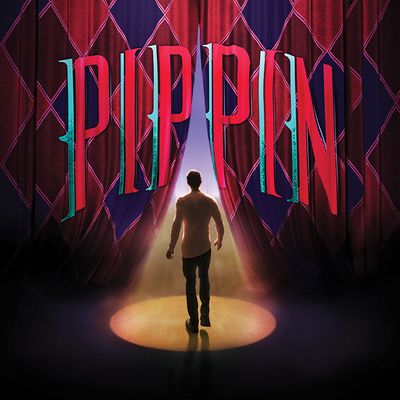
This episode dives deep into how director Diane Paulus and Andrea breathed new life into this classic show. It's the idea of circus, and how to bring that to life.
Hosted by Ilana Levine, Produced by Alan Seales, part of the Broadway Podcast Network.
Transcript
This transcript was automatically generated and might contain errors.
[0:00] Andrea Martin: I'm Andrea Martin and you're listening to And The Award Goes To...
[0:22] Ilana Levine: Have you ever dreamed of winning a Tony Award? Did you ever practice your Tony acceptance speech in the bathroom mirror? Did you grow up watching the Tony Awards every year? Do you have a collection of Tony Award shows on VHS tape that you refuse to throw out? Well then this is the podcast for you. Every week I interview your favorite Tony Award winners and together we go down memory lane as my guests share intimate and never before shared details about their Tony experience. By the end of every episode you're going to feel like you just won a Tony. Welcome to And The Tony Goes To... I'm your host Ilana Levine. Welcome today's Tony winner Andrea Martin.
[1:06] Ilana Levine: And the American Theatre Wing's Tony goes to... Andrea Martin, Pippin.
[1:17] Ilana Levine: With five nominations for acting, Andrea Martin takes home her second Tony Award. She won in 1993 for My Favorite Year. Oh my gosh, I ran up here like a longshoreman because I know we only have 75 seconds. I'm so sorry. Carmen Marc Valvo gave me this dress. Nobody else would. Anyway, I just want to thank him. Listen, I'm so nervous and I'm going to put this down because I know it's such a collaboration this show and I don't want to forget anybody and yet I wrote this speech out but the font is too small so I'm really scared I'm not going to be able to read it. So I love Pippin. I love the cast of Pippin. Each one is a singular artist. Thank you all so much, by the way, for voting for me. I'm so all over the place.
Each one is an artist and it's a privilege to share the stage with them. Yannick Thomas, my partner in the sky. Je t'adore. Jamais deux sans trois. You know how wonderful it is for a woman of my age to be held in a man like that and never dropped. It's unbelievable. Gary Gersh at Innovative. Perry Zimmel, my manager. Michael Oscars, my agent of over 40 years in Canada. Thank you for your unwavering love and support. The Weissers, the Kagan's, our producers and Diane, Diane Paulus, our extraordinary director for giving me this opportunity. Oh my god, Gypsy Snyder for making a dream come true and letting me run away with a circus. You're brilliant. To Chet, I'm going to read this. To Chet, Brad, Dominique, Scott, Kenny, Nancy, Charlie, Nadia, Mia, everybody I've ever trained with and the brilliant Nathan Lane, my darling friend, for your inspired collaboration.
To the crew, Michael, our rigger for keeping us safe. Who did I forget? Roger, what does that say? Oh, O'Herson and Stephen Schwartz who wrote this thrilling, no, who wrote this thrilling musical. Thank you so much. My boys, Jack and Joe, you are the reason I'm standing here. Thank you so much and thank you.
[3:24] Ilana Levine: Watching that speech again, hearing it back, I don't know if that's something you've been in the presence of before as you've been honored at different times, but I'm curious today, which is just a few days after the anniversary of 50 years that Pippin first, it's on October 23rd, it was 50 years since Pippin first dropped down on planet Earth. Can you just tell me what your thoughts were while you were watching the speech back?
[4:00] Andrea Martin: You know, I was so all over the place like I was in the actually giving the speech. Gosh, it was so emotional. The fact that I forgot Roger O'Herson who wrote the book, my God, that I forgot his name, that I was there with my son, which is always so special. And was the happiest time I've ever been on Broadway. I mean, I've loved everything I've ever done on Broadway, but that was so special because I've loved the circus for so long. And, you know, Chet, our choreographer, just passed away a couple of days ago. So that was so emotional. I realize how fleeting those moments are. And so I guess it caught me off guard this morning. It was very emotional watching it.
[5:00] Ilana Levine: Well, you know, the family that that show seems to create each time it's done is really remarkable. Your cast with Terrence Mann and Matthew James Thomas and Charlotte DeMoss. I mean, Rachel B. Jones, people who were just starting, people who were, you know, huge names already in the Broadway community. The one thing I remember when seeing the show is how truly an ensemble it felt like. It felt like a family up there when you say circus, like it felt like a family that was in the circus. And I wanted to ask you, because I've talked to other actors who've worked with Diane Paulus, and they've mentioned that sort of at the beginning of the process, she asks you to bring in a monologue or something that you've written to help create your character or share what you think about your character. Was that part of this Pippin process?
[5:50] Andrea Martin: Yes. And it's the greatest thing ever. And I use it now with every show that I do. It was a series of questions, five questions. You know, they informed who the character was, where she was before she is at that moment in her life. What is a secret she keeps from everybody from the cast, which I thought was a really valuable thing, because it kept just kept, you know, the idea of spontaneity all the time. And then she asked us to use those five questions and write a scene about it and do it and perform it. Honestly, it was really the greatest preparation for a part. And then after we finished Pippin, and I went on to do another show, I couldn't remember all the questions like I can't now. And I called her and her assistant Mia, and she gave me the questions again, I will always use, use it, you know, we just created a whole scenario for the whole past for the character.
[6:54] Ilana Levine: Incredible thing, right, to kind of develop a new aspect of your craft. I mean, you have been doing this for a long time. By the way, I believe you are one of the most nominated actresses for the featured actress in a musical category in Tony history. You do a play and everyone responds immediately to this very unique take that you bring to everything you do. I wanted to kind of go back a little bit to sort of how Pippin came into your life. You completely put a brand new stamp on what was considered an idea of a grandmother that people knew before, but you were like the hottest, sexiest grandma, like you made grandma something everyone aspired to after they saw you in the show. So can you talk to me about how you found out this production was coming? Based on what did you decide to do it? And when you said I love the circus? Talk about that component to this production?
[8:06] Andrea Martin: Yeah, so I love and have been enamored and followed every performance, every movie, anything that Giulietta Messina, who was married to Fellini did, you know, to me, she was the ultimate clown, beautiful actress, but her heartbreaking inside and always funny, always amusing. La Strada, Giulietta, the spirits, anyway, so I, you know, if your audience knows anything about Fellini, he, his movies were like circus, like the circus, really exaggerated characters. And, and he actually did a movie about clowns. And so I'd followed him, I followed the, you know, the lore of the circus. And, gosh, I remember watching a movie years ago, called Freaks, which was actually about the sideshows in the circus.
And so I've just, you know, I've just been kind of electrified by it. It was always a dream, I guess it is for a lot of people to run away with the circus. So this part came about, I was, my agent asked if I was interested. And I, I said that I had remembered how Irene Ryan did the part. It's Irene Ryan, right? Who did the part originally? Yeah. And, and it was kind of a little cameo, kind of like stunt casting. And I don't know, I, I didn't want to do it. I thought it was effective, for sure, when it was first done. But it wasn't something that I was interested in doing. I wanted to be more part of the play. And also, the way the song was done didn't resonate with me. It's time to start living. For me was where, where was I at my life? I, I had two sons, and I think I was 65 at the time. So time to start living. See.
[10:10] Andrea Martin: Like it was much more urgent than just stopping and doing a couple of jokes and leaving. And I really wanted to connect with the audience, because I realized that most of the audiences in Broadway are my age. And I thought everybody in this audience is struggling with the idea of mortality. And how would the song resonate? Time to start living, time to take a little from the world we're given, time to take time for spring will turn to fall in just no time at all. And when you're 65, you really are feeling that, you know, most of the time you shut it away, but you're feeling it. It's obvious. So I said I didn't want to do it. And then Diane asked if I would speak with her. So I went to bed that night, and I had this image of how I wanted to do it.
I don't know, it just was so clear to me, Ilana, I can't tell you, it just, it was, I just saw how I wanted to do the piece. I had no idea what Diane wanted to do. But I knew how I could bring it to life in a real, authentic way to where I was in my life. And I presented it to her and I said I wanted to be integrated in the circus in the show. I didn't want this just to be a little cameo moment. And I told her how I pictured the song to be, and I wanted to be doing something in the circus. I didn't know it was trapeze at the time, but I knew that I wanted to do something that she was a young girl at one time, a really successful circus performer. Now that she was 65, she was relating to her grandson what that meant.
Diane agreed. And then I met the beautiful Gypsy Snyder and I said, Gypsy, I want to do an old-fashioned circus act, not something newfangled like silks and like Pink, who I worship does, you know, she uses silks in her performance and also acrobatics, but I want to do something real traditional. So she said, what about the stationary trapeze? And I said, that sounds great. See, you can tell how excited I am still talking about it. That's how, you know, that's how much that part meant to me and how much it meant to me to connect, to send that message to the audience, to have a collaborative, it really was a profound inner monologue for me. There you go.
[12:52] Ilana Levine: Something that happens to you, this sort of how I will do a part coming to you in a dream or a vision, or was that unique to Pippin?
[13:05] Andrea Martin: I think that was really unique to Pippin. I certainly come prepared for sure. I do a lot of work before I, you know, before I actually am in rehearsals. Yes, I think that was the only time it came to me, because it wasn't just the part, it was the idea of circus. How do you bring that to life? So I've lived with that notion or that fantasy for 65 years. So it was a much larger context than just the part, right? You were so, you know, it's funny, because it's such a comedic part in some ways, but you were so elegant. But your elegance is sort of what I remember, because it goes, we all had this, if you are a Broadway lover, you might have had a preconceived idea, right, of what this part is. And then as soon as you got into the theater, you were aware, like, this is not your, you know, your father's Pippin, right?
Like, this is a new, new life was breathed into this thing. And it was really thrilling. And some people will only get to see it if you go on YouTube, you can see the, you know, the performance of the opening on the Tony Awards. I mean, there are ways to see like little snippets of it if you weren't fortunate enough to be there. Although it is an original Broadway cast recording, where you really feel the performance in the songs, you know, it's wonderful the way your characters really kind of come to life, even just listening to it. But the way so two things, I know, you've been so vocal about what being a parent has meant to you and what your sons and your family mean to you. So a just getting to see you play a part where you connected so deeply with Matthew James Thomas, and, and I remember just crying when I was watching it, I'm going to cry now, because it was like, you guys were very, I mean, maybe this will be like Officer and a Gentleman, and we'll find out you hated each other the way you know, Richard Gere and Deborah Winger didn't really like each other. But what I saw was this unbelievable bond between two artists on stage.
[15:22] Andrea Martin: Thank you for saying all that you said. I did love Matthew James Thomas, I still love him. But I saw in him, my sons, one son in particular. And so that's interesting. How do you make something so, well, that's, I mean, we see it all the time on in the theater. But you're right, this was a musical and a spectacle and had to reach the last row in the audience when I sang the song. That part came easy to me because I've been doing that, you know, so much in my life. I love connecting with an audience. I don't tell many people this, but I, I don't like, I like seeing an audience and most people don't. So I asked Diane if she would bring the lights up a little bit so I could actually see the faces of the people that I was singing to when I sang that song.
It was really important. What is I gosh, what was I guess, was it a challenge? You know, I'm not gonna even say it was a challenge. I'm going to say this gift was given to me. And because of where I was in my life, everything just materialized, honestly, the intimacy with which I sang to you.
[17:01] Andrea Martin: So I'll talk about the trapeze. You want to talk about? Um, yeah. So I so I asked Gypsy if I could learn something that was a traditional circus, and the trapeze certainly is certainly and stationary trapeze is also. So she thought that that's something that I could do. And then I went to circus school in Brooklyn and in LA, and worked really hard and loved every minute of it. And then I got to work with Yannick, who is from France, like the four acrobats were French acrobats. And he was a young man in his 20s. And so again, that was, you know, I just kind of put my sons in it in where he, you know, was or where Matthew was. It was very visceral, right? Singing that song and seeing your kids grow up.
It's hard to detach from that you're so in it. If you're living that in your life, there's very little artifice, really, it's just all genuine. And so I just worked very hard on the trapeze. And I worked very hard getting strong and healthiest I've ever been. And every night before the show, I would go out and warm up with the acrobats. And we kept in touch. I've been to France a few times to see them. And, you know, they're all in their 20s. And I mean, but I never thought I was older than them. You know, I just felt like we're all in this together. We're all young people performing because that's how the trapeze was. It was supposed to be when I was a young girl and a star in the circus. So I don't know, it was a kind of a seamless.
Look, every part I do wasn't like that. But it was kind of seamless and effortless in one way, and really effortful in the other to keep strong and to be able to perform on that trapeze, because I'm also really frightened of heights. So when I did that, when I was in rehearsal, I was always scared. But on stage, during the show, I was no longer frightened, because I felt like I was the actual acrobat doing it. So it was really a very deep, profound experience all the way. Obviously, you know, you sort of berated yourself at the beginning of this conversation. Oh, my God, how did I forget Roger Herson's name? Because you want to tell me and, and our brains and our bodies detach from each other at those heightened moments in life.
So, of course, I wanted to ask, you know, Stephen Schwartz, and who wrote the lyrics and the music and Roger Herson, who wrote the book? Yeah. 50 years ago? Yeah. Were they involved at all in this revival? Um, Stephen was for sure. So there's this beautiful little musical interlude when I'm on the trapeze, it's like a music box. And it's not in the original score. So I asked Stephen, I said, I had pictured her being on the trapeze, like that ballerina in a music box that you open. And he wrote that music.
[20:20] Andrea Martin: How incredible. For that moment. Yeah, it was incredible. Not only was he there, he was happy to be a part of this re-imagining of something he had done before. Yes, yes. Boy, it seemed like it to me. I don't know what he did, you know, after we all left, but it seemed like a genuine collaboration.
[20:41] Ilana Levine: Well, I mean, imagine for him and for all of the original creatives and the new creatives to kind of realize how at the moment you guys brought it from ART to Broadway. I know that the reception in Boston was also just over the moon from your audience. And obviously, you know, there were many nominations for your show. I wonder in our last few moments, if you can talk about, you know, you had won before. We mentioned that you've been nominated many times. I don't know if it gets easier each time once you've been through the process of Tony's. A, you were doing the show. B, the amount of press you have to do around the Tony's. It's all exhausting, the physical demands of this part. But when you finally got to the theater on the night of the Tony's, you mentioned you were with your son. You mentioned at the top of your speech who was happy to give you a dress, which I wonder, is there a backstory to that? Or was it just grand appreciation for the designer?
[21:49] Andrea Martin: You know what? Listen, you know, Carmen, Mark, maybe I didn't say it clearly enough. You know, nobody, no one was interested in donating a dress to me. And I didn't know Carmen. And then a friend of mine was helping me dress. She said, you know, Carmen, Mark, Mark Valvo would love to do that. And I thought that is so beautiful. And I love the dress that I got. And I really wanted to give him a shout out. I don't know if I did it properly, because it sounded like, you know, nobody else would be. But anyway, I didn't mean that I meant that he was so open, generous and gracious to helping me. And you know, so I do want to say a moment about Chet Walker, who passed away just recently, took all the dances from Bob Fosse and reinterpreted them for the audience and for the dancers.
And he was a real critical part of the, you know, I didn't do too much dancing in it. But I just remember that each person, Gypsy, the acrobatic director and Diane and lighting, every single person had a voice in the process. It wasn't like anybody was behind the scenes. Usually there are a lot of behind the scenes people, but the costume designer who did Cirque du Soleil, you know, it honestly did feel like a traveling circus because everything was out in the open. And we all, I don't know, talks to, I guess collaboration is the word, in a real, in a real different way than other collaborations are. And that's why I think you're already starting with incredible material that's tried and true. But then when you have that kind of love and communication attached to the process, you get Pippin and that production.
[23:49] Ilana Levine: So when I was asking about sort of the number of times you've been nominated, and the fact that you won, did it make going into that night easier for you? Did you think you would win? Do you ever think you're going to win? Like what, what was that?
[24:04] Andrea Martin: Yeah, you know, I'll be, I'm going to be really honest at the risk of sounding like, I don't know, arrogant or narcissistic. You know, I have been nominated a few times. Thank you for mentioning that. And I kind of knew when I was going to lose. I actually did know when I was going to lose. I just had a feeling. And those evenings were much easier because I was really just thrilled that I'd been nominated and could come and be a part of the group. But the pressure is kind of off because I just, you know, from so much buzz, and especially now in the world of social media, you kind of know before what everybody, you know, that kind of what's, what's at the top. I mean, I guess there are surprises, but don't seem to be in the Tony so much.
And then I, with all the buzz about Pippin and I'd won so many of their awards before, I just thought, well, maybe this was the night I was going to win. My favorite year though, was a totally different thing because I'd never been on Broadway. I was 45. I was living in LA. I was bringing up my kids. I didn't honestly, this won't gel as genuine, but it's the truth. I didn't really know too much about the Tonys. I'd never been on Broadway. My favorite year was, I was 45. So that came out of left field. Honestly, I had no idea what to expect. Would I win? Would I wouldn't win? I'm going to now go to New York. And then what do I have to get a drink? So it was totally not in my sphere of living, but that's all.
[25:44] Ilana Levine: Well, yeah. Do you remember? Yes. I mean, I know this event wasn't yesterday. It was a few years ago, but I wonder, do you have any memory of getting from your seat to the stage?
[25:58] Andrea Martin: Yeah, I totally remember because they told us that we had a very limited time and because I am, and I, you know, I accommodate everybody. I'm like, I'm not going to go over. I'm going to really be the one person. So I ran up to the stage. I really did run up to the stage without much grace or I don't know, femininity. I just pulled, hiked up my dress and jogged up the stairs because I wanted so much to be able to say thank you to the people that I did. Yeah. So I do remember exactly. And I also remember my favorite year because my dress became, when I got up, the zipper came undone on my dress and my sister had to zip me back up. So I remember that.
[26:45] Ilana Levine: Oh, my God. Well, here's my last question for you, because when it was announced that you had won, they said, Andrea Martin. And I didn't know that was the correct pronunciation of your name. So I'm going to ask you to end this conversation. Could you slate your name for me?
[27:10] Andrea Martin: Yes, dear. I can. It's Andrea Martin. I'm like, okay, so the one job description of actually being a presenter is getting a name right. But that's fine.
[27:21] Ilana Levine: Okay. Well, I'm relieved because I have had the pleasure of knowing you for a very long time. And I was watching it yesterday going, Oh, I've been calling. She's been so gracious to not correct me for 20 years. So I'm glad to know it wasn't me. It's usually me. I'm glad to know it's not me. Um, you are such a, you know, I have to say when I when I posted on the social medias, um, that I was going to have the privilege of speaking with you today, I feel like my phone blew up. Like, how beloved are you? Wow. From SCTV, to, you know, to the my big, fat Greek wedding fans to theater fans to just all of the kind of ways in which you've lent your success to so many organizations doing such incredible work in the world to the Armenians globally, who just think of you as theirs.
One of the highlights of my career, which you're not going to mention, but I am going to was working with your husband, Dominic Famosa in the rose tattoo, which was, again, a huge departure for me. I'd never done a classical piece like that Tennessee Williams, and your husband was so generous with my insane. You know, I came pre because this is how it's going to be done. This is how he's going to be because I've been working on it for so long. And he was so gracious. And I loved him. So when I was asked to do this today, because I said to you, I don't do any podcasts at all. I'm like, I'm definitely going to do that with that family member. That was an incredible time. We had a new baby and and to go to Boston and with the great Nicky Martin, and you and a whole cast of incredible people and to get to live in that language, which was very different for him to write like it was they were such character roles and and the and the weight of sort of, you know, and all the people that came before.
And yet you all made it your own. And you, as always, talk about number one on the call sheet, making everyone feel seen and able to do their best work. That is what you do. So thank you. On behalf of my husband. Thank you for just being the most beautiful artist and for coming on the podcast today.
[29:42] Andrea Martin: Thank you, Ilana Levine. And thank you.
[29:53] Ilana Levine: And the Tony goes to is produced by Alan Seales for the Broadway podcast network. The music and lyrics for the theme song were written by Georgia. Theme song orchestration by Alexander Sage. Episodes are edited by Derek Gunther. Thank you to Parody Bill for the graphics. And please don't forget to go to the iTunes show page and rate and review the show. Thanks for listening. Excerpt from the Tony Awards used with permission of Tony Awards productions.
© Broadway Podcast Network, All Rights Reserved