

Growing up in the midwest the seventh of eleven children- Norbert Leo Butz was surprisingly unaware of The Tony Awards. If he had practiced any speech in his bathroom mirror it most likely would have been for the Academy Awards or Grammy Awards yet here he is - a two time Tony Award winner... Read More
From the show: And the Award Goes To... Hosted by Ilana Levine
Guests
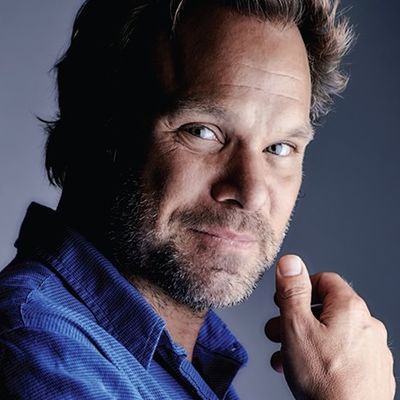
About
Growing up in the midwest the seventh of eleven children- Norbert Leo Butz was surprisingly unaware of The Tony Awards. If he had practiced any speech in his bathroom mirror it most likely would have been for the Academy Awards or Grammy Awards yet here he is - a two time Tony Award winner. The win for Dirty Rotten Scoundrels was such a joyous win and joyous night for Mr. Butz. It was while Norbert were starring in The Last Five Years that David Yazbek came to him and said he was writing the musical version of Dirty Rotten Schedules and wanted him to be in it. In this episode Norbert is so honest and vulnerable as he describes how often he felt like he didn’t know what he was doing with the role- wasn’t sure he was funny enough ( of course he was !!!) and then we talk about the night Bruce Springsteen came to see the show and how that made him weep for hours after because of the enormous emotional reaction he had to meeting his idol. That and so much more as we deep dive into the life of two time Tony Award winner- Norbert Leo Butz.
Hosted by Ilana Levine, Produced by Alan Seales, part of the Broadway Podcast Network.
Transcript
This transcript was automatically generated and might contain errors.
[0:00] Norbert Leo Butz: Hi there, this is Norbert Leo Butz and welcome to And the Tony Goes To...
[0:22] Ilana Levine: Have you ever dreamed of winning a Tony Award? Did you ever practice your Tony acceptance speech in the bathroom mirror? Did you grow up watching the Tony Awards every year? Do you have a collection of Tony Award shows on VHS tape that you refuse to throw out? Well then this is the podcast for you. Every week I interview your favorite Tony Award winners and together we go down memory lane as my guests share intimate and never before shared details about their Tony experience. By the end of every episode you're going to feel like you just won a Tony. Welcome to And the Tony Goes To... I'm your host Ilana Levine. Welcome today's Tony winner Norbert Leo Butz.
[1:09] Norbert Leo Butz: And the 2005 Tony Award goes to Norbert Leo Butz, Dirty Rotten Scoundrels.
[1:20] Norbert Leo Butz: I feel like crying because when I heard my name I just got the joke. I just got it. Oh no, I first and foremost want to thank God because there's no way that somebody with my name from South St. Louis, Missouri ends up at Radio City Music Hall holding one of these without some divine intervention. I want to say hello to my daughters, my beautiful daughters Clara and Maggie, who are my inspiration every night and every day. I love you two so much and there's no school tomorrow. Okay, my parents are here. Norbert and Elaine, yes he is the culprit. My best friend Michelle Federer, thank you for making me laugh on the inside again. Ellen Flack, my manager, thank you for believing in me from the beginning.
My agents, especially Lindsey Porter and Larry Taub, thank you so much. Thank you to Marty Bell, a truly compassionate producer who's given me another great part. The Old Globe Theater, a great regional theater who gave us a home to create this play. Support regional theater around the country. To the best cast on Broadway, Sherry, Scott, my dear, dear, dear friend and my wonderful scene partner and my life friend, Joanna, Greg, Sarah Gettelfinger, and to John Lithgow. John, I have one of these but you have, and I'm honored, but you have what I really want, which is the respect and the gratitude of every person in this community. I love you so much. Thank you.
[3:02] Ilana Levine: Hey Norbert Leo Butz. Hey Alana Levine. Do you remember that night?
[3:11] Norbert Leo Butz: I do. I have like snapshot memories of it. A lot of it's kind of a blur. There are gaps. There are big gaps in the memory. But listening to it again brings back even more memories.
[3:24] Ilana Levine: That's what I was going to ask you. Have you heard it since the night?
[3:29] Norbert Leo Butz: I think I have. It's been many years. You know, what strikes me first is how much has changed, even from, let's see, that was 2005. So yeah, so many things have changed. Time, it just goes on. You know, my friend at the time is now my wife. I have another daughter, so there would have been another girl to thank. And just on and on. Do you remember being in your seat when you heard your name called?
[4:05] Norbert Leo Butz: Not really. That part, you know, right at that couple of minutes, I know people say this, that being shot out of a cannon. It really is, man. It's just a rush of adrenaline. And so the memories are kind of vague.
[4:20] Ilana Levine: I totally understand. That's what's been so incredibly fun about doing this show and having conversations with people where we get to go back to what for most is a very happy event in their lives. Do someone who practiced Tony's speech anywhere in any mirror or reflective surface in your lifetime?
[4:46] Norbert Leo Butz: Did I practice a Tony's speech ever in my lifetime? I can't say a Tony's speech, but to be totally honest, you know, I grew up, you know, in a big family in the Midwest. I wasn't really even aware of the Tonys, to be honest with you. I didn't watch them growing up. I had this really, you know, it was this kind of amorphous thing. But I definitely remember holding a bottle of shampoo and like Oscar speeches or Grammy speech. That's definitely in the, you know, in something that I did.
[5:32] Ilana Levine: Well, this, by the way, this is one of two Tonys that you've won. You've had multiple nominations. And I found it interesting. And I'm curious if you can talk about how you decided which one to share or talk about today?
[5:46] Norbert Leo Butz: Oh, that's a good question. I don't even know, maybe now that I think about it, you know, the Catch Me If You Can, which I, you know, was just as scary and thrilling. But I think, you know, that that production and things that were going on in my life at the time were really difficult. There were some really hard things I was going through. And so I feel like the Dirty Rotten speech, as I as you had, you know, you asked me to listen to both of them was just a little bit more celebratory. It was a little bit more. It was funnier, you know. And, yeah, I think that's why sort of happier memories, maybe. Although I, you know, obviously, I'm so honored with Catch Me If You Can as well.
[6:43] Ilana Levine: So I do want to talk about Dirty Rotten Scoundrels, the show that is why we are talking today about a speech. But just to just like quick sidebar, you know, many of us have had showmances in our lives, where we, you know, call them our best friend. Actually, we call them our best friend while we're working together. We don't want people to know that we're more than best friends. Yes. You and your wife, if I'm correct, I think what met during Wicked, is that correct?
[7:20] Norbert Leo Butz: So actually, we had met a decade before that, through a mutual friend of ours. And we did a few readings of a play that was being developed. So we knew each other. And we're friendly, but we became really close during obviously during Wicked.
[7:40] Ilana Levine: And did you fall in love during that show?
[7:48] Norbert Leo Butz: We did. We did. And I was in love with her before I could even admit it to myself. And it is true. You know, we did start off as just really, really, really great friends. But yeah, I was crushing out so hard on her. And, and, and I think she was with me. And but we didn't really start dating, dating until, until after we got, we moved to Broadway. But it was that time in San Francisco, really, we were doing the out of town and, you know, putting together a huge, huge behemoth like Wicked, you know, there was a lot of stress. And she was just the person that our dressing rooms were next to each other. And she made me laugh. And, you know, we just, we fell in love in the darkened theater during Tech.
[8:33] Ilana Levine: Oh, those 10 out of 12 are just the best.
[8:37] Norbert Leo Butz: They're the best. And with Wicked, the tech was a month long. So that was a lot of flirting out in the dark while we were watching other people tech their scenes. So.
[8:47] Ilana Levine: Well, what a happy story. And I love that. And I love that the person you thanked in the speech is still in your life, because that is not always true.
[8:56] Norbert Leo Butz: That's true. That is very true.
[8:59] Norbert Leo Butz: Jack O'Brien, who directed Dirty Rotten Scoundrels, David Yazbek, Jeffrey Lane, everyone involved in the creative team of this show has said publicly and on record, how remarkable it was to have you and John Lithgow at the center of this piece. And what a remarkable coupling. Another showmance.
[9:23] Norbert Leo Butz: Yes, it was.
[9:24] Ilana Levine: That was just extraordinary to behold. But you had also been coupled with Sherry Renee Scott in what became, you know, musical theater history in terms of a show that just is a gift that keeps on giving in the last five years. And here you are reunited in such an unbelievably different sort of musical.
[9:48] Norbert Leo Butz: Yeah.
[9:50] Ilana Levine: Did you guys get offers for this show? Did you have to audition for this show? Did you and Sherry talk about it and go, yeah, let's this will be the next thing we do together? If you could talk about all those things.
[10:03] Norbert Leo Butz: Yeah, well, I mean, even the last five years was a reunion for Sherry and I, because we became buddies doing Rent together. We actually did Rent on Broadway when Sherry took over for Idina Menzel, and I took over for Adam.
[10:19] Norbert Leo Butz: Pascal. And so we actually became great friends in Rent. And then, you know, a couple of years later, did last five years. And then, yeah, and I think it was during the last five years. I remember David Yazbek came to see the show and we had drinks with him afterwards. And I think, you know, it was a casual conversation where he said he had this piece. And I think that was the first time that I heard that Dirty Rotten was in the works. I mean, that the last five years was in, I mean, Dirty Rotten was in the works. And so I went.
[10:54] Norbert Leo Butz: The last Dirty Rotten five years was in the works. That's what you're trying to say.
[11:00] Norbert Leo Butz: The last Dirty Rotten. Well, with Sherry, it's like there's been so many gigs we've done that I do I switch titles.
[11:05] Ilana Levine: Of course.
[11:07] Norbert Leo Butz: But I didn't audition. But what happened was it was, you know, I made I made Lemons. I made Lemonade out of lemons. So I was in Wicked and I got injured. I actually broke my neck. I ruptured two discs in my neck and I had to have a really intense spinal surgery. So I was out of Wicked for three months. And in that time, I got a call from my agent saying that I had been offered a two week workshop of Dirty Rotten. And Brian Stokes Mitchell actually played Lawrence. And we had a ball and that was Sherry and me and Stokes, you know, and, you know, as well as I, the two week workshop is sort of an elongated audition. So it was it was already firing. It was already clicking. And so based on that two week reading, I think, is when I, you know, they officially offered me the.
[12:06] Norbert Leo Butz: Norbert! Norbert Butz! This is John Lithgow!
[12:36] Norbert Leo Butz: John Lithgow used to say to me, before every performance, he was down on the stage level in the star dressing room and I was like up on the 12th floor. Every night, he would walk up all those flights of stairs and check in with me before the show. And he would say, from down the hall, that big booming voice, he'd say, Norbert, where's my bitch? Where's my bitch? And then he'd give me a big, huge bear hug. And then we'd go on and do that and it was a joy, Ilana, from start to finish. And the thing about Dirty Rotten that I'm just so grateful for, I mean, the show was a blast to do. But on our first day of rehearsal at the Old Globe in San Diego, I was going through a divorce and my divorce was legalized the day before we started rehearsal.
So I had to go to court, my marriage was dissolved, and the next day I got on a plane to start rehearsals. And I was really vulnerable at the time. I had two little kids. Sherry Scott had just had her first and her only child in a very complicated labor and delivery, which was really traumatic. And so she showed up still with like scars in her belly. And John had had treatment for some cancer cells that had shown up. So he had to do some, so he was not well. So I remember we showed up on the first day of rehearsal, like the walking wounded man. We were a mess and started laughing our asses off on the first day. And that show, like for the three of us, was like this balm. It was like this, you know, laughter really, really was the best medicine for us. And it just really bonded us. And it just saved me. That show did in a lot of ways. And I'm so grateful for it.
[14:33] Norbert Leo Butz: And for those of us who got to see it and be in the room where that kind of joy and this sort of, it was like, it's it was like magical realism, almost. You guys, it was also heightened. But it was based on this, you know, unbelievably, you felt the deep friendships that you're describing. And it is only probably, I mean, not that you can't have great chemistry with people you hate, because obviously, that's kind of an adrenaline that also works in storytelling. How thrilling for us that we all got to be in the presence of that, because we were healed watching it like that kind of, I mean, it was so smart, and so remarkably sung through by all of you, and then remarkably acted. And I think John Lithgow said, I'm sure he said it to you in between kisses, like not since Jane Curtin had he kind of felt this unbelievably comedic partnership, but also this incredible trust. And it was just it, you made it all seem so effortless, but my god, you worked hard.
[15:51] Norbert Leo Butz: Yeah, we did work hard. But you know, you're right on and we did not fake that that was authentic. That was an authentic love fest. Yeah. Among all of the principals in that show. I mean, Joanna Gleason, come on, Greg Jabara. And then saw an ensemble filled with, you know, people who are still dear friends of mine, you know, Rochelle Rack, and people who have just worked on Broadway over and over. I have so many, it was a joy. And when there's that kind of infectious joy, man, it's, it's, it's, it's just an energy bar of love. You know, you're working hard, but it doesn't feel like work. It feels like hardcore play. And, and, and I loved it. I mean, having said that, yeah, the show was super physical.
I was always injured. I was always in vocal, you know, crisis and all those things you have to do when you're doing eight shows a week. But, but man, and I learned so much along, I learned so much. Jack O'Brien is, you know, he has the reputation he has, because he's just that good. And the thing I think specifically that he did with that show, you know, it's just, it goes into ridiculous, bizarre comedic territory, right? It's just so over the top, but he's really disciplined as a director. And he would kick my ass. You know, if he thinks you're out there, you know, he was his note over and over the piece is funny. You're not funny. It's the piece that's funny. You are not funny. So he just really, really was merciless with us if he thought we were indulging and laughs too much.
And that was an issue for me. I had never been in a great big comedy, you know, getting laughs like that is, is tantamount to taking, you know, a really high grade drug, you know? Yeah, really good, good, good. And you just want more. You want more if you're like me. And, um, you know, he was just that voice and he would get mad. He'd come into my dressing room after a night that he thought I was, you know, straying from the story. And he'd be like, I am not having you. I am not having you tonight. He would say to me, and then I would, and I trusted and loved him so much. I would listen to him. And, and then, and then Lithgow was really just like, you know, every cast really does need that leader.
You hear people talking about being leaders of companies and man, that's, he's just the best. Lithgow's just the best at that. Um, he is, you know, he works the hardest. He is the most generous. He's the most, uh, he's the smartest when it comes to like dramaturgical stuff and, uh, writing things that need to be tweaked. So when you've got that guy with no ego or vanity involved, when you got that kind of energy leading the pack, everyone just follows suit, you know, it's that rule, you know, it's one-on-one of leadership. And so we were just lucky on all fronts, you know?
[19:07] Norbert Leo Butz: Yeah. I mean, when I think about, I mean, this is about you and we're going to go right back to you, but when I think of all of the roles I've seen him in and you too, for that matter, like the variation and the not repeating yourself. And I think the lesson of humility that you're describing when you talk about Jack O'Brien, that kind of humbleness is what makes the number one on the call sheet, um, be beloved rather than, uh, be an ass and, you know, and I think having those people at the helm early on and continuously is just so meaningful in a production. And I think, you know, when I think of the things I've seen you in, um, there, you know, it's really, it's really hard to teach comedy, you know, it's really hard to kind of teach.
You can learn choreography. And if you have natural talent, someone can bring you to other places, but this, you know, you describe how you grew up and it wasn't Tony speeches. Maybe it was a, you know, a Grammy speech and a Pearl bottle, but, um, you are so, I mean, we know you can do things that move us to tears, but this ability to be so funny, like, what is that? Where does that come from? Where did you get your 10,000 hours? Is Mr. Talks to us about that gives you the confidence to kind of push it in the ways that sometimes you have to be pulled back in from.
[20:45] Norbert Leo Butz: Yeah. Um, you're right. It really can't be taught. Um, and I, I had a, I struggled with, with confidence in Dirty Rotten in the beginning I had, um, you know, I knew I could do it. I, I had done some really wild comedies like in co in college, in grad school, I had done Moliere. I had done some really physical, uh, comedic stuff and I just loved it. And I knew I was agile with it. Um, but when I came to New York, my first gig was Rent, you know, and, um, I was with it for a long time and I played the tortured, you know, depressive, uh, HIV positive rock star. And then I went from that to The Last Five Years, which was also very heavy, emotional show. I mean, there's lightness and humor in it, but, um, and then I did a series of off-Broadway plays that were really heavy.
Um, and so I had not done a comedy in a long time. And so when, uh, when we, it came to staging Dirty Rotten and doing like these crazy, crazy comedic, uh, scenes, the Ruprecht scene, for instance, it scared the crap out of me because, um, you know, when you're rehearsing a comedy, a lot of, you know, this, like there are no laughs in the room. You know what I'm saying? It is you're out there doing ridiculous things and making huge choices in a vacuum, you know, talk about crickets and, um, and Jack is stingy. He will not laugh as the director unless he's really moved to laugh. So, you know, if you're getting it, um, and I remembered some of those, some days in San Diego specifically, where I'm like, I remember going to Sherry and I'm like, I suck.
I am not funny. I suddenly had this huge imposter syndrome. I, it was a couple of weeks and, um, all actors know what that feels like. And it feels crappy, like, oh my God, I'm going to get fired. I don't know anything. And, um, and I just kept showing up and trying to have faith and working with this great group of people. And when we, we did start to show it to designers and, and, you know, people looking at rehearsals. And then when an audience came, I started to get my sea legs, you know, the audience really does tell you, um, immediately yes or no, it's a very direct thing. You get the laugh or you don't, and you get the laugh honestly, or you don't. Um, and, and, and fine. So when I finally got an audience there, I started to get my confidence back.
And so that by the time we came to New York, I knew, I knew what the piece was. I knew, um, what was too far. Sometimes I still went over that line, because here's the tricky thing with Dirty Rotten. It invites that kind of improvisational vibe. Um, so it's a thin, it's a fine line, right? Um, yeah, you have to allow for there to be, uh, moments that are totally surprising and new at the same time, really sticking to, to that narrative, um, and being honest about the characters. So, um, so I was just, I was lucky. I was really supported.
[24:12] Ilana Levine: Like I remember, I mean, I was in New York, I was seeing that, you know, that was one of the shows that everyone wanted to see. And I have to tell you something, because the reason I mean, I remember seeing your show for a million reasons, and Sherry was an old friend, and I couldn't wait to see it because everybody was talking about it. But I also was at your show the night Bruce Springsteen came to see your show. And I grew up in New Jersey, and I have been obsessed with him. I've seen him in concert more than any other performer. So it was just like, my head was exploding. And then I want to know, did you know he was there?
[25:02] Norbert Leo Butz: Oh my gosh, this is I can't believe you said that. This was one of the clearest memories I have in all of my time at Dirty Rotten Scoundrels. Oh my gosh, I just even telling this story makes me sweat. So yes, I grew up worshiping Springsteen. When I was in high school, my high school girlfriend had an older sister, and she's like, listen to this. And it was, you know, born to run, and I became a huge fan. And this is from like, suburban St. Louis, Missouri. He was, I mean, I learned how to play guitar listening to those records. I learned how to sing listening to those records. I'm an enormous fan. I have a really strict policy when I'm in a show. I do not like to know who's in the audience.
It doesn't work for me. I know some people love it for me. It instantly gets me in my head. It instantly sort of, I don't like to distinguish any show separate from any other show. I don't like that. I like to, you know. But in the middle of Act One, I had to do a quick change on stage, surrounded by the ensemble guys. So they created this little wall around me, and they would, they were facing upstage, and I had to do this quick change. And one of the guys was like, under his breath, oh, my God, guys, look in the fourth row, it's Springsteen. He's out there. He's out there with his wife and his kids. And I was like, why did you say that? And then boom, I got a, they part ways, and I go out there.
So of course, the rest of the show, and yes, I see him. And it, you know, my stomach was in my throat. I somehow got through the show. I did see him cracking up. So I was like, okay, that's good. After the show, I get a knock on my dressing room door. It's the stage manager saying, Mr. Springsteen and his family are in John's dressing room. He'd like to say hello. I closed my dressing room door. I think I had a beer, and I just tried to calm myself down. I have a, I'm actually a really shy person when it comes to meeting these types of people. Sure. I got the gumption. I went into his dressing room. Mr. Springsteen was there. He was as sweet and gracious and very, very meek, almost shy. Patty Siafa, his wife, was much more.
She definitely was the, was repping the whole family. His kids were beautiful. We talked. He loved the show. I took a moment and told him how much his work meant to me. He said, thank you. I had a car service that took me back home to New Jersey. I got in the car, and I started to weep. I wept, I am not kidding you, for a couple of hours to the point where I couldn't feel my face anymore. I had this enormous emotional reaction. I've thought about that so much. I've talked about it with a therapist, what that was. It's a combination of things. Our heroes, our personal heroes, they're like gods to us. It must have been like what the Greeks felt like with their, but when I found out he was a person, you know what I mean?
He came down to my size. I don't know. Something inside me was like, it wasn't sadness. It was just like, I don't know even what it was. But this idea that I had met the most important artist in my life, I didn't know where to go from there. I'm done. I can retire. I was only 34 years old. I was like, it was just so much to take on. And I had a huge emotional reaction after meeting Springsteen that night. But yeah, that was my Springsteen story.
[29:20] Ilana Levine: Wow. So Springsteen and the Tony.
[29:22] Norbert Leo Butz: And the Tony. Craziness, craziness, craziness. Did you guys feel any pressure or, I don't know, did you have any feelings about the fact that this was an adaptation of a film?
[29:31] Norbert Leo Butz: Not really. I am a huge Steve Martin fan and I remembered seeing the movie. I was a student in London and I remember I went to this Steve Martin film festival. It was like a 24 hour thing where they just showed movies. You could go and just chill and see a couple of movies and then leave and come back. And that was the first time I saw Dirty Rotten Scoundrels on screen. And I just loved it. Cracked up like everybody else. Then when we got the script, it felt like its own thing. Because even the film Dirty Rotten Scoundrels was based on an earlier film that Marlon Brando and David Niven did called Bedtime Story, which is one of Brando's rare comedic performances. And he actually has some really great moments.
It's not nearly as good of a film as Dirty Rotten Scoundrels. And then Jeffrey Lane and David Yazbek are, I mean, come on, they're just geniuses at what they do. So the script felt like, yes, there were some greatest hits from the movie, but it was also its own thing. The jokes were so fresh. Yazbek's lyrics were so consistently, unrelentingly, surprisingly hilarious. Laugh after laugh after laugh. So that really eradicated any memory of the film for me. I was able to just do our show. Yes.
[31:07] Ilana Levine: But I still love the film Dirty Rotten Scoundrels and I still watch it when it comes on.
[31:12] Norbert Leo Butz: Well, I love that I got to see it. I love that I got to see it with my Jersey family, Bruce and Patty and the kids. I love everything I see you in. I think, you know, this is all, having you on the show is just an excuse to say that the amount of pleasure your performances have given me over the years live, and then the endless hours of comfort I've received from listening to you on cast recordings. I couldn't even log in the hours. I owe you, if you got residuals every time I listened to you, well, you'd be a very rich man, my friend.
[31:52] Norbert Leo Butz: Well, you know what? Listen, I'm going to throw it back at you a little bit, because I love your show and I didn't know about your show. Amy Ryan is a dear old friend of mine, and I don't even remember where I read it came up on my feed or something that she had done this podcast with you. And I listened to it, and that's when I first heard your show. And I'm like, this girl is delightful. I just love it. And I have, I mean, Alana, I have listened to so many of the archives of your show during the virus, because I find them so inspirational and funny. Yeah, so I'm honored to talk to you. I'm so glad. All right. You do such a great service for this community. Anyway, blah, blah, blah. Thank you. Thank you. Thank you. Air kisses, air kisses. Yes. Audio, whatever that is, virtual. So I have a couple of like, this is a quick lightning round to wrap it up. And I know you're going to do great. So here we go.
[32:52] Ilana Levine: On the night that you won your Tony for Dirty Rotten Scoundrels, the year was 2005. Who did you bring with you to the ceremony?
[33:04] Norbert Leo Butz: I brought my then girlfriend, now my wife, Michelle Federer, and my mother and father.
[33:11] Ilana Levine: So sweet. Which was a dream. Yeah, I can't even, that's a whole, that's a whole other episode, right? Like bringing your parents to the thing, I can't, I can weep and weep and weep. This is something that not everyone knows the answer to, but they should. What did you wear?
[33:29] Norbert Leo Butz: I wore a tuxedo by Zegna. Is that the name of the company?
[33:38] Ilana Levine: Yes, because you say so. Do you remember who gave you your Tony Award?
[33:45] Norbert Leo Butz: Of course I do. Bernadette Peters. I mean, it was just, it was just, it was just gift after gift after gift. That's bananas. That's bananas. And she pronounced my name Norbert Leo, but Norbert, I can't remember how she said my name, but it was not quite your name, but better. It was better. It was, it was Bernadette. I don't care. She could have called me shit face. And I would have been like, thank you. Thank you. Thank you. Take my Tony.
[34:18] Ilana Levine: And lastly, and in this case, there's more than one, where, where are your Tony statues?
[34:25] Norbert Leo Butz: Oh my gosh. Funnily enough, they're only just a few feet from me right now on a shelf in my, in my office, but I have to full straight up disclosure. I can't believe I'm going to say this. I lost them both for several months recently. My wife and I moved. We stayed in the same community. We live in Essex County, New Jersey, but we moved and all our stuff was in different boxes and attics and basement and storage spaces. And I could not find the box with my Tonys. And I found it like three weeks ago under my bed in our bedroom. This one lone box with the two, the two girls were just inside unharmed. They were returned and I'm happy to have them back. But I was, I was about to like, who do you call when you lose both your Tonys? Is there a 800 number?
[35:14] Ilana Levine: Yes, I'm sure there is. Yes. Yes. Just Google it and you will find it. I promise. Norbert Leo Butz, you are a gift to mankind. I'm so lucky to live on the same planet as you and thank you for being on And The Tony Goes To today. You're extraordinary.
[35:37] Norbert Leo Butz: You're extraordinary Alana. Thank you. And The Tony Goes To is produced by Alan Seals for the Broadway Podcast Network. The music and lyrics for the theme song were written by Georgia Femusa. Theme song orchestration by Alexander Sage Oyen. Episodes are edited by Derek Gunther. Thank you to Parody Bill for the graphics. And please don't forget to go to the iTunes show page and rate and review the show. Thanks for listening. Excerpt from The Tony Awards used with permission of Tony Awards Productions.
© Broadway Podcast Network, All Rights Reserved