
The conclusion of a three-part program paying tribute to legendary Broadway theatre director and producer Harold “Hal” Prince, known for among many other shows, WEST SIDE STORY, FIDDLER ON THE ROOF, and SWEENEY TODD... Read More
From the show: Anything Goes
Guests
Featured Shows
About
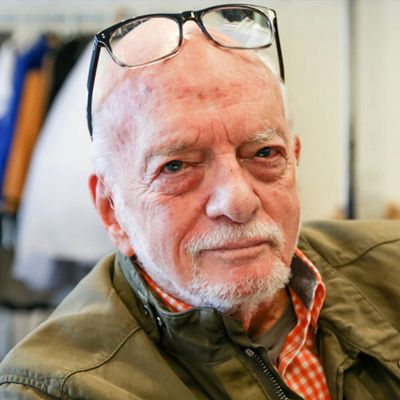
The conclusion of a three-part program paying tribute to legendary Broadway theatre director and producer Harold “Hal” Prince, known for among many other shows, WEST SIDE STORY, FIDDLER ON THE ROOF, and SWEENEY TODD. Celebrating Prince’s 55th birthday, this episode features music from his iconic shows, including BAKER STREET, FLORA THE RED MENACE, IT’S A BIRD… IT’S A PLANE… IT’S SUPERMAN, CABARET, ZORBA, and A DOLL'S LIFE.
Featured songs: “I SHALL MISS YOU,” “A QUIET THING,” “DOING GOOD,” “TOMORROW BELONGS TO ME,” “LIFE IS WHAT YOU DO WHILE YOU’RE WAITING TO DIE,” and “THE BALLAD OF SWEENEY TODD.”
Originally produced and broadcast in 1983. For more information go to AnythingGoesPL.com or BPN.FM/Anything Goes. Theme music arranged by Bruce Coughlin. Associate producer Jeff Lunden. Anything Goes – Backstage with Broadway’s Best – is produced and hosted by Paul Lazarus.
Transcript
This transcript was automatically generated and might contain errors.
[0:00] Paul Lazarus: Hi, this is Paul Lazarus. In the 1980s, I produced and hosted a radio series called Anything Goes, a celebration of the American musical theater. Now, the Broadway Podcast Network is bringing back these shows. This is the conclusion of a three-part series celebrating the extraordinary career of producer-director Harold Hal Prince. This program originally aired in 1983 on the occasion of Prince's 55th birthday and covered the first 30 years of Prince's storied career, from Pajama Game to A Doll's Life. Prince's next directorial effort was a show called Baker Street, based on Sherlock Holmes, of course. And though Prince has mixed feelings about this show, it was a fairly decent and respectable show of its time, and book by Jerome Cooper Smith, music and lyrics by Marianne Grudeff and Raymond Jessel, adopted from Conan Doyle's stories, and choreography by Lee Becker Theodore, in this case.
And I thought I'd feature Martin Gable from this cast, who played the villain, singing about how he's going to get rid of Holmes, and the song is called "I Shall Miss You." This cast also featured Inga Swenson, fresh from her hit in 110 in the Shade, and Fritz Weaver played Holmes.
[1:31] ♪ Musical number: "I Shall Miss You" — performed by Martin Gable ♪
[4:00] ♪ Musical number: "A Quiet Thing" — performed by Liza Minnelli ♪
[8:12] Paul Lazarus: Liza Minnelli singing Kander and Ebb song from Flora the Red Menace, "A Quiet Thing." Prince wrote, Flora the Red Menace was the last of the plays I produced that I didn't direct. It was based on Lester Atwell's book, Love is Just Around the Corner, the story of an extroverted young girl, a commercial artist, looking for work in the post-depression years and becoming involved with the young communists. Prince wanted to direct that shows and writes, of all the shows I've done which didn't work, I regret the failure of Flora, most especially, what it could have been and it was the perfect time for it. Joe McCarthy was dead. Interesting that he feels that strongly about that particular show. He went on to direct and produce It's a Bird, It's a Plane, It's Superman, which considering it was 1966, sort of is a preface for all of these 70s comic strip musicals. Here's a song from the score by Strauss and Adams to Superman.
[9:15] ♪ Musical number: "Doing Good" — performed by Unknown performer ♪
[10:35] ♪ Musical number: "It's a Bird... It's a Plane... It's Superman" — performed by the original cast ♪
[11:17] Paul Lazarus: That same year, Prince both produced and directed Cabaret, another Kander and Ebb phenomenally successful piece of work. Quoting from Prince's book again, Prince was interested in the role of lights in the theatre as early as West Side Story when Jerome Robbins, directing, brought in Gene Rosenthal to design the lights. Up to then, the lights really had been handled by a technician and Bobby Griffith, a stage manager. So this was a kind of novel idea to have a person designated as a lighting designer in West Side Story, but it's become an absolutely normal thing in theatre now. But in describing the lighting for Cabaret, Prince writes, Gene Rosenthal designed a light trough about six feet upstage at the edge of the apron in Cabaret.
Covered with a wooden shield, it rose electronically and could be directed at an angle of 45 degrees upstage to the rear wall. We danced a tiller chorus of lumpen Valkyries across the stage, lighting only their legs. Downstage at 45 degrees, we momentarily blinded the audience, and at 90 degrees straight up into the flies, we made a curtain of dust. Our trough served as footlights for the MC; five waiters singing Tomorrow Belongs to Me stepped across it and disappeared upstage. At the climax of the show, Sally Bowles sang Cabaret, lost track of her audience, broke down, and for the first time in the evening stepped across the footlights into the limbo area, and the audience understood.
[13:22] ♪ Musical number: "Tomorrow Belongs to Me" — performed by the original cast ♪
[15:11] Paul Lazarus: You are listening to Anything Goes with a tribute to Hal Prince, which first aired in 1983 on the occasion of Prince's 55th birthday. You know, I'm only scratching the surface here. I'm neglecting to mention all of the London productions of these shows that Prince directed and all of the other projects that were going along simultaneously with all of this work. But, for example, in between Cabaret's opening on Broadway and the show that I'm going to feature next, Zorba, he managed to direct the London company of Fiddler on the Roof, the London company of Cabaret, and do a production, a revival production of The Beggar's Opera in London, all of that in '67 and '68. But in '69, he re-teamed with Kander and Ebb from Cabaret and directed the musical version with Herschel Bernardi and Maria Karnilova of Zorba, Katsuzaka's book.
And he writes, interestingly, that Arthur Lawrence's opinion was that, I think Zorba was a, I'm sorry, this is Hal Prince, I think Zorba was a frustrating, depressing show. What exhilarated me evidently depressed others. The opening number was called Life is What You Do While You're Waiting to Die. Arthur Lawrence said that sank us.
[16:34] ♪ Musical number: "Life is What You Do While You're Waiting to Die" — performed by the original cast ♪
[17:56] Paul Lazarus: So, what should we do now? Hey, how about a story? Let's all tell them a story. What story? It's all about story. What's it about? What's it about? What's any story about? It's about life. Right. You know what life is? Life is a glass of rum. No. Life is a sip of sage. No. Life is the taste of rocky flowing warmly from the cup. Shut up! Life is a walnut leaf. No. Life is an olive tree. Shut up! Life is a scented melon-breasted woman when her lips are red and full. Life is a barbeque of an orchard and two lovers passing by. Life is my fist in your face if you don't keep quiet. What did you say? I said... Life is my fist in your face if you don't keep quiet. Wait. Listen to me. I will tell you.
Life is what you do while you're waiting to die. Life is how the time goes by. Life is where you wait while you're waiting to live. Life is where you grin and dream. Having if you're lucky, wanting if you're not. Looking for the rupee underneath the rat. Hungry for the fill up in someone else's pot. But that's the only choice. Life is where you stand just before you are flat. Life is only that. Mr. Life is simply that. Mr. That and nothing more than that. Life is what you need till you can't live at all. Life is where you fly and fall. Running for the shelter naked in the snow. Learning that the tear drops anywhere you go. Finding it's the mud that makes the roses grow. But that's the only choice. Mr. Life. Wait! Once again. Life is what you do.
[21:12] Paul Lazarus: While you're waiting to die, this is how the time goes by. Life is what you do while you're waiting to die from Zorba, which is on the road and due to come in a new revival soon. I'm running out of time, and we've just begun to cover Mr. Prince's career on his 55th birthday today. The very next show that Hal Prince produced and directed was a landmark musical called Company in 1970, and as the cliché goes, the rest is history. Just to give you an idea of what Hal Prince has accomplished in the last 13 years, I'm holding a stack of records, which represent some of the shows that he's worked on. After Company, he went on to produce and direct Follies, another score by Stephen Sondheim. Company in London was done in 1972.
A Little Night Music was first heard in 1973, another pairing of Prince and Stephen Sondheim. I also have the score to the film version of A Little Night Music that Prince directed. The revival of Candide in 1974, Hal Prince's environmental staging of that Bernstein operetta. And then in 1976, Stephen Sondheim yet again in Pacific Overtures. Sweeney Todd, the Kurt Weill rare opera Silver Lake at City Opera, Merrily We Roll Along, and leading up to A Doll's Life, which is the last show we'll have time to feature a selection from. I wanted to read one quote from Prince's book Contradictions, which was put out in 1974. I thought it interested me in terms of Prince's own viewpoint on his career and just the latest trends in his career.
He's describing West Side Story as he writes, "We gave a performance for the gypsies, an affectionate term given to dancers and singers in an earlier time when living out of trunks was the mainstay of the commercial theater. Songs, costumes, scenery, or orchestra. I have never heard such a reaction. To this day, 1974, I tend to prefer these performances to the finished ones, probably because the audiences are sophisticated, predisposed in favor of the friends in the cast, and unprepared. Certainly production values should and can enhance. The trouble is that so often they don't. I've never seen a show that was made a hit by its scenery or costumes. Oliver Messel's work for House of Flowers and Christian Berard's for The Madwoman of Shio were equally ravishing.
However, I have seen shows that were seriously injured by the wrong production." And just in light of his own title, Contradictions, I thought that was interesting. I want to finish off this tribute to Hal Prince on his 55th birthday with one song from A Doll's Life, his latest show on Broadway.
[25:02] ♪ Musical number: "Power" — performed by Betsy Joslyn from the Original Company of A Doll's Life ♪
[27:34] Paul Lazarus: Oh boy, we're tight on time here and I've got many things to do. This program very much was a happy birthday wish to Hal Prince on his 55th birthday. Born in 1928 on this day, January 30th. We have time today to feature the opening moment from Sweeney Todd with music and lyrics by Stephen Sondheim. Winning several Tony Awards in 1979, including Best Musical, this stunning show was directed by Harold Prince.
[28:00] ♪ Musical number: "The Ballad of Sweeney Todd" — performed by the Original Cast of Sweeney Todd ♪
[31:09] Paul Lazarus: You've been listening to the conclusion of a 55th Birthday Tribute to the legendary producer-director Harold Hal Prince. Associate producer Jeff Lunden. Anything Goes, backstage with Broadway's Best, is produced and hosted by Paul Lazarus. For more information, visit AnythingGoesPL.com. If you enjoyed this episode, be sure to rate and follow us. Thanks for listening.
© Broadway Podcast Network, All Rights Reserved