

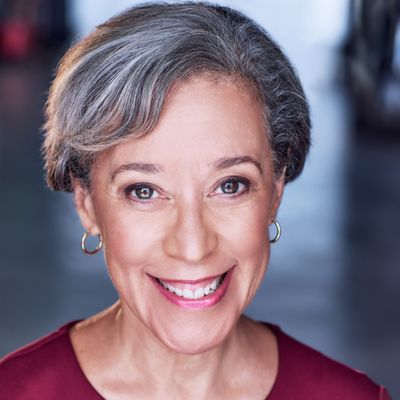
Debra Cardona teaches us that it is never too late to make your Broadway debut! ✨ Her wonderful journey in this industry is inspiring, especially when she talks about her family's heritage in New York's Spanish Harlem!.. Read More
From the show: Backstage Talk
Guests
Featured Shows


About
Debra Cardona teaches us that it is never too late to make your Broadway debut! ✨
Her wonderful journey in this industry is inspiring, especially when she talks about her family's heritage in New York's Spanish Harlem! 🫶🏼
Please visit her Instagram to see what she's been working on!
If you want to know more about our host, please visit his website! Feel free to reach out with feedback or if you want to be part of Backstage Talk!
Follow us on Social Media:
Transcript
This transcript was automatically generated and might contain errors.
[0:00] Martín Acuña: Hi everyone, I am Martín Acuña and you are listening to Backstage Talk.
[0:10] Martín Acuña: Hello everyone, welcome back to another episode of Backstage Talk. Today's guest is Debra Cardona, who was most recently seen as Mrs. Meeker in the Broadway revival of Funny Girl. She also covered a couple of other roles as an understudy on that show, but you probably may have seen her in Morning Set 7, A Christmas Carol, and Soul Doctor, playing in New York, and also a bunch of other TV and film stuff. She played Emma Goldman in Ragtime at Paper Mill Playhouse, Abuela Claudia in five regional productions of In the Heights, which is iconic, one of my favorite characters ever, and Abuela Consuelo in the national tour of On Your Feet. Debra, I am starstruck to have you over. Welcome to Backstage Talk.
[1:04] Debra Cardona: Oh, thank you so much for inviting me. I'm so happy to be here.
[1:08] Martín Acuña: Yes, yes, I am truly honored. So what else did I miss on your bio? Because I know that was a really short version, so tell us a little bit more about yourself.
[1:20] Debra Cardona: Oh my goodness. Well, I'm a Nuyorican. I was born in New York. My grandparents, three of my four grandparents were born in Puerto Rico. My parents were born in Spanish Harlem in New York, which is East Harlem. I was born there as well, and we moved to the South Bronx, and then we moved out to Queens. And so when I decided to become an actress, I stayed in New York, so I studied in New York. But the last 10 years, I did a lot of theater. I did tours. I did regionals. I played all sorts of roles. And then my husband and I went out to Los Angeles because he went to pursue voiceover in animation and video games, and that's all out there. So I went out there and actually started doing a little TV. I did a couple of episodes of Scandal. I did an episode of Pose. I had a recurring role as Hector's mom in Crazy Ex-Girlfriend. And now I'm doing video games. So I'm doing lots of voiceover.
[2:31] Martín Acuña: That is amazing. Look at you, a multi-hyphenate. I love that. I love that. So when you started in theater, why did you choose theater and musical theater?
[2:40] Debra Cardona: Well, when I was in eighth grade, they took us to see a production of Godspell, which at the time was running off Broadway and then soon would transfer to Broadway. I fell in love with it. I bought the cast album, and I played it constantly. I learned all the words. I acted it out in my backyard. I wanted to be in musical theater, and I wanted to be on Broadway. So that's what inspired me. Then I went to college and studied acting. I did not study musicals. I just studied acting. So I'm a classically trained actress. And after college, I started taking singing lessons and dancing lessons so that I could be in musicals. And once I started doing musicals, that's mostly what I've done. I've done some plays, but I'd say 95% of my work has been in musicals, and it's been a joy.
[3:46] Martín Acuña: Oh, that is great. That is great. Tell us a little bit more about your Broadway debut.
[3:51] Debra Cardona: Oh my goodness. I made my Broadway debut last year in Funny Girl. Now, I have been doing theater professionally at the time for 41 years. So I've done everything else. I've done off-Broadway. I've done off-off-Broadway. I've done national tours. I've done all the regionals. I've done dinner theater. I have done every kind of theater that you can do except for Broadway. I was in New York doing Mornings at Seven, and I just happened to be in New York when they were having auditions for Funny Girl. I never thought I'd get it, honestly. I walked in the room, and I did my audition, and I walked out, and I thought, well, that's done. I'll never hear from them again. And then a month later, I heard from them, and they said, can you come back in a month and have a work session with the director?
I went, oh, okay. I can come back in a month. So I came back in a month. I had the work session with the director and the musical director, and they had some of the producers on Zoom. And I left the room, and I thought, I think that went really well. And then later that evening, my agent FaceTimed me, so he could see the look on my face when he told me that I was going to make my Broadway debut, and we both started crying.
[5:30] Martín Acuña: Oh, my God. I got the feels, too. I live for these type of stories. Thank you for sharing that, because, I mean, after 41 years, you got your Broadway debut. Those were 41 years of grinding, of hard work, of changing cities, of doing a lot of different stuff. So that is really inspiring, because in this industry, it's very common to have the collective thought of, I need to be very young and have my Broadway debut very young. But you are one of those stories that inspire a lot of us that are in New York and are not in New York, that it's never too late to keep dreaming and keep doing the stuff that you love until you achieve one other role, that maybe it's Broadway, maybe it's not, but you are on your way. So thank you so much for sharing that.
[6:31] Debra Cardona: It really never is too late. I honestly thought by this time I would never be on Broadway. So when the opportunity came, I didn't put so much pressure on myself. I just went in there and I had a great time, and it went really, really well, and I thought, well, I made a good impression. That's all I can do. You just go in there and do the best you can, and then you go home. Now, we have a couple of Broadway debuts of dancers that are 19 years old. So they basically came right out of their training program, and they were in the right place at the right time, and they are on Broadway. It could happen at any time, or it could not happen. You just never know. I've always been very happy to keep working, and I've been doing a lot of different things.
So at my age, there's not a whole lot of roles in theater for people my age. So I was very lucky to audition for this show that had several older women in it, and several older men as well. So it's really a great show for character people.
[7:49] Martín Acuña: But that is so inspiring. You made my day. How has your heritage impacted or influenced your artistry?
[8:02] Debra Cardona: It's interesting, because when you're doing a role, there is always a part of you in it, even if it has nothing to do with your heritage. I've done a bunch of productions of Fiddler on the Roof, and I am not Jewish, but the whole idea of your community and family and where you come from and trying to preserve that is very, very in my wheelhouse. It's how I grew up. When I went on to do In the Heights, I always describe it to people as Fiddler on the Roof in Washington Heights, because it's over three days. And after those three days, a lot of people will not be there anymore. Usnavi stays, but other people leave. So it's the last three days you're together in this community and this family. So I feel like also doing musical theater and doing musical theater specifically, there were not, you know, I've been doing this for a very long time. So when I started studying in the late 1970s, I am quite old. And I graduated in 1980 from NYU. So when, at that time, there was West Side Story. They had brought Zoot Suit.
[9:33] Debra Cardona: To Broadway and it did not do well. It did not run long at all. And pretty much on Broadway, and I'm saying specifically Broadway, that was it. Now, in New York, there are Latin theater companies, there's Pregones, there's Puerto Rican Traveling Theater, there's Teatro de la Tea. Those were the places where you could go to work with your people and work on new things. Plays, there were more plays available to do as a Latin actor. Musicals, if that's what you wanted to do, you were not going to portray yourself. And that was hard because I always wanted to do it. I always felt that nobody knew who I was and where I came from because it was not on the Broadway musical stage. And then I saw In the Heights and it was exactly my experience.
I was born in Spanish Harlem. My parents grew up in Spanish Harlem. This took place in Washington Heights. I used to sleep on my grandmother's fire escape when it was too hot in the summer. We'd open the fire hydrants. All of that was my experience. And this was the first thing that was going to explain to the world what that community was and what that experience was. And I bawled like a baby through the whole thing. I love that. You're going to have me crying right now. That is beautiful. And I mean, that is why I absolutely love having these conversations because you had this whole journey of being visible and feeling seen on stage with, even if it was 20, 30, 40 years later, but you had this experience and I just love your experience with In the Heights. And it wasn't like a huge full circle moment because you've done so many regional productions of this show.
[11:13] Debra Cardona: Oh yeah. And I had never, until that time, I had never done a musical with an almost all Latin cast. And let me tell you, it's like a party. Every production of In the Heights I've done, my familia, when I went on tour with On Your Feet, oh my goodness. It was another party. And we all just cherished every moment. That production of On Your Feet that went on tour, five of the 10 musicians were original Miami Sound Machine. So that sound and they were on stage. So the band was the most incredible sound I ever heard. And we just had a wonderful, wonderful time. So I want more musicals for Latin actors and actresses. I want that. And that's happening. It's happening. Little by little. I am on the advisory board of the Latine Musical Theater Lab.
[12:58] Martín Acuña: Yeah. With Ryan.
[12:59] Debra Cardona: With Ryan. Have you talked to Ryan?
[13:01] Martín Acuña: Yes.
[13:01] Debra Cardona: He is incredible. He started this by himself with no money and he's becoming a force. So I think some really good things are going to come out of that. And I have so much hope for the future so that we have a body of work to say, here are all the ways that we are Latin. And it's not just one thing, it's 500,000 things. Wait till you see who we are.
[13:39] Martín Acuña: Yeah, absolutely. Huge shout out and thanks to Ryan Morales-Green with Latine Musical Theater Lab. And also there's new shows that are happening right now with Azul, with Little Duende, with all those young composers that are bringing the Latin experience to musical theater and to New York. And I really cannot wait to see what happens because the landscape is exciting.
[14:09] Debra Cardona: Yes, yes, yes, yes. And I'm so glad that I'm here to be part of it.
[14:14] Martín Acuña: Yes, absolutely. What is the best thing about being a Latin artist?
[14:21] Debra Cardona: I thought of that. Oh, you know what the best thing is? After the show, going out and having people wait for you at the stage door that tell you, you remind me of my abuela. I was so excited to see somebody like me on stage. Thank you, thank you for doing this. I want to do this too. That's the best thing, to be up there on that stage, no matter what kind of show it is, whether it be about Latinx people or anybody else that I am here, Debra Cardona. I think I will be the first Latin Mrs. Bryce on Broadway.
[15:12] Martín Acuña: Yes.
[15:13] Debra Cardona: So I'm very, very proud of that. So, anybody out there can look at that and say, I can do that too.
[15:24] Martín Acuña: Yes. For the record, for our listeners, Debra is stepping up into the role of Mrs. Bryce. We are recording this on July 11th, and she is stepping up as one of these roles understudies in the Broadway production of Funny Girl. So, Debra, huge, huge kudos to you. I know that we just met, but I'm so unbelievably proud of you, and I know you're making our community proud.
[15:52] Debra Cardona: Thank you, thank you. I hope so, I hope so. I want what I'm doing to mean something.
[16:01] Martín Acuña: And trust me, it does. It does mean a lot. One of my final questions for you is, who is your biggest Latin inspiration?
[16:10] Debra Cardona: It's a number of people, because when I was coming up, and when I was young, we had Rita Moreno, we had Chita Rivera. When I was obsessed with Chorus Line, I was obsessed with Chorus Line, and Priscilla Lopez, and the other person was Raul Julia. He was doing Shakespeare in the Park. He was born in Puerto Rico, and he was becoming famous, and he kept his accent, and nobody tried to take it away from him. That was incredible, incredible to me. He was one of my favorite actors growing up.
[16:56] Martín Acuña: I love that, I love that. Deborah, my final question for you is, what are your top five favorite musical theater shows?
[17:03] Debra Cardona: Okay, that would be In the Heights.
[17:09] Martín Acuña: Of course.
[17:12] Debra Cardona: Sweeney Todd, Hamilton, Ragtime, and The Light in the Piazza.
[17:21] Martín Acuña: Yes, beautiful, beautiful work.
[17:25] Debra Cardona: Yeah, they all had a great impact on me, and I really loved them. I think I saw Hamilton three times. I saw it in London, too.
[17:42] Martín Acuña: It's a great show.
[17:44] Debra Cardona: I have run into young Latin people that started doing more research about Alexander Hamilton and the Founding Fathers, and everything that Alexander Hamilton wrote, and it was a lot, and all because of that musical. They would never know about it, or be even a little interested in finding out more about that, so thank you, Lin-Manuel.
[18:15] Martín Acuña: Yes, yes. Huge, huge thank you to our inspiration, Lin-Manuel Miranda. Deborah, thank you so much for being here, for sharing your story. As we said, we cannot wait for everything else that is coming your way. Thank you so much for being part of this year's Latin in Musical Theater special.
[18:42] Debra Cardona: Thank you, thank you. It was such a pleasure talking to you.
[18:48] Martín Acuña: Thanks, everyone, for listening to this new episode of Backstage Talk. Remember to follow us on Facebook and Instagram at Backstage Talk Podcast.
© Broadway Podcast Network, All Rights Reserved