

From Honduras to New York, José Solís spearheaded the Latinx Critics movement in the United States and specifically on Broadway. 🔥 His work as a musical theatre and art critic has been vital for a lot of Latinx soon-to-be journalists, writers, and critics... Read More
From the show: Backstage Talk
Guests

Featured Shows
About
From Honduras to New York, José Solís spearheaded the Latinx Critics movement in the United States and specifically on Broadway. 🔥
His work as a musical theatre and art critic has been vital for a lot of Latinx soon-to-be journalists, writers, and critics. ✨
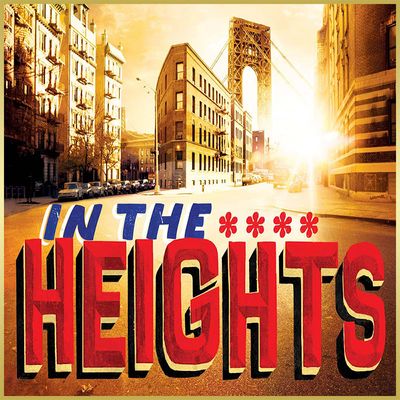
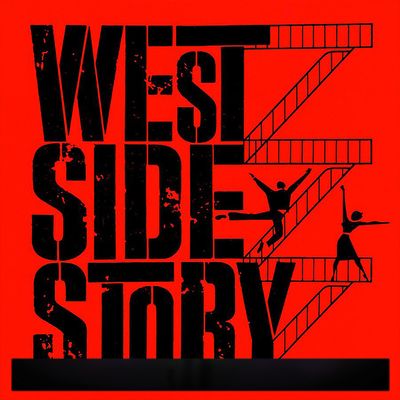
José's voice in our industry carries our whole Latin culture and his thoughts around West Side Story, In The Heights, diversity, equity, and inclusion are a must! 👏🏻
This episode is available in Spanish! 🌎
Follow José on his Twitter to know more about his work.
If you want to know more about our host, please visit his website! Feel free to reach out with feedback or if you want to be part of Backstage Talk!
Follow us on Social Media:
Transcript
This transcript was automatically generated and might contain errors.
[0:00] Martín Acuña: Hi everyone, I am Martín Acuña and you are listening to Backstage Talk.
[0:16] Martín Acuña: Jonathan Larson asked how can you make someone take off and fly in one of his songs from Tick Tick Boom, and I, for the past two years, have learned one way to do it, through the power of community. Welcome to the Latinx in Musical Theatre special for Season 3 of Backstage Talk, where we will be featuring artists from across all positions in musical theatre, from several Latin American countries and different Latin heritages. I am proud to showcase my Latinx family. I hope you enjoy.
[0:51] Martín Acuña: Hello everyone, welcome back to another episode of Backstage Talk. Today's guest is someone I admire profoundly. José Solís began his career as a critic at the age of 16 when he launched a film review website while living in Honduras, where he was born. He began writing professionally about theatre while attending college in Costa Rica, and upon moving to New York City in 2012, focused entirely on the stage. His work appears in the New York Times, American Theatre, TDF Stages, Backstage, Three Views, and America Magazine. In 2020, he was selected as the Floria Lasky Visiting Artist at Hunter College, where he will host the What Add One series, and started the BIPOC Critics Lab, a workshop he created meant to train the cultural critics of the future.
The second installment of the Lab was hosted at the Kennedy Center. He is also the creator and host of Token Theatre Friends, a weekly web series podcast, one of my favorites I must say, where he talks to some of the most influential theatre artists working today. José, I am truly honored. I've been following you for quite a while. I've been reading your stuff, listening to your podcast, following the BIPOC Critics Lab, and truly I am starstruck to have you here at Backstage Talk. So thank you for coming today. How are you?
[2:31] José Solís: First of all, I'm really glad that we have our cameras off right now because you cannot see me blushing. Thank you so much for your kind words. There's nothing to be starstruck about. I'm a regular human being. I'm really flattered. Thank you so much. You're very kind. Thank you. Thank you. And I'm very happy to be here with you.
[2:56] Martín Acuña: Oh, thank you so much. I am very, very happy too. So what made you choose the artist path in life?
[3:05] José Solís: I don't know, Martín, and I hope this doesn't sound like bullshit, but I'm not sure if I chose that or if it chose me. And what I mean by that is that I do not remember a moment in my life, a period in my life where I wasn't creating something. When I was very little, I used to draw all the time. I used to be very crafty, which is something that I lost. If I try to put together an Ikea table nowadays, I always end up having extra pieces and it looks like a chair rather than a table. But my entire life, I have been doing something. Nowadays, my dad still has drawings that I did when I was maybe four years old. And what happened specifically with my path in criticism and writing was that when I was 10 years old, I received the greatest gift ever probably.
I got a journal that my mom gave me. And what happened was that I started journaling that as you can recall, as you can imagine, the life of a 10 year old is not very exciting. Like you basically go to school and then go home and then there's a weekend, right? So what happened was that at some point in my journal, I abandoned my own life and I started writing about movies and like art that I was experiencing that I was enjoying. So like if I went to see a puppet show when I was little, I would write about that. If I went to the movies, I would write about the movies and what they had mentioned. Like I've always thought of my path and I've always thought of my career as a critic and as a writer.
I think of it as like someone who wants to preserve, sorry, I think of it as someone who wants to preserve their most cherished memories. Like I often describe if someone were to open my skull and look into my brain, I can imagine it's like a series of like endless shelves with little jars with memories. So that's what I've tried to do my whole life with my work. Does that make sense?
[5:01] Martín Acuña: Yeah, it does. And I think it's beautiful. Like I was thinking about this Pixar movie that has to do with emotions and they have these shelves with memories. I thought about that.
[5:10] José Solís: Oh yeah. Yeah. Except I'm not Andrew. Like Andrew, yeah, definitely not Andrew.
[5:22] Martín Acuña: Okay, so tell me a little bit about your journey writing and being a critic in musical theater.
[5:28] José Solís: Okay, specifically in musical theater, like I feel like everything, you know, everything's like, just let me start at the beginning, like they say in the side of music, right? So I grew up in Honduras, like you said, and I grew up with a family that was on my dad's side, a bunch of old women. So basically think like Almodovar old ladies, right? Who had all these stories to share and like all these beautiful memories that I got to listen to when I was little. So a lot of their memories, a lot of the things that they talked about was precisely about the musicals that they had loved when they were young, right? Like musical movies specifically. So I grew up on West Side Story. I grew up on My Fair Lady.
I grew up on Carousel and The Sound of Music, which I saw too many times. And Mary Poppins and like all the classic musicals. So what happened was that when I originally started my career as a film critic specifically, but upon moving to New York, when you have Broadway and when you have theater at your disposal, you know, 24 seven, basically, it was like a no brainer that I was going to start writing about stage musicals. So what happened was that my world was suddenly, it suddenly opened up, you know, I went from just like knowing movie musicals to then knowing off Broadway musicals and off of Broadway and experimental musicals. And now with the pandemic, obviously we have, you know, audio musicals, which sounds like I'm repeating myself, but you know, like audio drama musicals and like the pandemic has really led for, you know, companies and people to be creative in unexpected ways.
Like for example, one of my favorite musicals that I've experienced during the pandemic was an opera, my theme that someone, you set up a time when someone would call you, they would send you the libretto in advance and you would have the libretto on your phone or your computer or whatever. If you're like someone, you know, if you're a boomer, you probably printed it. And then someone would call you and they would sing the opera to you on your phone while someone, you know, it was a musician and a singer. So then they would interact with you. Like you would be the other character, except you don't sing because you don't want to, you know, like offend professional opera singers. So yeah, my path specifically with musicals was basically let's call it a branch of just like my career path in general.
[8:02] Martín Acuña: I love it. I love it. So what would be your approach to critic writing in musical theater?
[8:09] José Solís: The, you know, one of the things that really fascinates me about criticism with music specifically is that there still seems to be a portion of critics who kind of feel like they had to explain to people what musicals are. And musicals have always been this art form that you know, we briefly touched upon this on Twitter, I believe, but like in our countries, for instance, in Colombia and Honduras and Latin America, we don't really have that. What is it that I wouldn't say it's a taste or cause we don't really get exposed to that, but there's no culture for like the big Broadway music. I mean, Bollywood is a whole other beast. So I'm not even going to talk about Bollywood, but we don't have that, you know, like, except for maybe people like our grandparents who did go to all the big musicals when they were younger and maybe places like Mexico, but we don't have that.
So I've noticed that even, you know, American critics, like there's like two, there's like two types of musical criticism. Like there's the kind of musical criticism that's very like snobby and almost like the monopoly guy with the monocle and the top hat where they disregard people. They don't want to welcome people into this art form because they think their taste arbiters, right? When I approach writing about musicals specifically, I come for it from a place of pure love. Like musicals are my favorite art form in the whole world. So I both want to celebrate and share with the people who already love musicals, right? Like people who don't need to understand why musicals exist while being able to welcome people who don't get it. You know, like I, there's nothing that I love more than describing and setting up scenes, for instance, when I write about musicals so that people know why the music is.
[11:06] José Solís: I'm going to be corny as hell, but it's like Tony in West Side Story saying, something's coming, right? Like, I don't know what the hell it is, but something's coming. I love it. Yeah, I agree with you. Entering musical theater is a whole universe, not even a planet, a whole universe of different possibilities. And I just love that you approach it from a place of love and, like, opening the doors to being wonderstruck about the show you're going to see.
[11:38] José Solís: Yes, Martín. I mean, like, can you imagine how miserable we would be if we didn't approach everything we see with, like, at least the hope of being wonderstruck? Can you imagine? Like, we would be like cranky old bastards. Yeah, yeah. You mentioned something earlier when we were talking about creative writing in our industry, that there is always a certain type of people in power. And I want to turn gears into Latins in musical theater. What is visibility and representation for you? Because you have been a beacon of Latin representation in writing in our industry.
[12:22] José Solís: Okay, Martín, stop making me blush. Let me think. Let me think how to answer this. I swear to God I'm blushing, but thank you so much. You're very kind. Representation is very complex. It's not complicated, but it's very complex. So my vision of representation has evolved, obviously, because, you know, something that I have to acknowledge, not only as a critic, but as a human being, is that I don't know everything. I don't have the answers to everything. My life is an eternal process of evolution and learning, which is something that I wouldn't say advice, because I don't want to impose myself, but I would suggest that my fellow colleagues and criticism listen to this. Like, we don't have the answers. Like, not everything can be in those right or wrong binaries. You know, not everything's black or white. There's so many, you know, different kinds of gray in the middle, and I feel like we don't know how to handle those grays anymore.
[13:40] José Solís: So, for instance, when we're talking about representation, let's talk about two very specific, poignant examples of movies that came out this year. So we have the In the Heights film that was released over the summer, and remember how the controversy about the lack of Afro-Latinx performers in the movie kind of, not kind of, it derailed the conversation. Like, that's the only thing that people talked about. No one talked about the crack. No one talked about Tiara Alegría, who does this magnificent screenplay in her adaptation. No one talked about the performers who were predominantly known for their work on stage, who were making their transition to film in a film that, sure, it was flawed. Sure, it was imperfect, but nothing is.
So let's think a little bit about how people received In the Heights, and then let's think about how people have been talking about the Steven Spielberg West Side Story, which, sure, people have barely touched on. Like, some people have mentioned problems with the accents. Some people have mentioned problems with, you know, things that they haven't blown out of proportion.
[15:04] José Solís: So what happens? What happens is that we have a film that is a version of a musical created by white people, like Leonard Bernstein and Stephen Sondheim, helmed by probably the most famous director in movie history. So what happens? You know, it's at a representation level, sure, Spielberg is showing us West Side Story, and he cast Latin Americans, which is the least he could do, right? And people are celebrating the movie. But what happened with In the Heights, for instance, where it was a predominantly team of collaborators, people of color, you know, John M. Chu directed the movie, Lin-Manuel Miranda and Quiero Alegria, who does, for example, screenplay. And it had also a predominantly, you know, everyone was Latino in the movie.
So if we're talking about visibility, both movies kind of feel the same, you know, like they both cast Latinos. But when we look at the credits for the Steven Spielberg movie, and when we look at the credits for the John M. Chu version of In the Heights, we're going to see like a huge difference. Like In the Heights, for instance, focused on creating equity and representation at every level of the process, while almost everyone involved in West Side Story behind the cameras is a white man.
[16:32] José Solís: So, you know, when we talk about representation, we have to think about visibility. And we have to dispel that idea that the only representation that matters is the visible one. We have to ask people to, you know, to apply diversity and equity behind the curtains, behind the camera, where we can see what's happening. So it's a tricky, complex issue.
[17:06] José Solís: Absolutely. So in that order of ideas, well, how do you think that we can increase Latin visibility and representation, both on stage, off stage, in front of the camera, behind the camera, on both Broadway and Hollywood?
[17:17] José Solís: I don't really think, and I'm sorry, I don't want to be like, especially around the holidays, I don't want to be like a therapist or a drench. But I don't think you and I can do much, I mean, I don't think that the public can do a lot. I don't think critics can do a lot. I mean, critics often point out the problems in the system and the issues in the system, but nothing will happen until we see effect. Sorry, nothing will happen until we see change being affected from the people at the very top. I mean, all the producers, all the people in power, all the gatekeepers, it has to start there. And a way that we can do that is, you know, I don't know if it always works, but economic boycott. We don't go to see shows that are only about white people anymore. We refuse to engage with that. Instead, what are we doing? Instead, we find maybe a smaller show created by a Latinx artist, and that's what we support.
[18:24] José Solís: This means that there has to be almost a relearning process. I mean, everyone gets excited when X property moves to Broadway, right? But no one really gets excited or no one really talks about, you know, the off-Broadway run of a show. Like, I'm thinking, for example, in, you know, recently, the Public Theater's production of Miss You Like Hell, which was my absolute favorite show that season, you know, it both plays and musicals. I loved it so much. And then the show didn't transfer to Broadway. I don't know if it was supposed to transfer to Broadway, but that is something that we also have to rethink. Why do things have to move to Broadway in order for us to embrace them, right? Like, why do we have to wait?
This talks not only about the, you know, like marketing and advertising, all of that for shows. This is like really sad, and we would need at least a whole day to discuss the problems with that. But it also talks about how complacent we have become as audience members. And I don't blame us. I mean, we have Netflix, we have Hulu, we have all the streaming services at home. We're in the middle of a pandemic right now, which doesn't help. So the system that exists right now, the system, you know, the things that the system has put into place don't allow us to either be adventurous and also don't tell us when something is happening.
[19:59] José Solís: So in order for us, like people like you and I, Martín, to change something, we would have to do our homework. We would have to find the words by Latinx artists, and we would have to share with people. We would have to tell people that they're happening. We would have to share those reviews. We would have to...
[20:12] José Solís: I absolutely agree with you, and you touch base with something that has been really important for me for the last two years, and it's been the power of community. And because when people get together with a common goal in mind and a state of taking care of everyone instead of one single individual, that is when change comes. So I want to go back a little bit into your work as a critic and as a writer. For you, what would be the most important part of Latin critics in an American industry like Broadway?
[21:13] José Solís: Well, I mean, there's not even that many. There was a period of time, and I'm not sure if that has changed. The pandemic has changed so many of my priorities, but before the pandemic, I was the only Latino critic, Martín, I would say, on the East Coast that was making any money by being a critic. And I barely supported myself. New York is a very expensive city. But that to me was just so depressing. People would often be like, oh, you're the only one. Don't you feel special? And I was like, no, I feel alone, and no one wants to feel alone. So there's several aspects that I've mentioned throughout our conversation need also to happen in criticism if we want to see more Latinx people. The first one would be inclusion, like invite people to shows.
I'm talking about In the Heights again for a second. It was so funny to me, although that was when the movie was about to come out. I got all these offers, Martín, from all these different outlets that are big outlets that I've never been a contributor on. Because when In the Heights came out, I can imagine often being like, oh, shit, do we know any Latinos who can write about this? And for so many people, I was the only Latino that I could think of. So I ended up writing like four pieces on In the Heights. I had to turn down a bunch. Everyone, can you review In the Heights? I was like, nope, I'm ready. Asked by three other outlets. So that's sad, Martín. How can I be the only one? I don't want to be that.
You know what I mean? So there needs to be, again, coming from the gatekeepers, there needs to be inclusion. They need to invite us. They need to make us feel like we're wanted there. I mean, it's always so baffling to me that the United States is probably, I think it's by 2050 or something, that Latinos will be the biggest growing population. And Spanish is one of the fastest growing languages in the United States. And for instance, it's so baffling to me that if you go to Broadway, you don't have supertitles. Why don't you have supertitles in Spanish? Right? Like, why are we not welcome at the least they can do? Give us the option to enjoy the things that we like with subtitles, right? Create playbills and programs that are bilingual. You know, just starting with that. I'm not going to go deeper into this. Just start with that. Talk to us in Spanish, for Christ's sake.
[24:06] Martín Acuña: Yeah, absolutely. José, thank you so much. I have loved every single second of this conversation. If someone wants to contact you, I know they can find you on Twitter. You're pretty active on that platform. But if someone wants to contact you, to ask you to write a piece, to invite you to a show, where can they find you?
[24:24] José Solís: Thank you, Martín. Basically, all my contact info is on Twitter. So, my handle is @JoseSolisMayan. And my email is in my bio. And thank you so much, Martín. It has been a pleasure talking to you. Thank you so much for having me. I have one last question before we wrap up. And it's, what is your top five favorite musical theater shows?
[24:40] José Solís: Okay, Martín. So, I knew you were going to ask this because I did my homework. So, I have two options for you. Are we talking favorite, just musicals in general, you know, like the text? Or are we talking favorite productions specifically?
[25:02] Martín Acuña: Oh, oh my god, I don't know. This backfired. Let's have both.
[25:13] José Solís: Oh, both? Okay, now you're being greedy, Martín. So, my favorite musicals of all time are, you know, West Side Story is by far my favorite musical. I also really love, hold on, my mind went blank because I'm reading my notes. So, let me redo that. My favorite musical of all time is by far West Side Story. Like, I love that musical to death. Like, I can't even, I can't even tell you how much I love it. Then, I realized that I'm a huge Kander and Ebb person because, like, three of my favorite musicals in my top five are Kander and Ebb musicals. So, I love Cabaret, I love Chicago, and I really love The Visit. I don't know if you've had a chance to either see it or if you've listened to the cast recording, but it's one of the most beautiful shows that I've ever experienced.
And then my fifth favorite musical of all time is Misty Like Hell by Ariane McCune and Kehra Alaydi-Akwudah. Now, for my favorite productions, my absolute, you know, all-time favorite production of a musical was five years ago, I think. Carnegie Hall was celebrating Leonard Bernstein's centennial, right? So, they were doing something called the Somewhere Project, which was over the length of the year. They did projects all over the city with schools and students and everyone, you know, communities that were driven by West Side Story. So, that year culminated in a musical, in a production of the musical West Side Story at a place called the Knockdown Center, which used to be a door factory in the middle of Queens.
So, they put together this remarkable cast consisting of both, you know, theater professionals and also amateur actors. And that sounds like very, you know, that doesn't sound like a nice word, but it's like unprofessional actors, actors who were just beginning their career. But also, they included high school students and kids from elementary school as well. So, it was this immersive production of West Side Story that happened in a factory. So, it has this industrial aspect to it and all this industrial element. And I can't begin to describe how beautiful it was. Everything was so simple, but it really got to the core of what makes this musical beautiful, and it's that longing for community.
But also, just like the night I went, Chita Rivera was there. And, you know, like getting to see West Side Story with like the original Anita and the audience was just, I don't know, it was just like a pleasure. Like I get goosebumps every time that I think about that performance. My second favorite performance of all time was the one and only time that I got to see Shuffle Along back in 2016 as well. That, you know, I left the theater electrified. Like, I could almost feel like electrical currents coming down, you know, like all over my limbs, because that production just like left me completely exhilarated. My third favorite production, I'm sorry that I'm such a cliché, Martín, but I love West Side Story in 2009.
I got to see Karen Olivo play Anita, and that was just great. And the fourth place, my favorite production ever, you know, like my first experience was going to Chicago in 2003, because it was the first Broadway musical that I ever went to. I was a teenager, and I had watched the movie at home, and I was visiting New York. So when my dad asked me what I wanted as a present, you know, what I wanted to use money for in New York, I told him, buy me a Broadway ticket. And I went to Chicago, and it was just like completely unforgettable. And then my fifth favorite moment was going to see Mr. Leclerc at the Public Theater in 2018. That production just shook me, and I almost left like I did when I went to see Shuffle Along. I left, and I felt like the world that I was going out into when I left the theater was a world, a completely different world from when I entered.
[29:37] Martín Acuña: That is amazing. Amazing. I love those memories. I love those shows. José, thank you so much. It's been an honor, and I cannot wait to keep reading you out there. And yeah, thank you so much for being here. It's been a pleasure and an honor.
[29:50] José Solís: Un placer para mí, Martín. Thank you so much for having me.
[29:56] Martín Acuña: Thanks, everyone, for listening to this new episode of Backstage Talk. Remember to follow us on Facebook and Instagram at Backstage Talk Podcast.
© Broadway Podcast Network, All Rights Reserved