

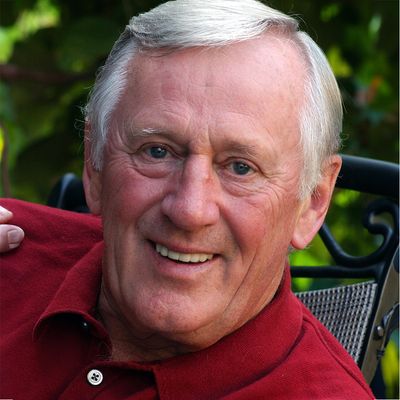
Sweeney Todd. Frederik Egerman. Bill Samson. All of these roles, plus many others, were first brought to life by Tony Award winner Len Cariou. Len dropped by Shetler Studios to share memories of his incredible career, including tackling Shakespeare, Sondheim, and everything in between... Read More
From the show: BEHIND THE CURTAIN: BROADWAY'S LIVING LEGENDS » Podcast
Guests
Featured Shows

About
Sweeney Todd. Frederik Egerman. Bill Samson. All of these roles, plus many others, were first brought to life by Tony Award winner Len Cariou. Len dropped by Shetler Studios to share memories of his incredible career, including tackling Shakespeare, Sondheim, and everything in between.
Transcript
This transcript was automatically generated and might contain errors.
[0:00] Robert W. Schneider: Hi, I'm Robert W. Schneider.
[0:01] Kevin David Thomas: And I'm Kevin David Thomas.
[0:02] Robert W. Schneider: And this is Behind the Curtain, Broadway's Living Legends.
[0:05] Kevin David Thomas: Don't forget to follow us on Twitter at Broadway Curtain and on Instagram on Broadway Curtain Podcast.
[0:11] Robert W. Schneider: And make sure to join our Facebook page at Behind the Curtain, Broadway's Living Legends.
[0:16] Robert W. Schneider: Our guest today has inhabited the greatest roles in the theater's canon. Orestes, Joe Keller, Brutus, Prospero, and countless others. And he has created some of the greatest roles in the American musical theater. Bill Samson, Frederik Egerman, Benjamin Barker, better known to audiences as Sweeney Todd. To tell us what it was like to be directed by Tyrone Guthrie and Hal Prince, shared the stage with such greats as Angela Lansbury and Lauren Bacall, and to perform the poetry of Sondheim and Shakespeare. Here is Tony Award winner, LEN CARIOU.
[0:48] LEN CARIOU: Len, thank you for joining us today.
[0:50] LEN CARIOU: My pleasure, gentlemen.
[0:51] Robert W. Schneider: How did you first get exposed to theater?
[0:54] LEN CARIOU: Well, I was kind of lucky. Um I've always been a singer, and uh we had an outdoor theater. There was no professional theater, there was an amateur theater. And I uh aspired when I got to be in my teens to uh to be a part of the Rainbow Stage, it was called. Is called still there. Uh it was an outdoor theater in Kildonan Park. And uh now it's now it's under a dome, because of course, you know, if if it clouded over, people tended not to come.
[1:24] Kevin David Thomas: Exactly.
[1:25] LEN CARIOU: And we were we had a big, pretty big stage, uh, and it was, you know, part of the uh the parks and recreation of the city of Winnipeg. A man by the name of John Hirsch, who was uh Hungarian refugee that came to Winnipeg after he'd been there five years, arrived without speaking a word of English, and in five years was teaching English at the University of Manitoba. Had been a puppeteer in in his native Hungary, and uh um said, you know, well, why is there no professional theater? You have one of the great ballet companies in the world. I don't understand. Uh so he said, I'm going to start a theater and uh became my mentor. So I was very, very lucky to have somebody that that gave a damn.
[2:08] Kevin David Thomas: Right.
[2:08] LEN CARIOU: He saw that I had some talent and he said, Come here, come with me. And he engineered my getting to Stratford. That really launched my career as it was, because when I got there, not knowing a lot about, I mean, I had no clue what I would play in Shakespeare, other than you know, Romeo or and you know, the other stuff that you studied, Macbeth. When I got to Stratford that summer, I uh I was as cast, which meant that you were in every play and in every scene that they could possibly put you in. And uh I took that as as my since I had to be in the building every day anyway, I thought, well, why don't you just sit in on rehearsal all the time and just see what what's going on here? Let's figure this out.
Let's see if I fit into this system of of Shakespeare or not. And if you were curious, and uh and the fire was burning in your belly, it was a it was the place to be. So I was happily there, and uh at the end of that first season, uh I went back home to Winnipeg. John had hired me to to uh to be part of the winter program, and I did that for about four or five years. Uh and I went back to him and I said, uh, this is what I want to do. I want to do the classics, because I saw that that's obviously where the challenge was for an actor. And I understood because I spent all that time in the, you know, in the rehearsal rooms and watched these wonderful actors translating Elizabethan speech and making it oh God, I understand what he said.
And so uh he says to me, John said to me, Well, he said, uh You're taking the high road. And he said, but you make me a promise. He said, do not give up the musical theater. He said, because there are very few people that can do what you can do. Which stopped me kind of in my tracks. And I said, what? He said, no, he said, not many people can that are actors can sing as well. And he said, you must think of yourself that way. Think of yourself as an actor who sings, not the other way around. And so I said, okay, I promise.
[4:16] LEN CARIOU: And uh this is a little off probably the the the subject, but uh uh we were doing a production of An Enemy of the People in which I was playing the churncoat guy, I can't even remember his name, and we were having notes, and we were about to have our first audience, and we had done a run through and he gave notes, and he didn't give me any notes. And we were in the theater and I was standing on the stage, and he was he said, Okay, let's go. You know, go away, you uh come back and uh have a good show, and he'd be walking out, and as he was walking out, I said to him, John, I said, You don't have any notes for me, I'm so perfect. And he said, notes, you want notes? And he threw his coat down and he walked back down to the stage, and he ha I mean, I was this man, he was six foot five.
Like he looked like a scarecrow. Came down, stopped standing. I'm up on the stage, and he's he's directly below me. He looks up, he says, You notes, you want notes? When you learn to listen and practice humility, maybe when you'll be 40, you'll be an actor. And he turned on his heel and left. I mean, stop me dead in my track. I went, oh Jesus Christ. I was, you know, I was trying to be funny, but obviously it was burned into my head. When I was 40, I was doing Sweeney Todd, and he came to see it. And my we hadn't worked together in 17 years. And I'd done many plays with him in Winnipeg. And he came backstage and he couldn't have been more proud. And I said, So, John, am I an actor yet? And he looked at me and he said, What are you talking about? And I re told him the story that I just told you. And he went, I said that. He of course had never forgot all about it.
[6:06] Kevin David Thomas: Right.
[6:06] LEN CARIOU: Before the Shakespeare bug bit, what musicals were you doing? Were you doing them at school or as well as the book?
[6:10] LEN CARIOU: No, the first well the first musical I ever did was uh was uh Ray Frackstraw uh in high school. And so you know, I as far as acting was concerned, I uh I thought I was a singer who wanted to act.
[6:25] Kevin David Thomas: Did you take any voice lessons or did it just be a little bit more than a few years?
[6:27] LEN CARIOU: Oh yeah, I studied as as a boy soprano, I studied then. As a boy soprano. And then when my voice changed, I studied. It was interesting because uh when it changed and and a year had gone by, I went to uh a next door neighbor who was a wonderful baritone uh who was a teacher uh also. Uh and uh he said to me, What do you want to be? And I said, What do you mean? He said, Well, you want to be a bass or a tenor or a baritone? What do you want to be? And I said, Are you serious? I can be any of those things. If you he said, Yeah, well, just train your voice to do that. He said, because we've got we've got a you know a clean slate here, and we can do whatever we can go in any direction you want to go. And I said, Well, I'm a boy baritone, you know. Come on. Sinatra and Bennett, and those guys worshiped.
[7:15] LEN CARIOU: So uh how did your journey go from Canada to the Guthrie?
[7:21] LEN CARIOU: Well, Douglas Campbell, who was then the artistic director at the Guthrie Theater after uh after Guthrie had started the theater. He came up to he was he'd always been a member of of uh the Stratford Company, and then went down, Guthrie brought him down to Minneapolis to uh to head that company up and be its artistic director. And then he came up to direct something for Stratford. And I had been in the company three years and I'd won a Guthrie Award. You know, it's just uh an honorarium for because they didn't quite know what to do with me, because I said, Oh, are you doing Henry the Fifth? Well, I'm playing Henry the Fifth. And Michael Langham looked at me and said, No, son. He said, There are five guys in a head here waiting for waiting to play Henry V. And I said, Oh, come on, what am I? So they gave me a Guthrie Award, and I came here to study voice with with Kristen Linklater.
And so Douglas said then I went back because they were doing Mahagoni. The man who directed it, Jean Gascon knew me and said, you know, would you sing for the music director? Because he said, I think he'd really be good in in uh play Moneybags Bill. So I did, and and I got the job, so I was kind of gloating as I came back because I left as an actor in the acting company. I came back in the opera company. And I was kind of going, Yeah. Giving them the finger. And Douglas Campbell saw me, and and he'd known me uh, you know, as an actor, and and then saw me do this, and he anyway came to me, he said, Look, I'd like you to come to the Guthrie and lead the company at the Guthrie. Play Orlando and As You Like It.
So I did, and that's how I got to the Guthrie. And then it turned out that Guthrie came back to do the Orestia, and so I finally caught up to him. He didn't, he he didn't know me from Adam, and Douglas Campbell said he's gonna play Orestes. And I think Guthrie said, Who is he?
[9:19] Kevin David Thomas: Yeah.
[9:19] LEN CARIOU: But Douglas was uh was on my team, if you will, and said, and I think Guthrie was a little reluctant, and then he said, Well, sorry, but that's that's the way it's gonna be. And I won them over. Thank God. Um we brought it here and played it at what's now the Niederlander Theater. It was the Billy Rose. We brought that and Arturo Ui, did them in rep here, and then we took them to Los Angeles and did them there. And then I went from after that I went to Stratford, Connecticut.
[9:49] Kevin David Thomas: What are the benefits of being in a rep company?
[9:53] LEN CARIOU: The gravitas, it's it's uh you grow up really quickly. Uh you have a lot of responsibility because you're from my point of view, and I because you as cash, you really are, you know, uh, you do you're in every scene, you're in every play, and you understudy three or four different roles, and sometimes they're you never get to play them, of course, because guys will kill before they'd have to be dead before anybody would go on for them. You just do them in understudy rehearsal. But if you if you apply yourself, you learn an awful lot in a very concentrated period of time. And I think that's really what uh I mean when I did Lear, I did Lear when I was thirty-five because it just it changes your life.
It just changes your life because you go, Oh heavens, you want me to play Lear? I'm thirty-five years old. The guy's eighty years old. What's going on here? As I say in my in Broadway in the Bard, uh I have reiterate this story and that Michael Langham, who was then the artistic director at the Guthrie, he had come to take over after Cl Campbell. He had been the artistic director at Stratford, Ontario for fifteen years. And maybe the best director of Shakespeare who ever lived. He should have been Sir Michael. I called him that anyway. So he came to me at at uh I I was then an associate artistic director of the the uh the Guthrie at the point. And uh and Michael said we were going to do Macbeth.
He changed his mind and switched it to Lear. I was, you know, I was crap. Because, you know, what am I gonna play in Lear? I didn't want to play Edgar. Yeah. 'Cause we I had just done the Orostaya and all that body makeup. No thanks. And uh he said, No, you'll play Lear. Time you started doing those character parts. And it changed my life. It really did, because uh you take that on and you once you embody it, once you I mean I think I was, you know, I was obviously too young to play it, but I was obvious uh again he said I said to him, What are we gonna do with our uh our actors who are the right age in our company? Paul Ballantyne and and Robert Pasteine were both in our company at that time, and uh I said, What are they gonna think of? And he looked at me, he said, They're probably gonna go thank God I didn't know I don't have to do that. That changed my life.
[12:20] Kevin David Thomas: What made we'll call him Sir Michael, but what made Sir Michael such a good director of Shakespeare?
[12:25] LEN CARIOU: Well, you know what is really interesting? He was a prisoner of war in the Second World. For the entire war, I think got in the first month of the war. He was a Air Force guy captured, was in concentration camp, I believe, in in Germany. He was a lawyer by profession. And to keep their sanity, he directed all these guys in the entire canon of Shakespeare. Maybe five or six times they did the canon. Pretty incredible. So he when it's over and the war is over, and these people go to Guthrie and say, Guthrie, this guy, Michael Lang, my God, he's a s Shakespeare scholar. And he's a wonderful director. And he's a very funny guy, and you know, uh and smart as a whip. So Guthrie then just went, you know, said, okay, and he gave him a job. And then when Guthrie founded Stratford, Ontario, he brought Michael over to take his place. Pretty extraordinary guy.
[13:22] LEN CARIOU: And then after your time with Shakespeare and the classics for so long, you transitioned into the musical theater, the commercial musical theater world. And the first one that you do is Applause.
[13:31] Kevin David Thomas: Right.
[13:33] LEN CARIOU: How did that come about? How did you go from playing the state of the state?
[13:45] LEN CARIOU: I was up at Stratford, and I got a call from my agent, come in and audition for this musical called Applause based on All About Eve. And I said, okay, so I came in and it was the Alvin Theater, which is now the Neil Simon, I think. And the anti-theaters was directly across the street. I came in and I auditioned, and this is my first when I was on a stage black, you know, on a stage with a work like the piano and Ron Field said thanks very much. He said, We'll be in touch. And I said, Okay. Oh, and the funny part of that about that was that he says to me, Would you mind reading a scene? And I said, No, no. But then I thought, where's the woman that I'm gonna read with? Well, it was a six foot four screaming queen, who was one of the stage managers, a wonderful guy, actually.
He was really, really but it was very funny, and he had this ridiculous lisp, it was absolutely silly. But it was crazy. I mean, it was all I could do not to laugh at him, you know, when he was playing Miss McCall. It was pretty funny. So I did that. And then about a month later I got another call, but you come back, because now Charles Strauss and Lee Adams want to and Comnet and Green are gonna be there. So I went back and I auditioned a second time. And they all very nice, very nice and see you. And the third time, now this is getting ridiculous, and I'm going, what the fuck is going on here? He said, No, now Miss McCall is gonna be there, the producers are gonna be there. They really they're really, really hot on you.
And I said, Well then why don't they just give me the goddamn job? And they said, Well, I you know, that's the way it is. And so I said, okay. So I come in on the third time. They're all very impressed. Ronfield comes up onto the stage, and Ms. McCall came up, they all came up and I meet them all. And Ron says to me, I'd really like to give you the job. He said, but it's not up to me. It's up to them. So he said, I might as far as I'm concerned, you're my guy. And I read and I went, Oh, that's nice. That's nice. And he said, and I he said I know Betty's very impressed. He said, now tell me what it is you're doing again at the moment, and I went, come with me, Ron. And he said, Well, I said, I gotta show you something.
It was, I guess it was September. I think it had to be September. It might have even been October. But we were going into the anti theater with Henry V. We were transferring it to the antitheater for like six weeks, right? I walked out the stage door, and I pointed across the street. And there were three six-foot photographs of me as Henry V. And he's, I said, that's what I'm doing. That's awesome. He went, Oh shit. Oh god. I am so embarrassed. I said, Well, I said I couldn't resist.
[16:40] Kevin David Thomas: What was the rehearsal process like?
[16:42] LEN CARIOU: It's, you know, it's normal. Yeah, we did, unfortunately. We uh John had John had uh uh John Hirsch had said to me, you know, uh when you're doing a Broadway musical, he he said it can be the replacement game. So he said, you know, don't he said things change, and uh and you might, you know, he said you might be all alright, and then they get a thing, g get you out there, and and they look and they go, well, no, then that's not working, so let's get somebody else. Um and of course unfortunately that's what happened with Applause. And uh we were in uh we were in Baltimore, and we had to replace uh the girl who was playing Eve. Uh that's uh how Penny Fuller ended up playing Eve. But the process was, you know, the same.
I mean, it was normal. One of the things that we wanted to ask you is is this Applause is uh I mean, Lauren McCall is wonderful. I mean, there's a television recording of it, so it preserves her performance, but someone who was not known for doing musical theater, uh, and you have an extensive background in musical theater. What were some of the challenges of taking somebody who hadn't really done musical theater before and putting them in that environment?
[17:59] LEN CARIOU: Well, I think, you know, she was she was very, very nervous about it. She, you know, she can't sing. Yeah. And uh obviously was uh, you know, uh a concern of hers. But you know, they made some they wrote songs for her that weren't that difficult. Uh but she was she also had to dance. And uh, you know, she took taken on a huge responsibility, and it had never, you know, it's not like being in a film. You're the thing's on your back. So you feel the weight. Let me put it that way. Uh but she was uh um she was a trooper from the word go. She was there and she worked her butt off. And we ended we fell in love with one another. Uh so that helped a little bit, I think. And um, and I think she was able to, because I was very much on her side uh and said, you know, you're gonna be terrific in this thing.
It's you're you know, remember it's a vehicle for you, and uh, you know, you're uh you're the you're certainly able to handle it. Oh, I said it's uh the you know, it's a big responsibility, obviously. But I said, you know, we've got a lot of good people around you, so uh that'll help. And then after Applause, Night Watch.
[19:15] LEN CARIOU: Joan Hackett is a remarkable actress that a lot of younger students probably aren't aware of, unfortunately, even though she does leave behind a nice body of work. Well, do you have any memories of working with her, what her process was like?
[19:28] LEN CARIOU: Oh, yeah, she was she was again uh you know uh wonderfully capable, had a great worth of work ethic. So it was a very pleasant time. Yeah. Um she was uh she was, I think uh pretty trepidatious too about being, you know, doing this. Because I think probably if I'm remembering correctly, she had done a lot of of um support roles. Yeah, this this was uh you know, this was a leading role, and uh so you know it was a thriller, correct? Yeah, right. It was kind of fun to do the play. It was a fun play. And it was it was uh it was a nice lovely experience.
[20:05] Kevin David Thomas: Hey listeners, Kevin and I need your help.
[20:07] LEN CARIOU: Yes, we need your help, please, please, please.
[20:09] Kevin David Thomas: We need your stars.
[20:11] LEN CARIOU: We need your reviews, you guys, on iTunes, so we can start to climb those iTunes rating charts.
[20:17] Kevin David Thomas: It's simple. Open iTunes, click on the iTunes store, search for Behind the Curtain: Broadway's Living Legends.
[20:24] LEN CARIOU: Then click on ratings and reviews under the customer reviews, click write a review, and then let us know what you think from one to five stars.
[20:34] Kevin David Thomas: If you need some help, think of one star being Carol Channing and Paul Lynn in the road company of the last five years.
[20:40] LEN CARIOU: And five stars being free front road tickets to Hamilton.
[20:43] Kevin David Thomas: Although, when you think about it, I actually would give five stars to the road company of Carol Channing and Paul in the last five years, because I think that would be awesome.
[20:51] LEN CARIOU: I would love to hear.
[20:52] LEN CARIOU: Can I hear moving too fast as Paul? That's the really that's the one I really want to do. She the Shakespeare Erica Schwartz and Danica Weiss. And the Handleman twins. So there you go. You can also leave a comment if you like. That's it. The reviews. Send us your reviews, friends. Thank you. How did the little night music uh come into your window? Well, I was at the Guthrie and uh Hal Prince, when we did the run the gypsy run through of applause, we did it at the Schubert Theater. And I I had never, you know, it was my first gypsy run through, and the joint was packed. And uh at the end of it, you know, everybody comes out of the audience up onto the stage. Oh wow. And uh so I'm standing there, you know.
I'm I'm a rookie, remember, you know. And people are counting up, geez, terrific stuff, terrific stuff. And uh this guy leans in and says, Bravo, he said, I thought you were the best, you know, one of the best eating young leading men I've seen in a long time. And turns around and walks away, and I said, Thank you, thank you. So Ron Field comes over to me and said, What did Hal say to you? And I said, Hal, who? And he said, Come on. I said, I don't know who he said, Hal Prince, for Christ's sake. I'm sorry. I said, I don't know who Hal Prince is. And he said, the guy over there with the glasses on. Right. And I said, Oh, you really want to know? So it was kind of like the same deal, you know.
And he went, he went, okay, and I said, and I said, Well, we'll see whether this ever comes to anything. He said, We should because he had said to me, but we should work together sometime. And I'm when that happened, I went, Oh, that's pretty interesting. So I said, Well, we'll see. And I'm at the Guthrie, and I get the call from the agent, would you come and uh audition for Mr. Prince for a little night music? They sent me a script, which was just Hugh Wheeler's book. There's no no lyric in it or anything. So it and it was really, you know, it's it's like it's written like an ennui play. It's really a beautiful script. The role was Carl Magnus. I I said, you know, I I read it and I said, Well, it's really a lovely story.
I said, but I've played Carl Magnus any number of times, and I but I'm certainly not going to pass up the opportunity to sing for Stephen Sondheim and Hal Prince. So uh so much acting going on in the world. There's a lot of acting, a lot of voting happening and all that. So I get on a plane and we were in rep at that time, and I had like four days off. So I came to New York, and uh I still had an apartment here in New York up on 110th Street. So I came and auditioned for them, and I I don't remember what I sang there either. And Hal says to me, uh, thanks, that was really good. Um would you We've we have a new script, and I'd like you to read it overnight. And we'll talk in the morning if you wouldn't mind calling me and and um I said no. So they gave me this new script. And now this has got lyrics in it, right?
[23:59] ⚠ About 4 minutes of audio could not be automatically transcribed.
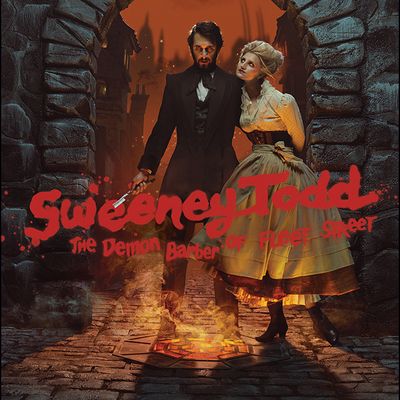
[27:32] LEN CARIOU: I was flying. The adrenaline, the adrenaline was flying. And I never missed a performance, and I never missed a rehearsal in the middle of winter between Minneapolis and New York. What are the odds of that, boy? What are the odds of that? And then you get to work with Mr. Prince again a few years later with Sweeney Todd. How did that come about for you? Well, it was, it was again interesting after I was finished with Night Music, I went back to the Guthrie, and that's when I played Lear, and then we were doing a production of Company called Harold, and I said, "Would you mind sending me a copy of your stage manager's script so I can refer to it?" And he said, "No, no, absolutely I will." And he said, "Oh, and by the way, Steven has written a musical for you."
And I said, "By the way?" Yeah. And he said, "Yeah." It's called Sweeney Todd, the Demon Barber of Fleet Street. He said, "I'll send a copy of it." So it arrives, and I'm in rehearsal, so I'm not able to really, I mean, and I'm directing, no, I was playing in Equus. My mind was not fully on what it should have been. So I read it the first day, and I thought, "They're out of their minds. This is ridiculous, this thing." And I said, "Well, I'll read it over the weekend when I can give it my undivided attention." And I did that. And then I thought, "Well, you know, if he writes a really romantic score, who knows?" And there was again no lyrics in it, just Hugh Wheeler had written the book. And it was a pretty interesting book, and I thought, "Well, you know."
And it so happened that my contract with the Manitoba Theater Center was my only out clause was if I got an offer to do a Broadway show. And so after a few months, I get the offer. So I'm only there for a year as artistic director. And so we come back to, you know, I come back to New York. We were gonna go into rehearsal in December, which was, and then they said, "What are we doing going into rehearsal over the holidays?" I mean, you know, we're out of our minds. So they changed that, and that was too bad, because I was geared and ready to go. And so I had that time, and then it so happens life again gets in your way, and the marriage breaks up, and you know, it was a pretty rough time, so it's a good thing that I wasn't in the middle of that when we went into rehearsal.
We finally did, you know, a month later. And that was just when I read that script and saw the lyrics, and Angela was going to play Mrs. Lovett, and Harold was directing, and I thought, "Well, you know, you're on this thing, you better write it in the direction it's going." So, and I thought, "You know, this could be either extraordinary or just a huge bomb." But I said, "It really is pretty brilliant stuff. It's genius work." And once you heard the music, I just went, "Oh my lord. This is just extraordinary theater." Yeah. Just extraordinary theater. And we better not screw it up. And I think that's really what Angela and I were most proud of was that we were able to do that and maintain it for a whole year and not go over the top in farce.
[30:50] Kevin David Thomas: Yeah.
[30:50] LEN CARIOU: Which easily could have happened. So we were pretty proud of that, that we were able to manage that. We consciously did that. We said, "We better be careful here." And that was a huge bond, I think, between she and I. What's it like to be directed by Hal Prince?
[31:09] LEN CARIOU: Well, it was funny. He's wonderful. I think his, he's very much open to what you have to bring to the table. I think his major, I think one of the great things is about him is his casting. He has a great sense about who should do what. And because he's working with original material and they're creating this piece, to have that imagination and that discipline, and to know how to speak to a composer and a book writer, a librettist, you know, because he had done it all. He started as a stage manager, you know, and so he had been in the process of putting new works together all his life, and then became a producer and then said, "Well, I'm gonna direct because, you know, I know how to do this."
And you know, he learned from Mr. Abbott, so he had a great mentor there, and he was a great student and then became a consummate artist in his own right. And again, the film, of course, I wasn't gonna be in the film, and I got a phone call literally in the middle of the night from Hal. They were over, they were in London doing the recording for the soundtrack, and I get a call from, it's Hal. I said, "Yeah, I know." I said, "Hal, it's three o'clock in the morning. What are you calling me for?" He said, "Can you get over here?" He said, "The guy can't do this." He said, "Get on the next plane, come to London." He said, "We're recording the tracks for this, you know, for the soundtrack." So I got on a plane the next day and went out and went to London, and they were recording Send in the Clowns, and Elizabeth Taylor was playing Desiree, and she was of course terrified because she'd not been a singer, and she had not, you know, she had fallen on hard times in the film business, but she's perfect in a sense for Desiree.
So anyway, I get in the booth with Elizabeth Taylor, because she's got to give me her blessing that I should play opposite her because they had had two guys that weren't cutting it, and she was a little worried, you know. But I managed to quell that. And so on we went and made the film, and it was fun. The problem is that they wanted, I think, Prince to remake Smiles of a Summer Night. They weren't going to be kind to Elizabeth. They were kind of waiting for her to, you know, so they could chop her down. So it was, that was unfortunate, I think.
[33:56] Kevin David Thomas: Do you happen to remember who the other two gentlemen were that came before you?
[34:02] LEN CARIOU: Yeah. Great. After Sweeney, really quickly, no rest for the weary, back to Stratford, and I have to make sure I get this right. In rep, you played Prospero, Coriolanus, Brutus, and Petruchio.
[34:17] Kevin David Thomas: Yes.
[34:17] LEN CARIOU: Not all in the same year, though. I like that you maintained your relationships with the theaters that made you, essentially.
[34:25] Kevin David Thomas: Yeah.
[34:25] LEN CARIOU: I think that's really, I don't know, it says something. You didn't just stay in New York and say, "All right, I'm done with that."
[34:30] Kevin David Thomas: You're not sure.
[34:32] LEN CARIOU: Yeah, you have to. It's really special. Well, you know what? It was the lesson that John said, "Don't give up the musical theater."
[34:39] Kevin David Thomas: Yeah.
[34:39] LEN CARIOU: And I made that promise to myself, "Don't give up the classical theater either." And then you will have created something that is a legacy that you can be very proud of. And so there it is now. I'm, you know, I've got this body of work that I think is the envy of most actors.
[34:58] Kevin David Thomas: Yes.
[34:59] LEN CARIOU: And is something that I'm very proud of. I think it's unique in our business, and it's just doing this show of Broadway in the Bard that I've created is kind of like taking the two, because it's an evening of Shakespeare and song, taking the two and giving you the best of both, if you will. Let's just very quickly talk about your process a little bit and approaching a role. If we could take, we'll take Joe Keller from All My Sons, if that's okay with you. You get this script. How does your process begin?
[35:35] LEN CARIOU: Well, I think first of all, I think in any role that I think you have to find where it is emotional within you. You have to, that's pretty easy to say, I guess, but the point is you have to know that about yourself. And I believe my, if there's a criteria that I have about doing this, it's me knowing where I am emotionally with a role. So you read, you obviously read the material and you say, "Well, this is a really well-written play, and this is a very complicated man." And he's been living this, in Joe Keller's case, this lie, if you will, all his life. And he and his wife know about it, but it's their dirty secret. And so you had to realize I had to look at it as this benevolent man who, you know, was gotten into the twilight of his life.
And he's, you know, he's about to give his son his business, and lo and behold, this stuff comes up, and he's in a sense forgotten all about it. He's so buried it in his subconscious that it's not, it never happened. And it really, you know, and it's never gonna come out, what really happened, unfortunately. It does. You know, and so he, it cracks the man. You know, but I think you have to find emotionally where he lives. And until there's a, somebody pokes him, he's this, you know, the big shot in town, and he's beloved by everybody except one who outs him, really, and when it, and when he, not to his face but to his son's face, and then his son has to say, "Is this what happened?" And Joe confesses, "Yeah."
It's pretty brutal stuff between his son and father. So that's then it becomes raw. It becomes raw stuff, and paranoia takes over and reality sets in. He just says, "Well, there's no point anymore," kills himself, which is a kind of the coward's way out, in a sense. Even his wife had turned against him in the end. So it didn't seem to be much hope for him. But finding the emotional, yeah, I think that's what I always do, is look toward what, after you've said, "Okay, this is really good material." Now let's find out if it stands up if I go, because it's gotta be visceral. It's gotta go in, it's gotta come from your groin. You gotta, however intellectually you approach it, it's got to be visceral. In that sense, it allows you to then open yourself up as an actor and invite the audience in. And that I think is the secret to good theater.
[38:33] LEN CARIOU: It's to get them. Because it's, you know, it's where it's our medium, the actor's medium is the stage. Because we tell you what to do, we tell you when to laugh and when to cry and when to, so it's pretty powerful stuff. And I think that's very, very important for actors to understand is that you have this incredible responsibility and what a powerful tool it is. What you can do to an audience member and make it something that they'll never forget. And that's really rewarding. That's something that, you know, I've managed to do a couple of times in my life. And that's gratifying.
[39:15] Kevin David Thomas: Yeah.
[39:16] LEN CARIOU: And then just very quickly, we love the score of Dance a Little Closer. Tell us a little bit.
[39:21] LEN CARIOU: That was Alan J. Lerner's last, I believe, last piece of show. The problem was that he didn't trust directors anymore. So he wanted to direct it. And he'd written the book too, you know, so he didn't have those eyes that needed to be. So, but you know, he wrote some wonderful lyrics and Charles Strouse wrote a beautiful score. But the book wasn't strong enough. So it was, it never got strong enough. And when he finally gave up the directing to another director, I think it was too late. It just needed another aspect that, but the train had already left, I think. And it was unfortunate. Alan Jay was a lovely man, very talented. You know, he was now in the twilight of his years, and I think he, you know, it was something that he wanted to have a big hit to, you know, go out on.
[40:21] Kevin David Thomas: Yeah.
[40:22] LEN CARIOU: And he didn't get one in that, I think, 'cause he died shortly after that.
[40:28] Kevin David Thomas: Yeah, a few years later, yeah.
[40:30] LEN CARIOU: Put a marvelous score.
[40:32] Kevin David Thomas: Yeah.
[40:32] LEN CARIOU: Marvelous score, and luckily it's been preserved.
[40:35] Kevin David Thomas: Yeah.
[40:35] LEN CARIOU: Yeah. As an album. And so much of your work has been preserved, which is so wonderful, and generations to come are just gonna be enjoying it.
[40:44] LEN CARIOU: Well, yeah, I'm thankful for that. It's a body of work, I think, to be proud of. So yeah, there's a legacy there.
[40:56] Kevin David Thomas: Wanna know what it's like being in the Guinness Book of World Records? Tune in next week to find out when we talk to actor George Lee Andrews, who holds the record for the most performances in the same Broadway show.
© Broadway Podcast Network, All Rights Reserved