

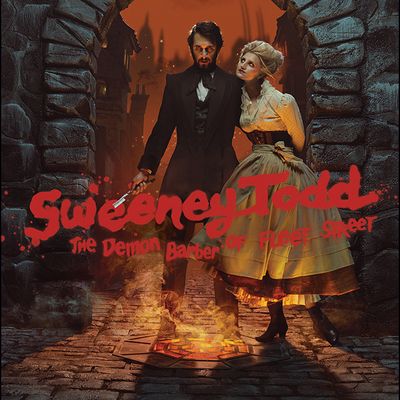
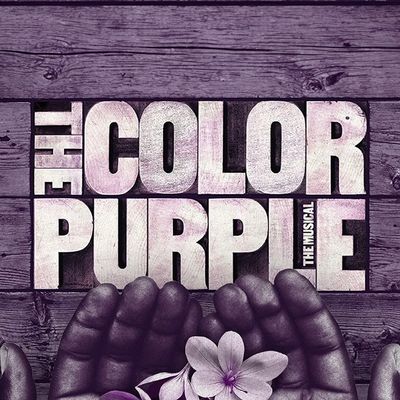
SHOWS: The Color Purple, Sweeney Todd, Company. Tony Award winning director John Doyle, artistic director of New York's acclaimed Classic Stage Company, joins Rob and Kevin to look back on his career which includes the Broadway revivals of Sweeney Todd, Company, and The Color Purple, as well as The Visit, A Catered Affair, and many more... Read More
From the show: BEHIND THE CURTAIN: BROADWAY'S LIVING LEGENDS » Podcast
Guests

Featured Shows

About
SHOWS: The Color Purple, Sweeney Todd, Company
Tony Award winning director John Doyle, artistic director of New York's acclaimed Classic Stage Company, joins Rob and Kevin to look back on his career which includes the Broadway revivals of Sweeney Todd, Company, and The Color Purple, as well as The Visit, A Catered Affair, and many more.
John pulls back the curtain on his career to discuss how he creates his actor/musician productions, what it was like collaborating with Stephen Sondheim, and why your career should always be based on pushing artistic boundaries.
Also, John shines the spotlight on Cynthia Errivo, Harvey Fierstein, and Patti LuPone!
Transcript
This transcript was automatically generated and might contain errors.
[0:00] Robert W. Schneider: Hi, I'm Robert W. Schneider.
[0:01] Kevin David Thomas: And I'm Kevin David Thomas.
[0:03] Robert W. Schneider: And this is Behind the Curtain Broadway's Living Legends.
[0:05] Kevin David Thomas: Don't forget to follow us on Twitter at Broadway Curtain.
[0:08] Robert W. Schneider: And make sure to join our Facebook page at Behind the Curtain Broadway's Living Legends.
[0:12] Kevin David Thomas: And follow us on Instagram at Broadway Curtain Podcast.
[0:16] Robert W. Schneider: Plus, you can always listen to all of our episodes, old and new, on the Broadway Podcast Network, iTunes, and Spotify.
[0:22] Kevin David Thomas: Our guest today is one of the most accomplished and inventive directors working in the musical theater. Well, he first became known to Broadway audiences in the early 2000s for his work integrating actors and musicians as one storytelling unit. Long before that, he had been helming some of Europe's most interesting theater companies. Today, he is the artistic director of New York's award-winning Classic Stage Company. His credits include the New York revivals of Sweeney Todd with Patti LuPone, for which he won the Tony Award for Best Director, Company with Raul Esparza, The Color Purple with Cynthia Errivo, Allegro, Pacific Overtures, as well as new musicals like Road Show, A Catered Affair, and The Visit.
And in London, he created iconic revivals of Oklahoma, Merrily We Roll Along, and Mack and Mabel. To tell us what it was like to work with such legends as Stephen Sondheim, Jerry Herman, George Takei, Chita Rivera, Kander and Ebb, and so many more, please welcome the artistic director of the Classic Stage Company, one of the most fabulous directors working today, JOHN DOYLE.
[1:18] JOHN DOYLE: How are you, John?
[1:20] JOHN DOYLE: I'm good, thank you, you know. A little bit locked in up here in Connecticut, but I am really fine.
[1:26] Kevin David Thomas: Good. I was gonna say, how is Classic Stage Company handling this quarantine? What production were you involved in when this all hit us?
[1:34] JOHN DOYLE: We were halfway through a production of Pacific Overtures.
[1:38] JOHN DOYLE: No, no, no, what am I saying? Halfway through a production of Assassins.
[1:41] Kevin David Thomas: Yeah.
[1:42] JOHN DOYLE: You mentioned George Takei and Pacific Overtures, but halfway through Assassins. And sadly, we’ve done two weeks' rehearsal with a fantastic cast, and suddenly we had to stop.
[1:54] Kevin David Thomas: Really?
[1:55] JOHN DOYLE: And we will still do it. You know, when we get open together, we'll still do it without any question. But it was hard. It's such an odd feeling to be in a process, and then suddenly it's like your arms cut off, you know, without any anesthetic. Very strange, very strange feeling. But that's what we were in the midst of. But things are going okay, you know. People have been very generous to Classic Stage, which is wonderful, at a time when people's generosity is so stretched inevitably. I think we'll be okay. As much as you can ever say that in the theater, I think we will.
[2:32] Kevin David Thomas: Absolutely. Now, John, when did you first fall in love with the theater?
[2:36] JOHN DOYLE: Oh, well, you know, it terrifies me that your program has got the word legend inside it because that made me feel very old. And so I can tell you it was a long time ago. I come from—I should tell you where I actually come from.
[2:52] JOHN DOYLE: Please.
[2:52] JOHN DOYLE: I come from Inverness in the Highlands of Scotland, where really there isn't any theater at all. Well, there wasn't; there is now, but there wasn't when I was little. My parents were not theater people. My mother had some interest in, you know, what we call amateur dramatics, like community theater, you would call it in America. She had some interest in that, but not excessively. So, and there was no great interest, you know, there was no great pressure to do anything. I was of a generation where all of the rest of my—I don't have siblings, but all my cousins, the expectation was that you stayed in your local town, you know, you didn't move away. There wasn't the same expectation. I was the first of my generation to go to university or anything like that.
[3:41] Kevin David Thomas: Oh, wow, alone in America.
[3:43] JOHN DOYLE: I know it's quite different. So I did get involved though in some kind of local community theater a little bit, and as an actor. I had been intending to be a minister in the church, but most boys from the Highlands of Scotland intend to be ministers for the church. It's not unusual. That was the plan. And then I kind of took a right turn and went and applied to drama school, theater school. I was very young; I was 17, and I was accepted to go to the Royal Scottish Academy of Music and Drama, now the Royal Conservatoire of Drama, Music and Drama, and that's where I went.
[4:24] JOHN DOYLE: And then after that, I came to America and studied here.
[4:28] Kevin David Thomas: Right. What do you think prompted the right turn from ministry to dramatics?
[4:33] JOHN DOYLE: Well, I don't know that they're so terribly dissimilar, to be honest. You know, there's something about—it's all telling a story, isn't it? It's all that. I suppose being involved in some things in the community theater and at school, I was very lucky; there was a particular teacher, like many listeners would have a particular teacher who was an influence, and that kind of opened my eyes to the fact that I could go and do this. I had to sort of pretend in some ways, you know, and though at that time we're talking about 1970. So in 1970, there was quite a big movement in the UK for learning to become teachers of drama. Now, I don't mean teachers of theater; I mean teaching, using drama as a technique to learn other subjects.
[5:29] JOHN DOYLE: Oh, interesting. Almost like a form of—the closest I could explain to you is like drama therapy, but it wasn't quite like that. But at that point, almost every school in the country had a drama teacher who didn't necessarily put on the school play or anything like that. They were there to, you know, they went into the geography class and enabled the geography teacher to teach something, or they went to the history class and used drama to look at a historic subject, etc. So that's what I went off to theater school to learn to be, mainly because, of course, one's parents would say, "Well, I don't know about this going into the theater because there can't be any work for anybody. So maybe you should learn to be a teacher."
So I kind of negotiated that this would be a halfway house. I've sometimes thought, you know, in other parts of my career, should I go back into the church? Never did it. My dear Chita Rivera calls me father because she thinks I'm like a priest in the rehearsal room. So maybe I am doing it and I didn't know.
[6:40] Kevin David Thomas: Sure. I mean, it's theater; if you would have been into that world, you would have been.
[6:43] JOHN DOYLE: So yeah, similar characteristics there. Exactly. So, yeah, so I went to Glasgow, which of course, if you were to look at it on a map, Inverness to Glasgow is like 175 miles or something. To me, at that time, that felt like the other side of the world. So I went to the big city and did my three-year drama, very, you know, a conservatoire training, really, is what it really was. And then I had a scholarship, and I came in 1973, 74, I came to the University of Georgia, Athens, Georgia, and we weren't so very long after desegregation. Not really. Not all that much had changed. You have to remember that I was raised in a very white part of the world. So there was a whole, you know, that was a lot to look at there.
[7:39] JOHN DOYLE: And I worked there with two professors, one of whom was a man called John Reich, who was actually a guest at the school, but he had been an associate director of Max Reinhardt. And then the other was Dr. Bardini, who I think was head of this Polish School of Drama and was also a guest, and the following semester, and he had been a member of the Berliner Ensemble with Brecht. And I suppose that was the biggest influence on me. You could probably know that by looking at my work. So ironic that I had to go to Athens, Georgia, to work with two European directors in order to become a director. But there we are. That's how it works sometimes. I'm so happy that happened.
[8:29] Kevin David Thomas: Now, when you were in Georgia, did you ever travel up to New York to take a look at the theater scene up there?
[8:36] JOHN DOYLE: No. My first experience of New York was flying in on this particular scholarship, which paid for everything except the travel.
[8:45] JOHN DOYLE: Oh wow.
[8:46] JOHN DOYLE: Which was very generous. But my family didn't have any money to pay for the travel. So I worked in a bakery all summer, rigging cakes into boxes on a conveyor belt, and got enough money to get myself a flight on, I think it was Air India, that was the cheapest way you could fly in those days. Came into JFK; I didn't know that. I mean, I came into New York; I can remember seeing the skyline for the first time from the airplane. I still feel the same sense of excitement whenever I see it now. Went, got—must have got on a bus or maybe a cab; I doubt it—and got to the Port Authority building, I think the old Port Authority building, got on a bus to Athens, Georgia, a Greyhound bus, because that was the cheapest way I could do it.
[9:39] JOHN DOYLE: I didn't know what a Greyhound bus was. I was the only white person on the bus, right? All the way to Athens, Georgia. Now, you must bear in mind that I had never met or spoken to a person of color. And that's solely because of where I came from. It's nothing to do with anything other than that. Solely that. The irony of decades later directing The Color Purple on Broadway is extraordinary. I mean, there's like a life in there just in itself. So I didn't really have any experience of New York, you know, other than that little journey across the city. And then many years later, I came back, and the first Broadway show I ever saw was Carol Channing doing Hello, Dolly.
[10:32] JOHN DOYLE: That was the very first thing I ever saw. I can remember before it started, there was an announcement that said, "Ladies and gentlemen, the lights, the house went to half. Ladies and gentlemen, this evening is Miss Carol Channing's 2435th performance of Dolly Gallagher Levi." The entire audience stood up and applauded. She got a standing ovation before the curtain went out. And that will show you how old the production was by that time because she'd done all those performances, probably been out on tour with it and come back. So that was my first probation. Probably the antithesis of anything that I've ever made myself. I loved it. You know, you know what I do think I do remember is that there was—here was this lady who, by strict terms, couldn't sing, right?
[11:31] Kevin David Thomas: Yep.
[11:32] JOHN DOYLE: I don't know how great an actor she was. I don't know. She seemed quite arthritic by this point. You know, she was getting on. I'm sure there was a soft follow spot on her all night. But she had the most extraordinary charisma. And it is a very specific thing, you know. I've been, as you mentioned earlier on, I've been very lucky in that—blessed in that I have worked with some remarkable Broadway performers directing those performances. And that same charisma is in all of them. I mean, it's something very special. It's intangible; it's something unique. And you know, Patti or Bernadette or Chita or Faith Prince, they've all got it.
[12:25] Kevin David Thomas: Have you ever seen it in somebody before they were a star? Have you ever seen that quality and thought, "Oh man, that's—they're gonna—that's gonna be something"?
[12:34] JOHN DOYLE: I saw it in Cynthia Errivo. I mean, you know, when I auditioned Cynthia in London for The Color Purple when we were doing it at the Chocolate Factory, now she'd worked, don't get me wrong, but she came and she auditioned. Nobody really knew who she was. Right, not internationally.
[12:53] JOHN DOYLE: No, and not even nationally. I mean, she'd been the replacement in something and things like that, you know. But I don't want to make it sound—you know, she had gone to RADA and all those things, but she wasn't what she is now. And I can remember her in this wet Thursday afternoon where the rain was pouring down outside. She walked in and she sang, and I thought, "Oh, this is extraordinary." Same quality. It happened, of course. You learn to see it; you learn to understand what it is. It's kind of God-given, I think. It's something unique and God-given. I've certainly—I mean, I've seen certainly in other people, of course, she's further on in her career, but another person I think of as Heather Hadley has got the same—Heather's got the same quality, and it's something to do with who these people are in real life.
[13:43] Kevin David Thomas: When you were at Georgia, what lessons did you learn that you still take with you today when you walk into a rehearsal room?
[14:00] JOHN DOYLE: Wright would work with Reinhardt. That was much more about scale and the number of people that you can have. And, you know, Reinhardt did some enormous productions. It's much more about that. The other, the Brechtian influences were more about storytelling being about people, not about spectacle necessarily, right? Storytelling being about asking the audience to use its imagination as opposed to doing its imaginative work for it. I think those elements were probably there in the thinking then. I don't know that I thought that. I mean, people talk about their mentors, and when I look back to Georgia, all I can remember thinking about is sort of like six packs of beer and Dunkin' Donuts, you know, stuff that we weren't doing in Britain. So I wasn't really, you know, drifting along, let's put it that way. I think Dunkin' Donuts counts as a mentor.
[15:10] JOHN DOYLE: I went back to the UK and then I started to work. And that was lucky. You know, I went into work straight away and I've worked ever since. For me, most of it has been about learning the craft of it all kind of as I've gone along, and then also finding my own voice within that, which happened much later. And when you went back to Europe and you started working over there, did you say, okay, acting is done, that door is closed, or were you trying to keep a dual path going, directing and acting?
[15:42] JOHN DOYLE: I came off the airplane having landed in the UK, coming back from Georgia, and it was seven o'clock in the morning, and I had an interview that day with a small regional theatre in Great Britain in Scotland, who said to me, and I went along for the interview, and it was for to be an acting ASM. So in those days in Britain, the system was that you could be the sort of lowest of the low in a way. My job was, you know, I had to sweep the stage, make sure the props were laid out every morning, and understudy all of the men in the season. Oh, that's all. And didn't think anything of it really. And then did some acting in the season. But later on, so that's what I thought I would. I think I probably was still thinking, well, I'll probably become an actor. You know, I didn't really know. I was still only like 21.
[16:33] JOHN DOYLE: I didn't really know. And then a woman who was the executive director of the theatre asked me one day if I'd go out, would you like to go out for lunch? And I said that would be lovely, thinking, how does this woman even know who I am? But of course I went, and she said, we would like you to direct the play after next. And I said, but how could you possibly want me to do that? She said, well, we've been watching you, and we think you're a director. So we'd like you to do let's be the one after. Well, of course I said, oh, how lovely, thank you. You know, when you're 21, it's like going down a ski slope, you don't care. I didn't have any fear of any of it.
[17:26] JOHN DOYLE: I was very fortunate that I went into a rehearsal room on a two-person play, a new play actually. I haven't done an awful lot of new play work in my life, but that was a new play, and was with two quite well-known actors, star actors, if you like. That would now frighten me. It didn't then. And that really led to one thing after the other. I'm touching wood as I speak to you, but I'd be very fortunate. I've never, I've never not worked, I've never not known what the next job was. So I don't know the feeling of doing a day job. You know, I'm lucky. I always had but it was much easier.
[18:10] JOHN DOYLE: You see, I mean, you know, it was in the United Kingdom, it's not a you know, it's like the size of California, you know. There were 200 regional repertory theatres. So there was much more, all funded by the government, God knows. Yeah, exactly. You know, I wish. You know, that there was more work. There were work for trainee directors, there were scholarships you could get. There was just more work. There's no question about it. And theatre was looked at and maybe valued in a different way, I'd say. Young actors, young directors, they left theatre school with the intention of working in the theater, not with the intention of, can I get an Oscar before I'm 28?
[18:57] JOHN DOYLE: Yes, it was just very different. Craft, a field. There was much, much more so, much, much more so. And of course, also a field in terms of I'm thinking of the first season of the first company that I ran, a touring company before this, but the first building-based company I was the artistic director of in the. This is in Worcester, at the Swan in Worcester. And we would do 12 plays a year with the same actors, right? You know, you had resident companies at all, yeah, completely different way of working.
[19:32] JOHN DOYLE: The closest I've seen to that on this continent was at Stratford, Ontario. I went. Or Shaw, yeah. Sure, that's right. It's a similar thing. But of course they've followed the British tradition in doing it. Do you think directing can be taught?
[19:49] JOHN DOYLE: Yeah, look, it's the same question really as do you think acting can be taught? The craft can be taught, the skills can be taught, how to stage can be taught, how to make a room safe can be taught. All of those things are teachable. I'm not sure though that the observation of the human condition is teachable, and that applies to both of those. You know, people often say to me, why do I think I became a director? And I always like to cite a story of something that happened when I was very little. I mentioned, I think to you, I had no siblings. I was a perfectly happy only child, but I lived, I suppose, quite a lot in my imagination.
[20:37] JOHN DOYLE: And we had in my little school, when we were five, six or seven years old, we had a sandbox in the corner of the room, right? Because it was cold weather, so in the winter we couldn't go out to play, so there were things in the room to play with, so there was a sort of sandbox where you could play in the sand. I loved to help the other kids go into the sandbox, but I never went in myself. That's exactly the same as being a director, right? Exactly the same thing. I look now at photographs of myself when I was very small, and I'm with my cousins, and I was really happy, don't get me wrong, but I'm sitting in one area and they're all sitting in another area, and I'm watching them playing. That's what I do for a living.
[21:29] JOHN DOYLE: So there's something in that, you know, there's something in the enabling thing that was probably always there. I'm not, you know, are we born to be certain things? I don't know. Are you born with talent or talents? Yeah, I think possibly, possibly. I certainly think the true craft of acting is so much about hearing and listening, and so much about where you come from, you know, about your own story and bringing your own story to the work. And what was it? Ralph Richardson said, you know, don't think of acting as putting a coat off, think of it as taking a coat off, but certainly taking a coat off to get to yourself.
[22:14] JOHN DOYLE: Directing is the same. I mean, I think directing can only be truthful if you're actually examining yourself in the process, and I'm very interested in psychology, so that would be part of my thinking. So, but is it teachable? Sure, the craft, the craft is teachable, maybe not the talent. How do you think your voice as a director has changed from that two-hander that you first did to let's say Assassins now?
[22:39] JOHN DOYLE: Okay, well, hugely. For many, many years, I was able, I've always had a good eye, I think. So I was always able to stage things nicely and make it look good, and you know, could help people walk through the French windows and not fall over the furniture, and I always knew how to speak to actors. That never worried me. And most actors, you know, even going way back, companies of actors who have remained all friends today. I put them together in the first place. That's obviously something I've always been able to do. But I did hit a point in my I suppose late 30s, early 40s.
[23:19] JOHN DOYLE: I'd done a lot of musicals, right? And I did a production of Sweeney Todd with a, we're talking about 19, well, around about 1990, somewhere in there, maybe a little earlier. And it was good, I think. But it was, you know, we had the barbers chair up top and the upper level and the orchestra were in the orchestra pit. It was a small-scale version of Hal Prince's glorious original production. And I kept feeling a bit depressed once it was on because it was well received, nothing wrong with it, but I thought there's something wrong with me. I'm not feeling good about this. What's wrong with me?
[24:04] JOHN DOYLE: And I thought about it a lot and realized that I was depressed because I'd been making a copy of other people's work, and I think most of my work up to that point had on some level been a copy of somebody else's work. Not badly, but that's sort of repeating. And I thought I've got to first of all, I'm gonna stop doing musicals. That's the first thing I can do, take some control over this myself, and until I find a way of doing musicals that are about me, I'm not going to direct musicals anymore.
[24:41] JOHN DOYLE: I went off to the runner theatre in Liverpool, the Everyman in Liverpool, which is a wonderful space, and I spent four or five years there. By the fifth year, my board said, why aren't you doing any musicals? We brought you here because you like you used to direct a lot of music because you haven't done any. I said, I really don't want to do any. And they said, come on, you've really got to. So I thought, excuse me, and I said, okay, I'll do a musical then. Okay, I'll do, we'll do Candide, thinking we'll never be able to do it, we'll never be able to afford to do Candide, it's too big, can't afford the orchestra, etc.
[25:15] JOHN DOYLE: They said, what a great idea. Got it. At that point, I knew people who were in rock and roll shows, right? Buddy, Return to the Forbidden Planet, and all those shows. And I thought, well, maybe I could take, maybe I could find people who could play instruments-ish and do Candide, which is like an audacity, because it had never been done in that way, right? It had been done in rock and roll environments or pump boys and dinettes, you know, where music was naturally part of the environment, but not something where the music was character-led in the way that I eventually developed.
[25:56] JOHN DOYLE: And so, and so that Candide was the first of the journey that began for me at that point. You looking at what then became known as acting musicians. The title acting musician didn't exist at that point. I was in the very pub where we made up the name, and how ironic it was that many years later, it was Sweeney Todd done that way that brought me to being able to even have a conversation with you right now, right? But so I pinpointed back to that time when my style changed. And certainly going to that theater, regardless of doing acting musician work, it was a theatre that had almost no money to spend.
[26:40] JOHN DOYLE: And I really loved the space. I didn't always like the city, it was a tough city to work in, but it was a theatre that was devoted to doing classical work, really, to audiences who may never have otherwise seen the classics, and I was fascinated by that.
[27:00] JOHN DOYLE: Um and so we worked with very, very limited resources, and I think that gave me my directing style. I often credit Margaret Thatcher as well, you know, the Prime Minister of Great Britain, because Margaret Thatcher, when she took over in the late 70s, all the theatres were well funded. It was the socialist government before that. We all got money that we needed to do the work we wanted to do. The first theatre that I was artistic director of, 75% of our income came from the government. Mrs. Thatcher gradually destroyed that, right? She gradually ripped it apart and used the money in other ways. And so by the time I got to my last theater, before I stopped running theatres at that point in the 90s, um 40% of our money was from the government.
[27:55] JOHN DOYLE: So that required that made you have to think very differently. 40% is still better than what I know now, right? Here. Right. Right. But uh, but it made you have to think differently, and so you had to fall back on different storytelling techniques to do your work because there wasn't the money to put into big sets, flashy costumes, etc., etc. In the end, I'm grateful for that. I mean, I'm not grateful for ever having had Margaret Thatcher, but I'm grateful for having gone through a life experience that led to a way of working, much of which is rooted in economic decisions, and rooted in a kind of austerity of thinking. People talk about my work being minimalist. Um, I don't use that word, but I like to use the word essentialist, you know, I'm only having that which is essential in order to help to tell a story, uh, other than the actor.
Um and I think a lot of us have, you know, a lot of my some of these are younger than me, but you'll see a similarity in that work, um, you know, when you look at Michael Grandich's work, it has a it has which has come out of the Donmar. You know, um Philadelphia, Philip does work, uh she was my associate director for a number of years. So some of that work is, you know, uh Marianne Elliott used to be an assistant of mine. So there's a kind of there's a kind of body of work that has come up, influenced by how do we make theatre that is only for the theater, that is not putting movies on stage, but is purely for the theater and is using theatrical techniques. Um, but going back to the beginning of your question, I it was it was at that time where I found myself copying and thought you can't call yourself an artist if you're if you're copying. And and after uh uh around that time, I stopped saying I was a theater director and started calling myself an artist, but it took me many years to own that word. I used to be embarrassed by the word.
[30:00] Kevin David Thomas: Were you terrified when you said I'm not doing this anymore until I can do it on my own terms? Or did you find it liberating?
[30:07] JOHN DOYLE: Terrified. It didn't stop me working, but finding new ways of working was hard. And I was very fortunate at the beginning of that period of time, I went to Moscow to the Moscow Arts Theatre because I had two projects that I was working on, which I was going to be doing with a Russian designer. One was a piece by Alexander Solzhenitsyn, the Nobel piece, Nobel literature winner, which was a piece that he'd written in the Gulag and was actually a piece that was banned in in Russia. And then another piece called Sarcophagus, and it was about the Chernobyl disaster. And this wasn't all that long after Chernobyl, so it was also banned. So we I went to Russia before the Berlin War came down. And it was a very different experience, as you can imagine.
And uh worked with this young designer, all done through translators. We worked for a long period of time. And as we were working, he drove me crazy. But after we were working, he would, and we were always working slightly in secrecy because of course nobody was supposed to know we were doing these plays. He eventually came back to Britain with me to make them. But as we were working, I was we'd be talking, and I would say, Well, we need a door. And he would say, But what are you trying to say in Russian? And I would say, Well, you know, we didn't do it because people need to come in and out, or we need a window because they say that they're looking out the window, and he would say. But what are you trying to say?
Well, I could have murdered him. And he completely, in asking me that question again and again and again and again, he totally redefined who I am as not only as an artist, but as a human being. Because every piece of work I make, every day I'm in a rehearsal room, I ask myself the question, what are you trying to say? Don't just put it out there because it looks good. Don't just put it out there because you think, oh, that's flashy, I might get a prize. No, what are you trying to say? Right.
[32:24] JOHN DOYLE: And the other thing that I learned around that same time from him and from other people is in a rehearsal room as a director, only ask, if if possible, only ask questions to which you do not know the answer. That's hard to do, right? You think of every day of your life, you ask a question, well, you really you know your whole you've already planned the answer that you want to get out of the other person. Yeah, but no, your job is to only ask questions to which you do not know the answer. Otherwise, those questions are condescending. And it was around that time that I learned all that stuff and started to practice all that stuff. And that took that took time in the rehearsal room to figure that out and figure out the renegotiation of my relationship with my work, renegotiation of my relationship with actors, with my collaborators.
You know, when I started, directors were seen to be people who told other people what to do and had to be good at telling people what to do, as opposed to having people in the room to whom you could turn and say, Can you help me do this? Because I don't know how to do it. Um that takes humility.
[33:32] Kevin David Thomas: Trust.
[33:33] JOHN DOYLE: Yeah. Trust. It takes an understanding of your own vulnerabilities. But it's all changed me a lot. Another thing that changed me a lot was when I I've referred to it a couple of times, but in 1996, I stopped being an artistic director of theaters until I took over CSC all these years later. I was in my mid-40s, and I thought, you know, I don't want to be figuring out where the money's coming from from for the toilet tissue any longer. You know, I really don't. I want to be just to be free. And I I worked, um that's when I started working at the water mill at Newbury, where I was this kind of associate director. A very small stage, 14 feet by 16 or something. Tiny, tiny, tiny space. Uh a little, maybe a little more of that, but not very much.
Tiny, like the room I'm sitting in now. And um learning how to make big stories in an inexpensive way in that space, really redefined my work. And and um now, unless it doesn't matter if I'm at the Metropolitan Opera or on Broadway or at CSC, I still use the same techniques. I don't, you know, I I used to change my techniques in relation to where I was. I don't do that anymore. You know, I say to producers all the time, tell me how you want this done, because I want to be sure that you know that you're booking me, that you're not, you know, don't book me because I've got a Tony. Right. Book me, right? Understand me. Because if you don't understand me, you're gonna be miserable. Miserable. And you're upfront about that, it sounds like you're you're you are you are proud and say this is totally upfront about it.
[35:10] JOHN DOYLE: Totally upfront. And now, look, I'm lucky. I've got to an age, I'm 67, I've got to an age in my life where if I never made another piece of theater, that would be okay. I don't I don't want to not make another piece of theater. You understand me? Of course. But it would be okay. I've made over 300 pieces of work. That's fine. Um but so therefore, why why ever put yourself in situations that are not pleasant? You know, work comes out of good, warm situations, uh, which is why I warn people off. Uh and and I often say no a few times, not to play hard to get, but just to double check that they've done their homework before they so that they know so and also so that I'm not seen as being, oh, that's JOHN DOYLE.
He'll he'll do it on the cheap. Because it's not about doing it on the cheap. Simplicity can cost you a lot of money sometimes, right? Finding your way through to a simple answer can take a lot of time. Um, and I like long rehearsal periods. So that's that that makes it different.
[36:13] Kevin David Thomas: I was gonna ask, can you walk us through what your process is? So let's say taking Assassins for an example, if we can. Um you've you've responded to the material. What do you then do? How early do you engage in discussions with designers? What's your first rehearsal with the actors like?
[36:30] JOHN DOYLE: I don't do an enormous amount of research, right? I I look at the piece again and again and again, or listen to the piece again and again and again, and I think about what the piece means to me. I don't get into, oh, this is what it meant to um so and so at a you know, I don't get I mean, I happen to be a professor at Princeton, but I don't get into it academically, if that makes sense to you, right? Yes, yes. And that's particularly interesting when you're doing a classical play. I mean, I've done more than oh, yeah, well more than half the Shakespeare canon. Um, but I've never approached any of them from the point of, oh, this is what this scholar said and such and such. I mean, I'm interested in some research, but uh, but really I'm interested in what does the play say to me, and more importantly, what is the play say to now?
What's there's no point in doing it unless it says something to who we are as human beings right now. Um, and so with something like Assassins, which I of course also design, I often design my own work, right? I often do the design a set as well. Very seldom the costumes. I did do the costumes for Sweeney Todd, and I have done it for some other pieces of work, but but not very often. Um so I will have met with the costume designer, I will have met with the lighting designer. I tend to like to work with the same people again and again and again. Anne Hold Ward does a lot of my, well, she does all my costume design virtually. Um Jane Cox does mo a a group high percentage of my lighting design. Uh if I'm not designing it myself, I usually go see if Scott Pask is available. So I I'm lucky, I get to work with great people.
[38:08] JOHN DOYLE: And I will sit down with those folks and we'll talk, but not for very long. They laugh at me, you know. Oh, but look, we've only got this job, we're only gonna get an hour. I bore myself, so I I don't go on and on about it, you know. I just say these are the few things I've been thinking. You show me what you think, we'll see where we end up. That's usually the process. The casting of the actor is very important to me. I try, I would always prefer not, I would always prefer only to cast actors that I've humanly physically met, right? I'm not very fond of casting from videos or anything, because to me it's about human connection. Not every actor has to audition, but I but if they do, I try to make the audition process as pleasant as it can be.
My very first job, that woman I mentioned, my first play. I'd go in, audition some for the woman's part, and she said to me, There's something you need to know before you audition people, two things actually. One, they may not have been able to afford the bus fare to get there. And two, this may be their only audition this year. So it's your job to make it decent. And I've carried that with me all the time. It is my job to make the actor feel comfortable. And I like the audition process to be a conversation. I like to take time over it. I've kind of got to know people a little bit before we even begin.
[39:33] JOHN DOYLE: We go into the rehearsal room, I never do a read-through. Ever. No read through. I always think you either get from actors the best performance they're ever going to give, or just a lot of it. So I think the whole thing is just a waste of time. Very occasionally, if uh when there is an if it's a new piece of writing and the writer wants to hear the play, after four or five days, I might do a read through. Right. But I tend to get on the floor immediately. Not necessarily to start at the beginning and block the play, right? I don't like that word. You know, not or to physicalize the play is the word I would prefer to use. Not necessarily that, but certainly to start exploring the play, maybe from the middle of the play outwards, right?
Maybe from a key scene. Uh might be a day that we'd spend on an exercise on who knows who in the play, and take a page of the play and explore that. Or what's the difference? You know, what are the interrelating status of all each person in the play? Various things like that. I don't play games, uh, you know, with a ball or all going back to the case. Improv games, yeah. I don't do any of that. Um, but I do uh I try things a myriad of ways, right? And I will prepare an arsenal of possibilities that actors can uh I can so I can turn after four days and say, remember that version we did. Let's try that now in here at this point in relation to that. So that I'm I'm exploring a lot of different possibilities.
[41:07] JOHN DOYLE: I try to define the difference between rehearsal and practice. To me, say you have four weeks. To me, you should have three weeks of rehearsing and then a week of practice, as opposed to starting with practice. Yeah. When I first walked into a Broadway rehearsal room, the stage management team were there, and there were those numbers along the floor, you know.
[41:31] Kevin David Thomas: First, you'd love to take those out, yeah.
[41:32] JOHN DOYLE: Tape out the room. So people will know where to stand in relation to their numbers. I said, Well, let's get those off that floor right now. I am not interested in it ever being the same twice.
[41:44] JOHN DOYLE: It's not a dance show, and even if it were, you know, I did the set and the movement and directed The Color Purple. There were no numbers on the floor. I'm more interested in building everything as if it were a play, even though it has song. I approach them all as if they were plays, or as if they were stories, and then eventually, you know, of course, I would rehearse forever. I like to have five weeks if it's possible. That's sort of, that's really, I think, minimum what it should be. It's not always possible, but that's nice. I would prefer six. I'd actually prefer eight, but you know, six years. Yeah, greedy. Yeah, but I like to keep working, keep exploring, not making final decisions, starting to let the actor know when the final decision might happen.
A lot of repetition, a lot of small chunks, maybe never do a run through. Maybe, but maybe not. And if actors have become comfortable with the process, they don't care. We had interviewed Barbara Walsh on this show, and she, which is she's lovely, and she was saying that at one rehearsal, I think you did a day dedicated to each character where you ran the character's arc.
[43:07] JOHN DOYLE: A story, yeah, that's right. Or the story, yeah. Can you expand on that a little bit, please? So in her case, we would say, okay, we're gonna do Joanne's story today. We're all gonna focus on Joanne's story, and Joanne is the lead today, and it could be the same if it were in Company, if it were Peter or Susan or whatever. We're all here to tell that person's story. We're not just here to tell Bobby's story, we're not just here because Raul's the name, the star. If you do see what I'm saying, yeah. We're all here to do that person's story, and we're only gonna do their scenes, okay? We're not gonna do all them. If they're not in the bits in between, we don't do them. We're only gonna do what the audience finds out solely about that person.
But every interaction that you make with that person, let them be the focus. And okay, so what did you see in seeing that person's story this week? What did you see? Oh, I realized that I never look at them in this scene, or I pretend they're not there, or I don't listen to them. Okay, well, do you think that's useful? Well, no. So maybe we should remember that, and then on another day you might do Sarah's play. Okay, the next day you might do Sarah's play and Joanne's play together. So we'll only do the, they're the two, these two women are the co-leads. So we're here to service them, serve their story. You'd be amazed at how much humility it brings into the room. Because oh, it's not about me, it's about somebody else.
It does that, and it also gets a depth, a thoroughness of exploration that is very surprising. And that went on. I used to, even when those plays, I wasn't in New York all the way through the run of Company, and I certainly wasn't in Cincinnati all the way through the run of that one. But I would send an email saying, please put this email on the board to the stage manager and say, Tonight, could everybody please do Peter's play? Oh, they were doing the whole play, but they had one focus. So you're constantly changing thought processes and never getting stuck.
[45:12] JOHN DOYLE: There's a word that is used in the American theater that I don't like, which is my track. And I learned my track. I think, what are you? A bus? Like, I mean, you know, it's not a useful word because it means copying, you know, which is why, of course, when shows of mine then go out or with understudies, or when shows of mine go out on tour, I'm the last person you want in the room. Because I will want to change the entire thing, right? In relation to the new people who are sure, this new energy, this new presence, yes, of course. Totally. The reason that certain pieces of work really work is because they're built on a certain person. So when I, when they wanted to take The Color Purple from London to New York, and bear in mind Cynthia wasn't known, right?
Wasn't a star. And I said, I'll do it, but only if you have her. And I'm not seeing anybody resisted that, but I'm sure they thought, oh God, well, now we're gonna have to get a star into it somewhere else. Yeah, right. That's how people think. And because I said it was built on her. And so if you want, if you're wanting the essence of the same work, that's where we start. If not, we'll build it on somebody else, but I have to then start all over again. All over again. And I don't mind the starting over because it's always fresh if you remember that the other person is a new person.
[46:40] JOHN DOYLE: This is Lucille. Do you want to help keep Broadway behind the curtain on the air? Head over to Patreon.com. That's P-A-T-R-E-O-N.com and search Behind the Curtain, Broadway's Living Legends, and send a monthly donation. Even a dollar. Just tell them here you come, pow, pow. Light the candles. Get the ice out. I'm gonna sing until you give. Roll the rug up. Give today at Patreon.
[47:21] JOHN DOYLE: When did you first discover the works of Stephen Sondheim? The late 70s, I suppose. Somebody gave me, a friend gave me a cassette recorder of Company. I listened to it again and again. I thought, oh my gosh, this man, he's written this musical about me. This musical about somebody sitting on the outside looking in. How interesting is that? And became fascinated by the lyrics and stuff. Now, I suppose I would have known, you know, West Side Story, and I'd have known about Gypsy, and I'd have heard, I'd seen, I think, A Little Night Music, but I wasn't really taking in his work at that point in time, right? It was Company that did it. Did I ever dream in a million years that I would be doing the Broadway revival?
Never. And started to really love his work. Never thought I'd meet him or anything of that nature. You know, we're talking about a very different set of life experiences. And I did Anyone Can Whistle in England, the first production of it outside America, which was bizarre. And I had done Gypsy a couple of times and I'd done West Side Story. That production of Sweeney Todd that I mentioned to you. And I then later I did Into the Woods. But then this Sweeney that I did at the Watermill happened. Which I didn't really want to do. I felt that it was not a good idea to be doing it with acting musicians. I felt it would cost more money than that theatre had. It was January, and you were in the middle of a field down there working.
It's the most beautiful place, but the conditions used to be tough. Oh, I don't know that I wanted to Sweeney Todd again. It's a masterpiece, and I don't know if you can do that with nine people. Anyway, for various reasons, I was forced into it. And boy, am I glad I did. But out of that, I met him when it went to London. Can you just take us into that process of how it made that leap? Why? I mean, had any productions from that theater done that before? Have they ever transferred? Not at that point. They have since. The Mack and Mabel I did came from there as well. There was a gentleman called Adam Kenwright, who is now he runs a big marketing company in the UK. He was a young producer. And he came and saw it on the second preview.
There were only two previews before it pressed, you know. And he came to the second preview and he said, I'm going to take this onto the West End. And I thought, oh yeah, how many times should I have I heard that? And you know, still to this day when somebody says we're going to take this to Bodie, I go, Yeah, sure. Call me, call me when the contract starts. Show me the contract, yeah. And he, but he said, No, I am. I said, Yeah, yeah, sure. Anyway, he did a short tour of it, and then he got a Howard Panther from ATG involved, and they had a theater, and they co-produced it. And so suddenly it went, it took the journey that he said it would take. And we played it in London for a year, and during that time, they were looking to perhaps bring it over here.
Some Broadway producers, the Frankel group, they came over and they saw it and they wanted to bring it over here. And one of the, I'm sure one of the conditions was that Sondheim would see it before it was approved. Who was it to approve it? So he came over and he did approve it. And the rest is history, really. Do you know one thing I would say that to you that for all, you know, I had many wonderful gifts that came out of that particular show. It is a masterpiece. It was an honor to live with it for that long time there. Watermill, London, Broadway, touring America a lot. But the thing that meant most to me was a letter that I received at the stage door in London. A card in an envelope. It was the Savoy Hotel.
I thought letter for JOHN DOYLE. But wow. So I opened it up, and it was a card saying, Dear Mr. Doyle, thank you very much for your production of Sweeney Todd, which I very much enjoyed. And thank you for not doing a copy of my production. Very best wishes, Hal Prince. And it meant more to me than anything, any prize, anything. Because of what I said to you earlier on about when I stopped doing musicals for a while, it was because I realized I was making copies of his work.
[52:19] JOHN DOYLE: Oh wow. Of other of the originator's work. And that's when I saw a revival is not about copy. Revival is about new life. Revival is about retelling. It's not, it shouldn't be. I don't think anyway. I don't feel it should be the same, the blueprint of what it was before. It should be find a new language. Is it for now? Not for what it was, but is it for now? And so Sweeney, of course, we spent a year together around that show in New York. And then Company, they asked the man who wrote the man who ran Cincinnati who's no longer with us, Ed Stern. He met me in London before Sweeney came to Broadway and took me out for lunch and asked me if I would take Sweeney Todd to the Cincinnati players in the park.
I had never heard of Cincinnati, so you know I said, no disrespect to Cincinnati. And I said no. I said, No, I won't, because it's been talked about coming going to Broadway. And if it doesn't go to Broadway, it's fine, I'm done. But I said, I like you, you're a nice man. So if you want me to come and do something else, I'll do it. He said, Would you do another Sondheim? I said, Yeah, yeah. So I spoke to Steve Sondheim and I said, which what do you think I should do? And he said, Well, if it's to do with the DOYLE way, then A Little Night Music is the obvious one, but you should think about doing Company, and I did, and that's how my Company happened then, and then of course, we've gone on to have I think that there'd be many meaningful journeys, many.
I think in fairness the most meaningful was Roadshow, yeah, public and at the Chocolate Factory. And that's really because what an extraordinary opportunity to work with him and with my dear friend John Wildman. On a new show, but yeah. On a new show show, yeah, on a show that you know I didn't know John. We never met, and at that point, and it was just a wonderful, wonderful experience of working with two people who were trying to put it together, you know, who were trying to figure it out. Make it work, yeah. And having the humility to go to the drawing board and re-redo it was just a fantastic experience on every level.
[54:46] JOHN DOYLE: And as a director, were you a part a lot of, uh, were you a part of the conversation when it came to the storytelling, the structure, the, you know, since this was a piece that was sort of, you know, we know that there are many incarnations of battles going on.
[54:59] JOHN DOYLE: I was, they were very, very generous.
[55:01] JOHN DOYLE: Now I also designed it so that I had to be part of the process, but I met with John and Steve at Steve's house, and I hadn't met John before, so I was nervous. Wouldn't you be nervous, you know? Oh, absolutely. I was nervous and I'd read the piece, and they we talked about what it was about.
[55:24] JOHN DOYLE: Um, once we'd done that, uh, I put a couple of points of view, and I said, I think this was on a Friday, and I said, Look, I don't know that I can tell you what I think should or should not be in, you know, what we should cut, what we should keep, what we should strike, blah blah blah.
[55:39] JOHN DOYLE: But here's what I'd like to do. Is this all right? Is it okay if but the audacity of this? Is it okay if I take it away for the weekend and edit it? It was a two-act musical at that point, right? Edit it, conceptualize it, and come back to you with my edit and my concept. If you like it, that's great. And if you don't like it, that's also great. Well, just do what you already have, it's fine. But this is the only way I can explain to you what I think it might be. And I sent it back on the Monday, and that's pretty well the piece we did, to be honest. Of course, other things went in and out and changed, and of course they did. But that was the blueprint from which we began the conversations. Um it was it was wonderful.
I mean, it really was wonderful. The score changed, the book changed a lot. Um it felt different. We did in uh at the public, which is such a great place to work. At the public, um, it was end-on, you know. Um it was in that theater where Hamilton was or Chorus Line was that one. Uh, but in uh the Chocolate Factory, the audience was on two sides of the action. So like two different productions. Um I I ironically, I think it worked better in London than it did in New York. Um, maybe the sense of irony that they have that Steve and John have when they write together is uh more in the British sensibility, you know, and it's easier for a British person to laugh at somebody else's culture. The piece is looking at America, right?
That's easier to do than to ask an American to do. Um they were very different experiences, but but wonderful experiences, both of them. That was a pinnacle for me, and then that led me on to wanting to do uh Pacific Overtures because I enjoyed working with them both on those so much, and and now uh next one being Assassins.
[57:39] Kevin David Thomas: Is there a show that you've wanted to do, and for whatever reason the authors or the estate have said, no, that's not how we do this?
[57:47] JOHN DOYLE: It doesn't happen so much now. I um there have been shows that I've done that maybe weren't quite as honest with the estates as you know, it's not so much the authors often as the estates themselves that are the problem challenge. I'll tell you a little story about that. I I had done a production of Fiddler on the Roof with acting musicians. There were ten of them, like a Kletzmer band. And that meant by its very that was it, ten actor musicians, and that meant by its very nature that the whole thing was reinvented. Not a word was changed. You can't do a bottle dance if you've got a violin in your hand. It's not possible. So it meant that the whole the way the story was told, it was all told around the Sabbath table, the naturalist naturalness of the Jewish traditions of making music together.
Oh wow beautiful, it was lovely. Yeah, and there was much it got great reviews regionally and at the water mill, and the uh estate, the lawyers called me to their office in London, and pretty well ripped me apart, right? And I was not I mean, I was JOHN DOYLE, but I wasn't JOHN DOYLE by that point, right? This was before Sweeney Todd, you know, and uh uh they said, how dare you do this? You didn't get the proper permission, which is probably true. Um you uh these pieces shouldn't be, you know, touched. The Jerome Robbins estate would go mad, and we won't take it off, but we know there's interest in it coming to Broadway and to London to the West End, and we're not gonna allow it to happen. And the Americans, quote unquote, the writers, in other words, must never know about this.
So I go away with my tail between my legs and sort of do the same thing on Sweeney Todd. But anyway, that's okay. And then sort of. I mean, not quite, but uh, you know, I didn't know the things all the time. I couldn't call him up and say, Do you mind if we do this? It was still a risk. You understand what I'm saying? It wasn't illegal, but it was a risk. But anyway, I'm in, I'm in New York, Sweeney Todd is on. I get a I'm backstage, I get a call on the pan oil relay thing after the show. Could I go to Patti LuPone's dressing room? Well, you don't say no. So off I went upstairs to Patti's, and uh I go in, and there's this gentleman there, quite small man, um, and an elderly man and his wife, and Patti said, John, uh, somebody here would like to meet you.
I said, Hello, and she said, This is Joseph Stein. And I said, uh oh. I was quickly putting it together in my head, right? Thinking, he wrote the book of Fiddler on the Roof. He said to me, Have you ever thought of doing Fiddler on the Roof this way? Oh my gosh. I said, Well, to be absolutely honest with you, I have. And I did. And I was told it must not go any further. He said, Could you come to my apartment on Park Avenue at nine o'clock tomorrow morning for breakfast? I said, sure. I went to I went to Park Avenue. We sat down together. He said, Tell me, tell me about it. Tell me how you made it. I told him, and he started to cry. And he said, You're talking about my family the way you're talking.
I said, Well, that's what we made, and we were told no. He said, Well, I'm furious about this. It's too late now. That I'm so pleased that we talked about it. So was I, because it's sort of laid a ghost for me, right? Sure, yeah. Oh my gosh, yes. Um, and so, you know, do I think it's a good idea to just do what you want and not check in with the writers and the estates? No, I don't really. It's disrespectful. And we made a mistake in not doing that properly with with uh with Fiddler on the Roof. I mean, by the time I did Sweeney, it more people knew what we were doing there, and it was a bit more obvious. Um, so it wasn't a problem. But uh, but yeah, one has to be respectful, I think. But equally, uh I think what's great, what's wonderful when you got to work with writers like um like Stephen Sondheim or like John Kander?
I mean, we didn't have acting musicians in The Visit, but I was sure a part of a reinvention of what The Visit is, uh and my dear late Terence McNally, you know, when you work with people like that, they understand artists, you know, they're not lawyers, they want their work done, they under they understand that everybody's gonna have a different voice, and if the work is good, the work will survive at all. So I've been so blessed to work with these people.
[1:03:00] Kevin David Thomas: Our last question for you, John. I'm so curious is you know, what would you how would you classify your level of musicianship? And how much do you rely on a music director when you start to assemble?
[1:03:11] JOHN DOYLE: Okay, he's gonna play the piano and he's on clarinet, and she's on tuba. Yeah. Okay, well, you know, I I rely on the on the orchestrator and on the music director or music supervisor, depending on what it is, hugely. So, I mean, you know, I mentioned to you about um on The Color Purple saying uh Cynthia has to come. The other person that I insisted came was Catherine Jays, who's the music who's the music supervisor in London, who I've done an enormous amount of work with, and who made that piece with me, right? It would be wrong to say anything other. Uh Sarah Travis, who was the orchestra who won the Tony for Sweeney Todd, she made that piece with me. Barry Mitchell Campbell made Company with me.
There's just no question about it. Um Greg Jarrett, who's relatively new, who I'm working with right now on Assassins, he's he's making it in the room with me. No, no doubt. Um, how musical am I? Yeah, look, I I'm Scottish, I come from a Cayley tradition. We all learned to sing and play instruments and make music together. Um that's that, yeah, I can read music. I had a part-time singing scholarship when I went to drama school. Um two very close friends of mine who were at high school with me, um, were are now international opera singers. Oh yeah. So you know, I I I come from a very musical tradition. I can play the piano not very well. I used to play the cello not badly, and I certainly played the bagpipes like most Scottish people.
Um, you know, I know how something is working musically. Um I can read it and I understand it. Um, but it's interesting, you know, when I when I'm asked to do a new musical, um, I start by reading the first thing I do is read the script. And if a if the script doesn't grab me, I don't listen to the music. Oh wow. Yeah, brilliant. Because music is seductive, right? And music can make you think, oh well, it sounds so good. Maybe I could make up for it if I did this. I won't allow myself to do that. Um, because it just makes you miserable when you do that. So my advice to anybody looking at new musicals is always start with the book. Um people will say to you that's the thing that goes wrong most often.
I don't know that that's true. Are good book writers easy to find? No. But are good book writers fascinating? Yes. And uh, you know, I've I've written some musicals myself in terms of book and lyrics, and I'm really interested in in those structures. Um, but yeah, I'm I'm a relatively musical human being, I suppose. But I think I don't particularly like music in the house. My husband's always saying that he has to wait for me to go out in order to play a CD. I don't particularly like music around. Uh and and yet I love it. I think of it as I think of music as work. My my grandmother ran a boarding house, you know, like a lodging house, and she had 18 beds to make every morning. And she would say to me, Come on, John, this is when I was tiny.
Come on, help me make the beds and we'll sing while we're while we're doing it. And so I think of I when I walk into a rehearsal room, I start to sing. I think of I think of music work. It's all to do with work.
[1:06:34] Kevin David Thomas: And then finally, John, what do you know now that you wished you had known when you were first starting out? If you could go back and talk to that that man who was about to direct their first show, what do you know now?
[1:06:45] JOHN DOYLE: Two things, I think. Don't try to be somebody else. And have a deep sense of responsibility. Because the telling of a story is something for which we should all be deeply responsible. Look at the society we live in. It's full of lies, right? We see it every day. We hear it every day of our lives. And uh and our job as artists is to tell the truth. And however truthful, however painful the truth might be, that's our job. So Janitson said in his in his Nobel speech, one word of truth outweighs the whole world. So I would say to that young man, it's your job to tell the truth. I don't know that I knew that then. I think it was my job to think of I was gonna get applause. You know, but I I I don't do it for those reasons anymore. Uh and uh I do it for the rehearsal room and and the opportunity to try to tell the truth and to be humble, um, and to look at myself.
[1:07:48] Kevin David Thomas: John, I cannot tell you how much we appreciate not only you taking time out to talk with us today, but the amazing legacy of work that you have created. Every time we go to the theater, we know we are going to be inspired once those house lights go down. So thank you for that, John.
[1:08:02] JOHN DOYLE: My great pleasure. Thank you. Stay safe. Take care. Goodbye, everybody.
[1:08:07] Kevin David Thomas: Bye-bye.
[1:08:12] Robert W. Schneider: Today's episode was recorded at Shetler Studios on 244 West 54th Street. Visit Shetler Studios to book your room today, and you could be as cool as us. That's S-H-E-T-L-E-R-Studios.com. And a big thanks to our sound editor Daniel Schwartzberg and social media manager Bethany Ann Selecki. And friends, don't forget, we want more folks to hear these incredible stories, and that's where you guys can come in and help us out.
[1:08:37] Kevin David Thomas: Yes, in order for people to find out about us, we need lots of ratings on iTunes. The more ratings, the more they'll come up and search us. So head on over to iTunes, search for Behind the Curtain: Broadway's Living Legends, click on our logo, click on ratings and reviews, then write a review and leave us five stars and make us feel as special as Eliza Doolittle on Eliza Doolittle Day. Or you can leave us one star and make us feel as bad as Annie did in that weird production in Boston where Annie dreamed about being adopted and then ended the show back in the orphanage. True story, Rob was there.
[1:09:12] Robert W. Schneider: I saw it. So head on over to iTunes and make us feel even more special than we already do.
© Broadway Podcast Network, All Rights Reserved